-
-
Logo
-
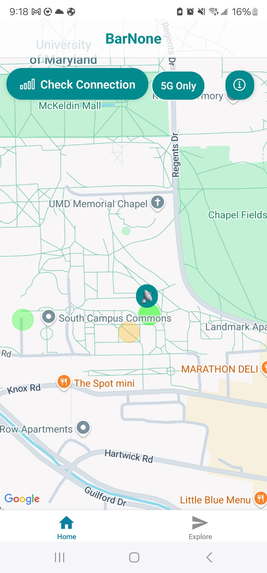
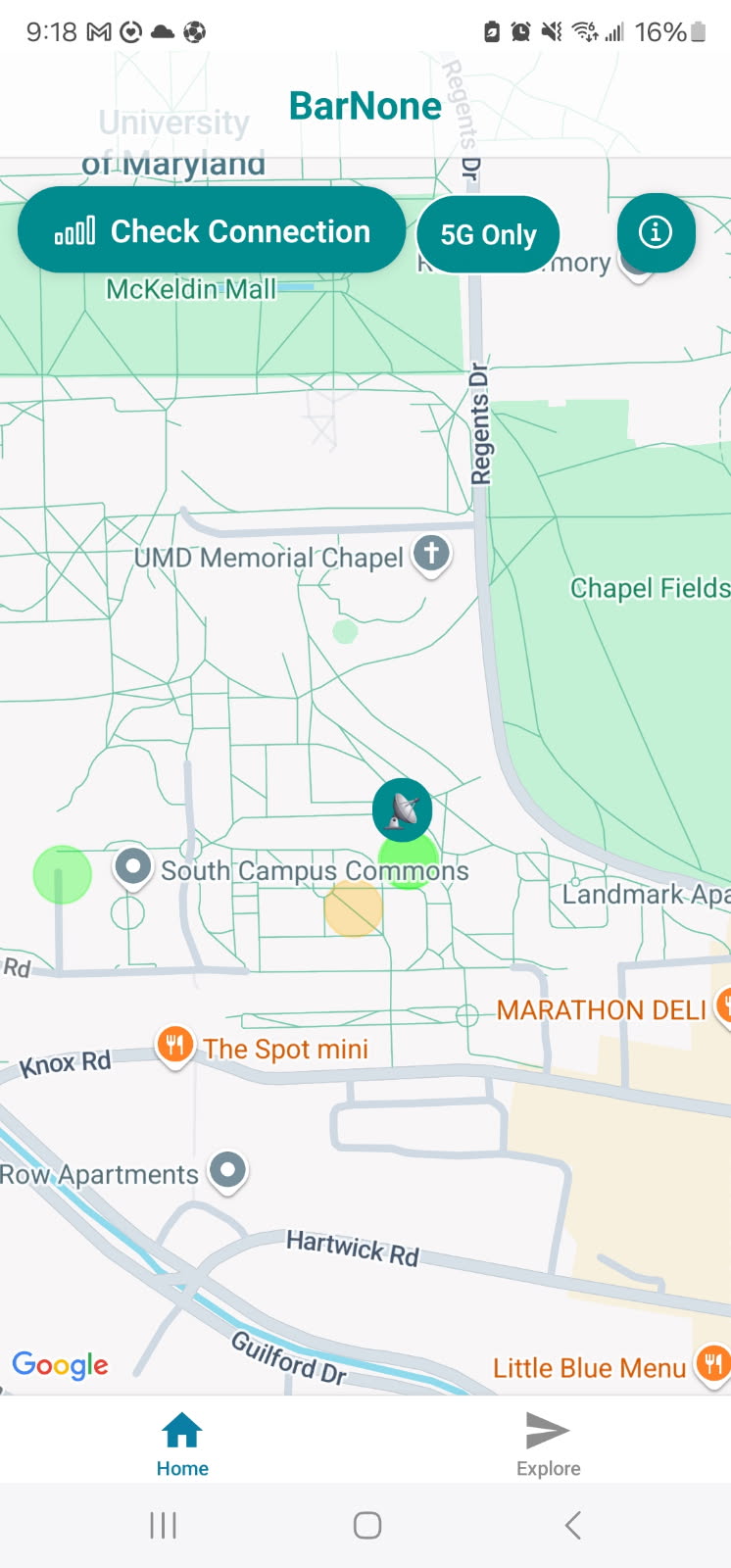
Home UI of app (the 5G only filter is on)
-
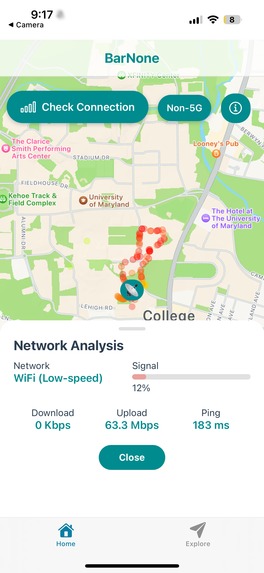
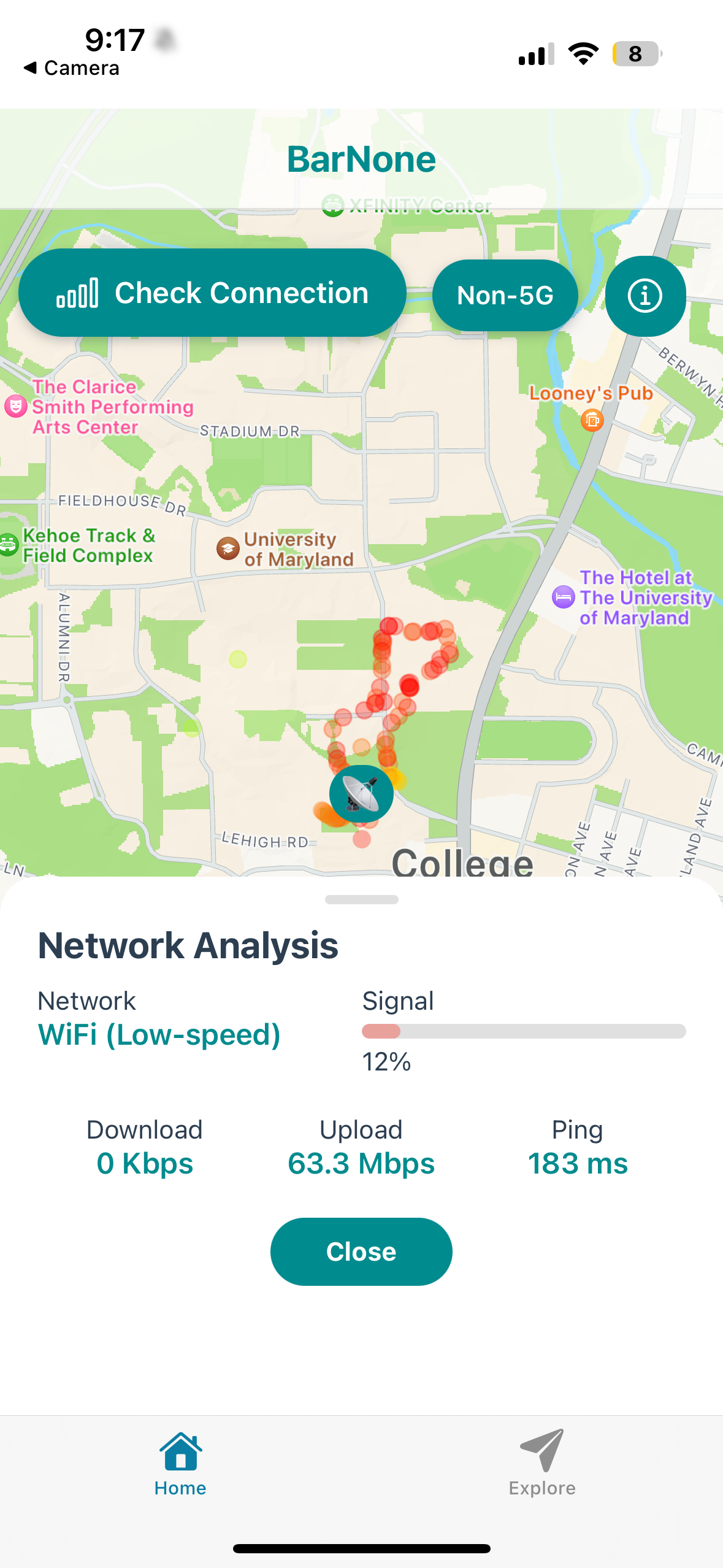
Network Analysis (the 5G only filter is off)
-
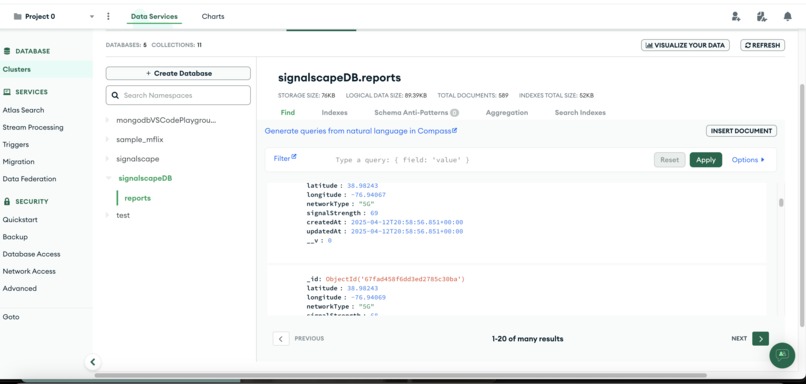
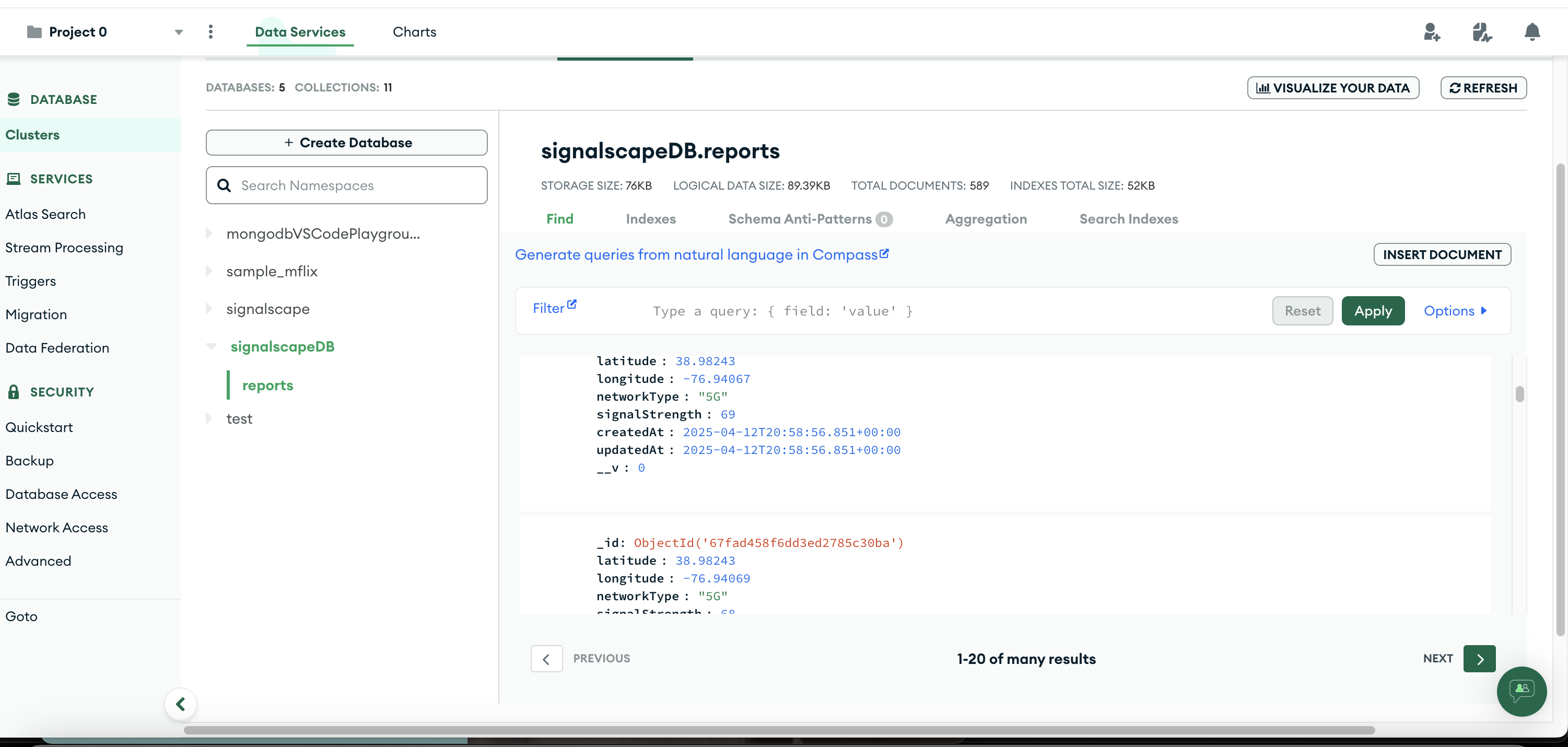
MongoDB Atlas database where the pings are collected from the app
💡 Inspiration
We’ve all experienced the frustration of dropped calls and buffering videos in "dead zones." BarNone was born to turn this universal pain point into actionable data—helping users find reliable connectivity in real-time. But beyond convenience, we saw a deeper impact. What if this data could help non-profits bring services to the people who need them most? With BarNone, we crowdsource signal strength to map where connection fails—so organizations can identify where to set up mobile clinics, distribute aid, or support remote learning.
It’s not just about signal bars—it’s about bridging digital divides and empowering communities through connection.
⚙️ What it does
BarNone tracks and visualizes cellular/WiFi strength as you move, creating live color-coded indicators of signal quality. Crowdsourced data helps users avoid dead zones and find optimal connection spots. Users essentially contribute data as they move, building a reliability network.
🛠️ How we built it
Frontend: React Native + Expo for cross-platform performance Backend: MongoDB for crowdsourced data storage Mapping: Dynamic circle scaling using signal strength metrics Live tracking: GPS-integrated movement updates
💪 Challenges we ran into
This was our first hackathon ever, so we were honestly overwhelmed at first. The concern of the time constraints mixed with some rushed planning and lack of experience led to a rather lackluster start to the project, but we quickly turned that around. Our key was that we didn't take small victories for granted, which boosted team morale and motivated us to push through a variety of difficulties.
🏆 Accomplishments that we're proud of
We were proud to have developed circle overlaps in dense areas, created a dynamic map view using react native libraries, and connecting our database to our map to show user data points.
💭 What we learned
Do not underestimate dependencies and version control...
⏭️ What's next for BarNone?
We aim to configure "best path" suggestions to avoid poor-signal zones, carrier comparisons that show which networks perform best locally, and an offline mode to cache maps for areas with spotty bandwidth.

Log in or sign up for Devpost to join the conversation.