-
-

App Icon
-
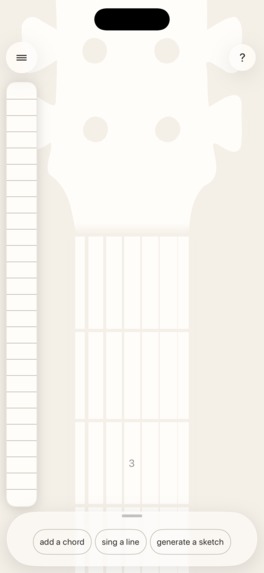
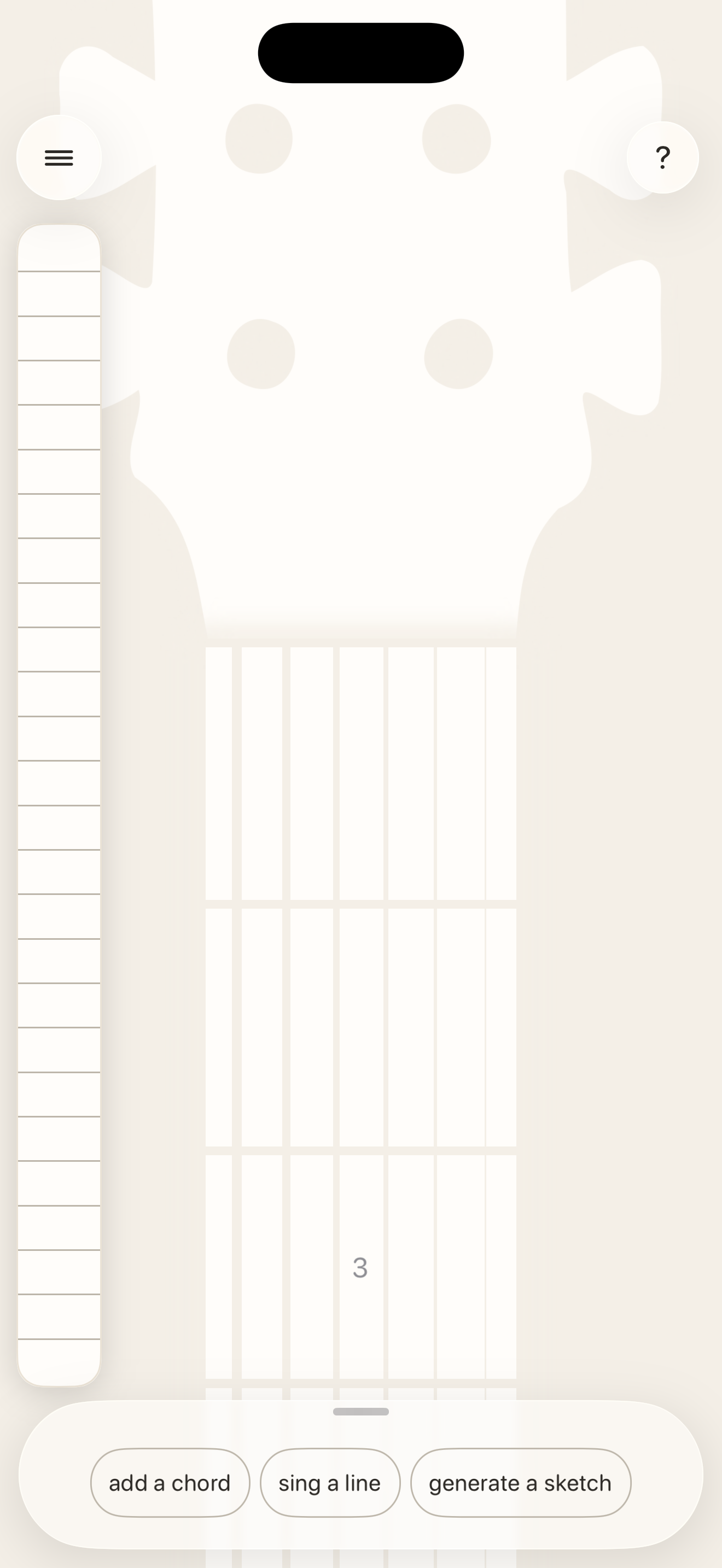
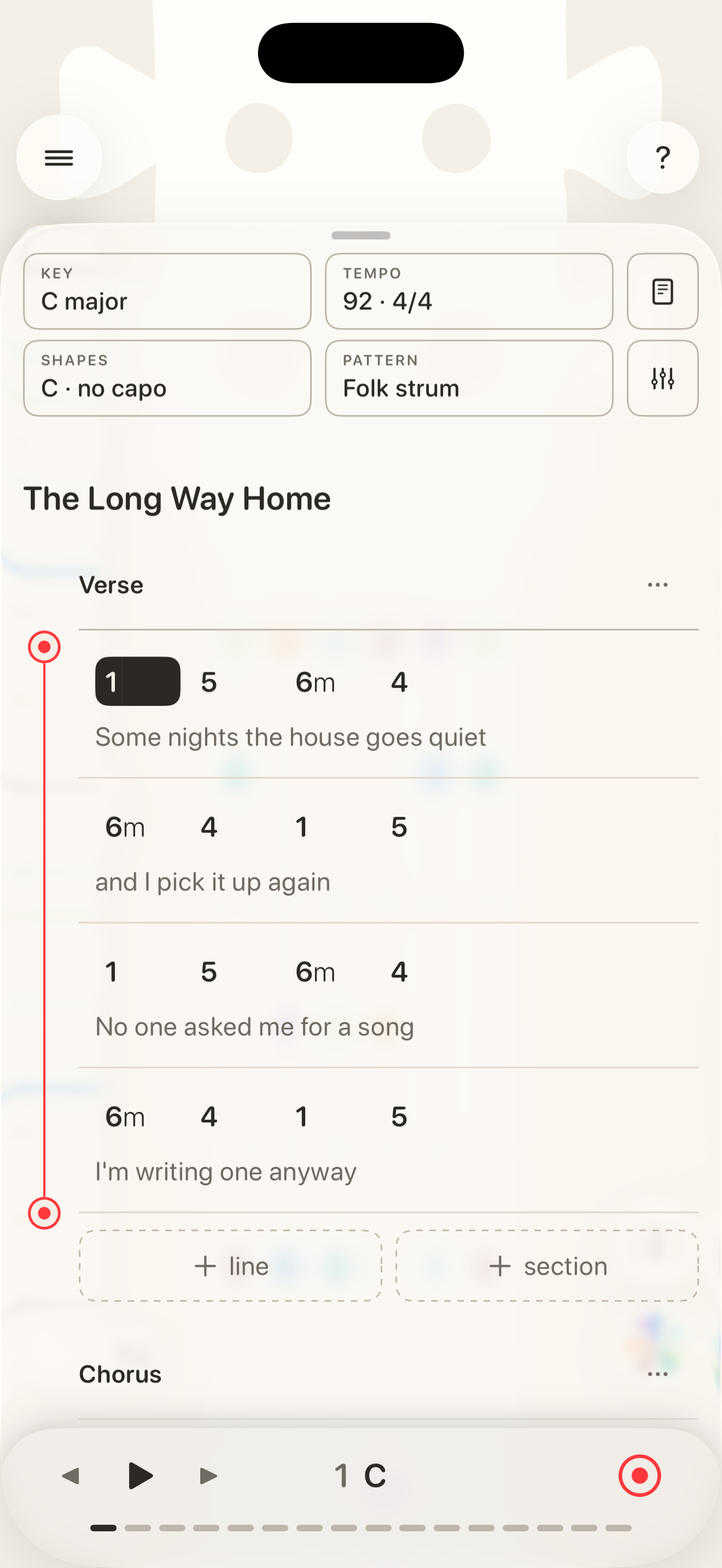
Start from a melody that's been on your mind, pick some chords, or generate a song sketch
-
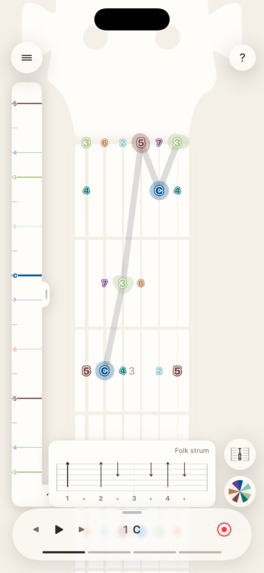
Write songs on the go that you can learn to play and sing
-
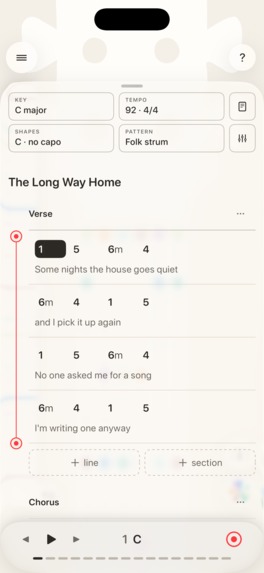
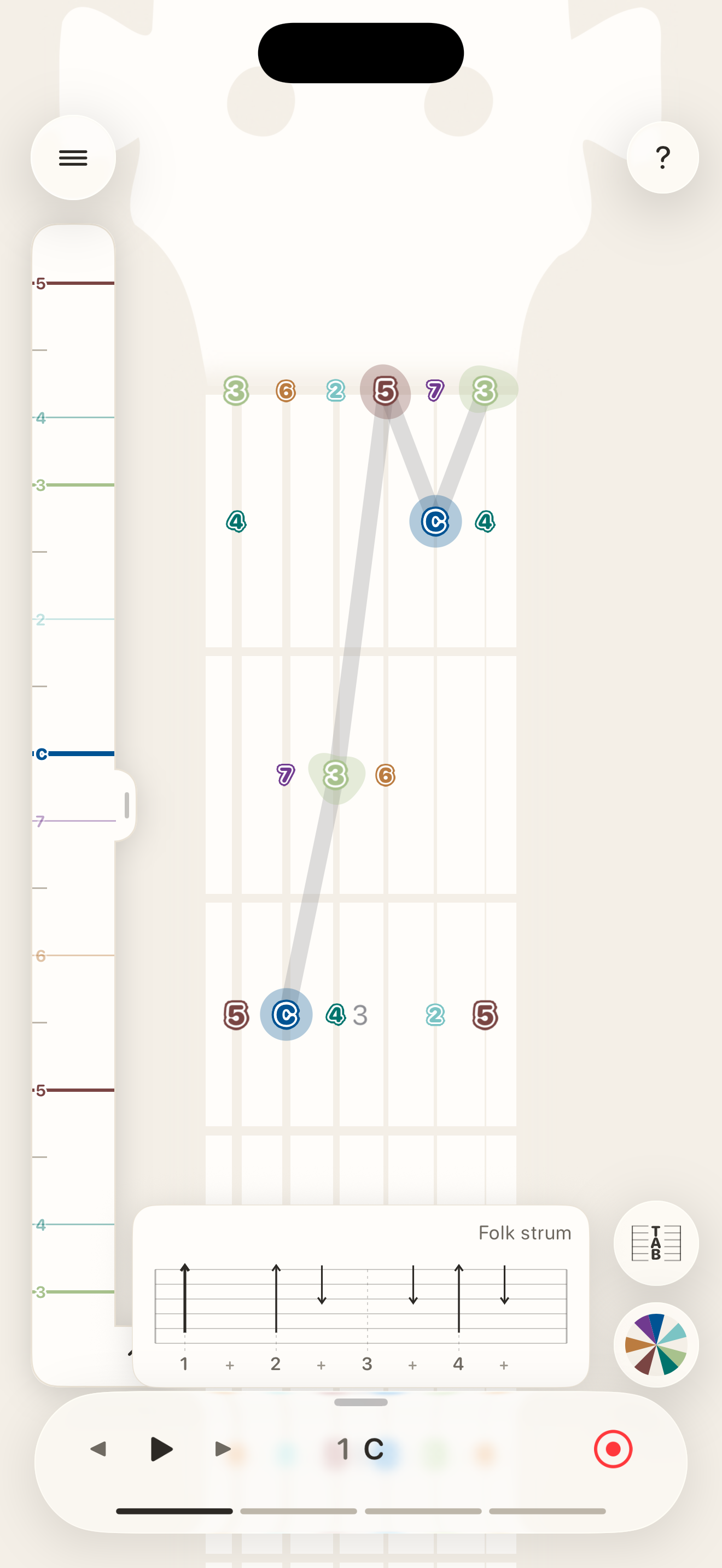
Add lyrics, takes, chords and shapes, and strumming/picking patterns
-
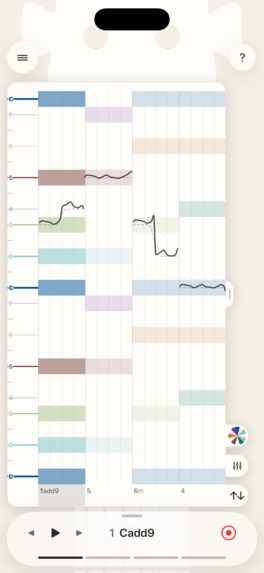
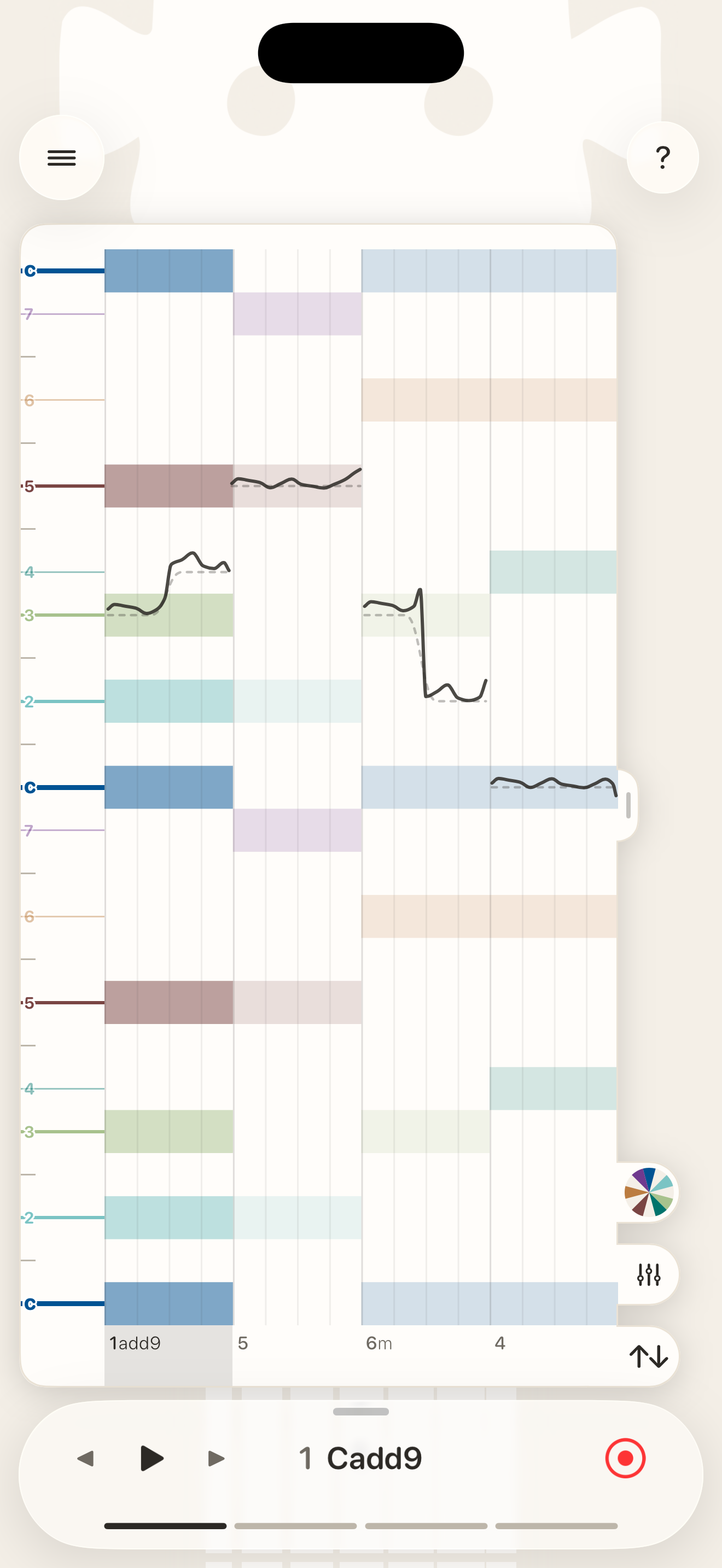
See how your melodies relate to the harmony
-
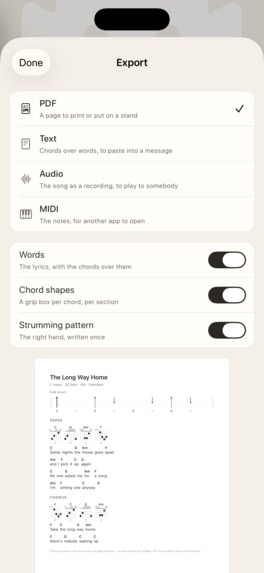
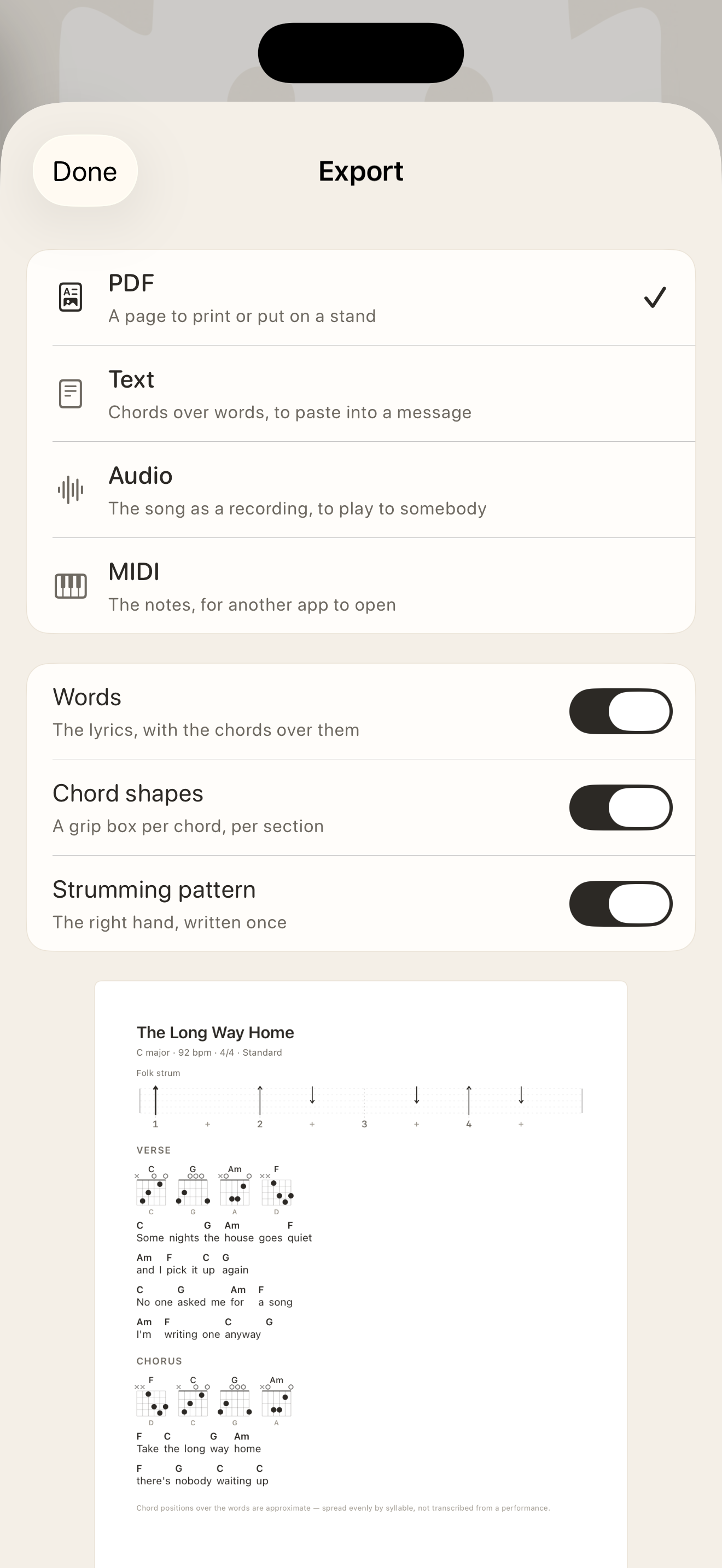
Export your songs to PDF, audio, MIDI
Inspiration
I've learn to sing and play plenty of songs – but they were always someone else's. Having also learnt the overarching, simplifying patterns underlying most songwriting, and already having built powerful engines for my other music app, I knew I'd be able to make something special happen in time for the Shipaton.
What it does
Bard organises your lyrics, recordings, melodies, and chords, allowing you to write on the go and learn at home. It makes it easy to make songs work for your voice and to play them with your guitar, all the while giving you subtle music-theoretical cues that alert you to your tendencies and help you understand what you're doing. Most importantly, it makes exploration of sounds fun and intuitive, allowing you to change the chords under your melody by simply dragging in 2D-space, or to riff over a loop until you've found the melody you want. Stuck? Bard can give you suggestions at every step and teach you the basics of songwriting.
How we built it
The music theory engine is ported from NoSheet. The goal of the visual layout was minimalism and simplicity, to ensure the tool doesn't distract from the goal, which is to write songs. To this end the design is inspired, first, by Apple Maps, going for a single screen with a native liquid glass sheet expanding over the instrument (the map). The design process was otherwise very experimental, demoing lots of UI element variants before settling those that feel smooth and encourage joyful exploration, for every element - a luxury afforded by the growing power of LLMs. Certain mechanics, like the aforementioned melody reharmonisation (chord changing), delightfully emerged from this process. RevenueCat for the subscriptions of course, Posthog for analytics, local storage.
Challenges we ran into
The main challenge was accomodating every target user behaviour without creating an overwhelming number of options - making decisions necessary only at the time where they really are. For example, users should be able to start from lyrics, chords or melody. But, to enable sensible chord recommendations (which is crucial to enable a seamless experience) we need to know the key - deriving this jointly from chords and melody without locking it in too soon is a fine line, and has a high risk of making things confusing. The result of the process is an experience that anyone can have fun with in their first session, and write a song that they can actually learn without any knowledge needed.
Accomplishments that we're proud of
This app makes writing and playing songs possible for anyone, helping everyone express their own personal songs.
What we learned
Build small, simple apps - it's more fun, easier, and just fits what an app is better. Most people don't want to have to wrap their heads around apps. You are a blip in their experience, and trying to be more leads to friction.
What's next for Bard: Guitar Songwriting
Contact singer songwriters to write a song with Bard, releasing it with a subtle strip showing how their melody relates to their chords. And, I will do the same.

Log in or sign up for Devpost to join the conversation.