-
Barbershop Tycoon
-
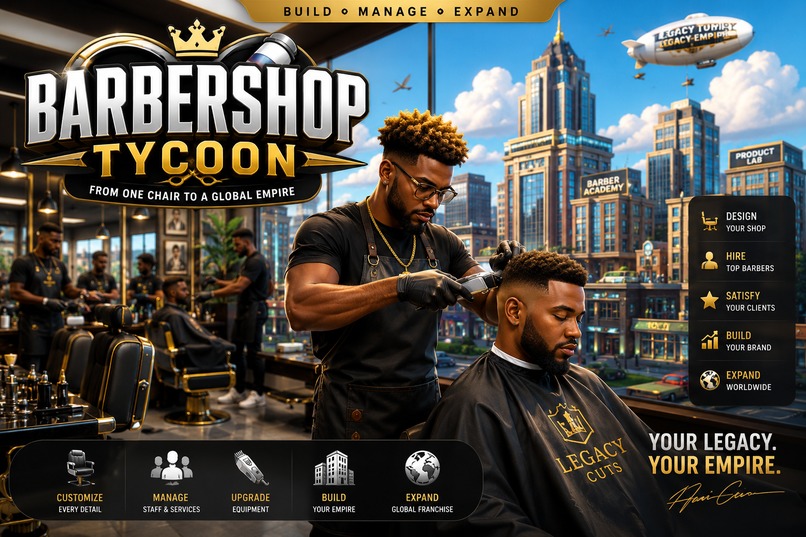
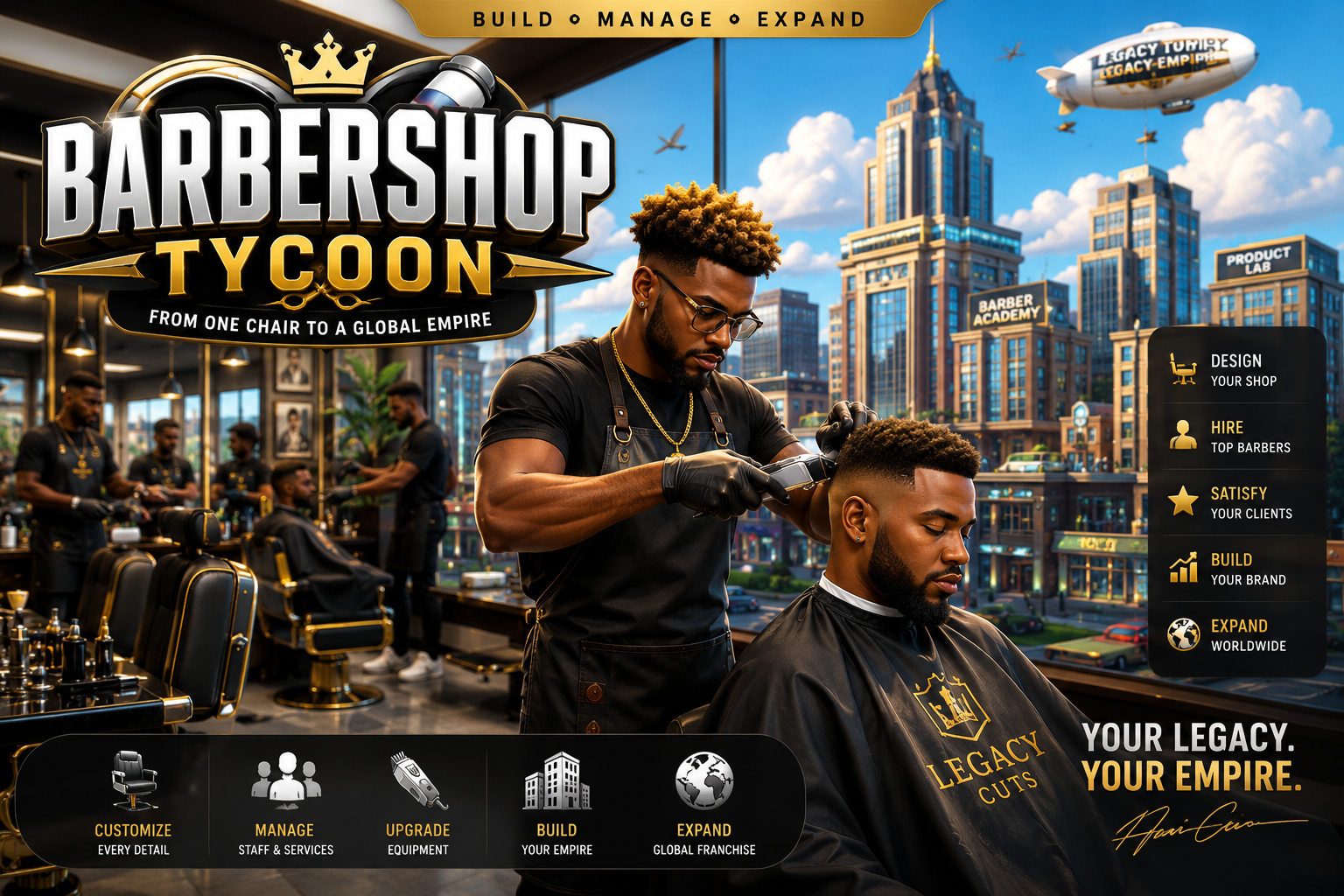
Barbershop Tycoon Thumbnail
The Story Behind Barbershop Tycoon
Inspiration
Barbershop Tycoon was inspired by something much bigger than haircuts.
Growing up, I saw barbershops as more than businesses. They were gathering places where people shared ideas, built friendships, celebrated milestones, and supported one another. A barbershop wasn't simply a place to get a haircut—it was a community hub, a small business, and often the foundation of someone's dream.
As I explored simulation and management games, I noticed that many industries had successful tycoon experiences, yet barbershop culture—a global industry built on entrepreneurship, creativity, and customer relationships—was largely unexplored.
That realization sparked a simple question:
What if players could experience the entire journey of building a barbershop empire from the ground up?
That question became the foundation for Barbershop Tycoon.
The Vision
My goal was to create more than another business simulator.
I wanted players to experience the excitement of starting with limited resources, making meaningful decisions, serving customers, developing talent, and gradually transforming a small neighborhood shop into a globally recognized brand.
The game combines four key experiences:
- Professional business management
- Creative shop customization
- Community-driven storytelling
- Long-term empire building
At its core, Barbershop Tycoon is about growth.
Not just growing a business—but growing a vision.
How I Built the Project
The design process began by studying what makes successful tycoon games engaging over long periods of time.
I analyzed common gameplay loops and identified several principles:
- Players enjoy visible progress.
- Meaningful decisions create engagement.
- Personal ownership increases retention.
- Long-term goals encourage repeat play.
From those principles, I designed the game's foundation.
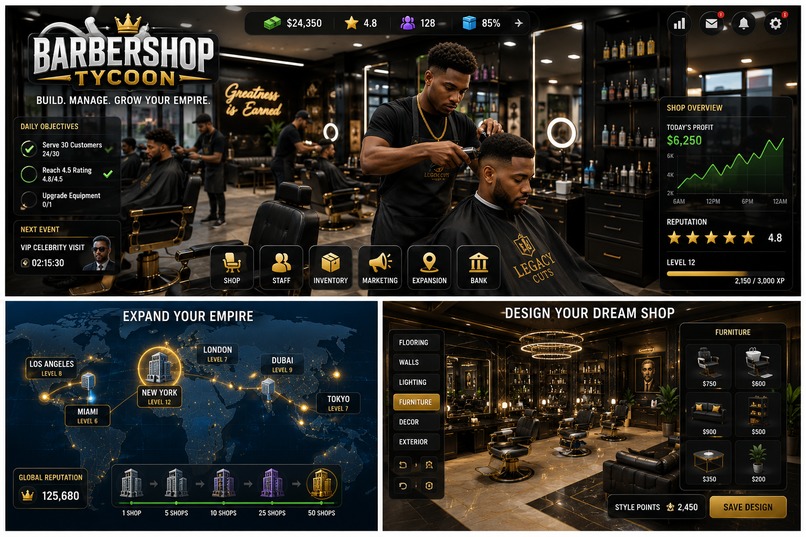
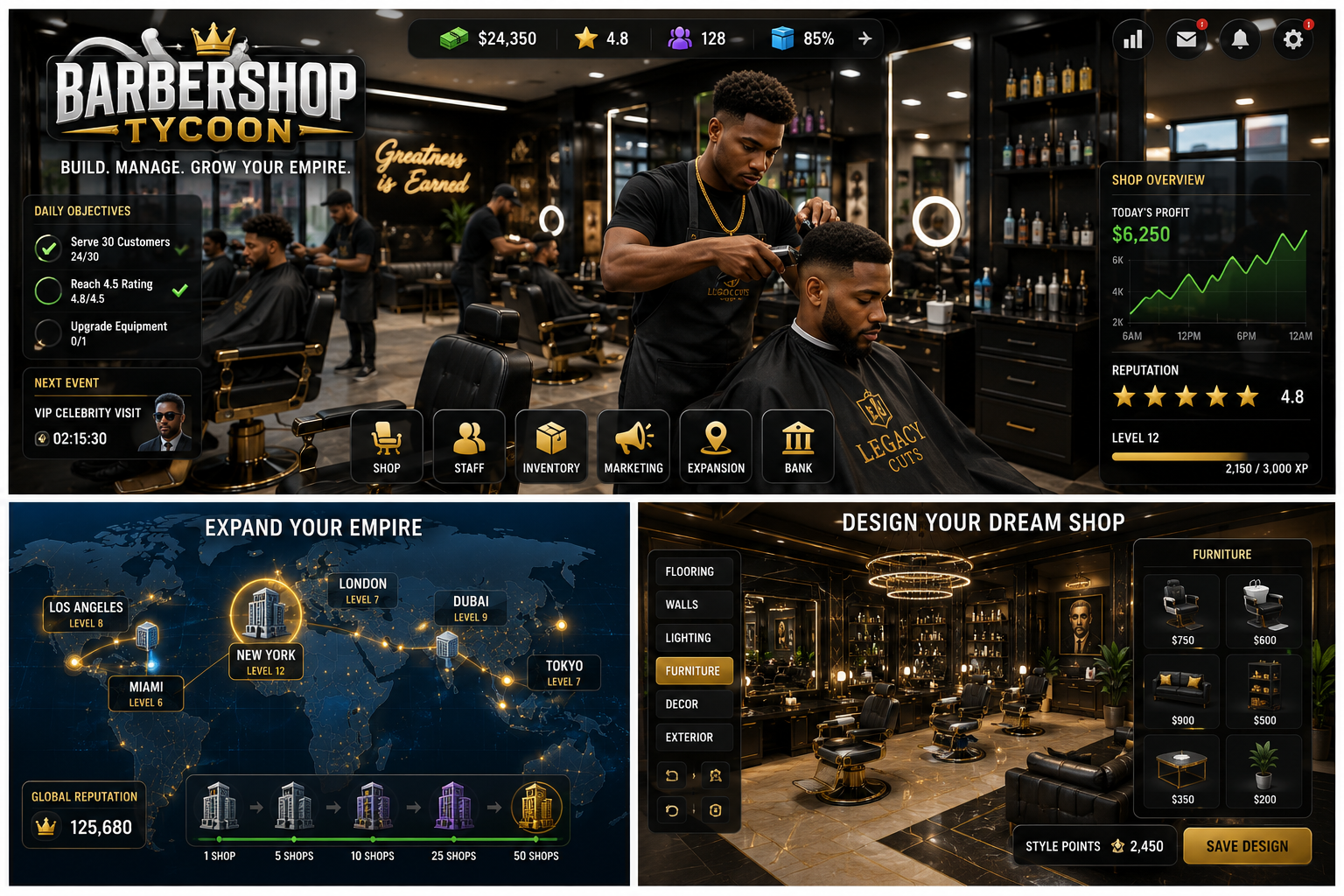
The player begins with a single barber chair and gradually builds a larger operation by serving customers, upgrading equipment, hiring staff, managing inventory, and expanding into new markets.
I focused heavily on progression systems because progression creates motivation.
The growth model can be summarized as:
[ Success = Reputation \times Customer\ Satisfaction \times Operational\ Efficiency ]
This philosophy influenced every system in the game.
Customer satisfaction drives reputation.
Reputation drives customer traffic.
Customer traffic drives revenue.
Revenue fuels expansion.
Expansion creates new opportunities.
The result is a progression loop where every action contributes to long-term growth.
What I Learned
One of the biggest lessons I learned during development was that successful management games are not about complexity alone.
They are about meaningful choices.
Adding more systems does not automatically create a better experience.
Instead, every mechanic should answer one question:
"Does this create an interesting decision for the player?"
This realization led me to simplify some ideas while expanding others.
For example:
- Shop layout became strategic.
- Staff development became meaningful.
- Customer personalities became dynamic.
- Reputation became a valuable resource.
I learned that depth often comes from interaction between systems rather than from individual systems themselves.
Challenges I Faced
One of the greatest challenges was balancing realism with accessibility.
Real businesses involve many moving parts.
However, if every detail is simulated, the game can become overwhelming.
My challenge was finding the balance between:
[ Realism + Accessibility = Player\ Enjoyment ]
I wanted the game to feel authentic while remaining easy to learn.
Another challenge was designing a concept that could sustain long-term engagement.
Many simulation games become repetitive after players master the basic systems.
To solve this problem, I introduced dynamic systems such as:
- Hairstyle trends
- Celebrity clients
- Staff progression
- Random business events
- Multi-city expansion
- Seasonal challenges
These features ensure that no two businesses evolve exactly the same way.
Why This Project Matters
Barbershop Tycoon represents entrepreneurship, creativity, and community.
It celebrates the idea that small beginnings can lead to extraordinary outcomes.
Every player starts with a single chair.
Every player faces obstacles.
Every player makes decisions that shape their future.
Over time, those decisions create a unique story.
That journey mirrors the experience of countless entrepreneurs who begin with a dream and gradually build something larger than themselves.
Looking Forward
Barbershop Tycoon is only the beginning.
Future versions could introduce:
- Global franchise management
- Multiplayer business districts
- Barber academies
- Product manufacturing
- Competitive industry events
My vision is to create a living business ecosystem where players continuously discover new opportunities, new challenges, and new ways to express their creativity.
Final Reflection
Barbershop Tycoon began with a simple idea:
What if players could build a barbershop empire from a single chair?
Through research, iteration, and creative problem-solving, that idea evolved into a game concept centered around ambition, strategy, creativity, and growth.
More than anything, this project reflects the belief that every great empire starts small.
The first customer.
The first chair.
The first decision.
And the courage to keep building.


Log in or sign up for Devpost to join the conversation.