Inspiration
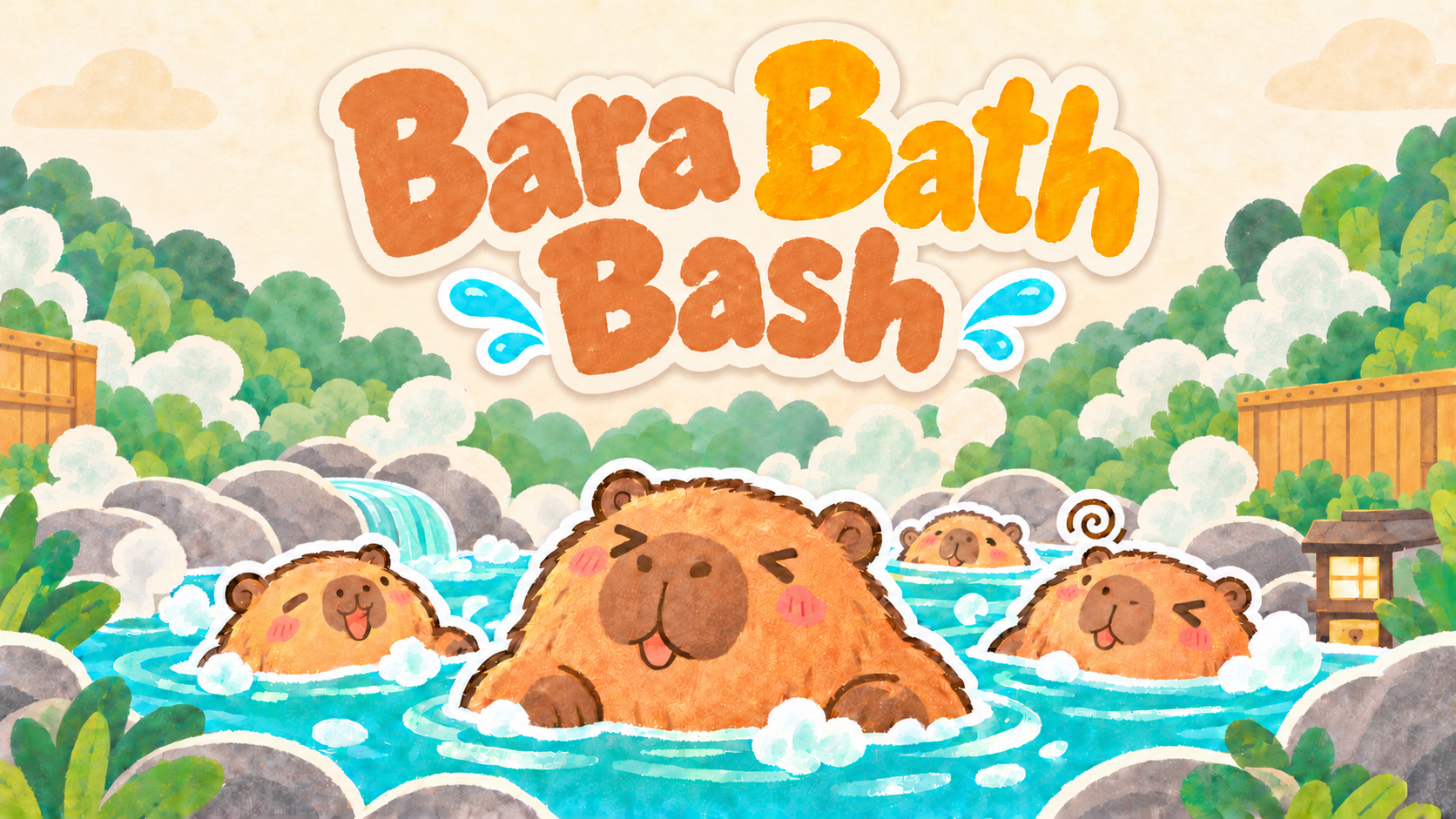
Capybaras might be the most relaxed animals on Earth. Every winter, some zoos in Japan treat their capybaras to a hot-spring bath, and the capybaras just sit there in the steam with citrus fruit floating around them, totally unbothered. I loved the idea of turning that calm moment into chaos: what if the capybaras kept popping up out of the hot spring, and you had to keep up with them?
That's Bara Bath Bash: a cozy, snowy hot spring on a mountain plateau, a pond full of cheeky capybaras, and one simple action: tap them before they sink back down.
What it does
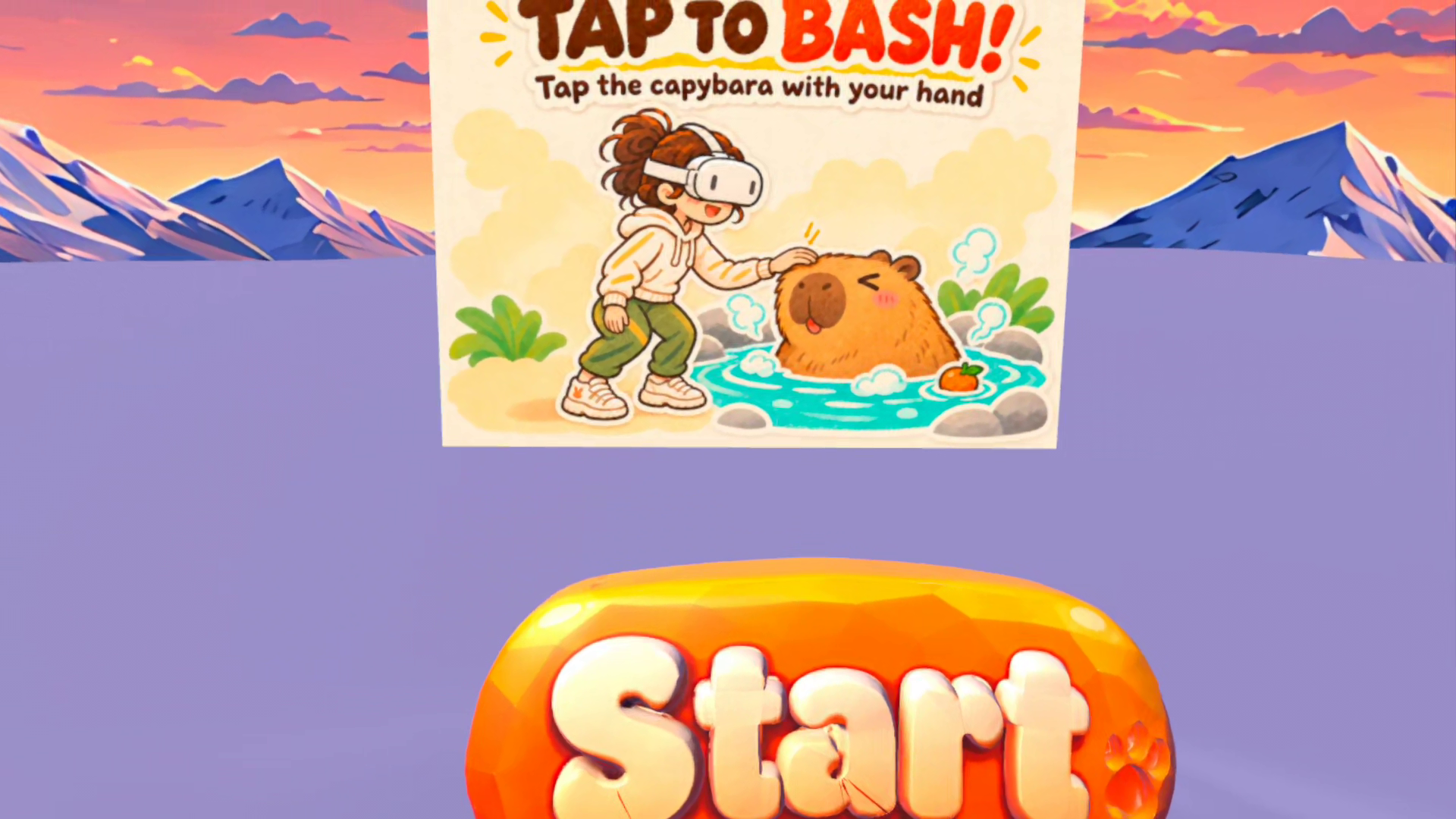
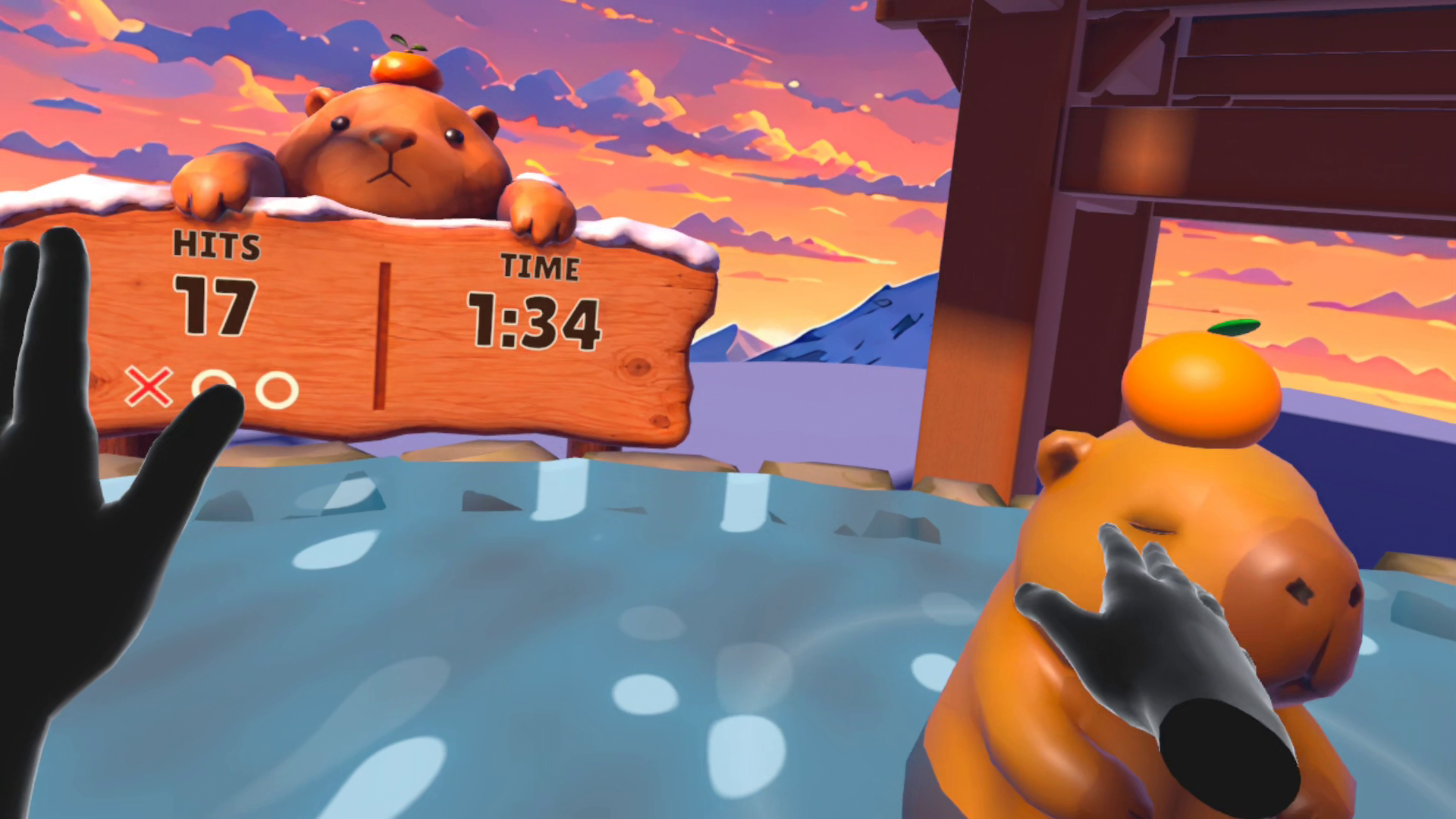
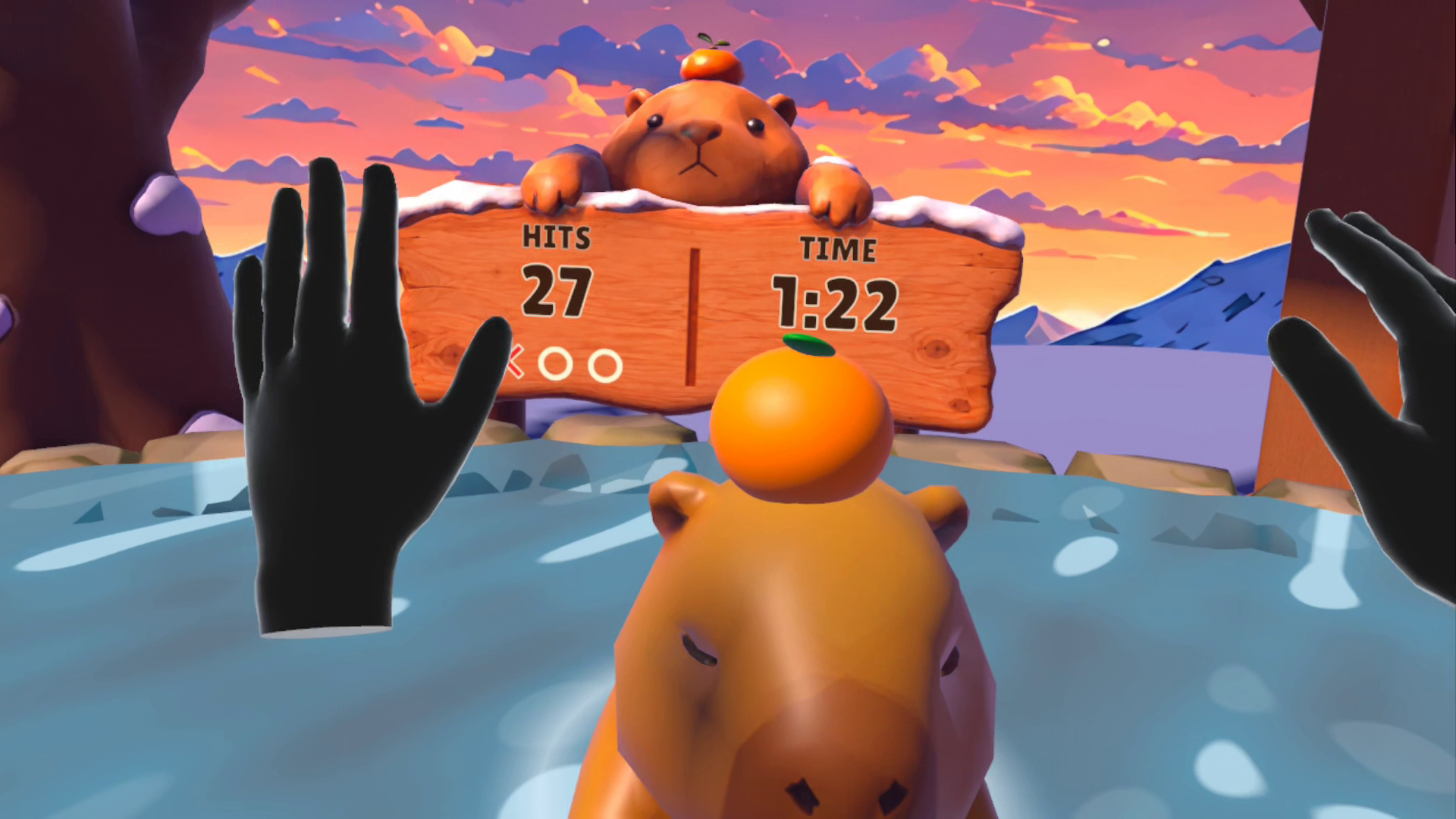
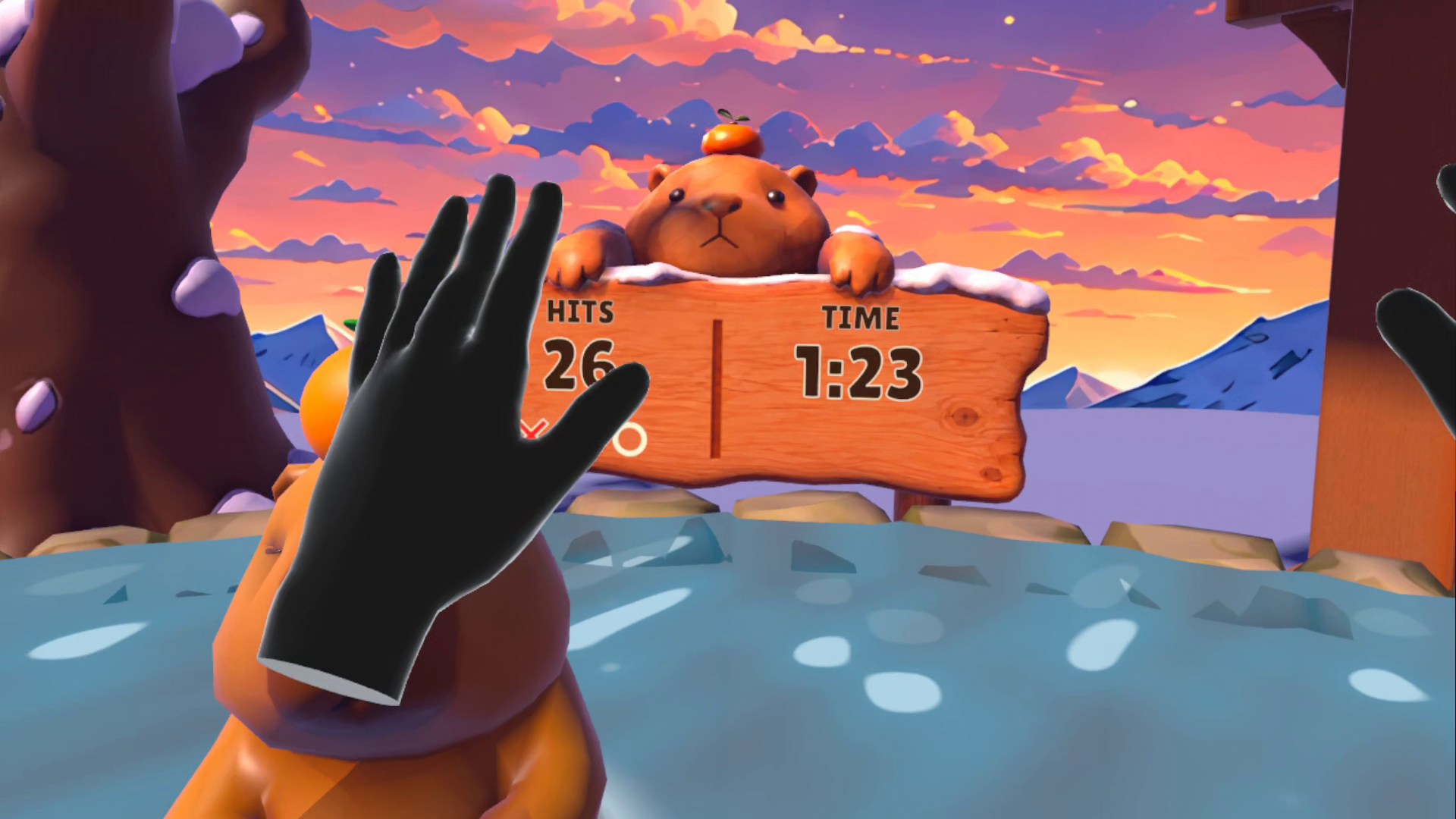
Capybaras pop up out of the steaming water one at a time. Tap one to bonk it and score +1. If you're too slow, the capybara jeers at you: it pulls a laughing face, wiggles, and sinks away, and you lose a life. Some capybaras carry an orange on their head. Tap them to send the orange flying into your fruit bucket for a bonus. Some carry a hot stone. Don't tap those! Tapping one burns you and costs a life, but leaving it alone is the right move. The longer you last, the faster they pop. Each capybara stays up for less time as the round heats up. Everything has a sound: pops come from each capybara's position in 3D space, so you can hear where the next one is rising. It's built to be picked up in seconds: no tutorial needed, just reach out and tap.
How we built it
Engine: Unity with the Universal Render Pipeline (URP), targeting Meta Quest through OpenXR. Input: Hand tracking with Unity's XR Hands and the XR Interaction Toolkit, so you play with your bare hands, plus controller support (Oculus Touch / Quest Pro profiles). 3D assets: I generated the capybara, hammer, logo and buttons with Tripo AI (3D model generation), then brought them into Unity and styled them with simple stylized materials for the water, stone and snow. Game logic: Each capybara is a small state machine (Hidden → PoppingUp → Up → Retreating) driven by coroutines. A game manager decides which capybara pops next, how long it stays up, and what it carries on its head (nothing, an orange, or a hot stone). Feedback: Face swaps (bonked face, laughing face) use a MaterialPropertyBlock to swap textures without duplicating materials. A quick squash on hit makes the bonk feel good, and pitch randomization keeps repeated sounds from feeling robotic. Audio: Fully spatialized 3D audio with linear rolloff, with Doppler turned off so moving your head doesn't make the sounds wobble. Build tooling: I wrote a custom editor menu (Bara > Configure for Meta Quest, Bara > Build Quest APK) that switches all the OpenXR features, the graphics API (Vulkan for Quest) and the Android settings in one click, then builds and logs the APK.
Challenges we ran into
Switching XR platforms. I started on PICO and moved to Meta Quest. Both are Android, but each needs a different set of OpenXR features, graphics API and interaction profiles. Toggling these by hand kept breaking things, so I automated it with an editor script that prints exactly what ended up enabled. Hidden build requirements. The Meta package pulls in Composition Layers, which refuses to build unless its own feature is turned on. One HoloLens feature also shares the same hand-tracking ID as the one I needed, so I had to filter it out explicitly. Windows build failures. Gradle sometimes failed with "Unable to establish loopback connection" because of socket files in the Windows Temp folder. The fix was pointing Java at a different temp directory just for the build. Making "fair" feel fair. Early versions felt random and frustrating. I added the jeer animation right before a capybara escapes, so players get a split-second warning, and I made hot-stone capybaras skip the jeer, since leaving them alone is correct. Little timing bugs. Interrupting a capybara mid-pop could make it teleport. I fixed it by always animating from its current position. Miss sounds also used to cut off when the game ended, so they now play from their own temporary audio source.
Accomplishments that we're proud of
My first solo XR project with the help of AI tools. A game anyone can understand in five seconds, from kids to first-time VR users. Real hand-tracking play: no controllers needed, you just reach out and tap. Capybaras with personality: they get bonked, they laugh at you, they carry snacks. A one-click Quest build pipeline that saved me hours of settings debugging.
What we learned
OpenXR is powerful but picky. Understanding feature sets, interaction profiles and graphics APIs was half the battle of shipping on real hardware. Game feel lives in the small details. A 12% squash, a tiny pitch shift and a laughing face did more for fun than any new mechanic. Spatial audio is a gameplay tool in VR, not just decoration. Players naturally turn toward the sound of the next pop. AI-generated 3D assets (Tripo) let me get a charming, consistent look quickly, so I could spend my time on gameplay.
What's next for Bara Bath Bash
More head items and power-ups (yuzu combos, golden capybaras, steam clouds that hide the pond) Mixed-reality mode: put the hot spring on your living-room floor using passthrough Online leaderboards and a two-player "bath battle" mode More hot springs: cherry-blossom spring, night spring under the stars


