Inspiration
Meeting new people in a bar or nightclub should be natural, but many people feel nervous or awkward when approaching strangers. Even when two people are interested in talking, they may not know how to start a conversation or whether the other person is open to meeting someone new.
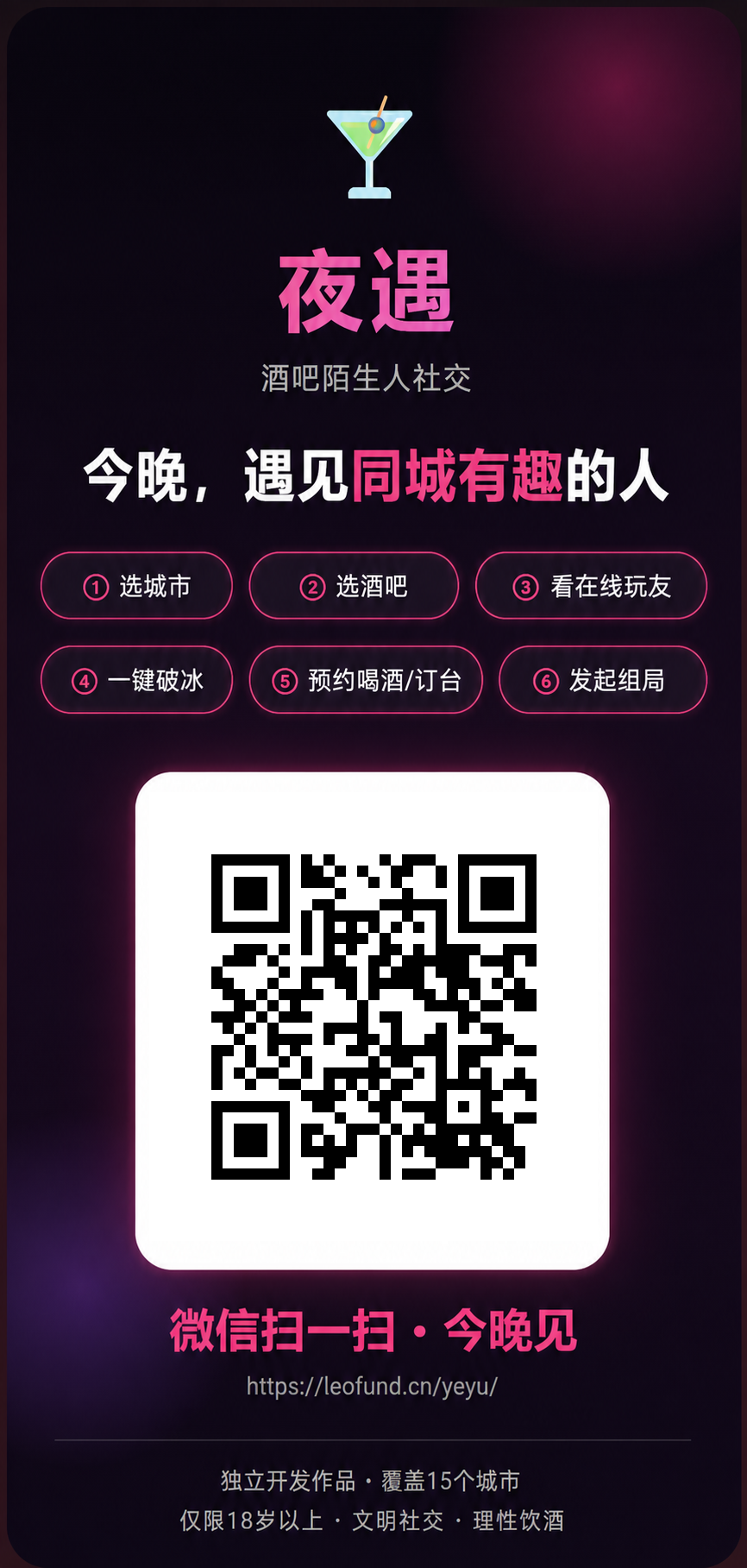
Most dating apps focus on matching people online before they meet. We wanted to build something different: a social product for people who are already in the same bar or nightclub. The app helps users discover nearby people, understand their social intentions, and break the ice with less pressure.
What it does
Bar Social App for Strangers is a location-based social networking product designed for bars and nightclubs.
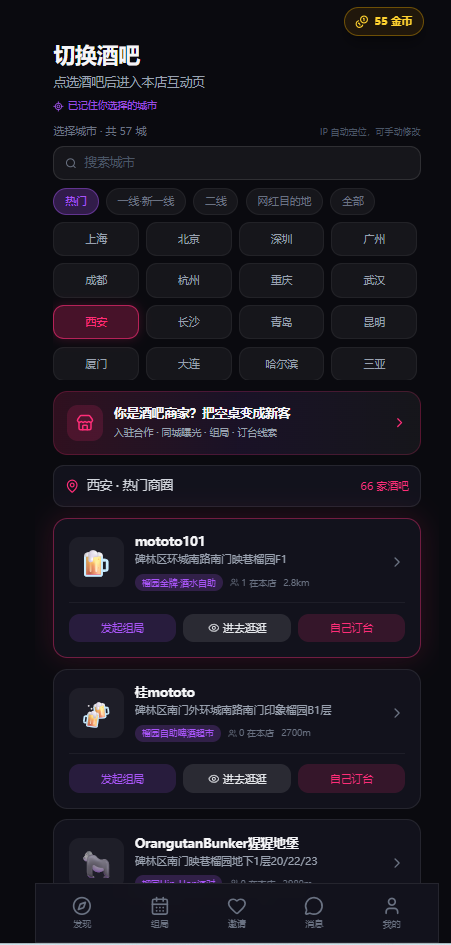
Users can complete a simple three-step registration process, choose the bar they are currently visiting, view the number of online users, distance, and atmosphere of each venue, and discover other users in the same bar.
They can filter users by gender and send an icebreaker invitation using one of four options: Buy a Drink, Chat, Dance, or Play a Game.
Users can also accept or decline invitations, communicate through the in-app messaging system, use quick replies, edit their profiles, and switch to another bar.
The goal is to turn online discovery into safe and natural face-to-face interaction.
How we built it
We designed the product around one simple user journey:
Register → Choose a Bar → Discover People → Send an Icebreaker → Chat → Meet Offline
We divided the application into several core modules:
Registration and login User profiles Bar selection User discovery Icebreaker invitations Invitation management Messaging Personal account management
The product was designed with a mobile-first approach because users will mainly use it inside bars and nightclubs. We used short interaction flows, large buttons, clear visual feedback, and simple navigation so users can complete actions quickly in a busy nightlife environment.
We also organized user discovery by venue rather than displaying exact user coordinates. This allows people in the same bar to connect while protecting their precise location.
Challenges we ran into
One of the biggest challenges was balancing fast social interaction with privacy and safety. Users want to discover people nearby, but they may not want to reveal too much personal information or their exact location.
Another challenge was designing an effective first interaction. A basic “Send Message” button can still leave users unsure about what to say. To solve this, we created four clear icebreaker options that communicate the user’s intention before the conversation begins.
We also had to prevent the product from becoming too complicated. Social applications can easily become overloaded with feeds, virtual gifts, matching algorithms, and unnecessary features. We focused on the shortest possible path from discovering someone to starting a real conversation.
Additional challenges included identity verification, inappropriate behavior, spam invitations, fake profiles, user reporting, and venue-level moderation.
Accomplishments that we're proud of
We are proud that we created a social product with a clear difference from traditional dating apps.
Instead of encouraging users to spend hours swiping through profiles, the app helps people connect with others who are already in the same physical venue.
We are especially proud of the four-option icebreaker system. It gives users an easy and low-pressure way to express their intentions without having to write the perfect opening message.
We also created a complete product flow covering registration, bar selection, user discovery, invitations, messaging, and profile management. The experience is simple enough for first-time users to understand quickly.
What we learned
We learned that successful social products are not only about matching people. They are also about reducing uncertainty.
Before starting a conversation, users want to know who is currently nearby, who is open to meeting new people, what kind of interaction the other person wants, whether an invitation has been accepted, and how to continue the conversation safely.
We also learned that offline social networking requires stronger trust and safety mechanisms than ordinary content platforms. User consent, profile authenticity, privacy protection, reporting systems, and venue cooperation are essential.
Most importantly, we learned that a simple and focused user experience can create more value than a product with too many features.
What's next for Bar social app for strangers
Our next step is to improve trust, safety, venue cooperation, and real-time interaction.
Planned features include:
Identity and profile verification Block and report functions Venue check-in verification More detailed interests and social-intention tags AI-generated icebreaker suggestions Group invitations and table-based social features Bar events and themed social activities Membership and premium visibility options Venue partnership dashboards User behavior and conversion analytics Personalized user recommendations Abuse prevention and invitation limits
In the future, the product could expand beyond bars and nightclubs into live music venues, festivals, cafés, university events, exhibitions, and other offline social environments.
Our long-term vision is to build a trusted offline social platform that helps people meet more naturally, communicate more clearly, and create meaningful real-world connections.
Built With
- chinese
- html5


Log in or sign up for Devpost to join the conversation.