Inspiration
I’ve always loved discovering new places to go out. But I kept asking the same question my friends asked me every weekend:
“Where’s the move tonight?”
Google Maps couldn’t answer that. Yelp? Outdated reviews. Instagram? A highlight reel. I needed real-time, trusted local data — from people who were actually outside.
So I decided to build it.
What it does
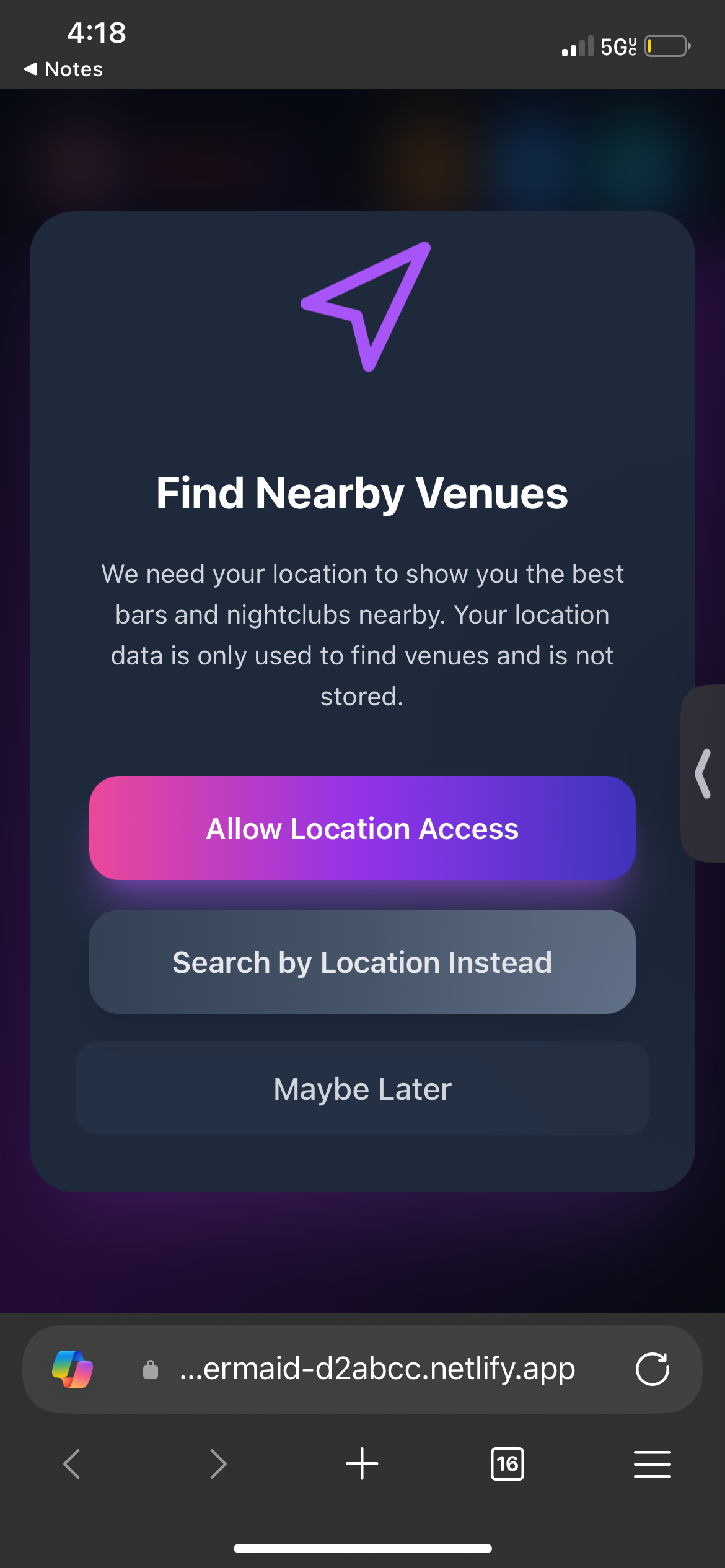
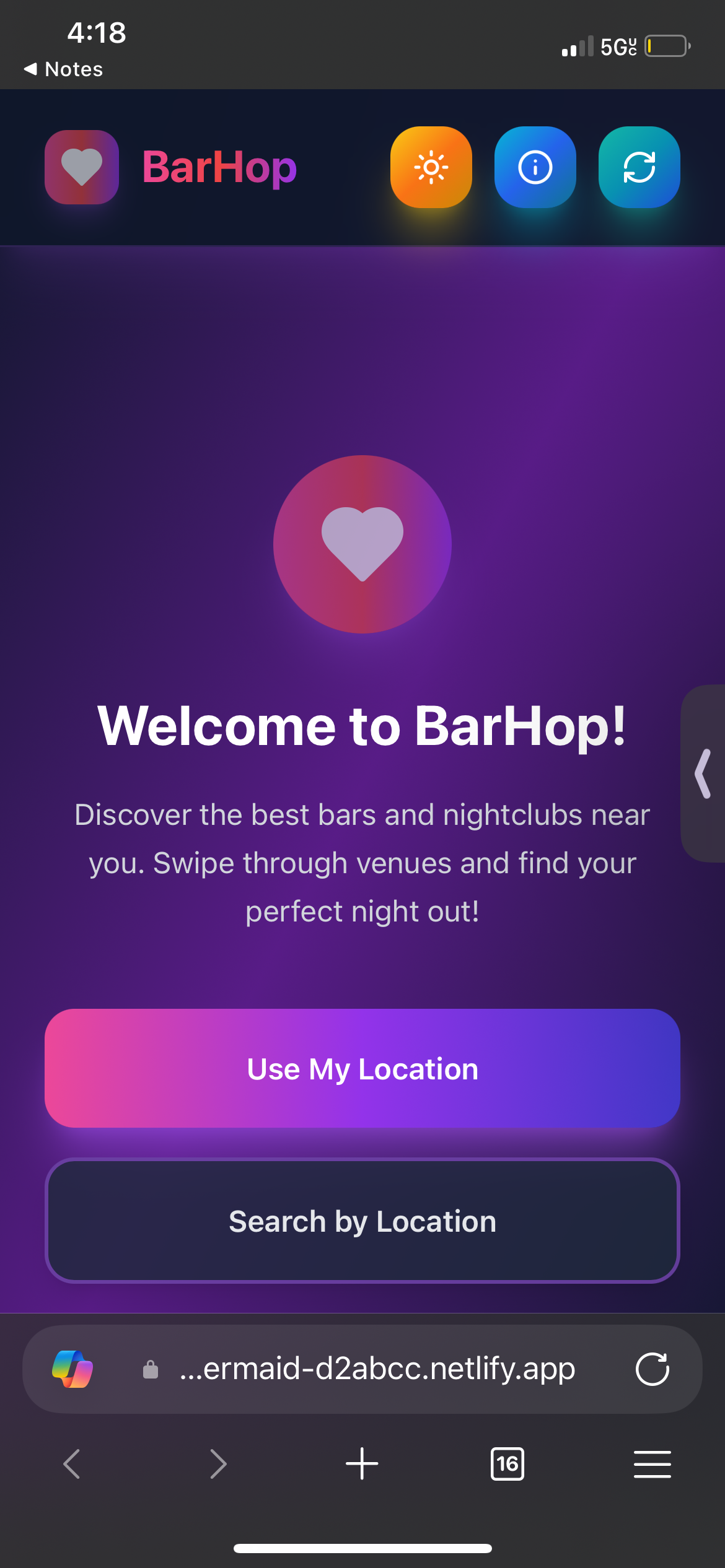
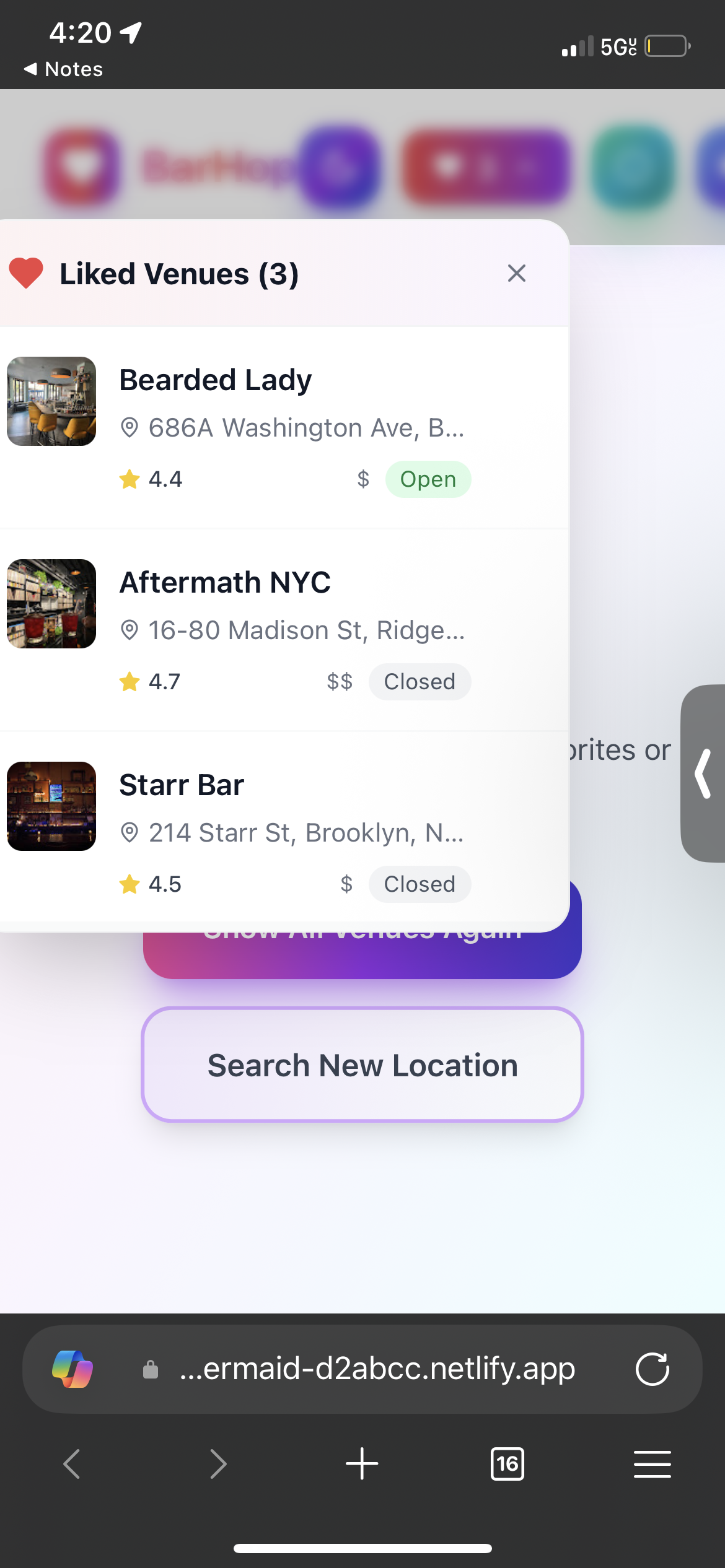
Bar Hop searches for bars and clubs near you (similar to Tinder) using live geo-data from venues in NYC. BarHop isn’t just a nightlife tool. It’s about giving people local visibility and voice. It starts with nightlife — but the same tech can help surface underground events, art popups, even spontaneous meetups.
How I built it
I started with a simple prompt: build a Tinder for Bars. That meant three key features: 1. Live, geo-based discovery of bars, clubs, and lounges 2. Live updates: crowd size, music genre, specials, vibe check 3. An anonymous message board (inspired by Yik Yak & Ask.fm)
I called it BarHop — a name that felt fun, social, and mobile.
Challenges I ran into
Using the Google Maps API to get accurate data required a lot of error handling. I learned how to create a database with SupaBase to store all the API functions, and that in turn made it easier to retrieve accurate data.
The UI was very rough at first and I’m not very experienced with Front End, so I told Bolt to make the UI similar to Tinder & MySpace. This made the UI much more fluid and usable.
Accomplishments that I'm proud of
Really proud of utilizing the Google Maps API for accurate live data. This is something I’ve always wanted to be able to use- but wasn’t available to me yet.
I’m also proud of my SupaBase Database and its functionality with my Google Cloud service. This is something that seemed complicated at first but became simpler the more I learned.
What I learned
• Inexperience isn’t failure — it’s just a phase. If you learn fast, it becomes your edge. • Real-world problems need real-world presence. I didn’t solve this by coding alone — I walked into venues, watched crowds, and talked to people. • If you want retention, create community. BarHop isn’t just a gimmick — it gives people a reason to come back daily, not just when they’re going out.
What's next for Bar Hop
The vision for BarHop should go far beyond being just another nightlife guide. Here’s how to think about and articulate a compelling long-term vision that could excite users, investors, and future teammates:
⸻
BarHop Vision: The Social Layer for the Physical World
Phase 1: Own the Night (Nightlife Discovery)
Start with solving a simple but real problem:
“Where’s the move tonight?”
BarHop becomes the go-to app for discovering: • Real-time info on bars, clubs, lounges • Anonymous local chatter about what’s happening • Hyper-local nightlife insights from actual people, not stale reviews
⸻ Phase 2: Expand to All In-Person Social Experiences
Once the platform is trusted for nightlife, it naturally expands to: • Pop-up events & underground parties • Live music, comedy nights, art shows • House parties, rooftops, block events • Date spots, chill vibes, local hangouts
BarHop evolves from “where to party” to “where to be.”
⸻ Phase 3: Become the Real-Time Map of Social Vibes
With scale and engagement, BarHop becomes a social discovery layer for cities: • Heat maps of where people are hanging out • Anonymous polls and community questions • Trusted user content driving decisions IRL
Think: Waze for nightlife and events, built from the ground up for Gen Z and younger Millennials.
⸻ Phase 4: Monetization Without Killing the Vibe
Monetization would be community-first: • Premium placement for venues (ads that don’t suck) • Brand/event partnerships (exclusive access, early drops) • Creator tools for local hosts, promoters, DJs
No shady data harvesting, no paywalls that kill discovery.
⸻ Final Vision:
“BarHop helps people find where they belong — in real life, in real time.”

Log in or sign up for Devpost to join the conversation.