-
-
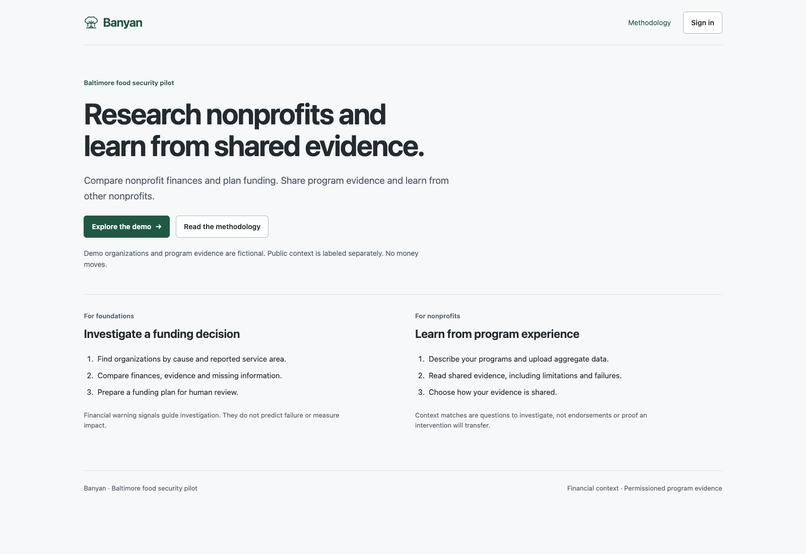
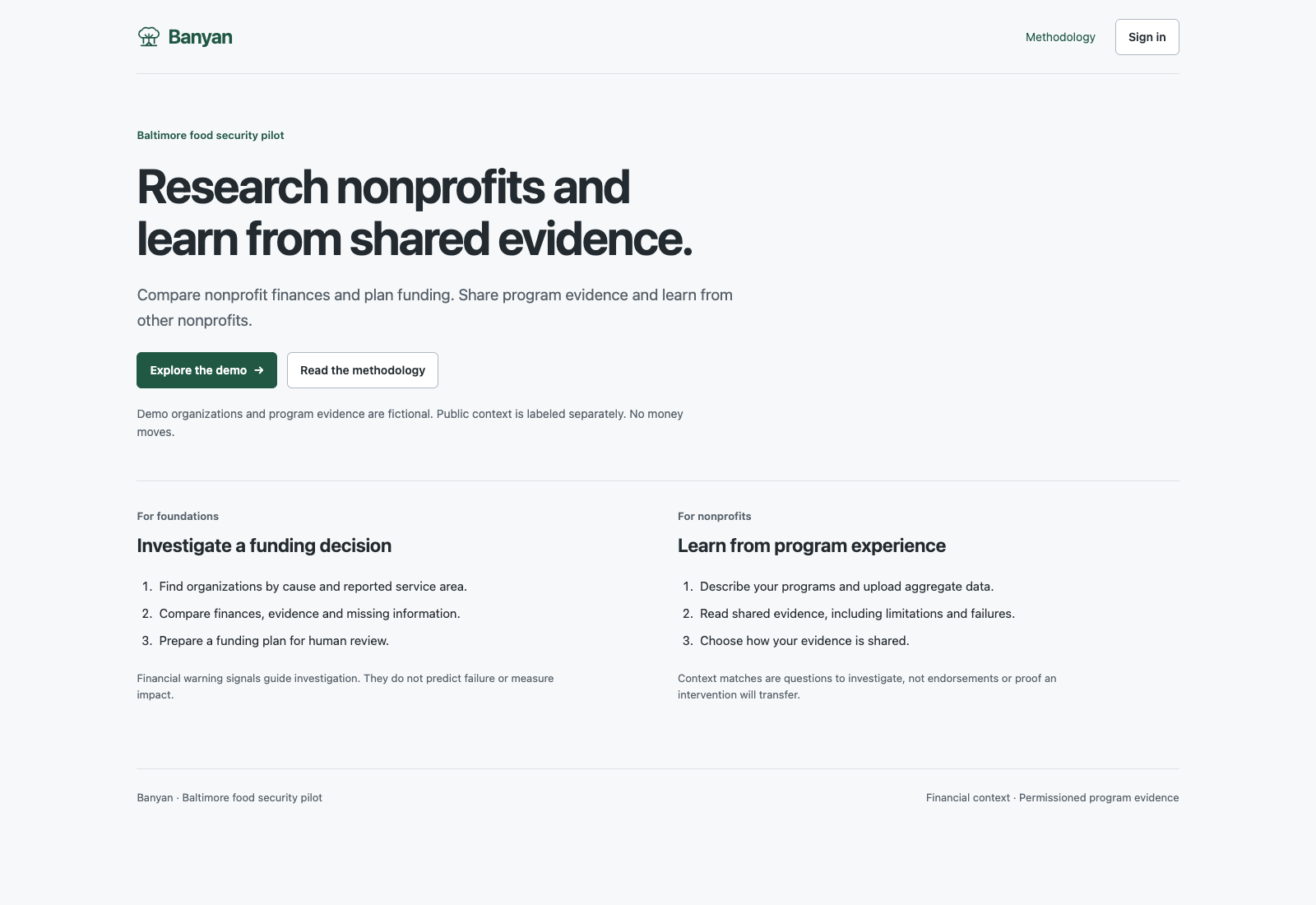
Banyan connects donor research with nonprofit learning through financial context and shared program evidence.
-
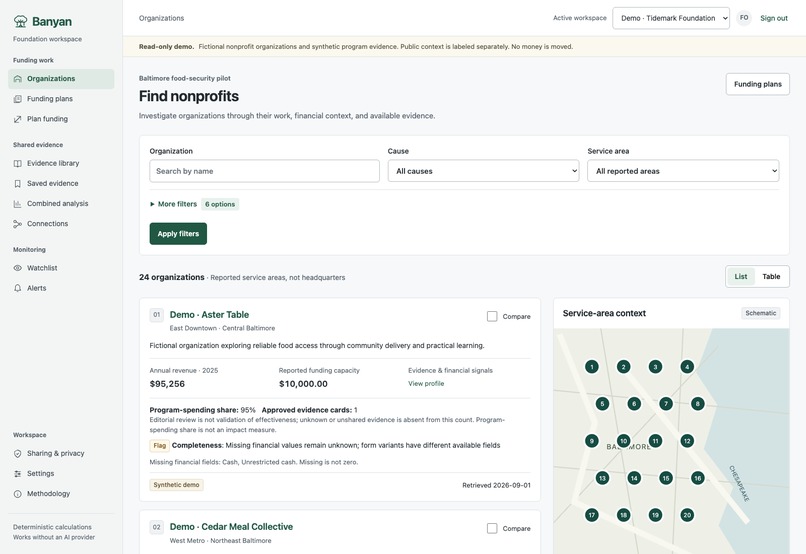
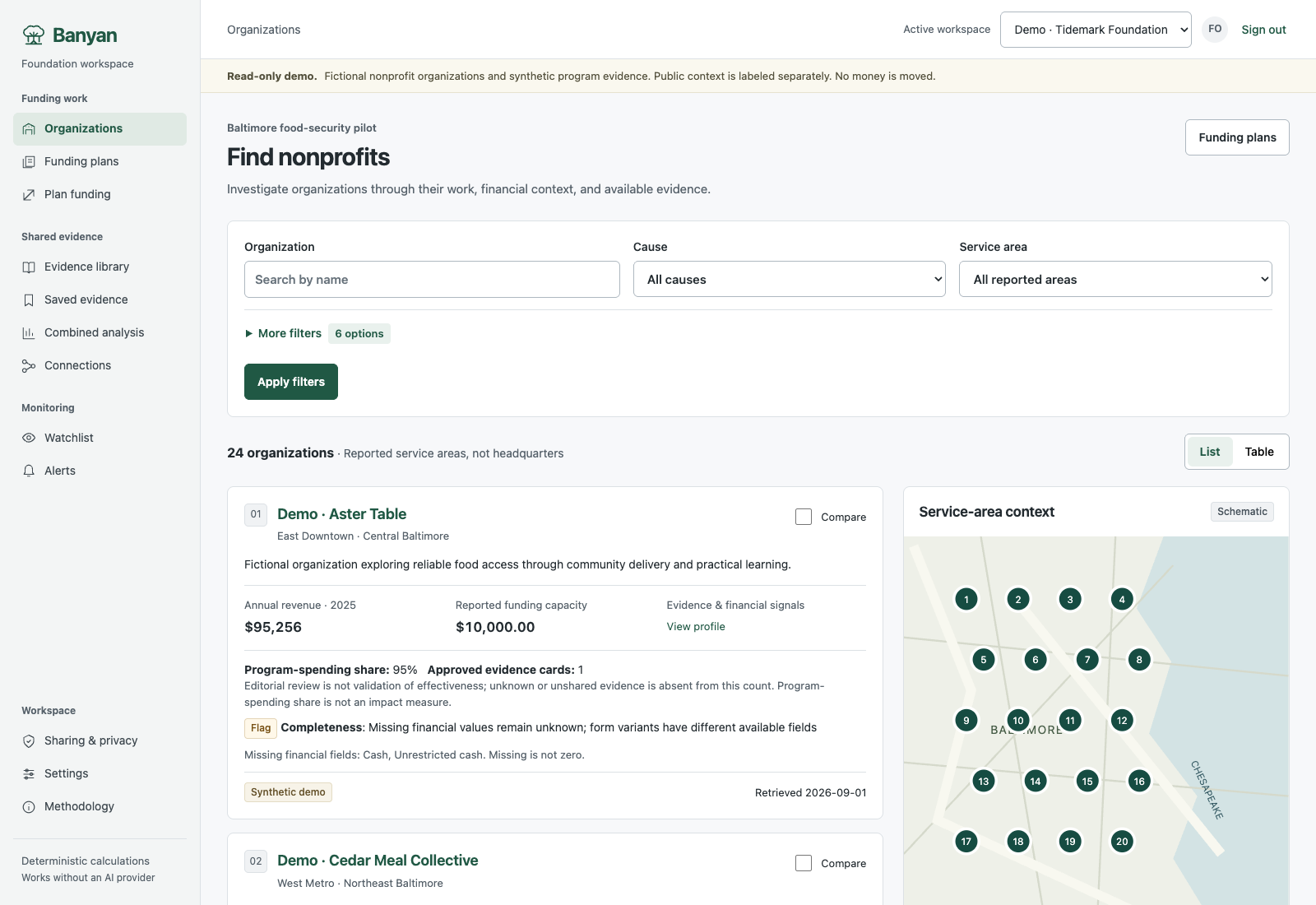
Discover nonprofits by cause and reported service area, with financial context and a schematic map.
-
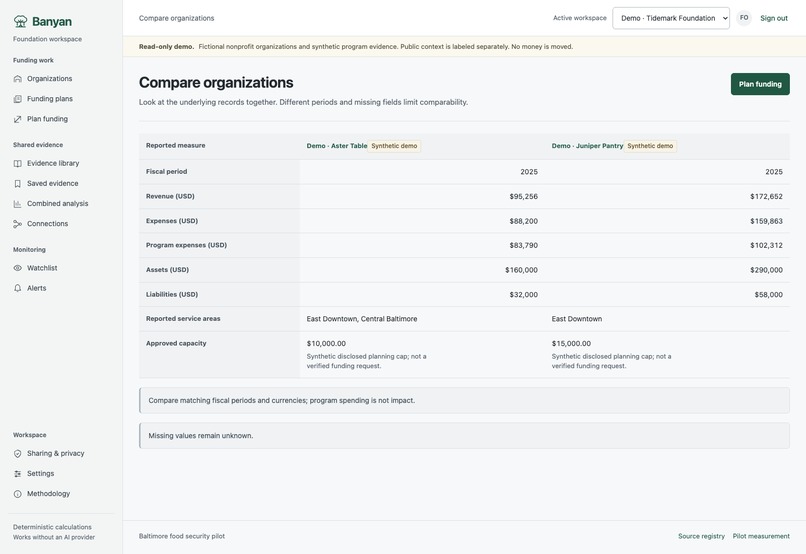
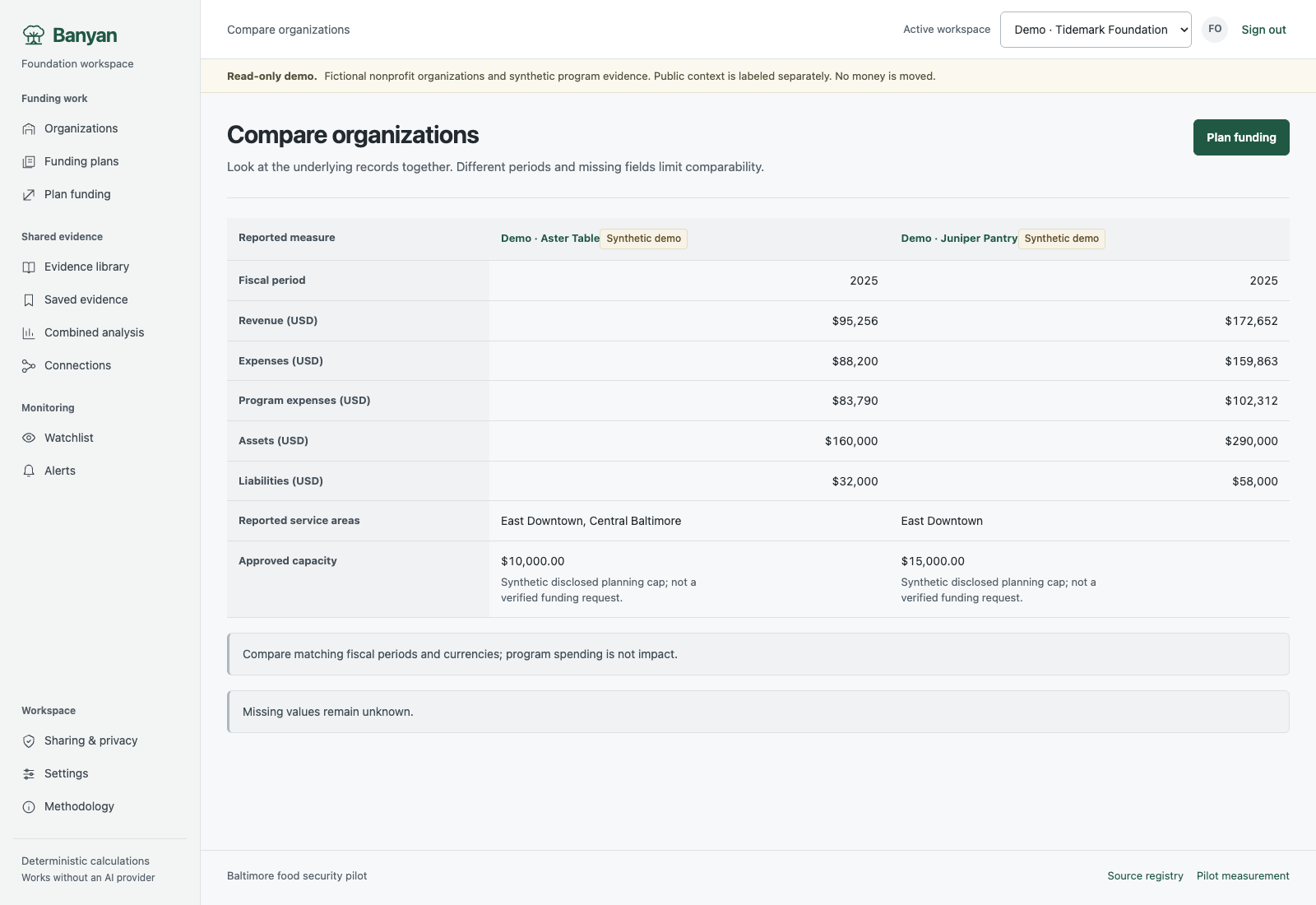
Compare nonprofit finances, service areas, and planning capacity side by side, with limitations clearly marked.
-
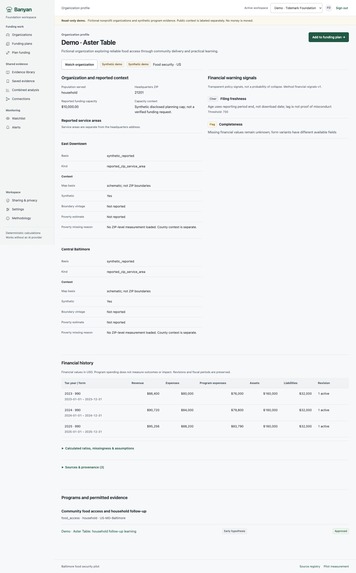
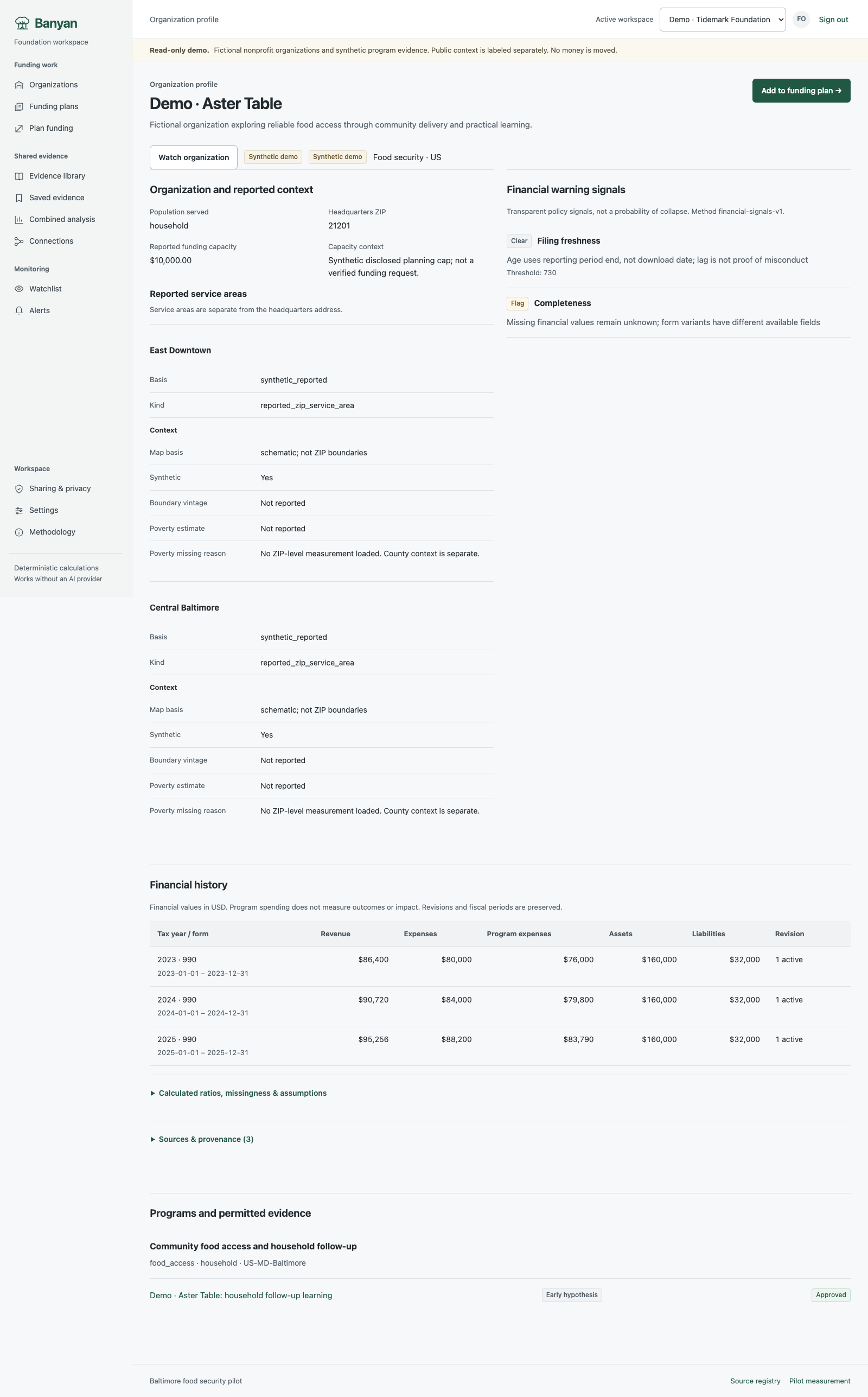
Explore a nonprofit’s financial history, warning signals, service areas, and available program evidence.
-
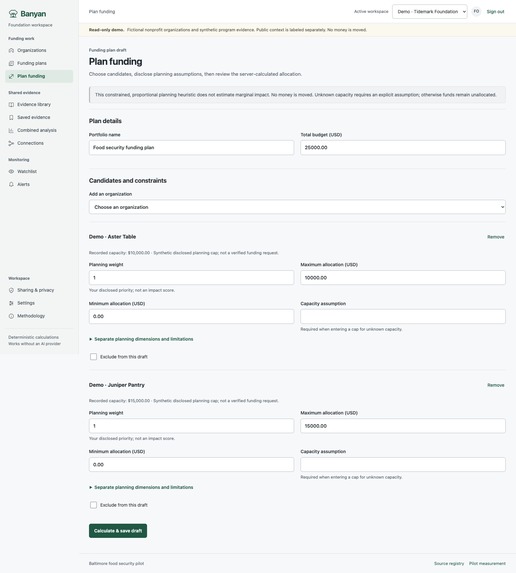
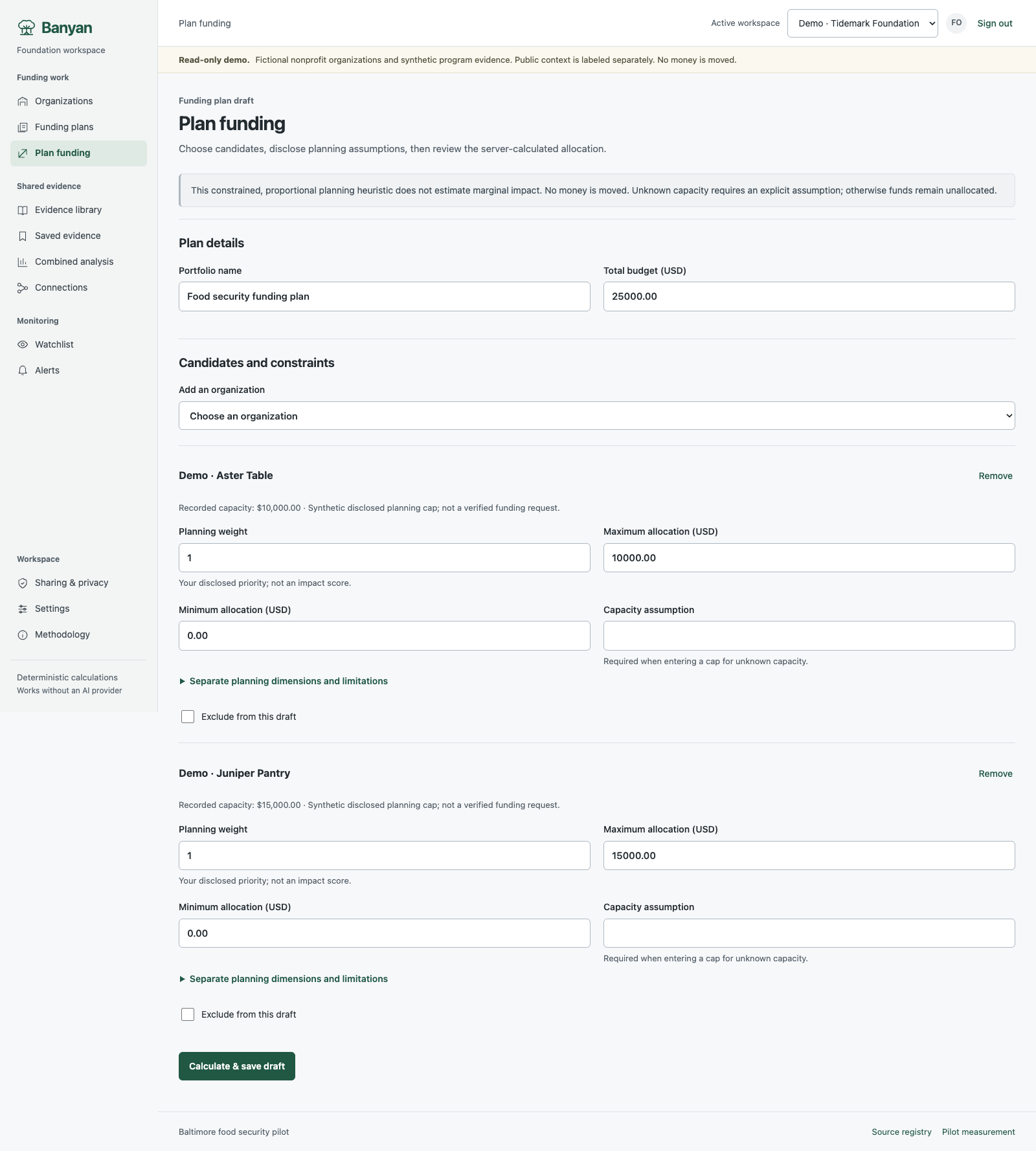
Build a funding draft with a defined budget, candidate organizations, allocation limits, and explicit assumptions.
-
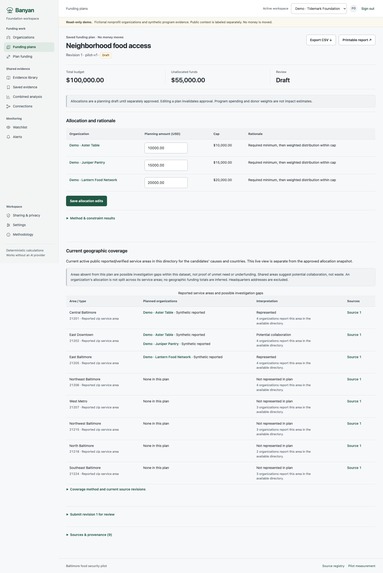
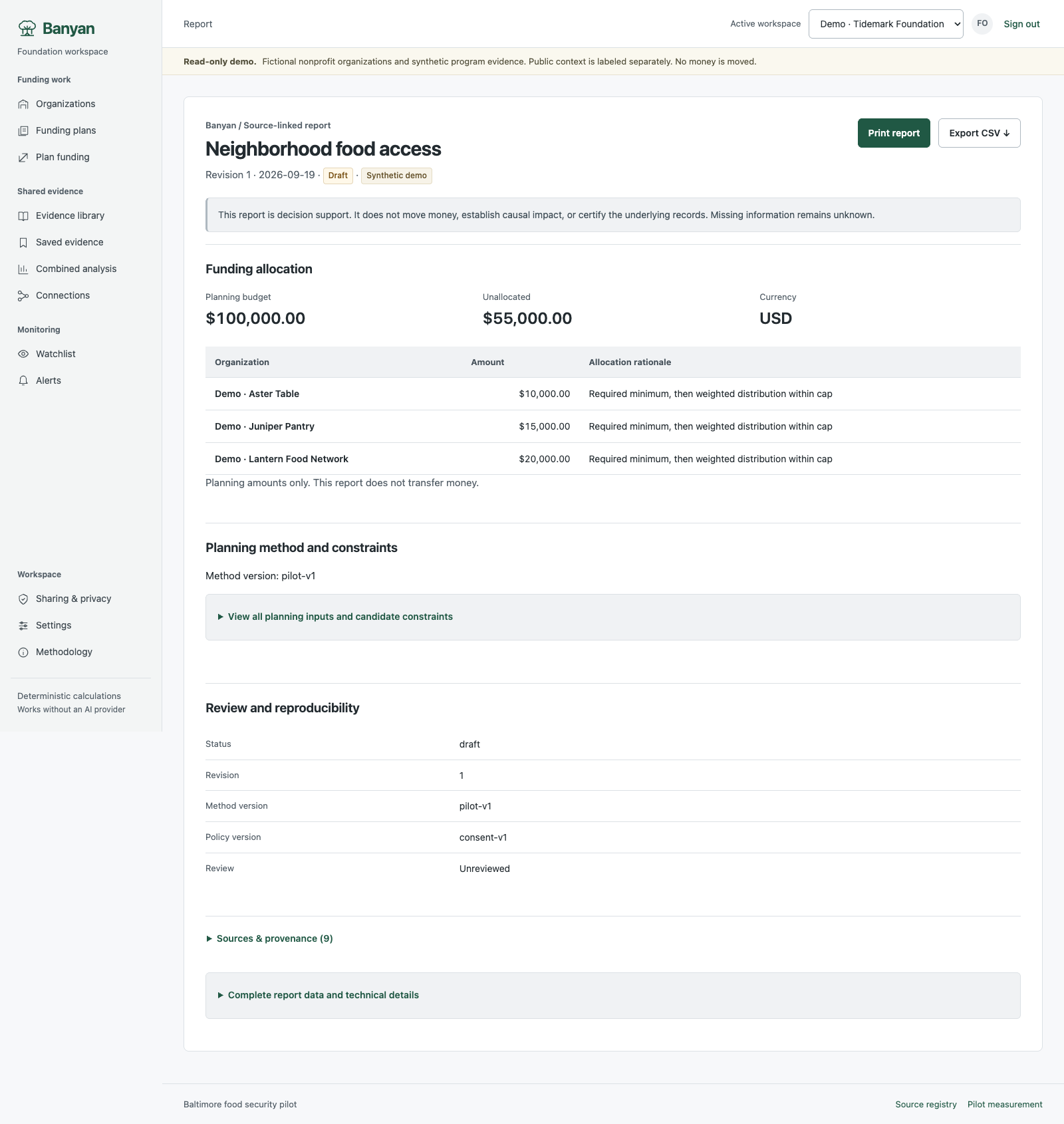
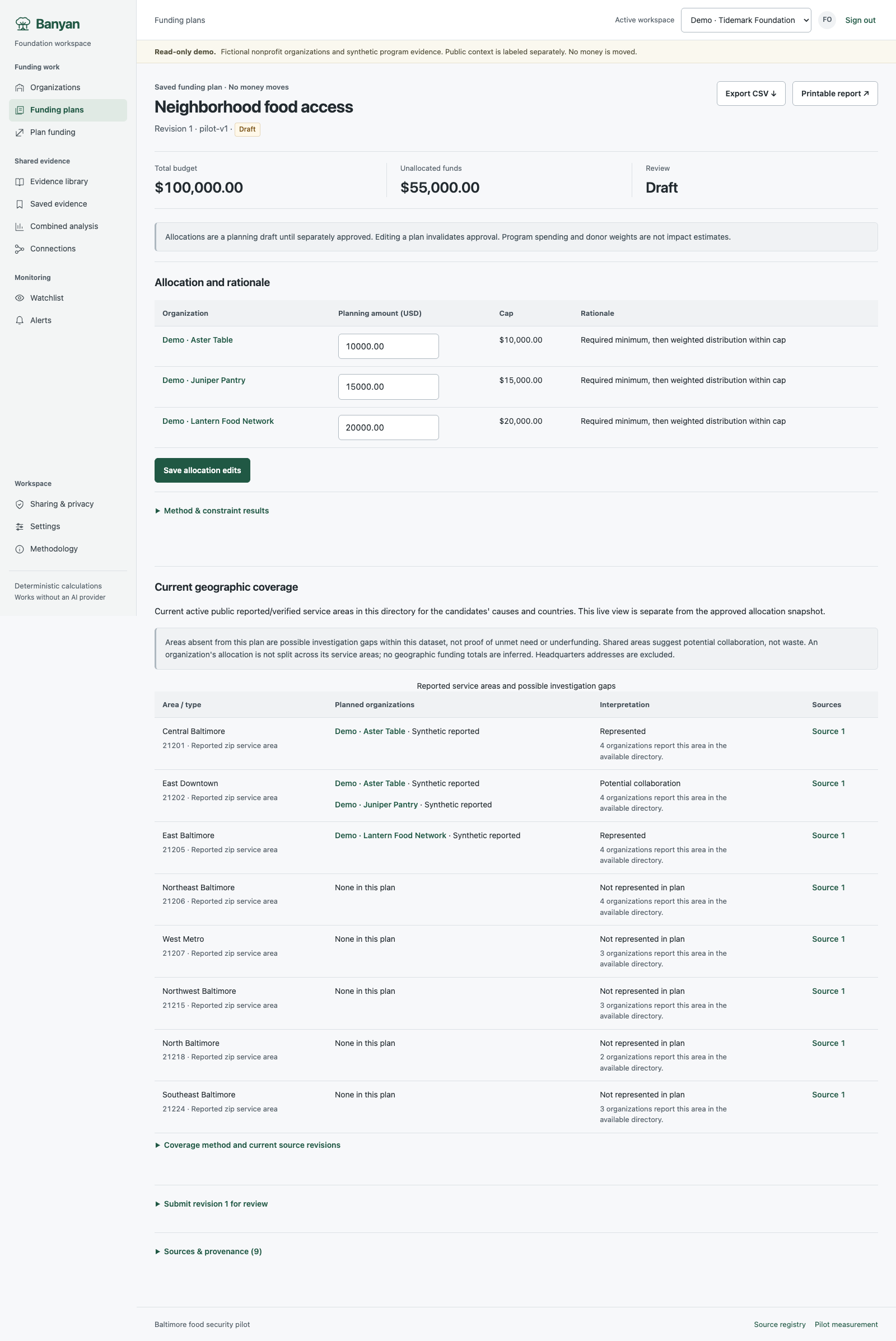
Inspect proposed allocations, their rationale, unallocated funds, and geographic coverage before review.
-
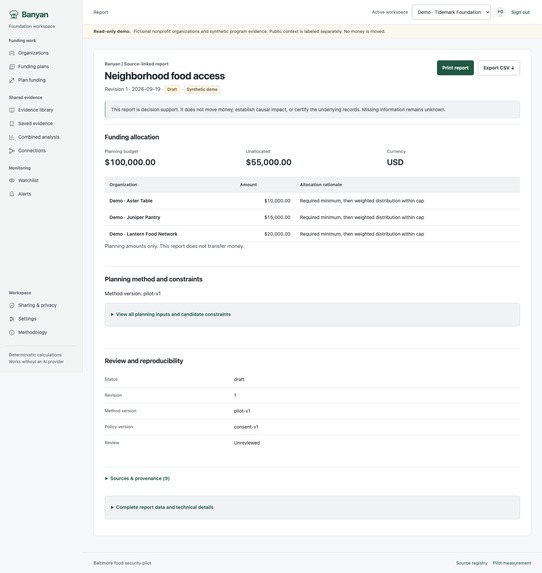
A source-linked funding report brings allocation amounts, planning methods, and review status into one view.
-
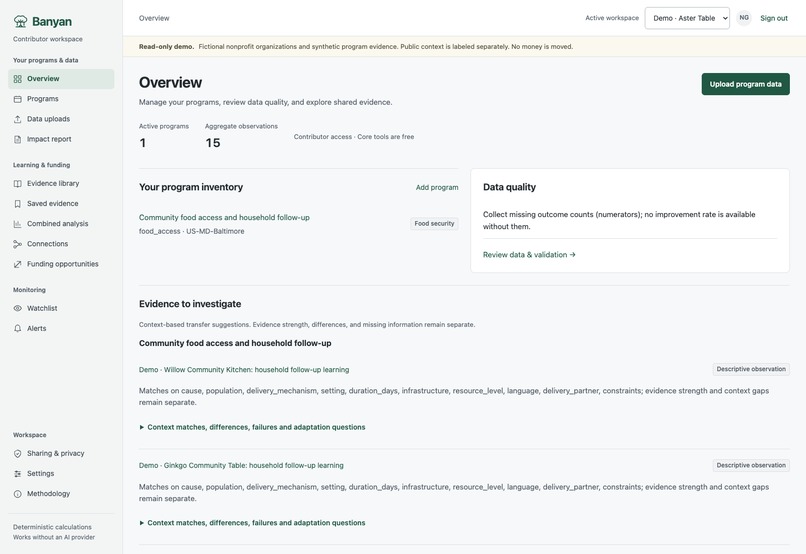
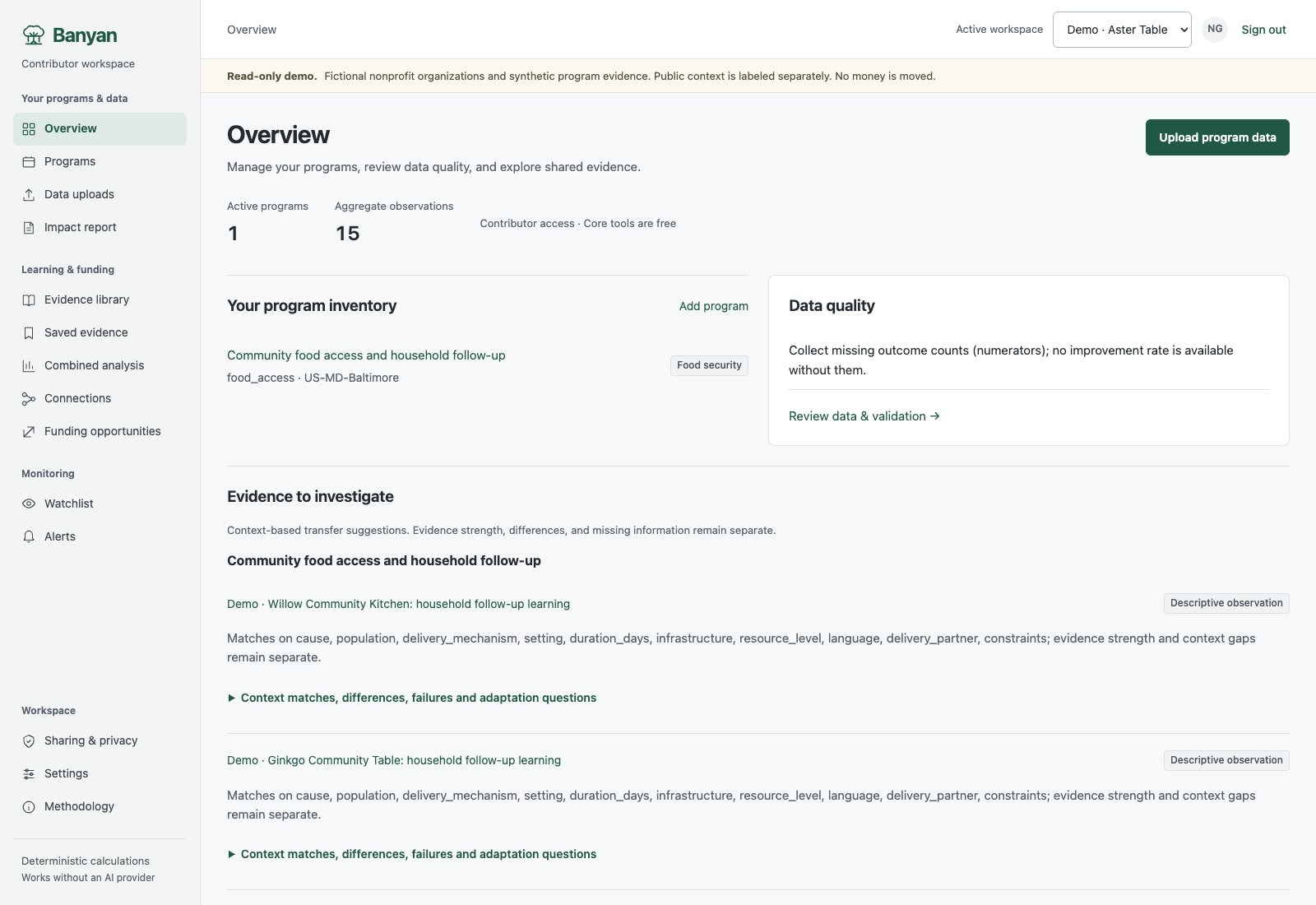
A nonprofit workspace brings programs, data quality gaps, and relevant learning suggestions together.
-
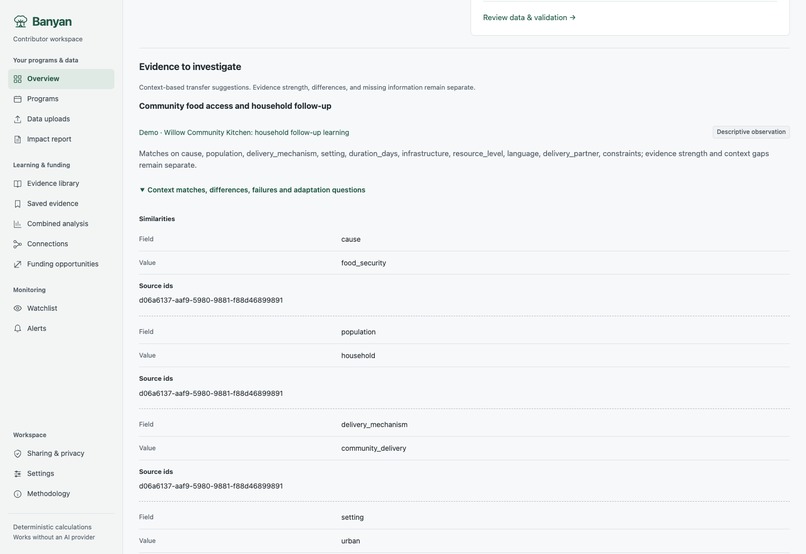
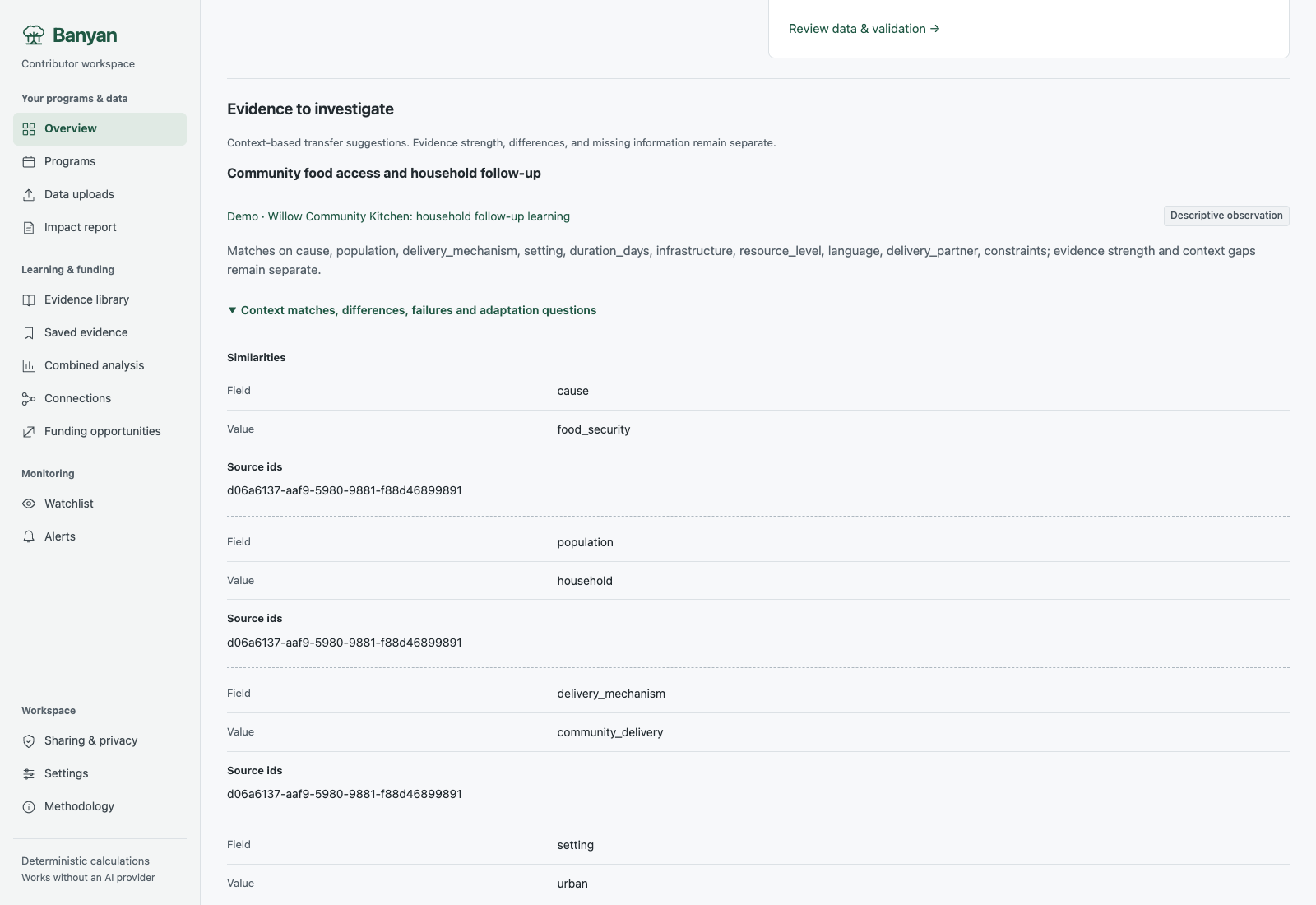
See why another program’s evidence may be relevant, with contextual similarities linked to supporting sources.
-
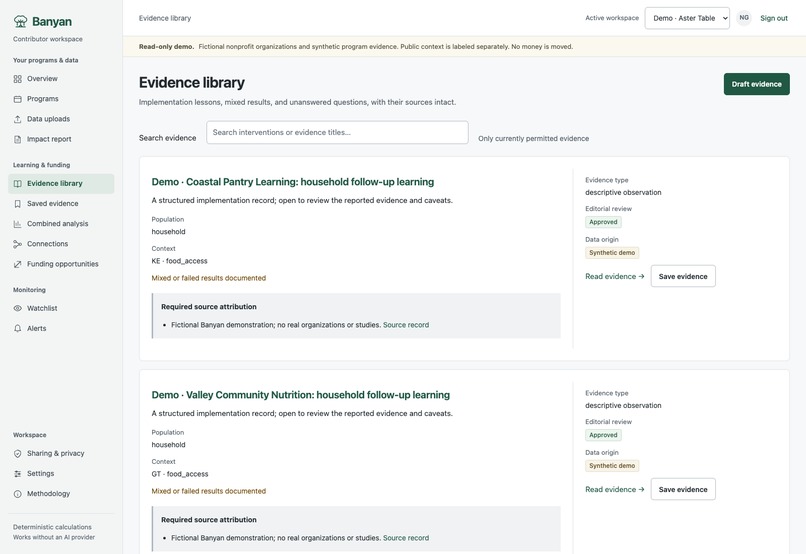
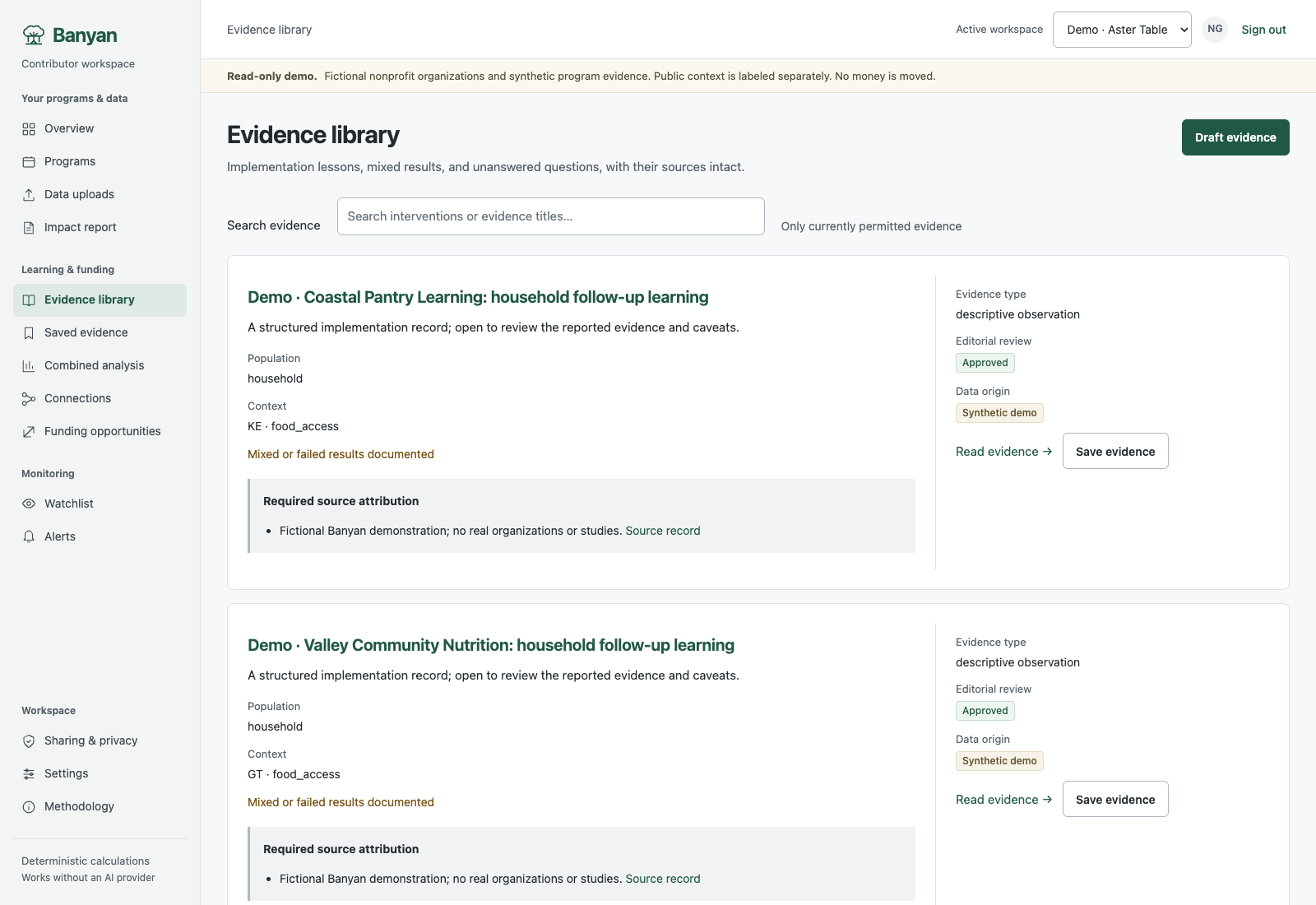
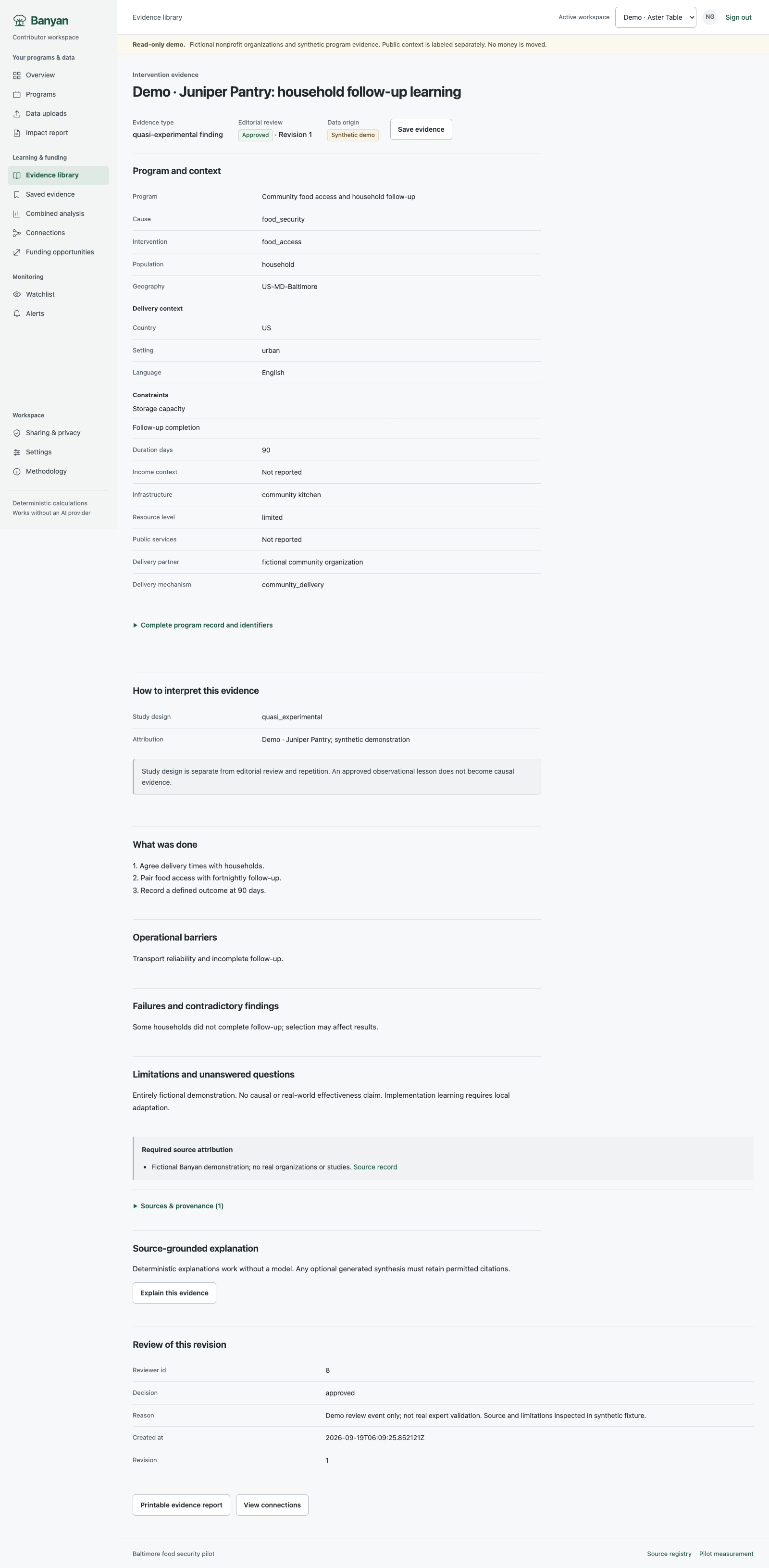
Browse shared evidence with study labels, review status, source attribution, and mixed or failed results.
-
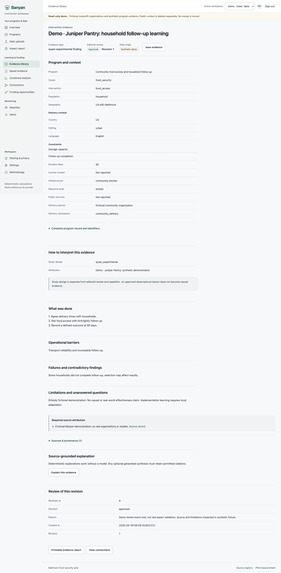
Examine program methods, practical barriers, contradictory findings, and limitations in a detailed evidence record.
-
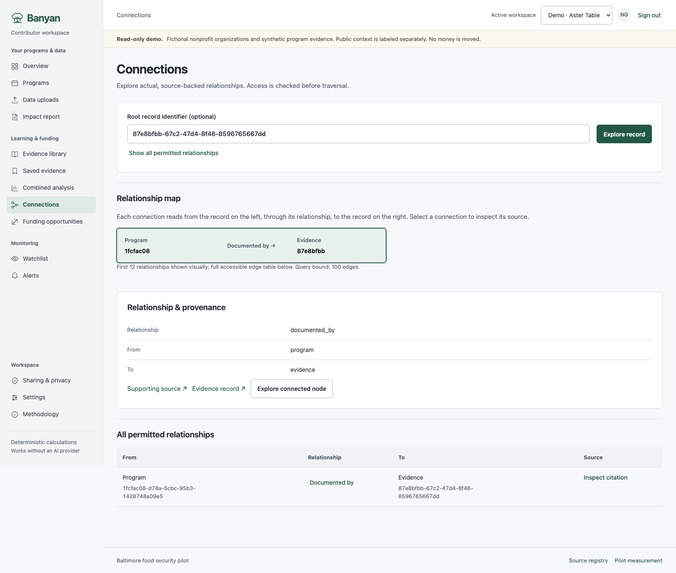
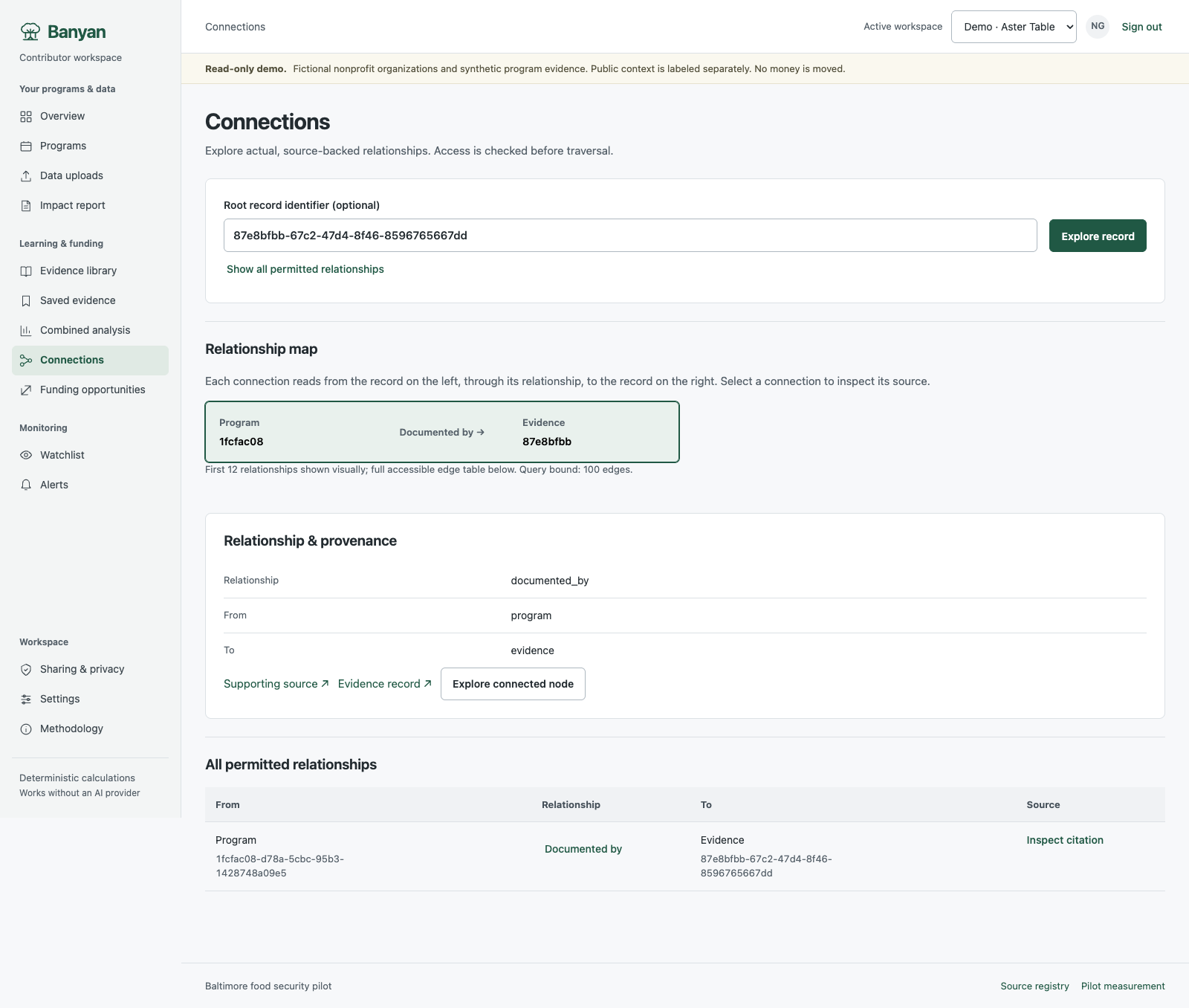
Trace connections between programs and evidence, then inspect the sources supporting each relationship.
-
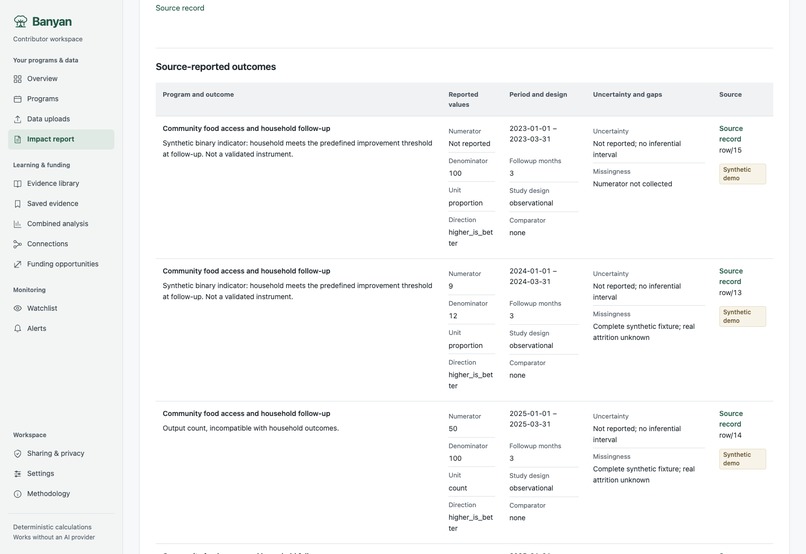
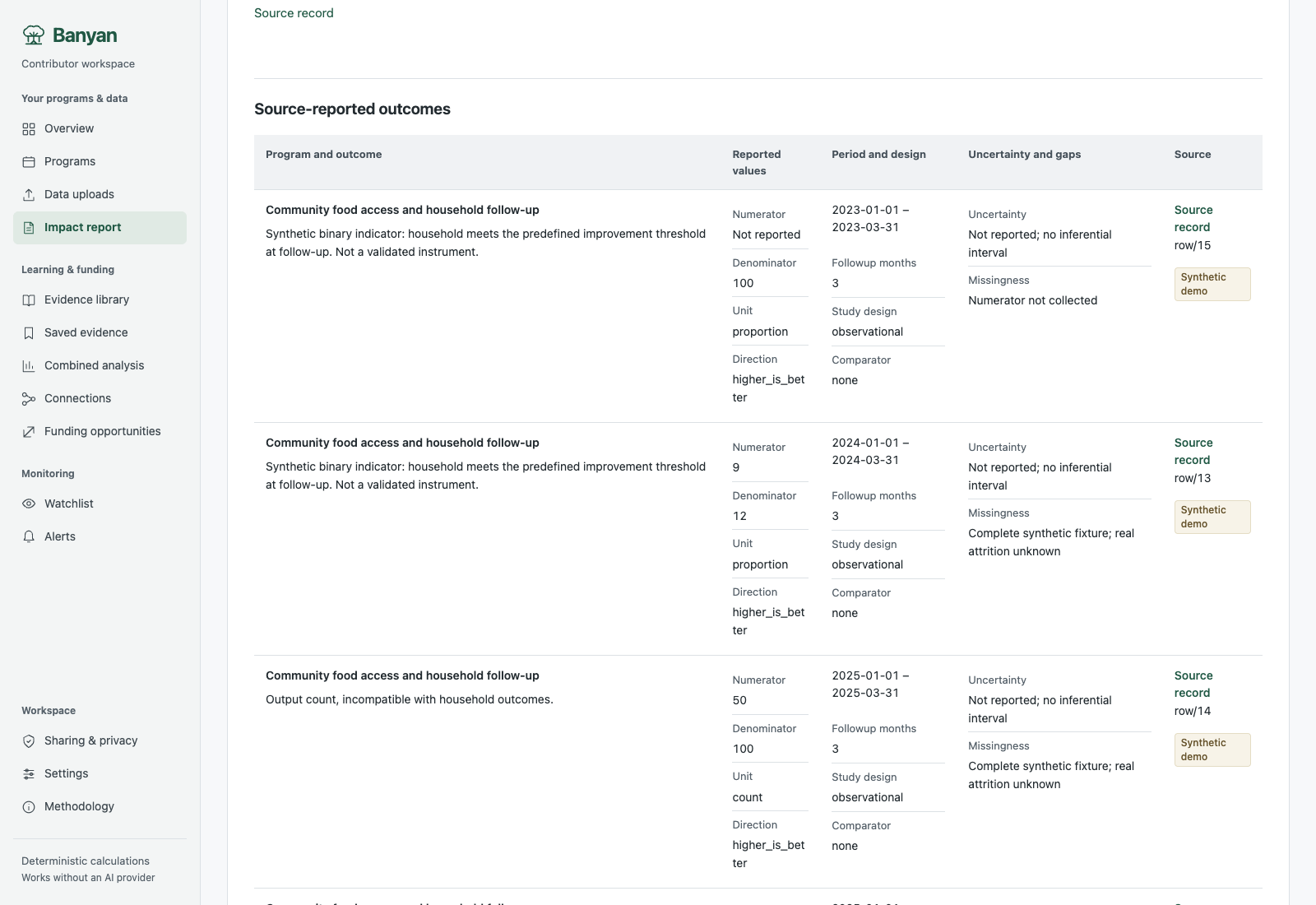
Review reported outcomes alongside denominators, study periods, missing information, and original source records.
-
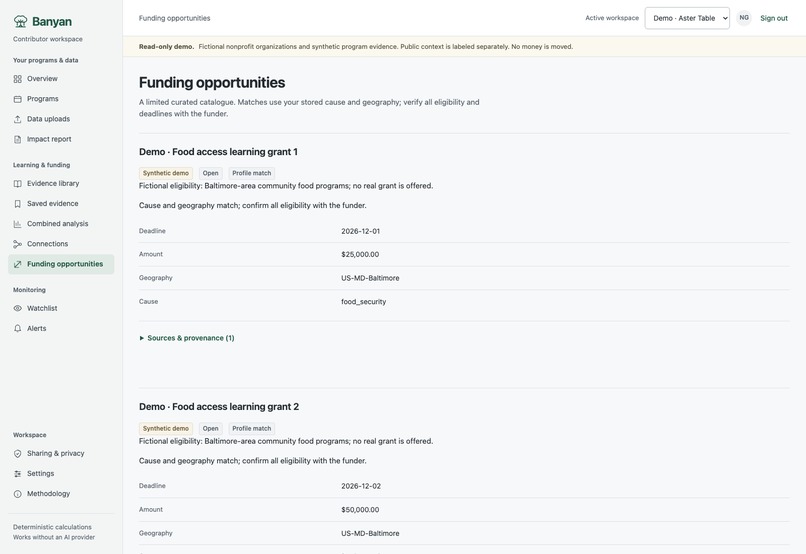
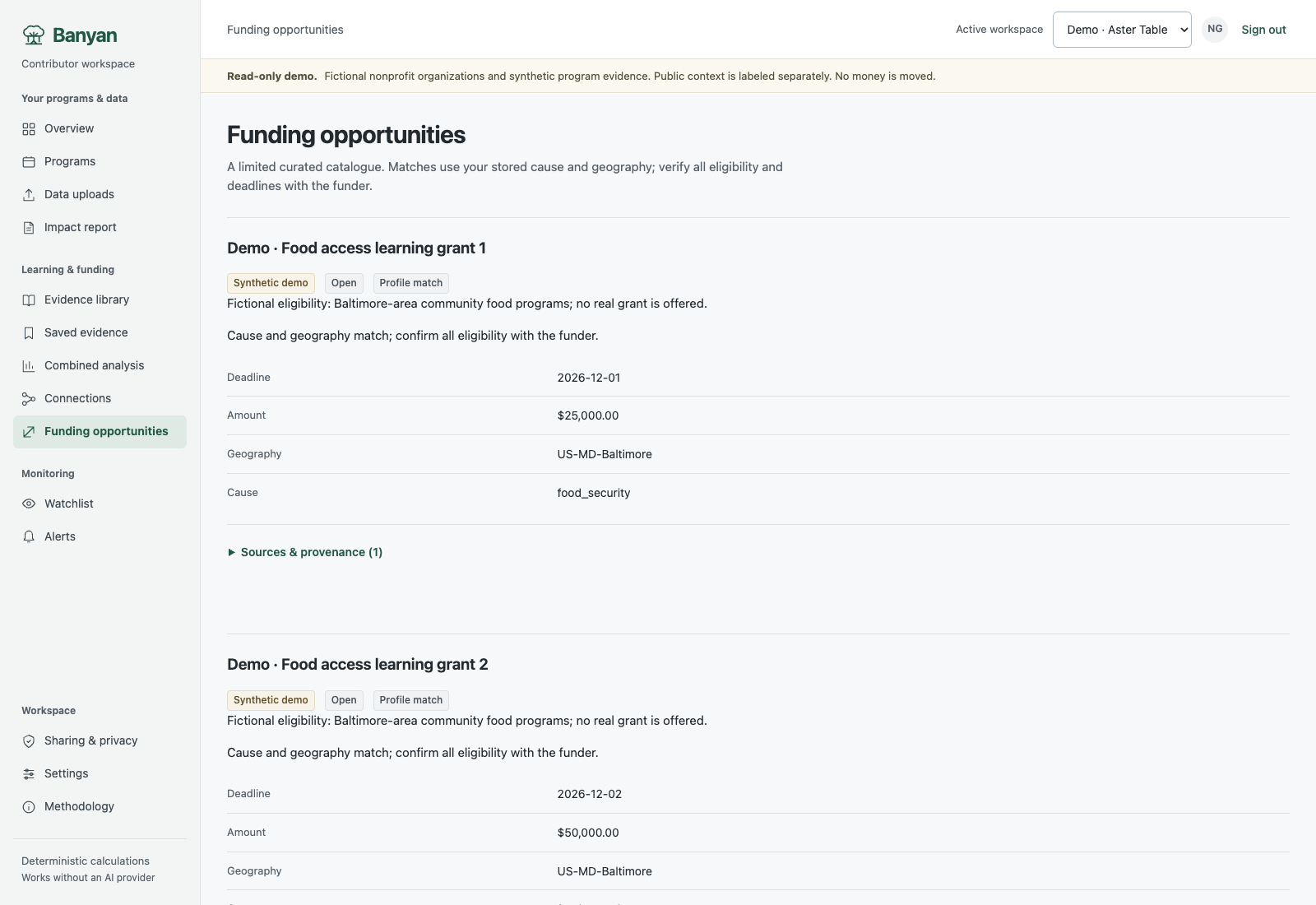
Explore demo funding opportunities matched by cause and geography, with eligibility, amounts, and deadlines.
-
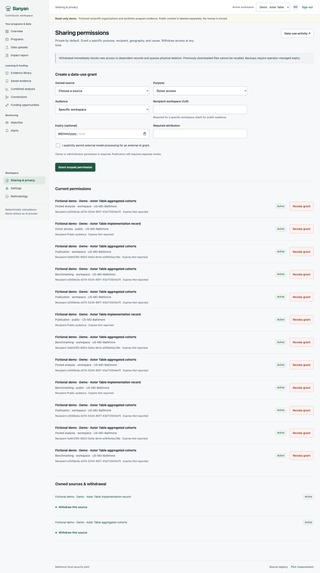
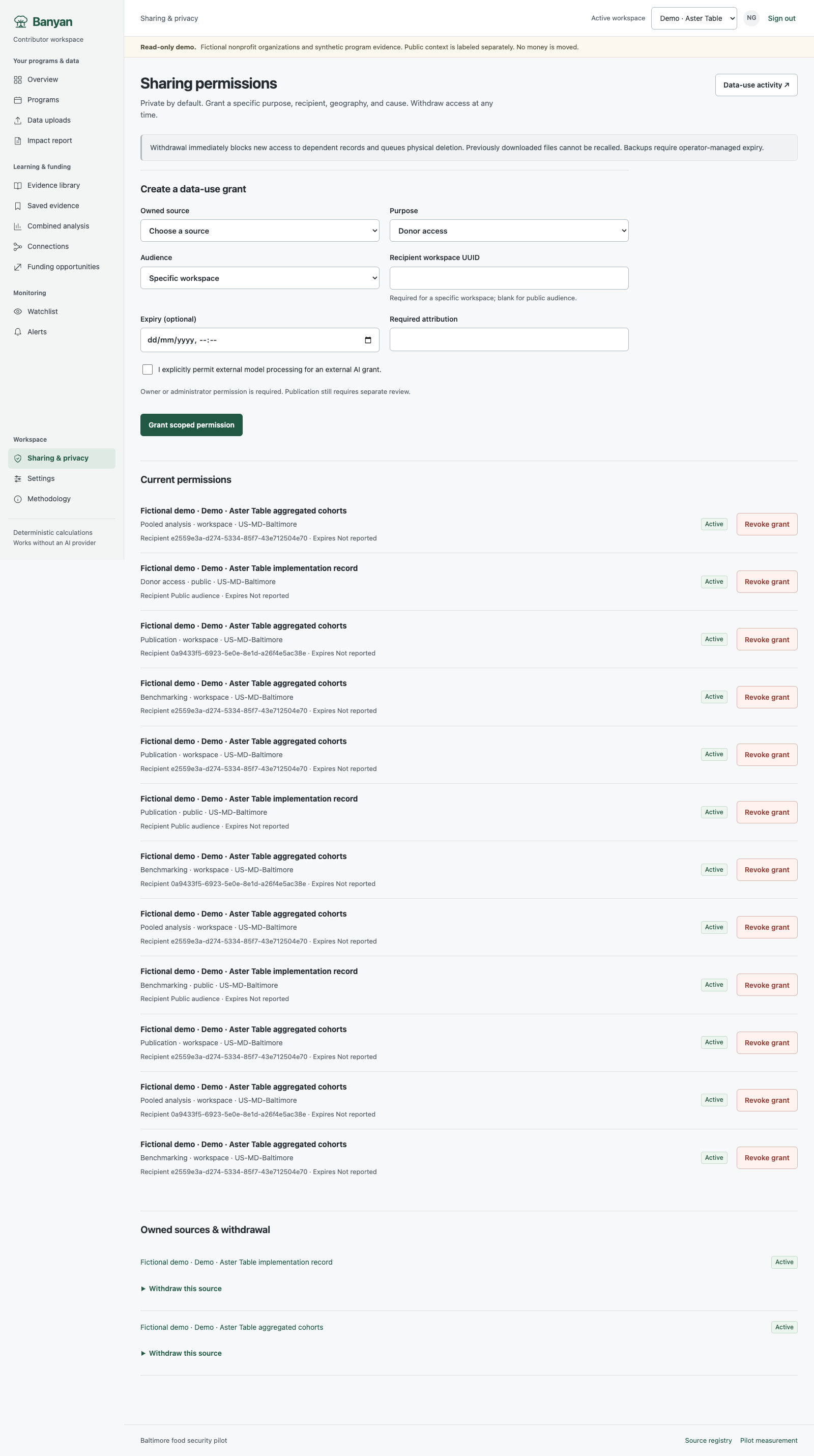
Nonprofits control data sharing through scoped permissions, recipient choices, revocation, and source withdrawal.
Inspiration
I spent two years working on a project to raise awareness of childhood cancer in India, my home country. One question stayed with me: how could we best support families beyond treatment? Was it transport, a place to stay, or help keeping appointments? I also wondered whether another organization had already learned something that could guide us. Banyan grew from that question, connecting nonprofits’ need to learn with donors’ need to decide where to fund.
What it does
Banyan brings nonprofit financial records, local context, and program evidence together. Donors can compare organizations and build funding plans, with the reasons and uncertainties visible. Nonprofits can share what they tried, what happened, and what went wrong while controlling access to their information. Findings stay linked to their sources so others can judge whether the lessons apply to their own work.
How we built it
We built the interface with Next.js and used Django and PostgreSQL to handle records, permissions, and calculations. We connected the donor and nonprofit workflows through shared source records. The core features work without a paid AI service, and we tested funding calculations, privacy controls, and user journeys against the backend.
Challenges we ran into
Making information comparable was harder than putting it in one place. Organizations report different measures across different periods, and similar programs can serve very different communities. We also had to make sure shared information stayed within the nonprofit’s permissions, including when it appeared in a recommendation or was later withdrawn.
Accomplishments that we're proud of
We have successfully signed on 4 student-led NGOs at Johns Hopkins, and are in communication with the Maryland Food Bank to demo our program and sign them on as recurring customers. We’re also proud of building working paths for both sides of Banyan: donors can investigate organizations and draft funding plans, while nonprofits can contribute evidence and explore lessons from other programs. Our demo uses clearly labeled template organizations and studies, letting people try these workflows without presenting sample results as real findings.
What we learned
A financial record can help someone ask better questions, but it cannot tell the whole story of an organization’s work. We also learned that a useful lesson needs more than a positive result: people need to know who a program served, how it was studied, and what remains uncertain.
What's next for Banyan
We want to test Banyan with a small group of nonprofits and donors, starting with a focused area such as food security. Their feedback would help us understand which comparisons are useful, what nonprofits feel comfortable sharing, and whether Banyan helps people make decisions. From there, we would expand the source coverage and improve the contribution process.
Built With
- axe-core
- django
- django-rest-framework
- docker
- docker-compose
- gunicorn
- hypothesis
- mypy
- next.js
- nginx
- node.js
- openapi
- openpyxl
- playwright
- pnpm
- postgresql
- pypdf
- pytest
- python
- react
- react-testing-library
- ruff
- typescript
- uv
- vitest


Log in or sign up for Devpost to join the conversation.