-
-
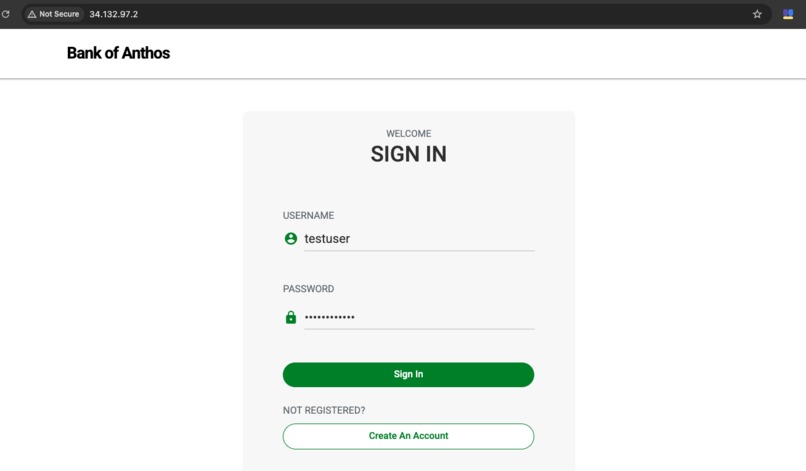
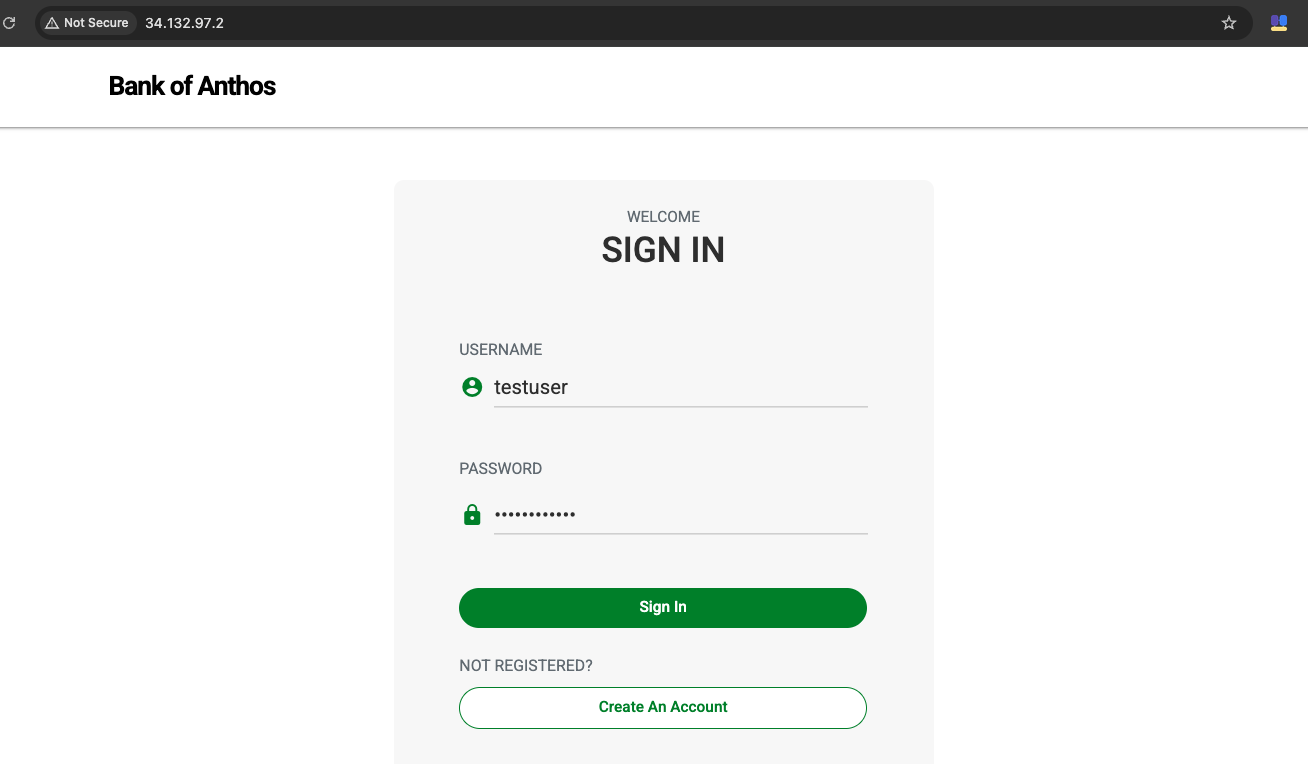
Bank of Anthos UI Login
-
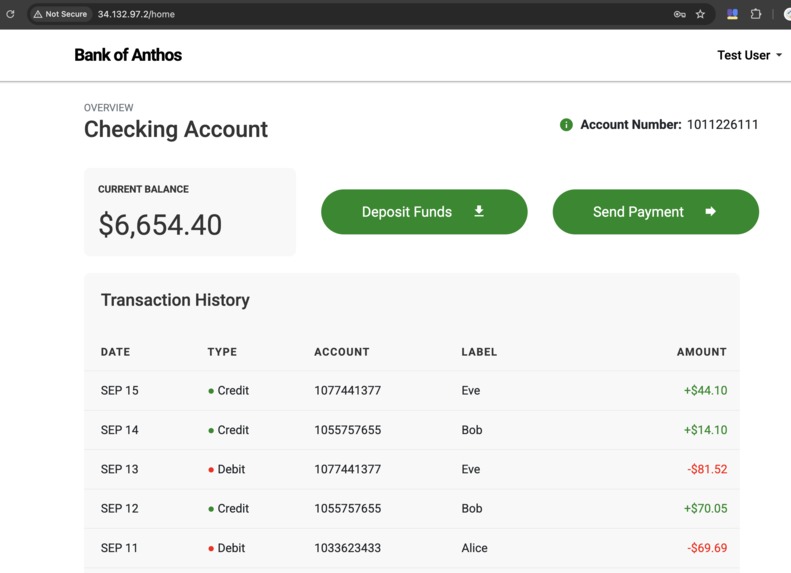
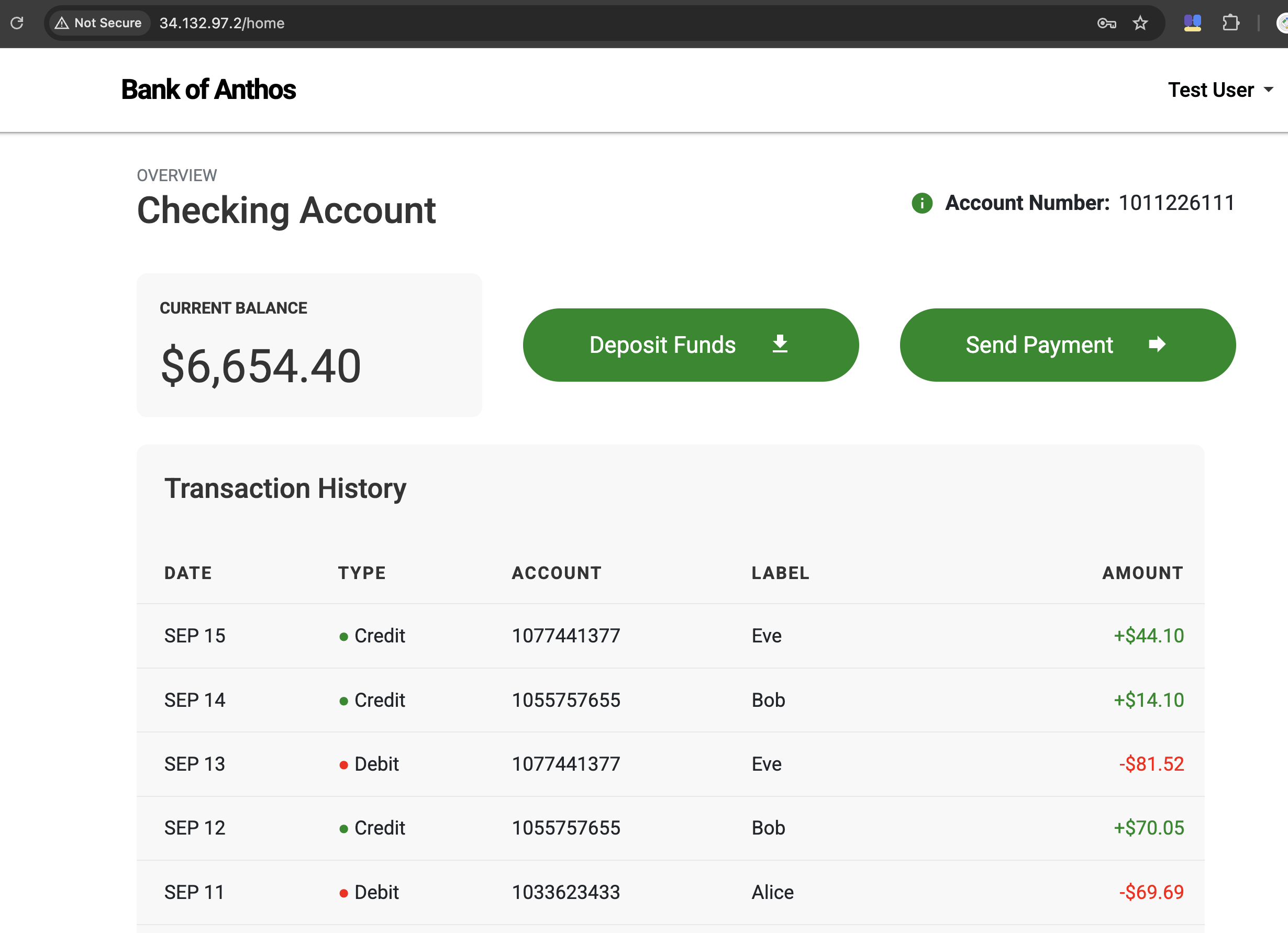
Bank of Anthos Dashboard (account view)
-
kubectl get deploy (BoA core + agents running)
-
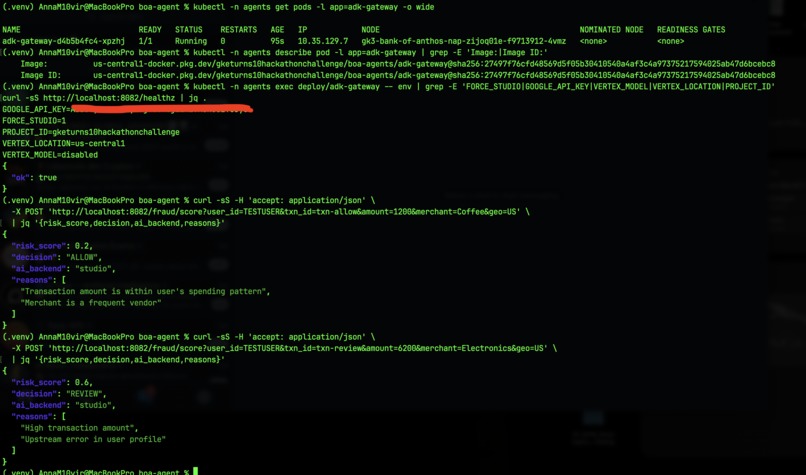
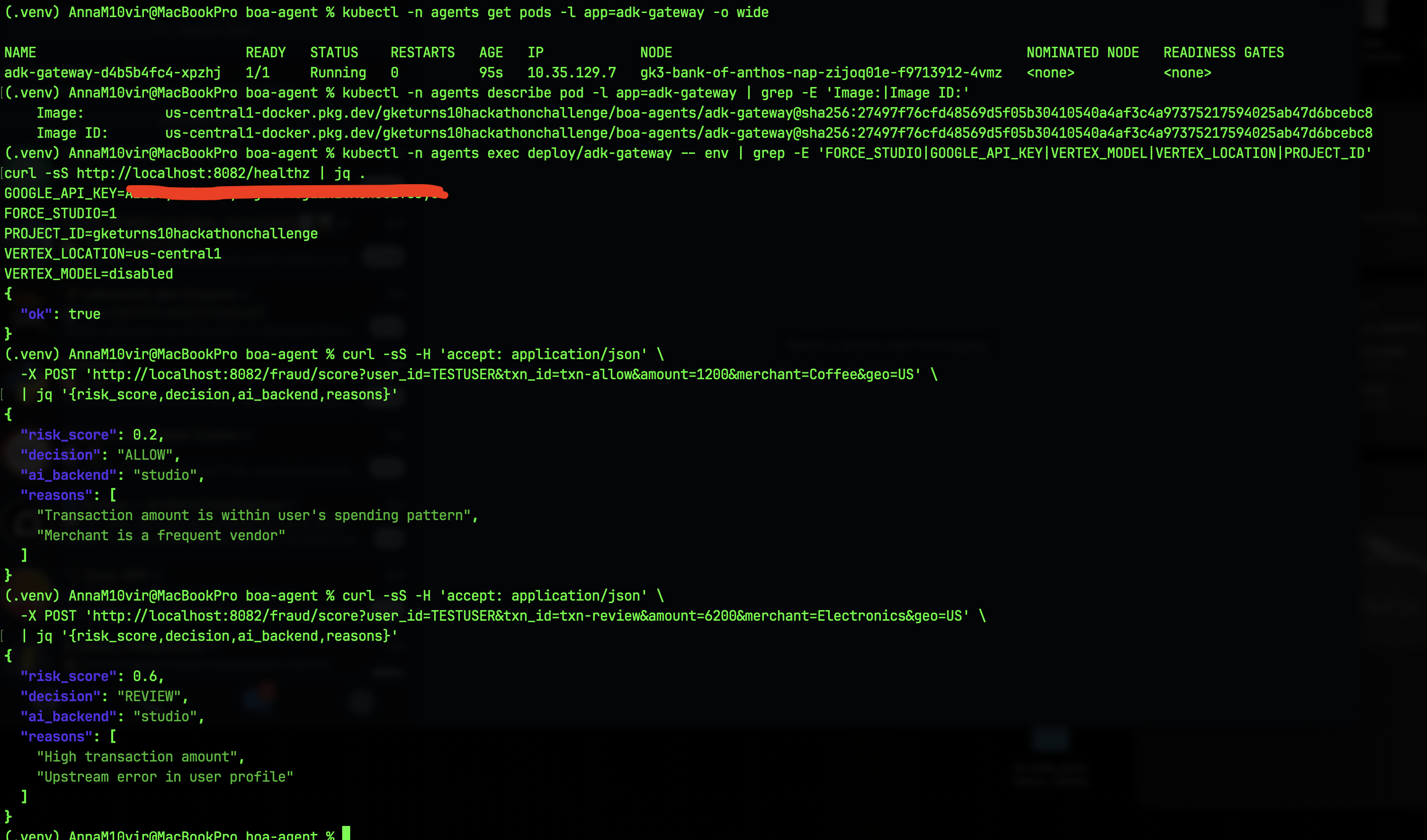
kubectl get pods (adk-gateway pod running + describe env)
-
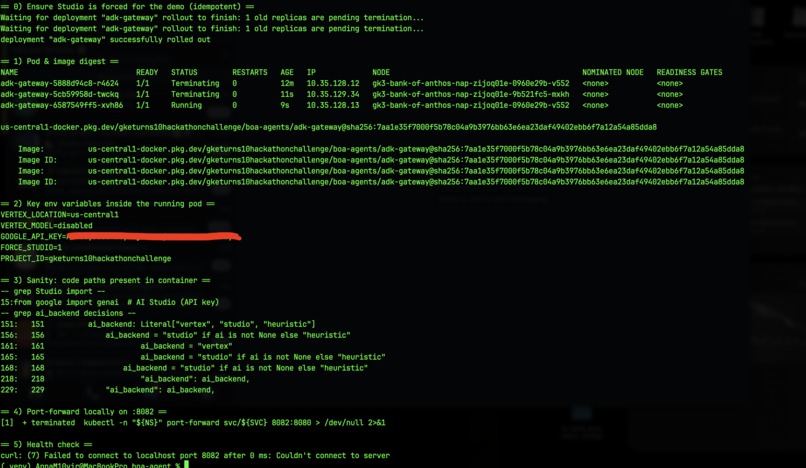
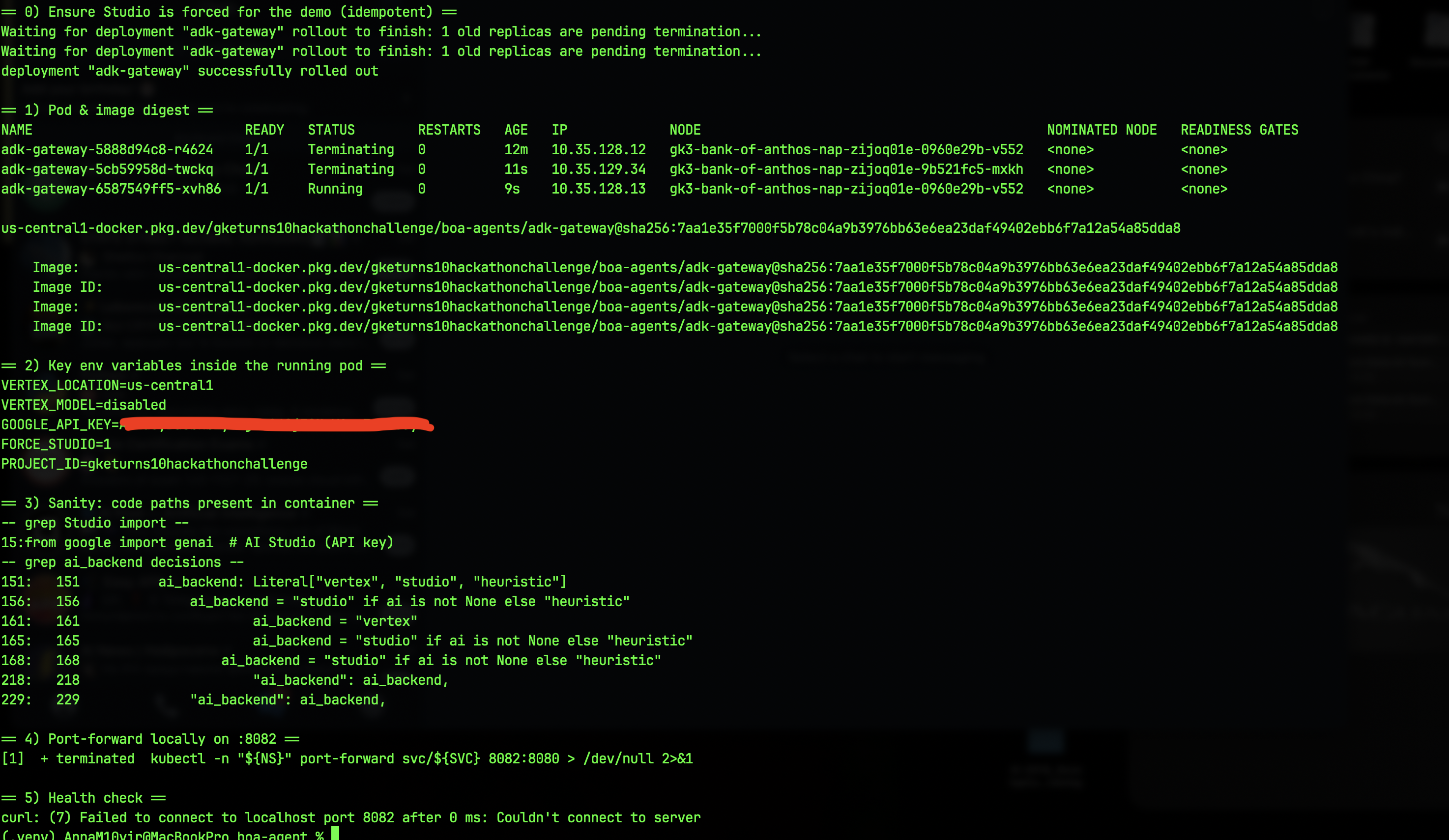
Step-by-step rollout script / sanity checks
-
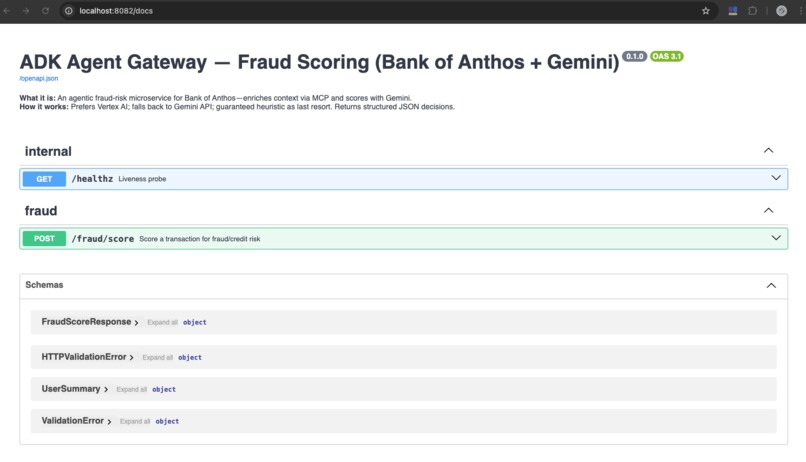
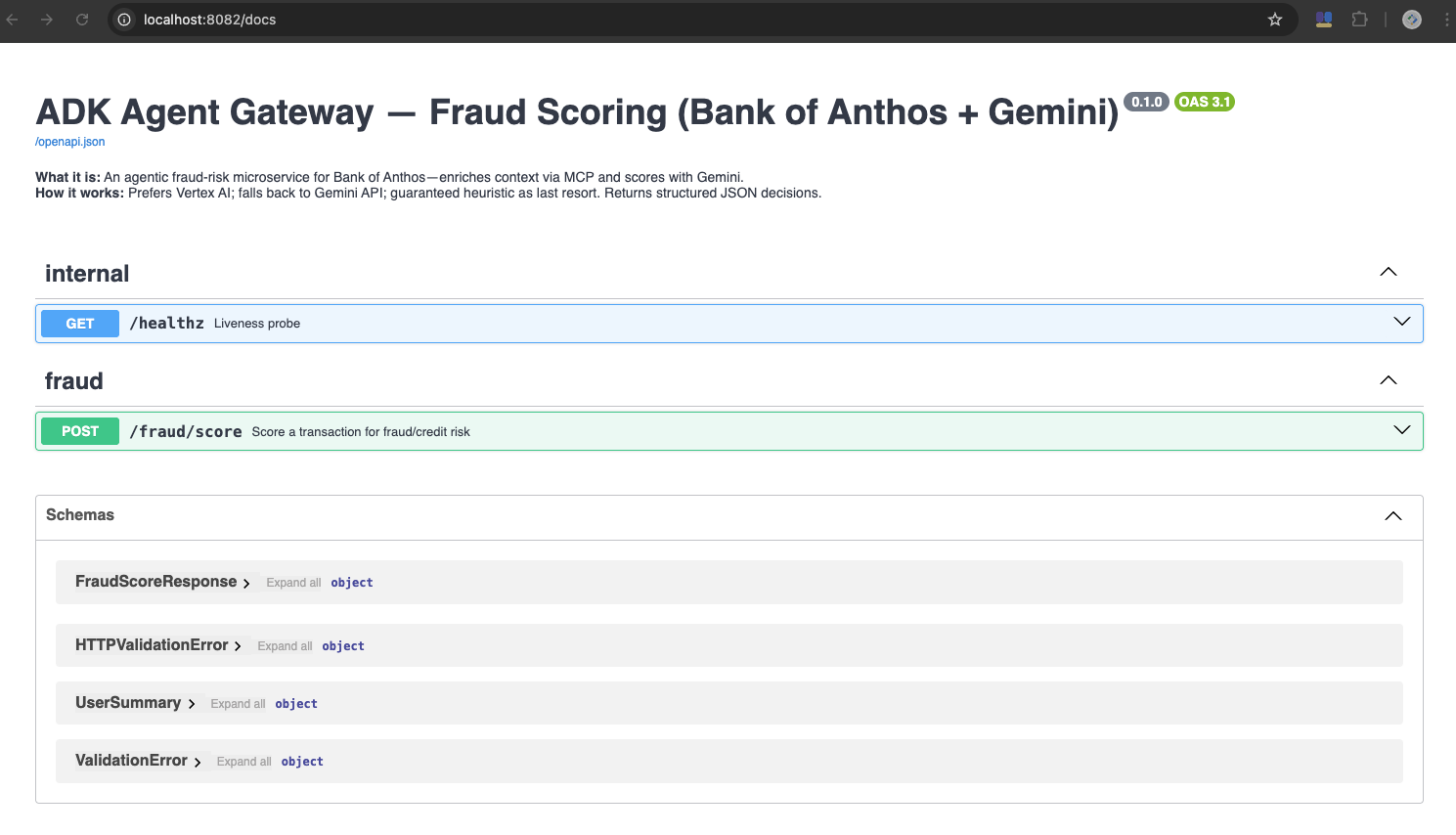
Swagger UI (API docs for /fraud/score)
-
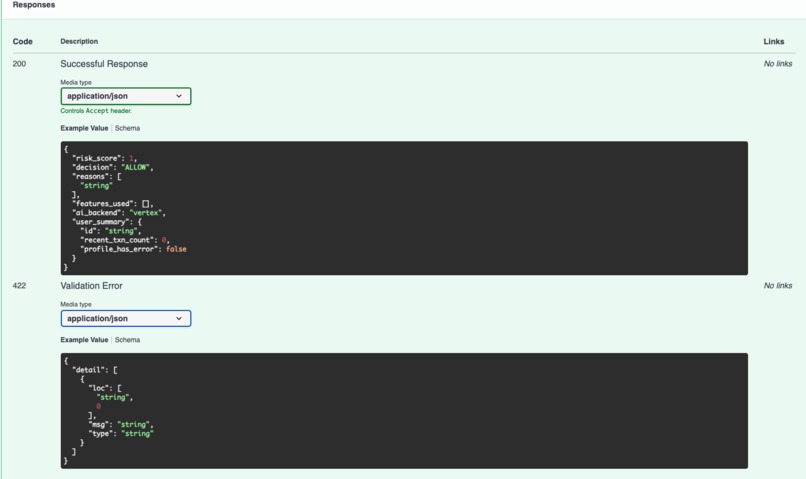
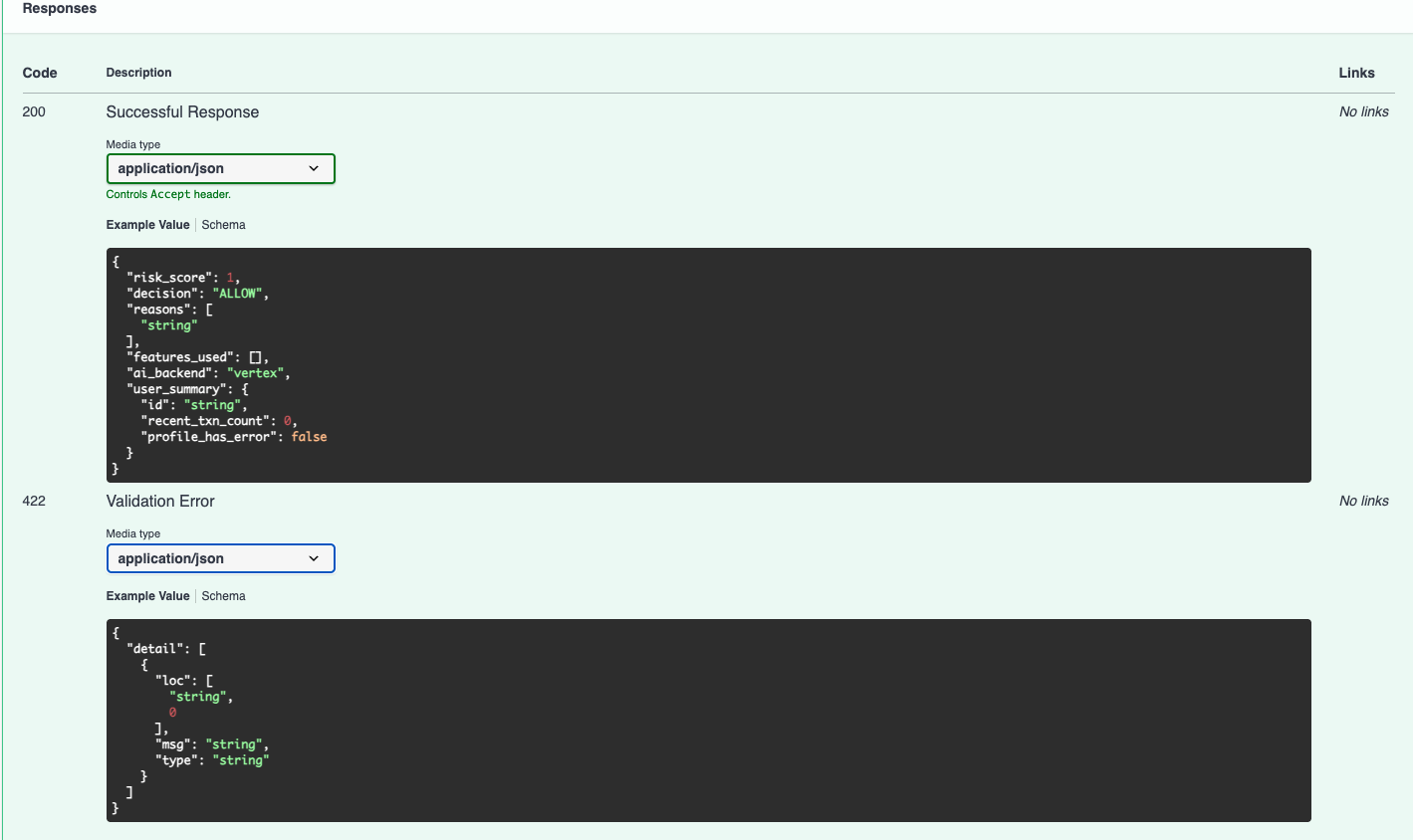
Swagger Response Schema - Vertex used case
-
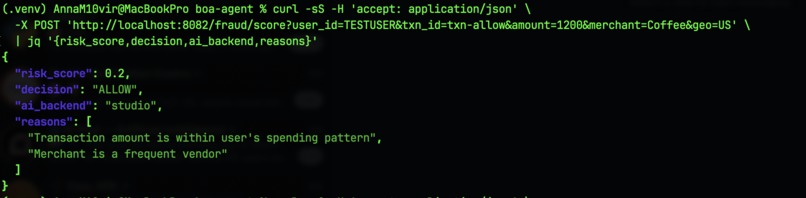
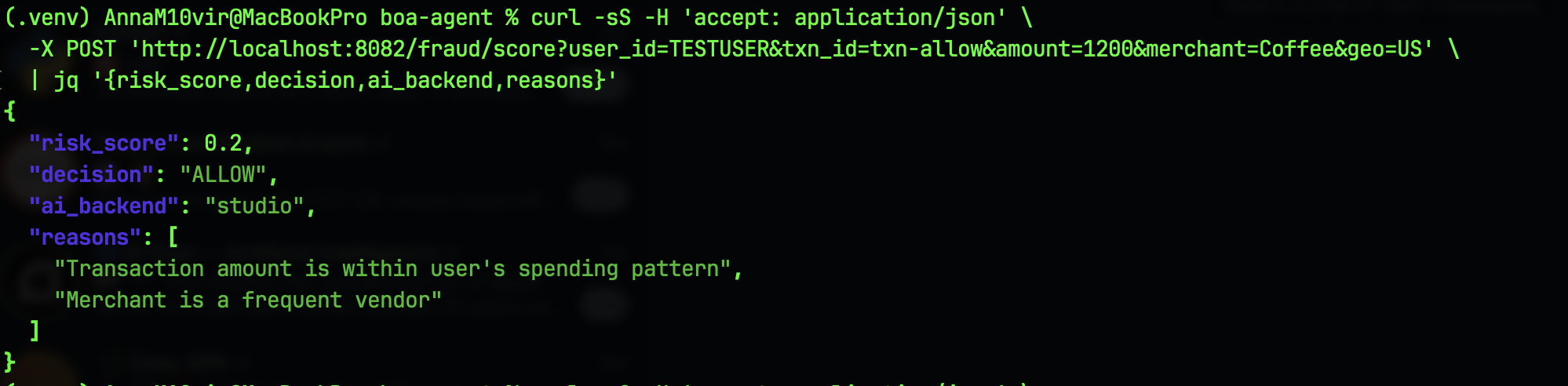
Fraud Agent curl demo (txn-allow)
-
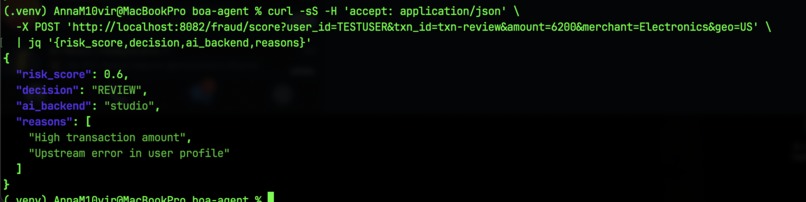
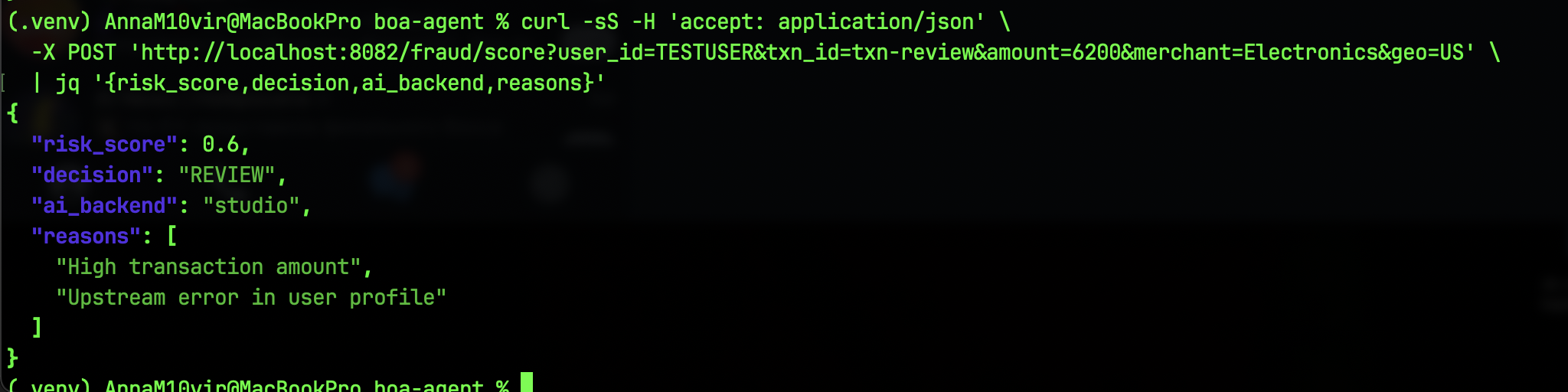
Fraud Agent curl demo (txn-review)
-
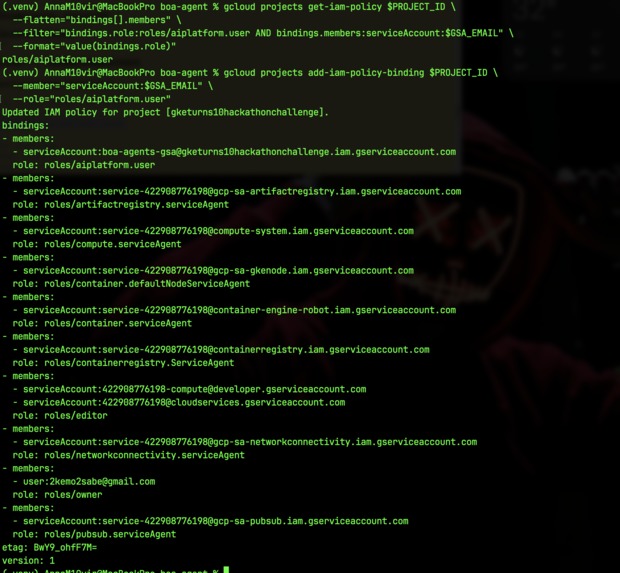
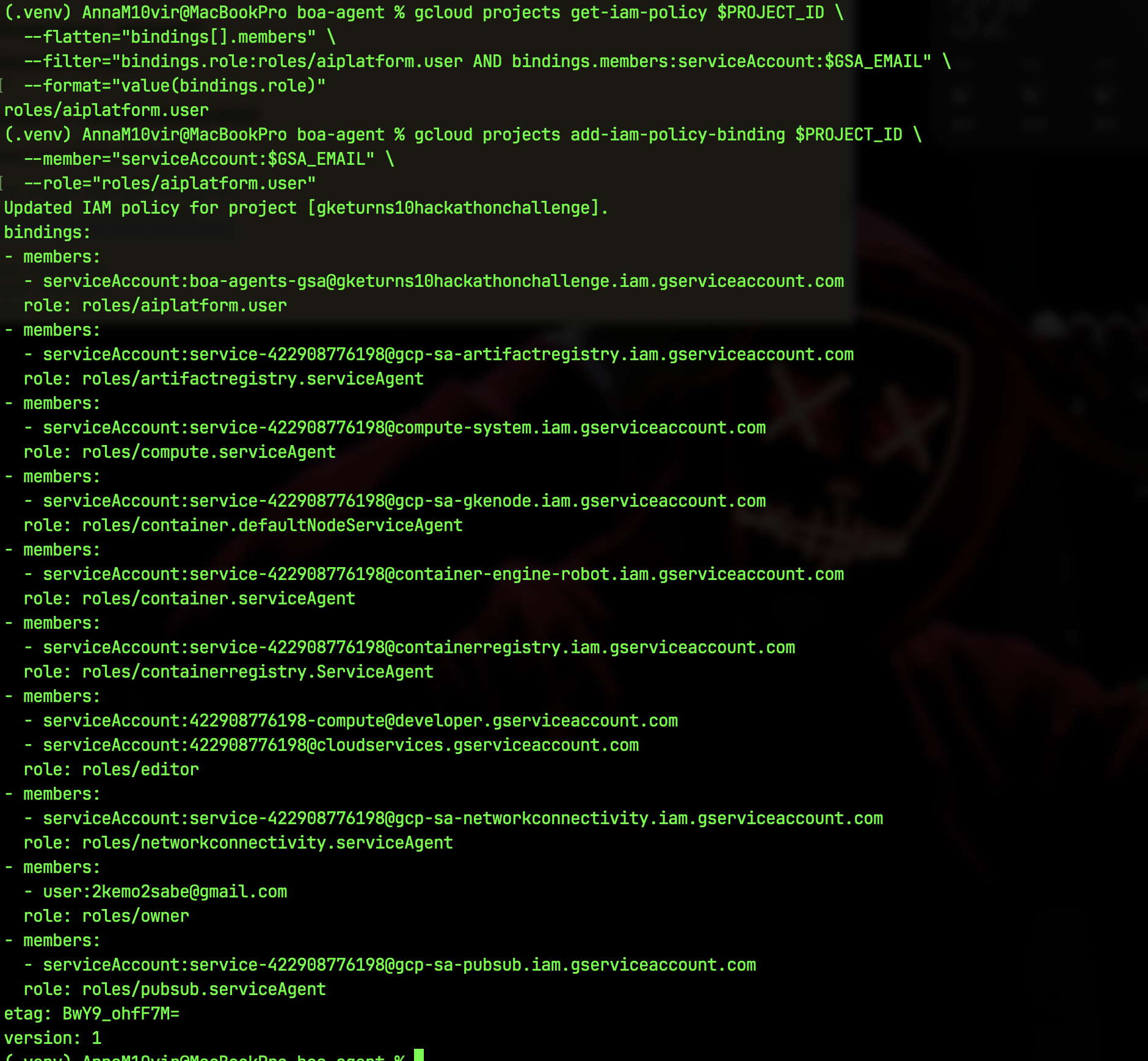
MCP server deployment + IAM binding
Inspiration
Bank of Anthos is a classic microservices demo, but it lacked intelligence in decision-making. Inspired by real-world banking needs—fraud prevention, credit scoring, and compliance—we wanted to supercharge it with agentic AI while leaving the core services untouched.
What it does
We added new AI-powered agents running on GKE that interact with Bank of Anthos through existing APIs: • Fraud Sentinel Agent → detects suspicious transactions in real time. • Creditworthiness Co-Pilot → AI-assisted scoring for loan applications. • Compliance Agent → monitors transactions for policy or regulatory breaches.
All powered by Gemini AI (via AI Studio) for natural reasoning, with safe fallback heuristics.
How we built it
• Deployed agents as containerized FastAPI services in a separate Kubernetes namespace.
• Used Model Context Protocol (MCP) to wrap Bank of Anthos APIs (user profile, transaction history).
• Integrated Gemini AI via AI Studio with API key authentication.
• Added safe fallbacks so the system continues working even if AI is unavailable.
• Delivered infra with GKE, Artifact Registry, and automated rollouts.
Challenges we ran into
• Ensuring AI agents didn’t require touching the existing Bank of Anthos core code.
• Debugging multi-arch Docker builds on a Mac M1 dev machine with Colima + buildx.
• Handling differences between AI Studio (API key) and Vertex AI (service account).
• Getting structured, explainable “reasons” out of the model consistently.
Accomplishments that we're proud of
• First working version of Bank of Anthos enhanced with live agentic AI calls.
• Clean separation: AI logic in agents, core microservices untouched.
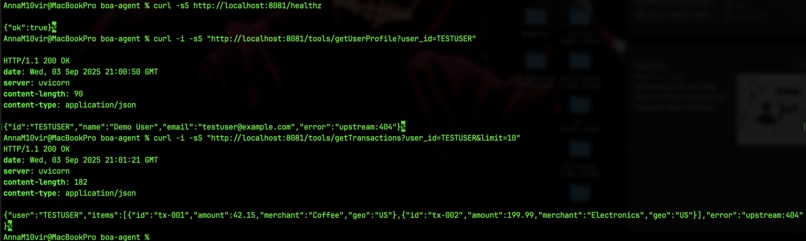
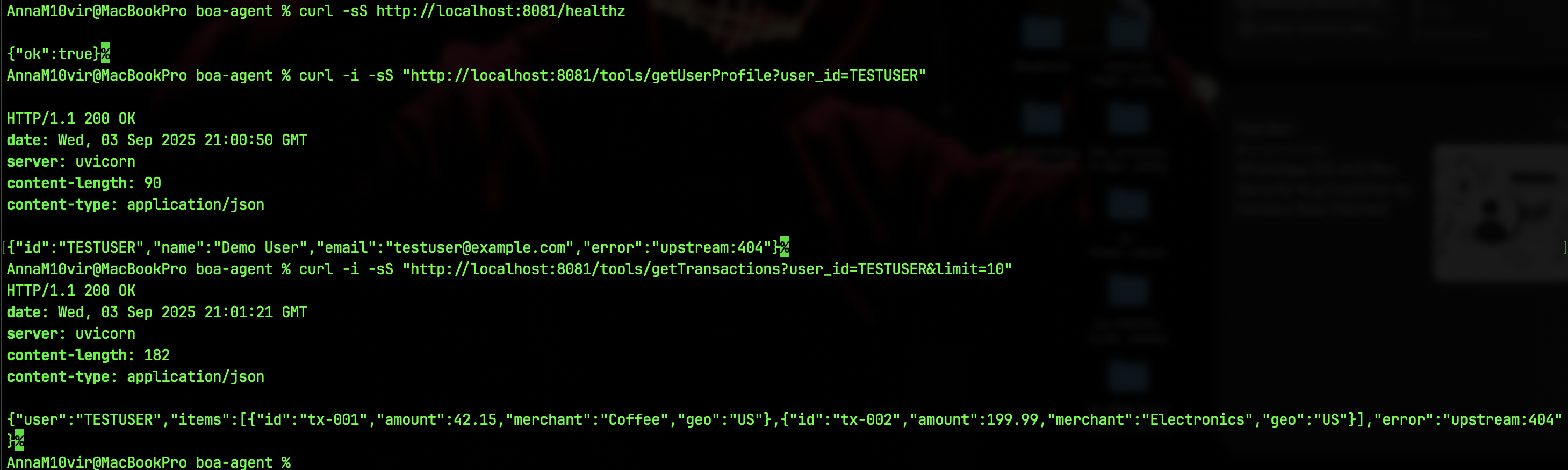
• Demonstrated end-to-end flow: curl → fraud agent → MCP → Bank of Anthos APIs → Gemini decision.
• Achieved reproducible builds and pinned images with digests in GKE.
What we learned
• How to extend production-grade microservices safely with external AI agents.
• The importance of fallback strategies for reliability in AI-enhanced apps.
• How MCP standardizes AI-agent interaction with microservices.
• Practical tradeoffs between Vertex AI and AI Studio integration.
What's next for Bank of Anthos AI Agents
• Multi-agent orchestration (A2A): Fraud signals influencing credit decisions.
• kubectl-ai integration: Natural language ops for GKE management.
• Stronger explainability: richer audit logs for compliance.
• Scaling to more domains: extending beyond fraud/risk into personalized banking.
Built With
- agent2agent(a2a)
- artifactregistry
- colima(macm1-builds)
- dockerbuildx
- googlecloud-iam
- googlegemini(ai-studioapikey-integration)
- googlegenai-sdk
- googlekubernetesengine(gkeautopilot)
- java(bankofanthosmicroservices)
- kubectl-ai-forsafeops
- modelcontextprotocol(mcp)
- python(fastapi)
- restapis


Log in or sign up for Devpost to join the conversation.