Inspiration
As students preparing for IELTS and the SAT, we wanted a place where we could practice consistently, understand our mistakes, and stay motivated. Our preparation often involves switching between question banks, vocabulary lists, writing tools, and study schedules. Having access to these resources does not always make it easier to know what to study next.
We created Band 9 to bring these activities together and connect learning with something students can look forward to: making progress in a game world through their own study effort.
What it does
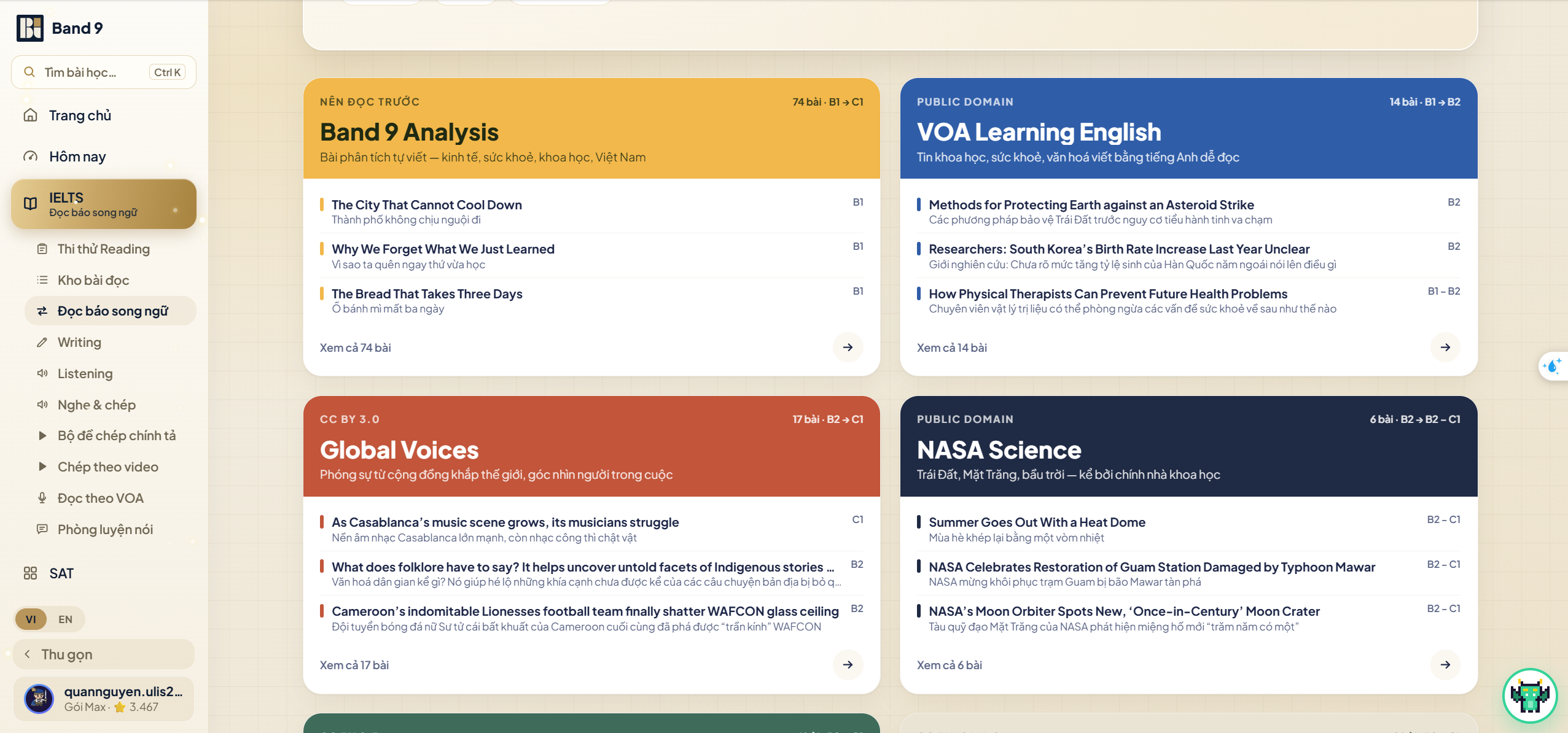
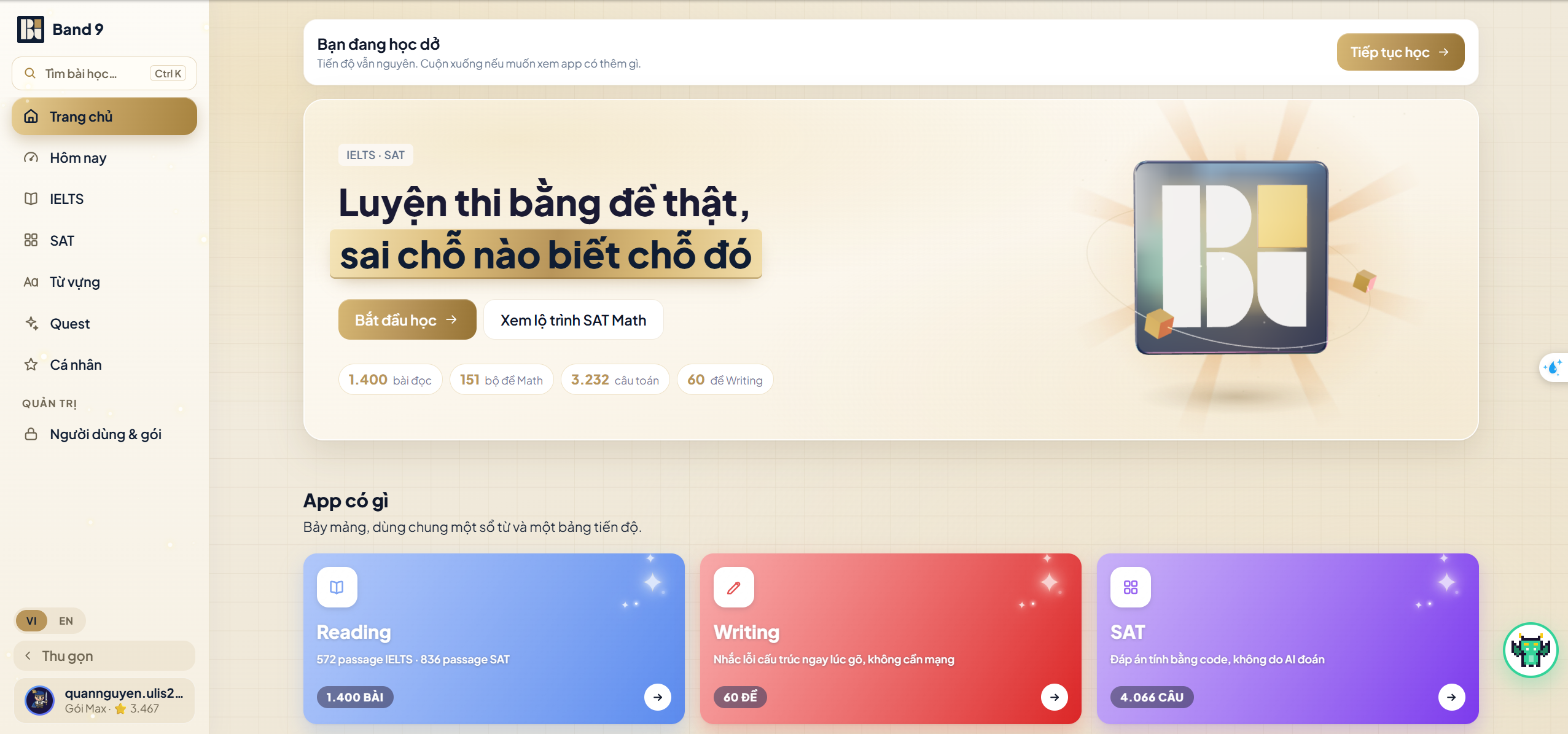
Band 9 is a learning platform designed for Vietnamese students preparing for IELTS and the SAT.
Its core features include:
- AI-assisted IELTS Writing feedback, with an estimated band score and explanations to guide revision.
- Study planning based on a learner’s target score and exam date.
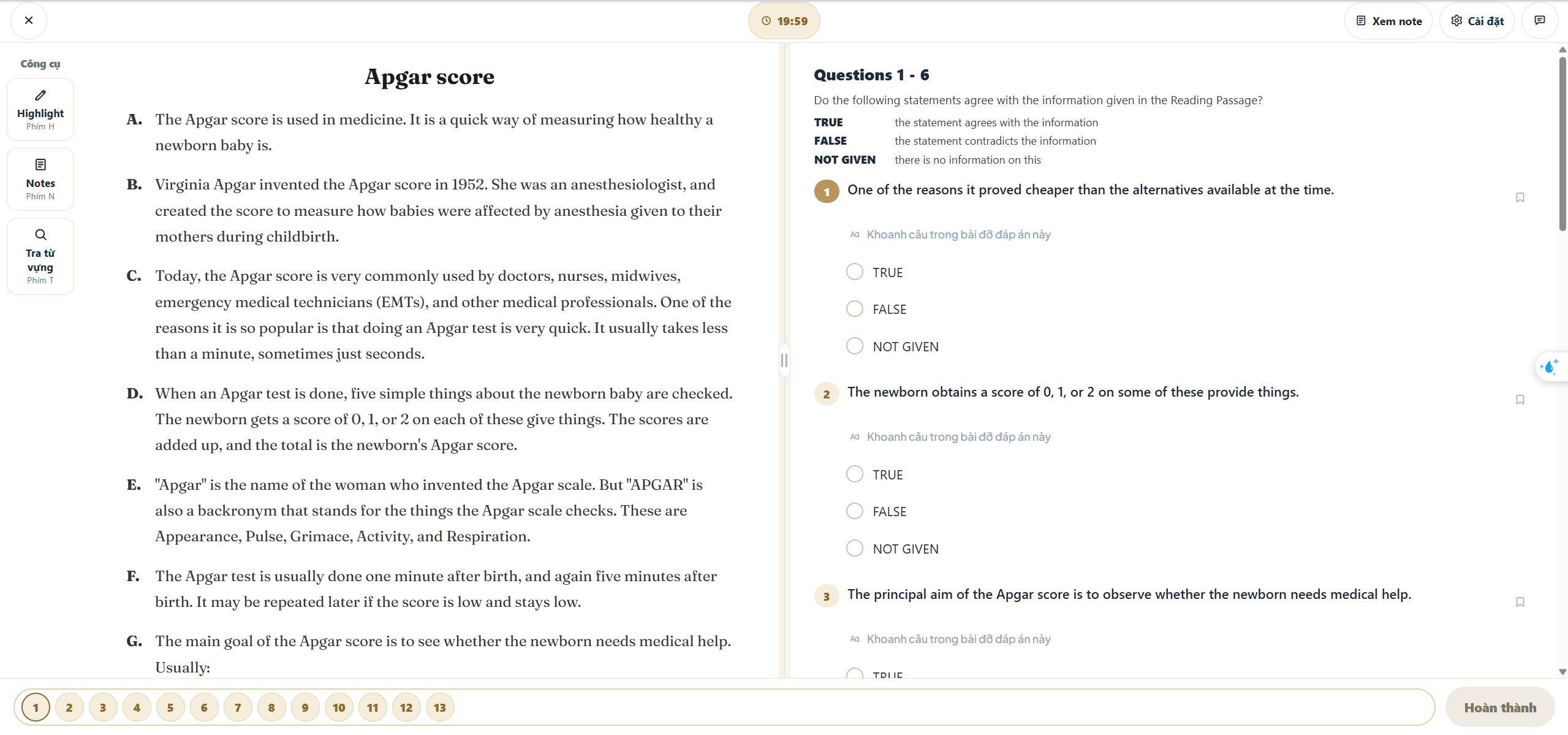
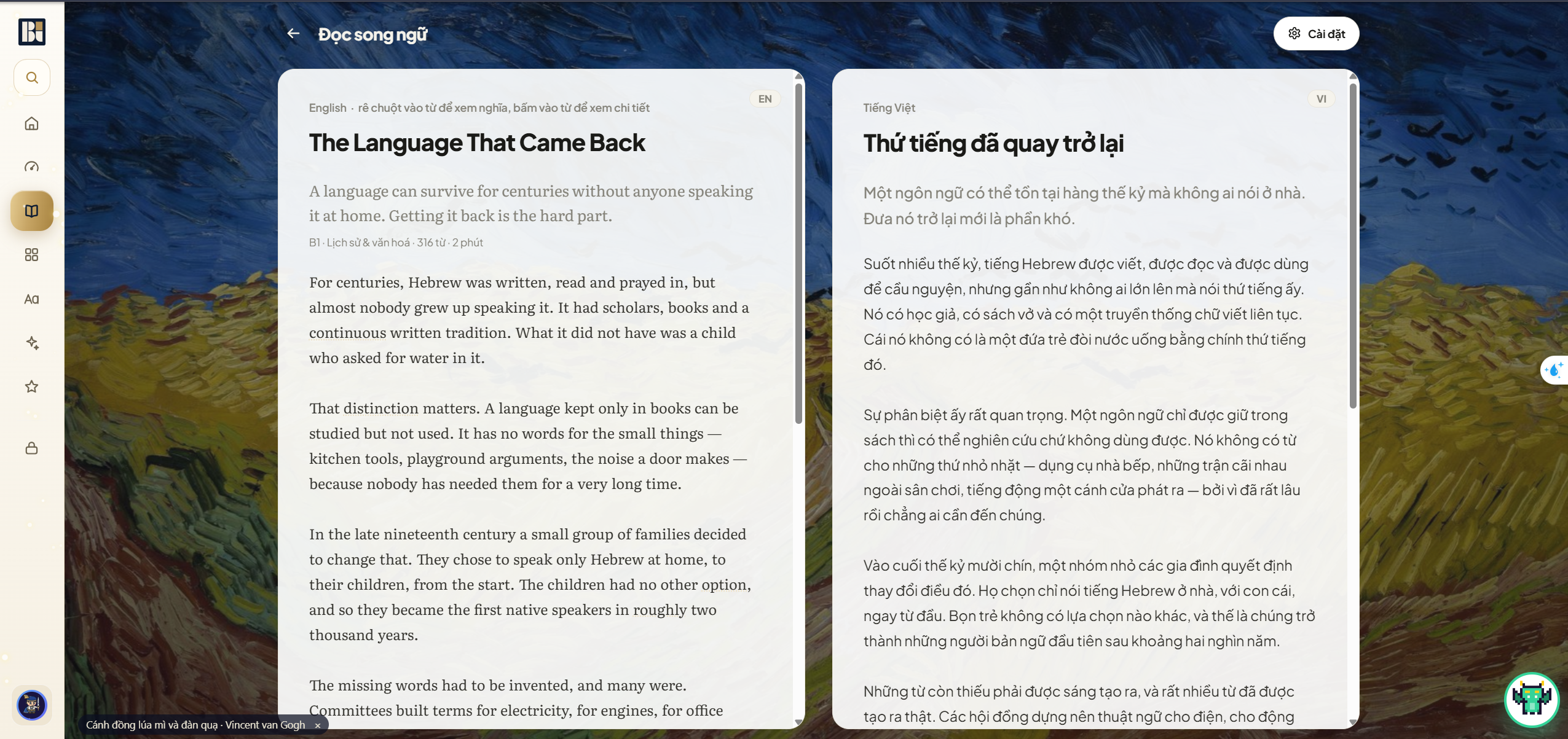
- Timed Reading practice with highlighting tools.
- Listening and dictation activities.
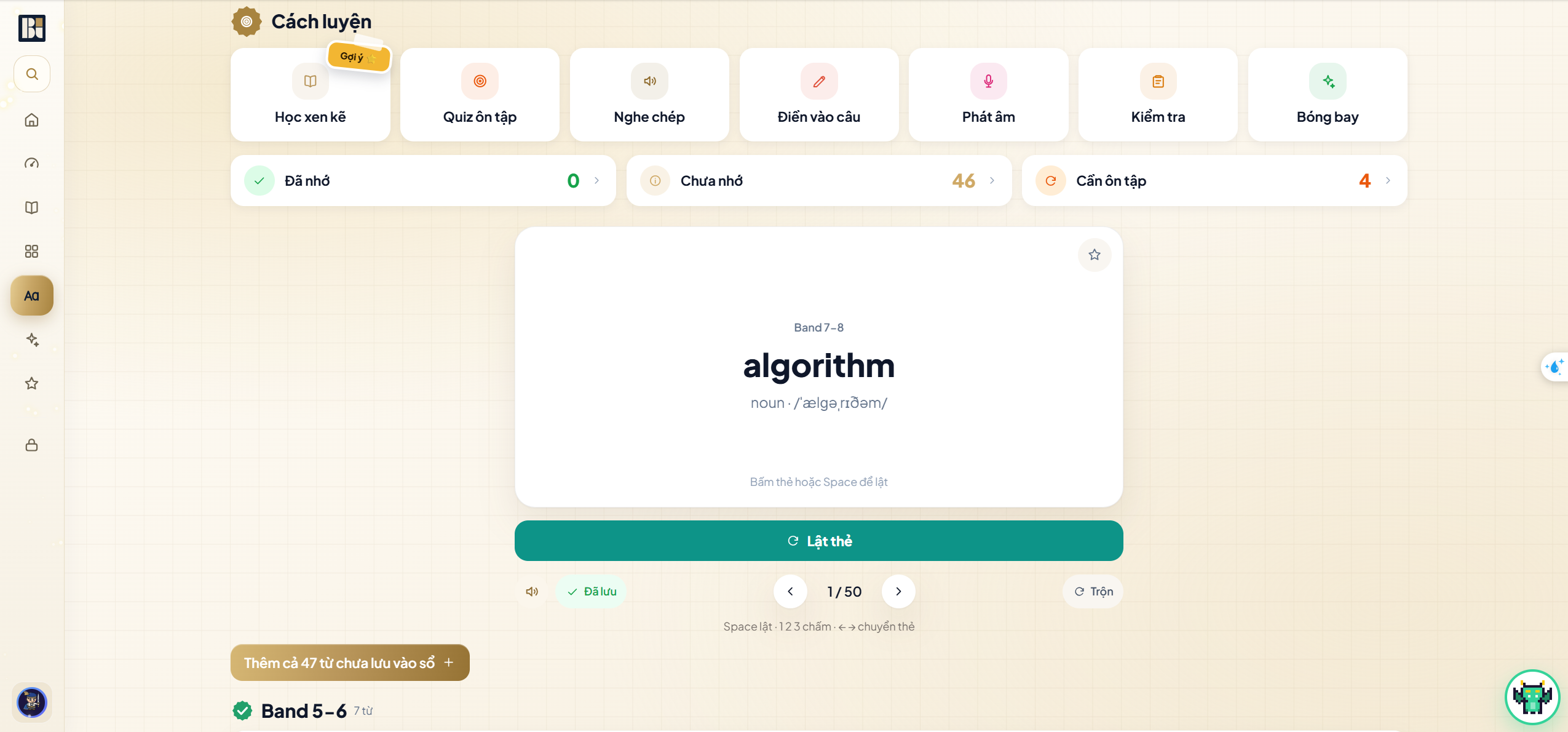
- Topic-based vocabulary practice and flashcards.
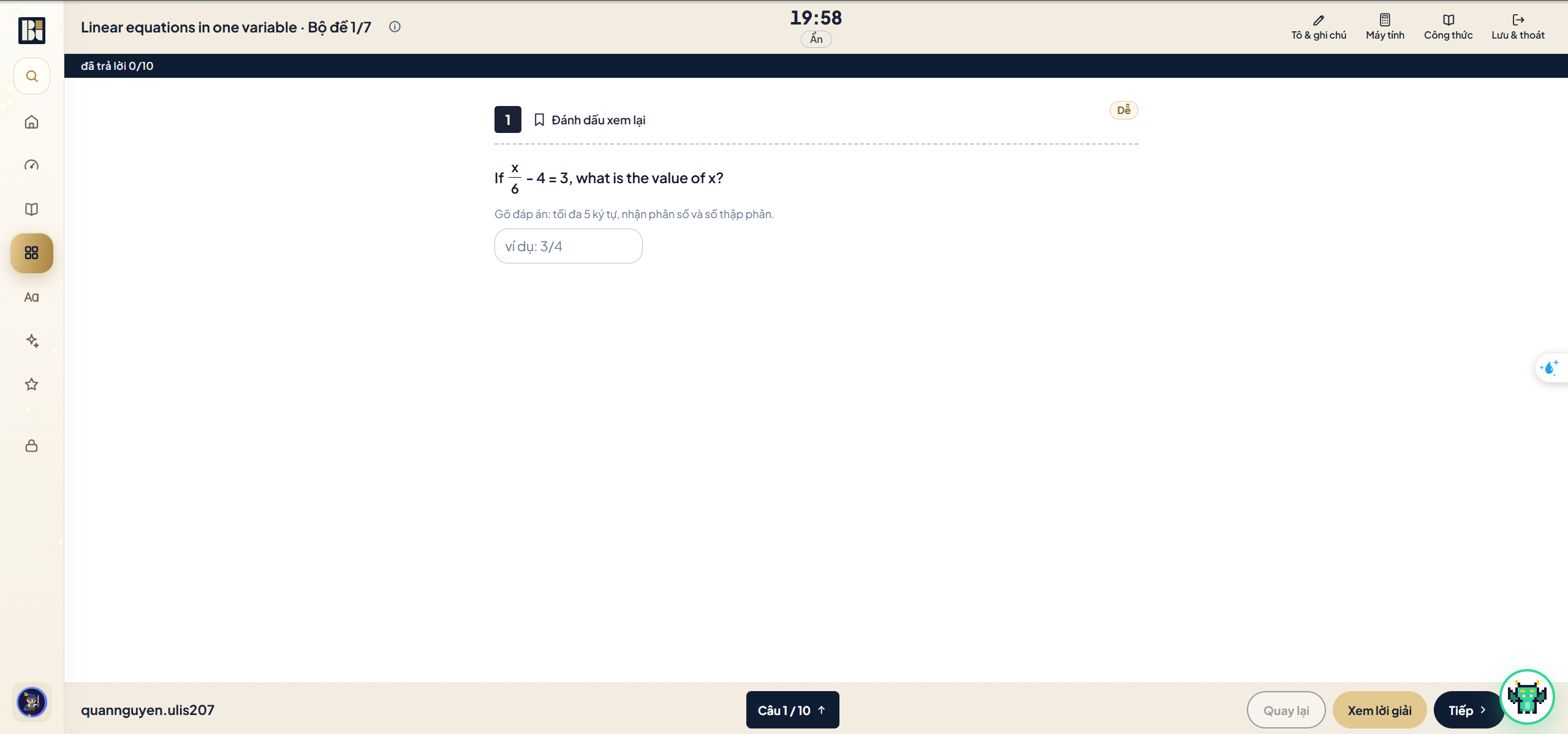
- SAT Math and Verbal practice with Vietnamese explanations.
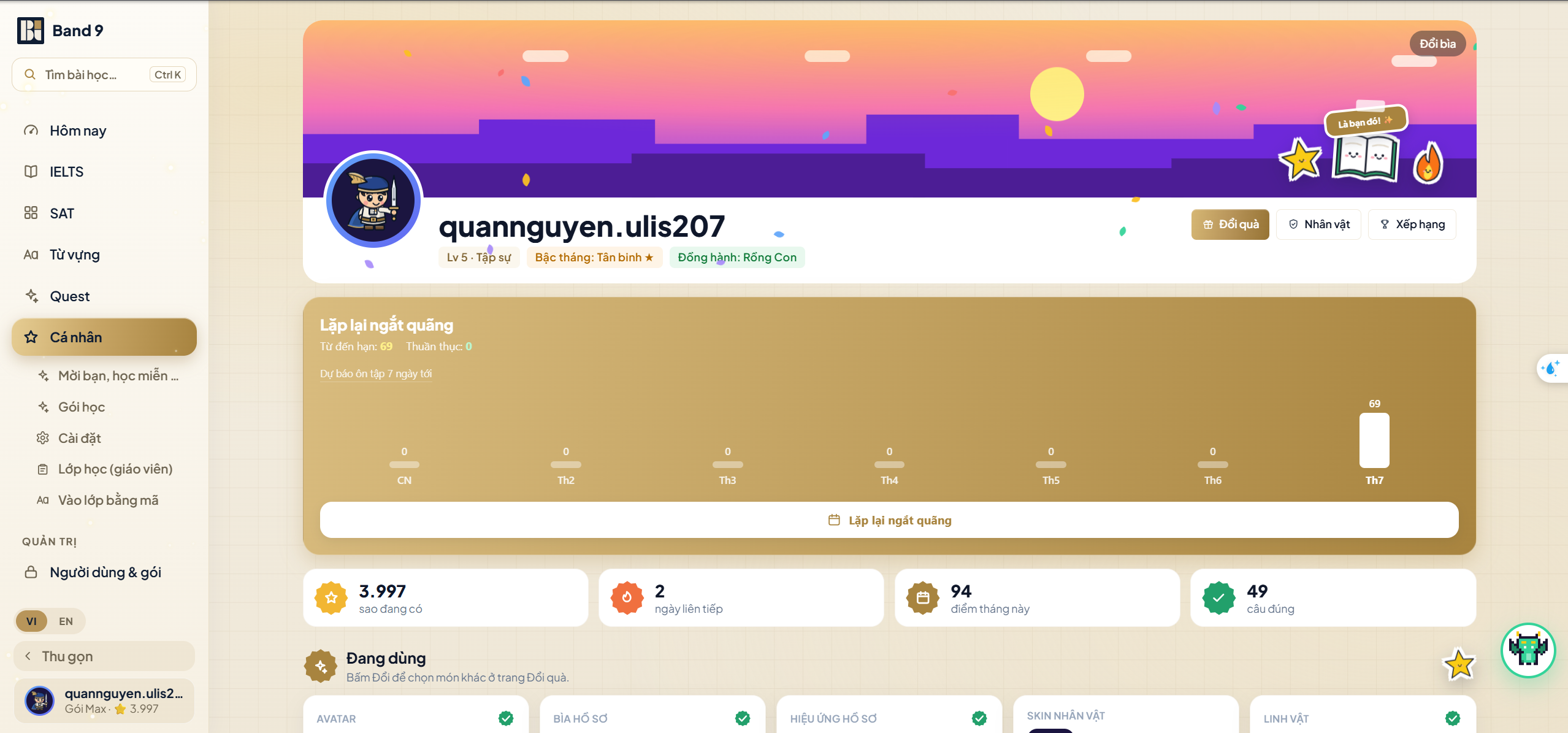
- Learning challenges, rewards, and leaderboards that encourage regular participation.
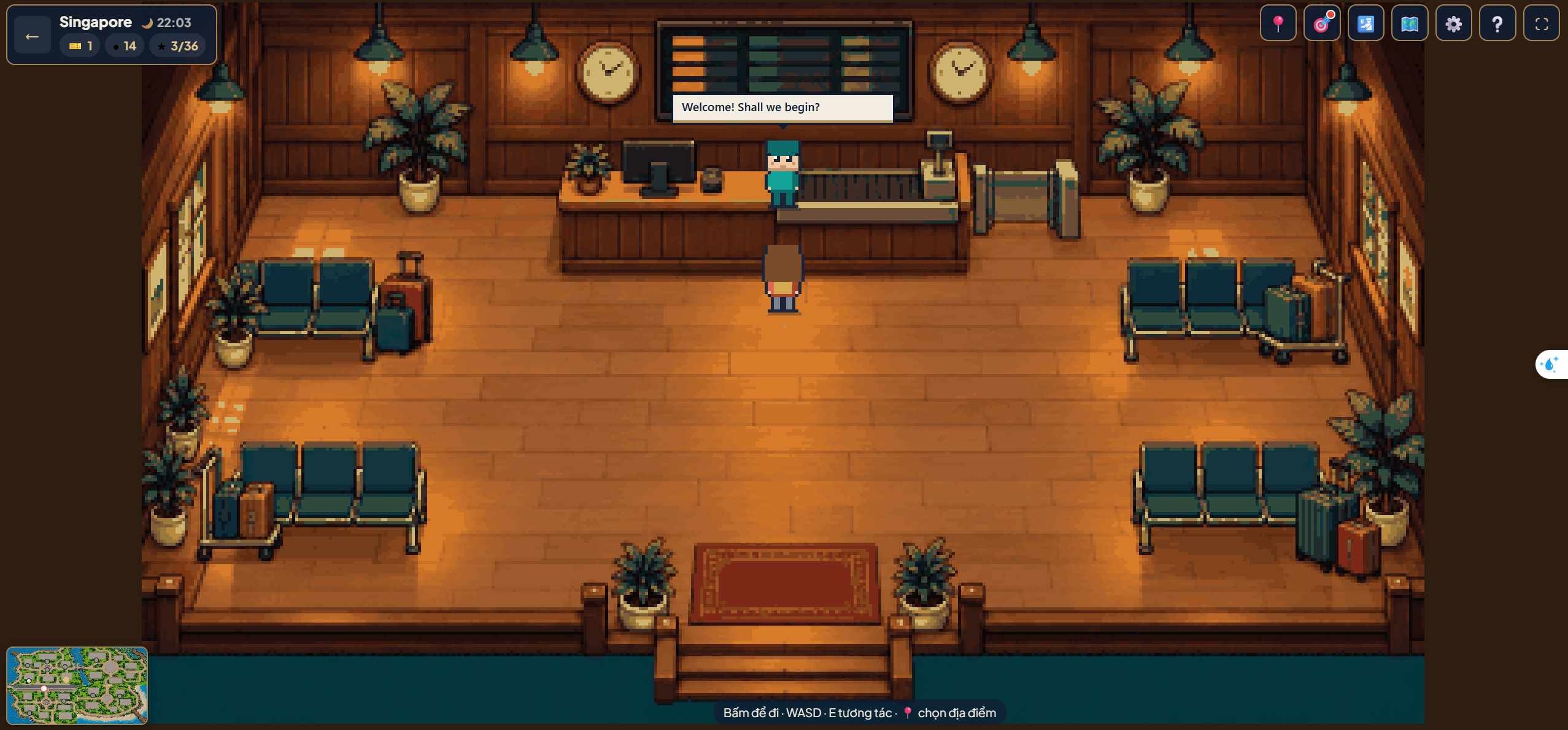
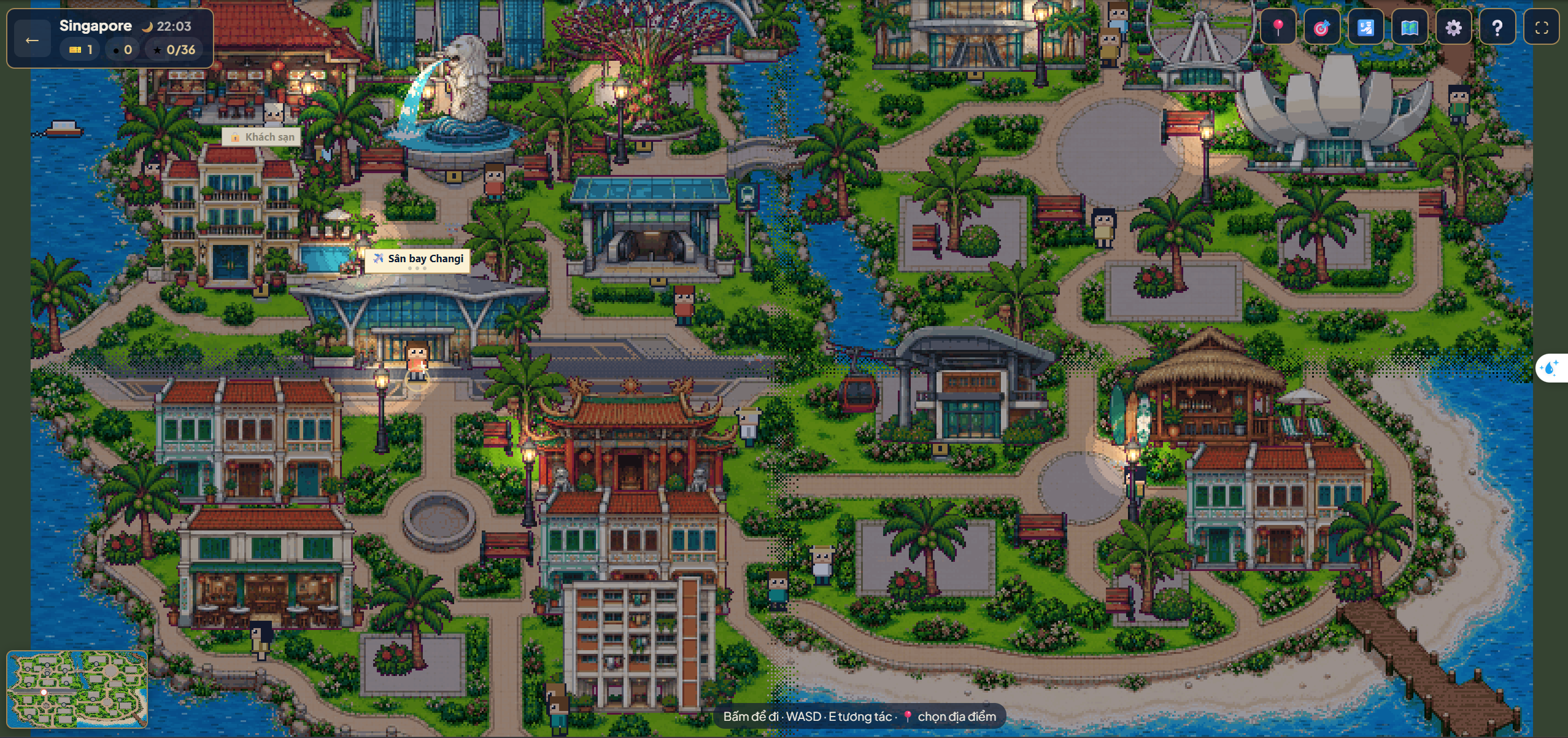
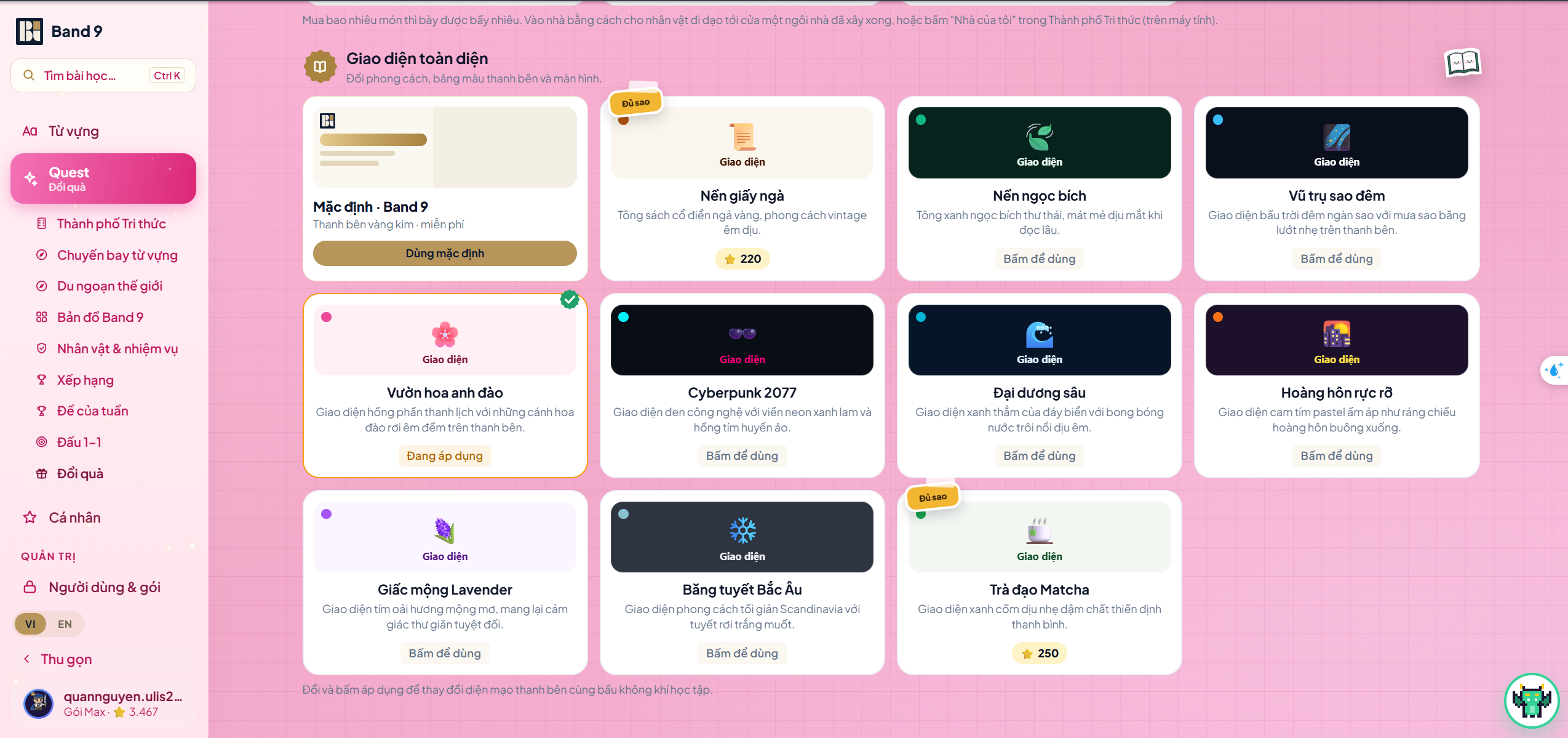
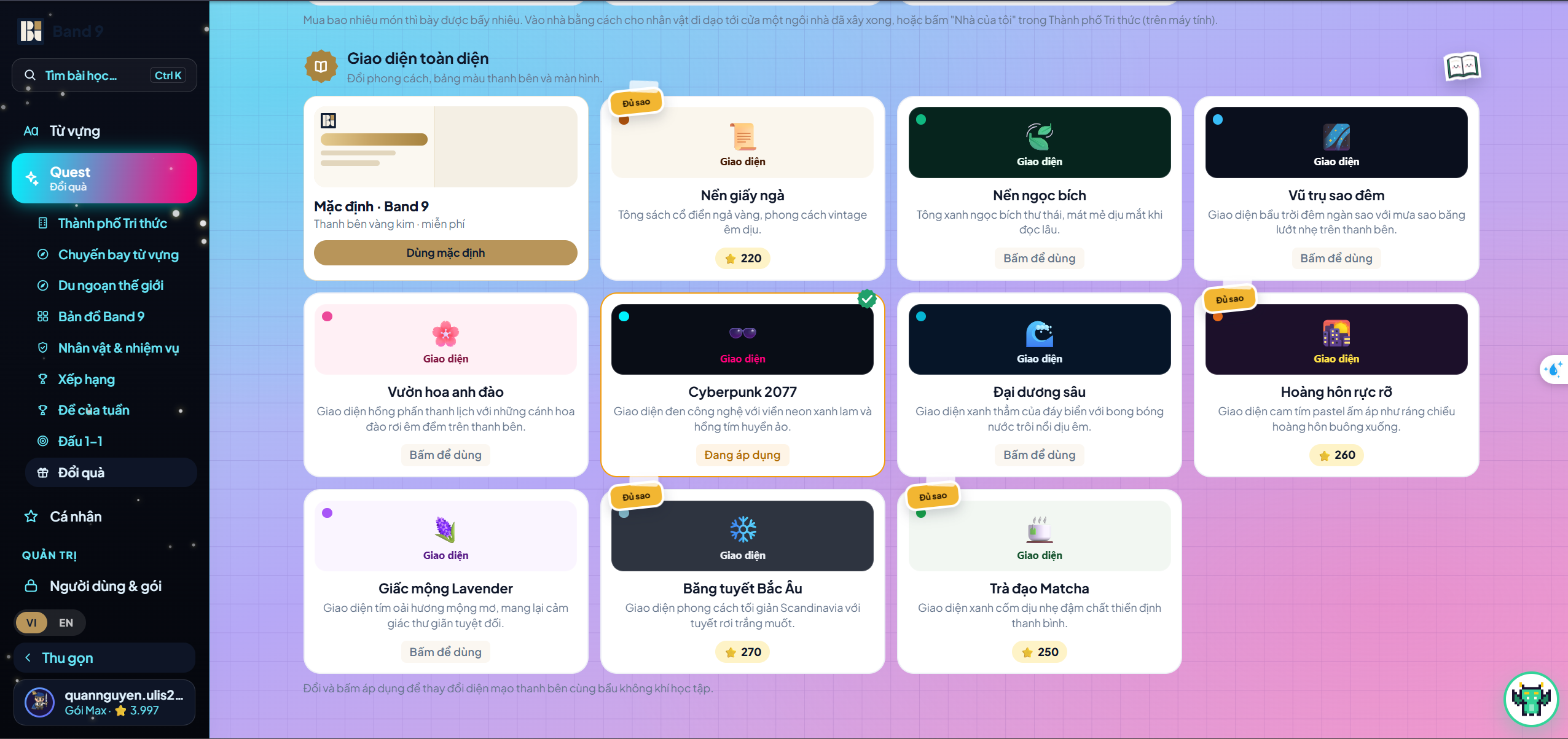
The game layer connects study activity with visible progress. Instead of treating rewards as a separate activity, we want students’ learning effort to help them develop their own virtual world.
AI feedback supports practice and revision. Its estimated scores are learning guidance, not official IELTS results.
How we built it
We built Band 9 with TypeScript, Expo, and React Native, using React Native Web for the browser experience. Supabase supports the backend, while Vercel hosts the web application.
We organize the platform around learning activities, student progress, and game state. The game rules are separated from the interface, making it easier to adjust reward behavior as the learning experience develops.
One important implementation detail is preventing repeated answers to the same question from generating repeated rewards. Progress should reflect completed learning activities.
Challenges we ran into
A central challenge is making game mechanics support meaningful learning. A student should have a reason to review an explanation and improve an answer, rather than simply rush through questions to collect rewards.
Another challenge is presenting several kinds of practice clearly. IELTS Writing, Listening, Reading, vocabulary, and SAT problems require different interactions, but students still need a consistent experience across the platform.
AI feedback also requires careful presentation. Students need specific explanations they can act on, while understanding the limits of an automated assessment.
Accomplishments that we are proud of
We have brought IELTS and SAT practice into one web application and added a game layer to support continued participation.
Vietnamese explanations are especially important to our design. They help learners understand why an answer works and make unfamiliar concepts easier to approach.
We are also proud of developing Band 9 from our own experience as students. The project addresses difficulties we encounter ourselves, including maintaining a study habit and turning feedback into a clear next step.
What we learned
Building Band 9 taught us that adding more content is only one part of improving a learning product. Students also need a clear path through that content, understandable feedback, and reasons to return.
We learned that educational game design requires careful choices about what earns a reward. The learning activity should remain valuable even before the reward is considered.
What's next for Band 9
Our next major direction is contextual Speaking practice in an explorable game world.
We plan to let students speak with AI characters in places such as a campus, dormitory, café, airport, or library. A conversation panel would appear over the map so learners can stay inside the scene while practicing. They could choose IELTS Speaking Part 1, 2, or 3, select a target band, and record their responses.
We also want to develop virtual exchange-student experiences inspired by destinations such as the United States, Singapore, Australia, and Europe. Campus life, roommates, teachers, and everyday missions would give students practical reasons to use English.
Before expanding these features, we want to test them with students and measure whether they improve participation and learning, rather than relying only on time spent in the game.
Built With
- claude
- expo.io
- react
- react-native
- react-native-web
- supabase
- typescript

Log in or sign up for Devpost to join the conversation.