-
-
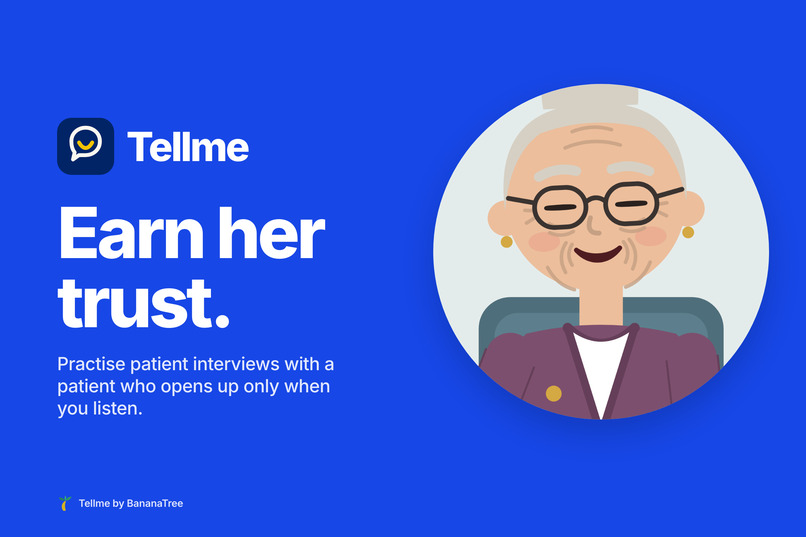
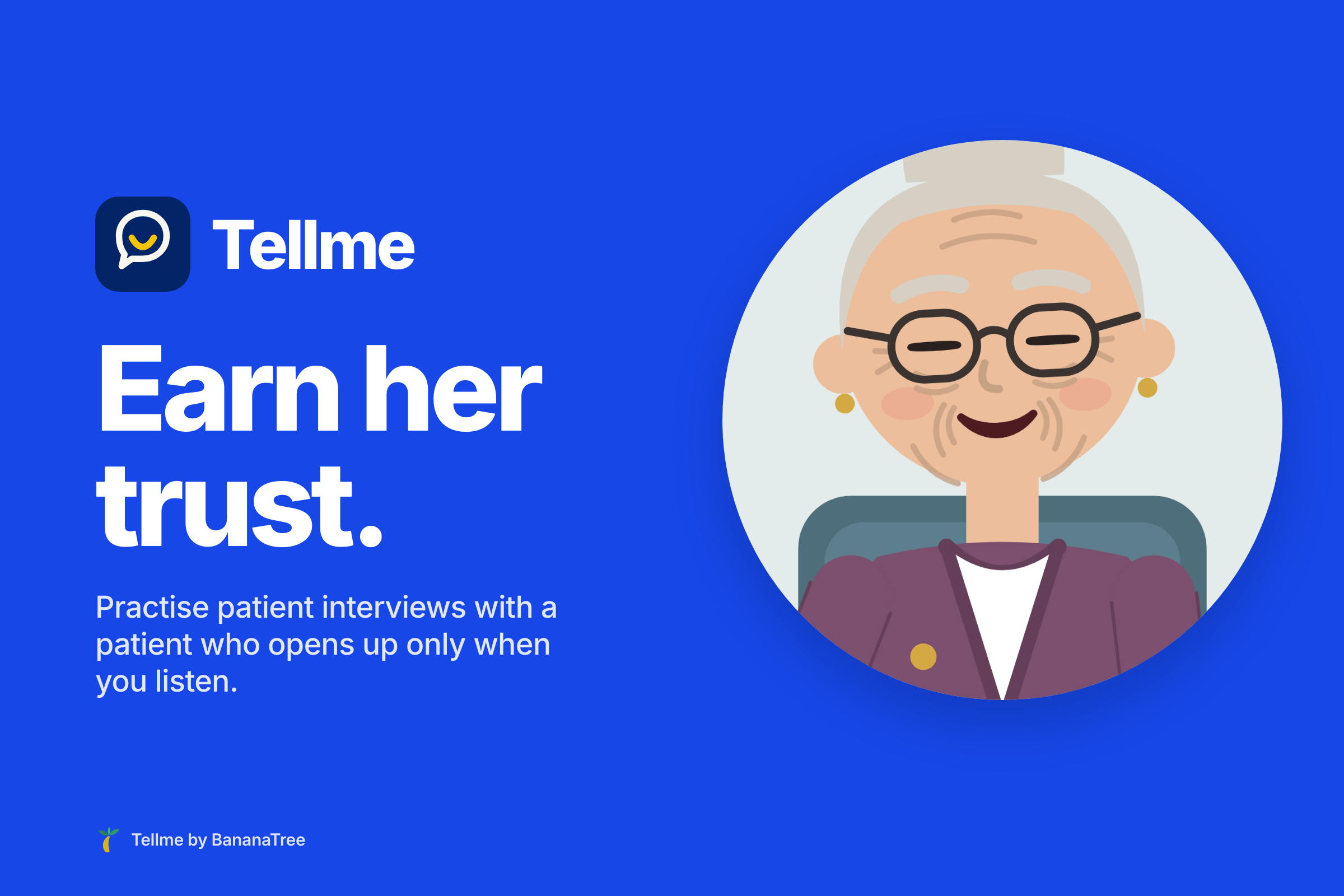
Tellme by BananaTree. Practise patient interviews with Margaret, 78, who opens up only when you earn her trust.
-
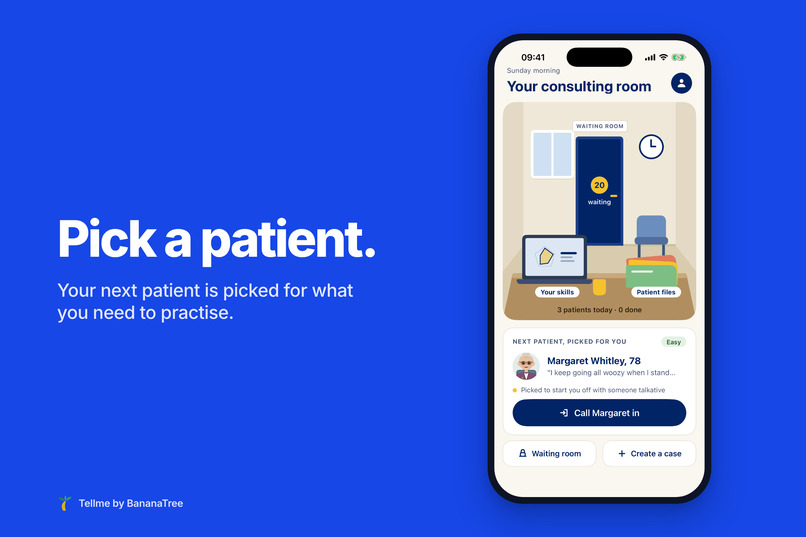
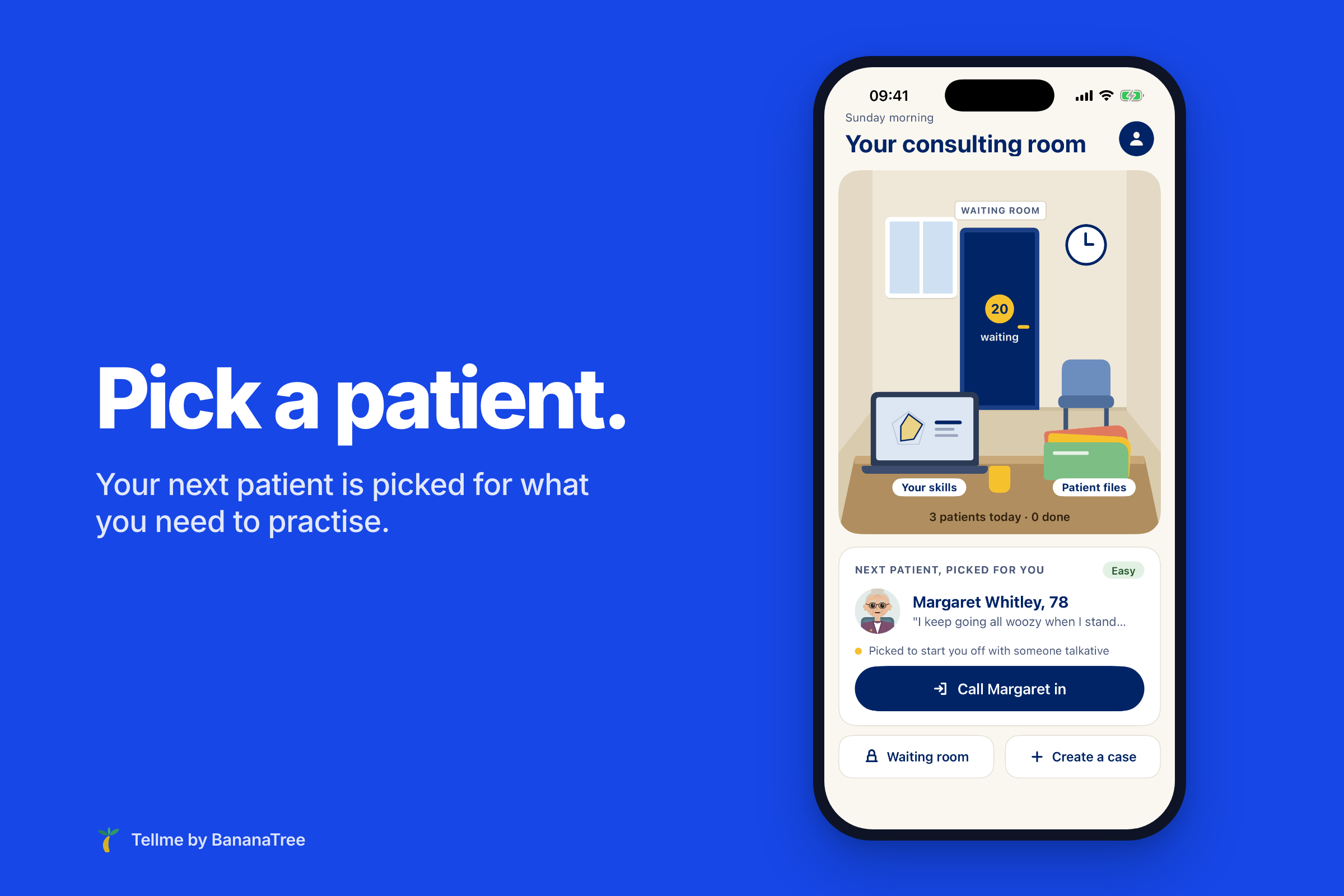
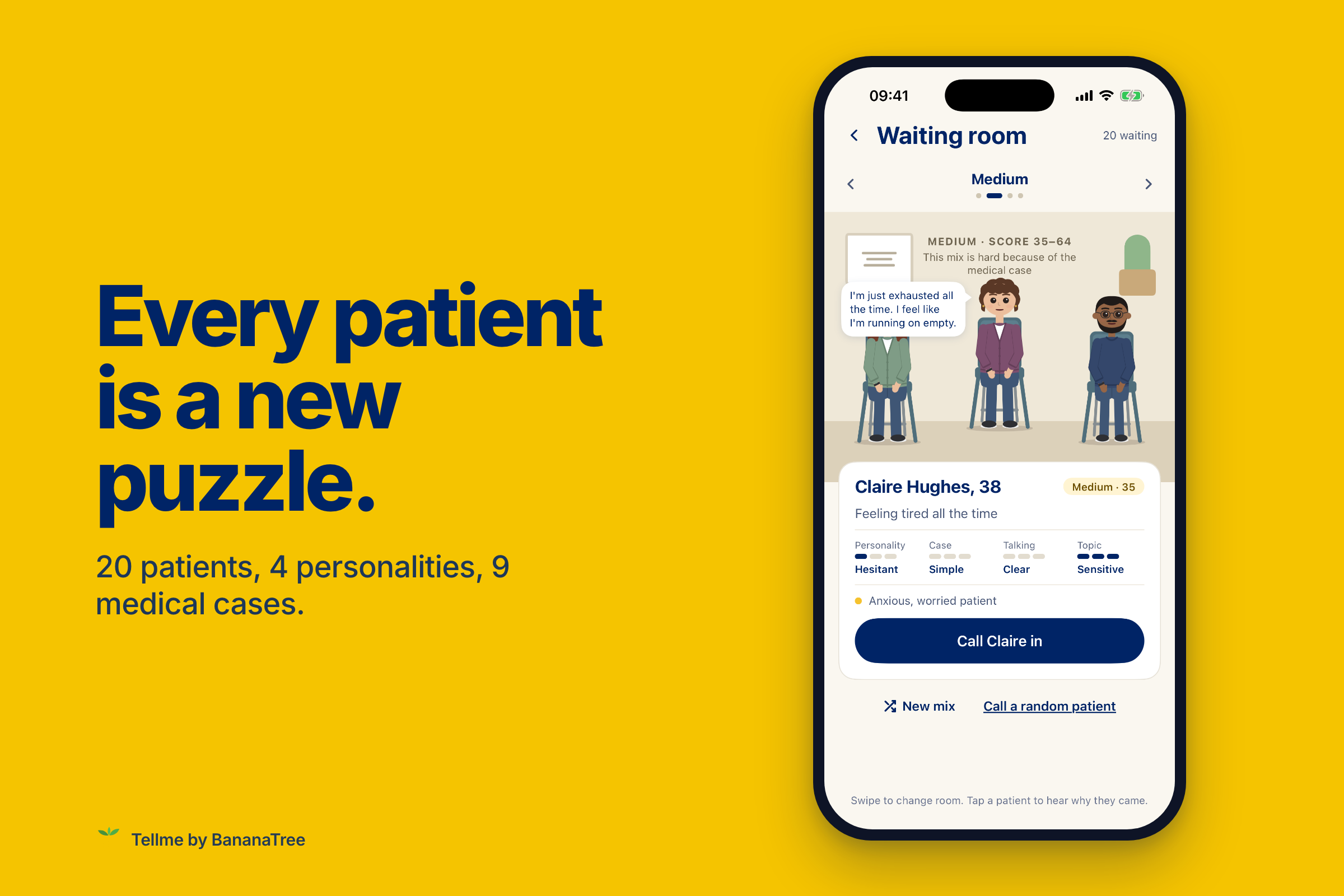
Your consulting room. The next patient is picked for what you need to practise.
-
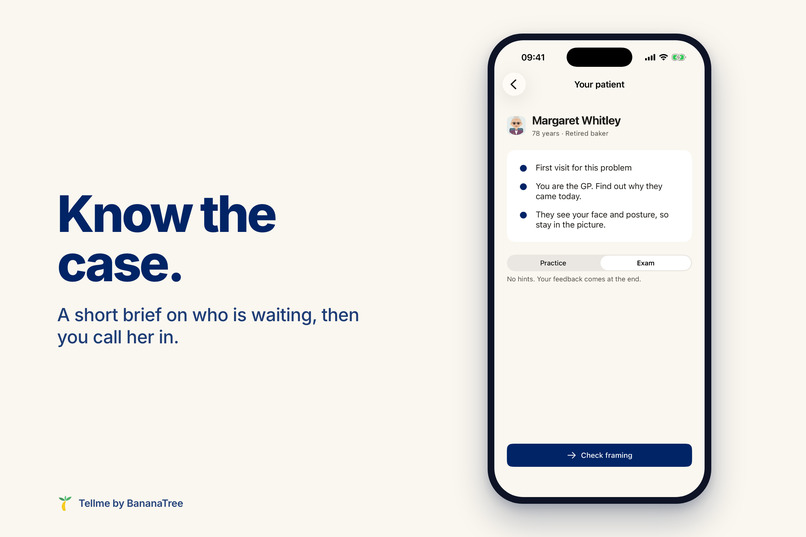
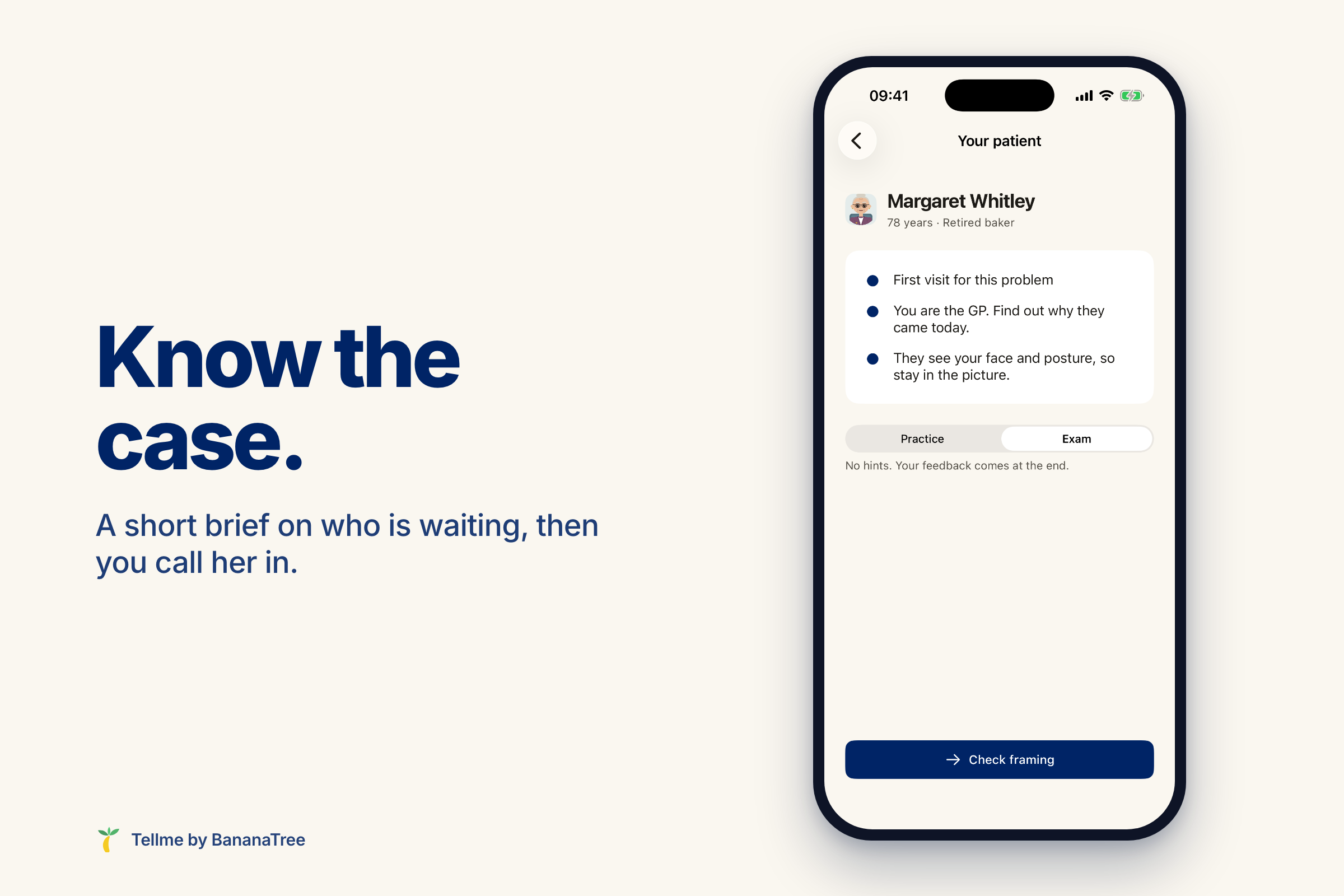
A short brief on who is waiting, then you call her in.
-
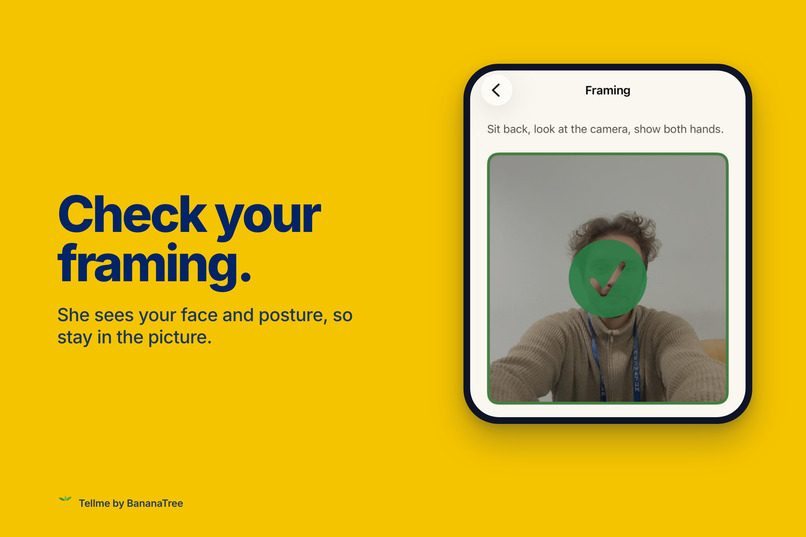
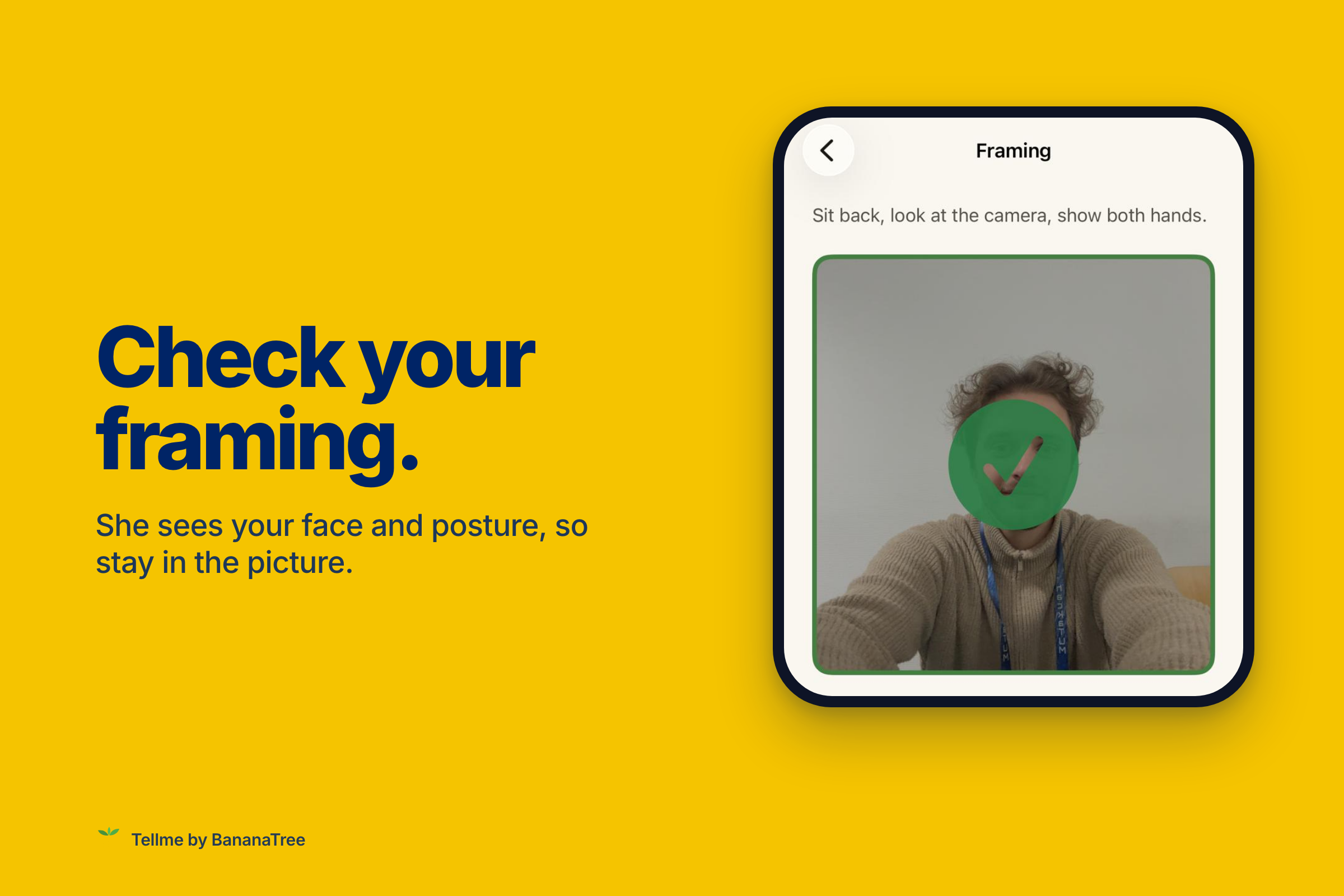
Before every interview, a framing check on the real camera: face in view, eyes on the camera.
-
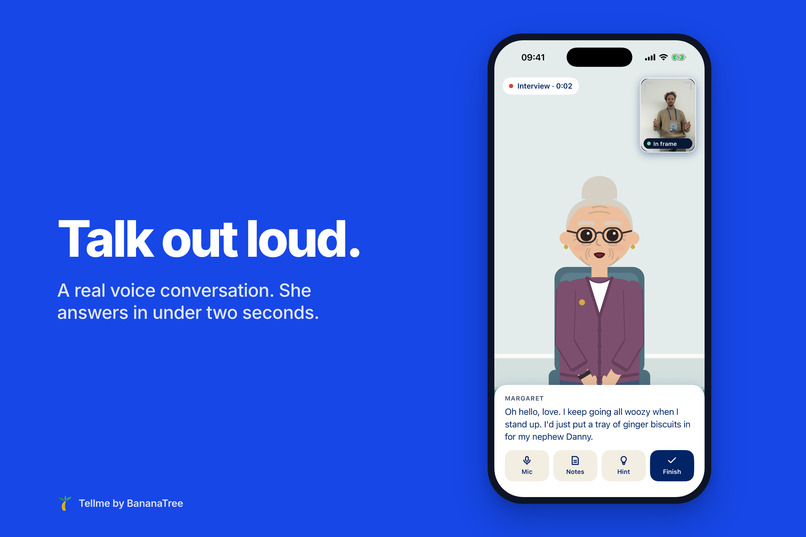
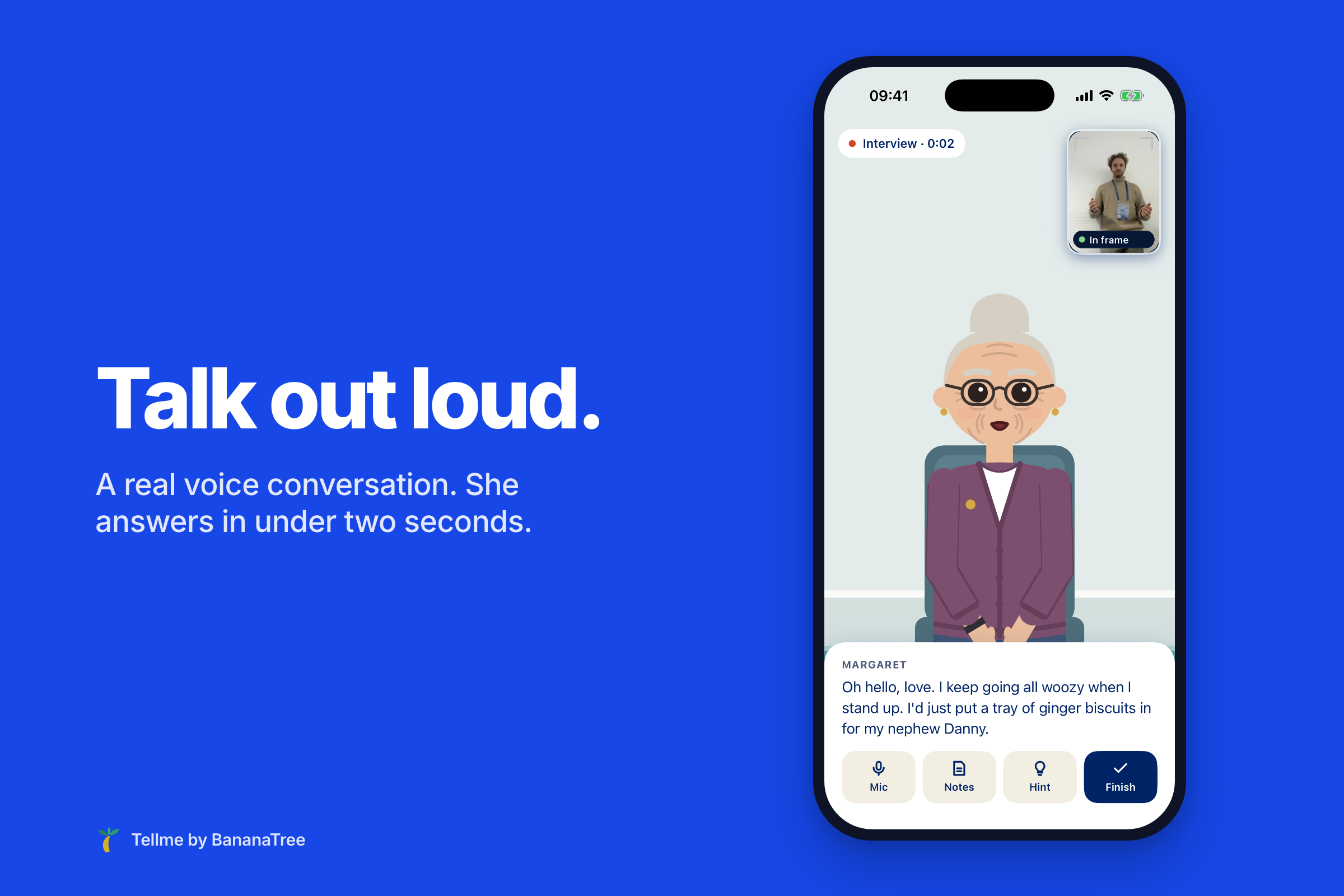
Talk out loud. A real voice conversation and she answers in under two seconds.
-
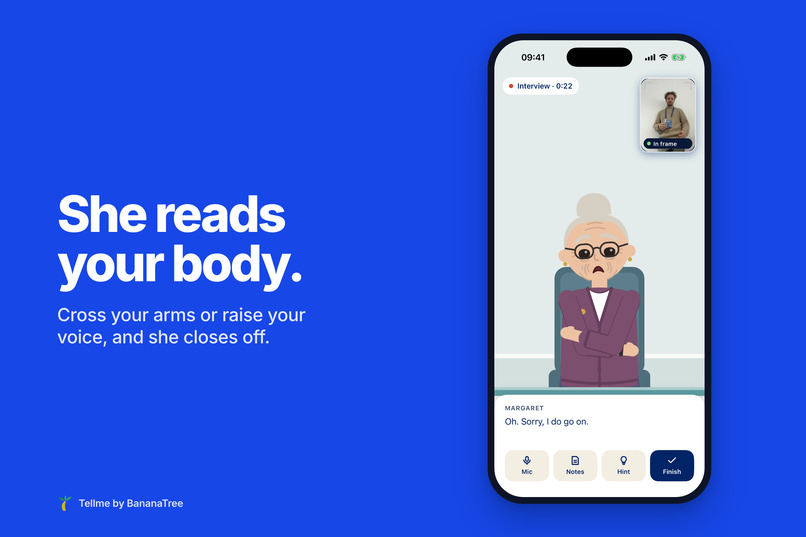
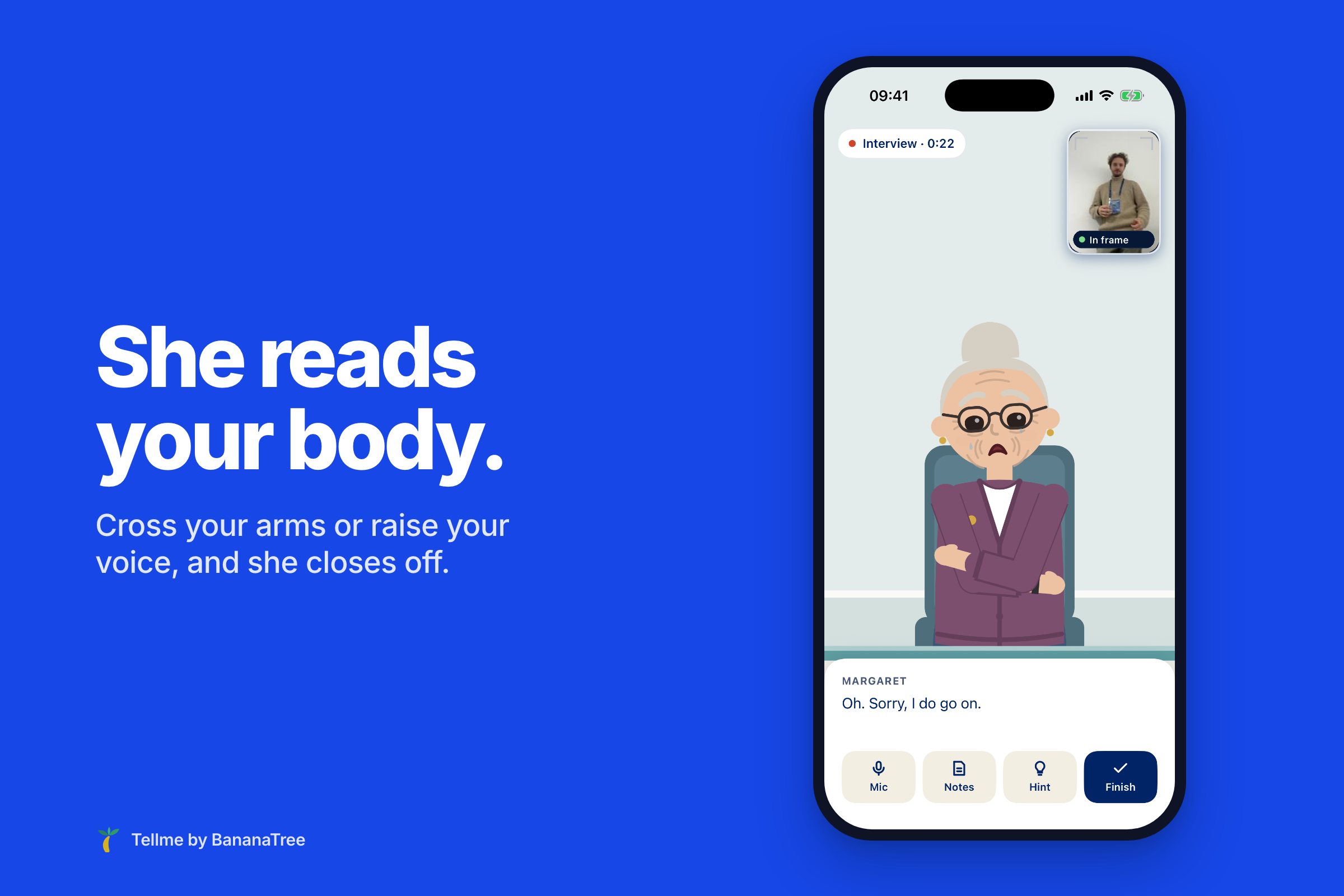
Cross your arms or raise your voice and Margaret closes off. The phone reads your body on-device.
-
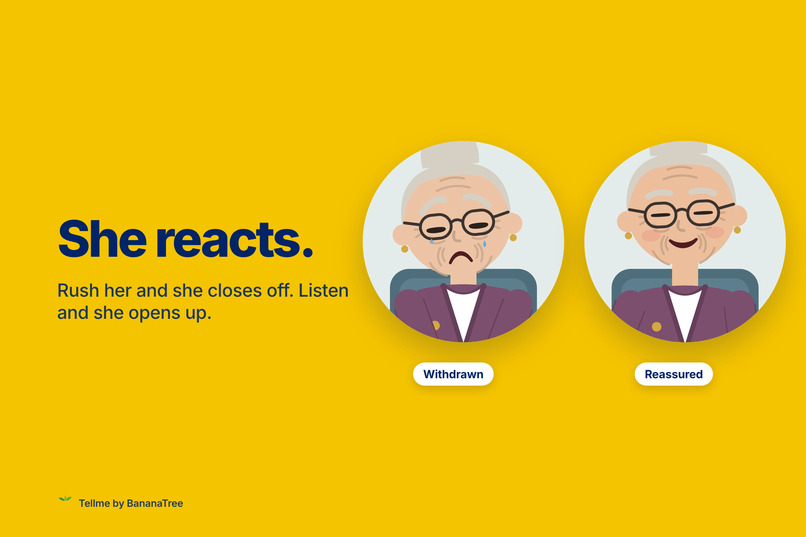
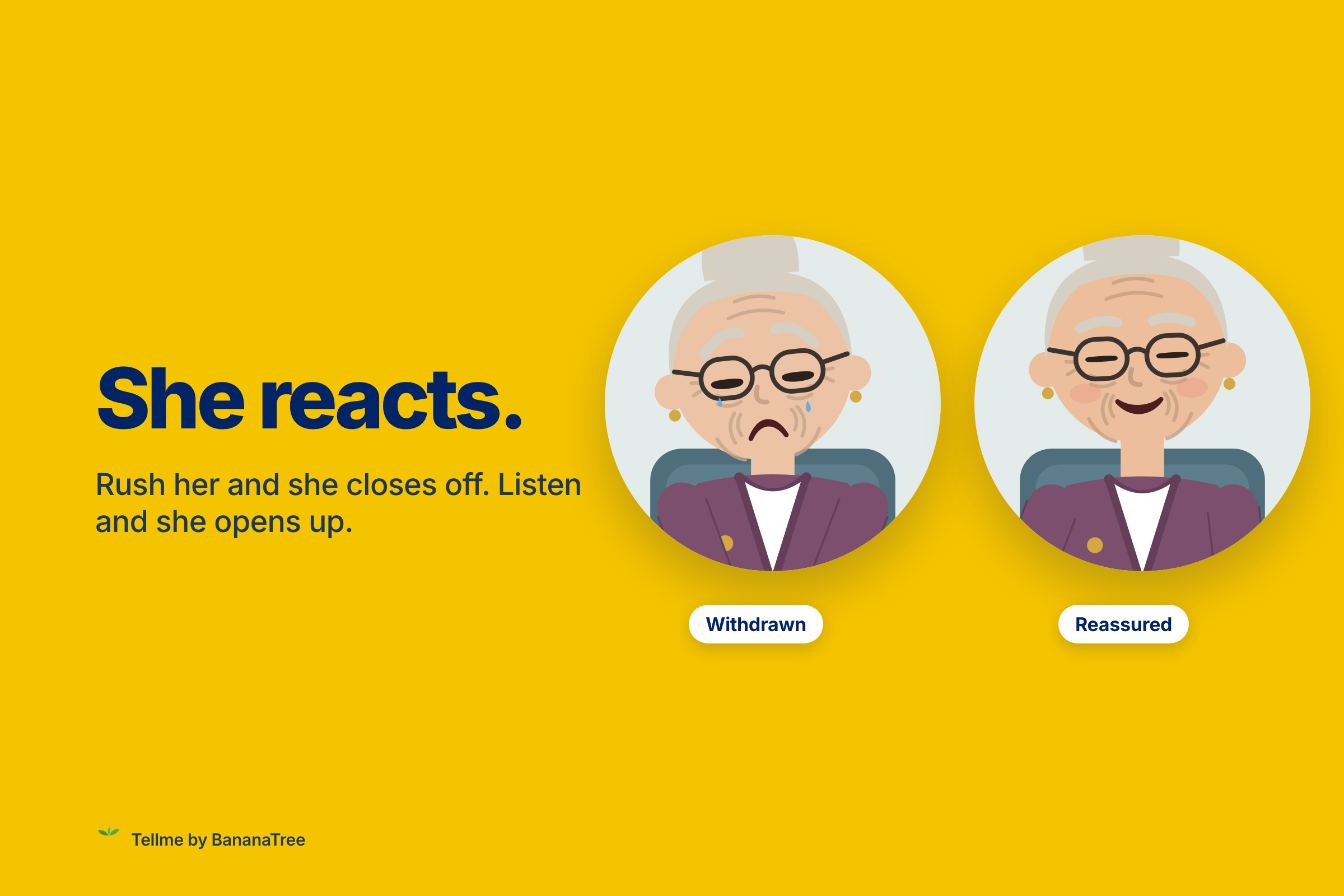
Her face shows it: withdrawn when rushed, reassured when you listen.
-
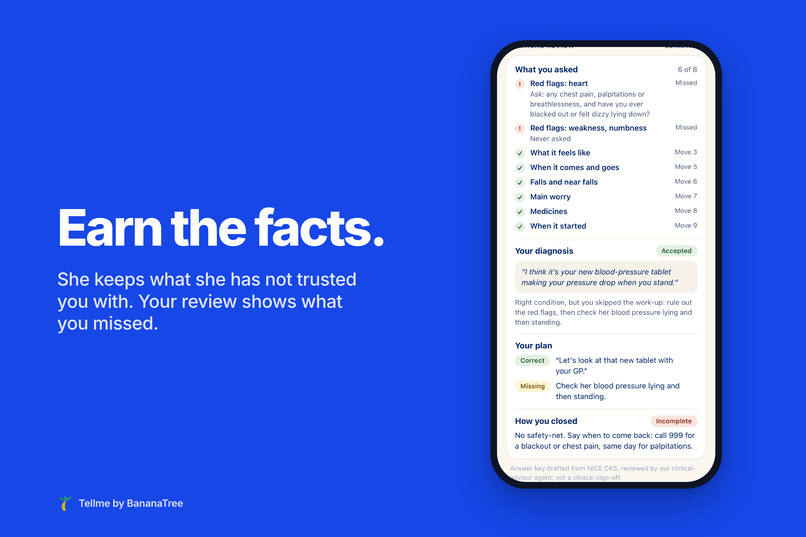
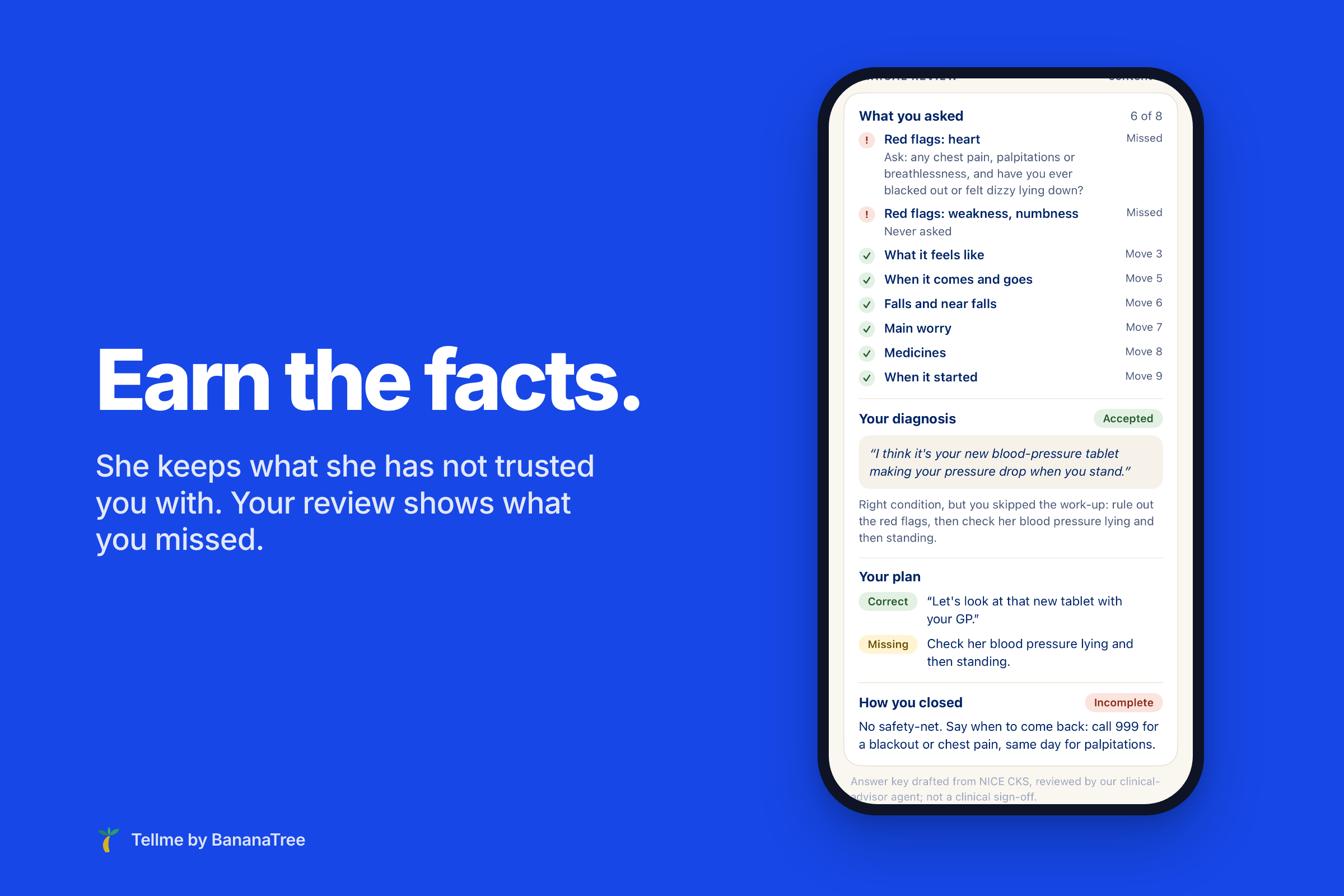
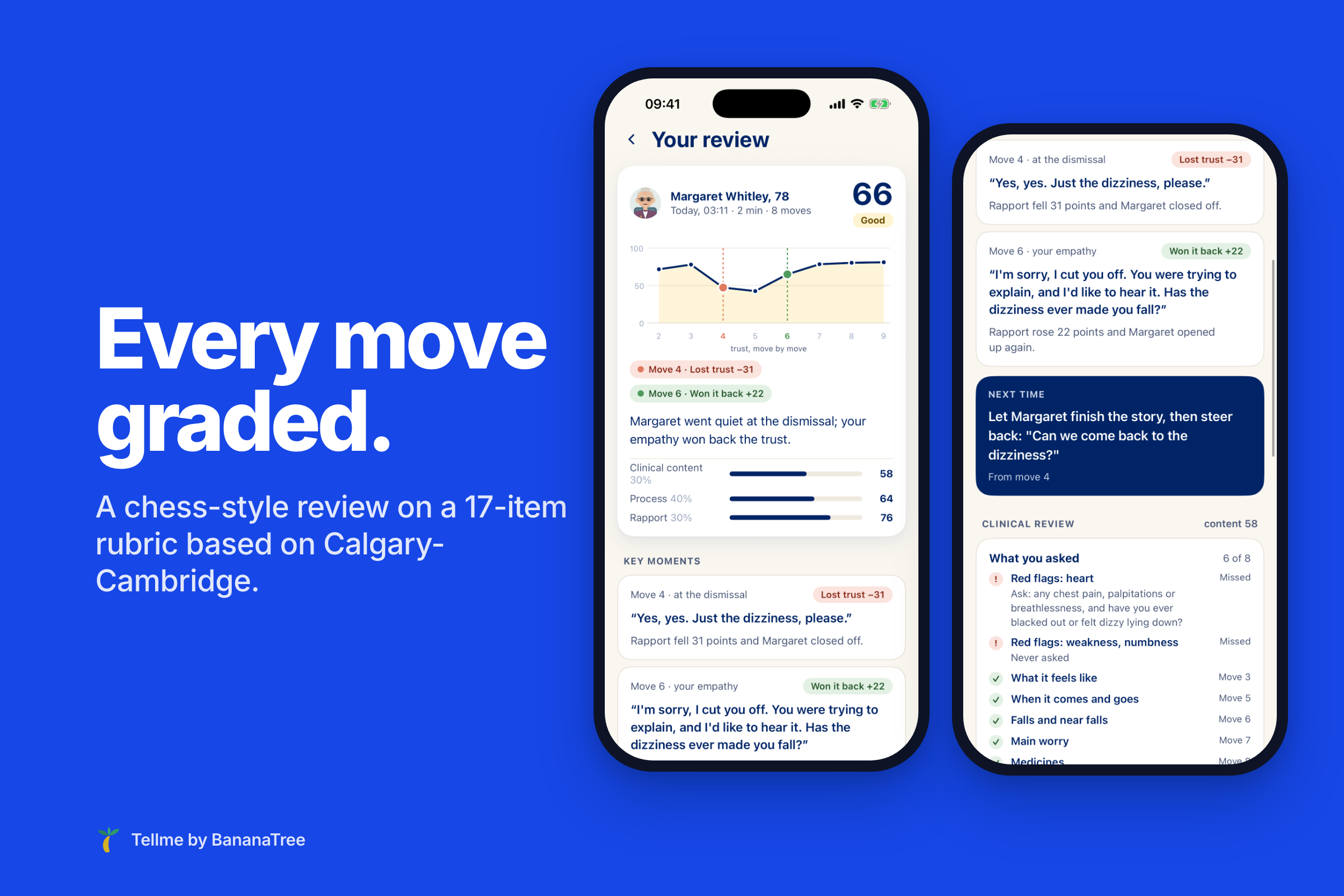
She keeps back what she has not trusted you with. Your review shows what you asked and what you missed.
-
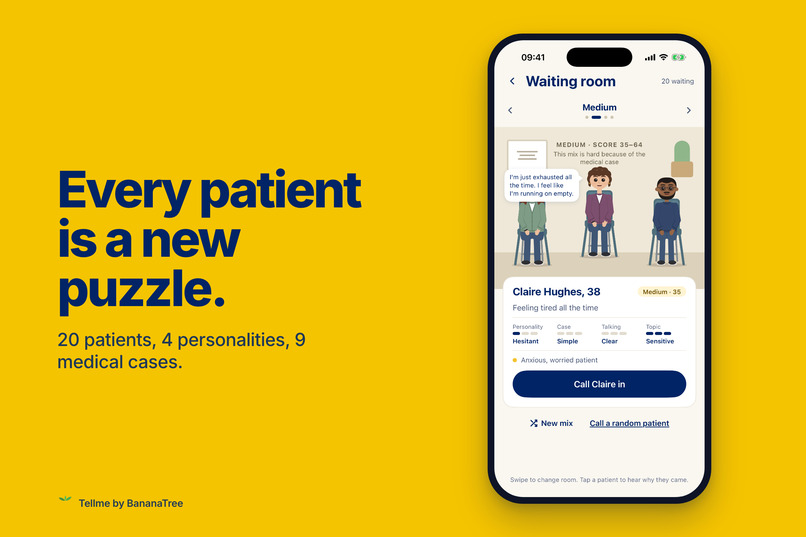
20 patients, 4 personalities, 9 medical cases. Every patient is a new puzzle.
-
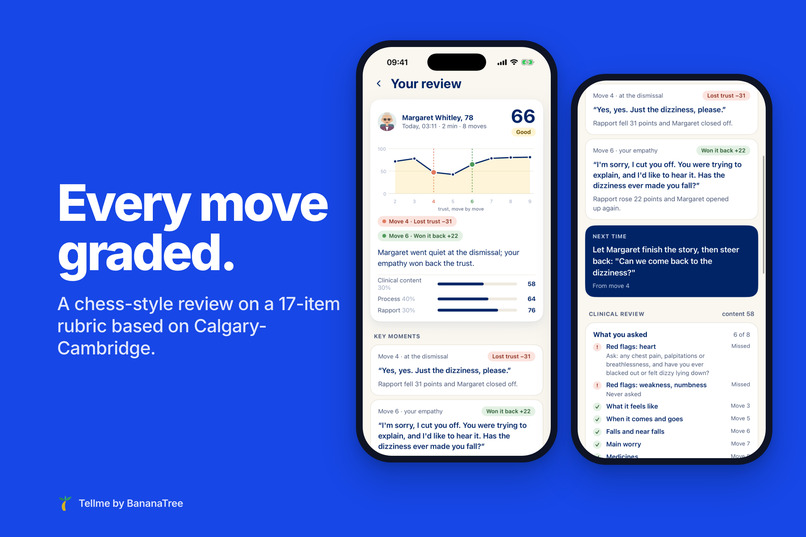
A chess-style review: every move graded, key moments, on a 17-item rubric based on Calgary-Cambridge.
-
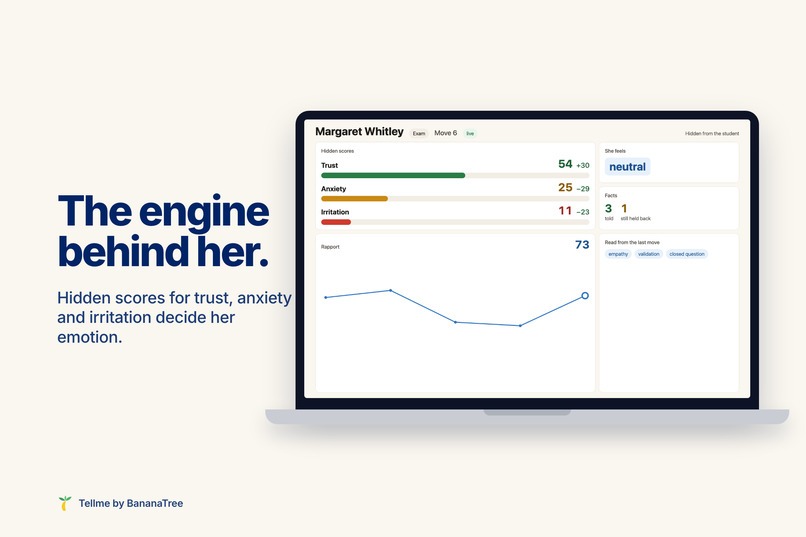
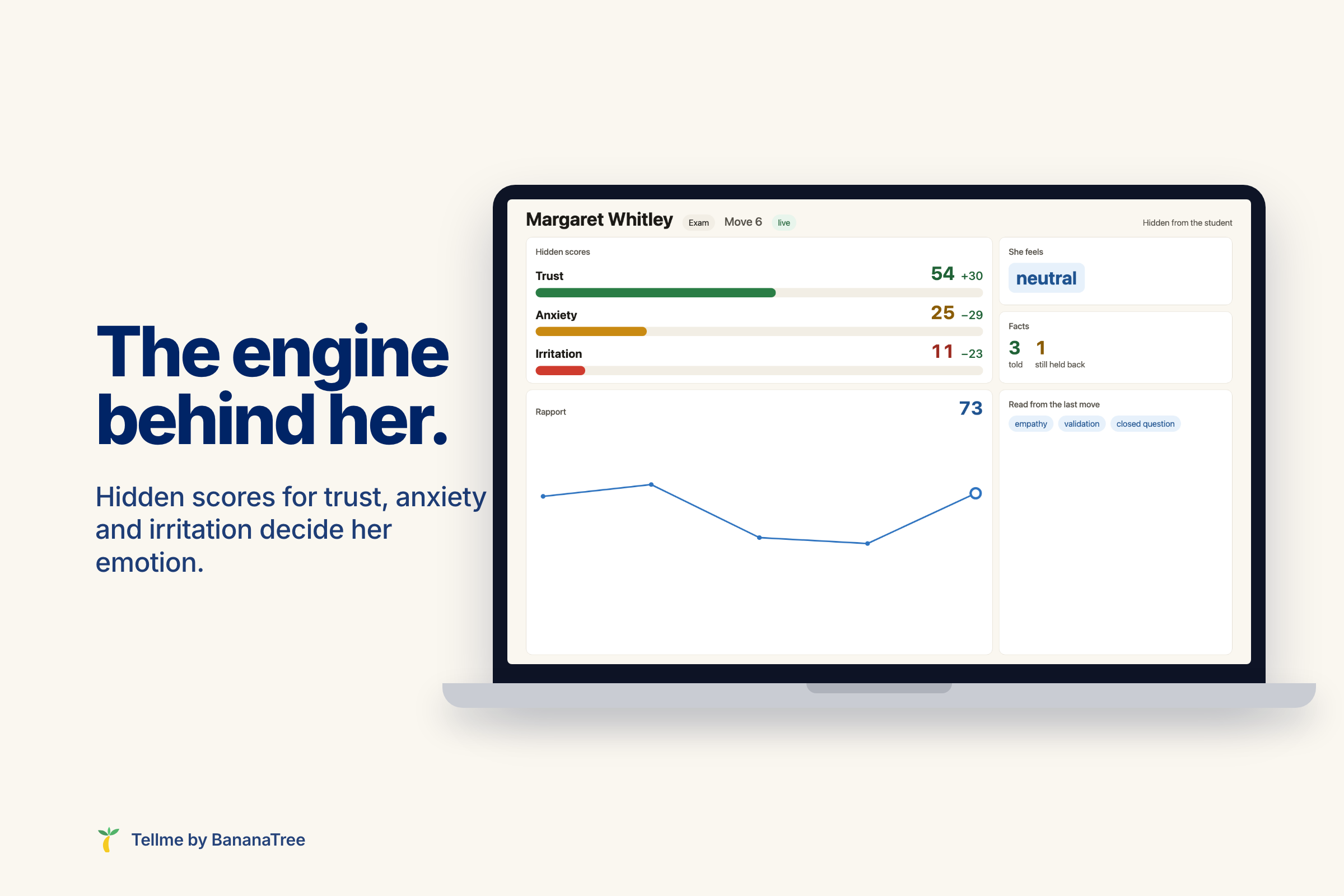
The Stage dashboard: three hidden scores, trust, anxiety and irritation, decide her emotion.
-
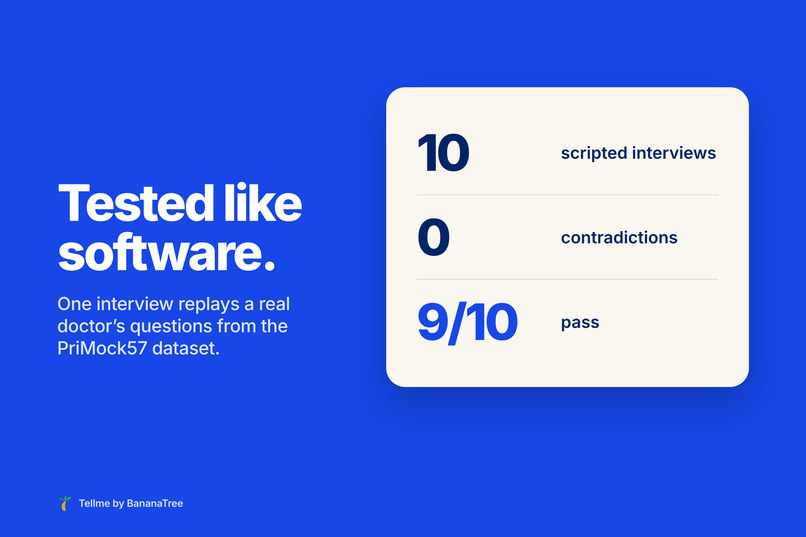
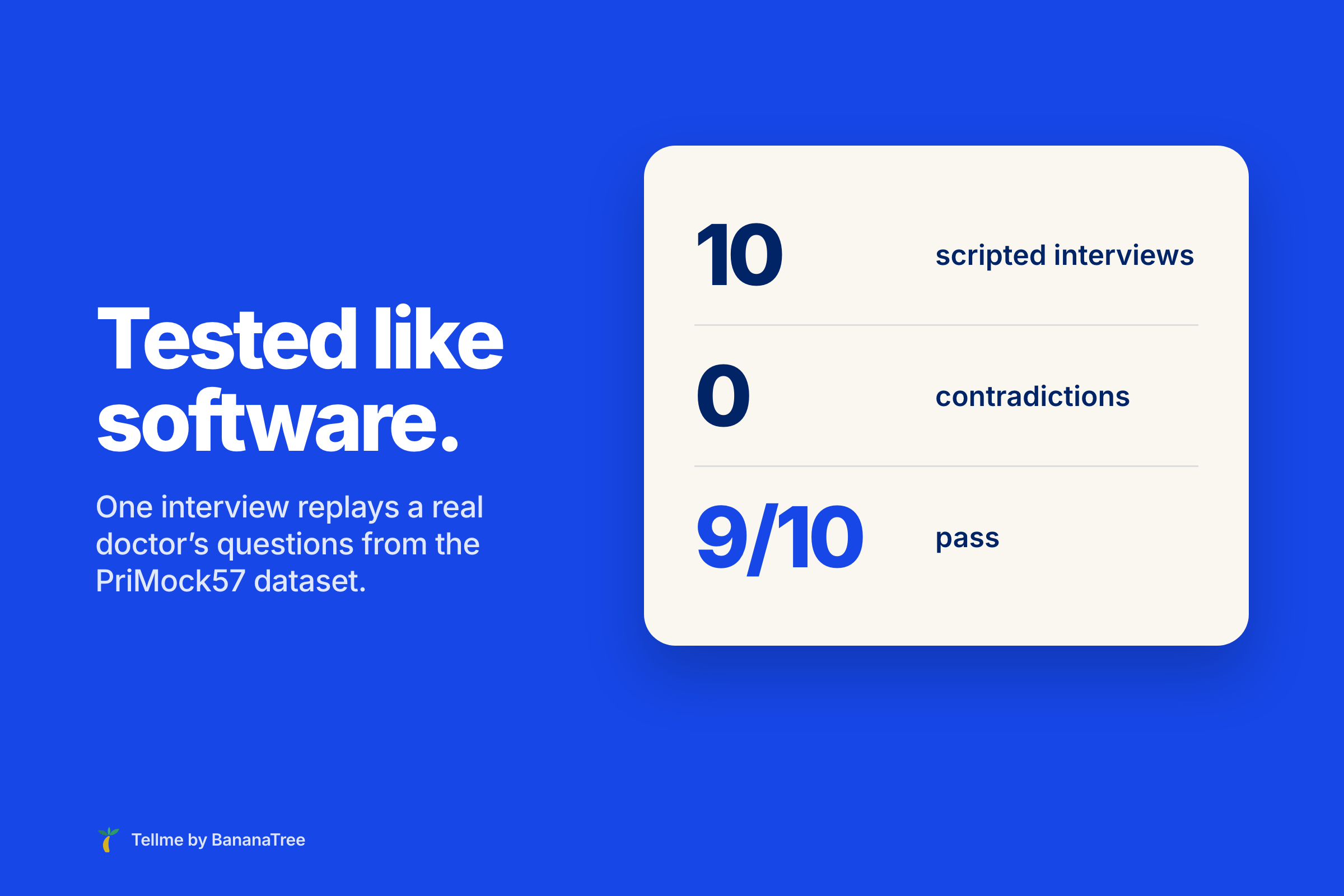
10 scripted interviews, 0 contradictions, 9 of 10 pass. One replays a real doctor's questions from PriMock57.
Inspiration
The girlfriend of one of our team members is a medical student, and she complained before that she can't practise talking to patients more than in a short session with an actor. We instantly knew this was the perfect challenge for us.
With this in mind we started ideating about how we can make that happen.
We reflected on what makes a human doctor connect to their patients: Their body language, facial expression, tonation and of course what they are saying. By talking to multiple target users, the future doctors, we realized patient behavior is diverse and depends on many factors.
To make it more immersive we made the whole app focus on the visual experience of actually being in a practicioner's office and based the analysis on chess engine analysis.
What it does
Tellme by bananatree is an iOS App (instructions on how to get early access are in the judges notes section) that lets medical students practise patient interviews out loud on an iPhone, with an AI patient that reacts like a real person. There are multiple personas: 20 patients built from 9 medical cases, 4 personalities and 19 social histories. Margaret, for example, is 78, has had a fall, keeps drifting off topic and is secretly afraid of ending up in a care home.
The patient doesn't just listen to what you say, but also how you say it and how you sit. The phone tracks your face and body posture, and a model picks up your tone of voice. Cross your arms, frown or raise your voice and she closes off. Lean in and apologise and she warms up again, and her face, posture and voice change with her mood. Behind the scenes she has hidden trust, anxiety and irritation scores. She only shares the important facts once you've earned them, and the facts she isn't ready to share aren't even in the AI's prompt, so she can't let them slip.
Afterwards, every move is graded like a chess game, from blunder to great move. You see where you won her trust and where you lost it, which facts you found and which you missed, and feedback on your body language.
How we built it
- Brainstorm with Crazy 8: everyone writes down 8 ideas in 8 minutes. => Cluster, filter and scope the product.
- Research the available technologies and the existing research on empathy.
- Think through the user story.
- Set up a full agent workflow, where we can ideate, upload our meeting transcripts and have agents build our ideas: developers, reviewers, mergers and many more agent roles.
- Implement and iterate fast.
- Finalize and get the main feature and workflow done.
Challenges we ran into
- The AI always replied too friendly and with way too long sentences.
- The patients revealed everything straight away instead of making you earn it.
- Bottlenecks in the merge queue, plus token and API limits.
Accomplishments that we're proud of
- Created something that is fun to use
- Got incredibly positive feedback from medical students
- Creatively build a unique UX and characters that are interesting
- Built a full agent orchestration method that we can reuse at the next hackathon
- Stayed hyperfocused throughout the whole weekend and really bonded as a team
What we learned
- Just how much four dedicated, ambitious friends can achieve in 36 hours when we really put in the time and effort
- Crazy 8 for ideating is actually crazy
- When you think you've prioritized and have a tight scope, tighten it even more. There will always be more sub-issues coming up.
- Token limits run out fast, so choosing the right model for the right task is crucial
What's next for bananatree & Tellme
For us as team bananatree:
- Do more hackathons together. We worked really well together and complemented each other's strengths.
- Reflect on how the hackathon went and improve our workflows and processes.
For the project Tellme:
- Pitch in front of Avelios
- Pitch on the main stage
- Win an iPad so we can test BananaTree on other device platforms too
- Future Doctors told us they really like our project, that it would be incredibly helpful to have, and that they would even pay for it. So we'll look into how to turn what we have now into a real product that we can either sell, or publish as open source so that people can benefit from the work we put in.
Built With
- accessiblebydefault
- agenticengineering
- ainative
- arkit
- chessstylefeedback
- claude
- datanotcode
- earneddisclosure
- edgeai
- elevenlabs
- empathytraining
- evaldriven
- evidencebasedcontent
- hiddenemotionstate
- llmasajudge
- multimodal
- privacybydesign
- python
- speechemotionrecognition
- swiftui
- wav2vec2
- zeroleakbydesign


