-
-
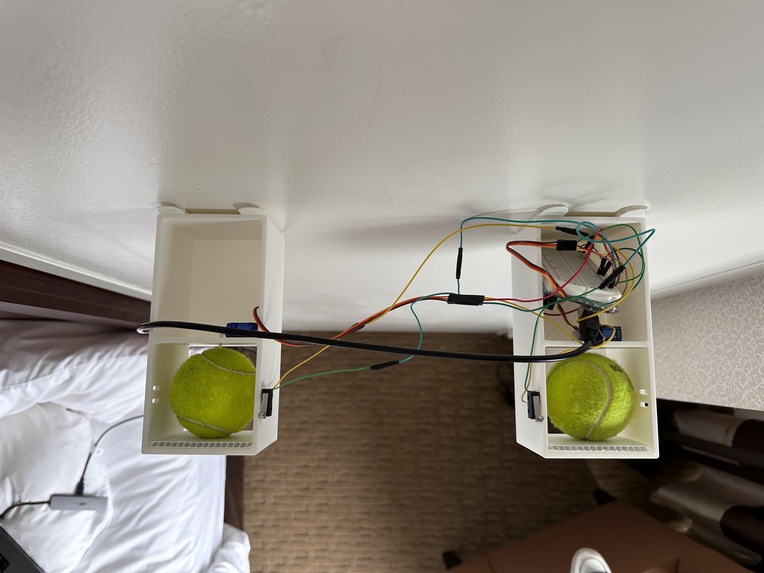
top view
-
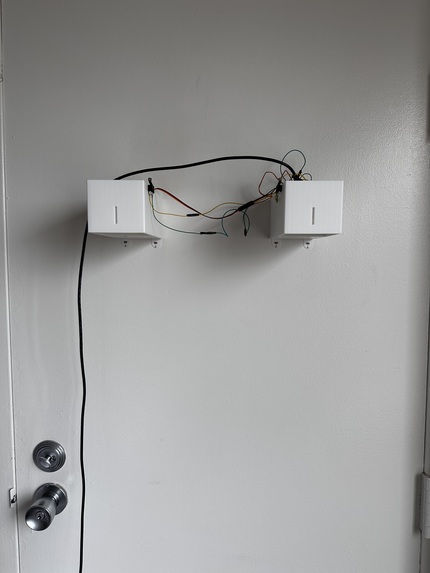
front view
-
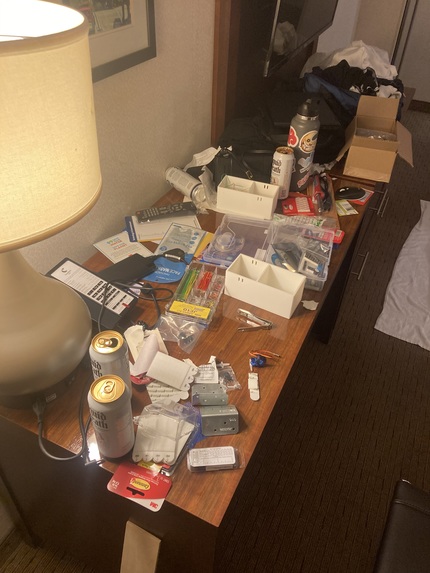
soldering at 2am in the hotel


Inspiration
Formula 1 drivers do a specific tennis ball reflex drill to prime their reactions before a race start. We created a robotic version that automates the function of the performance coach / trainer.
What it does
Ballistic mounts to any wall using command strip velcro. The athlete places their hands on top of the device. When both hands are detected by sensors, it waits a randomized amount of time and releases a tennis ball from the left, right or both sides. The athlete needs to catch the balls in the shortest amount of time.
How we built it
The prototype of ballistic was designed to be as simple and cheap as possible (<40$) and using only readily available materials. The main enclosures were designed in CAD and 3D printed. An arduino microcontroller was used for the controls. There are no fasteners in the design, everything is held together and mounted using command strips, allowing for quick assembly with no tools required.
Challenges we ran into
Acquiring materials in the time-frame of the hackathon was the main challenge. None of the hobby shops in SF survived Covid :(. We called every electronics and computer store in the bay area and the closest one that carried arduino and servo motors was over 30 min away, and we don't have a car. We hired a courier service to deliver the parts same-day, but when they arrived, one of the parts was wrong. We managed to track down the servo motor we needed in the misc. parts bin at F, inc (thanks Abhinav). We found the tennis balls in the bushes outside the tennis court we walk past on Laguna on the route to F, inc from my hotel. We've individually walked over 15 mi during this hackathon to pick up materials.
Accomplishments that we're proud of
Commitment to building hardware despite headwinds. Making it work with whatever we can get.
What we learned
Building hardware is hard, but especially in SF
What's next for ballistic
Open sourcing the design and sharing it with others
Built With
- 3dprinting
- cardboard
- onshape
- tape

Log in or sign up for Devpost to join the conversation.