-
-
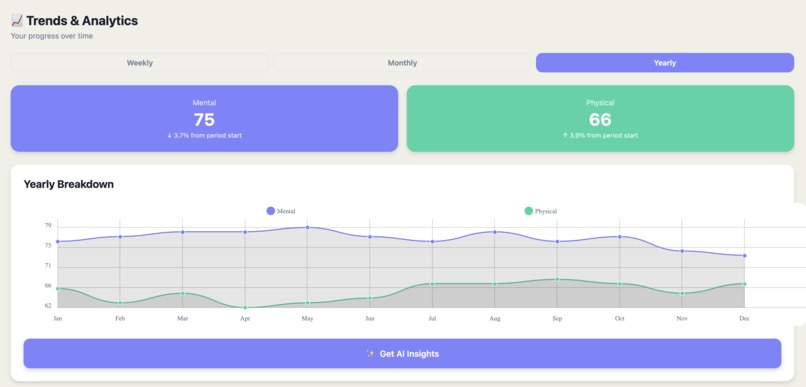
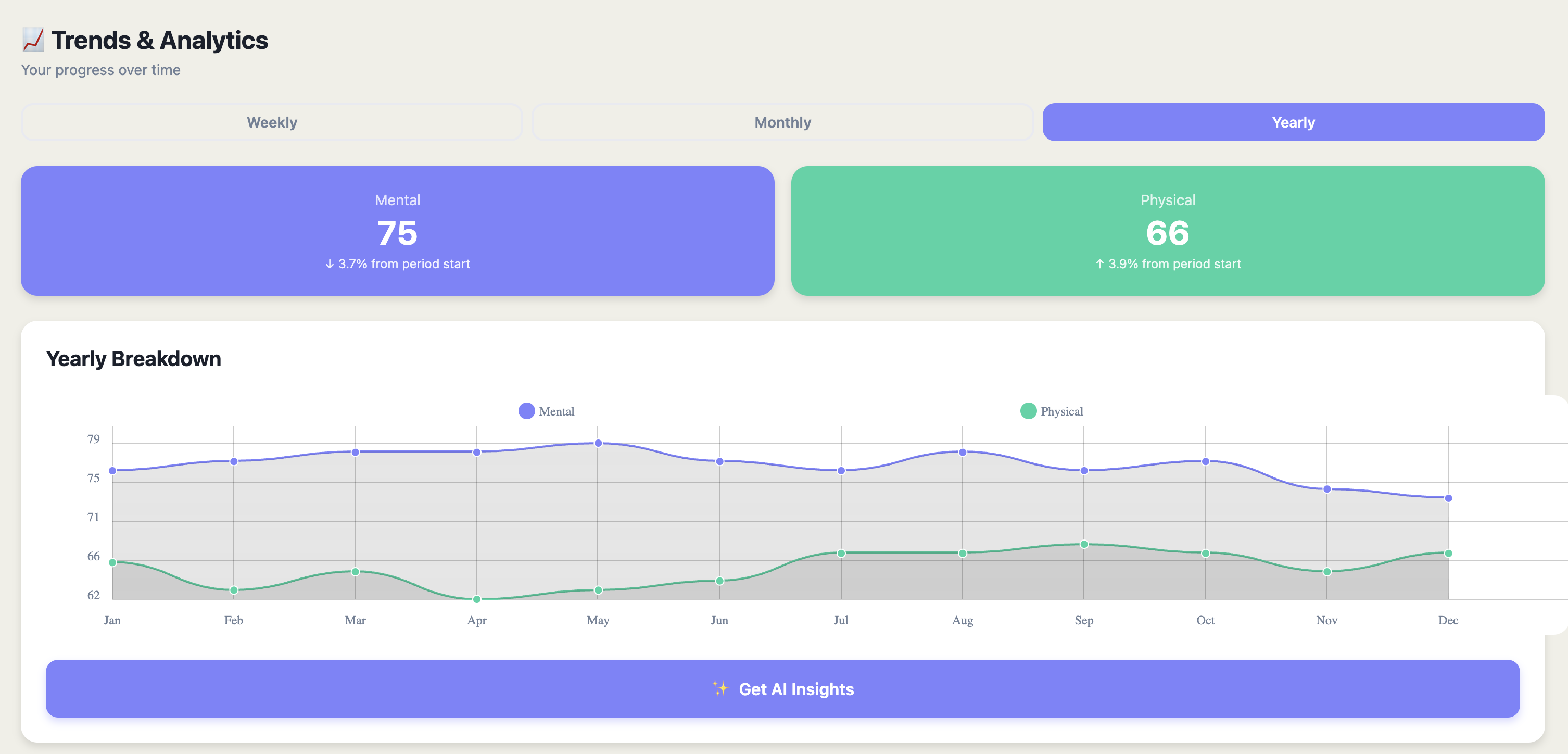
Trends over period
-
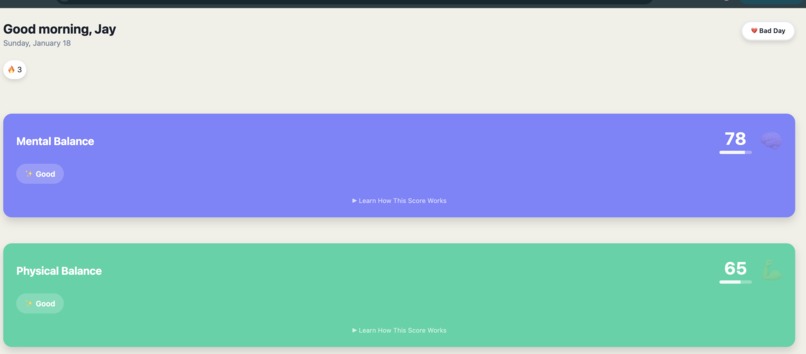
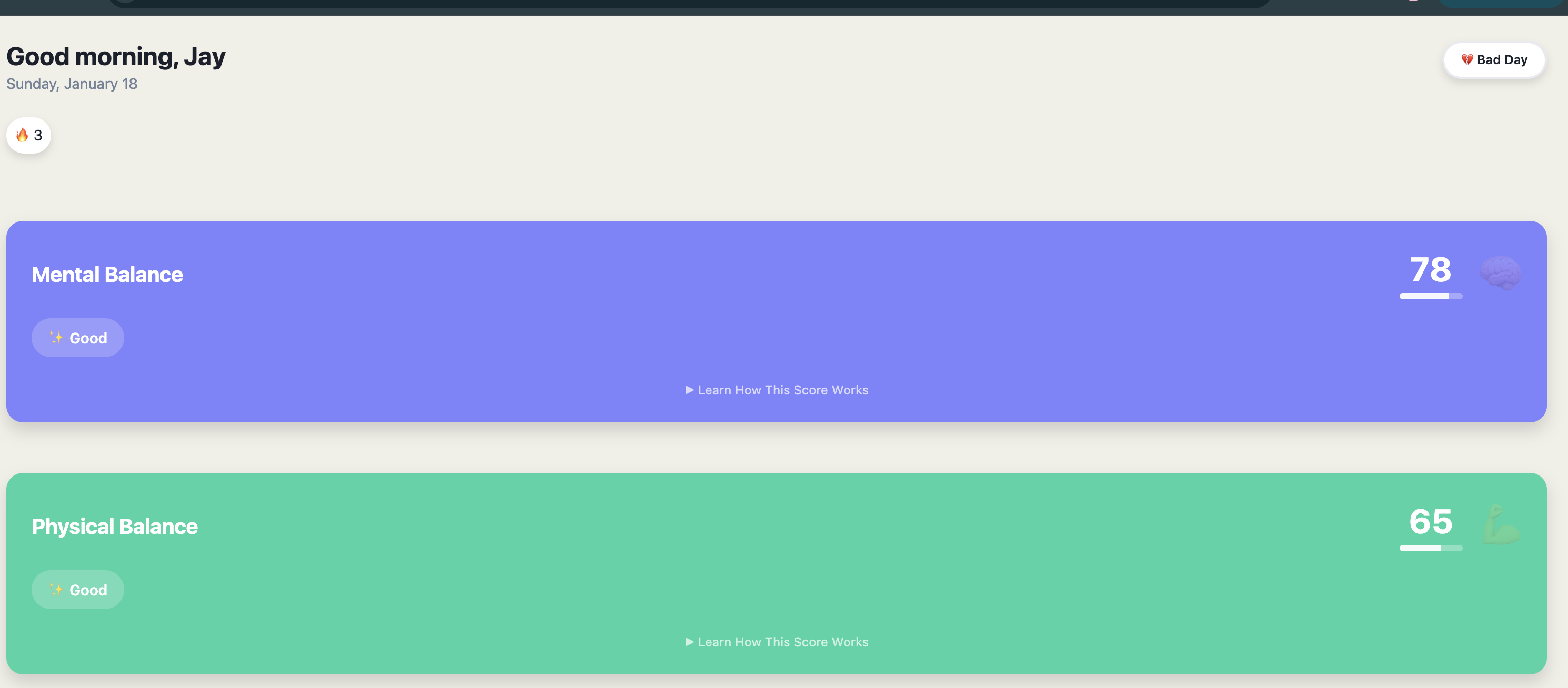
Homepage
-
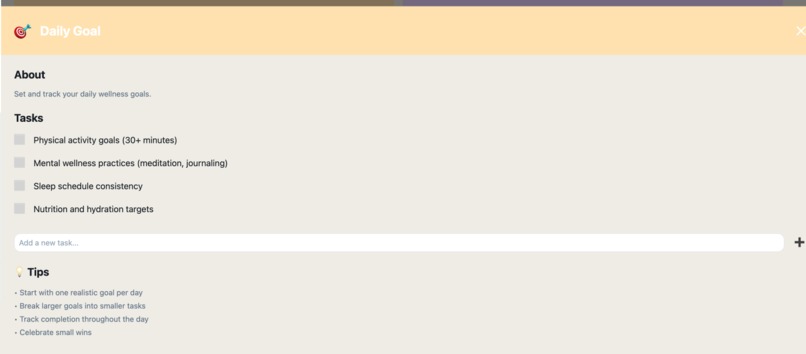
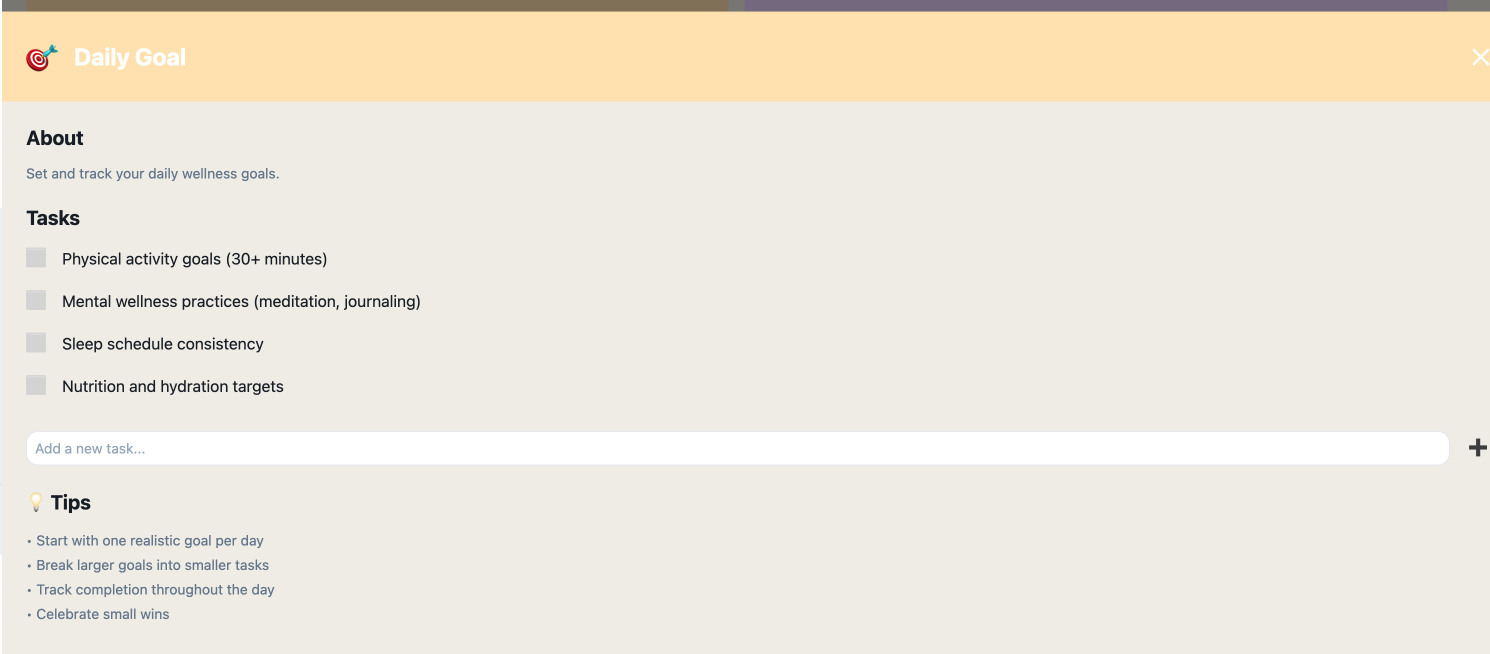
Tracking tasks
-
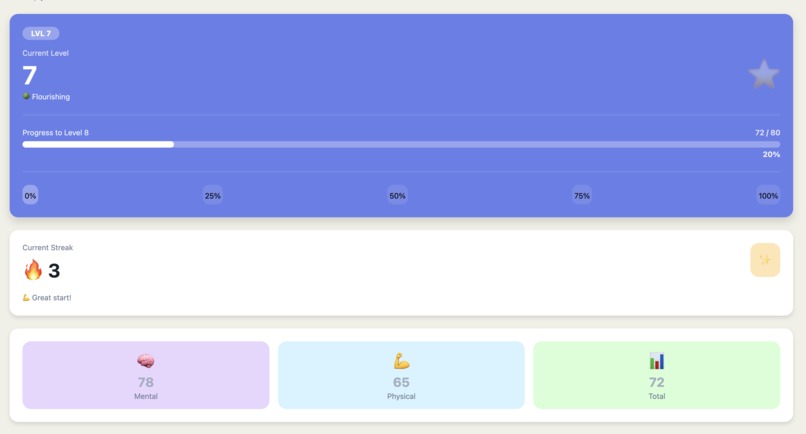
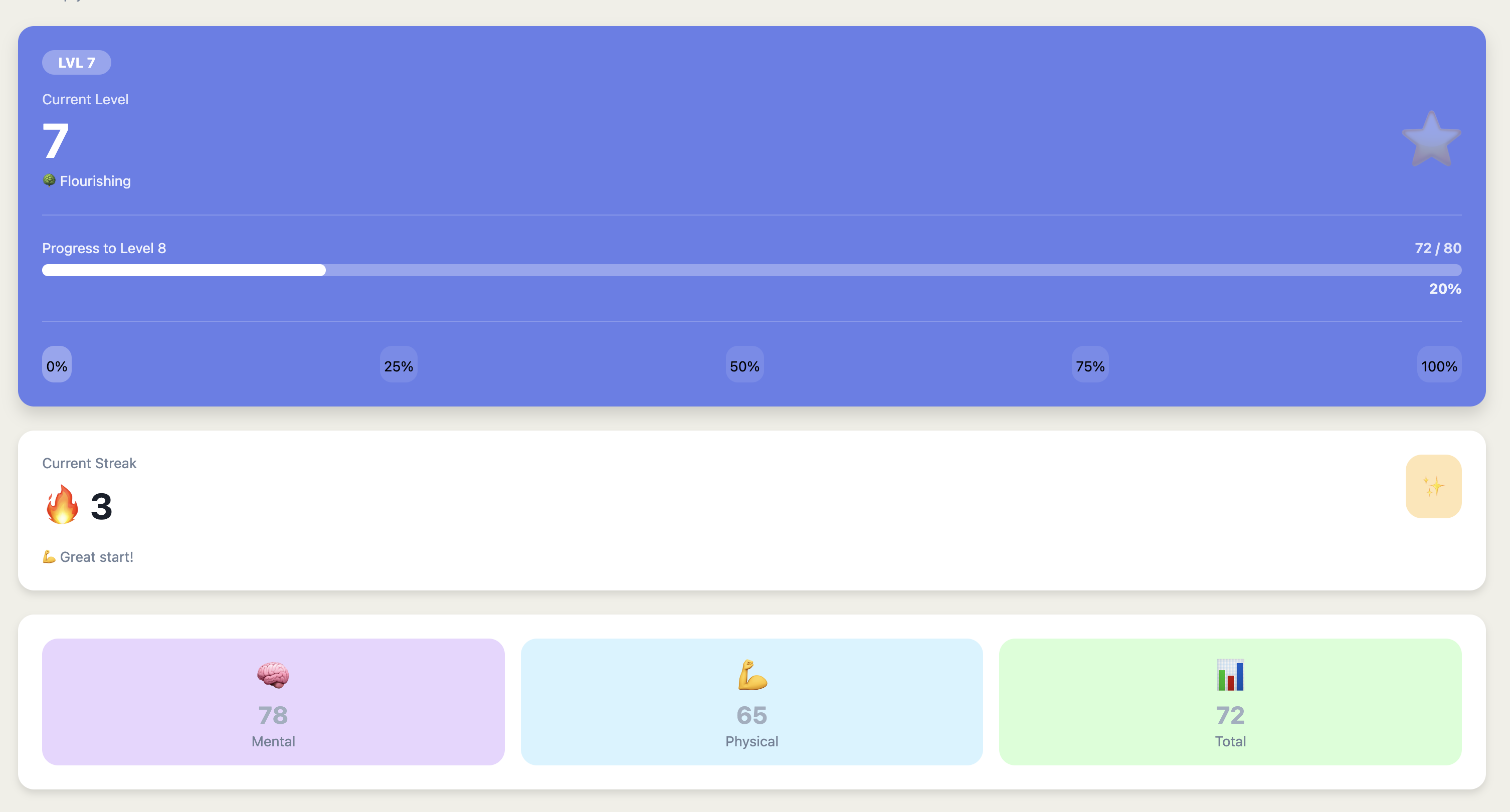
Gamified Journey of user
-
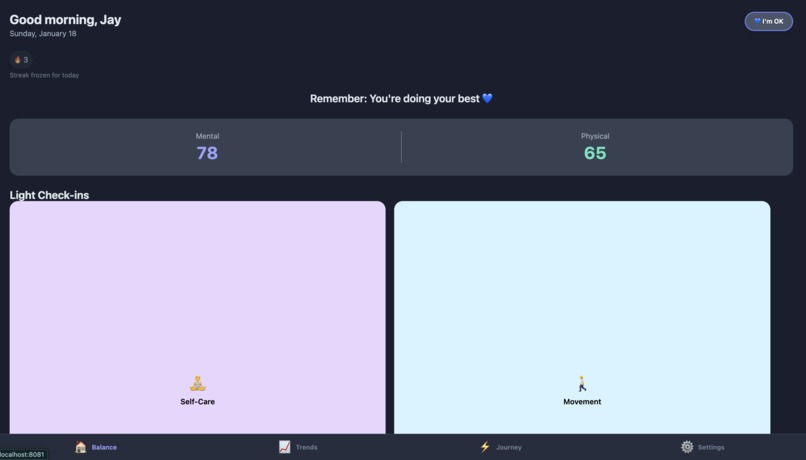
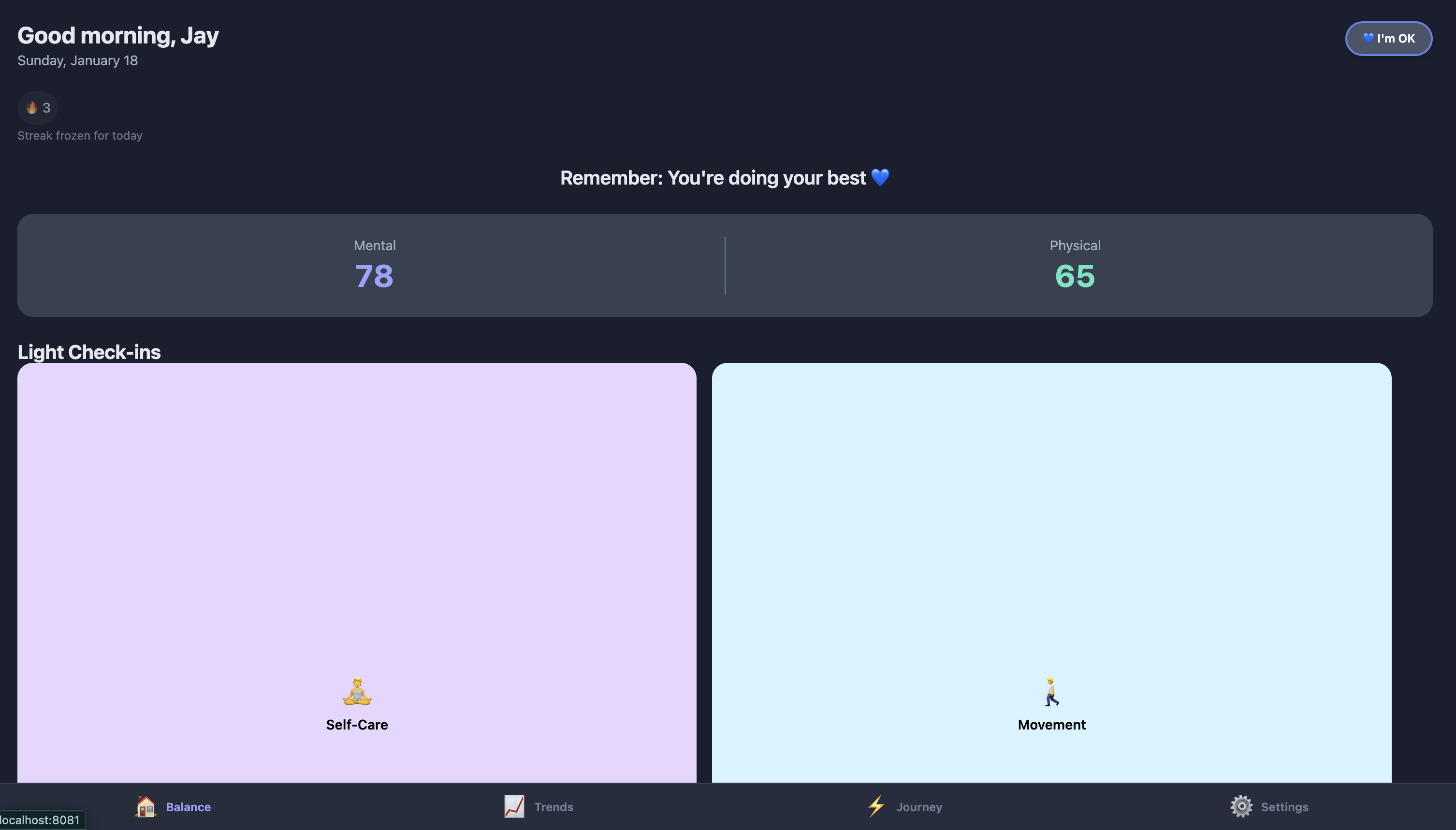
Bad Day simplification for user to relax
-
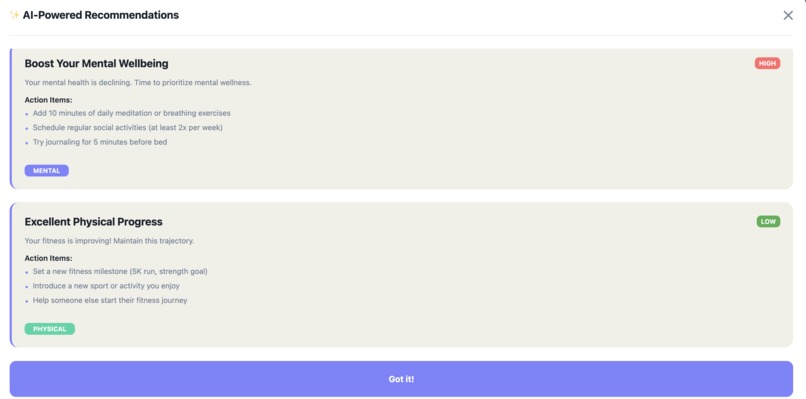
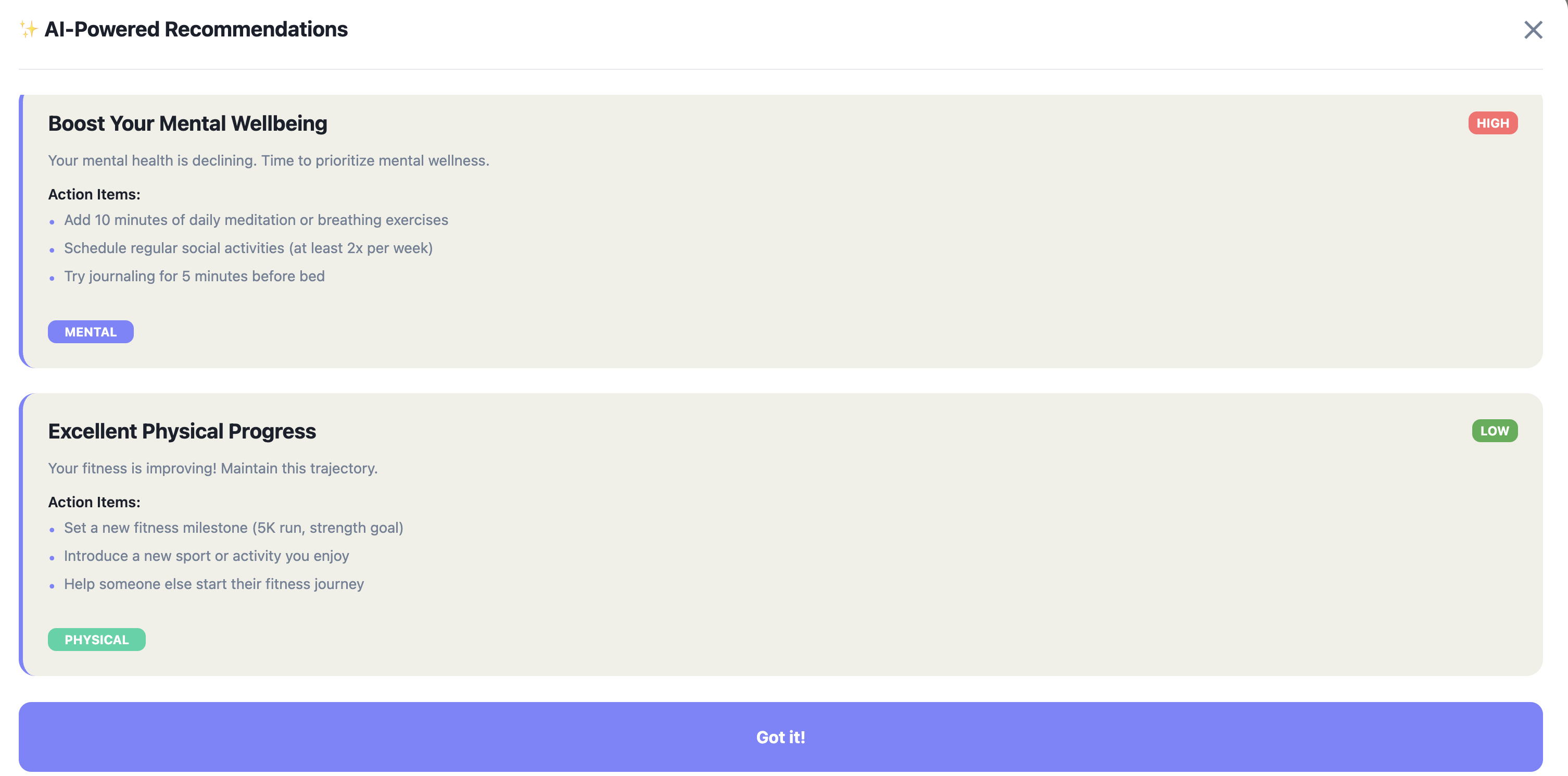
AI Advice based on trends
-
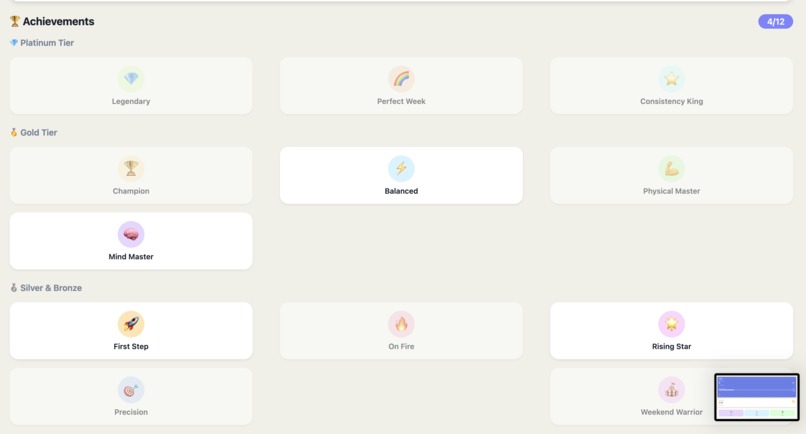
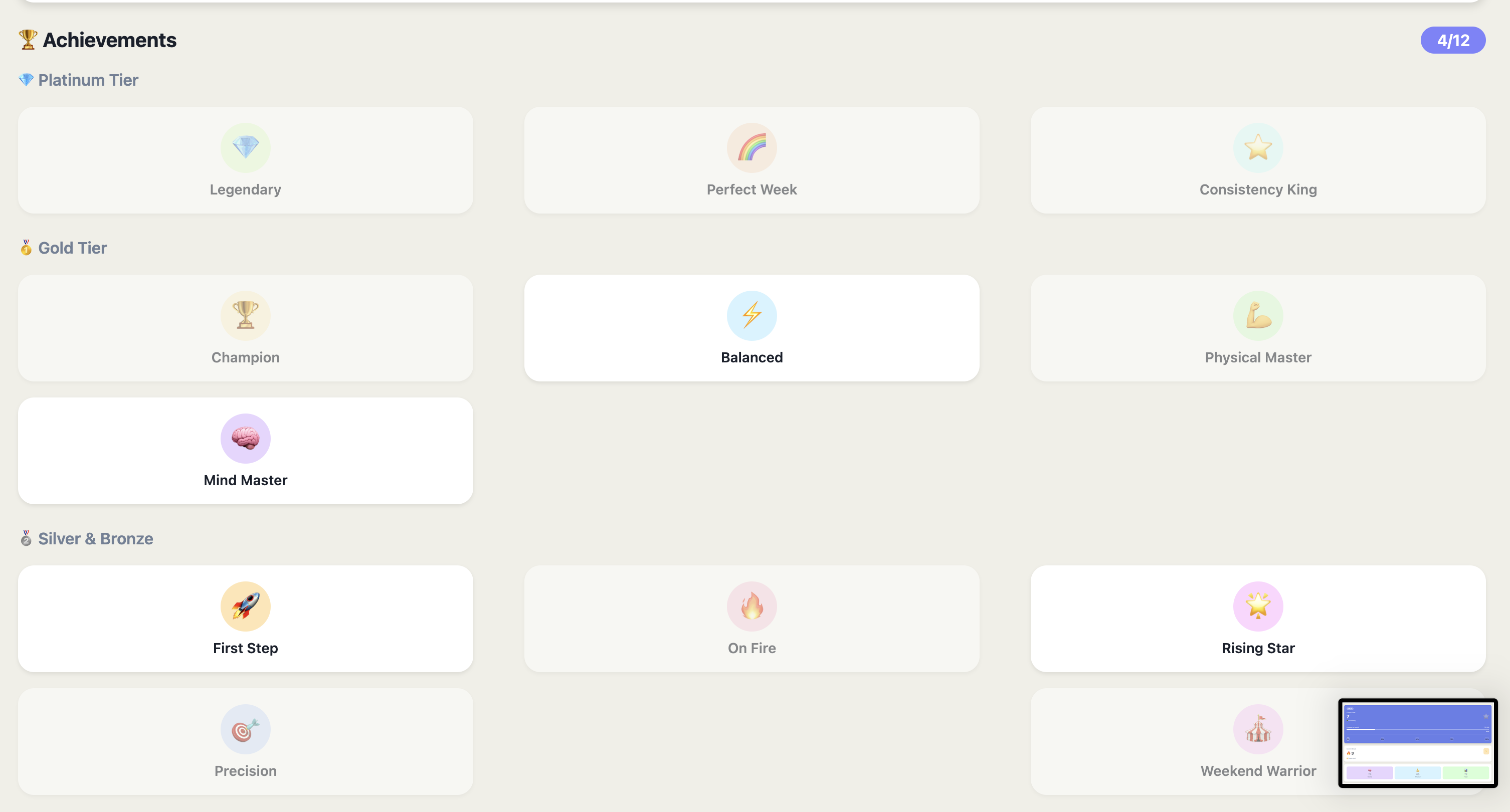
Achievements unlocked
Balance: A Personalized Wellness Intelligence Platform
Inspiration
Balance was inspired by a simple but persistent problem in modern wellness tracking: people monitor isolated metrics but rarely understand how those metrics interact.
- Someone may achieve daily step goals while spending excessive time on their phone.
- Others may exercise consistently but experience poor sleep due to late-night screen usage.
Through discussions with peers and personal observation, a recurring issue became clear: individuals lack visibility into how their time, habits, and behaviors collectively impact their well-being.
Most wellness tools assume ideal behavior rather than adapting to real-life patterns. Balance was created to address this gap by providing a holistic, adaptive view of wellness that evolves with the user.
What I Learned
Algorithm Design and Data Normalization
Designing the scoring system required careful consideration of:
- Meaningful thresholds for sleep, activity, and screen time based on established health guidelines
- Non-linear scoring, where early improvements have greater impact than marginal gains at higher levels
- Graceful handling of missing data by dynamically adjusting weights instead of invalidating results
Adaptive Scoring Architecture
Wellness scoring cannot be static. Balance dynamically adjusts factor weights based on available data sources. The system prioritizes:
- Task-based metrics when tasks are tracked
- Behavioral signals when only usage or health data is present
- Minimal weighting when a single data source exists
This ensures that users receive meaningful feedback regardless of onboarding stage.
Gamification and Motivation
The achievement system was designed to reinforce sustained engagement by:
- Making progress visible and measurable
- Supporting multiple effort levels through tiered achievements
- Providing tangible rewards that directly affect scores
- Recognizing effort as well as outcomes
Compassionate UX Design
A key design principle was reducing punitive feedback. Bad Day Mode was introduced to:
- Prevent streak loss
- Reduce expectations
- Prioritize psychological safety
This design choice emphasizes recovery and consistency over rigid adherence.
Cross-Platform Development
Building Balance using React Native for both web and mobile emphasized:
- Shared business logic with platform-specific UI adaptations
- Responsive design considerations from the outset
- Consistent behavior across platforms without code duplication
System Architecture
Balance transforms raw user data into actionable wellness insights through a structured pipeline:
Raw Inputs
- Health Data (sleep, activity, exercise)
- Usage Data (screen time, app categories)
- Task Data (mental and physical tasks)
Scoring Engine
- Mental Score Calculation
- Physical Score Calculation
- Dynamic Weight Adjustment
State Management
- Centralized store for scores, streaks, achievements
UI Layer
- Dashboard
- Progress Journey
- Analytics
- Settings
Key Design Decisions
Dynamic Weighting
The system does not assume complete datasets. As users track more data, weights rebalance automatically without requiring configuration or resets.
Tiered Achievements
Achievements are structured into progressive tiers:
- Entry-level milestones
- Intermediate performance goals
- Long-term consistency and mastery
Each tier requires increased commitment, creating a clear progression model.
Bad Day Mode
When enabled:
- The interface simplifies to essential metrics
- Task expectations shift to self-care
- Streaks are frozen rather than penalized
- Data is tagged separately for analytics integrity
Application Workflow
Data Collection The system ingests health metrics, usage patterns, and task completion data.
Adaptive Processing Weight distributions are recalculated based on available data sources.
Score Calculation Each component is scored independently and combined using weighted aggregation:
\text{Final Score} = \sum (\text{component score} \times \text{dynamic weight})
Contextual Analysis Scores are evaluated against historical trends to surface insights and patterns.
Visualization Users view overall scores, contributing factors, trends, and achievements.
Challenges and Solutions
Dynamic Scoring Without Excessive Complexity
The main challenge was ensuring fair scoring across vastly different data availability scenarios. This was addressed by defining explicit weight profiles that activate based on detected data sources.
Designing a Meaningful Achievement System
Achievements needed to balance challenge, visibility, and reward value. A tiered structure with progress tracking and score-based rewards created a feedback loop that reinforced consistent behavior rather than short-term optimization.
Key Features
- Adaptive mental and physical wellness scoring
- Dynamic weighting based on data availability
- Tiered achievement system with measurable progress
- Bad Day Mode for non-punitive recovery support
- Cross-platform web and mobile support
- Analytics dashboard with trend-based insights
- Integrated task management
- Immediate usability with generated test data
Running the Project (Web)
npm install
npx expo start --clear
An optional environment variable enables AI-generated insights.
Summary
Balance demonstrates how wellness technology can move beyond isolated metrics by interpreting behavioral data holistically. By adapting to real-world usage patterns and prioritizing consistency over perfection, Balance provides meaningful, actionable feedback throughout a user’s wellness journey.
The project emphasizes adaptability, transparency, and compassionate design as core principles for sustainable wellness systems.
Built With
- claudeapi
- expo.io
- react
- react-native-chart-kit
- typescript
- zustand


Log in or sign up for Devpost to join the conversation.