-
-
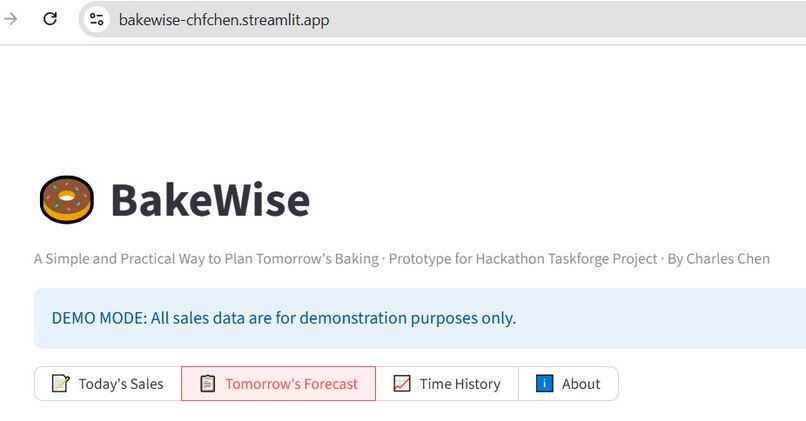
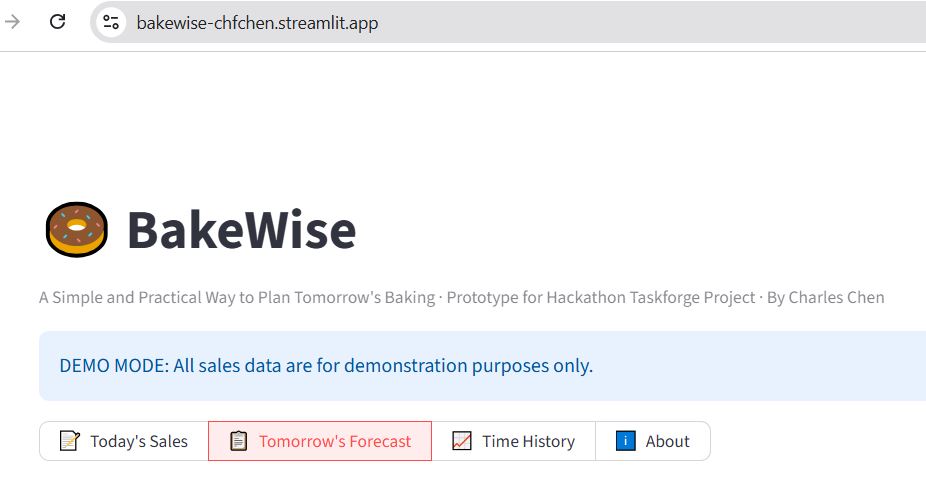
Cover-Website
-
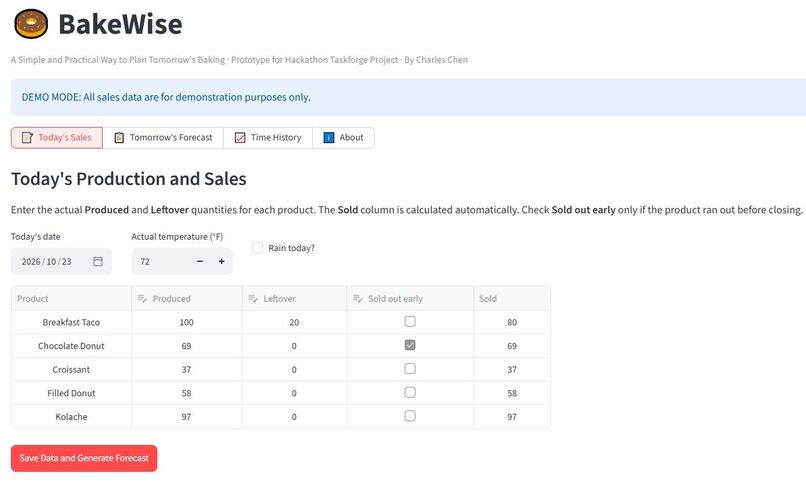
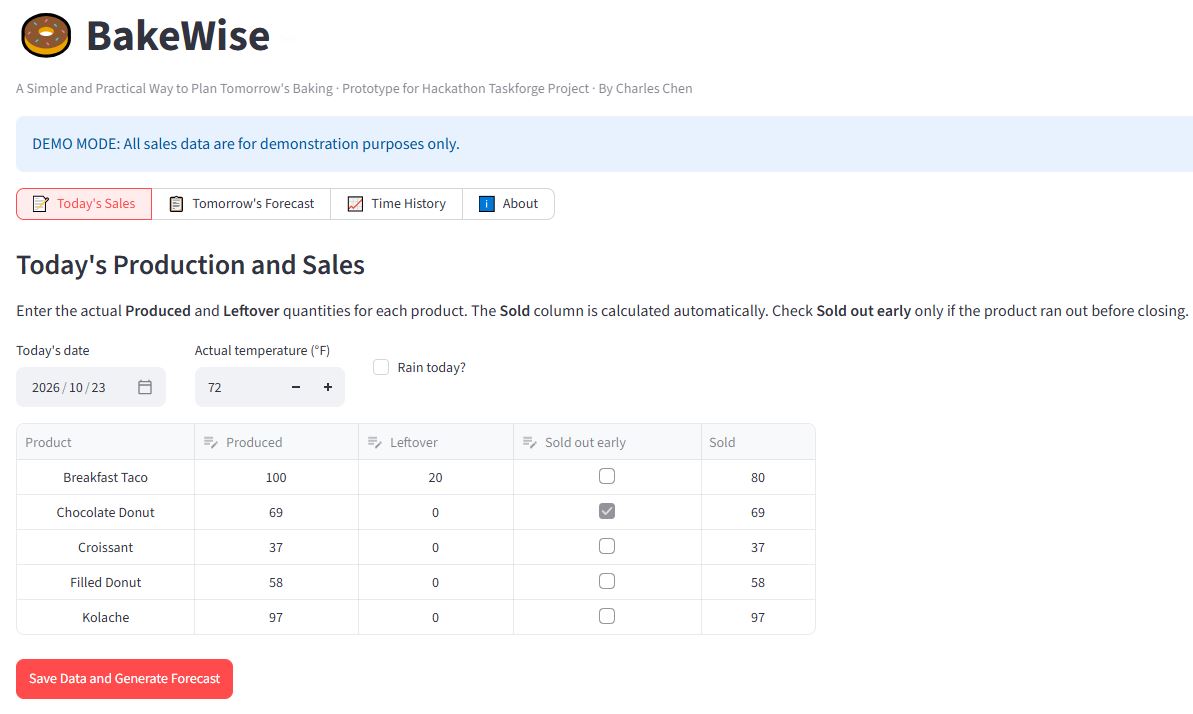
Today's Sales Page
-
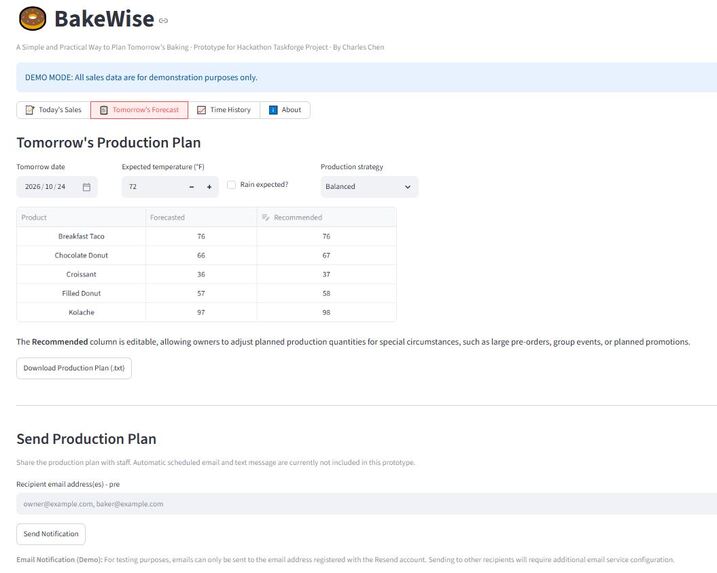
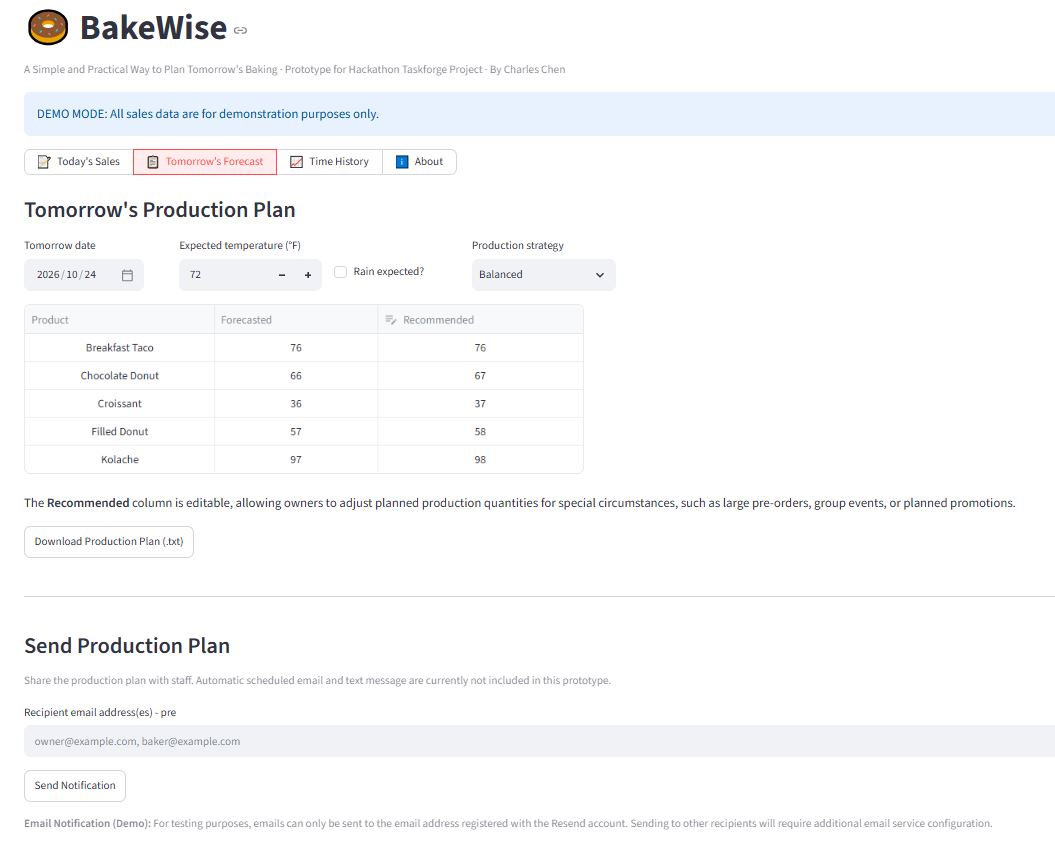
Tomorrow's Forecast Page
-
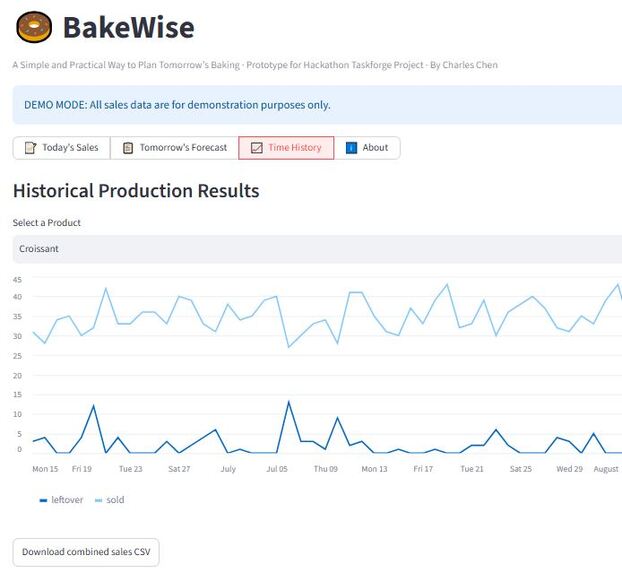
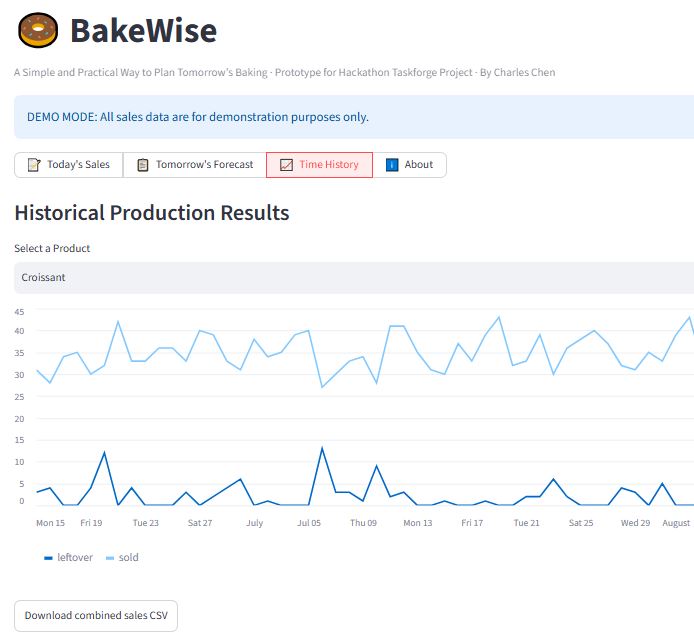
Time History Page
-
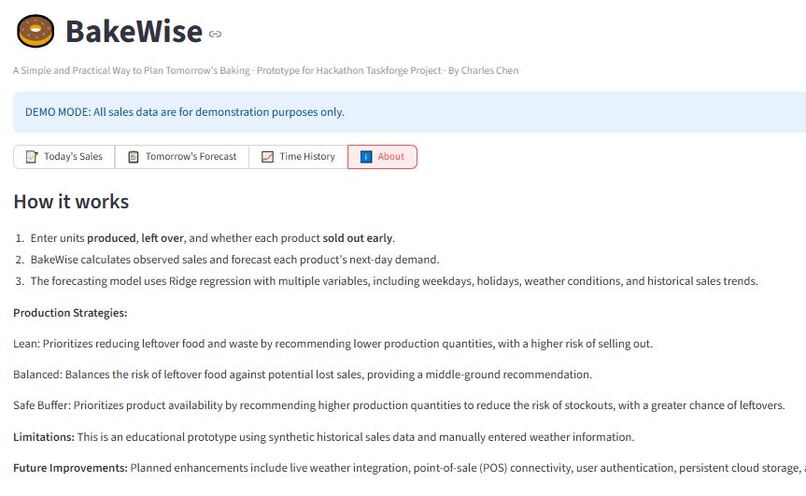
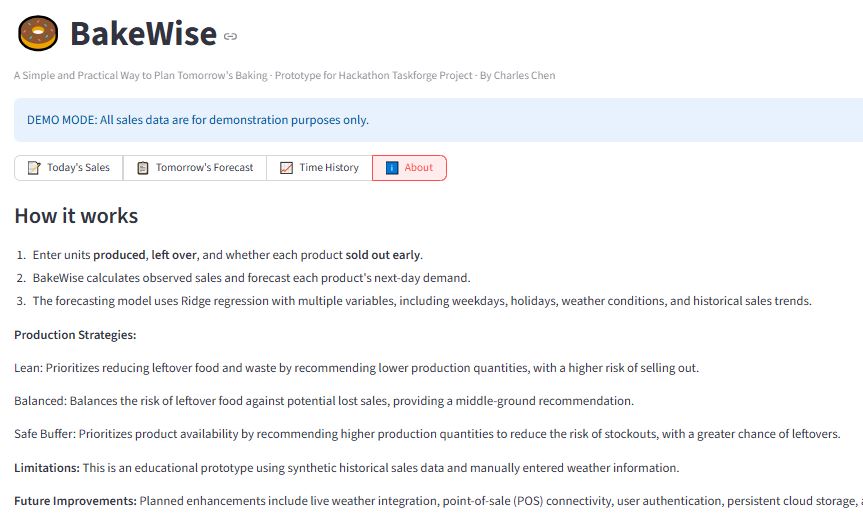
About / Information Page
Inspiration
Working at a local donut and breakfast shop, I saw firsthand how much effort goes into preparing food before customers even arrive. Every morning, the owners must decide how many donuts, kolaches, and other breakfast items to make. Because some of these products are highly perishable and often cannot be sold the following day, producing too much leads to food waste and financial losses, while producing too little means disappointed customers and missed sales.
These decisions often rely on memory, experience, and intuition, even though demand varies with weekdays, weather, holidays, and other factors. For owners who already work long hours, considering these variables adds stress and uncertainty.
Although inventory and production forecasting software already exists, there is often a gap between technology availability and actual adoption by small businesses. Even useful tools may go unused if they require extensive training, complicated setup, or significant daily effort. I believe technology should adapt to how people already work, rather than forcing them to change their routines.
This inspired me to create BakeWise, a simple production-planning assistant that combines data-driven recommendations with minimal daily effort.
What it does
BakeWise helps small bakery and breakfast shop owners determine how much of each product to prepare for the following day. Instead of relying primarily on memory and past experience, owners can follow a simple workflow:
- Quick daily input: Owners enter quantities produced and left over in a table. For 10–15 products, this requires 20–30 numbers and is designed to take 1–2 minutes.
- Demand forecasting: BakeWise uses historical sales, weekdays, holidays, and weather conditions to estimate next-day demand. For the prototype, weather inputs are entered manually.
- Instant recommendations: After submitting daily data, owners immediately see tomorrow's forecasted/recommended production quantities and can download the production plan.
- Flexible planning: Owners can choose lean, balanced, or safe-buffer production strategies and manually adjust recommendations when needed or for special circumstances, such as large pre-orders, group events, or planned promotions.
The goal is to make daily production planning faster and less stressful, requiring less than five minutes of daily effort. Future automated notification delivery will make recommendations accessible to owners and staff without requiring them to revisit the website.
How we built it
I designed BakeWise around one principle: minimize the effort required from bakery owners while improving production decisions.
The prototype uses Python for data processing, pandas for analyzing historical records, scikit-learn for forecasting, Streamlit for the browser-based interface, and CSV files for lightweight data storage.
Owners enter daily production and leftover quantities in a simple table, and BakeWise automatically calculates sales. The system then generates production recommendations using three strategies: lean, balanced, and safe buffer.
After submitting their data, owners immediately receive a clear production plan that they can adjust or download. I focused on creating a simple, practical workflow rather than adding complicated dashboards or unnecessary features.
Challenges we ran into
One of my biggest challenges was keeping BakeWise simple and practical. Rather than adding fancy dashboards or unnecessary features, I focused on functions that directly benefit bakery owners. I also had to balance forecasting accuracy with simplicity and consider unmet demand when products sell out.
The current prototype uses synthetic historical sales data and manually entered weather information. While sufficient to demonstrate the workflow, its forecasting accuracy still needs to be validated using real bakery sales data.
Throughout the project, I prioritized ease of use and practical value over technical complexity.
Accomplishments that we're proud of
I'm proud of turning a problem I observed firsthand into a working BakeWise prototype. It combines daily data entry, statistical demand forecasting, immediate production recommendations, and flexible planning strategies in a simple web interface.
What we learned
I learned that useful technology isn't just about sophisticated algorithms, but also about how easily people can adopt it. Accurate demand forecasting alone isn't enough; production decisions must balance potential waste against missed sales.
Most importantly, I realized that reducing daily effort and fitting into existing routines are essential to making technology truly accessible.
What's next
My next priority is automated delivery of production plans to owners and staff through scheduled emails or text messages, along with live weather integration to eliminate manual weather input. I also hope to connect point-of-sale systems to automate sales data collection and test forecasting accuracy using real bakery records.
Future improvements could include user authentication, persistent cloud storage, additional forecasting factors such as school calendars and local events, and more advanced machine learning techniques.
I also hope to develop a mobile app and an optional dashboard showing historical sales, leftovers, food waste trends, and forecasting accuracy.
My priority will remain the same: keeping BakeWise simple, practical, and easy to adopt.
AI Assistance
BakeWise is my original project idea, inspired by my firsthand experience working at a local donut shop. I independently identified the problem and designed the features and user workflow. I used ChatGPT to assist with coding, debugging, testing, and documentation. The project's concept and design decisions are my own.
Built With
- numpy
- pandas
- python
- scikit-learn
- streamlit

Log in or sign up for Devpost to join the conversation.