
Inspiration
In The Office, Michael Scott famously had a system: he’d task his receptionist, Pam, with bursting into meetings to fake an "emergency" call. Sometimes it was to make him look like a VIP; other times, it was a desperate plea for an exit. But what happens when Pam isn't at her desk? What happens when you’re actually trapped in a "Toby" style meeting with no escape hatch? We've all been in awkward social situations where we wished for a polite, believable excuse to leave. Bail was created to provide that escape hatch, instantly simulating a real-world, urgent call or message to help you gracefully exit.
What it does
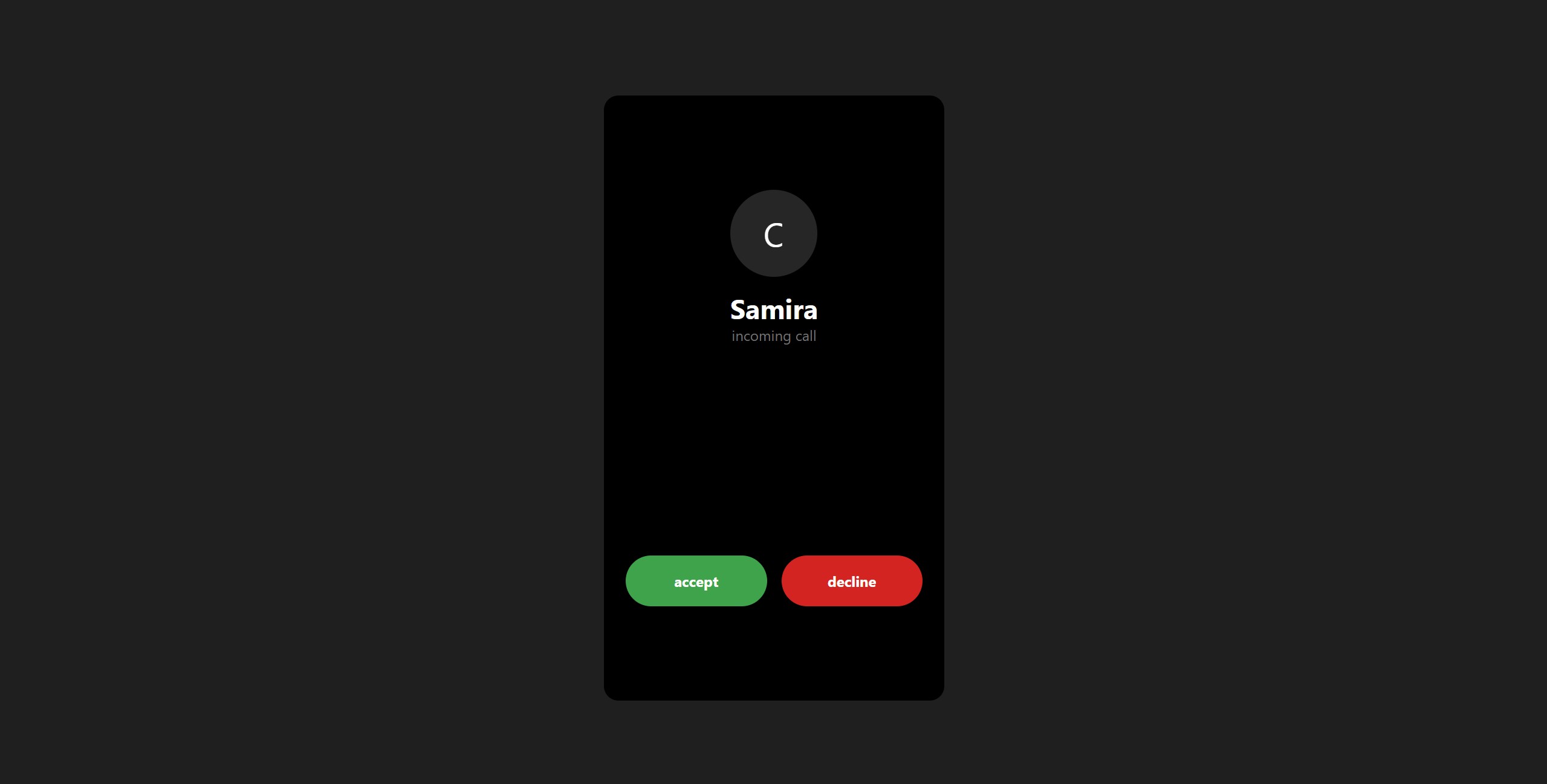
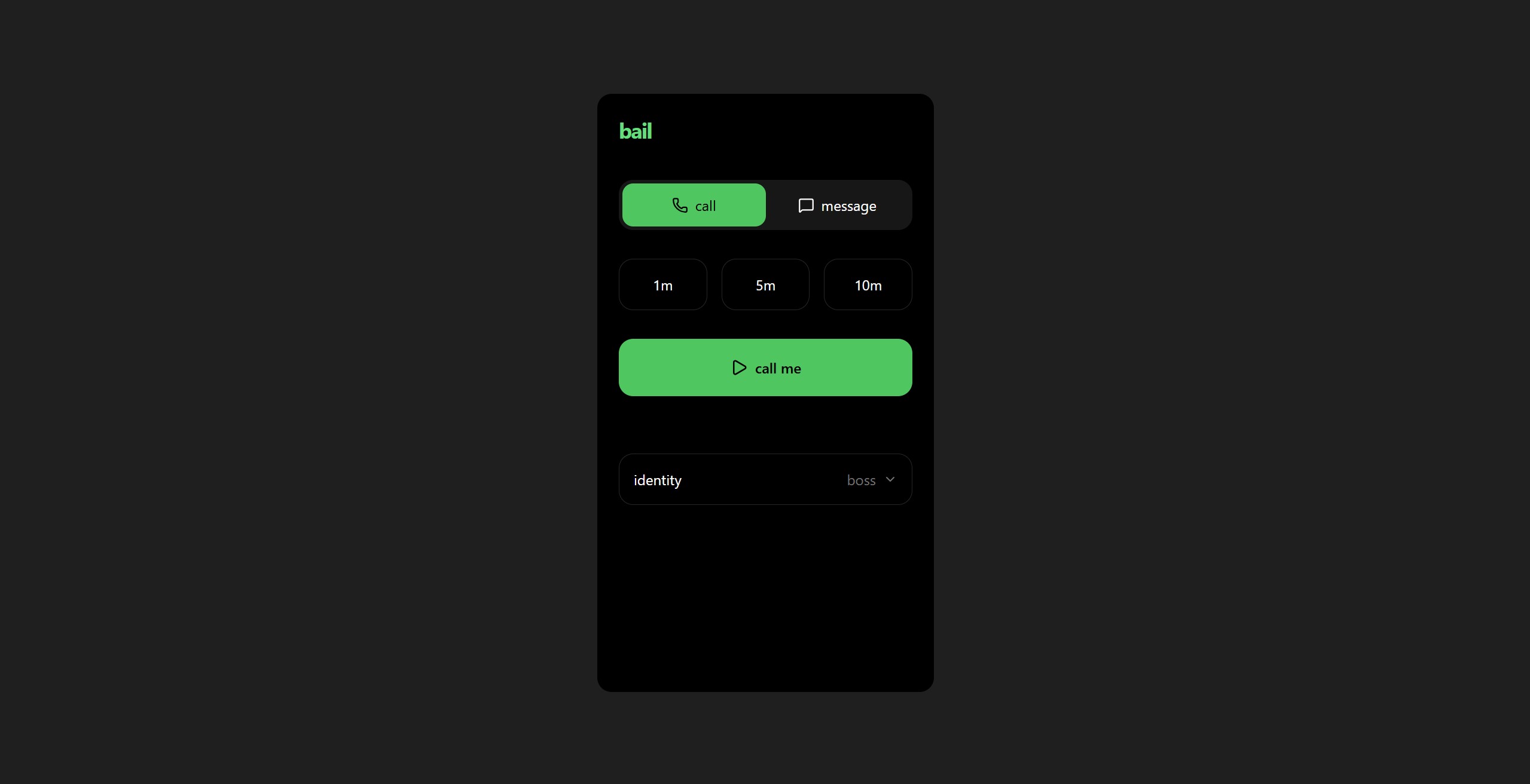
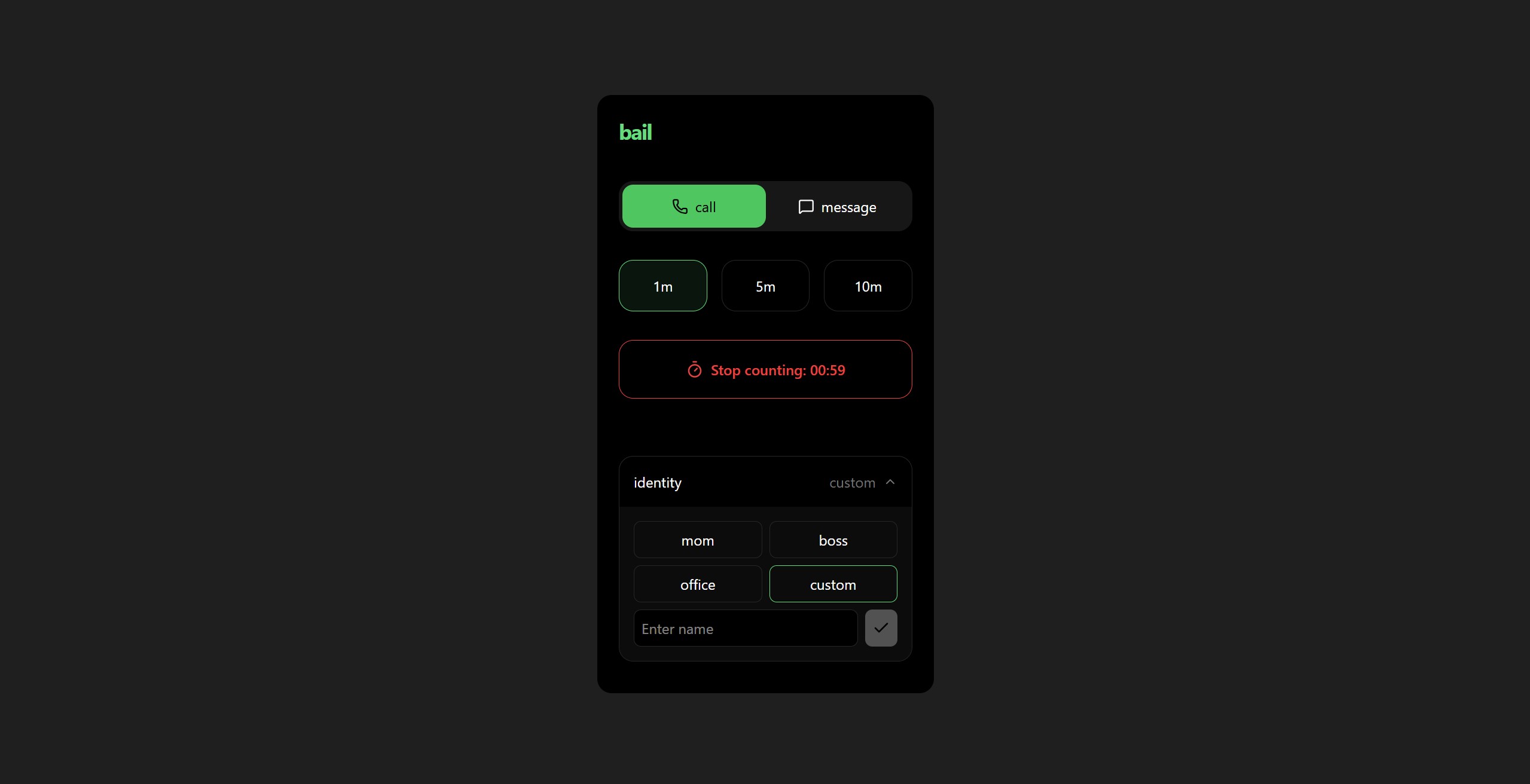
Bail allows users to trigger an incoming call or message instantly or set a custom timer to delay the trigger. It presents a realistic simulated interface based on a selected "identity" (e.g., Boss). To enhance realism, Bail leverages cutting-edge AI to generate convincing, natural-sounding voice responses on the fly, making the simulated call feel completely authentic.
How we built it
Bail was built using React and TypeScript for a fast, responsive user interface, styled with Tailwind CSS for a modern, polished look. At its core, I utilized the Google Gemini API, specifically the gemini-3.1-flash-tts-preview model, to generate high-fidelity, human-like audio voices (using the 'Kore' voice) dynamically, ensuring a truly immersive interaction.
Challenges we ran into
The primary challenge was managing complex state across the application—specifically, synchronizing the timer mechanism with the UI state to prevent unexpected behavior (like screen flashes) while allowing users to easily toggle their timer selection or stop a countdown in progress.
Accomplishments that we're proud of
I am particularly proud of integrating live, AI-generated audio directly into the simulated call experience, which significantly increases realism compared to static pre-recorded clips. Furthermore, I achieved a seamless user flow that allows users to switch between an instant trigger and a delayed timer with minimal friction.
What we learned
Building Bail deepened our understanding of complex state management in React, particularly for handling side effects like timers alongside user input. I also gained extensive practical experience working with the latest AI-driven text-to-speech technologies and integrating them to provide immediate, context-aware user experiences.
What's next for Bail
For future iterations, I plan to implement a broader array of identity personas, customizable caller names to match personal contacts, and more interactive voice-response scripts to make the simulated call even harder to distinguish from reality.
Built With
- framermotion
- gemini
- googleaistudio
- googlegeminiapi
- react
- tailwindcss
- typescript

Log in or sign up for Devpost to join the conversation.