Inspiration
Hardware development is still slow, tedious, and often disconnected from modern software workflows. I wanted to create a tool that brings the real-time, creative energy of "vibe coding" into the hardware world. With AI tools evolving rapidly, we saw an opportunity to let makers, engineers, and even beginners ideate, prototype, and deploy hardware solutions faster and more intuitively than ever before.
What it does
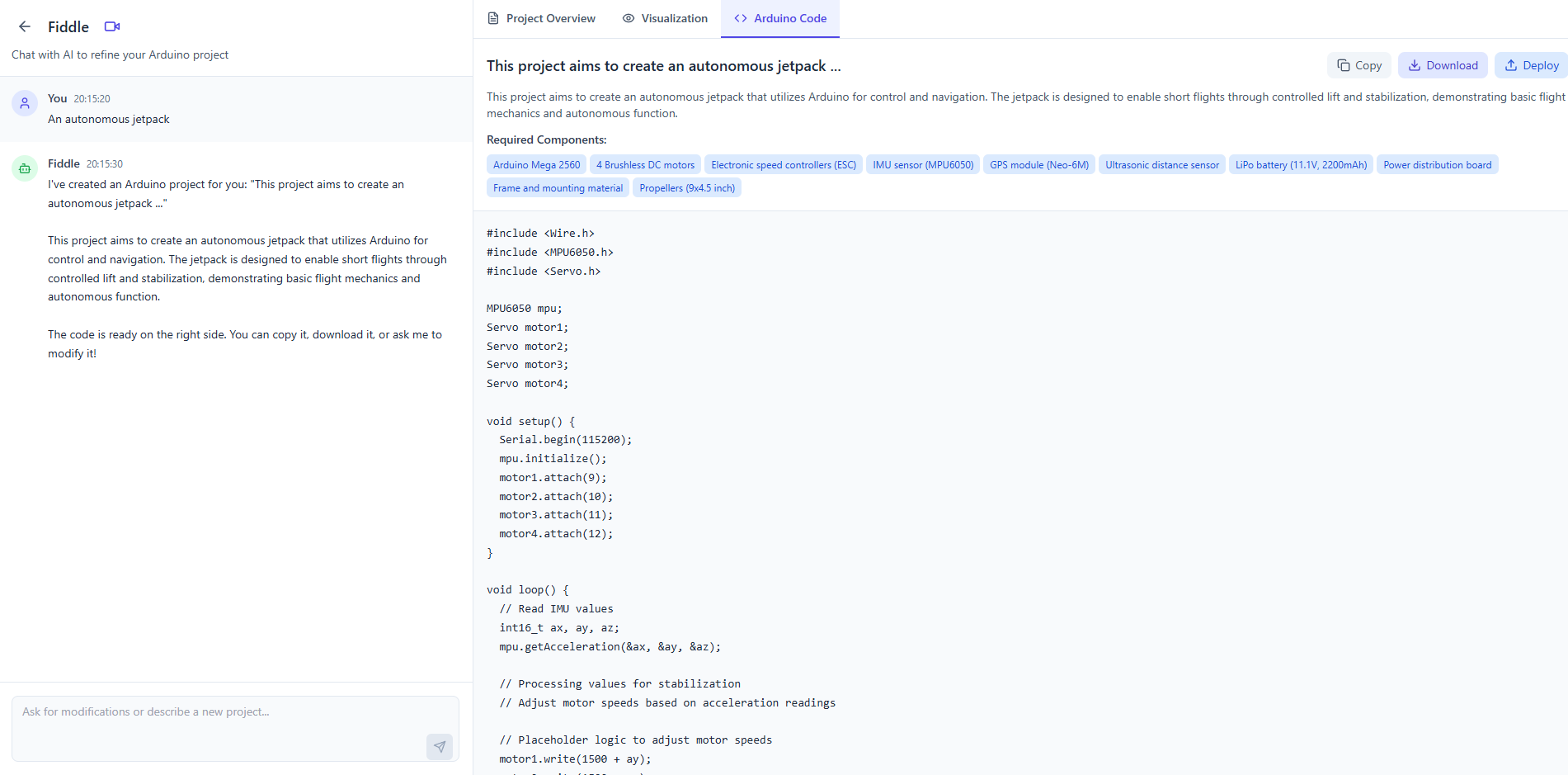
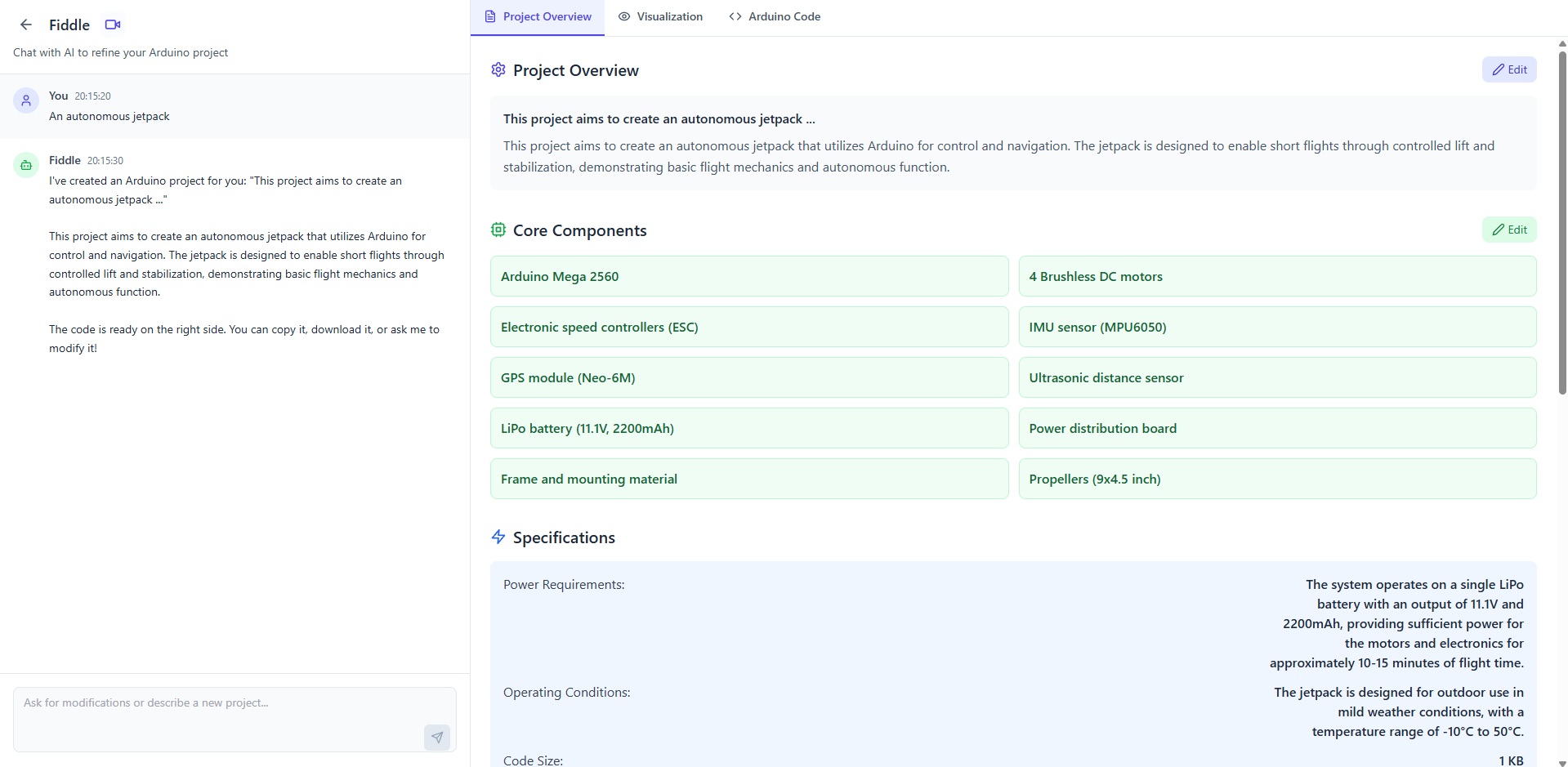
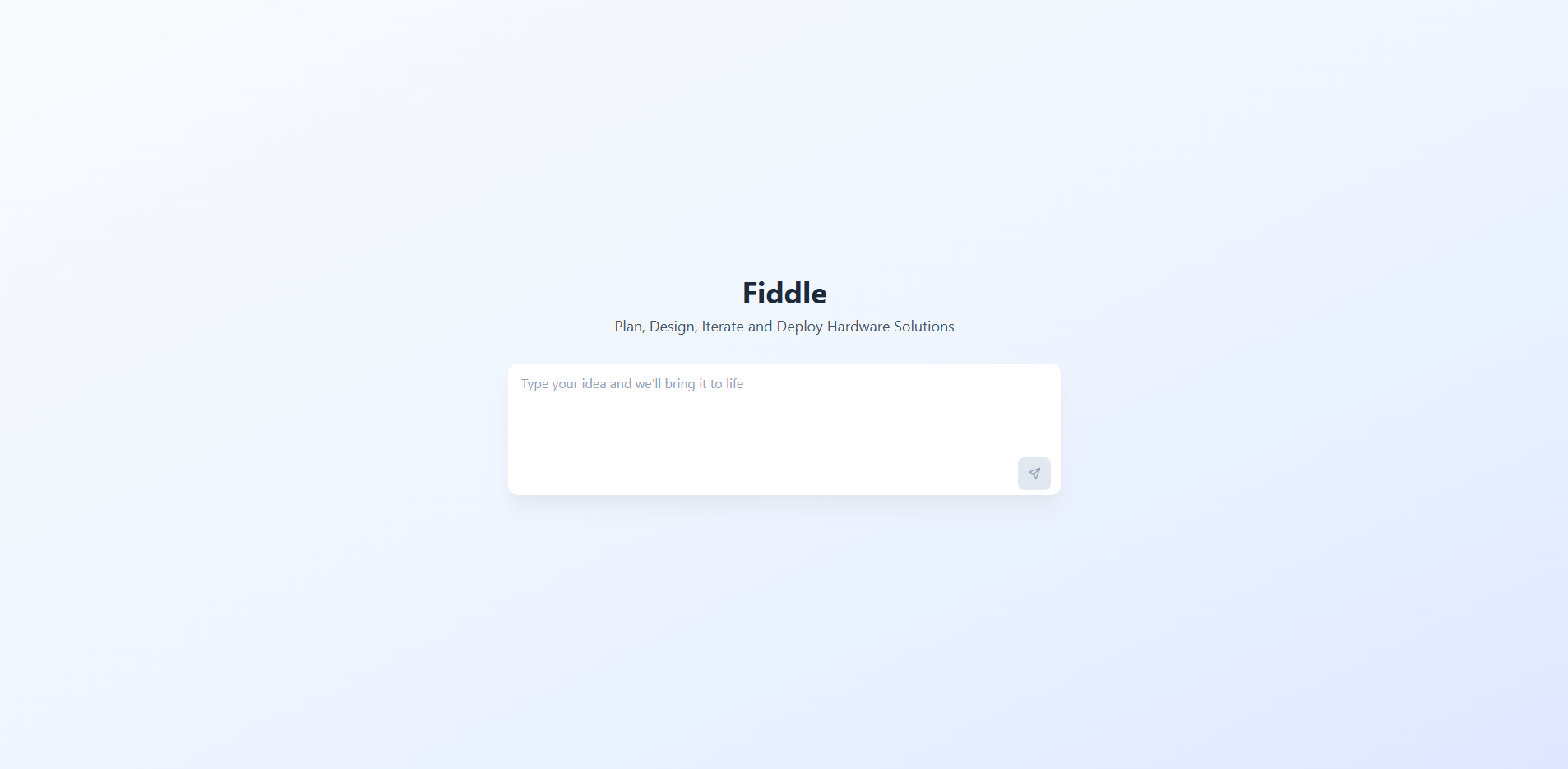
Fiddle is a hardware development assistant that lets you plan, design, iterate, and deploy hardware projects using natural language. Just describe what you want to build, and Fiddle helps generate schematics, code, part recommendations, and even deploys code directly to your connected devices. It works in a loop—suggesting improvements, debugging issues, and helping you "vibe code" hardware the same way you would do with software.
How we built it
I built Fiddle using Bolt and Cursor, leveraging a fast, AI-integrated workflow that allowed us to prototype and iterate quickly. Most of the development happened through conversational assistance with Gemini, which helped us debug, refine logic, and generate code across the stack. This setup let us move fluidly from idea to implementation, especially when integrating code generation, device communication, and user interface components.
Challenges we ran into
Creating a useful AI prompt structure for hardware-specific tasks took a lot of trial and error.
Vibe Coding a complex multifeatured project like this with Bolt was challenging, Bolt often made unauthorised changes which became difficult to fix.
Hardware connectivity - I would have liked to push the code directly to the connected device but for security reasons this isn't possible. A work-around is potentially a custom device that accepts data from my specific site or a desktop based proxy which is what I opted in for.
Accomplishments that we're proud of
Created a fully in-browser workflow that doesn't require a traditional IDE.
Working Prototype: I was able to get a working prototype together in a short amount of time.
What we learned
AI can significantly lower the barrier to entry in hardware development.
Real-time iteration is just as valuable in hardware as it is in software—possibly more so.
There’s a growing demand for creative, expressive ways to interact with physical computing.
Building developer tools that are fun increases adoption and engagement.
What's next for Fiddle
Add support for multi-component schematics and PCB layout suggestions.
Integrate with 3D design tools for enclosures and mechanical parts.
Launch a community-driven pattern library so users can remix and share hardware "vibes."
Expand board support (Raspberry Pi Pico, STM32, etc.) and cloud sync options for long-term projects.
Possibly ship a Fiddle-branded dev board optimized for live AI feedback and deployment.
Built With
- bolt.new
- openai

Log in or sign up for Devpost to join the conversation.