-
-
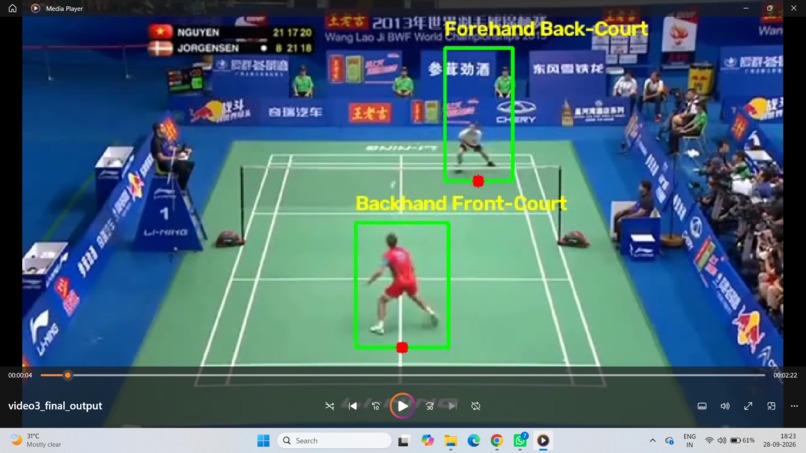
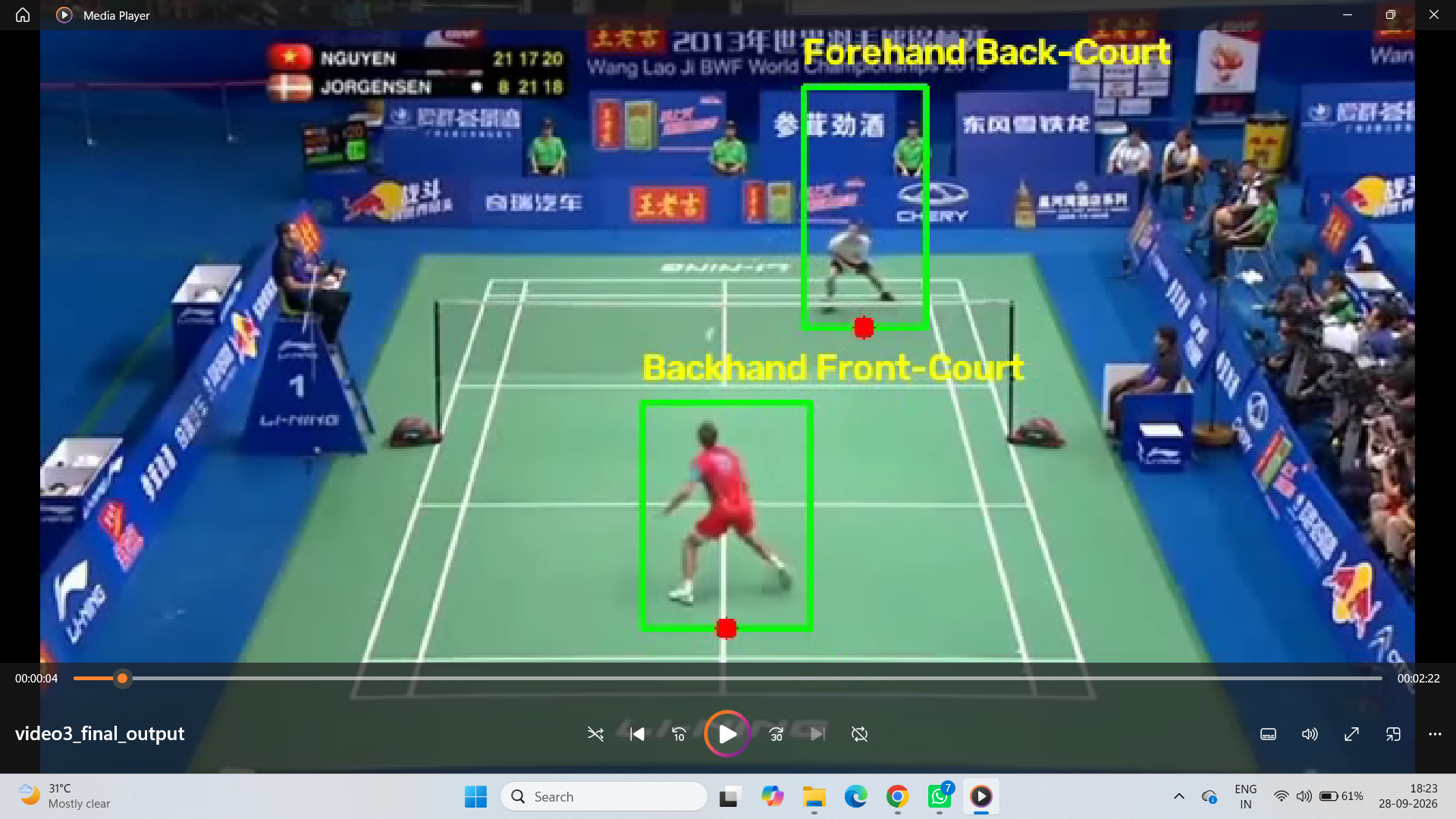
In these way our model able to detect badminton player footwork
Inspiration
We wanted to explore how AI and computer vision can be used to understand badminton player movement. The goal was to turn normal match footage into useful footwork and movement insights.
What it does
The system detects and tracks badminton players from video footage using YOLO and OpenCV. It analyzes their court positions, movement patterns, and activity across predefined court zones.
How we built it
We built the project using Python, YOLO, OpenCV, and data analysis techniques. Court points were mapped and player movement data was processed to generate visualizations and CSV-based reports.
Challenges we ran into
Accurately detecting and tracking players in badminton videos was challenging because of fast movement, changing positions, and video conditions. Mapping player movements correctly to court zones also required careful coordinate setup.
Accomplishments that we're proud of
We successfully developed a working pipeline for player detection, movement tracking, and court-zone analysis. The project also generates structured movement data and visual reports for further analysis.
What we learned
We gained practical experience with object detection, computer vision, video processing, player tracking, and data analysis. We also learned how important accurate court mapping and data processing are for sports analytics.
What's next for Badminton ai footwork detection
The next step is to improve detection and tracking accuracy and make the system more robust for different videos. We also plan to add deeper footwork analysis, performance metrics, and a more user-friendly interface.


Log in or sign up for Devpost to join the conversation.