-
-
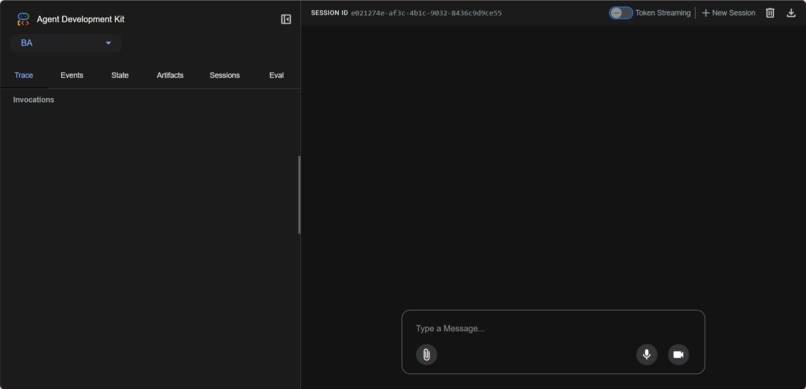
homepage
Inspiration The genesis of BADK stemmed directly from the significant amount of time and effort our Business Analysis (BA) team spent on the foundational, yet often tedious, aspects of requirements gathering and modeling. We observed that critical phases like defining user requirements, detailing data objects, identifying actors, and outlining use cases were not only time-consuming but also prone to inconsistencies when done manually.
Specifically, we noticed:
Manual User Requirement Generation: Drafting detailed user requirements was a laborious process involving extensive text writing, formatting, and ensuring alignment with business goals. This often led to delays and inconsistencies across projects. Tedious Data Object Definition: Identifying and meticulously defining every attribute, relationship, and constraint for data objects consumed a disproportionate amount of time, especially in complex systems. It was a repetitive task ripe for automation. Repetitive Actor Identification and Detailing: Pinpointing all system actors and thoroughly documenting their roles, permissions, and interactions across various use cases was a crucial but often repetitive exercise. Time-Intensive Use Case Development: Crafting comprehensive use case descriptions, including pre-conditions, post-conditions, main flows, and alternative flows, was highly detailed and demanded significant manual effort, leading to potential omissions or variations in quality. We recognized that while these tasks are fundamental to successful project delivery, the manual nature of their creation often slowed down the initial phases of projects. We envisioned BADK as a powerful assistant that could intelligently support BAs in generating these core artifacts, drastically reducing manual effort, improving consistency, and accelerating the overall analysis phase. This focus on intelligent generation and standardization for user requirements, data objects, actors, and use cases became the core inspiration for BADK's development.
What it does BADK is a comprehensive platform designed to be the central nervous system for Business Analysis activities. It provides a unified workspace where BA teams can:
Intelligent Requirement Generation: Leverage AI-powered assistance to quickly draft detailed user requirements based on high-level inputs, suggesting complete sentences, acceptance criteria, and linking to relevant business objectives. Automated Data Object Definition: Expedite the creation of data objects by providing structured templates, suggesting attributes, and mapping relationships, significantly reducing manual data entry and ensuring consistency. Streamlined Actor Identification & Profiling: Quickly identify and define all system actors with pre-configured templates for roles, permissions, and responsibilities, ensuring comprehensive stakeholder mapping. Accelerated Use Case Development: Generate structured use cases with prompts for pre-conditions, post-conditions, main flows, and alternative flows, drastically cutting down the time spent on detailed documentation. Establish End-to-End Traceability: Dynamically link requirements to business objectives, functional specifications, design elements, development tasks, test cases, and deployed features. This provides unparalleled transparency and ensures that every piece of work aligns with the original intent. Facilitate Real-time Collaboration: Enable multiple team members to work on documents simultaneously, leave contextual comments directly on specific sections, and manage feedback loops efficiently. In essence, BADK speeds up the working process and replaces manual time-consuming work, which allows BAs to focus on what they do best: understanding needs and defining solutions.
How we built it Our journey to build BADK embraced an exceptionally lean and agile development approach, focusing on rapid prototyping, multi-agent AI development, and continuous feedback within an aggressive one-month timeline:
Planning & Clear Requirement (1 Week) User Empathy & Core Feature Scoping: This week was intense. We conducted highly focused workshops with a small group of lead BAs to pinpoint the absolute minimum viable features for intelligent generation of user requirements, data objects, actors, and use cases. Given the tight timeline, scope clarity was paramount. Conceptualization & Agent Design: Based on the identified needs, we rapidly designed the multi-agent architecture. This involved defining the roles and responsibilities of individual agents for each generation task (e.g., one agent for user requirements, another for data objects, etc.) and how they would interact. Technology Stack Selection: We strategically chose Python as our primary programming language due to its versatility, rapid prototyping capabilities, and extensive AI/ML ecosystem. For the intelligent generation capabilities, we leveraged the Gemini Model as the core large language model. The critical enabler for our multi-agent architecture was the ADK (Agent Development Kit), which allowed us to quickly define, orchestrate, and manage the interactions between our specialized agents. Our application was designed for scalable deployment on Google Cloud Run, selected for its speed of deployment and automatic scaling. Development (2 Weeks) Parallel Agent Development (Week 1 of Dev): This was a high-intensity phase. Our small team split to develop specialized agents in parallel using ADK: User Requirement Agent: Focused on taking high-level inputs and generating structured user stories with acceptance criteria. Data Object Agent: Designed to extract and formalize data entities and their attributes from text, suggesting relationships. Actor Identification Agent: Built to identify different users/systems interacting with the product and define their roles. Use Case Generation Agent: Focused on structuring main flows, alternative flows, pre/post conditions based on user stories and actor interactions. Each agent heavily leveraged the Gemini Model for its core generative capabilities, with ADK providing the framework for prompt engineering and state management. Core Platform Integration & Basic UI (Week 2 of Dev): We rapidly integrated these agents into a minimal backend infrastructure (built in Python) and developed a very lean web-based user interface. The focus was on functionality over extensive polish, ensuring BAs could input their high-level ideas and receive generated outputs, enabling rapid iteration. Continuous internal testing and quick feedback loops within the team were crucial. Deployment (1 Week) Containerization & Cloud Run Deployment: The first few days of this week were dedicated to containerizing our Python application and the ADK-powered agents. We then rapidly configured and deployed the application to Google Cloud Run, leveraging its automatic scaling and simple deployment process. Testing & Iteration: We conducted rapid end-to-end testing, focusing on the stability and performance of the agent interactions and the generation outputs. Critical bug fixes and immediate feedback from a small group of test BAs were incorporated on the fly. User Handoff & Training: A concise training session and quick-start guide were prepared for the initial BA team users, focusing on how to interact with the generative features and provide feedback. The goal was to get the tool into their hands as quickly as possible. Challenges we ran into Building BADK within such a tight timeframe, especially with a focus on multi-agent AI generation, presented unique and intense challenges:
Extreme Time Constraints: The most significant hurdle was the one-month total timeline. This demanded incredibly disciplined scope management, efficient parallel development, and minimal overhead. We frequently had to make tough decisions about what not to build in the initial version. Multi-Agent Orchestration Complexity: While ADK greatly simplified agent development, ensuring seamless and effective communication and hand-off between multiple specialized agents (e.g., how the User Requirement Agent's output fed into the Use Case Agent) within a tight deadline was complex. Debugging inter-agent interactions was particularly challenging. Fine-tuning Gemini Model for Specificity: While the Gemini Model is powerful, getting it to consistently generate highly specific, structured outputs for user requirements, data objects, actors, and use cases, aligned with BA best practices, required extremely precise prompt engineering and iterative refinement within ADK. This was an ongoing learning curve. Data Consistency Across Generations: Ensuring that generated user requirements, data objects, actors, and use cases were logically consistent with each other, especially as different agents contributed, was a major challenge requiring clever design of shared context and feedback loops between agents. Minimal UI for Complex AI: Rapidly building a user interface that was intuitive enough for BAs to interact with complex generative AI functions, without significant front-end development time, was a balancing act. We prioritized functionality over aesthetic polish. Rapid Deployment & Monitoring: Deploying to Cloud Run was fast, but setting up robust monitoring and logging for a complex multi-agent system in a compressed timeframe required intense focus to ensure we could quickly identify and resolve issues post-launch. Accomplishments that we're proud of Despite the challenges, the BADK project achieved several significant accomplishments that we are immensely proud of:
Lightning-Fast Delivery: Successfully conceptualizing, developing, and deploying a functional, multi-agent AI-powered BA tool within an unprecedented one-month timeframe is a testament to the team's dedication and the power of our chosen stack. Tangible Efficiency Gains in Core BA Tasks: We immediately saw a measurable reduction in the time BAs spend on administrative tasks related to drafting requirements, defining data objects, and detailing use cases. This allowed them to dedicate more time to actual analysis, stakeholder engagement, and strategic thinking from day one. Demonstrated Power of Multi-Agent AI: Successfully implementing a multi-agent system using ADK and the Gemini Model to automate complex BA tasks showcased the incredible potential of this architecture for intelligent automation. Improved Requirement Quality & Consistency: The structured approach and intelligent generation provided by BADK have significantly improved the clarity, completeness, and consistency of our requirements documentation across all projects, even in its early stage. High User Satisfaction & Immediate Impact: The initial feedback and high adoption rate from the BA team were overwhelmingly positive. They genuinely saw BADK as an indispensable tool that directly addressed their pain points and empowered them. Robust & Scalable Prototype: We successfully built a highly resilient, secure, and scalable initial version of the platform on Google Cloud Run, proving the concept and laying a strong foundation for future growth. What we learned The BADK journey was an intense, accelerated masterclass in product development and team collaboration. Our key learnings include:
Extreme Focus is Key for Rapid Delivery: When faced with an aggressive timeline, ruthless prioritization and absolute clarity on the core problem to solve are paramount. Anything outside the immediate scope must be deferred. The Power of AI for Automation: Leveraging the Gemini Model and ADK for multi-agent systems proved incredibly effective at automating complex, knowledge-intensive tasks that previously consumed significant manual effort. Iterate on AI Outputs Rapidly: The quality of AI-generated content improves dramatically with quick feedback loops and iterative refinement of prompts and agent behaviors. Getting the tool into users' hands quickly, even in a basic form, was vital for this learning. Cloud Run's Agility is a Game-Changer: For rapid prototyping and deployment of AI-powered microservices, Google Cloud Run provided unparalleled speed and simplicity, allowing us to focus on the application logic rather than infrastructure. User Feedback is a Lifeline: Even with limited time, continuous, high-quality user feedback was essential for ensuring the generative AI outputs were practical and met real-world BA needs. Embrace the "Bare Minimum" Mindset: For a 1-month project, "perfect" is the enemy of "done." We learned to deliver functional, impactful features rapidly, accepting that polish and advanced capabilities would come later. What's next for BADK The journey for BADK is far from over; it's a living product that will continue to evolve. Our roadmap includes exciting new developments:
Robust Data Persistence with Google Cloud Services: The immediate next step is to transition our data storage to Google Cloud's managed services. We will strategically implement: Google Cloud Storage for large, unstructured data like documents, images, and historical versions of requirements. Cloud Firestore for flexible, scalable NoSQL document storage, ideal for real-time updates of generated requirements, data objects, actors, and use cases, and for managing user-specific settings. Cloud SQL (PostgreSQL or MySQL) for relational data that requires strong consistency and complex querying, such as user accounts, project metadata, and core traceability links that benefit from a structured relational model. This will ensure data integrity, scalability, and high availability. Fully Operational System on GCP for BA Teams: Building on our Cloud Run deployment, we will refine the overall system to be a robust, team-ready application on Google Cloud Platform. This involves: Implementing robust user authentication and authorization using Google Cloud Identity and Access Management (IAM). Enhancing the user interface to provide a more intuitive and feature-rich experience for BA teams. Setting up comprehensive monitoring and logging with Cloud Monitoring and Cloud Logging to ensure system health and performance. Establishing continuous integration and continuous deployment (CI/CD) pipelines to enable rapid and reliable future updates. Optimizing for cost-efficiency and performance across all Google Cloud services. Enhanced Reporting and Analytics: Developing more customizable and predictive analytics to help BAs and PMs foresee potential roadblocks and optimize workflows based on generated data. Deeper Integrations: Expanding our API ecosystem to integrate more seamlessly with a wider range of enterprise tools, including popular diagramming tools, collaboration platforms, and testing suites. Community Features: Fostering a community around BADK where BAs can share best practices, custom templates for generated content, and insights. Workflow Automation: Building more sophisticated workflow automation capabilities to streamline common BA processes, from stakeholder approval cycles for generated requirements to automated report generation. BADK will continue to be driven by the needs of the Business Analyst team, aiming to remain at the forefront of empowering BAs to deliver exceptional value in an increasingly complex project landscape.

Log in or sign up for Devpost to join the conversation.