-
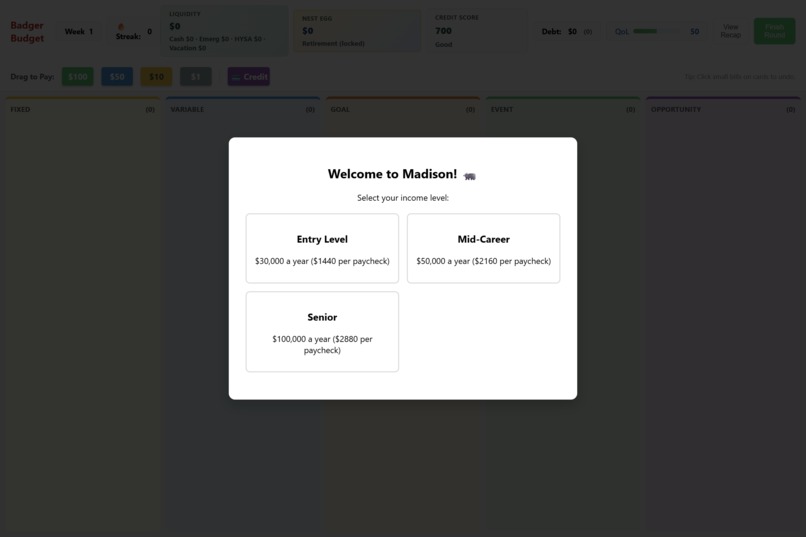
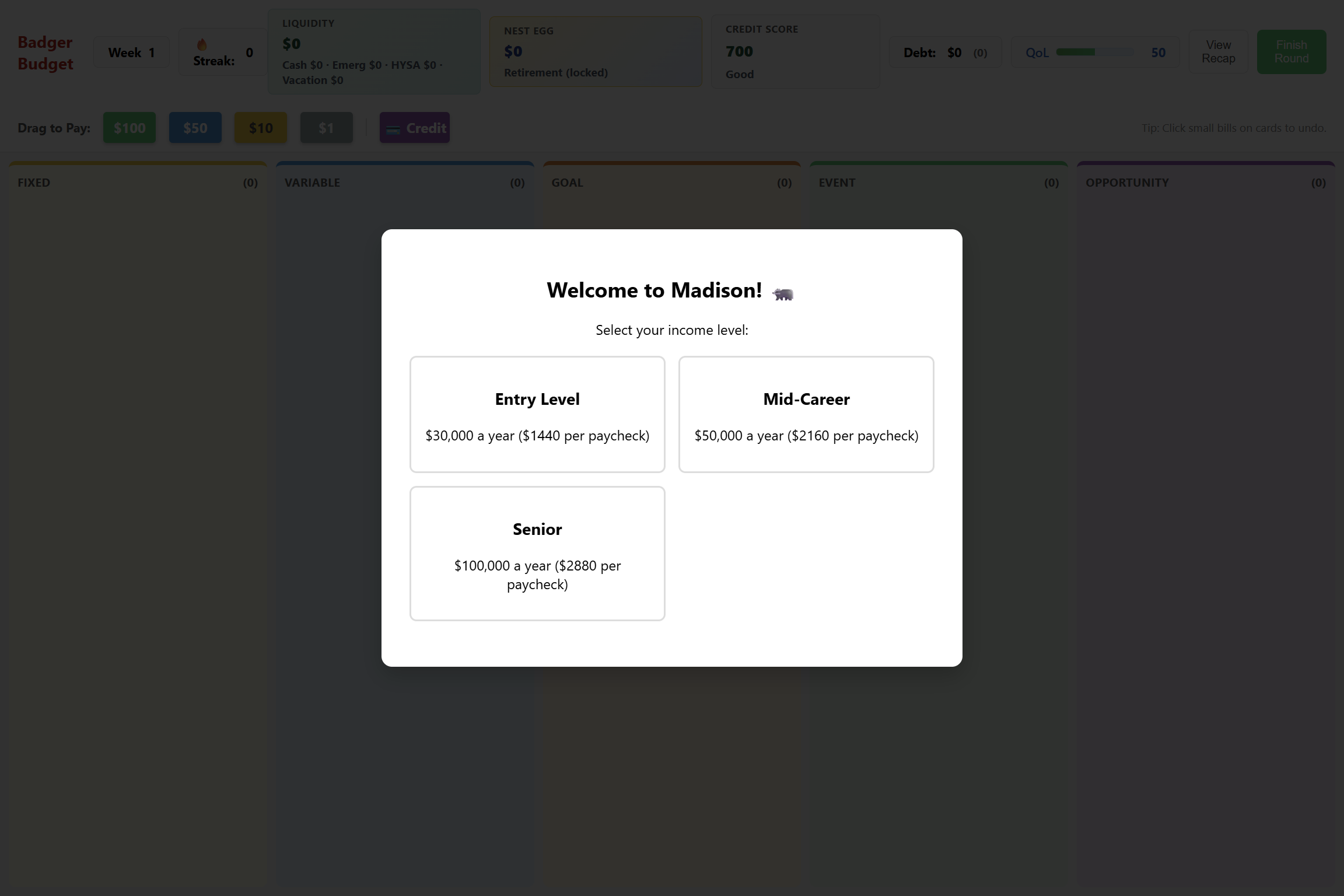
Player chooses their salary (from Madison data) for the game, which affects how much their paycheck is each round.
-
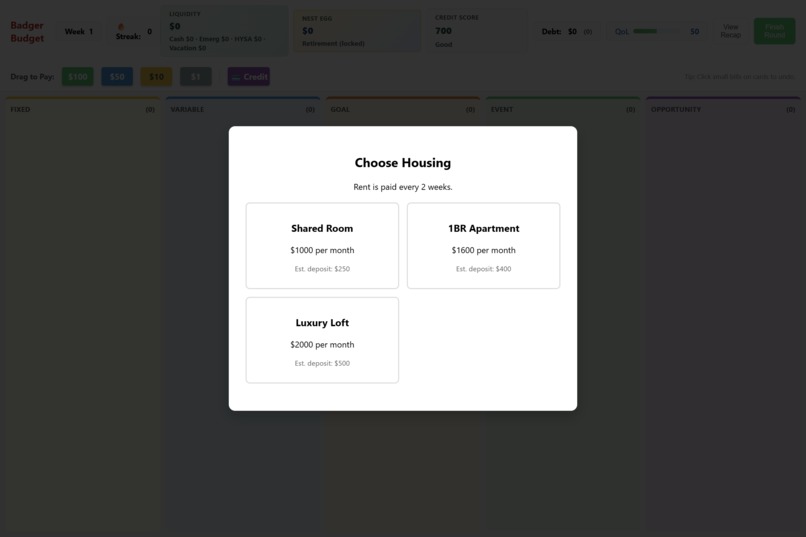
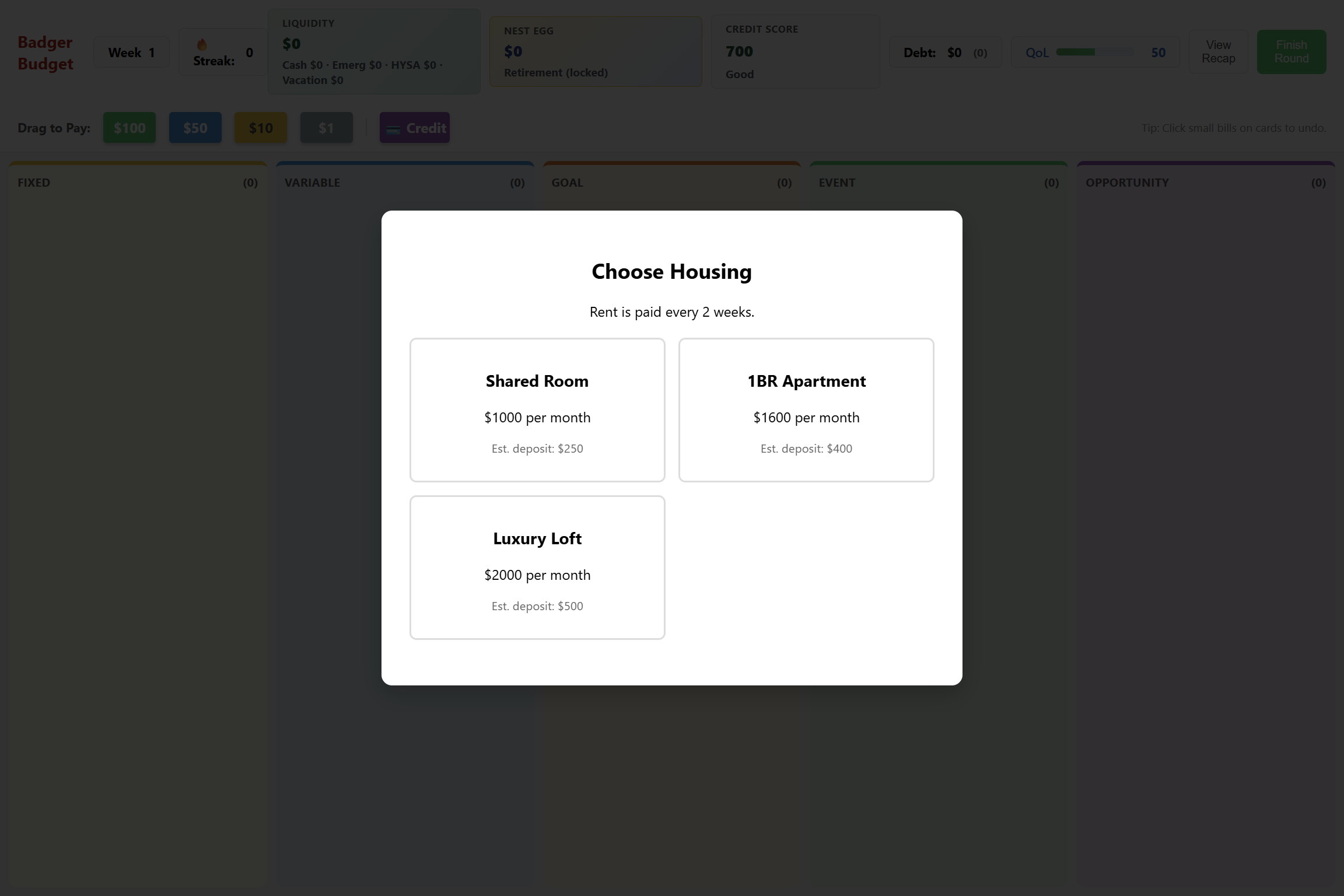
Player chooses their housing situation for the game (from Madison data), which affects how much their monthly rent is.
-
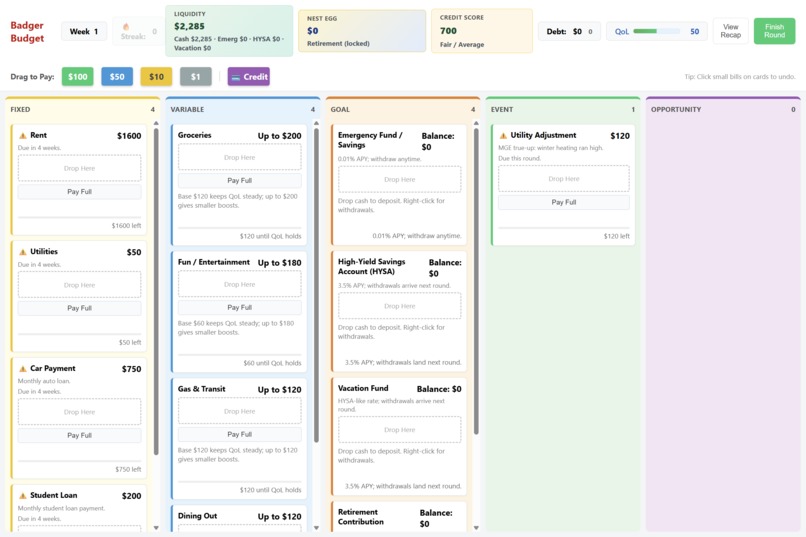
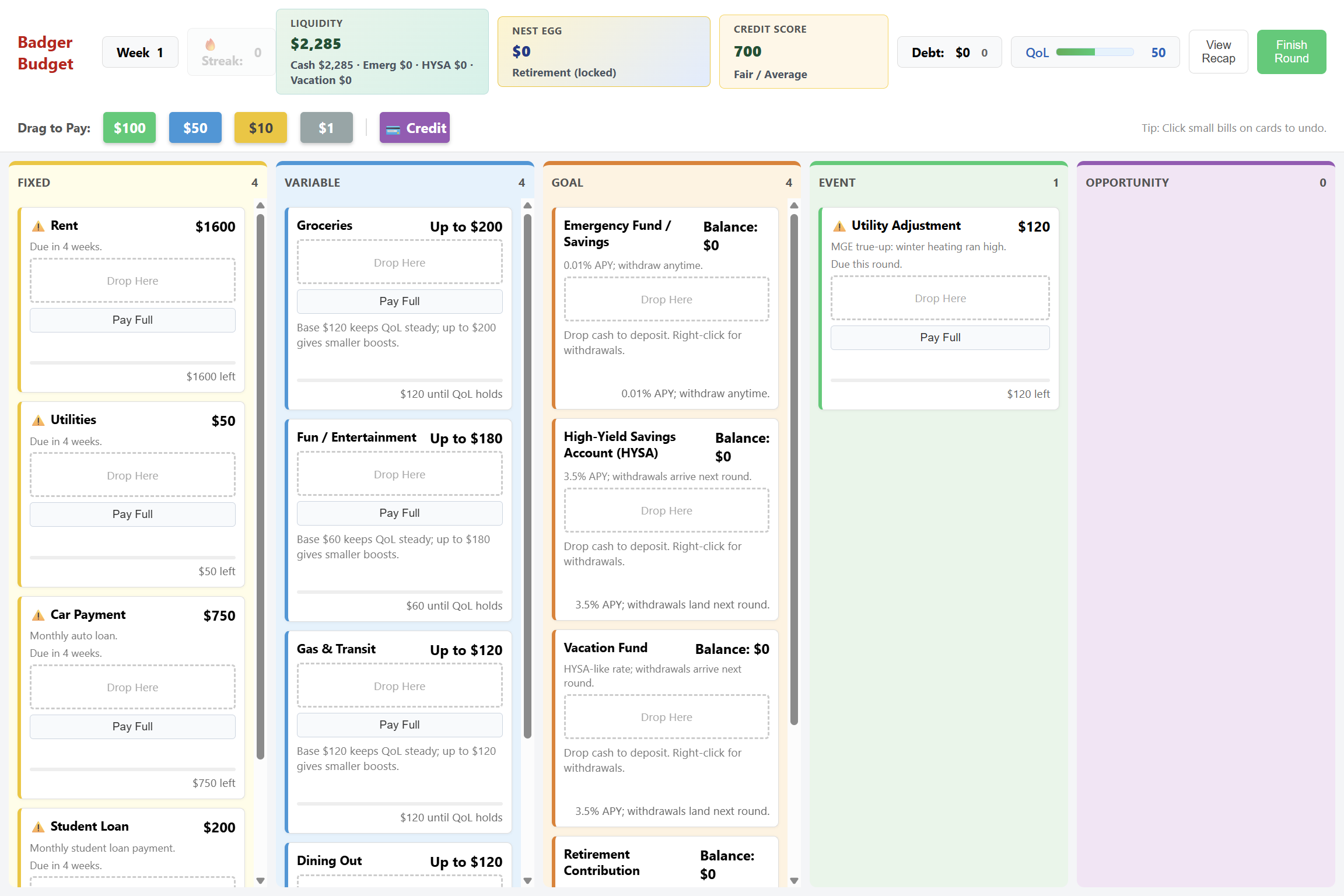
How the board is laid out; each card is a financial item, organized in categories. Players can drag money and stats are tracked at the top.
-
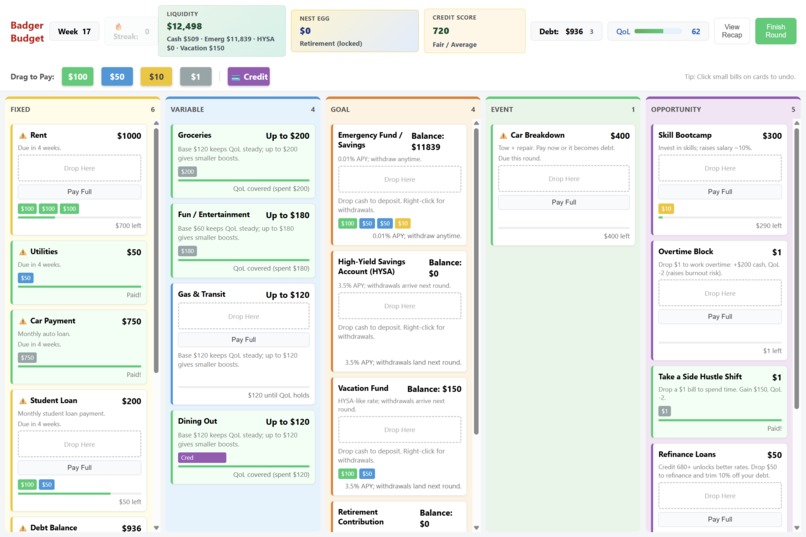
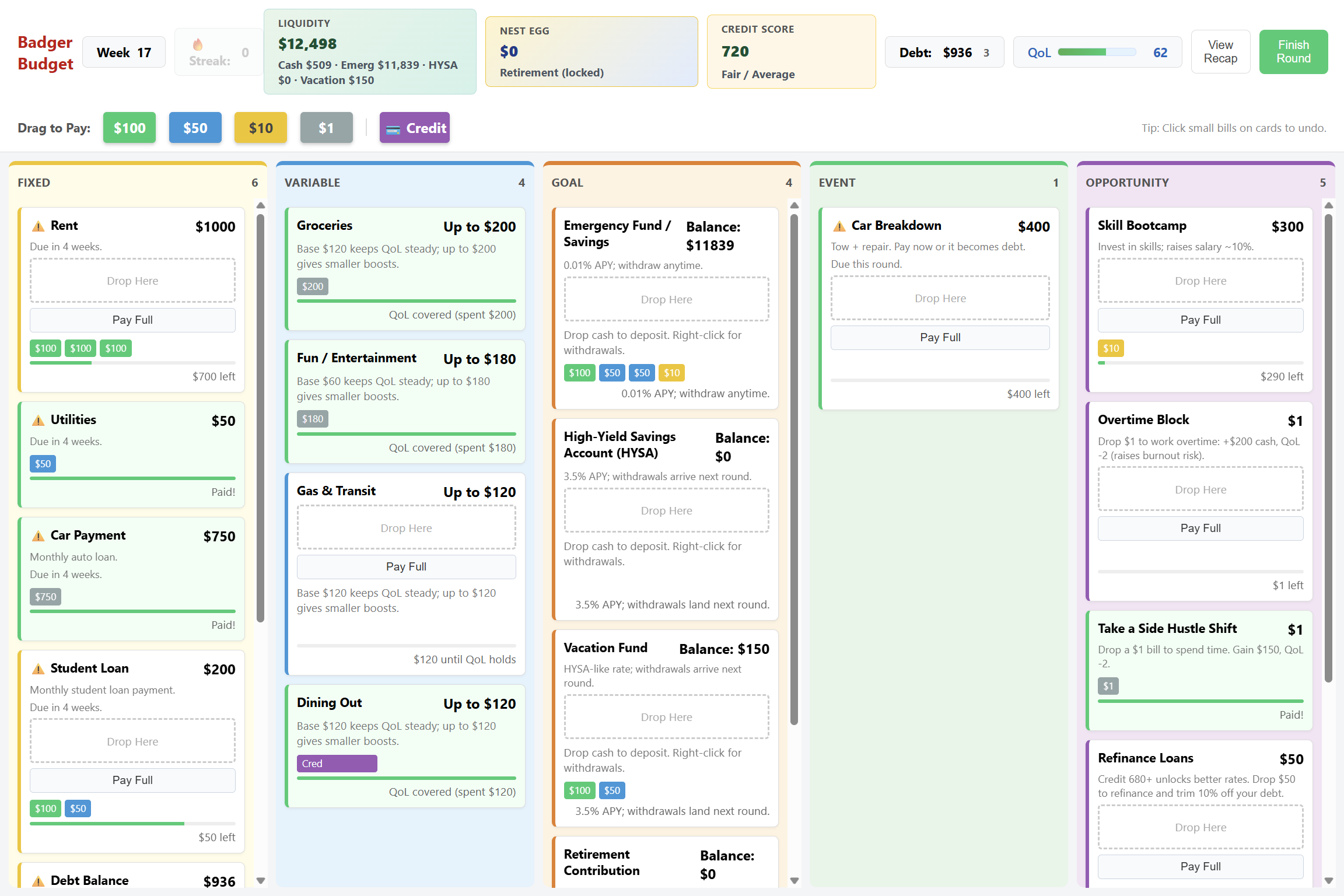
How the board might look in the middle of the game, which is determined by the choices the player makes and how they distribute payments.
-
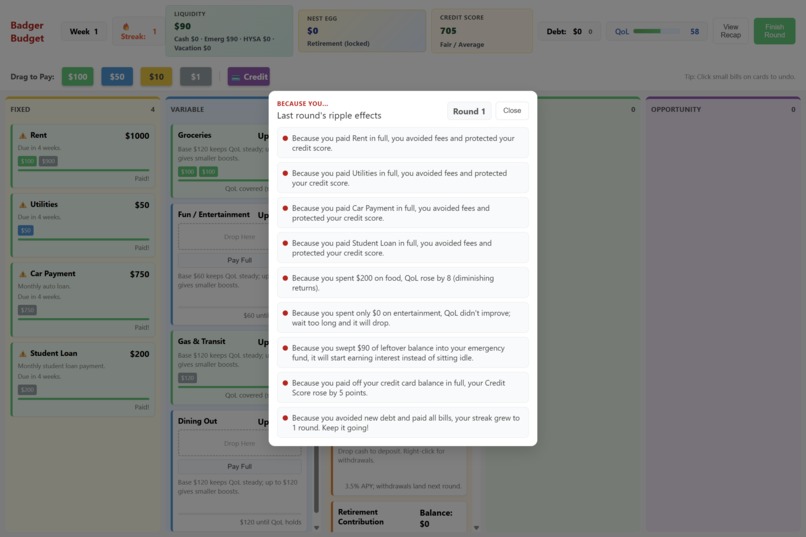
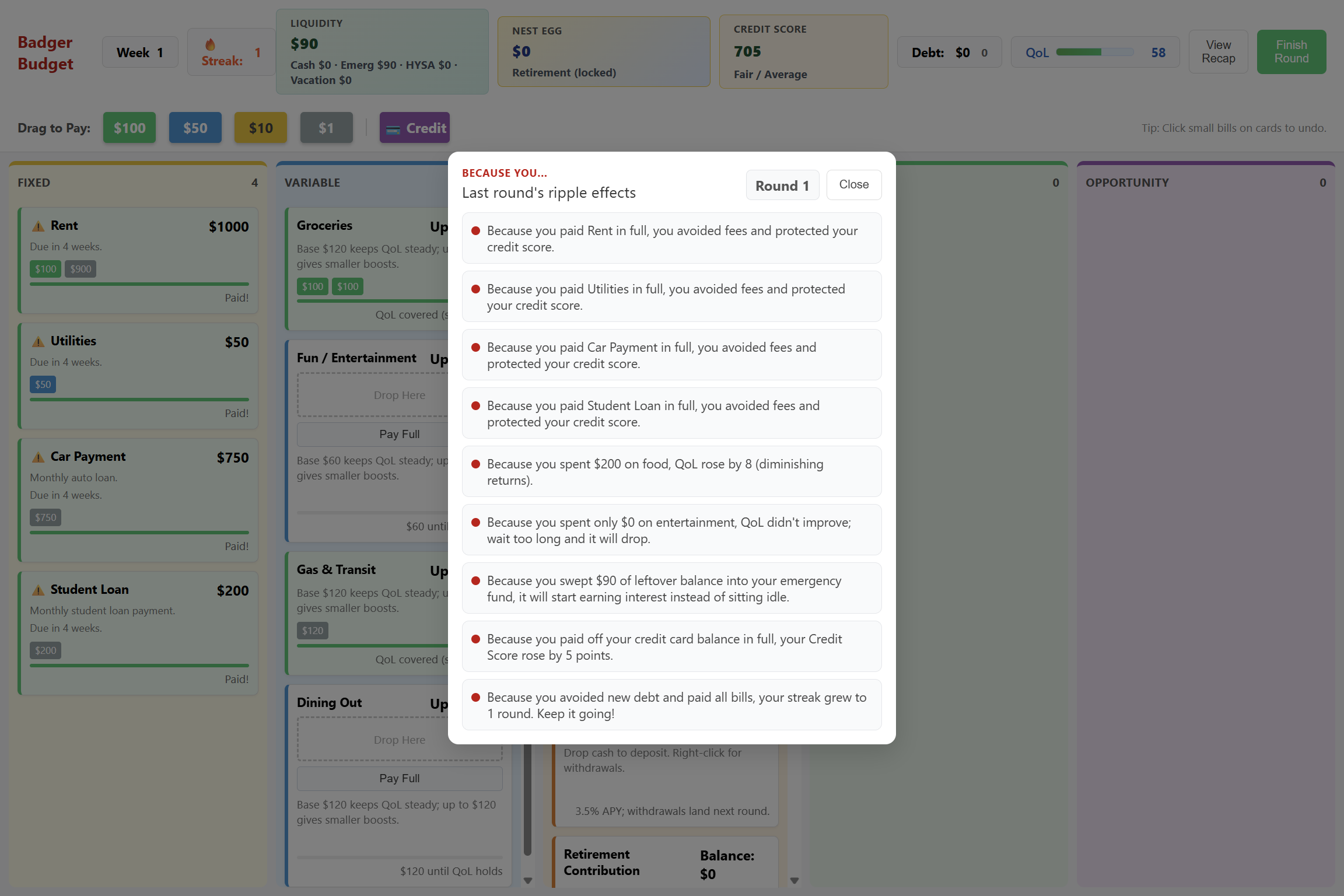
A recap pops up after every round with the players choices and those players' consequences, enhancing user's learning.
-
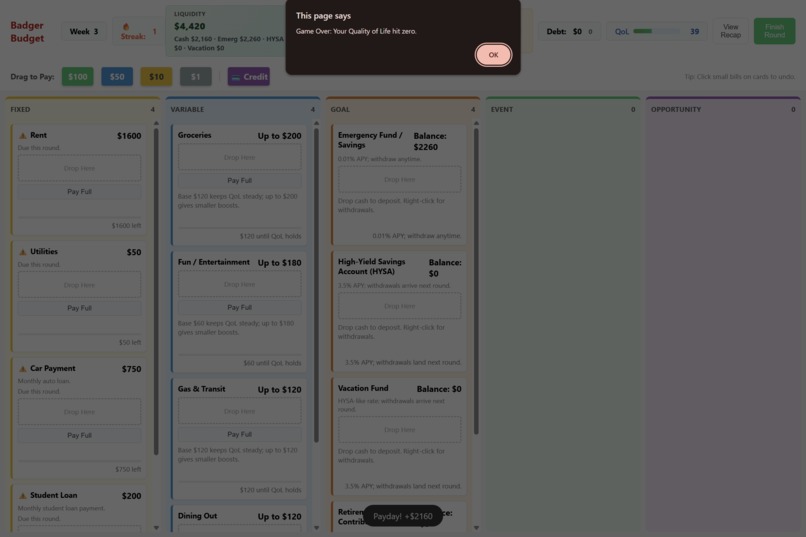
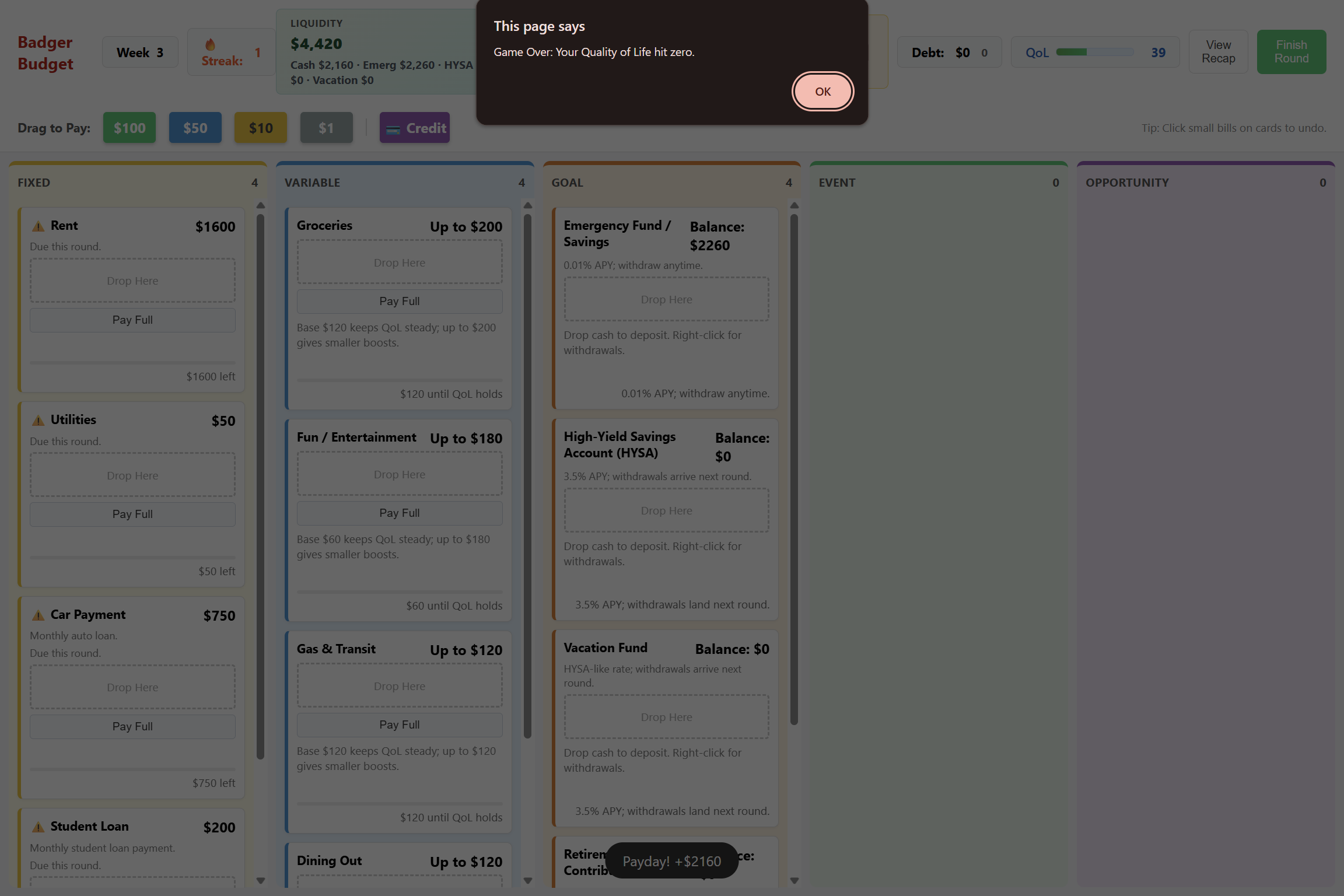
Game Over! Although the player stayed afloat financially, their quality of life dropped too low. Balance is important!
Inspiration
As UW–Madison students, we constantly face the challenge of managing personal finances — rent, insurance, groceries, fun, and the occasional surprise expense. We wanted to create a game that reflects these real-world pressures using actual Madison cost data, while making budgeting feel less intimidating and more engaging. That’s how Badger Budget was born: a financial literacy game built by students, for students
What it does
Badger Budget simulates life on a paycheck. Each round, players receive a fixed income and must allocate it across four categories:
- Fixed Expenses (e.g., rent, insurance)
- Variable (e.g., dining out, entertainment)
- Goals (e.g., saving, investing)
- Unexpected Events (e.g., car breakdowns, medical bills) The game uses real Madison, WI cost data to ground decisions in reality. Players learn to balance short-term enjoyment with long-term planning — all in a low-stakes, interactive environment.
How we built it
We built the game using JavaScript, HTML, and CSS, inspired by a Kanban-style interface that visually represents financial category zones. Each card represents a cost or decision, and players drag money tiles into them to simulate allocation. The UI is clean, intuitive, and purposefully playful — making financial literacy feel like a puzzle, not a chore.
Challenges we ran into
The hardest part was distilling the complexity of real-life finances into a game that’s both educational and fun. We debated how granular to get — should we include taxes? credit scores? compound interest? Ultimately, we focused on the core components that shape student financial life and built mechanics that reflect tradeoffs without overwhelming players.
Accomplishments that we're proud of
We’re proud that Badger Budget is more than just a game — it’s an educational tool. It’s relatable, grounded in real data, and genuinely fun to play. We also love that it’s modular: new scenarios, costs, and events can be added easily, making it adaptable for different audiences.
What we learned
We learned how to translate real-world systems into interactive mechanics, how to balance realism with simplicity, and how to design interfaces that teach through play. We also deepened our understanding of budgeting principles and the psychology behind financial decision-making.
What's next for Badger Budget - A Financial Literacy Game
We plan to expand the game with more life scenarios (e.g., marriage, job changes), polish the UI, and explore partnerships with campus organizations to bring Badger Budget into classrooms and workshops. We’d also love to explore mobile deployment and multiplayer modes for peer-to-peer budgeting challenges.


Log in or sign up for Devpost to join the conversation.