-
-
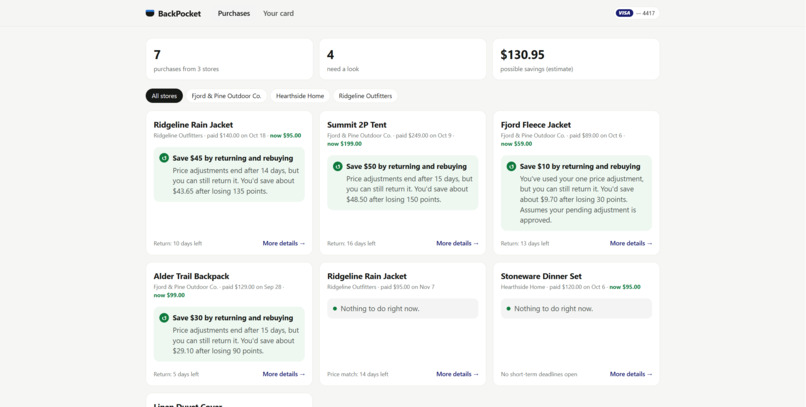
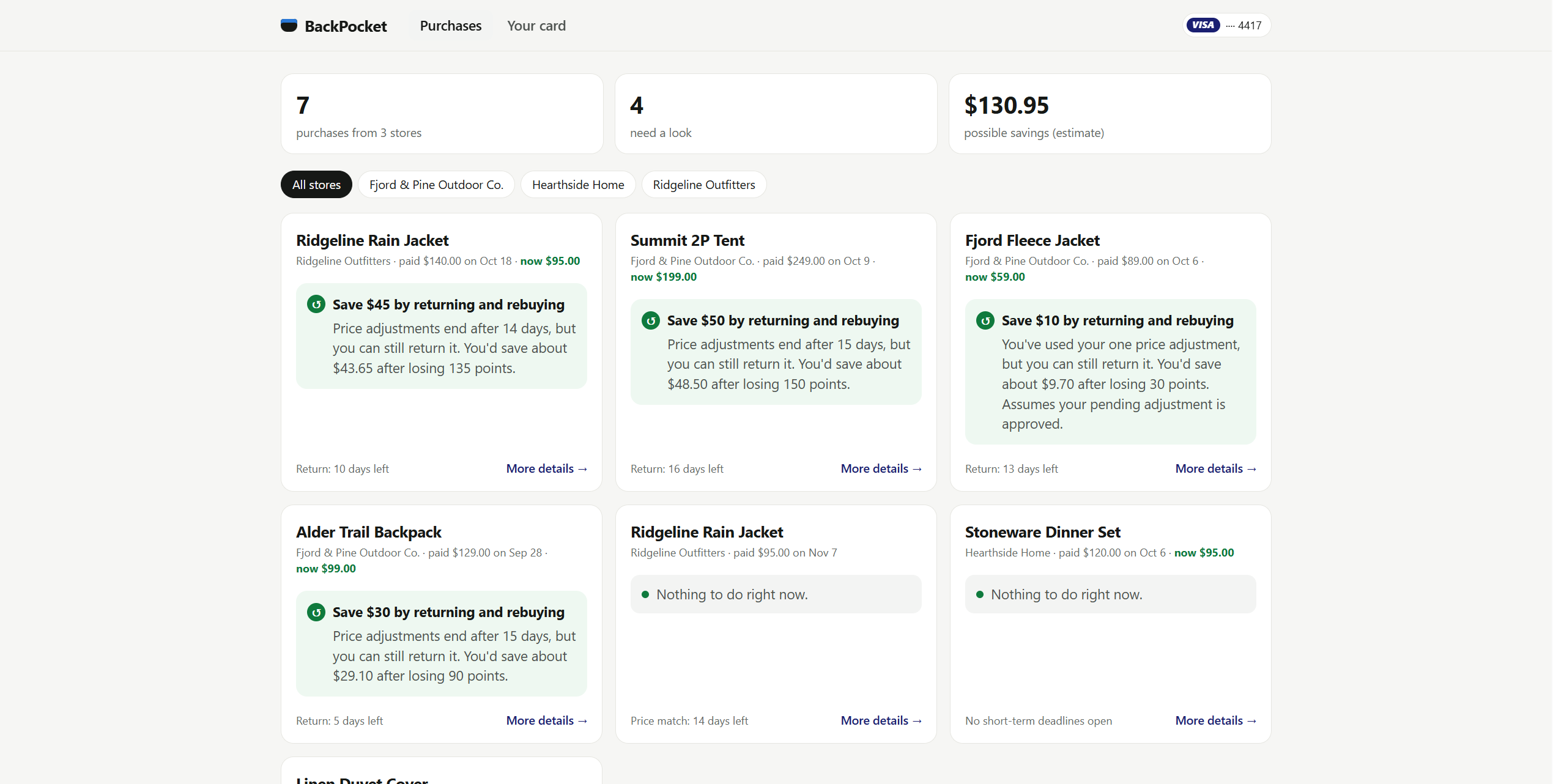
BackPocket's dashboard automatically keeps track of price adjustment and return deadlines, customized to store-specific policies.
-
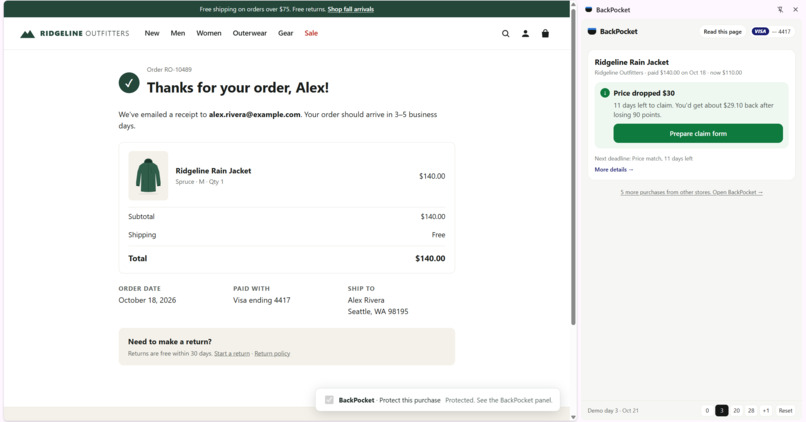
Quickly act on price drops without the hassle of reading through store policies.
-
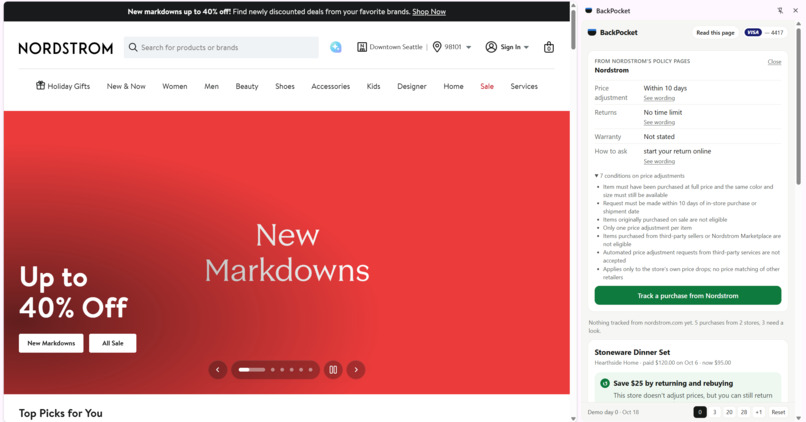
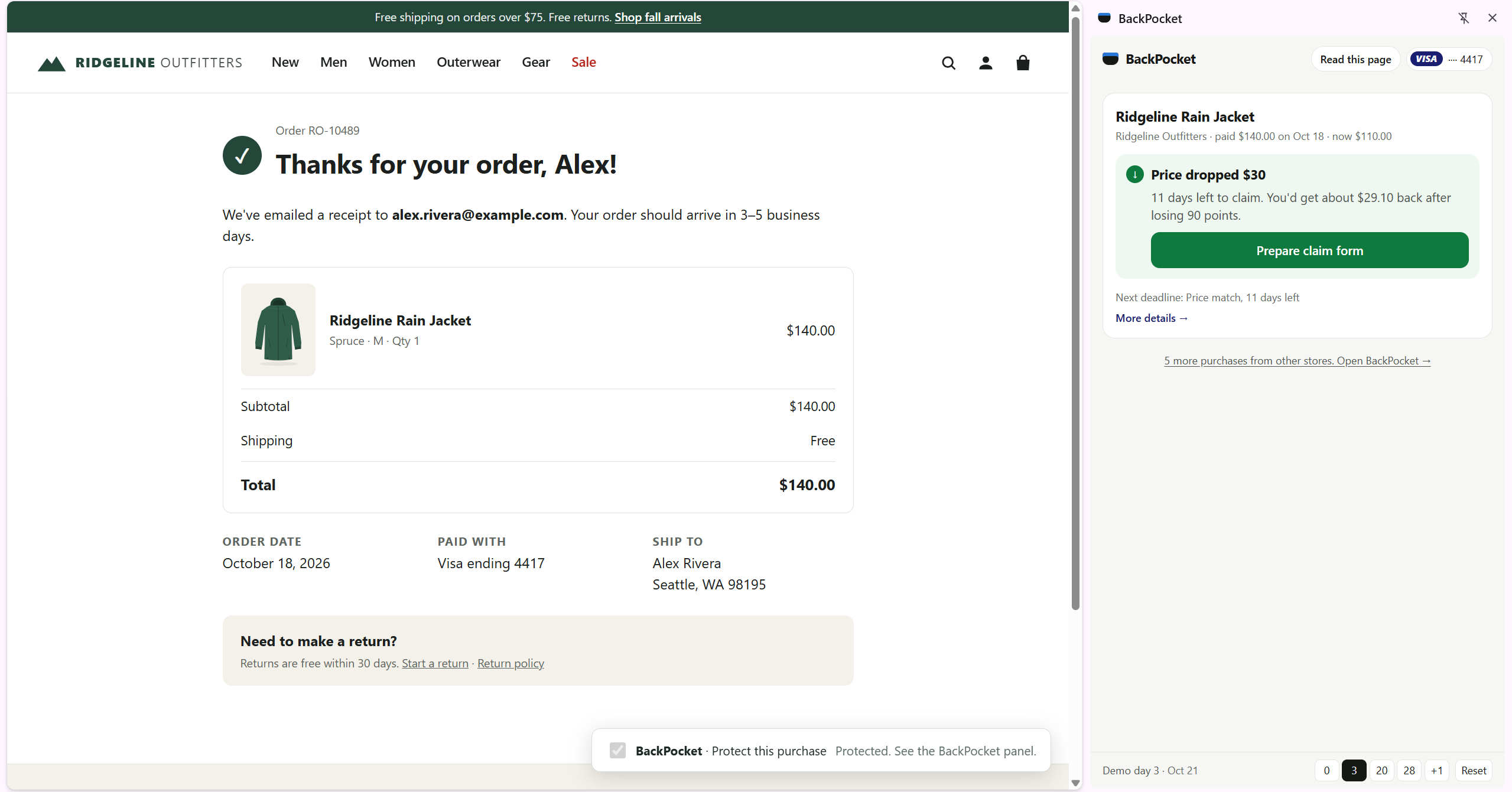
Enhance users' post-purchase experiences for major retail sites.
-
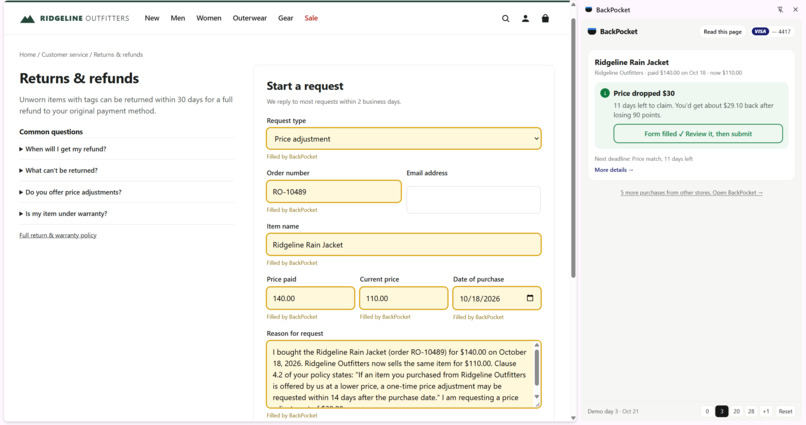
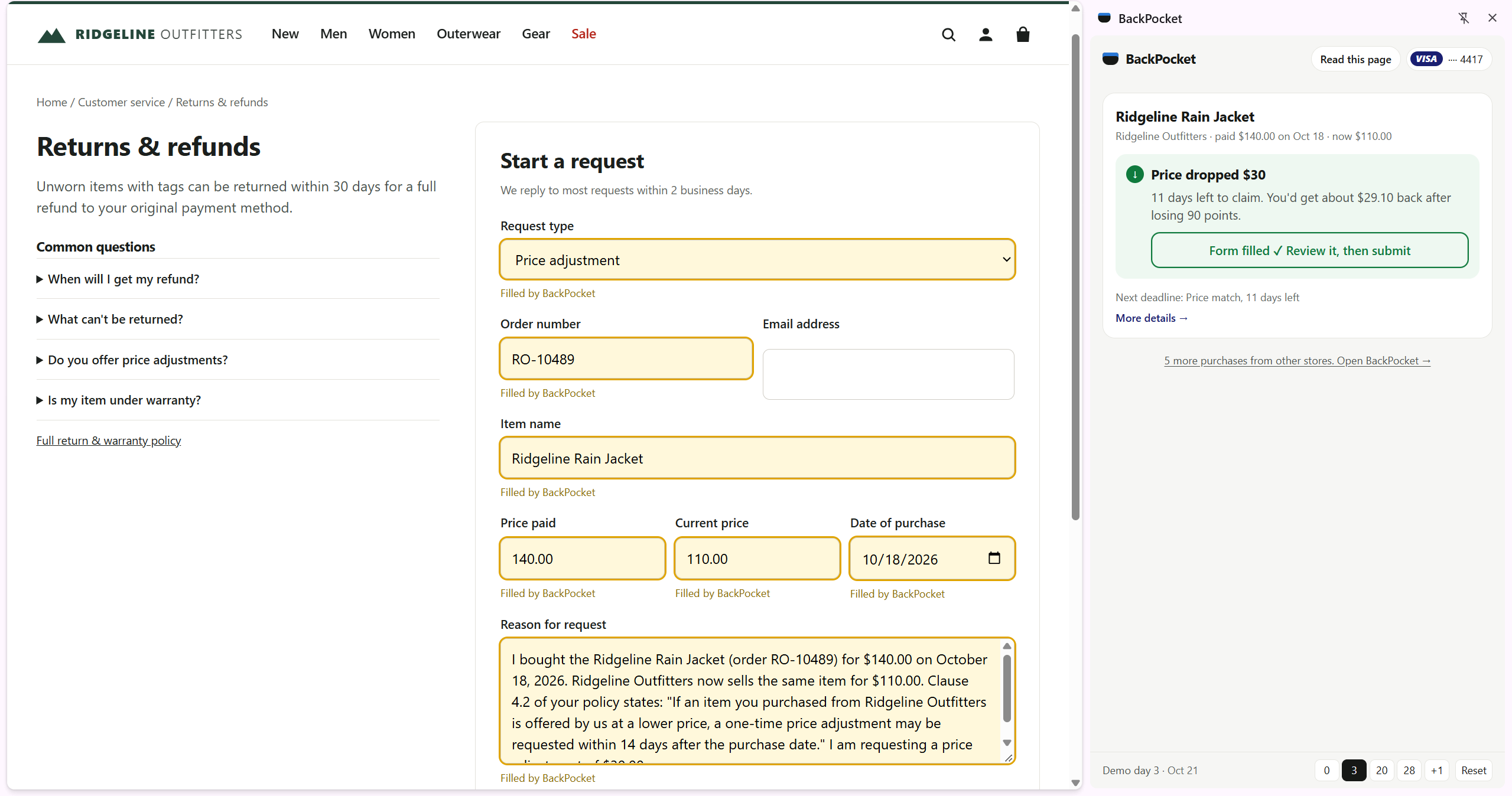
Automatically fill out claim forms and return messages.
Inspiration
We’ve all missed a return window or seen something we bought go on sale a week later. It just so happens the store’s policy covered it, but we never read it, or we decided the effort of reading through all the store's policies and filing a claim wasn't worth the $40 saved.
What it does
BackPocket is a web extension that’s got your back after checkout: it reads return policies, tracks price changes, and drafts claim forms, so you never miss out on a price adjustment or refund opportunity.
After you buy something, BackPocket reads the store’s return policy and your card’s benefits guide and keeps track of every useful deadline for you. If the price drops while you can still get a price match, it tells you how much you’re owed, quotes the part of the policy that allows for it, and estimates how many card points you’d lose on the adjustment. All it takes is one click, and it fills out the store’s claim form. If the store's policy doesn’t cover a claim, BackPocket tells you and suggests alternative methods to get your money back.
How we built it
BackPocket has four parts: a Chrome extension (React, Manifest V3, built with Plasmo), a companion website, a Python/FastAPI service with SQLite, and a realistic mock clothing store we built to demo the full flow end to end.
The work is split between an agentic and deterministic flow:
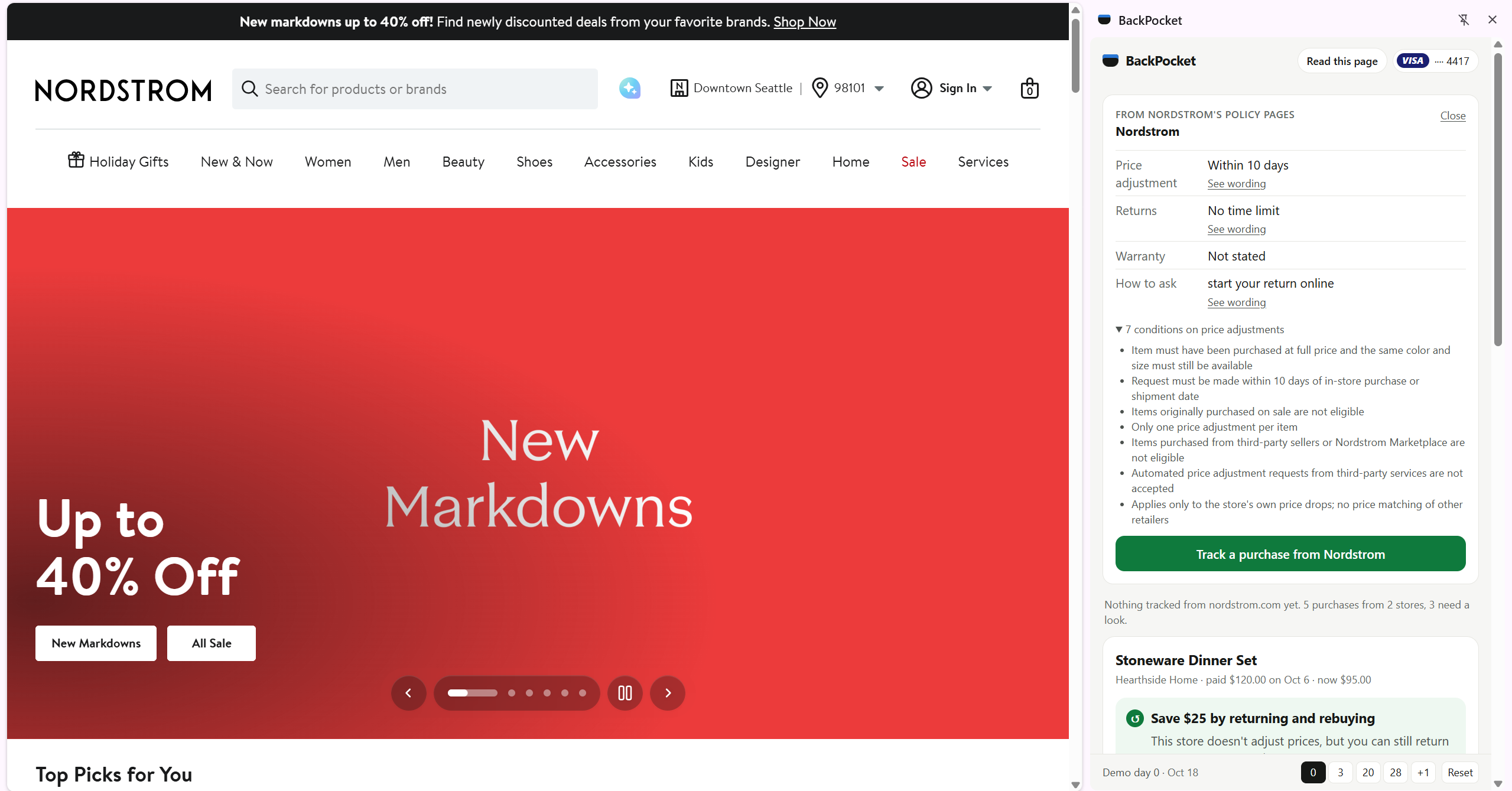
- Claude Opus 5.5 reads the documents. It pulls the deadlines, conditions, and how-to-claim instructions out of the store's policy and the card's benefits guide into a fixed structure, and quotes the sentence behind every term. Our code then checks each quote word for word against the source page, and flags anything that doesn't match for the shopper to double-check.
- The agent never makes a decision on its own. Deadlines, price drops, points, and when to recommend returning and rebuying are calculated by deterministic rules.
- Real retailers: We built a data ingestion pipeline that renders the policy pages of the 20 largest US retailers in a headless browser, follows links to the pages where the fine print lives, and merges each store's terms with a link to the exact source. On stores outside that set, the extension finds and reads the policy page you have open.
- Demo calendar: a simulated clock lets us show 30 days of a purchase in a few minutes.
Challenges we ran into
- The fine print is scattered. Nordstrom's price-adjustment terms sit two links deep, behind a sign-in form. Many retailers block automated browsers. For the rest, the extension reads the page you have open.
- Trust. An AI that tells you you're owed money had better be right, so we need to ensure every claim can cite an exact line from a store's policy or card benefits plan.
Accomplishments that we're proud of
- Every term is quoted and checked. Every deadline and dollar figure traces back to a quoted sentence from the store or the card.
- It works on real stores. On Target's and Nordstrom's public policy pages, it pulls the correct adjustment windows and how to request one.
- It always gives you a next step. When a price adjustment isn't possible anymore, BackPocket says why and suggests available alternatives, such as returning the item and buying it again at the lower price, with the savings after card points.
- It's tried and tested. Automated browser tests cover the full demo, chart readability, and the interface has zero automated accessibility violations in light and dark mode.
What we learned
Most of a policy's value is in exclusions and conditions, not the headline number of days. Letting AI read and letting code decide made the product both flexible and trustworthy. And people trust a recommendation far more when they can see the sentence it came from.
What's next for BackPocket
- Spot purchases automatically: detect orders from confirmation pages and email receipts.
- More stores: extend the policy data to more retailers and get past more bot protection.
- Card terms: with the cardholder's consent, use issuer or Visa data to get exact figures.


Log in or sign up for Devpost to join the conversation.