-
-

Screenshot 3
-
Screenshot 1
-
Screenshot 2
-
Screenshot 4

Inspiration
Product ideas often become bloated before the core value is proven. Most AI assistants make this worse by organizing every feature instead of challenging the scope.
Backlog Surgeon started with one question: what if the AI’s job was to help you decide what not to build?
What it does
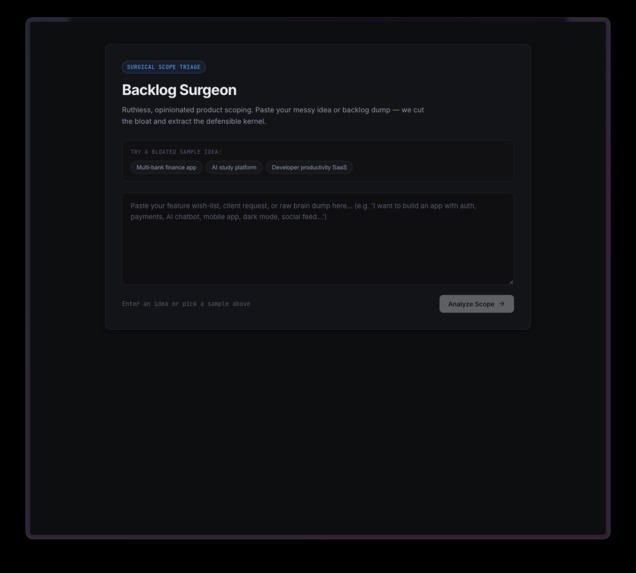
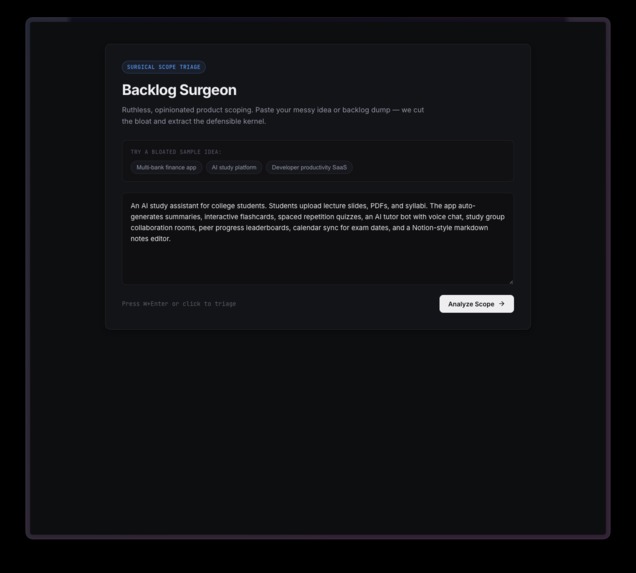
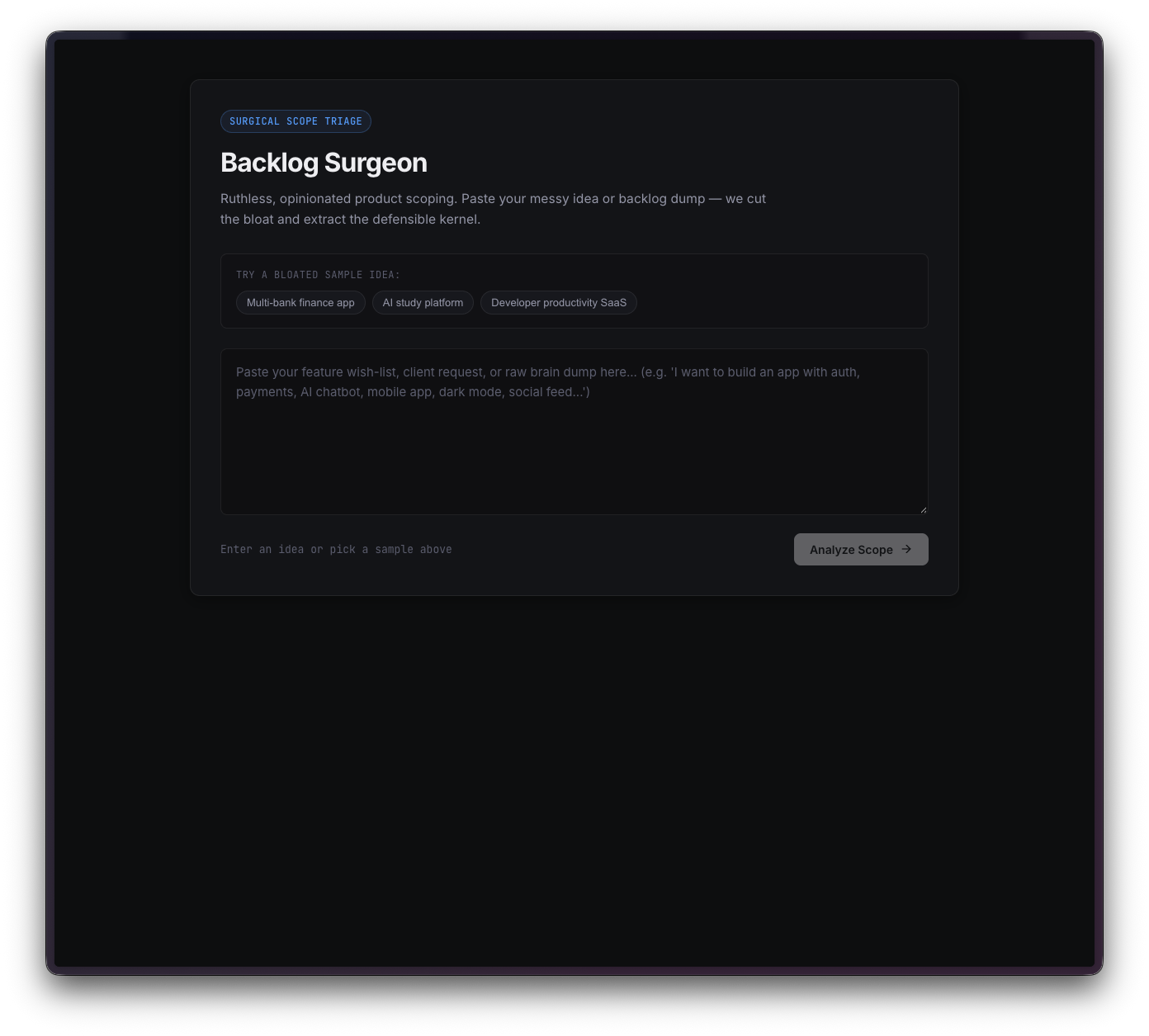
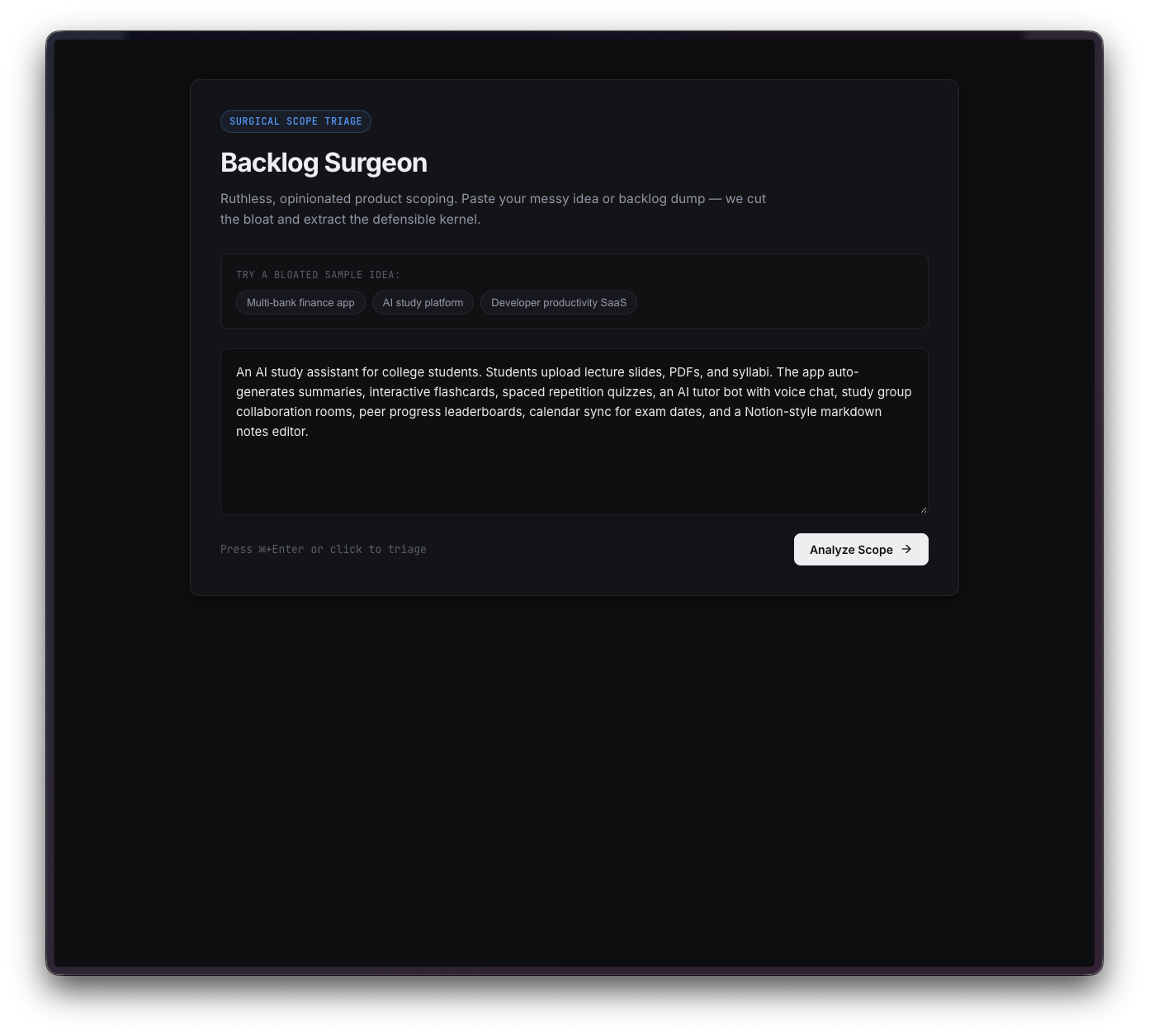
Backlog Surgeon turns messy product ideas, feature lists, or meeting notes into a focused MVP.
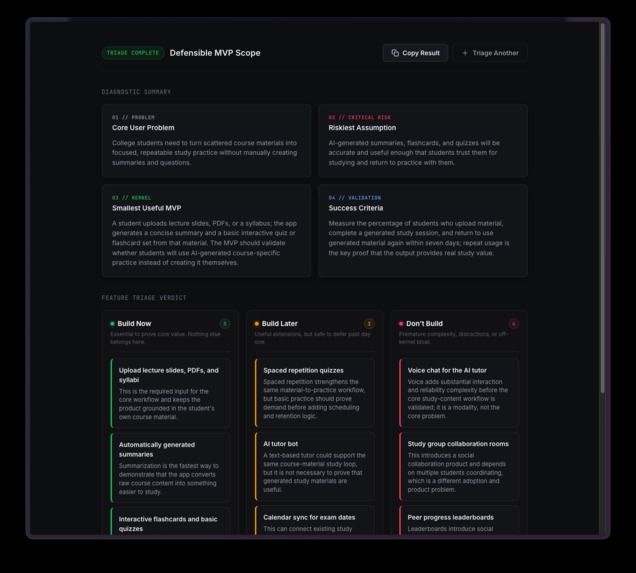
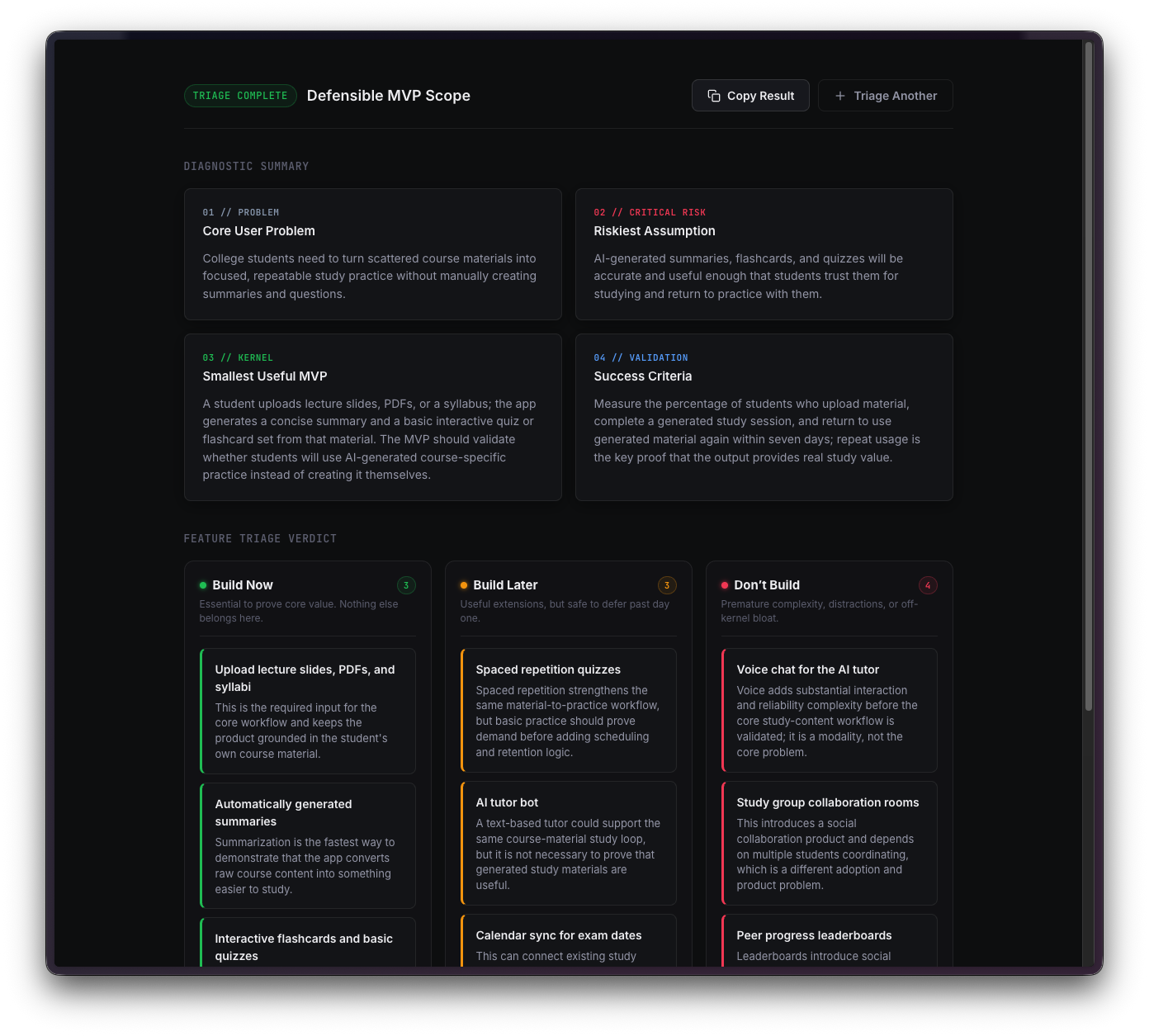
It identifies the core problem, riskiest assumption, smallest useful MVP, and success criteria, then sorts features into:
- Build Now
- Build Later
- Don’t Build
Every decision includes a clear reason.
How I built it
I built Backlog Surgeon with Next.js, TypeScript, OpenAI’s Responses API, Structured Outputs, and Zod validation.
The flow is intentionally simple:
Input -> Analysis -> Structured Triage
There is no database, authentication, or separate backend service.
Challenges I ran into
The hardest part was making the AI genuinely opinionated.
Early versions preserved too many features or introduced new ones. I refined the prompt so it keeps Build Now small, avoids inventing features, and more aggressively rejects distracting complexity.
Accomplishments that i'm proud of
I kept the product true to its own philosophy.
Backlog Surgeon does one thing end-to-end: turns an over-scoped idea into a smaller, defensible MVP without behaving like a generic chatbot.
What I learned
Good AI products depend heavily on constraints.
The strongest results came from clearly defining what the AI should reject, what it must not invent, and how its output should be structured.
What's next for Backlog Surgeon
The next step is testing the triage model with real founders and developers.
If the core behavior proves useful, future versions could add project history, shareable reports, editable recommendations, and integrations with tools like Linear or GitHub.
Built With
- nextjs
- openai
- typescript

Log in or sign up for Devpost to join the conversation.