Inspiration
I’ve seen firsthand how inventory can become a bottleneck for a business. On a previous project, a straightforward application for recording and managing stock helped solve that problem. It made me wonder how much further I could go if software could also recognize what needed attention and help get the work done.
That inspired Backhaus AI. Agents give us an opportunity to rethink how businesses operate, reducing repetitive work and the room for human error. I wanted to give business owners more time to serve customers and grow, with less time spent checking stock, chasing suppliers, and reconciling records.
What it does
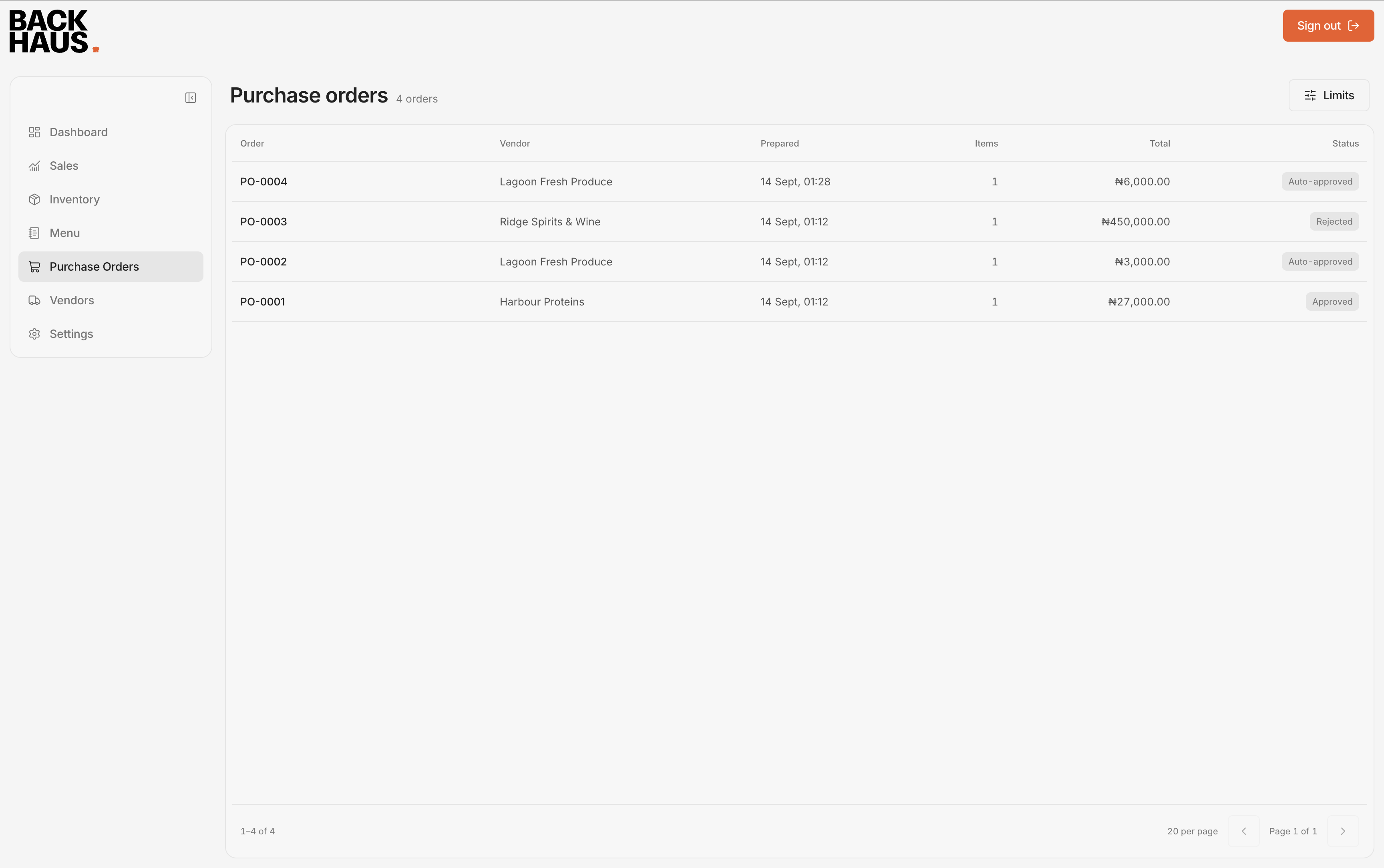
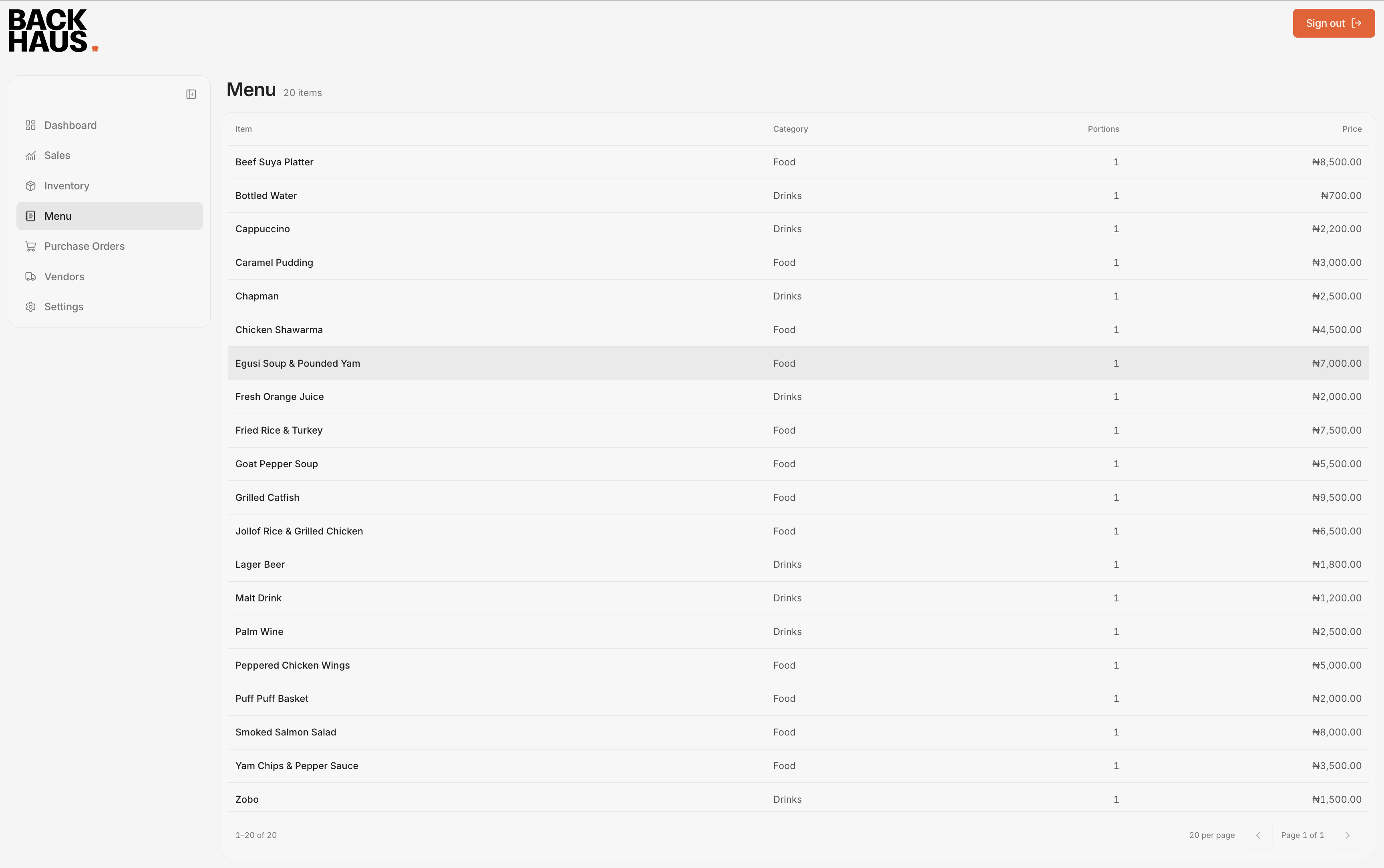
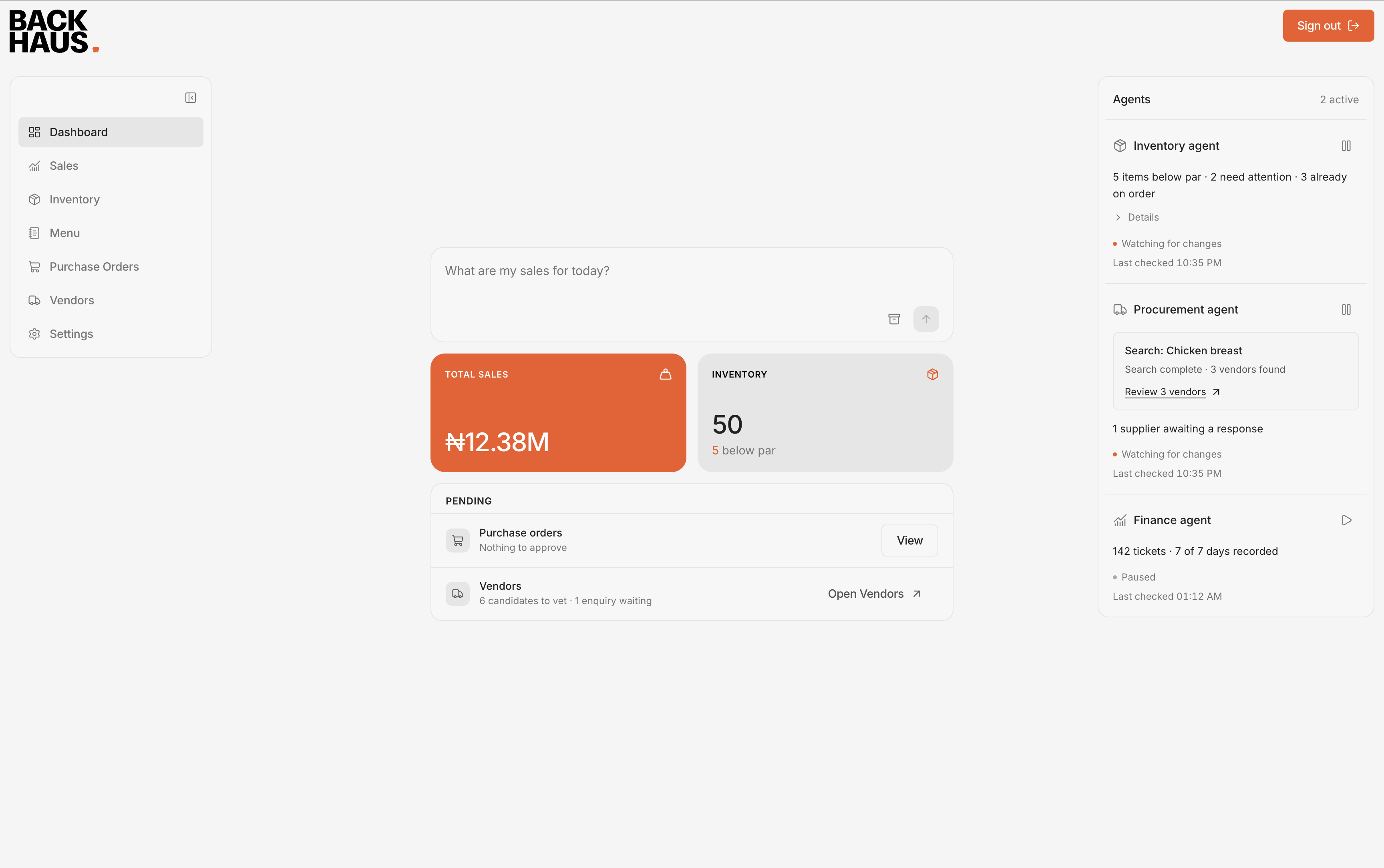
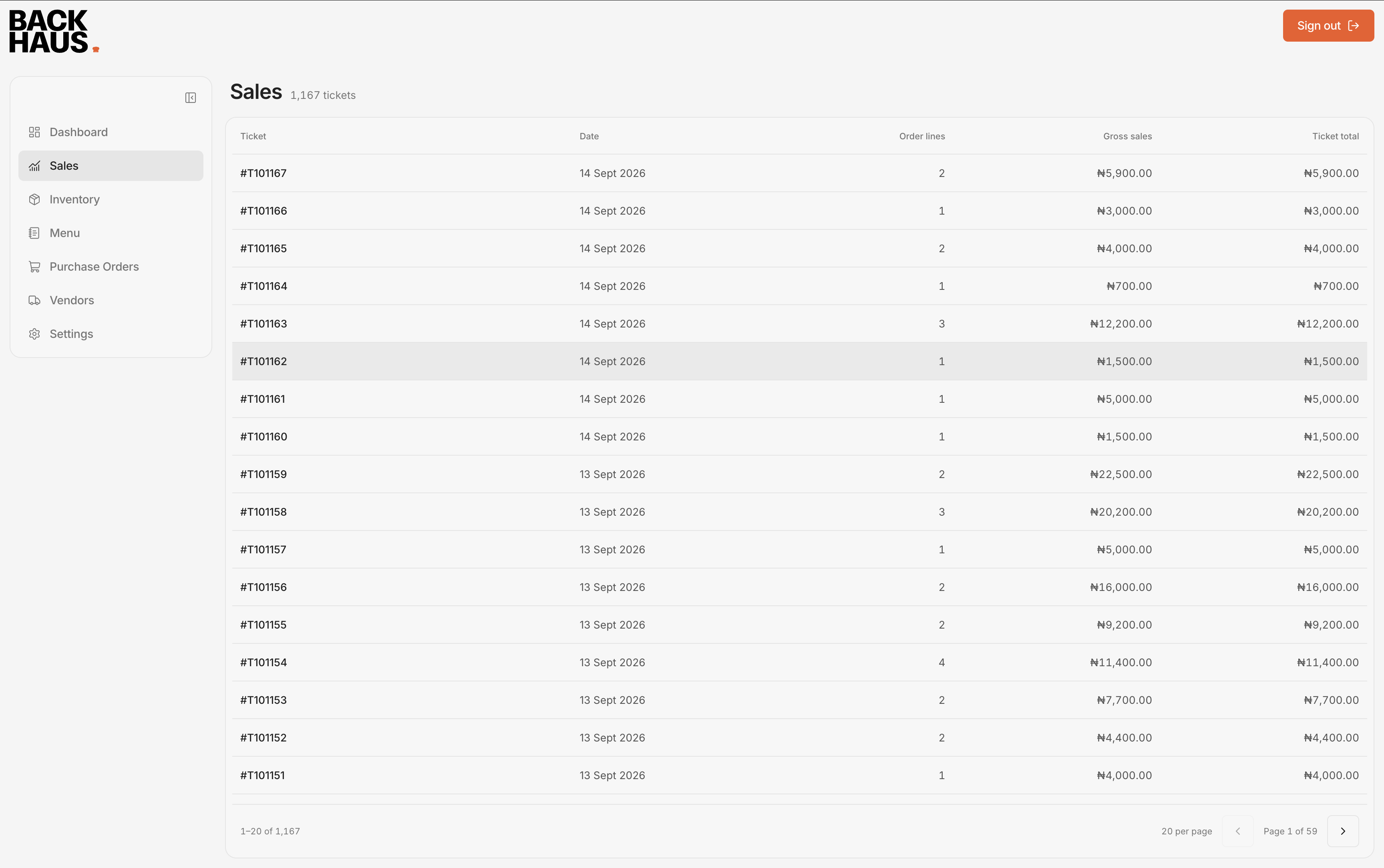
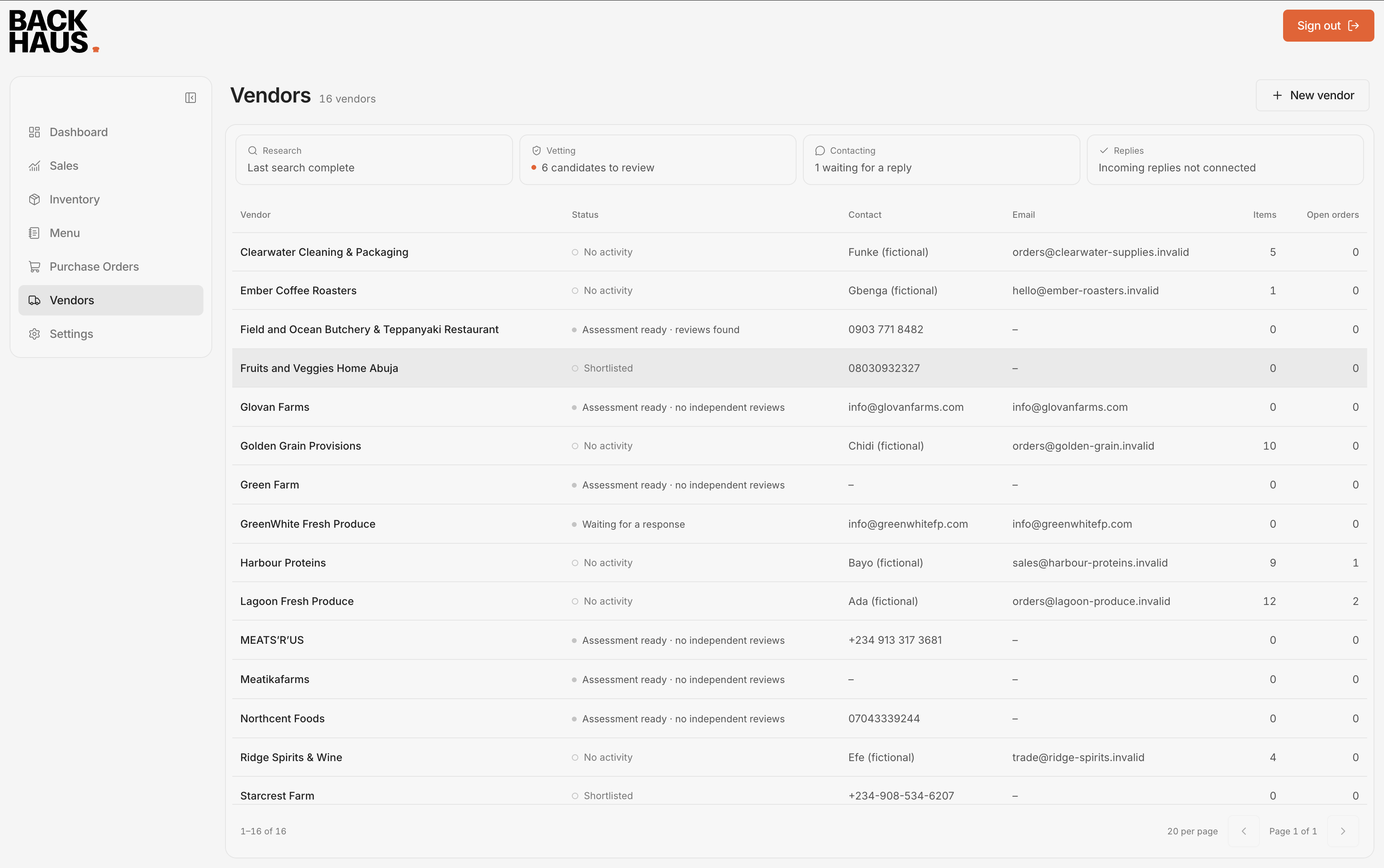
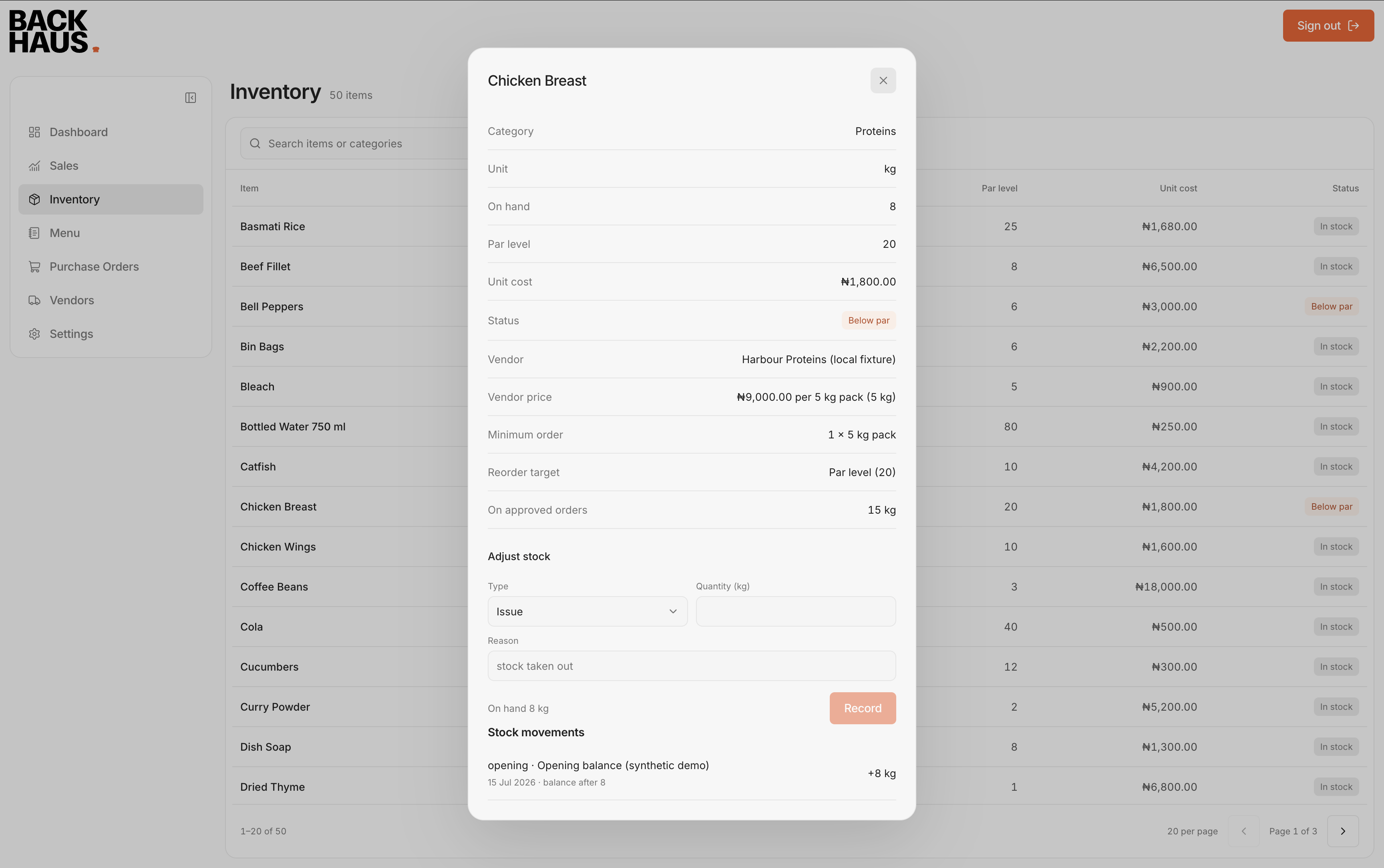
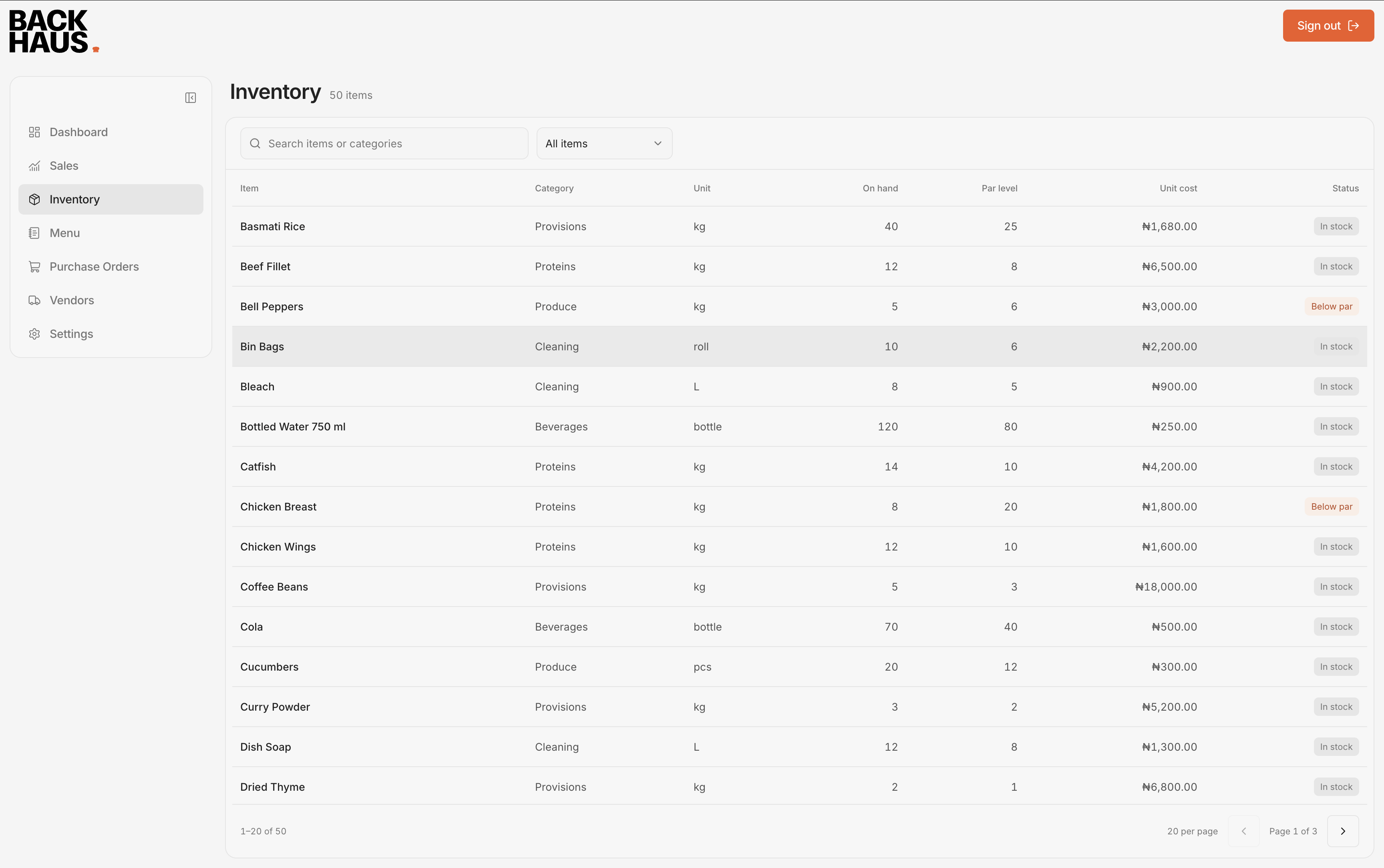
Backhaus AI brings sales, inventory, menus, vendors, and purchase orders into one workspace, supported by three specialized agents:
- Finance agent: answers sales questions using business records and checks reporting coverage.
- Inventory agent: monitors stock against par levels, accounts for existing orders, and identifies replenishment needs.
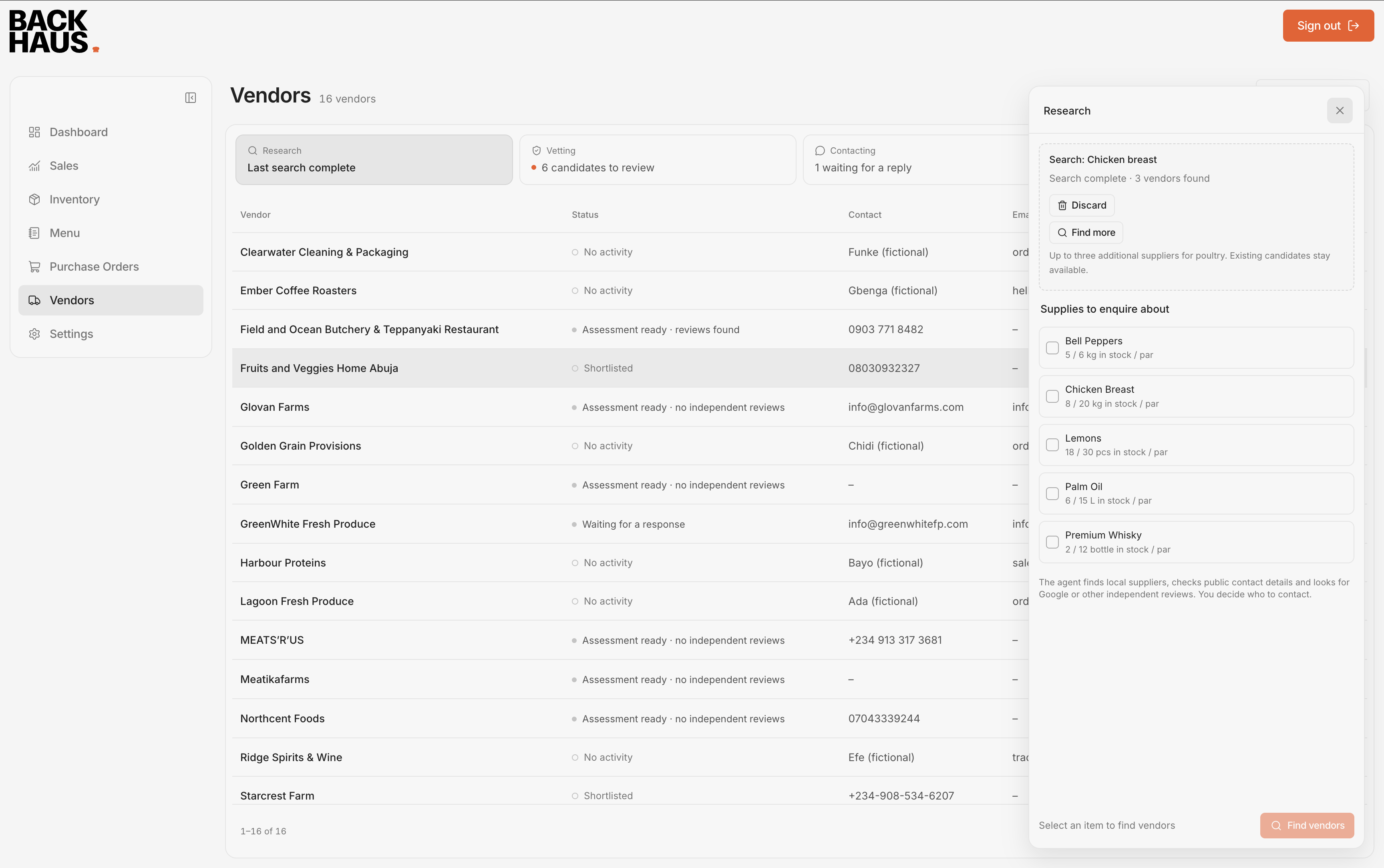
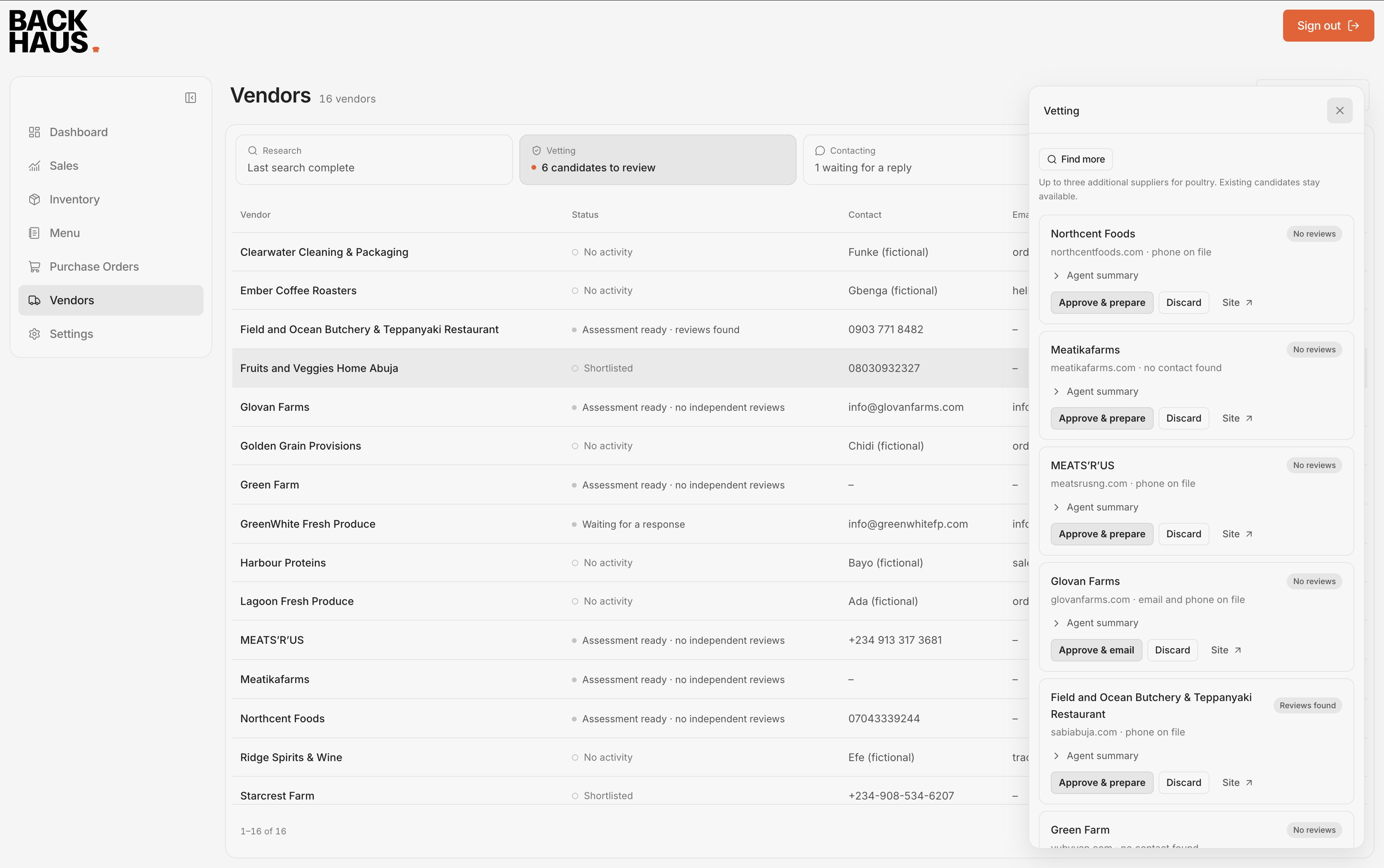
- Procurement agent: researches suppliers, gathers contact details and review evidence, and supports supplier enquiries and quote collection.
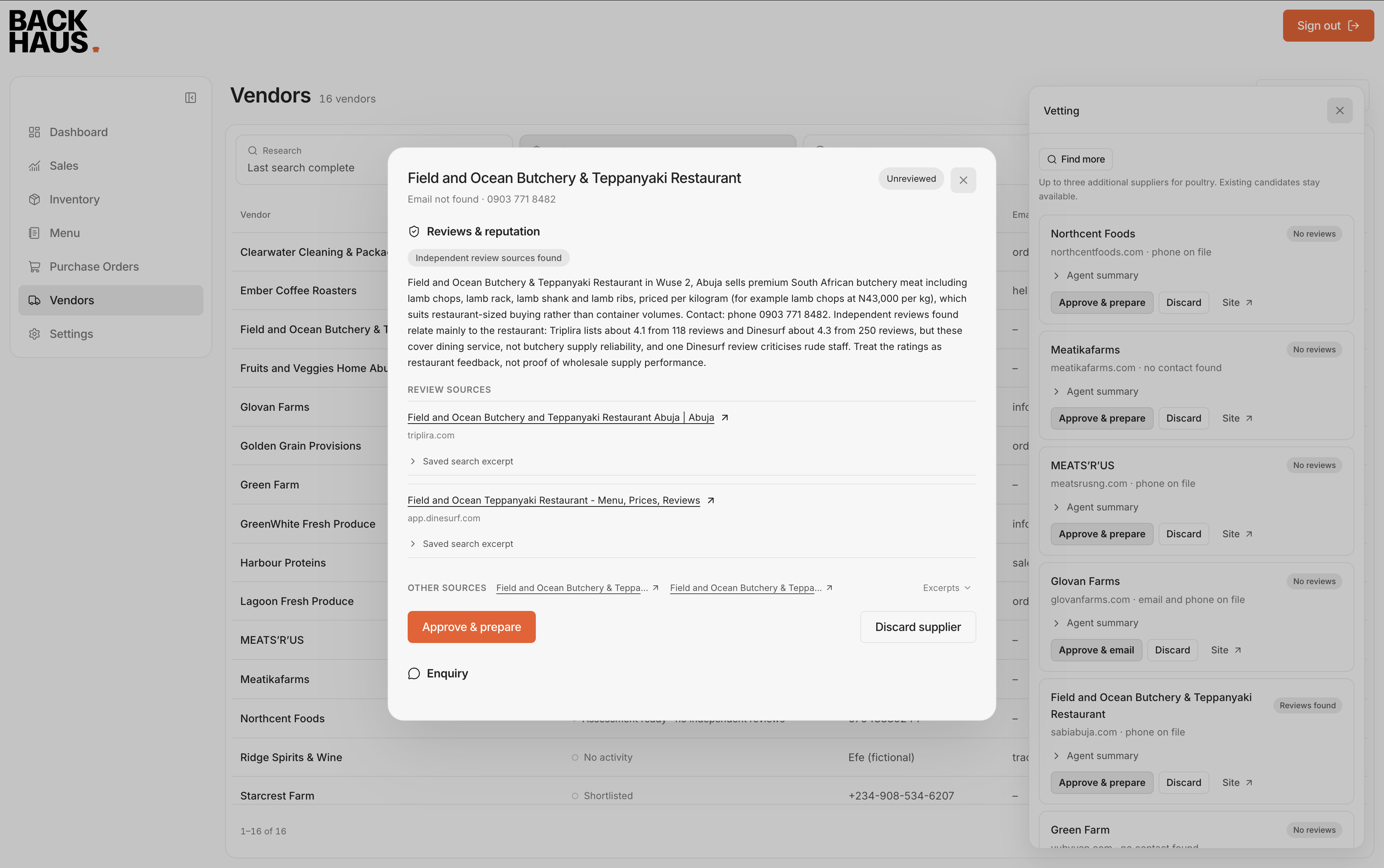
Business owners can chat naturally with Backhaus to ask about performance or request supplier research, even for items outside their current inventory. The interface shows agent activity, research results, and decisions waiting for attention. Supplier assessments include supporting sources, and approving a supplier can trigger an email enquiry when sending is configured.
How I built it
The interface uses React and TypeScript. The backend uses Rust and PostgreSQL to manage business records, enforce rules, and preserve workflow progress. Agent orchestration runs through Strands in Node.js, with two workers processing jobs.
Each agent has a focused role and tools suited to its responsibilities. Business rules remain in the backend, while agents interpret requests, research information, and work through those tools. I used synthetic business data to exercise sales reporting, inventory monitoring, and purchase-order workflows, alongside live supplier research.
Challenges I ran into
Time was the biggest constraint. I discovered the hackathon late, so I had to prioritize a working experience while still making the underlying workflows reliable.
Getting agents to consistently follow rules was another challenge. Providing domain context was only the starting point. The system also needed explicit constraints and validation around what agents could do. A stock shortage might already be covered by an existing order. A supplier’s own testimonials are not independent reviews. A prepared email is not a sent email. These distinctions matter when software is helping someone run a business.
Handling failed searches, retries, duplicate suppliers, and interrupted work also required care. The interface needed to communicate those states clearly.
Accomplishments that I'm proud of
I’m proud of building a connected workflow from identifying an inventory need to researching suppliers, reviewing evidence, and initiating an approved enquiry. Other highlights include:
- Three specialized agents with visible activity and separate responsibilities.
- Sales answers grounded in stored business records.
- Supplier assessments with accessible sources and review evidence.
- An initial shortlist of up to three suppliers per category, with an option to find more.
- Backend checks and saved progress that help workflows recover without duplicating work.
The biggest accomplishment is turning a familiar operational problem into a working foundation for agent-assisted business management.
What I learned
Useful autonomy depends on clear boundaries, reliable context, and visible progress. The model’s answer is only one part of the experience. Tool design, backend validation, retry behavior, and accurate status messages all determine whether people can trust the system.
I also learned that interface clarity is part of reliability. Users should immediately understand what an agent did, what it found, what failed, and what needs their decision.
What's next for Backhaus AI
The next step is to test Backhaus AI with real businesses and measure its impact on administrative time, procurement turnaround, and avoidable stock errors. I also want to:
- Complete email reply integration so agents can follow enquiries through to usable offers.
- Connect existing sales and inventory systems.
- Improve supplier comparisons and recommendations as stronger evidence becomes available.
- Refine notifications and exception handling so owners can focus on decisions that need their attention.
The long-term goal is to help businesses grow without making their operations harder to manage.
Built With
- openrouteservice
- postgresql
- react
- resend
- rust
- strands
- typescript

Log in or sign up for Devpost to join the conversation.