-
-
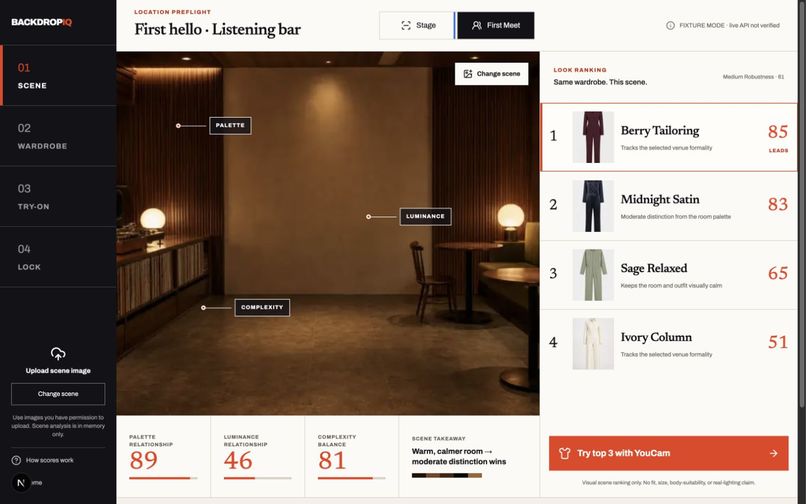
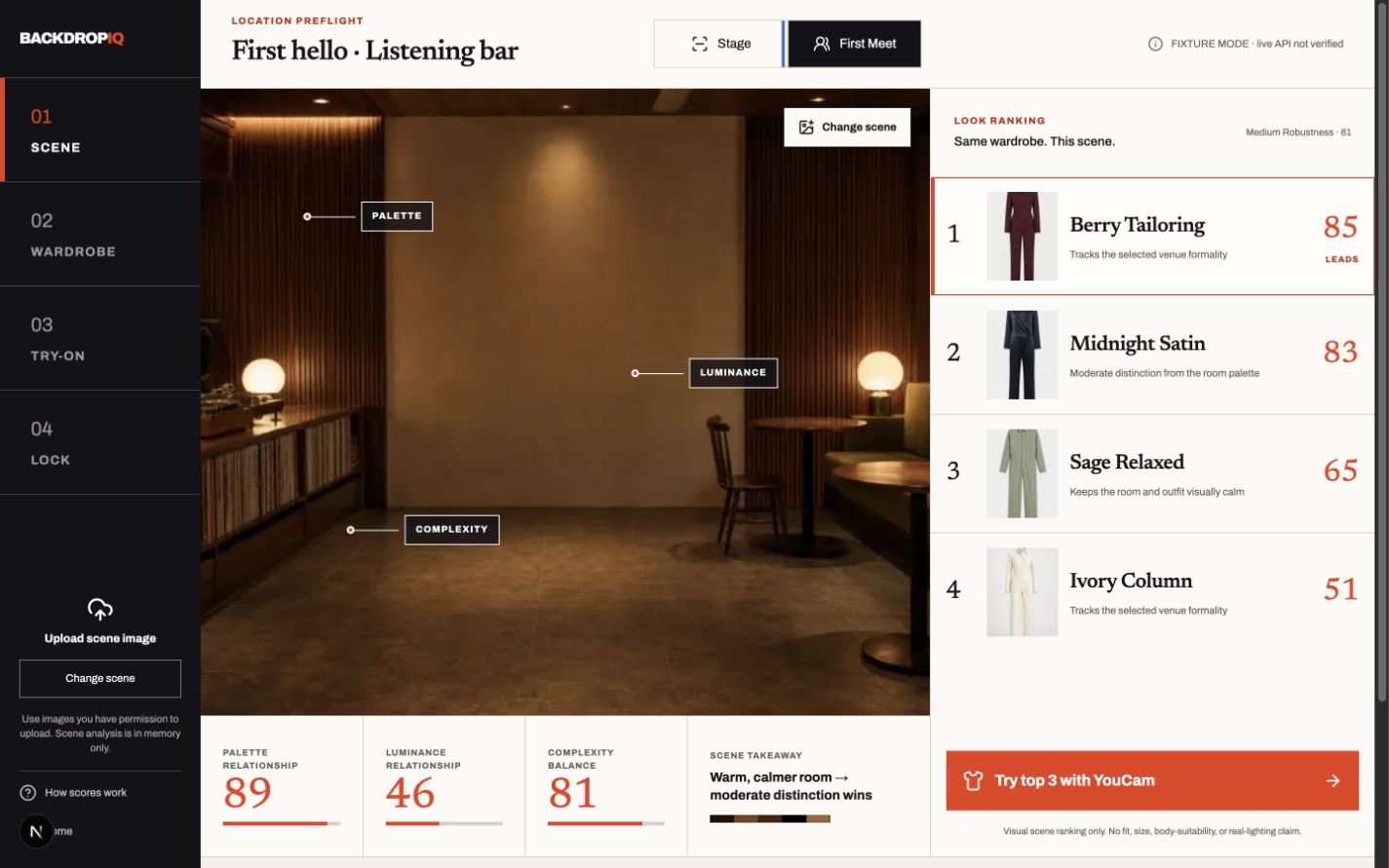
First Meet Mode: the same garments reorder for an amber listening bar.
-
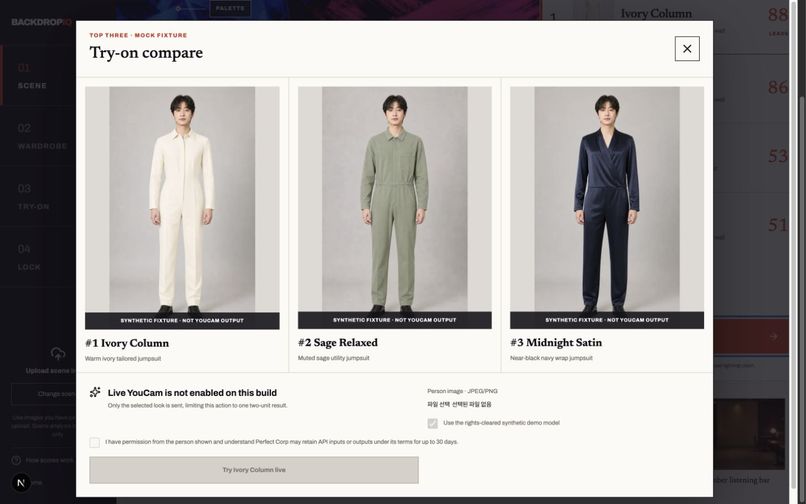
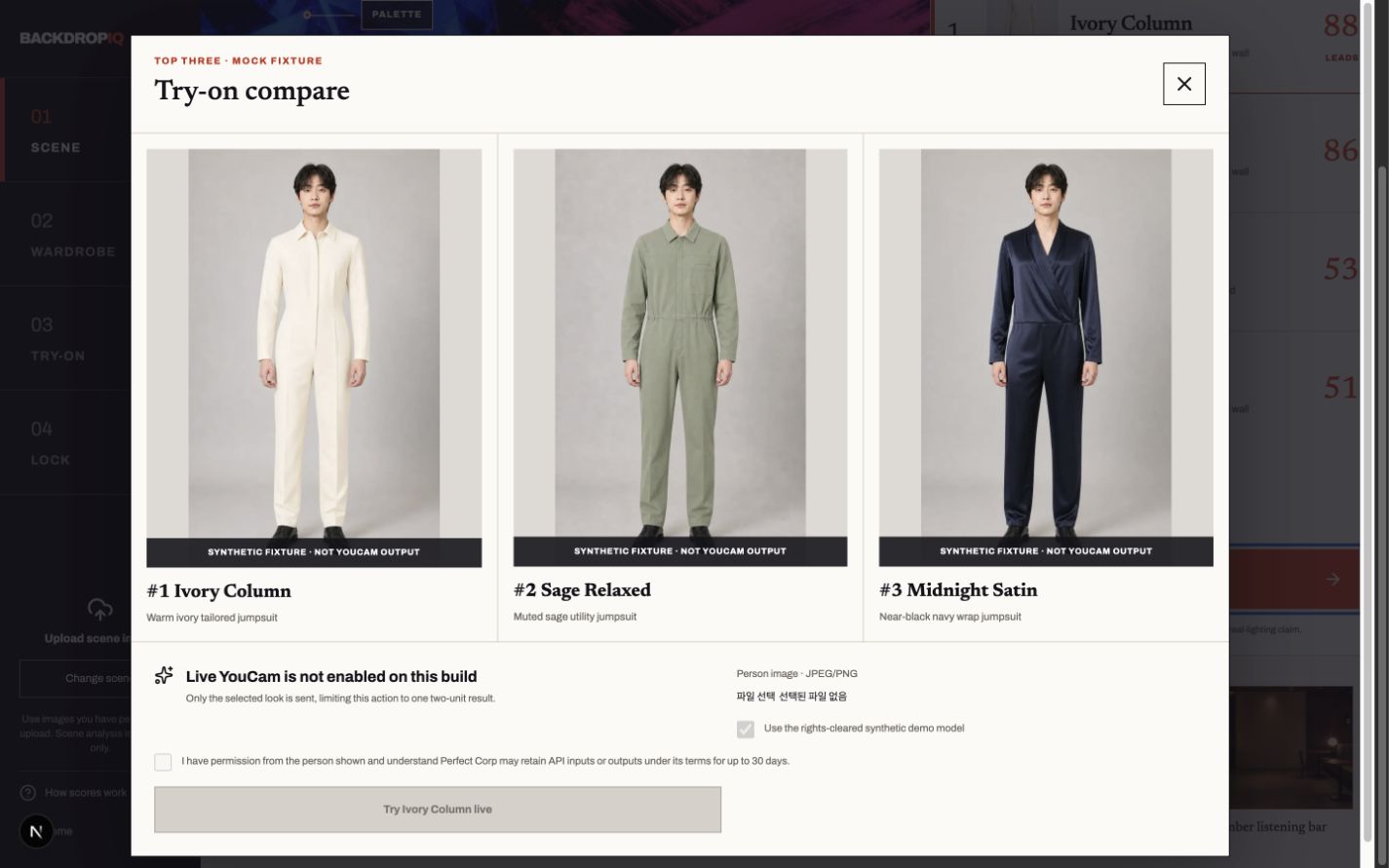
Fixture comparison, clearly labeled: top-three shortlist before live generation.
-
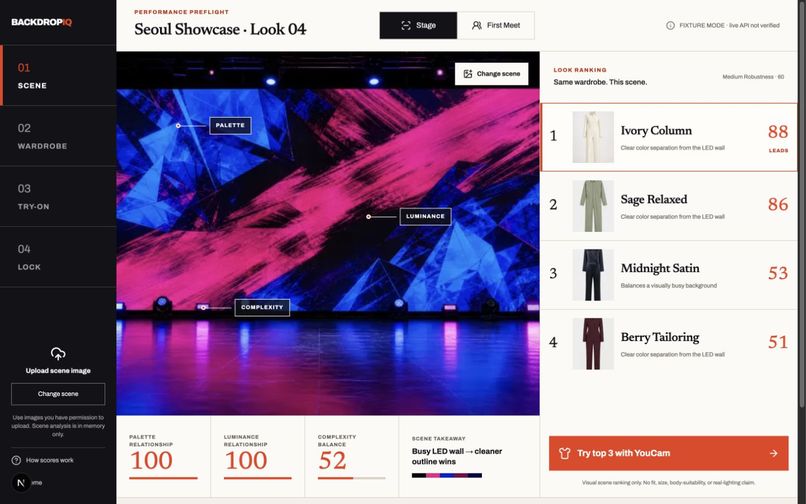
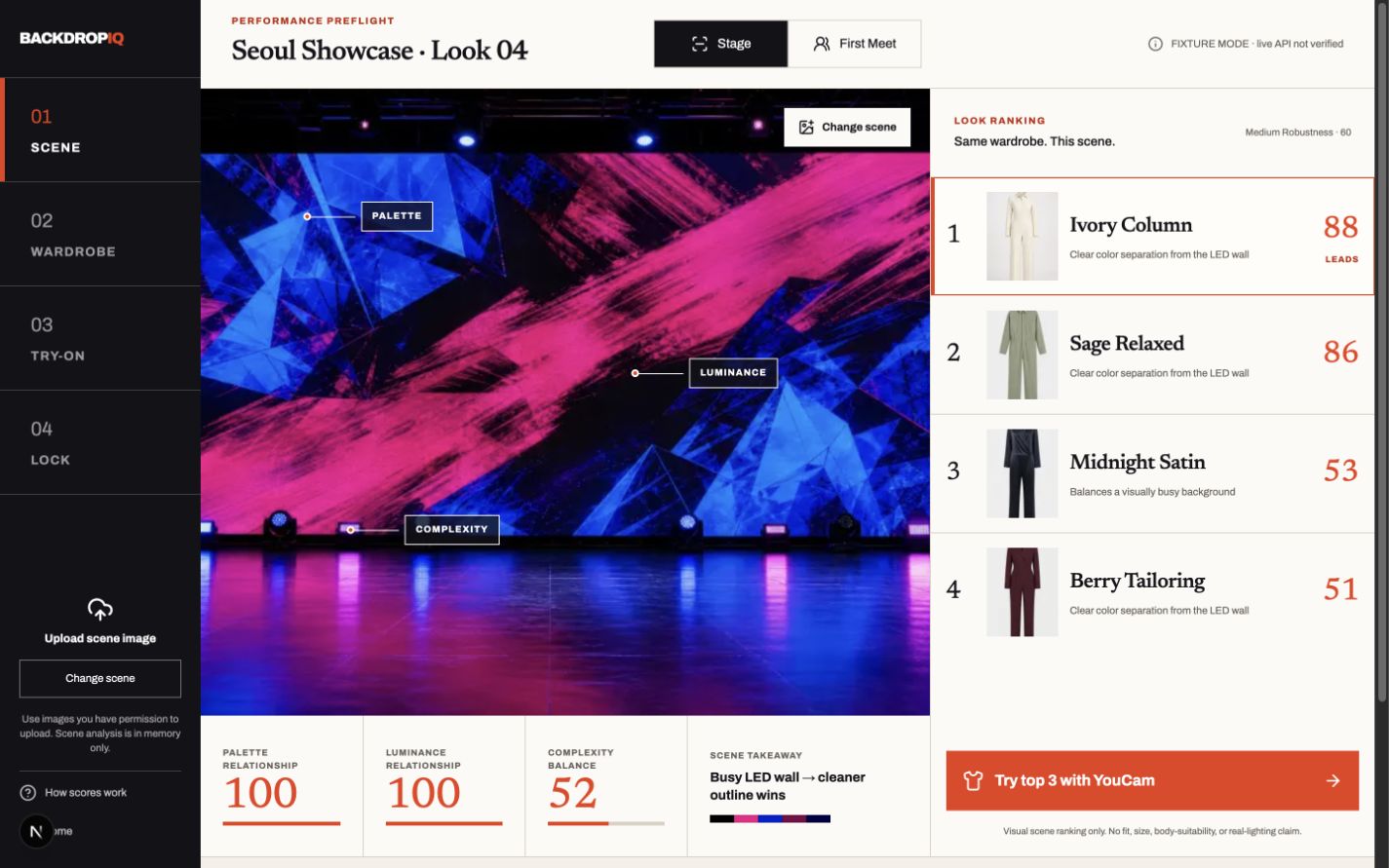
Stage Mode: the same wardrobe ranked against a high-energy LED scene.
-
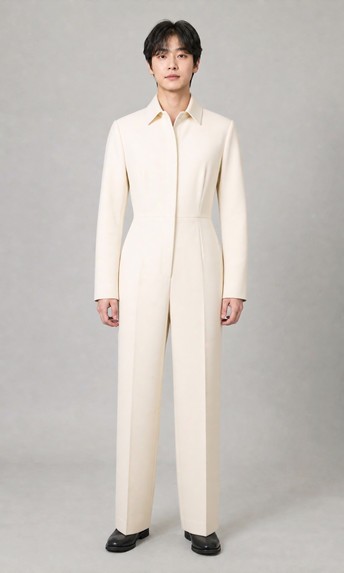
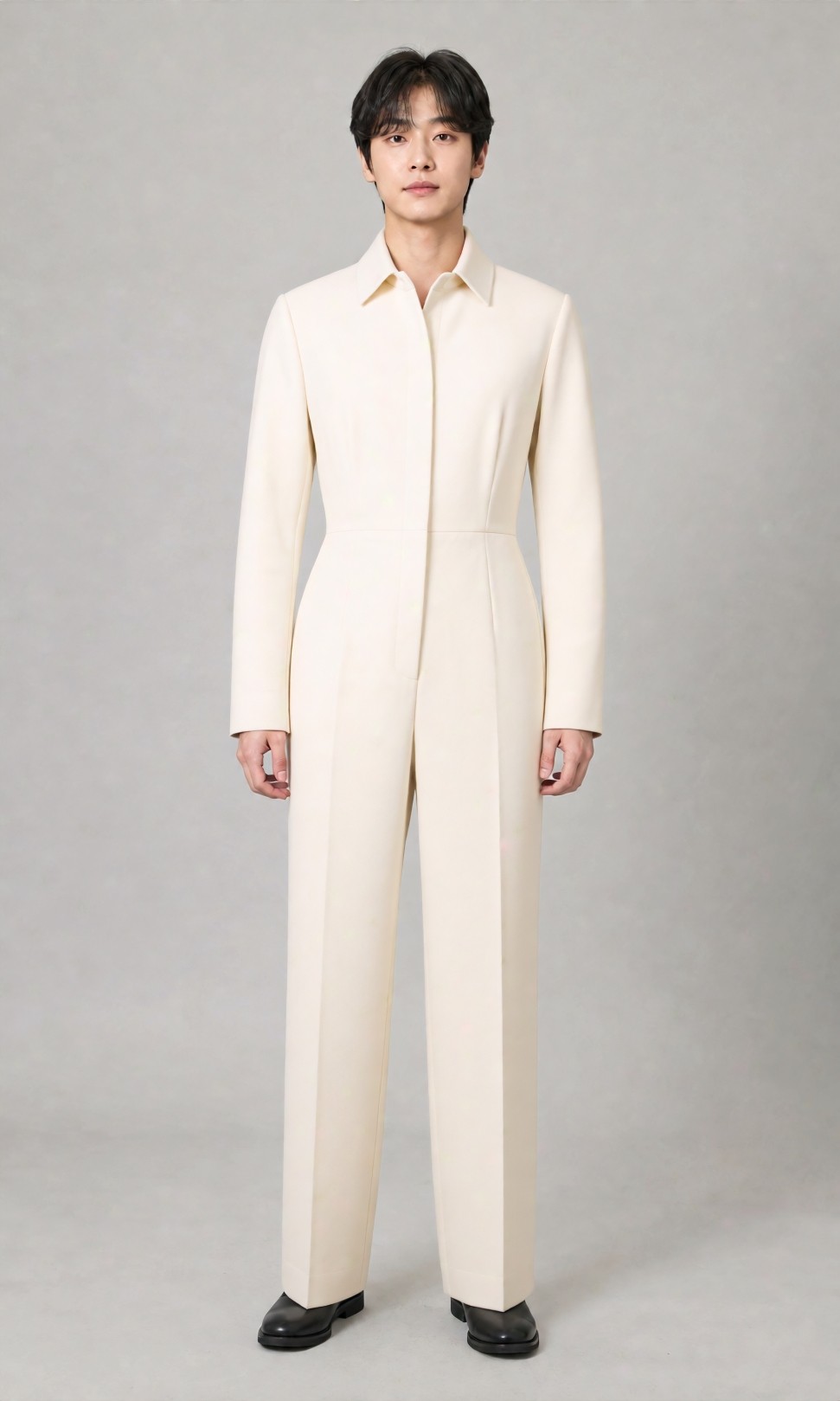
Verified YouCam Clothes V3 result — synthetic demo person + Ivory Column, July 30, 2026.
Inspiration
Outfit tools usually judge a person or garment in isolation. But a performer can disappear into a high-energy LED wall, and a carefully chosen first-meeting look can fight the color, formality, or visual density of the actual room. BACKDROPIQ makes the background a first-class input: stage wardrobe preflight first, then the same mechanism for a café, bar, gallery, or restaurant.
What it does
The user selects Stage or First Meet and uploads a rights-cleared scene image. BACKDROPIQ extracts a weighted palette, relative luminance, contrast, and visual complexity. A deterministic, versioned engine scores the same garment set across palette relationship, luminance relationship, complexity, silhouette, and formality. The interface shows the ordered wardrobe, component reasons, score weights, ranking robustness, and a rank-flip explanation when the scene changes. Stage Mode favors separation and restraint against busy performance backgrounds. First Meet combines location pixels with a listening-bar formality and silhouette profile. Neither mode scores bodies, attractiveness, or social success. The top-three flow is built for YouCam AI Clothes Virtual Try-On V3. The API key stays server-side, person transfer requires explicit permission, images are validated and re-encoded, polling is bounded, the signed result is downloaded, and completed tasks are sent through the deletion endpoint. Fixture previews are always labeled SYNTHETIC FIXTURE — NOT YOUCAM OUTPUT.
How we built it
The frontend uses Next.js, React, and TypeScript. Scene analysis runs in a Node route with Sharp: files are bounded, fully decoded in memory, reduced to a small analysis frame, and transformed into deterministic features. Dominant colors use quantized sRGB frequency plus OKLab separation. backdropiq-rank-v1 converts component scores to integer basis-point contributions. Stage weights are palette 30%, luminance 25%, complexity 20%, silhouette 15%, and formality 10%. First Meet uses 25%, 15%, 20%, 15%, and 25%. Stable tie-breaks and deterministic perturbations make the ordering replayable and the robustness label inspectable. The server-only YouCam adapter implements the Clothes V3 upload, task, polling, download, and delete lifecycle. The public route adds same-origin enforcement, a live-mode kill switch, allowlisted garments, permission validation, image re-encoding, separate ingress and paid-generation limits, redacted errors, no-store responses, and a short bounded idempotency cache.
Challenges we ran into
The hardest product challenge was separating a defensible visual measurement from an overconfident style verdict. We kept each feature and weight visible and defined robustness as ranking stability—not user preference or model accuracy. The hardest engineering challenge was the asynchronous media lifecycle: presigned uploads, bounded polling, temporary result URLs, cleanup that must still run after download, strict origin checks, and unit protection. We also kept fixture mode useful without letting synthetic previews be mistaken for API evidence.
Accomplishments that we're proud of
- The same wardrobe produces a visible, explainable rank flip when the scene changes.
- Scene pixels—not an occasion prompt or weather lookup—drive the core evidence.
- Every ranking component, weight, tie, and limitation is inspectable.
- Fixture and live states are explicit throughout the interface.
- The deployed scene-analysis endpoint, public demo, test suite, and repository are reproducible.
- Synthetic scenes, person, garments, and previews have a provenance ledger and hashes.
What we learned
Context-aware styling is most useful when it narrows choices without pretending to replace human judgment. A rank flip is more persuasive than a single score because it makes the scene's causal role visible: person and wardrobe stay fixed; only the background changes. We also learned that VTO integration is not just an image-generation call. A responsible product needs clear permission, secret isolation, upload validation, bounded polling, temporary-result handling, deletion requests, unit protection, and honest fallback labeling.
What's next
Next is a small consented pilot with wardrobe teams across multiple LED cues, followed by consumer venue sets for First Meet. We would add catalog ingestion, per-cue comparison, team review, and durable—but user-controlled—look records only after privacy and retention design are complete. We would evaluate time-to-shortlist, explanation agreement, rank-flip comprehension, VTO completion and latency, and units per completed preview. We will not use body, attractiveness, or dating-success metrics.
Current verification status
The deployed scene-analysis, ranking, and consent-gated YouCam Clothes V3 flows are live and tested. On July 30, 2026, the public /api/try-on route returned HTTP 200 with a 971×1619 JPEG (115,904 bytes) in 17.4 seconds from the rights-cleared synthetic demo person and ivory garment. The YouCam usage ledger recorded Clothes V3 at 2 units, and the provider log recorded the deletion request as HTTP 200. The public video was recorded earlier and intentionally shows clearly labeled fixture mode; the live evidence is documented in the public repository without exposing credentials, task IDs, or signed result URLs.
Built With
- next.js
- youcam

Log in or sign up for Devpost to join the conversation.