Team Members: Yash Dhir [email protected] Rahul Nambiar [email protected] Tzipora Schein [email protected]
Inspiration
Being college students, a lot of our time is consumed on our laptops at desks. And while this problem has existed for a while, as a result of the COVID-19 pandemic people have spent longer times sitting in place and there has been an increased number of posture related injuries . For our final project, we wanted to design a device that attaches to your chair, that helps you better your posture.
What it does
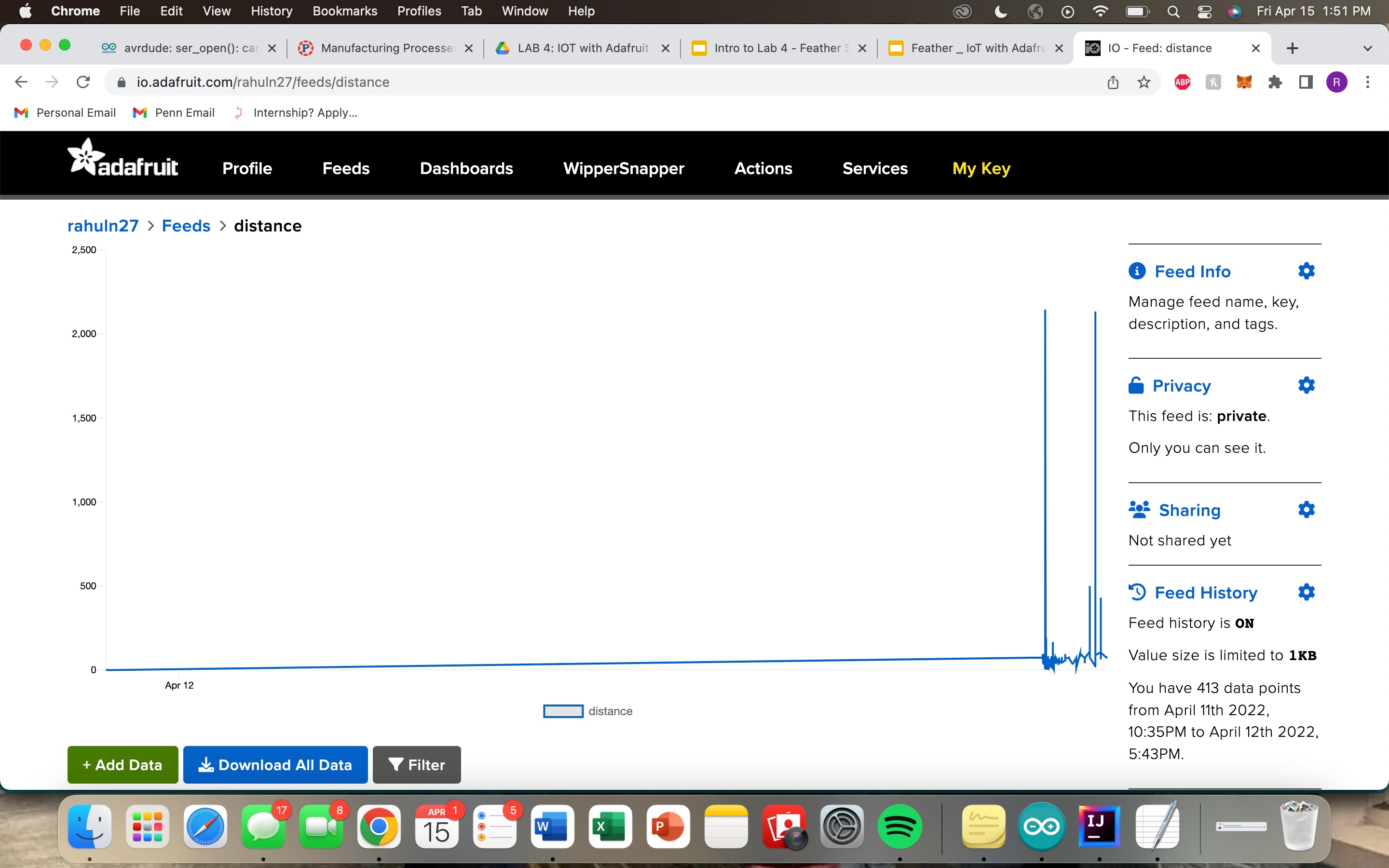
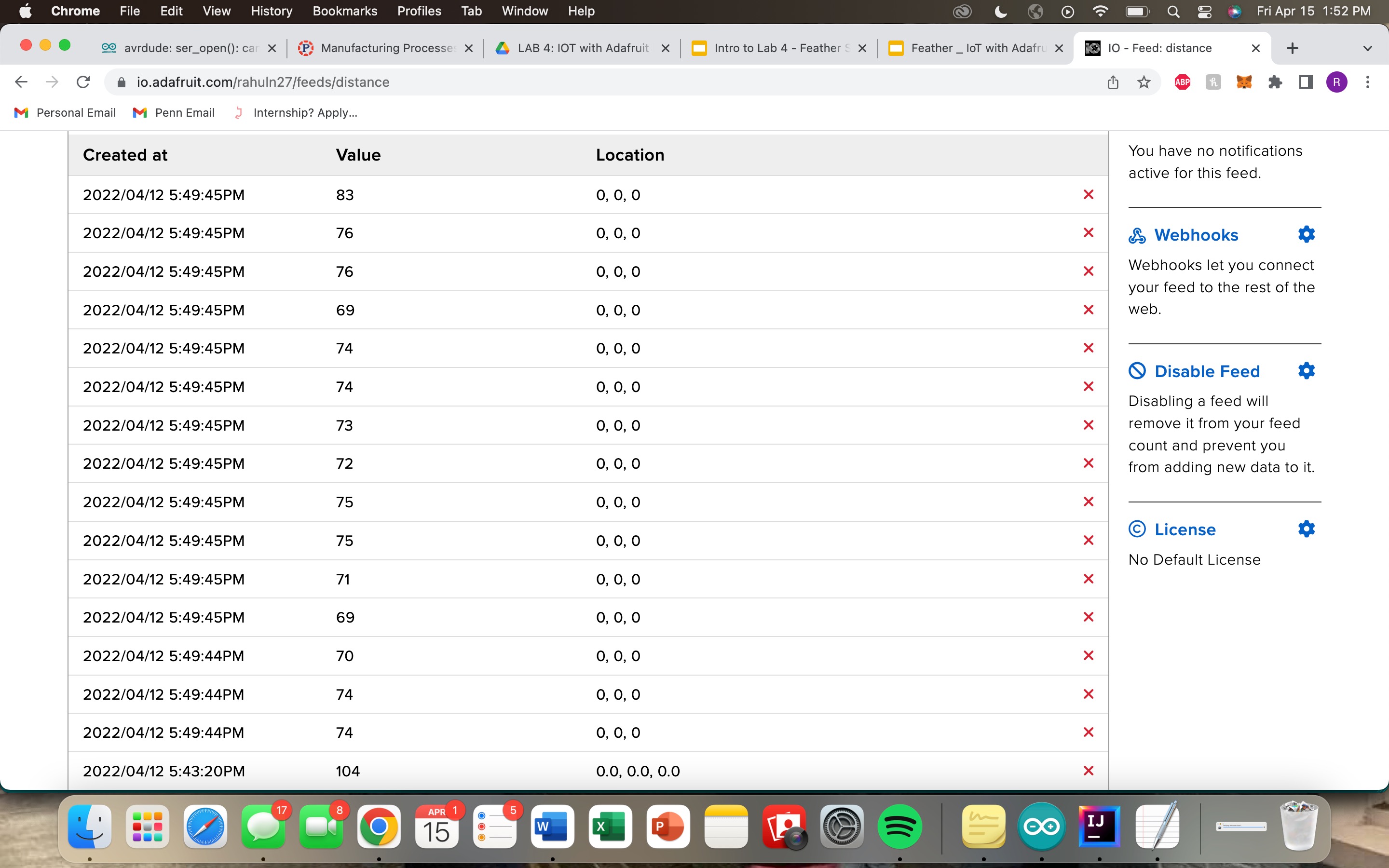
Through a mix of distance sensors and pushbuttons, our device provides users individualized recommendations (as notifications on the Adafruit dashboard) on how and when to correct their posture.
How we built it
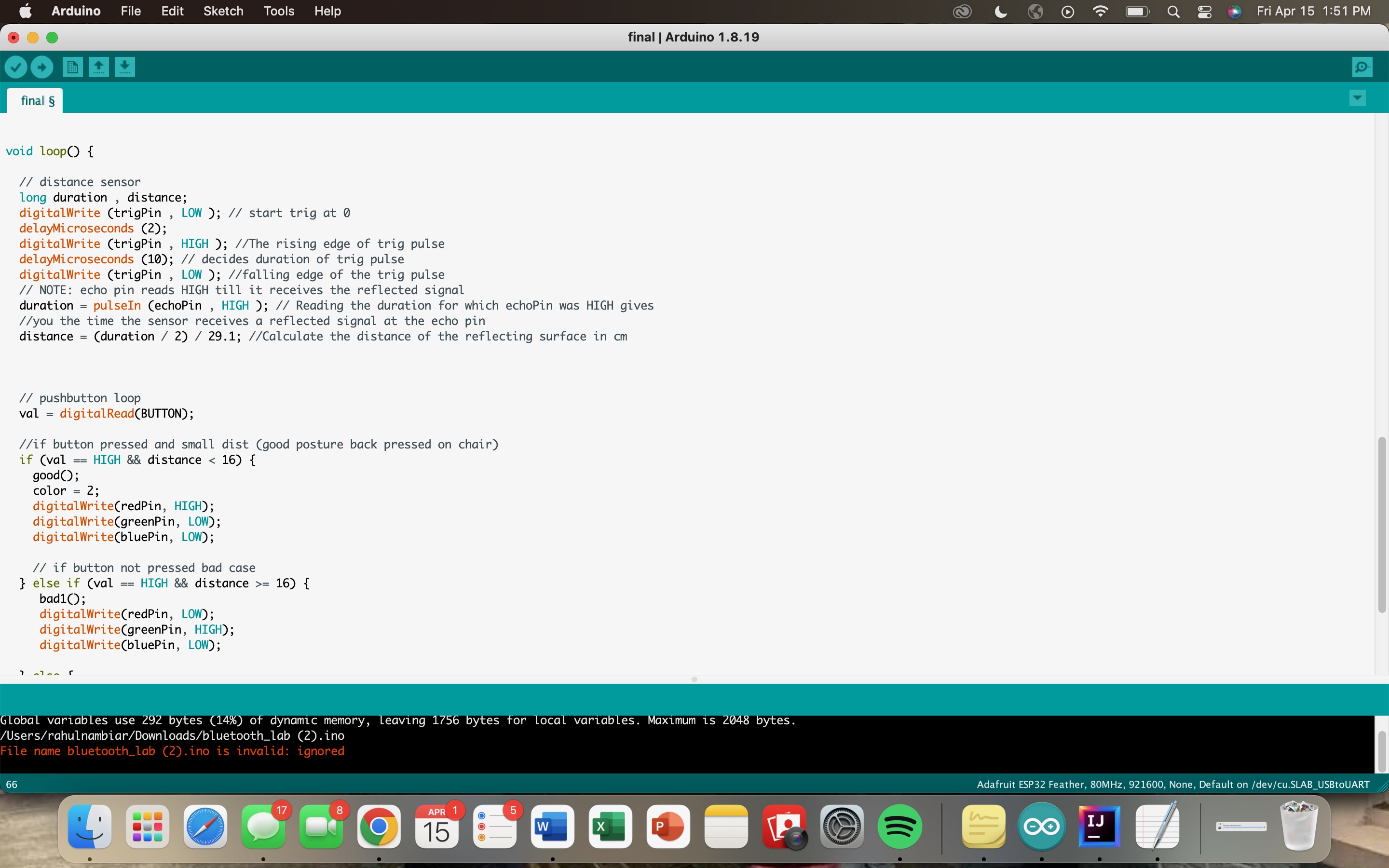
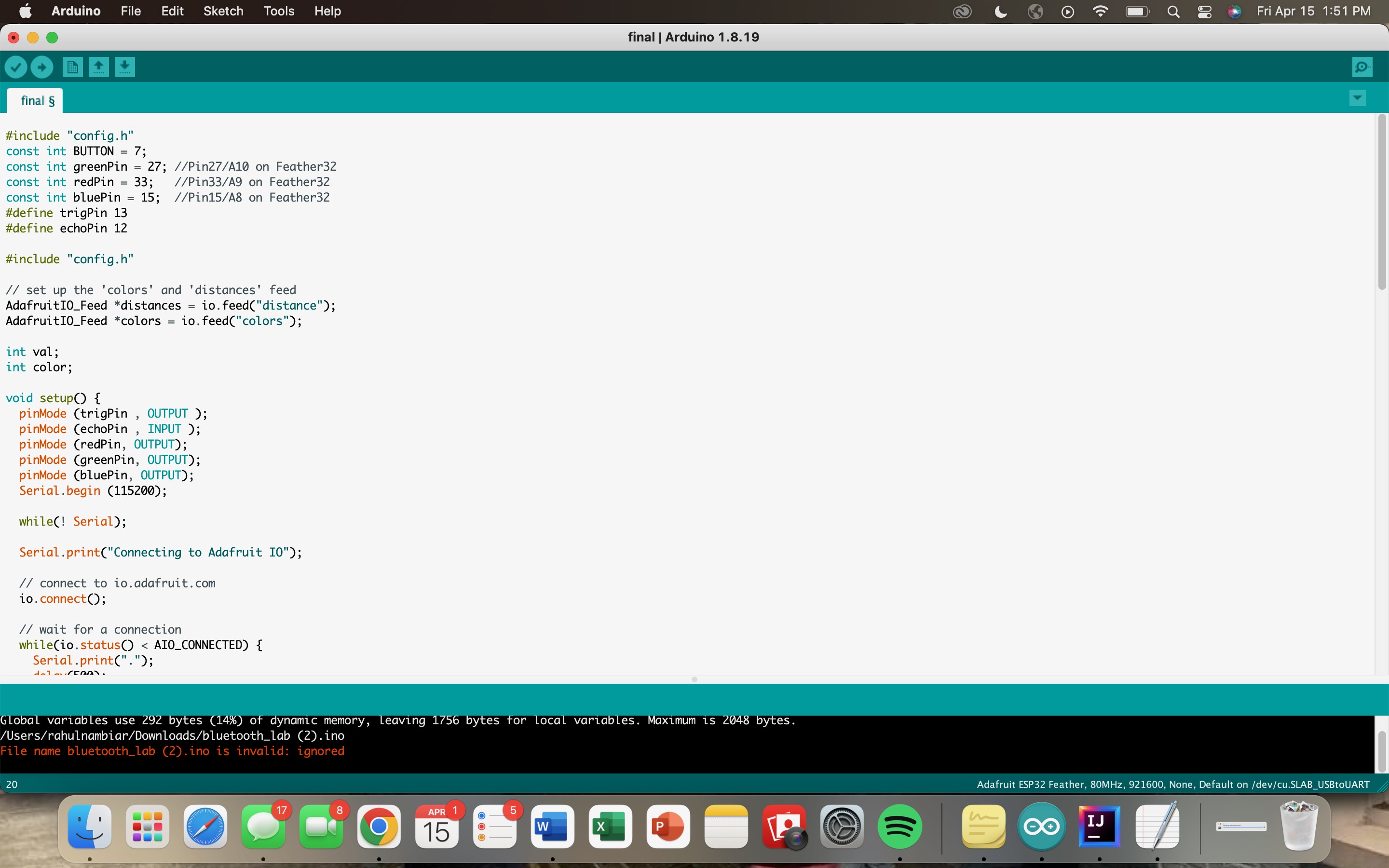
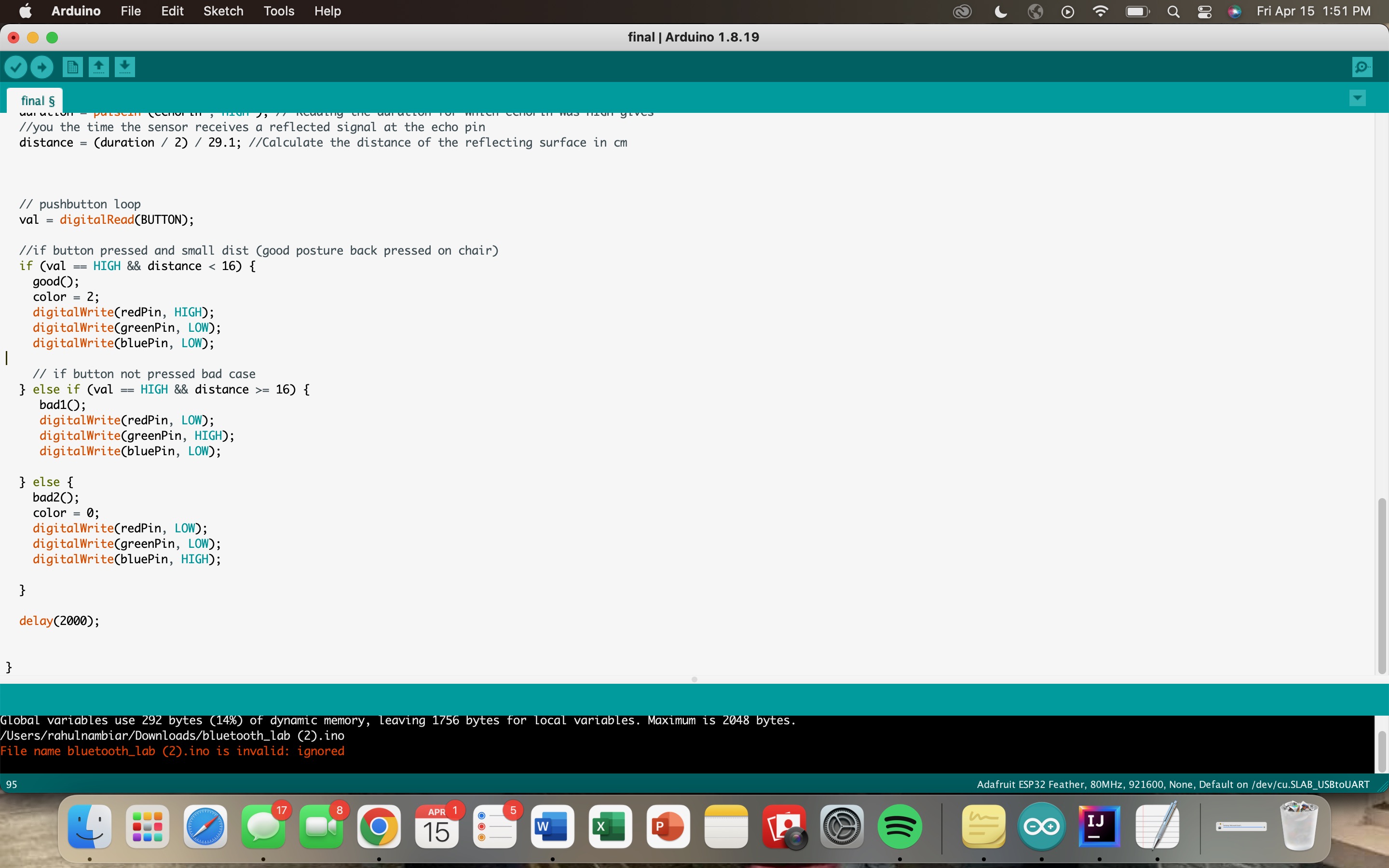
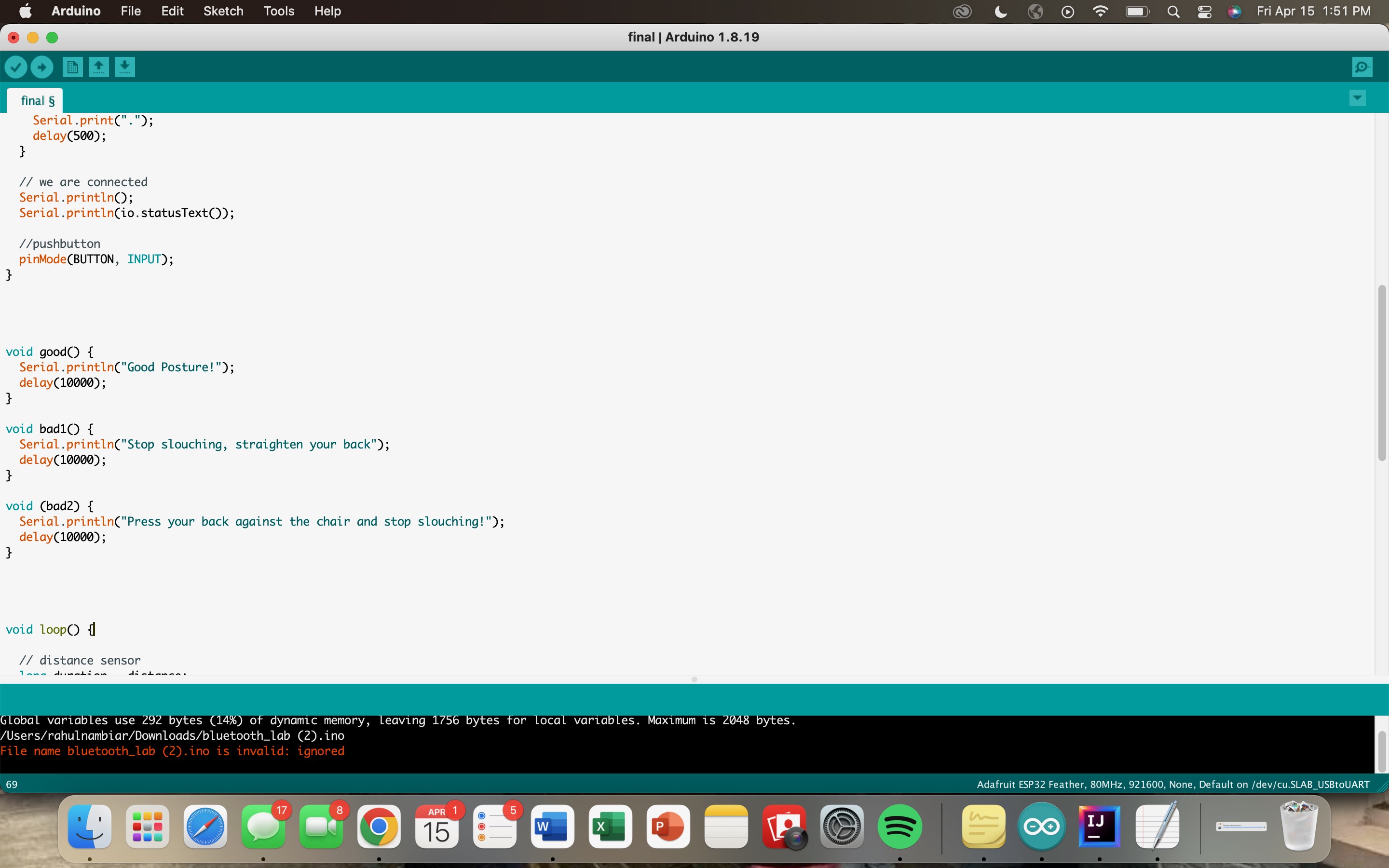
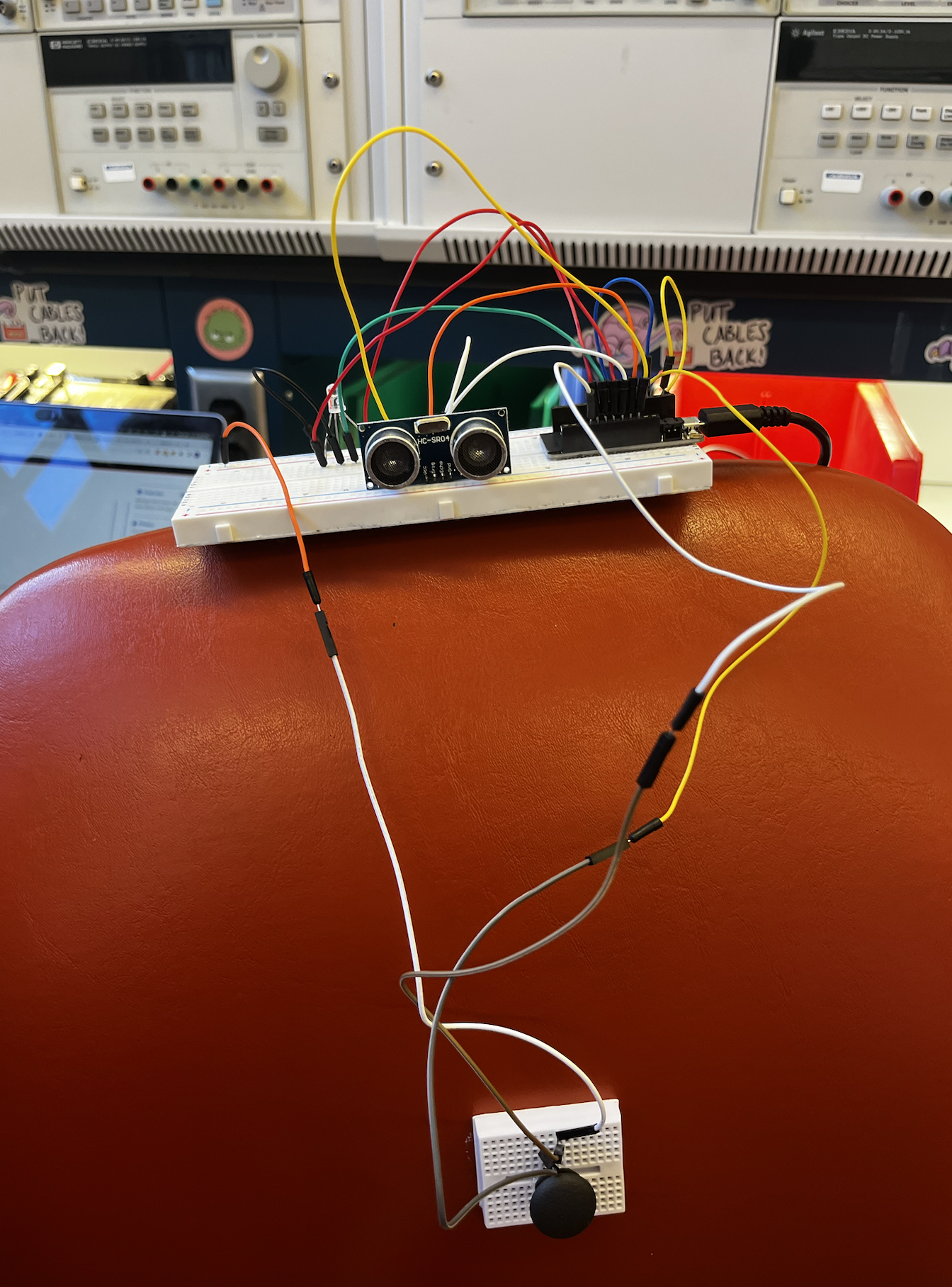
We first built a breadboard with a distance sensor and LED light. This breadboard was kept on top of the back of a chair - where ones neck would be. A separate breadboard had a pushbutton on it. We attached that breadboard to the back of a chair - where ones back would be. When the pushbotton was not pressed that would mean the person sitting in the chair was not sitting up straight. The distance sensor could also tell the distance between the chair and the person, so if one is slouching the device would know and the LED light would turn on. Instead of Arduino, the distance sensor was connected to the Adafruit board to upload data to the computer directly. The Adafruit dashboard would inform the user if they need to correct their posture.
Challenges we ran into
There were many challenges that we overcame over the course of the project. It was difficult to get the Wi-Fi board to work in the correct way. The pushbutton and distance sensor were not working together properly at first. In order to make sure the correct lights were blinking, the LED bulb was added. With help from our TA's and google we were able to troubleshoot all of our problems!
Accomplishments that we're proud of
We are proud that we started this course not having much experience with Arduino and we finished with a device that could be beneficial for so many people. We are proud of the ways we worked together and brainstormed ideas to make this functioning device.
What we learned
While making this project and throughout this class, we learned a lot about building hardware and being able to connect it to a computer's software. Working through the process of displaying data on a computer after a physical pushbutton was pushed was very informative.
What's next for Back Track
Our next goal for Back Track is to make a device that can go underneath the fabric of the chair! While our device satisfies our goal of informing someone when they need to correct their posture, it would be more practical if the design of the product was more appealing. We would not predict trouble with the pushbutton being underneath the fabric, but the distance sensor might be more difficult. We would have to look into ways the distance sensor could still have accurate reading through an additional layer of fabric.

Log in or sign up for Devpost to join the conversation.