-
-
banner
-
app icon
-
app screen
-
app screen
-
app screen
Inspiration
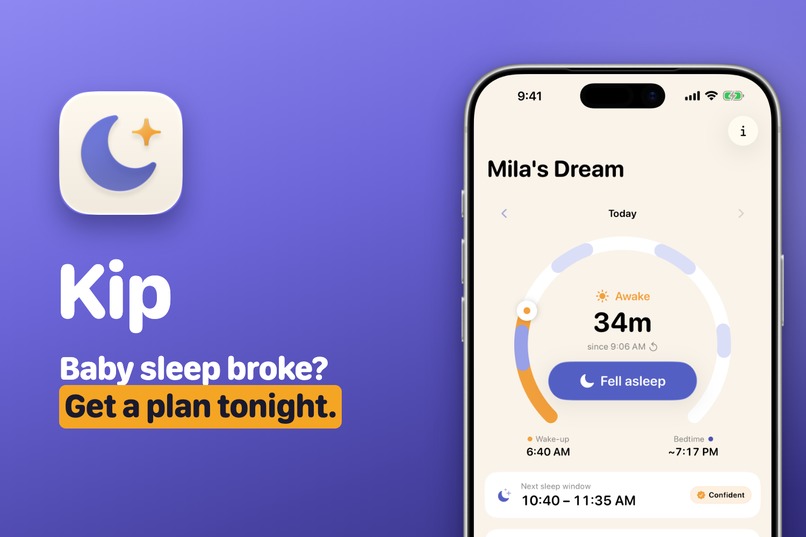
Parents download a baby sleep app on a bad night. It's the 4-month regression, a first tooth or a trip, and the baby who napped on schedule last week now wakes every hour. Most sleep apps log naps and suggest times from the baby's age, and that doesn't help much when the week falls apart. At 3 AM a tired parent wants two answers: what do I do tonight, and when does this end?
I wanted to build the app for that night.
What it does
Kip starts with one question: did sleep suddenly break, or do you want a better schedule?
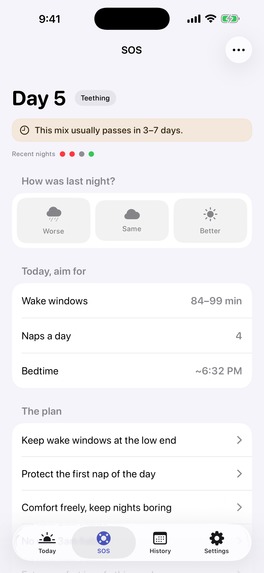
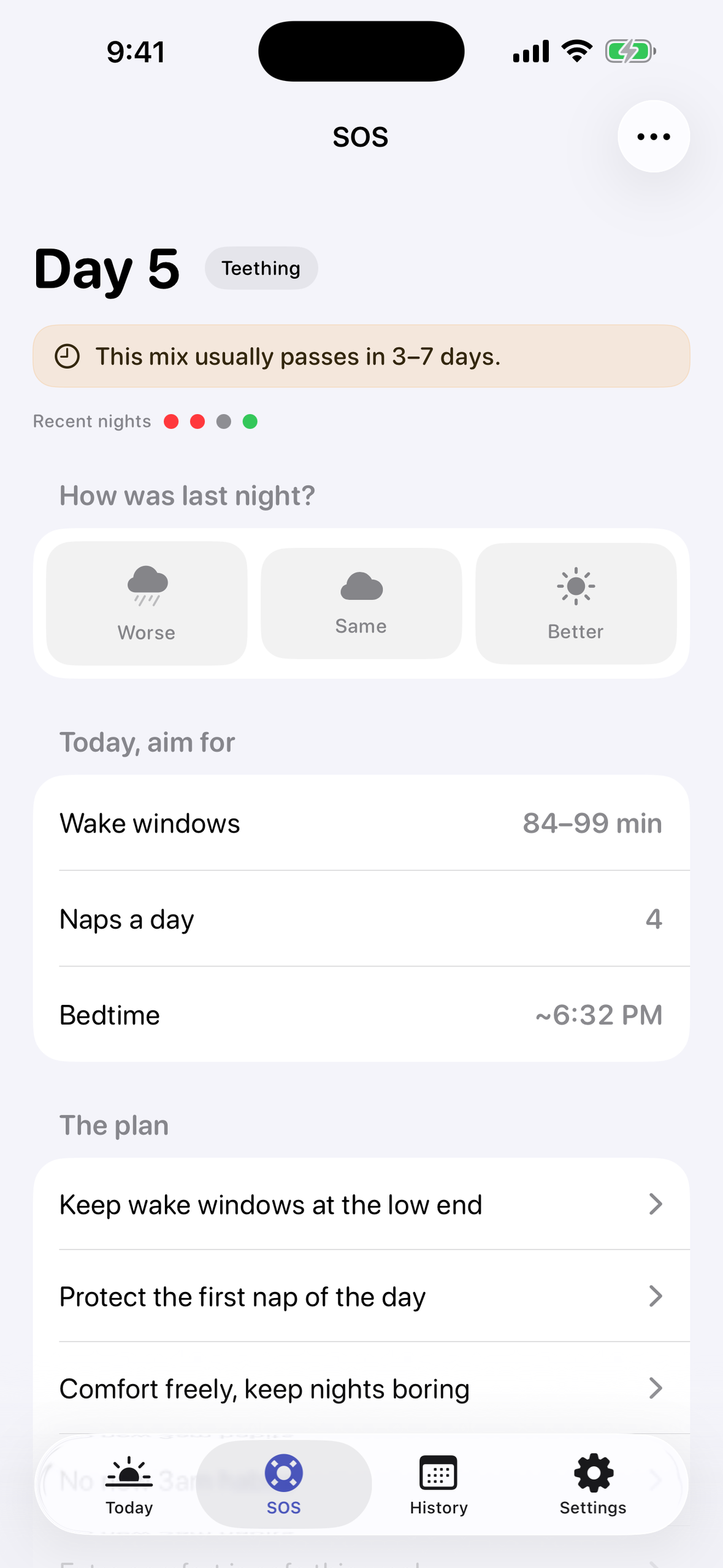
If sleep broke, you tick what's going on: teething, a new skill like rolling or crawling, travel, a schedule change. Kip gives you a plan for tonight and the next days: shorter wake windows, an earlier bedtime, what to do at 3 AM. A counter shows which day of the rough patch you're on and how long it usually lasts. Each morning you rate the night, and after three better nights out of five Kip tells you that you made it through.
If your baby is sick or has a fever, Kip gives no plan and sends you to your pediatrician first.
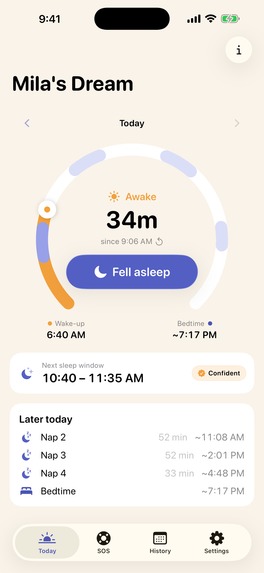
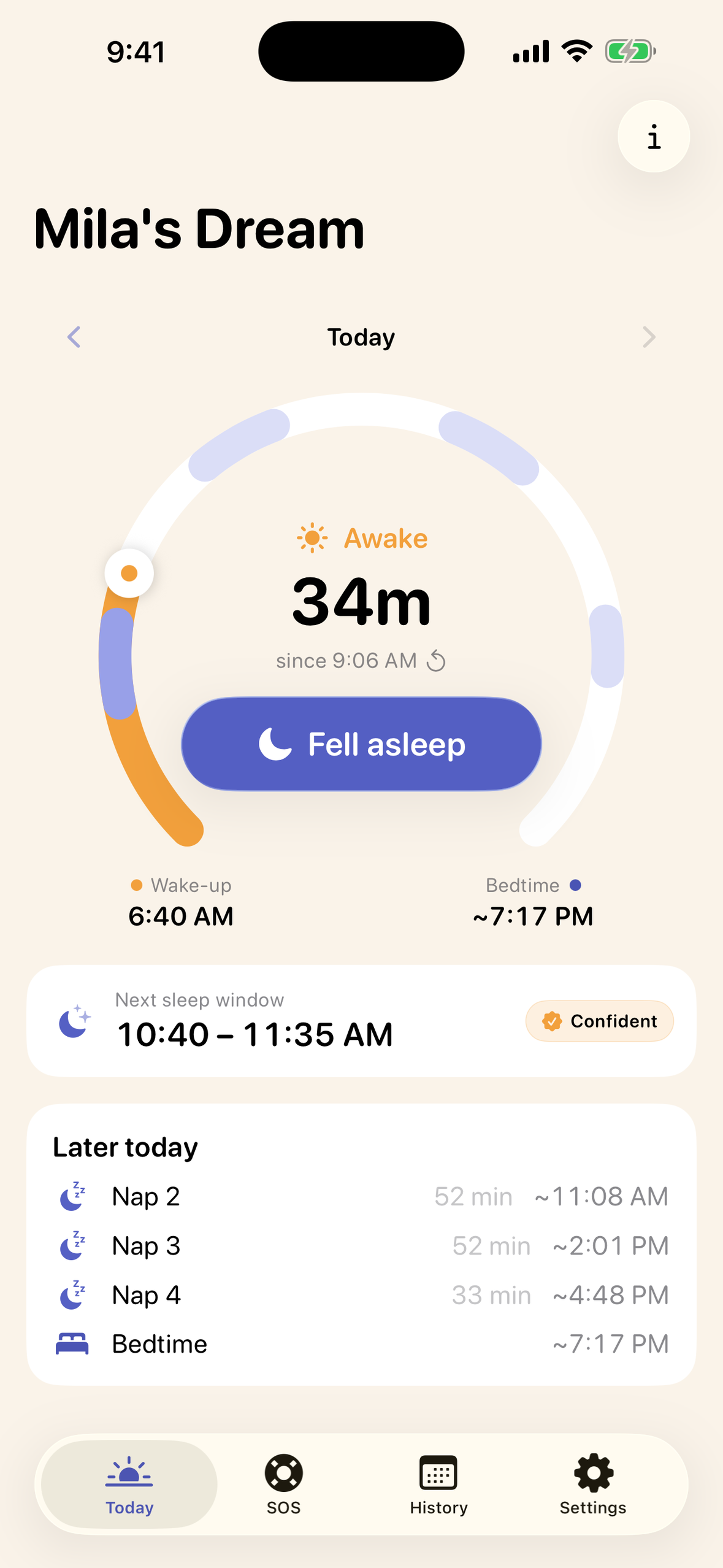
On normal days Kip shows when the next nap should start, as a range with a badge that says how sure it is. The more you log, the closer it fits your baby.
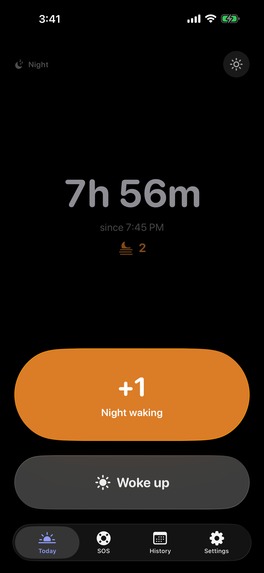
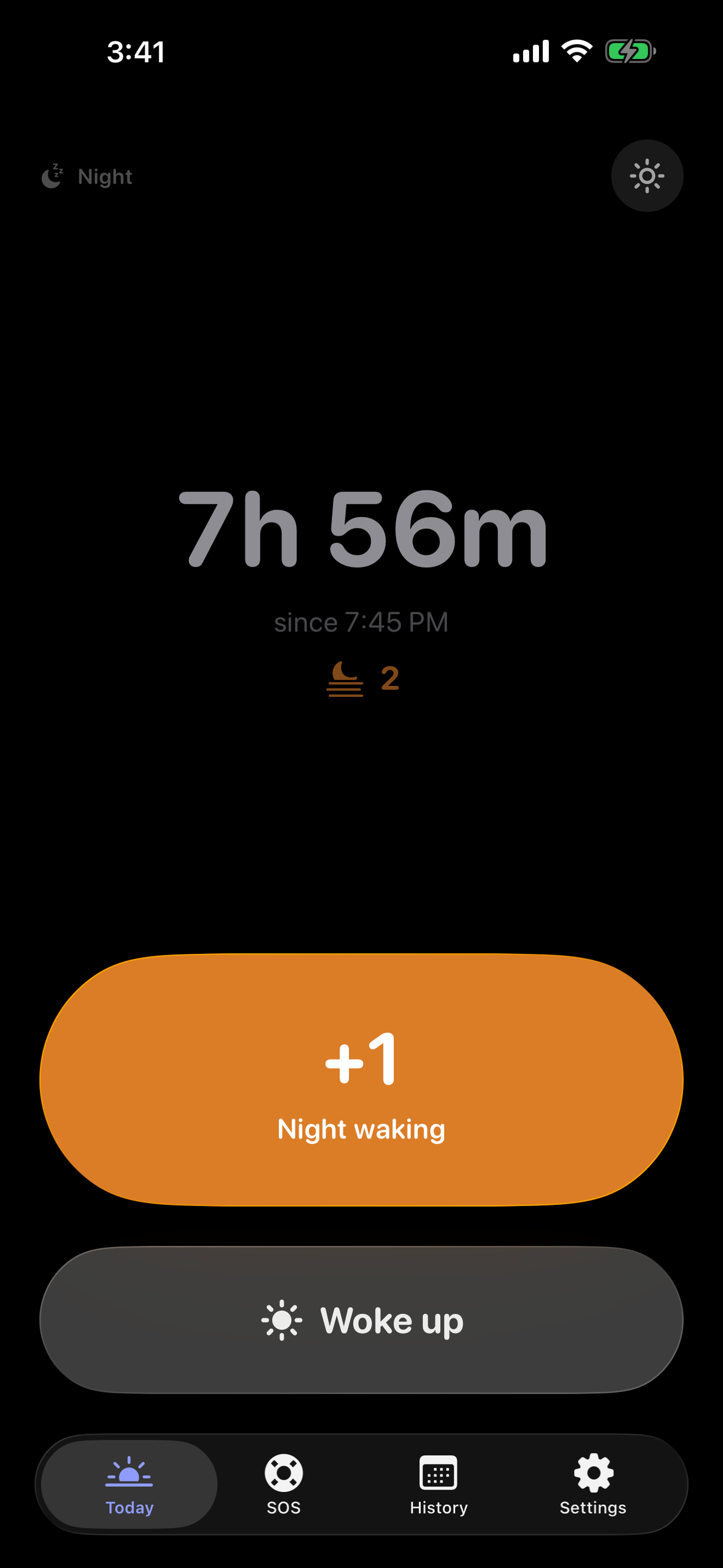
Logging is one big button. You can also start and stop sleep from a widget, the Lock Screen, Control Center or Siri without unlocking the phone. At night the Today tab turns dark, with a big +1 for night wakings and a Woke up button.
The other parent, a grandparent or a nanny can join by link and log on their own phone. Everyone sees the same day.
Kip speaks 24 languages.
How I built it
Kip is a native iPhone app in Swift and SwiftUI. There's no server of my own and no account: the sleep log lives in your iCloud, and sharing with family goes through iCloud too. RevenueCat handles the subscription and the paywall.
I shipped 1.0 on August 18 and three updates since.
Challenges I ran into
Helping on the first night. A parent who arrives at 3 AM in the middle of a regression hasn't logged anything yet. Kip still has to help that night, so the plan starts from what they tell it, and the schedule learns later.
Honest predictions. Babies don't nap on the minute. Kip shows a range and says how sure it is, instead of a time that turns out wrong.
Staying out of medicine. A sleep plan is the wrong answer for a sick baby, so illness sends parents to a pediatrician instead.
How it makes money
Kip is free to download. Everything you need every day stays free: logging, the next nap window, reminders, widgets, Siri and a week of history.
Kip Premium unlocks the full rough-patch plan with daily steps and check-ins, the rest of today's naps and bedtime, a month of history, the Live Activity, and sharing with family, who don't need their own subscription. It costs $5.99 a week with a 3-day free trial, or $39.99 once.
What I learned
I built Kip around the bad night, but most parents arrive on a normal day and want a better schedule. So the everyday screen matters as much as the plan, and the plan has to be one tap away when the bad night comes.
What's next
An Apple Watch app, so you can log sleep from your wrist while holding the baby.

Log in or sign up for Devpost to join the conversation.