-
-
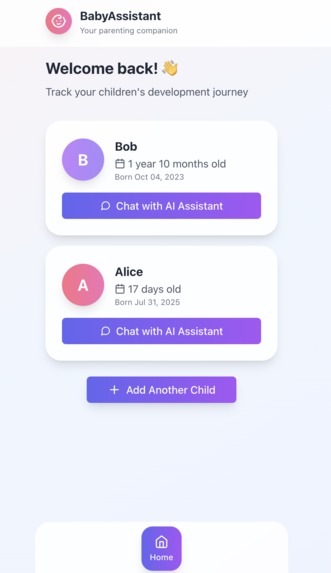
Prospective UI module
-
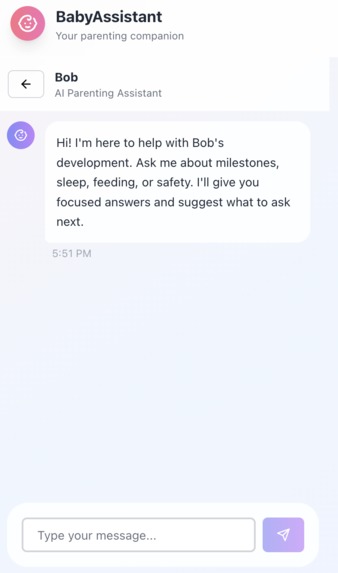
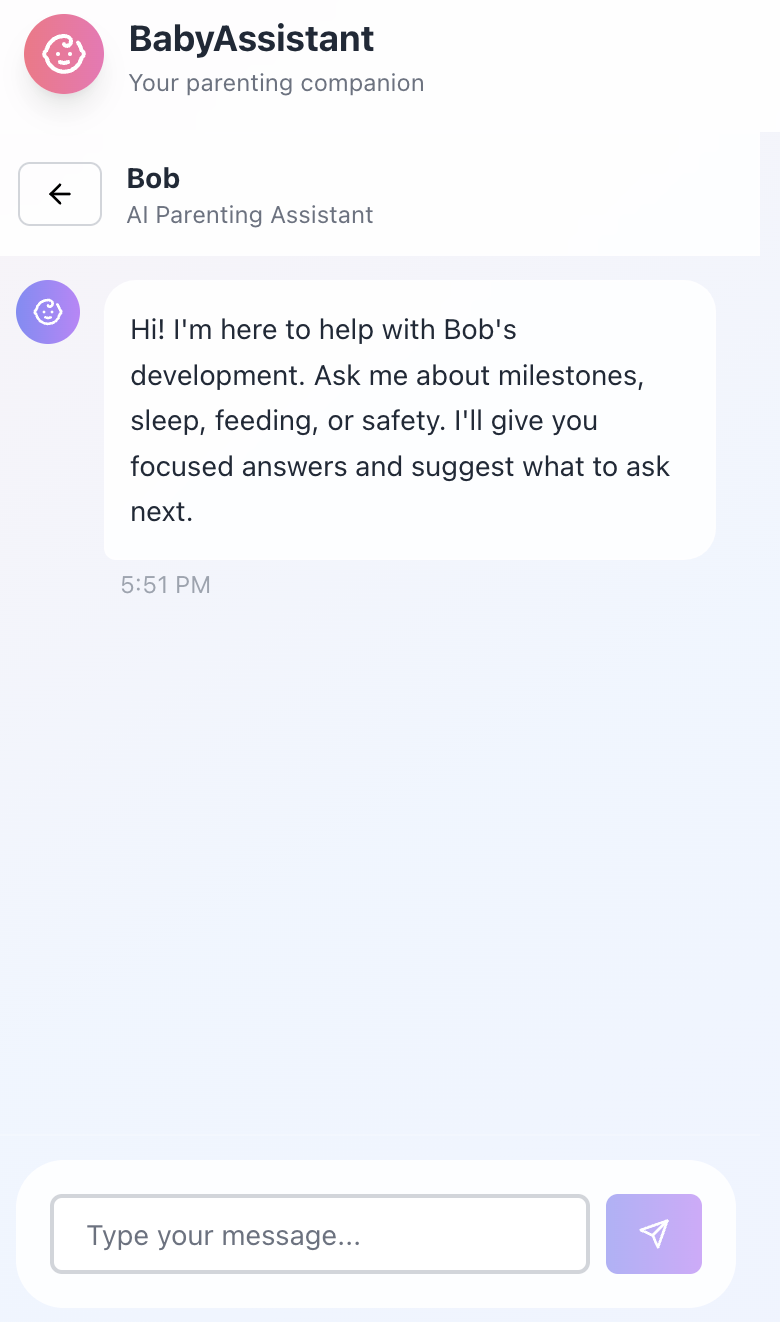
Prospective chat system
-
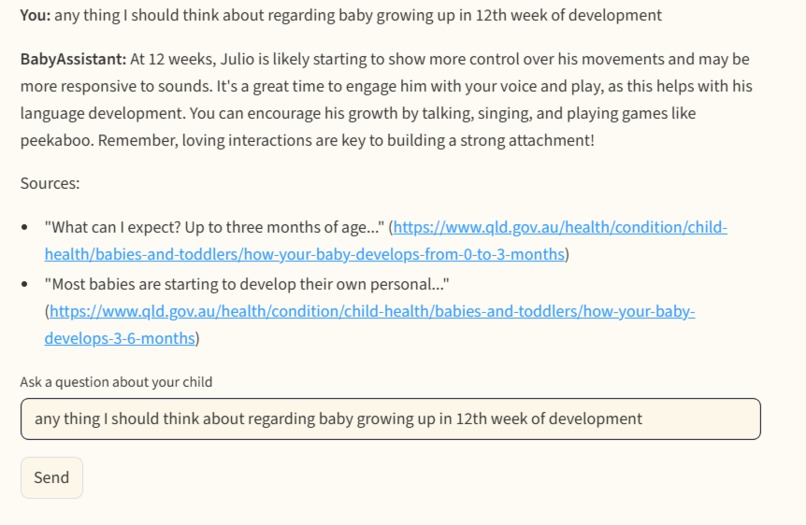
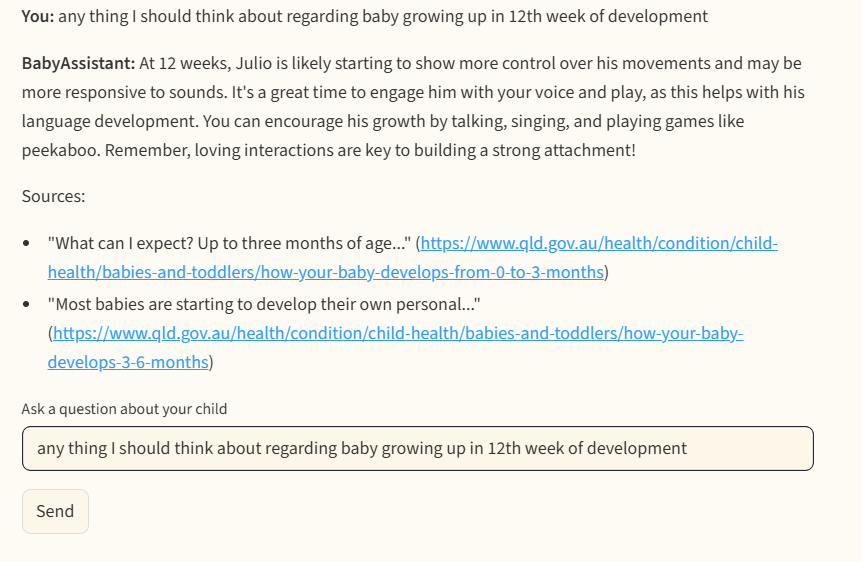
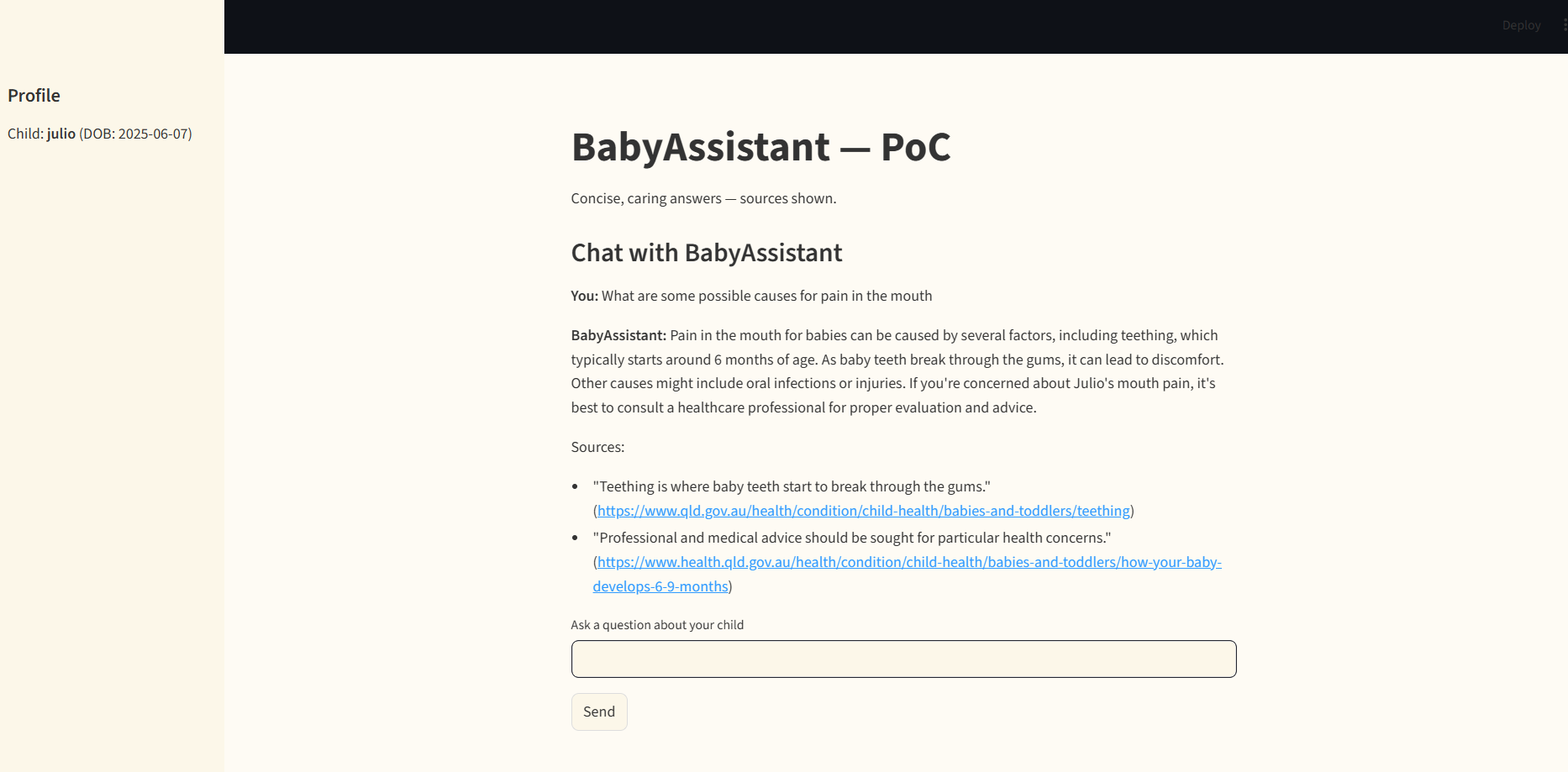
MVP single question
-
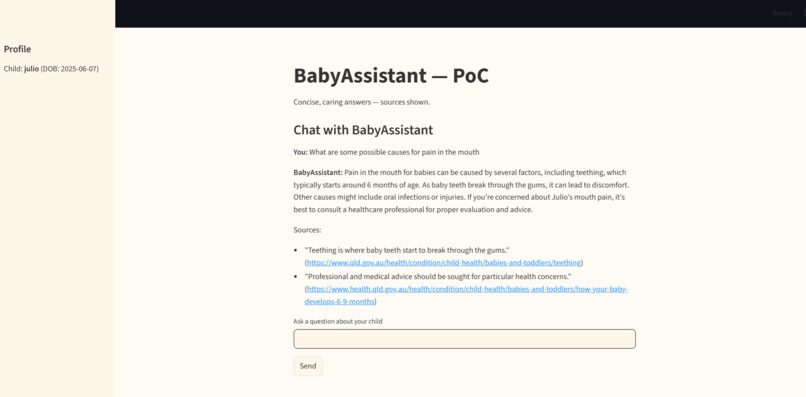
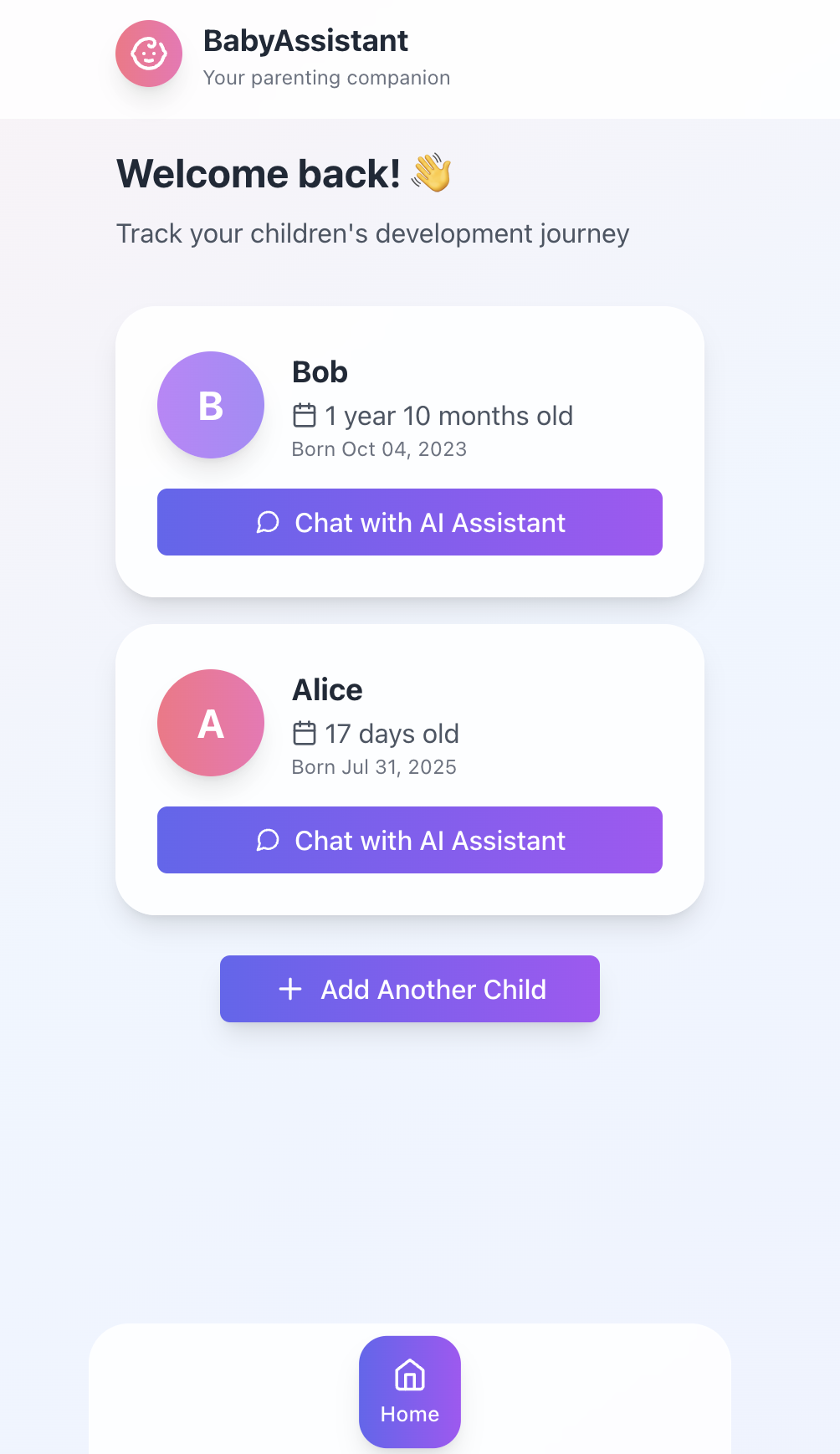
MVP Home
Inspiration
The spark came from a common traumatic event uncovered during customer interviews: Mum goes back to work, and Dad becomes the primary carer overnight. He’s juggling naps, feeds, and meltdowns without the accumulated, child-specific context Mum has. Everything online feels scattered and hard to trust. We set out to build bite-sized, high-trust guidance that’s there exactly when he needs it.
What it does
Baby Assistant is an AI-powered companion for new Dads when Mum returns to work after the first child. It provides on-demand, high-trust, child-specific guidance - bite-sized, context-aware tips that cut through the noise and help Dad feel confident in the moment.
How we built it
We validated the idea through numerous customer interviews with new parents, then designed the product flow around their needs. On the technical side, we experimented with GPT fine-tuning and prompt engineering to build a safer, more trustworthy chatbot that can cite its sources. We also designed initial mockups for features like milestone tracking and voice-to-text support to sell the idea to ourselves and others. Then we went on to create an MVP based on the most quickly delivered value proposition of convenient, trusted information that's cited delivered in bite sized chunks.
Challenges we ran into
One major challenge was implementing all of the features we hoped the app would have in the short timeframe such as voice-to-text functionality (parents need hands-free tools because they've usually got their hands full!) and milestone tracking. Ensuring the AI assistant could provide not just helpful but also trustworthy and well-referenced information was another difficult hurdle.
Further, finding, contacting and talking to customers was difficult (the rejections 😭), time-pressing and stressing at times despite being absolutely necessary and the part we are most excited about.
Accomplishments that we're proud of
We’re proud of the comprehensive idea validation we achieved through many customer interviews, which gave us strong confidence in the problem we’re solving. We’re also excited by the genuine interest we raised in the app concept among potential users and real sign-ups.
What we learned
We learned about the common struggles of new parents face when the primary caregiver returns to work. On the technical side, we explored how to train GPT on curated resources in order to build a safer, more trustworthy AI assistant that can provide references for its information instead of just answers.
What's next for Baby Assistant
Our next step is to ship a fully functioning mobile app that delivers the Baby Assistant experience and captures real-world usage and value signals. Using those insights, we’ll choose the hardware path - an in-room vision hub for continuous monitoring, a child-worn wearable for targeted health cues, or a hybrid - based on trust, false-alert rate, setup friction, privacy acceptance, and willingness-to-pay.
Built With
- base44
- cursor
- javascript
- langchain
- openai
- python
- react
- streamlit
- supabase
- vercel


Log in or sign up for Devpost to join the conversation.