-
-
-
-
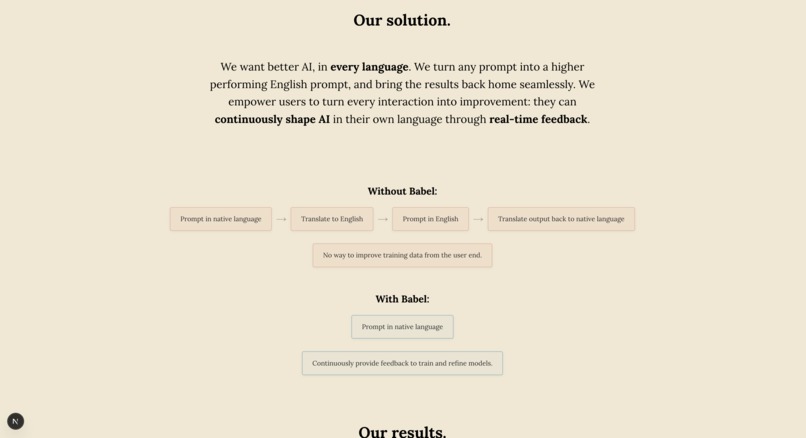
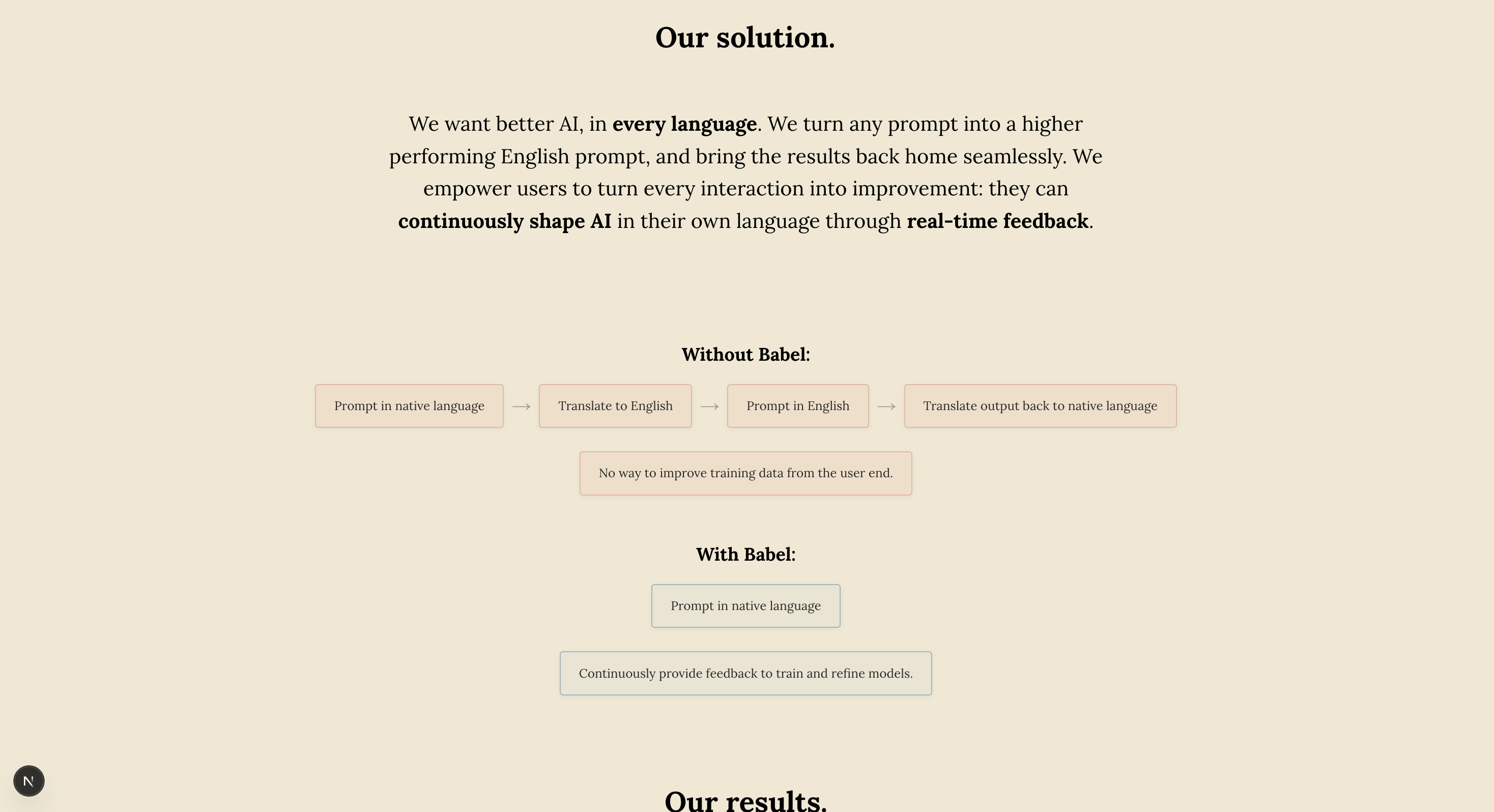
Summary of our solution
-
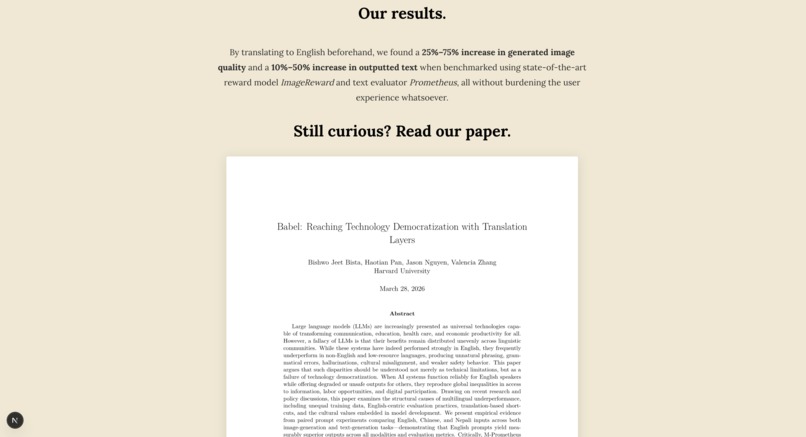
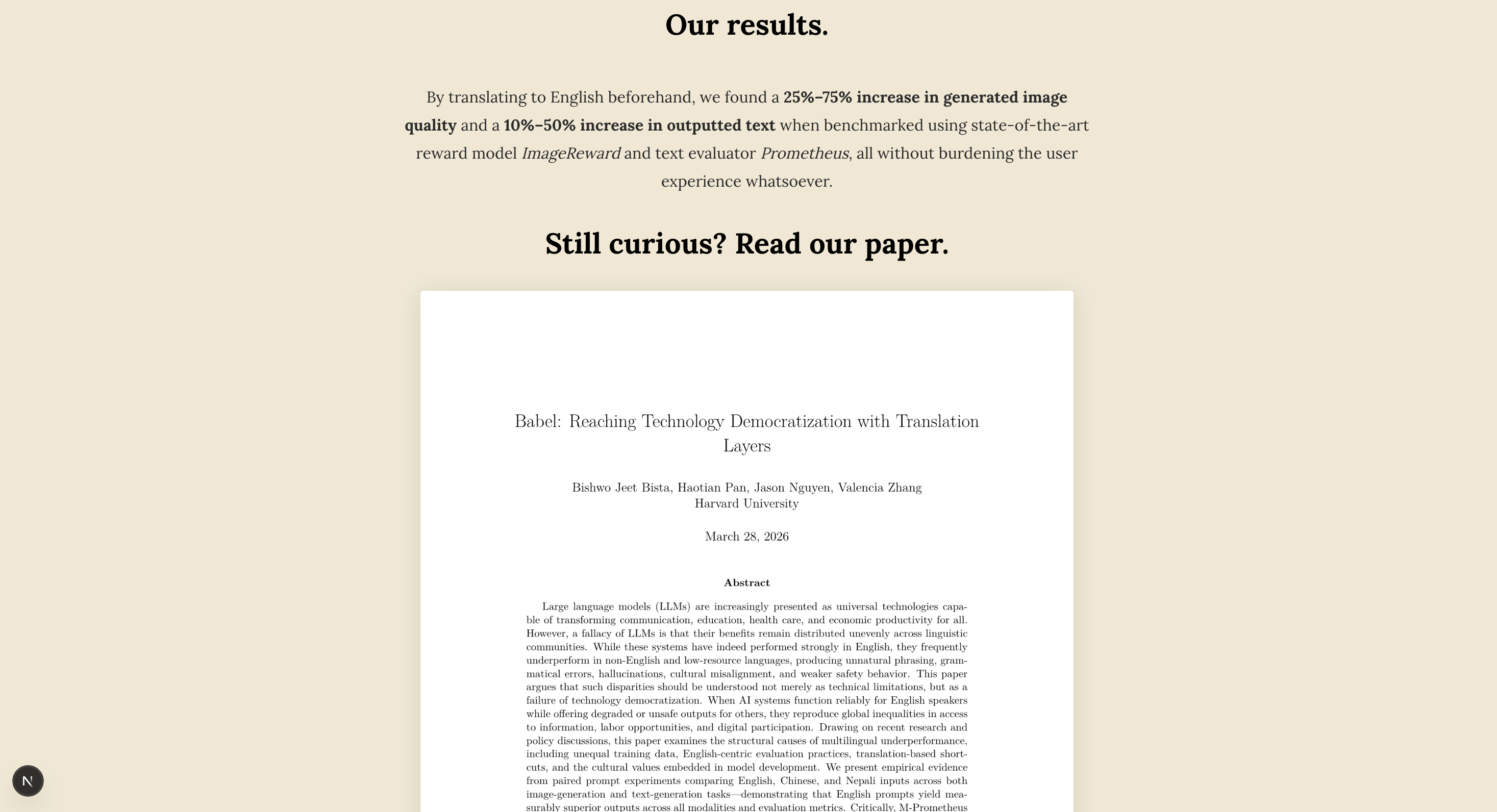
Our research paper, backing up our outcomes
-
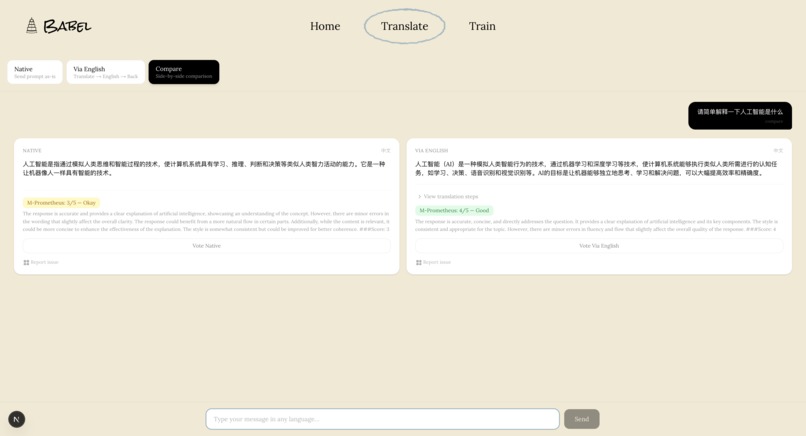
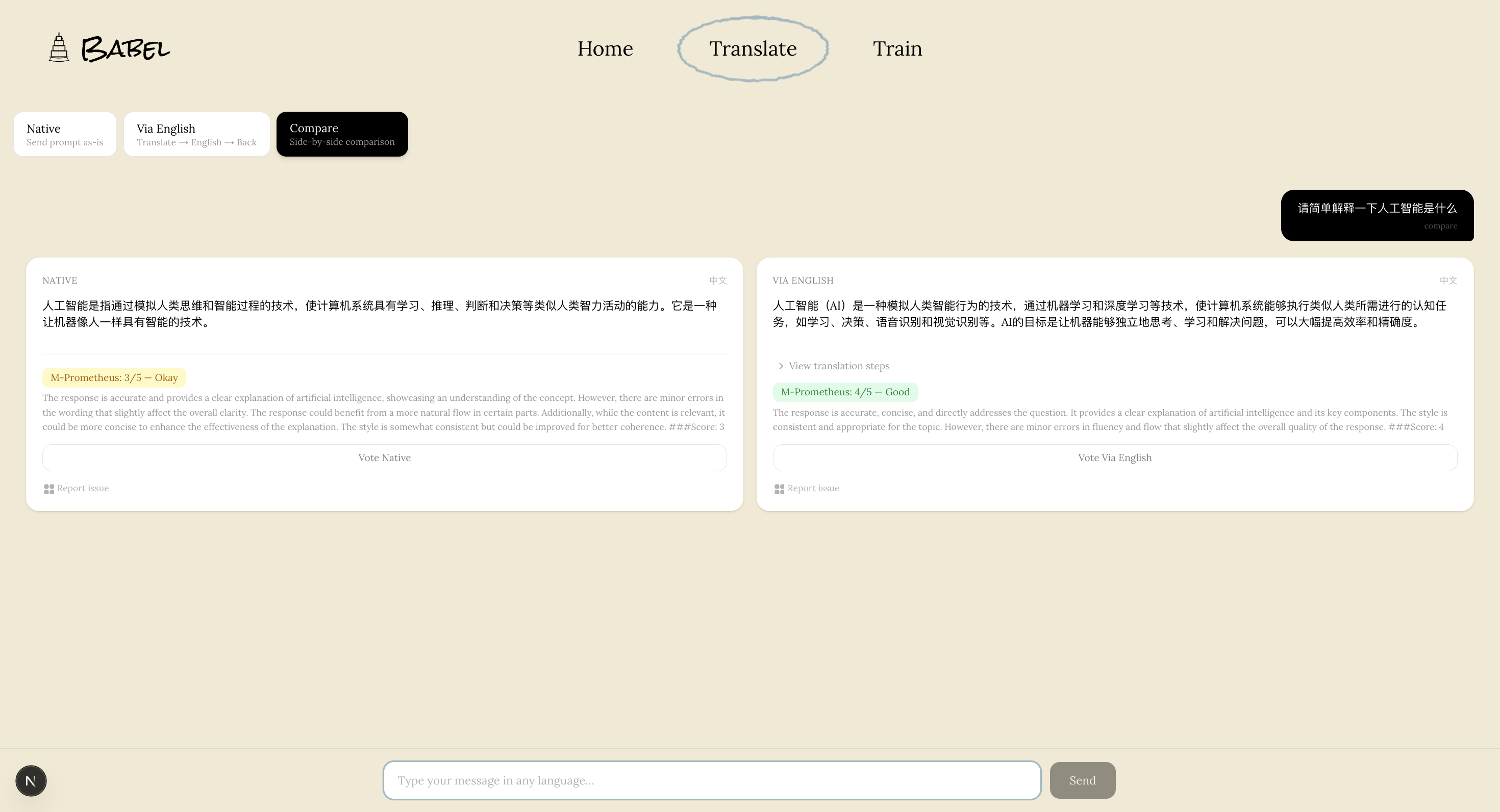
Our translate and compare function, evaluated by m-Prometheus
-
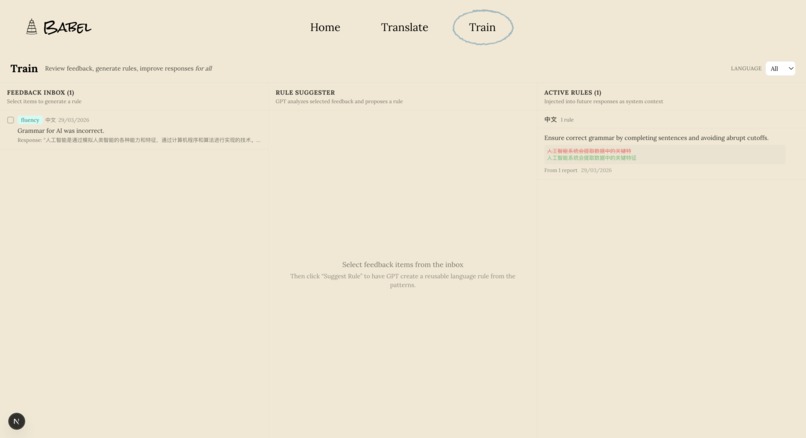
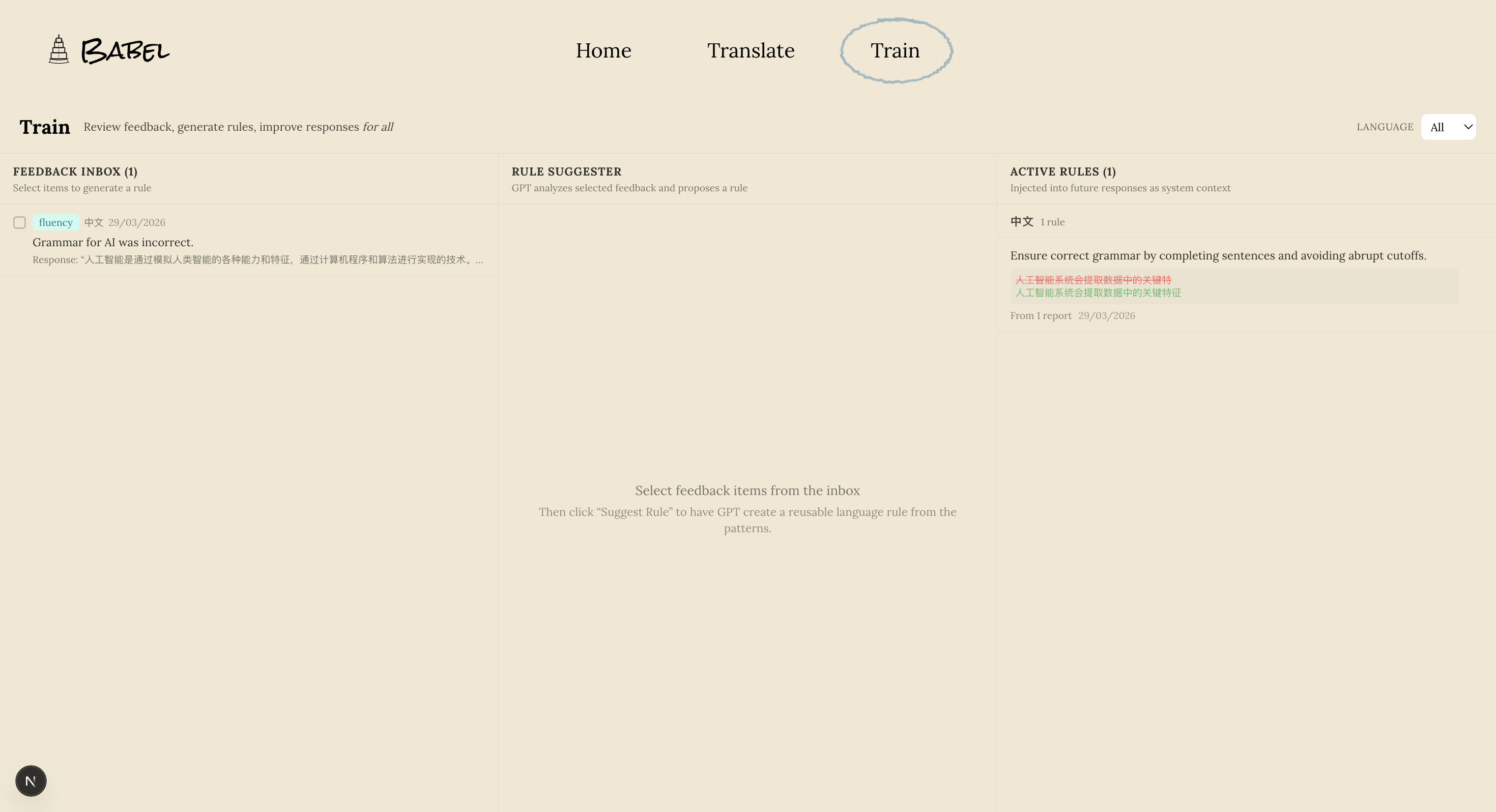
The community feedback function to enhance and train the LLMs
Inspiration
We built Babel because this problem is our life.
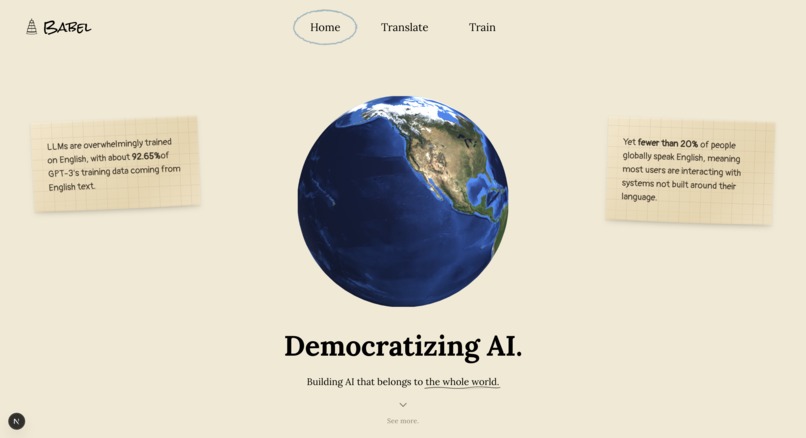
Our team is Nepali, Vietnamese, Singaporean, and Chinese. We’re multilingual, we’re passionate polyglots, and we’ve all watched the same thing happen: AI claims to be for everyone, but the best version of it is still locked behind English.
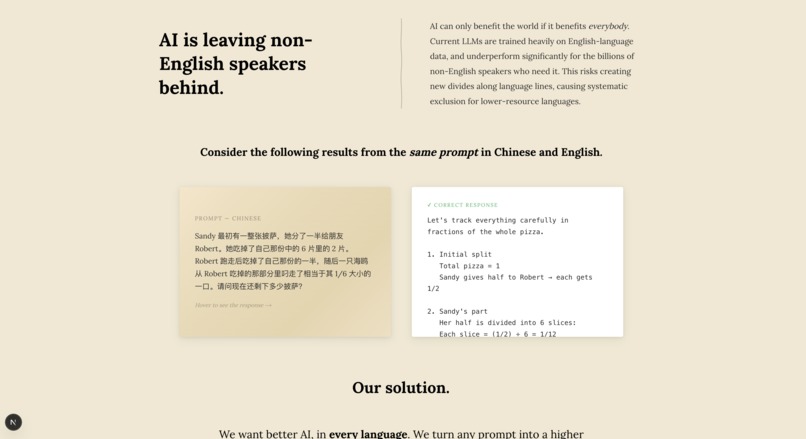
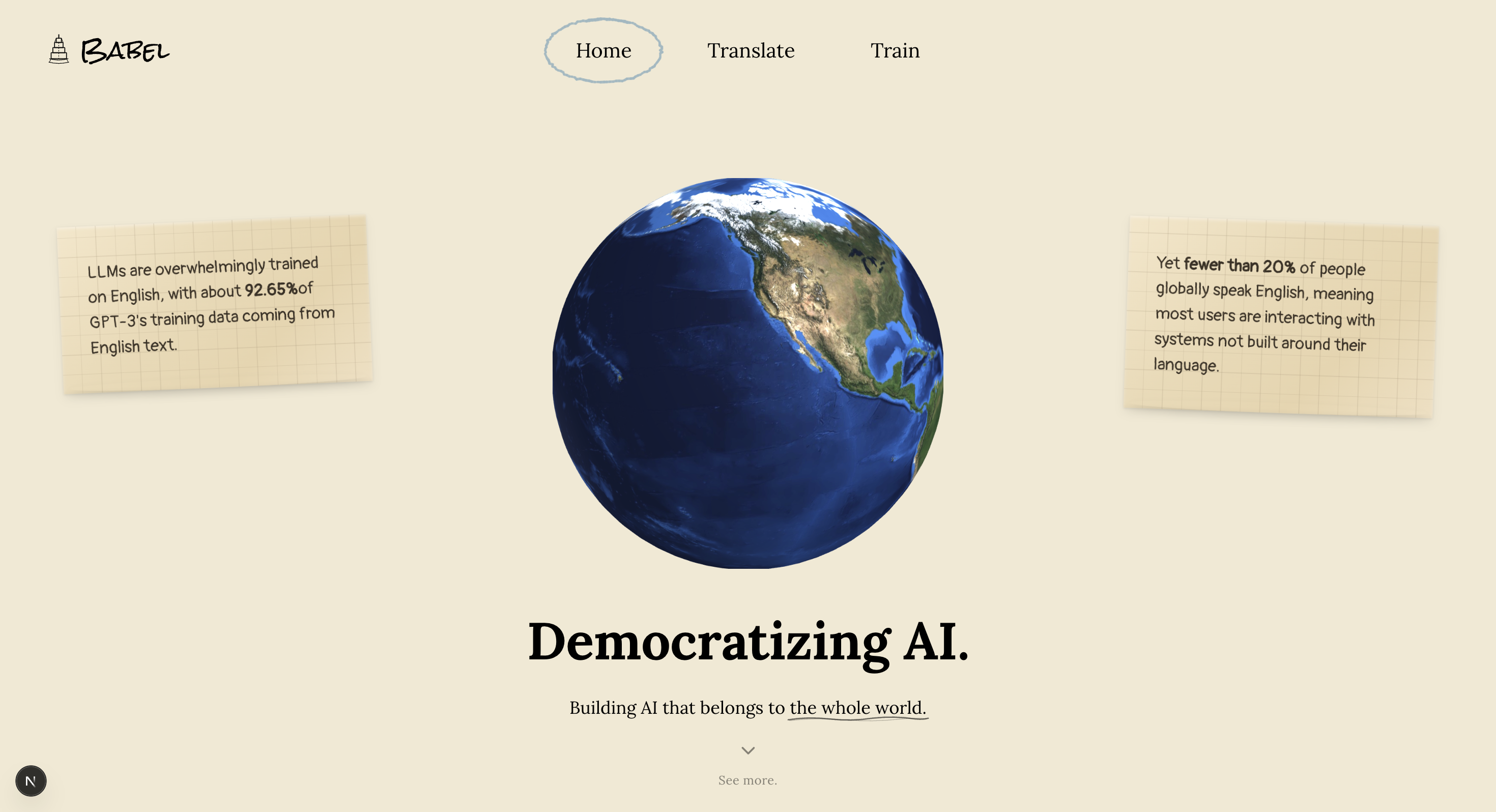
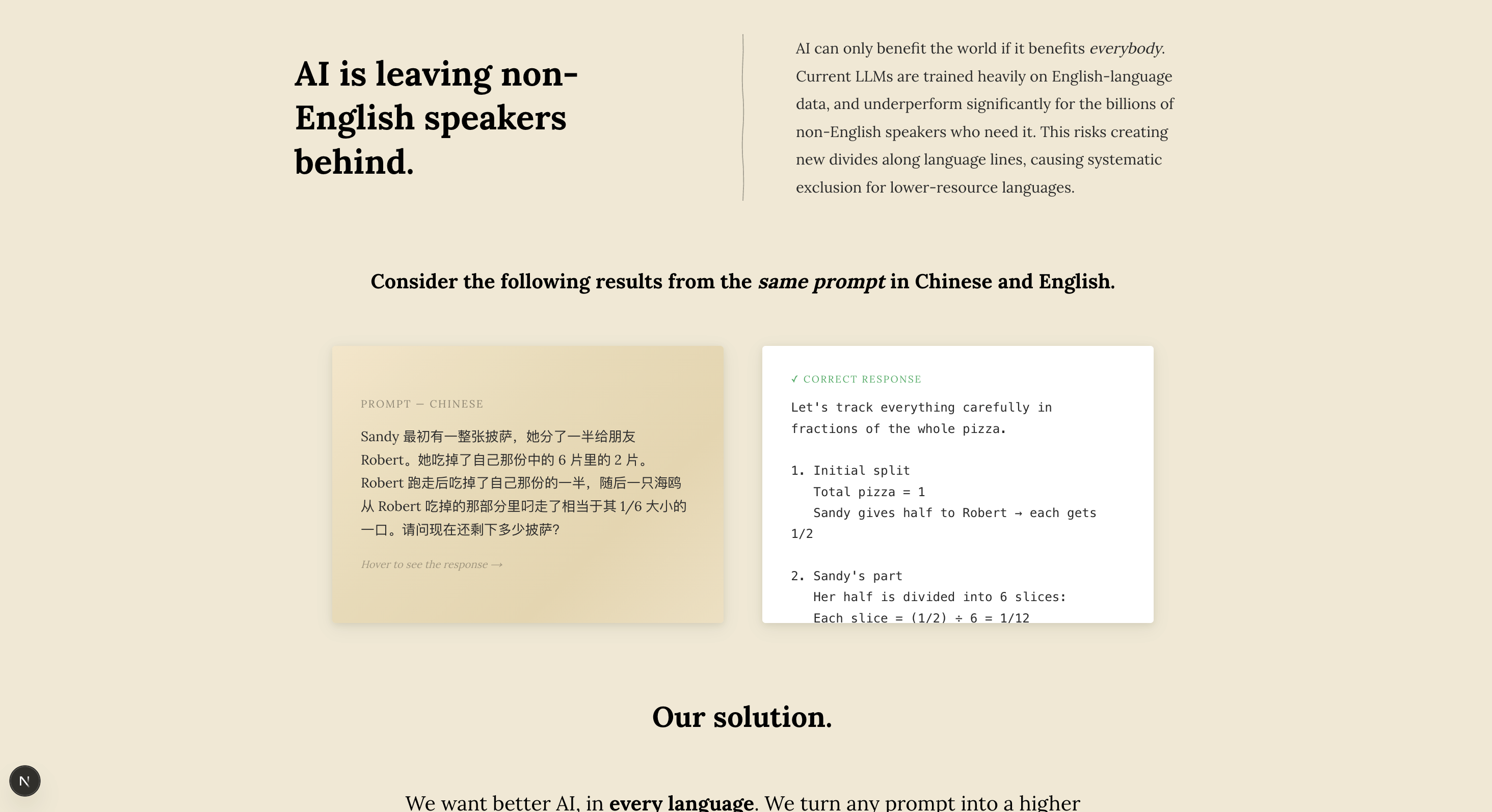
Our parents want to use ChatGPT in their daily lives too. Our communities want the same access English speakers get. But when people prompt in their own languages, the quality often drops hard. That means English-speaking users get a better version of intelligence tools, while everyone else gets a weaker one.
That felt deeply unfair. We started researching that gap. Our 17-pages paper develops a translation layer mechanism to get better LLM outcomes in all languages in the world.
What it does
- Lets users write prompts in their own language
- Transparently translates the prompt into English for a better result
- Presents the output in the user’s language
- Lets users leave comments/feedback to improve future responses In short: Babel helps non-English speakers access the stronger version of AI.
How we built it
- DeepL as the translation layer
- OpenAI / Gemini / Opus APIs as the model backend
- A pipeline that takes a user’s native-language prompt, converts it to English, gets the stronger English output, returns that output in the user’s language We built it from research first.
Challenges we ran into
- We were broke, so API credits were a real constraint
- One of our teammate’s laptops broke down, so we were sharing n-1 laptops
- Testing across many languages with limited tokens was brutal
- Different model providers behaved differently
- Lower-resource languages had weaker evaluation/tooling support
- We had to ship all of this under hackathon time pressure without crashing out permanently
Accomplishments that we’re proud of
- Built a working product at our first hackathon
- Tested across 20+ languages
- Did it without paying a dime
- Made the product work under severe token and budget limits
- Built something that actually reflects who we are and who we care about
What we learned
- Supporting many languages is not the same as working well in many languages
- Multilingual access is not a bonus feature; rather, it is a core infrastructure
- Translation layers can meaningfully improve access right now
- Real user feedback matters more than benchmark hype
- Building from lived experience gives a project much sharper purpose
What’s next for Babel
- Improve the product with more R&D and evaluation
- Work more deeply with actual LLM workflows
- Add support for more translation engines
- Make user feedback shared between users
- Expand support across more languages
- Explore how Babel could help preserve endangered languages, not just support major ones
If AI is going to shape the future, that future cannot belong only to English.
Built With
- css
- html
- javascript
- json
- next
- openai
- typescript

Log in or sign up for Devpost to join the conversation.