-
-
-
-
-
-
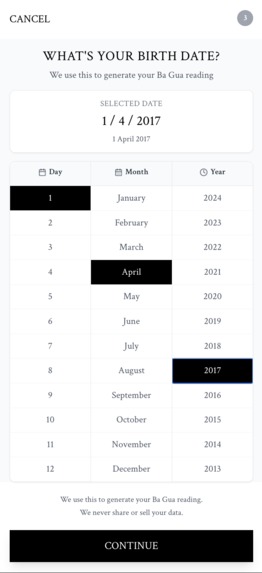
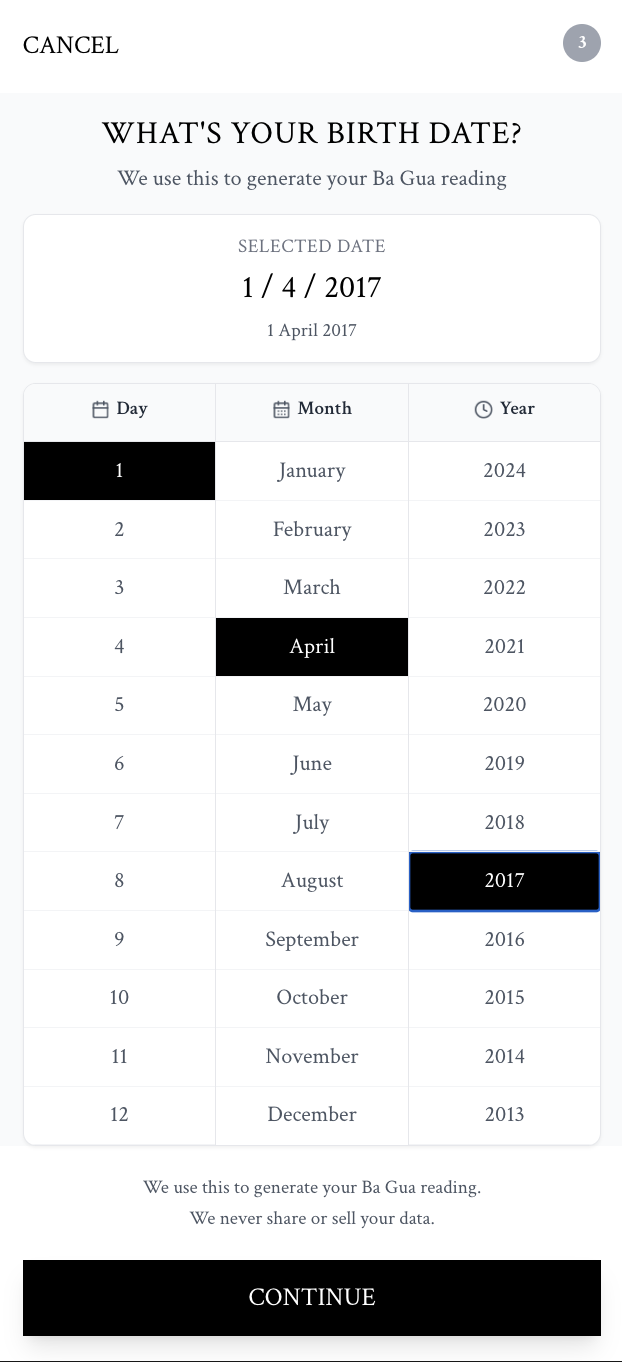
Enter DOB
-
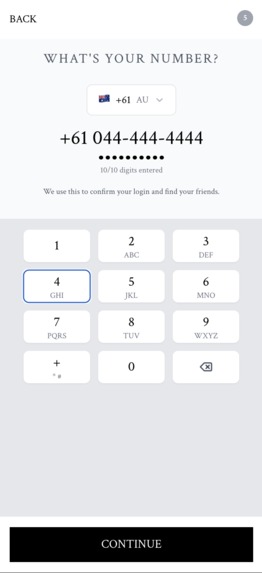
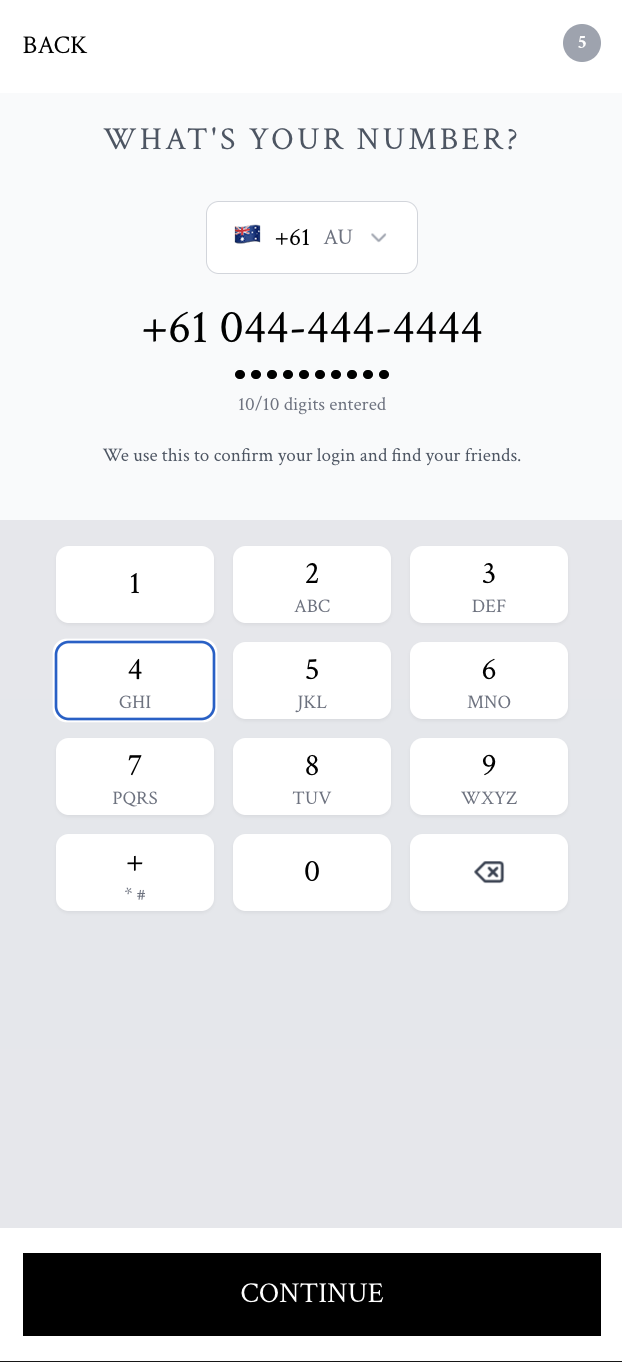
Enter mobile (for texting later)
-
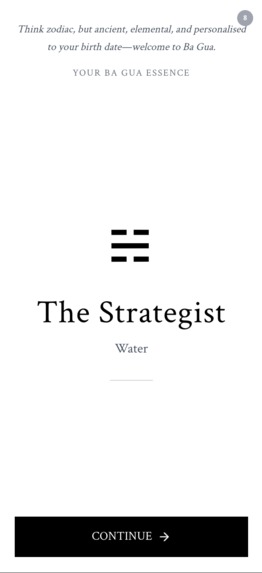
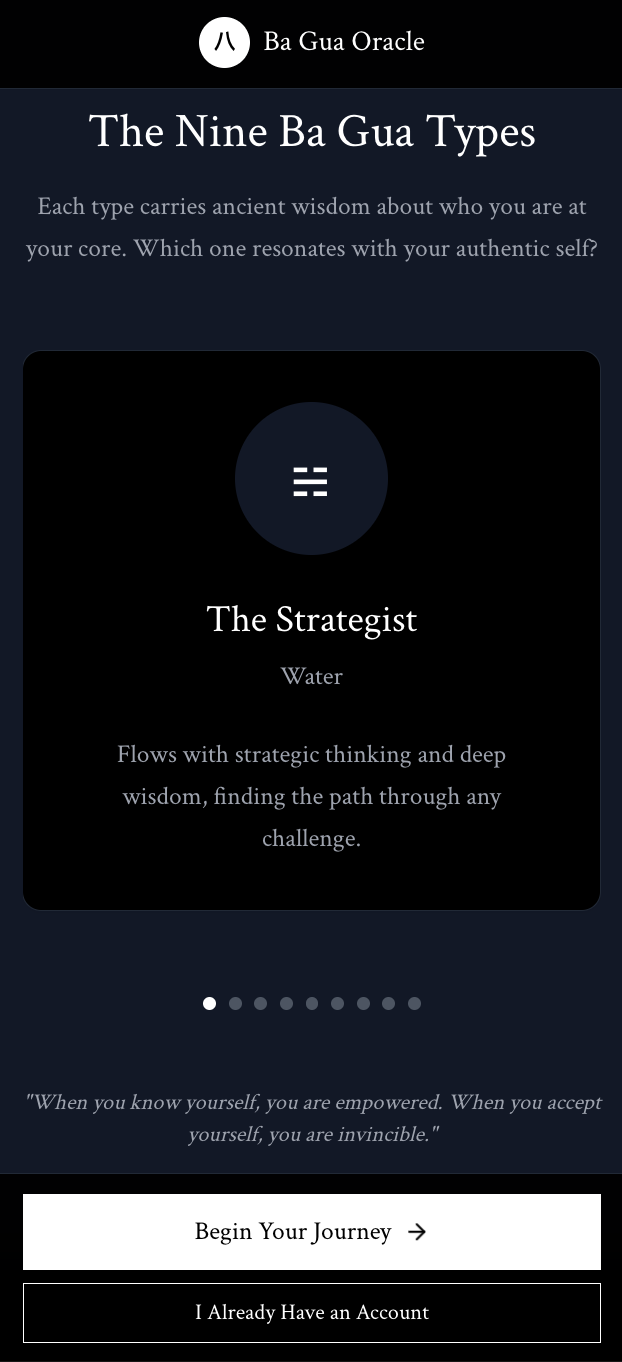
Ba Gua type
-
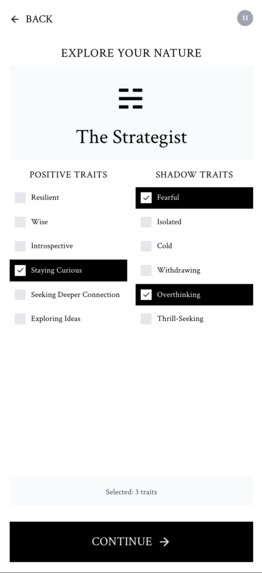
Choose
-
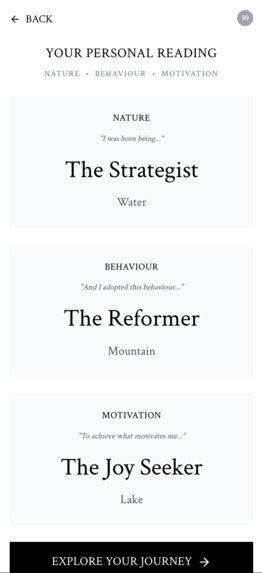
Ba Gua type
-
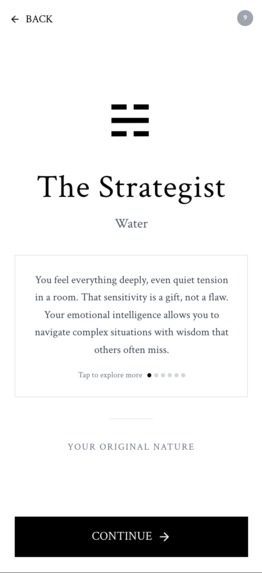
Findings
-
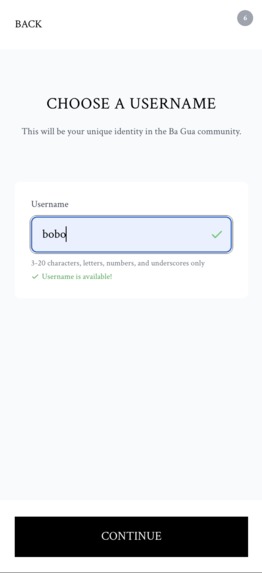
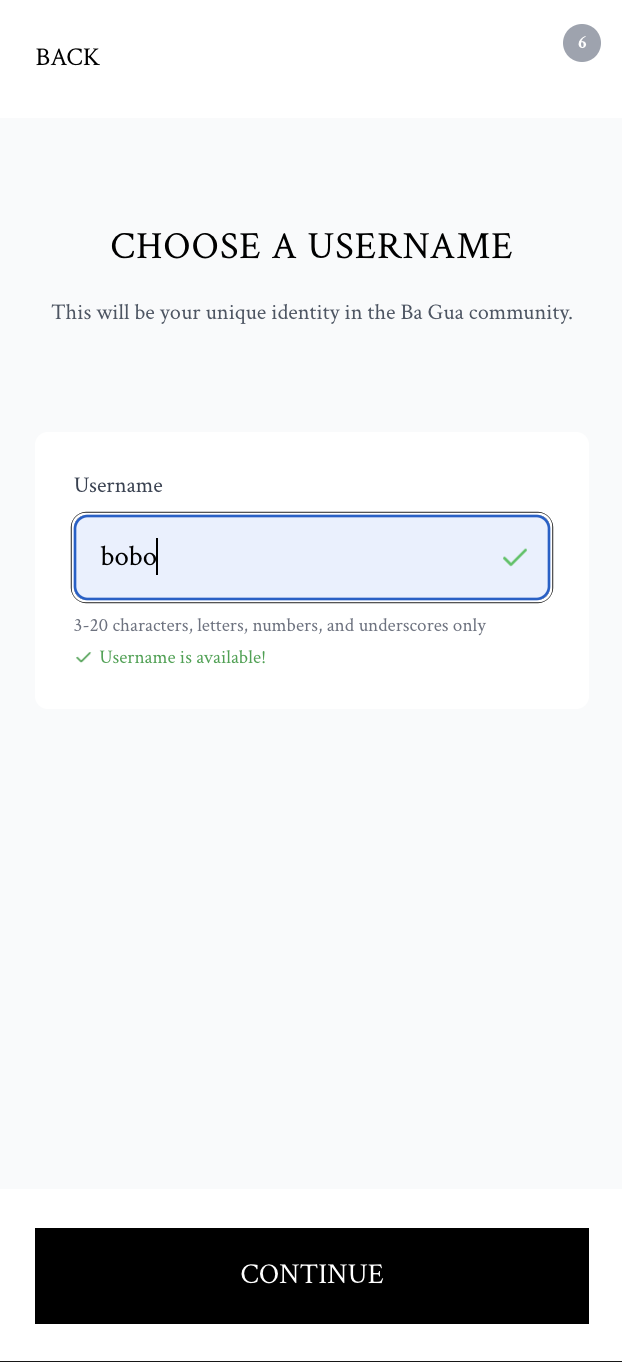
Username
-
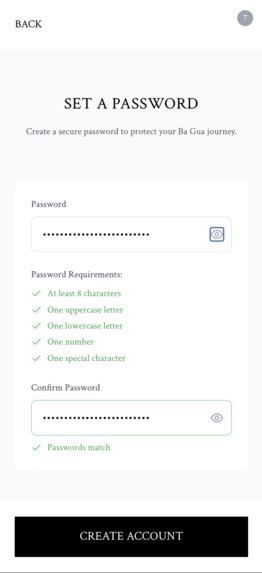
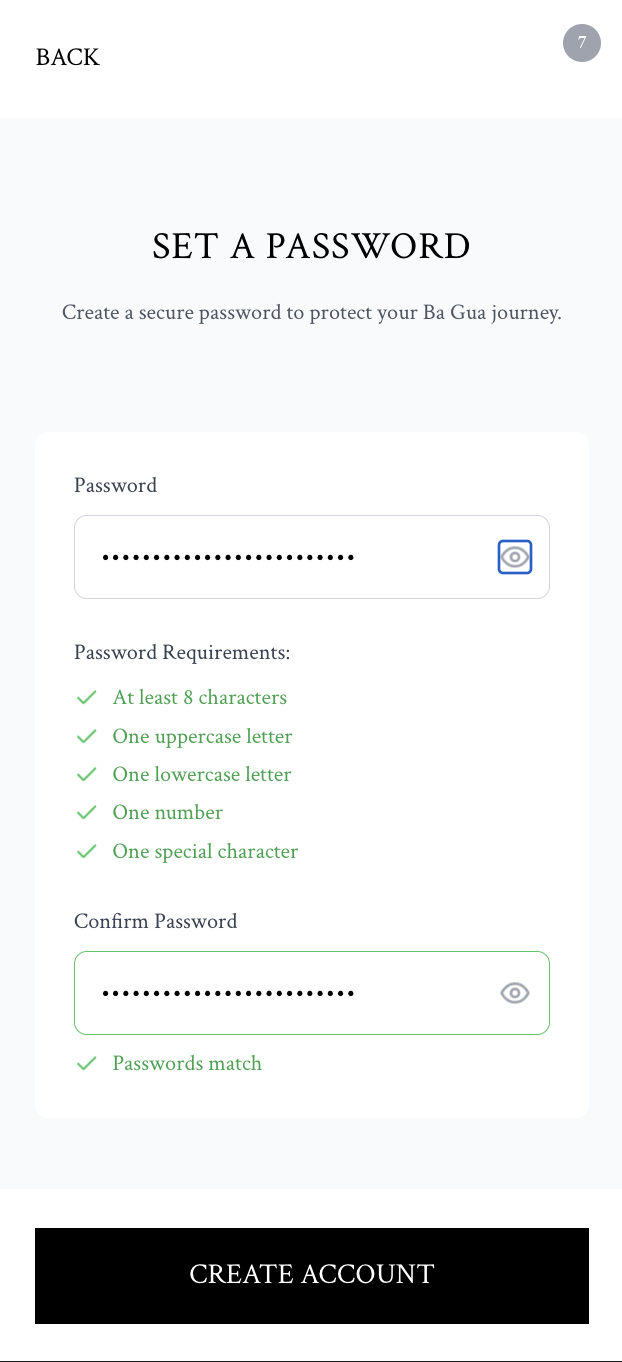
Password
-
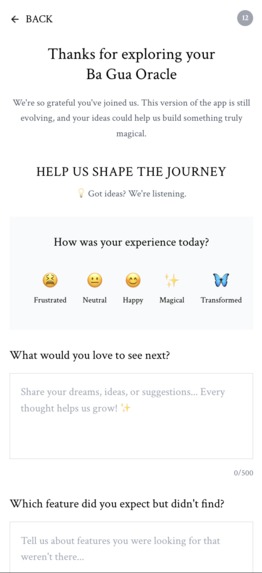
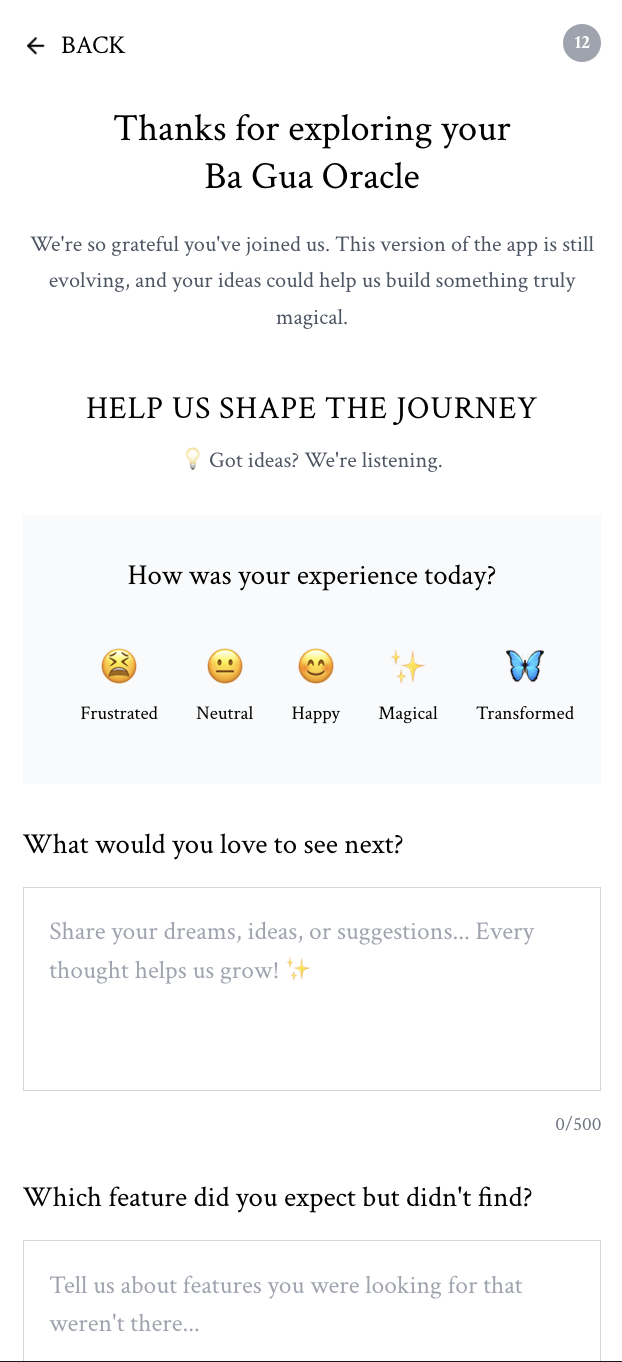
Thank you and reviews
-

Future characters
-

Future characters
-

Future characters
-
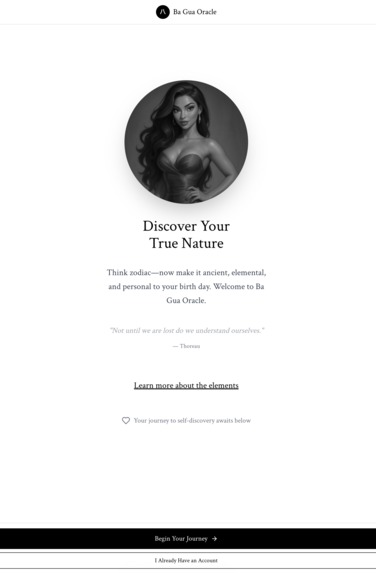
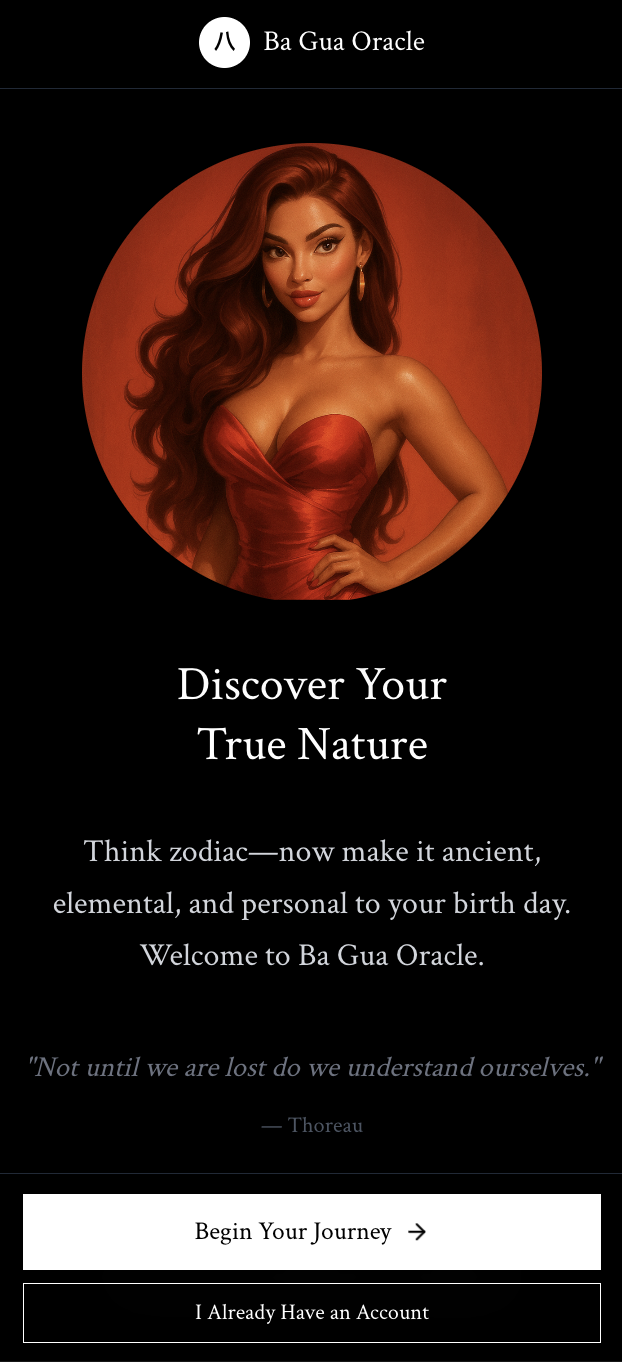
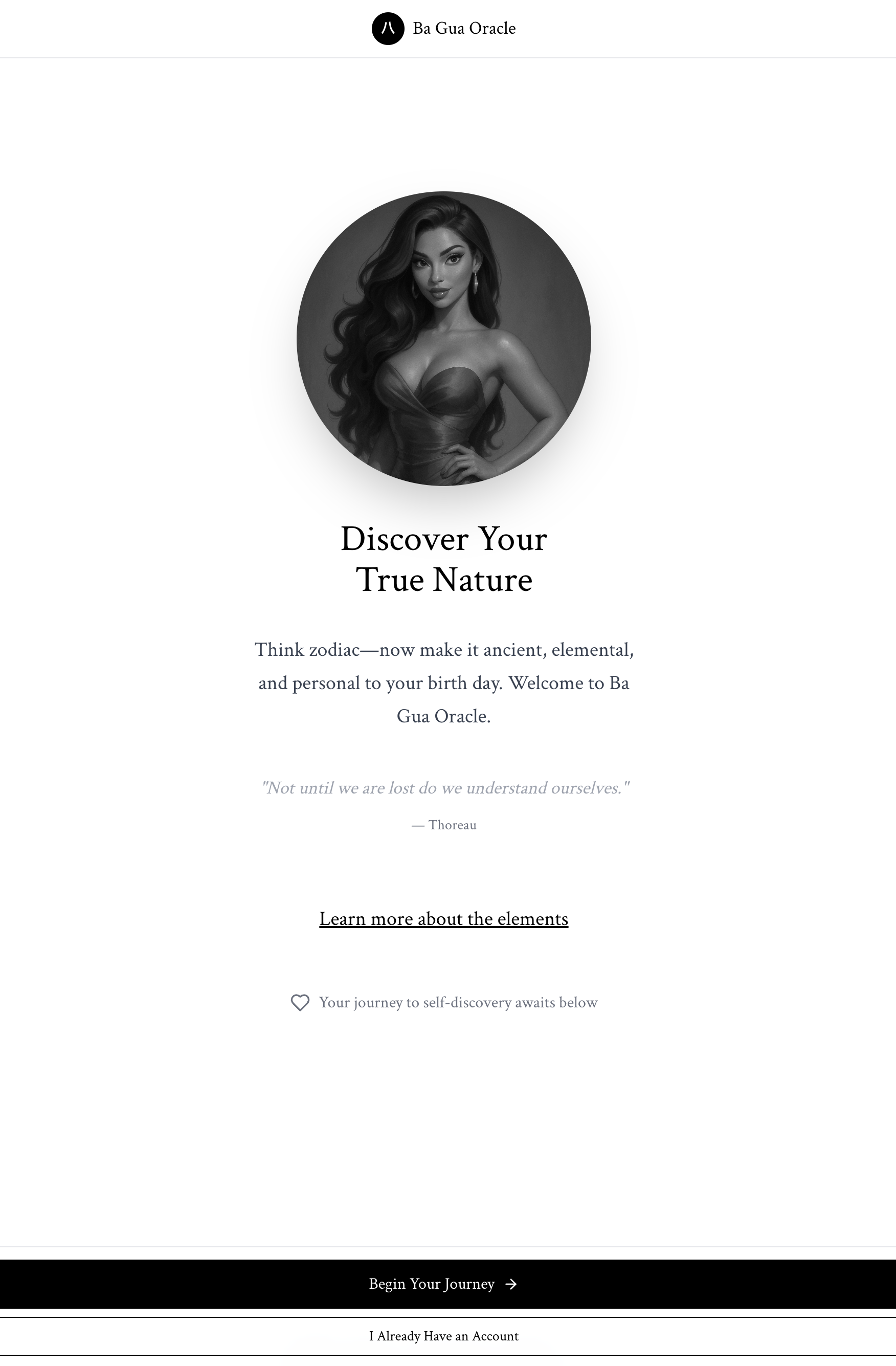
Homepage
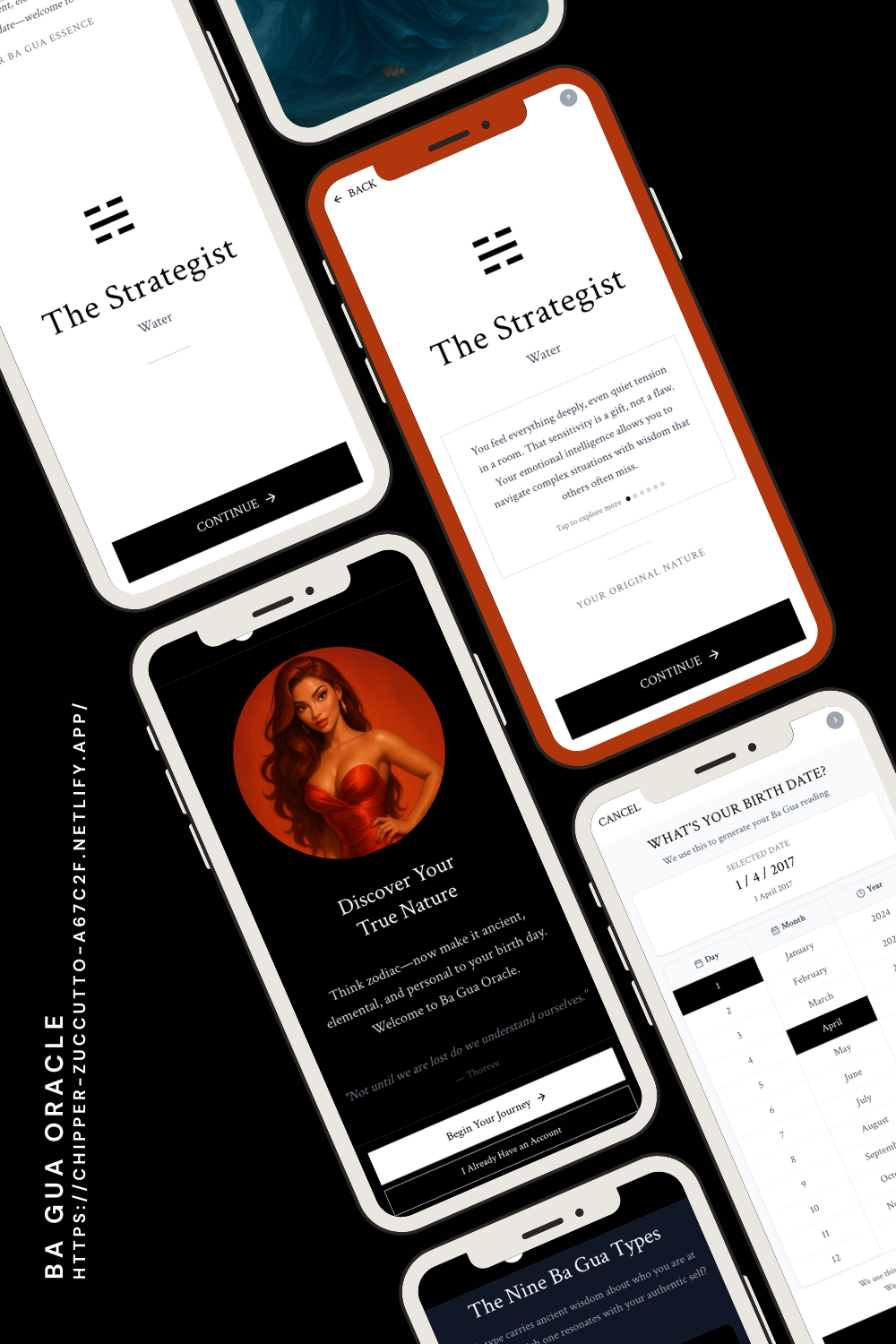
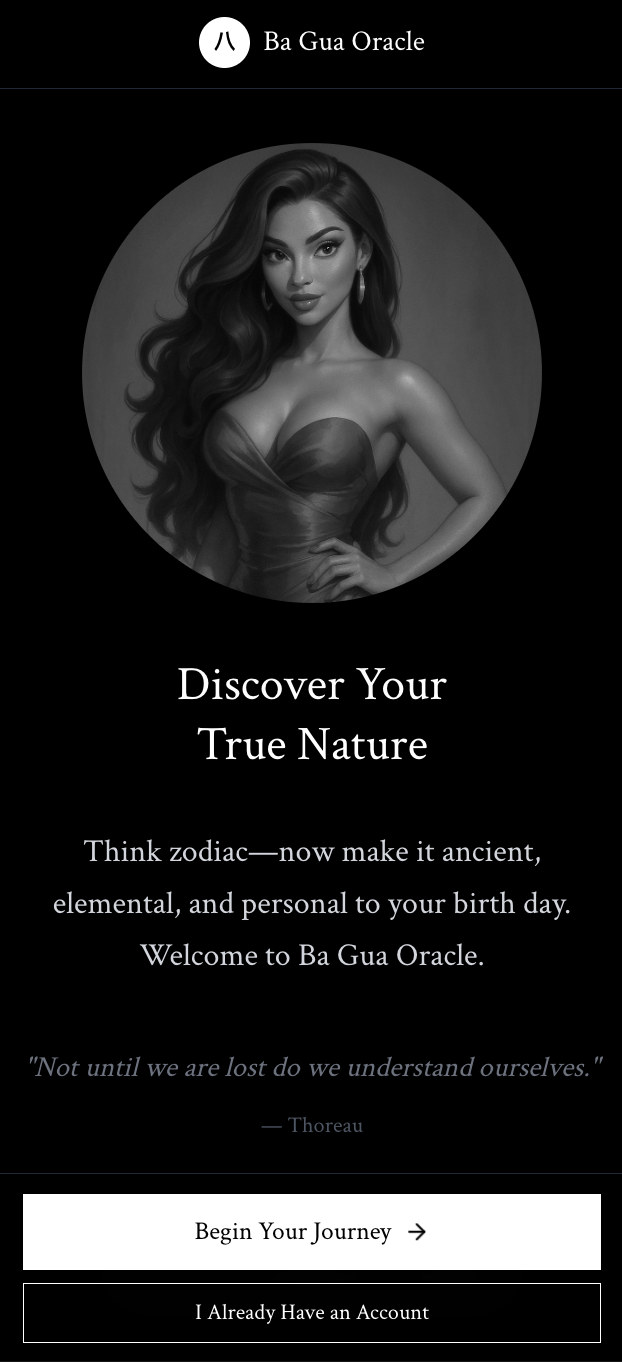



Inspiration
Ba Gua Oracle was born from my journey as a Kinesiologist and Mind Body Medicine Practitioner. Over the years, I witnessed profound transformations in people—physically, emotionally, and spiritually—once we identified their Ba Gua and began addressing imbalances unique to their elemental type.
This ancient Chinese system proved far more powerful and precise than any zodiac or astrology model I’d ever encountered. I saw firsthand how it helped people overcome a wide range of issues—from anxiety to digestive problems to burnout—by working with their core elemental nature.
I originally tried to capture this insight years ago in a spreadsheet, but it lacked beauty, accessibility, and emotional impact. When I discovered Bolt and its vibe coding potential, I knew I had finally found the right medium. Ba Gua Oracle is now a living, evolving tool—and I’ve only just scratched the surface of what it can become.
What it does
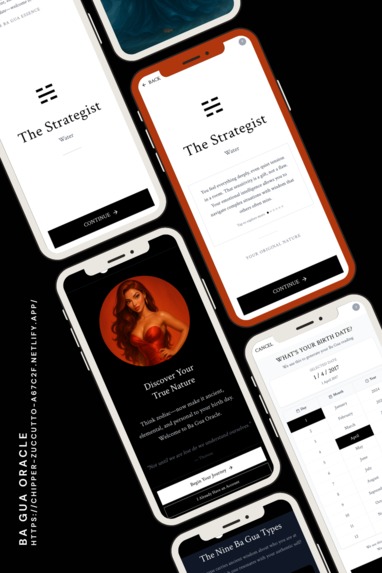
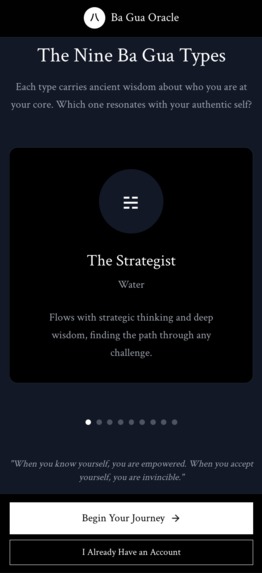
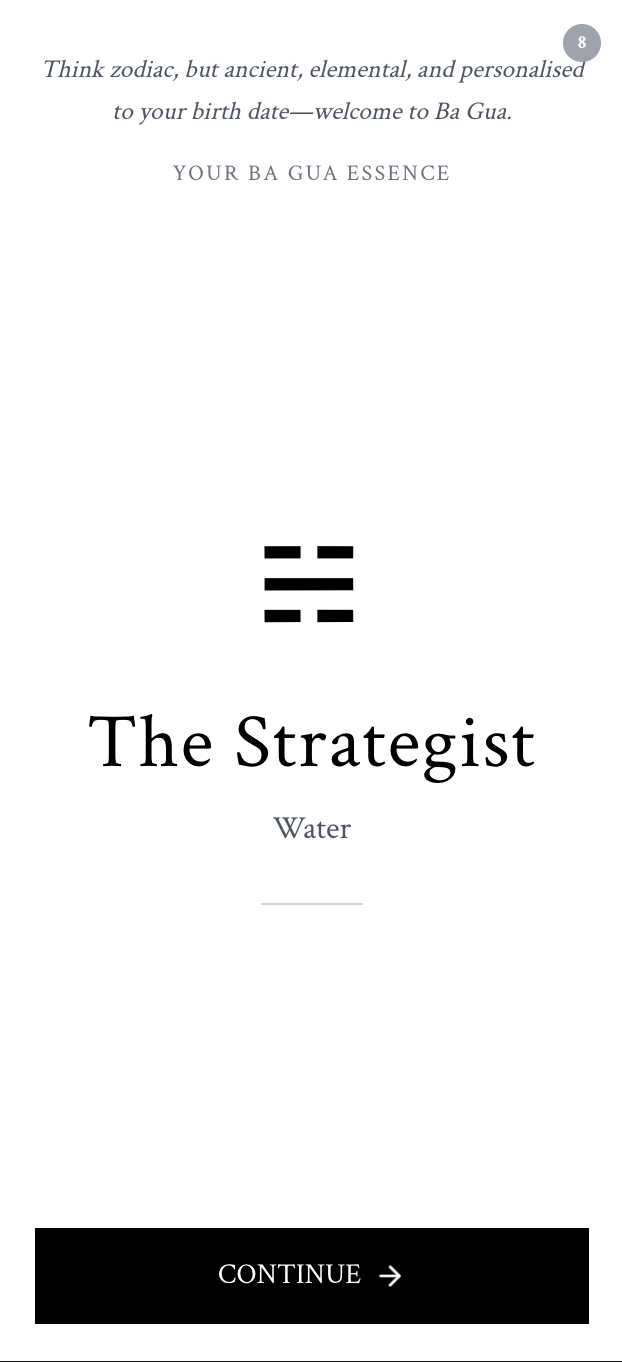
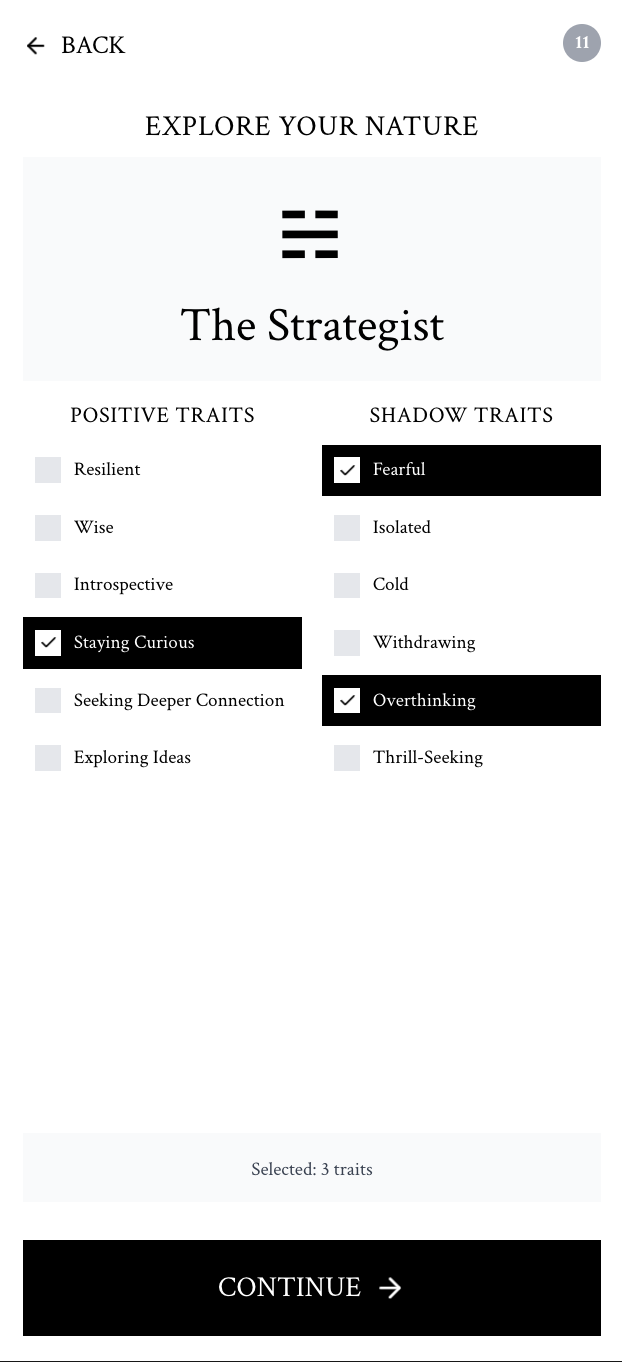
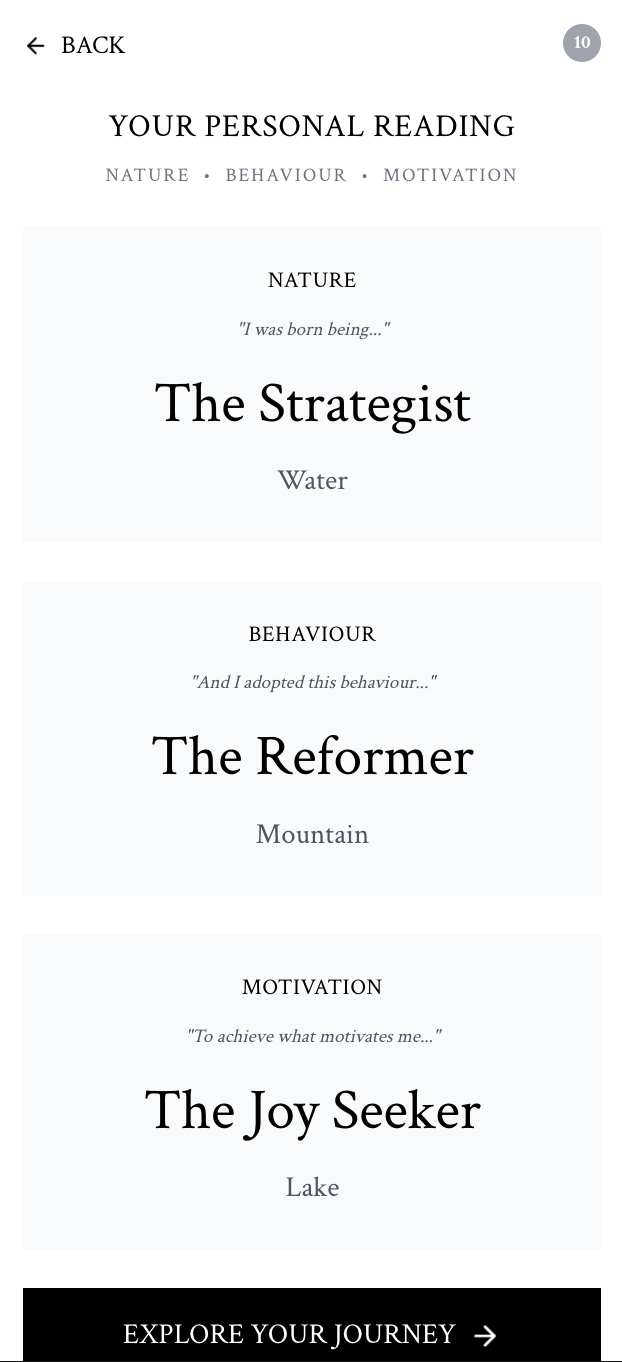
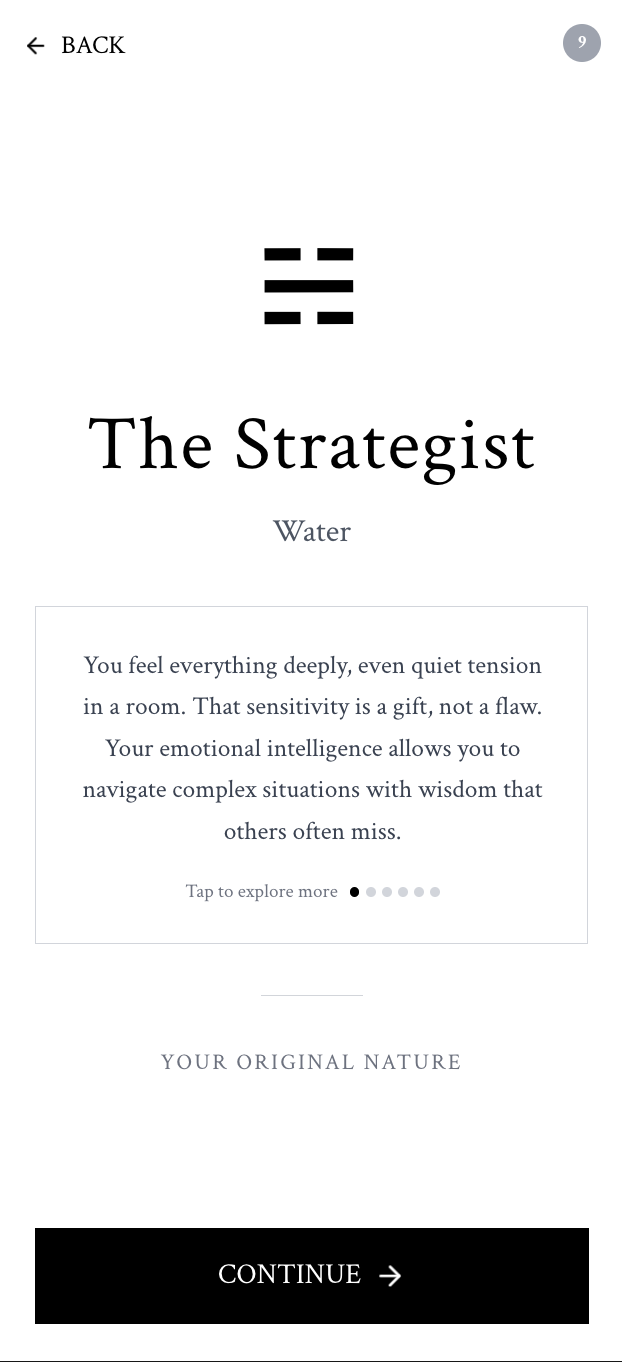
Ba Gua Oracle takes a user’s date of birth and unlocks a deep personality blueprint using the ancient Chinese Ba Gua system. It reveals three elemental archetypes:
- Nature – the core personality they were born with
- Motivation – what subconsciously drives their life choices
- Behaviour – the patterned actions they adopt to achieve those goals
The result is like having a mirror held up to your soul—users often say it articulates something they’ve always felt, but never had the words for until now. It brings clarity, self-recognition, and a powerful sense of validation.
By blending 3,000 years of Ba Gua wisdom with modern tech—including upcoming AI voice interactions and personalized insights—Ba Gua Oracle transforms ancient metaphysics into an emotionally rich, highly accessible experience for today’s digital generation.
How I built it
Throughout the competition, I ended up building three different apps—but this one kept pulling me back. It felt the most aligned with the kind of work I want to be doing and had the most potential to actually help people. The more I explored it, the more excited I got about what it could become.
I used Bolt.new for most of the build, and ChatGPT helped me test out ideas, troubleshoot bugs, and generate dynamic content. Because Ba Gua is such an ancient Chinese system, I also did a lot of in-depth research using DeepSeek, which gave me better access to classical texts and historical insight.
One part I really enjoyed was designing and generating imagery for the archetypes—I haven’t uploaded them all yet, but visuals are going to be a big part of future updates. I’m also looking forward to adding AI voice integrations and playing more with prompt engineering to make the app feel even more tailored and intuitive.
Challenges I ran into
The tech side was definitely the hardest part. I haven’t done any real coding in a very long time, so I was pretty rusty going in. Luckily, I watched some great videos early on that made a big difference—especially when it came to debugging. Honestly, if I hadn’t found those resources, I probably wouldn’t have made it this far.
In fact, I actually dropped two other app ideas midway through because I hit limitations I couldn’t overcome without diving into real programming. One of them would have required learning Swift, which just wasn’t realistic in this timeframe.
Time was also a challenge—I had so many ideas for features I wanted to add, but I simply ran out of time to build them all. Bolt was amazing in a lot of ways, but sometimes even simple things became surprisingly tricky. For example, trying to change how a date input looked ended up breaking the whole component and took me ages to fix. And at one point, Bolt made an unexpected change to a component that was working perfectly and looking great… and then suddenly, it wasn’t. That was incredibly frustrating.
But I kept going, and I’m glad I did.
Accomplishments that I'm proud of
Honestly, I’m really proud that I’ve made it this far and stuck with it—especially considering I haven’t coded in years. It’s been extra tricky juggling everything from Australia, where a lot of the hackathon events and resources happened in the middle of the night.
There were definitely moments where I paused and thought, “Wow—I actually built this.” Even my 21-year-old son had a look and was genuinely surprised and impressed by what I’d created. That meant a lot.
I’m also really proud that I followed through with the idea that resonated the most with me. Every time I work on it, I get more excited. I keep coming up with new ideas for how to improve it, and I honestly can’t wait to see what it evolves into next.
What I learned
I’ve come out of this experience feeling way more confident than when I started. I honestly never thought I could enter a hackathon—I assumed it was just for experienced coders or app developers who’ve been doing this for years. But here I am, and I’ve actually built something I’m proud of.
This experience has taught me that I don’t need to be a pro developer to bring an idea to life. I’ve learned how to lean into the tools, ask better questions, experiment, and just keep going. I’m really chuffed with myself for showing up and sticking with it.
What's next for Ba Gua Oracle
Next up, I want to expand the app with more features and give it more of that familiar, engaging “zodiac” feel—while still staying true to the depth of Ba Gua wisdom. I’ve got a ton of content ready to go, but I held back for this version because I didn’t want to overwhelm new users. The goal is to make it digestible and powerful.
One of my biggest goals is to integrate voice AI so users can interact with the app in a two-way conversation. I want people to be able to talk about what issues they’re currently facing—whether physical, emotional, or mental—and have the app respond based on their specific Ba Gua personality type. The idea is to build a kind of virtual Ba Gua-informed counselling experience, where users gain insight into why they feel the way they do, and what might help rebalance them.
I also want to explore adding a self-guided support tool for deeper reflection—kind of like a Ba Gua take on the Myers-Briggs framework, but more energetically and elementally grounded.
Ultimately, I plan to launch Ba Gua Oracle publicly and grow it into a real business. I believe deeply that this app can help a lot of people—both practitioners who want to use it in their work, and individuals who are looking for guidance but don’t have the time, money, or access to see a Kinesiologist in person. This app can bridge that gap.
Built With
- bolt
- chatgpt
- elevenlabs
- sora


Log in or sign up for Devpost to join the conversation.