Inspiration

• I built an Amazon-style order tracking system for my own Lagos agribusiness (Klutch Konnect Ltd) because no tool existed for small Nigerian businesses
• Every restaurant, pharmacy and supermarket in Lagos has the same delivery trust problem I had
• I solved it for myself — then realised I could sell the same solution to them

What it does

• B2B logistics infrastructure as a service for Lagos businesses
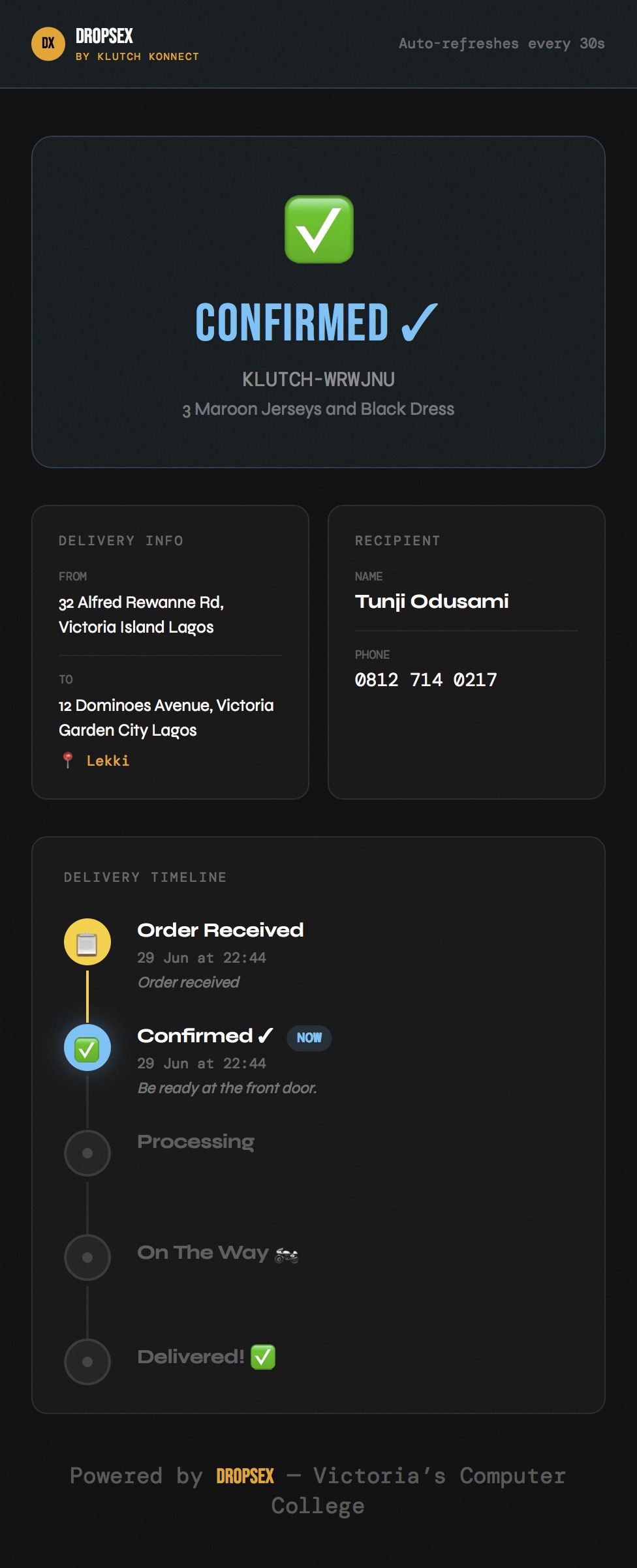
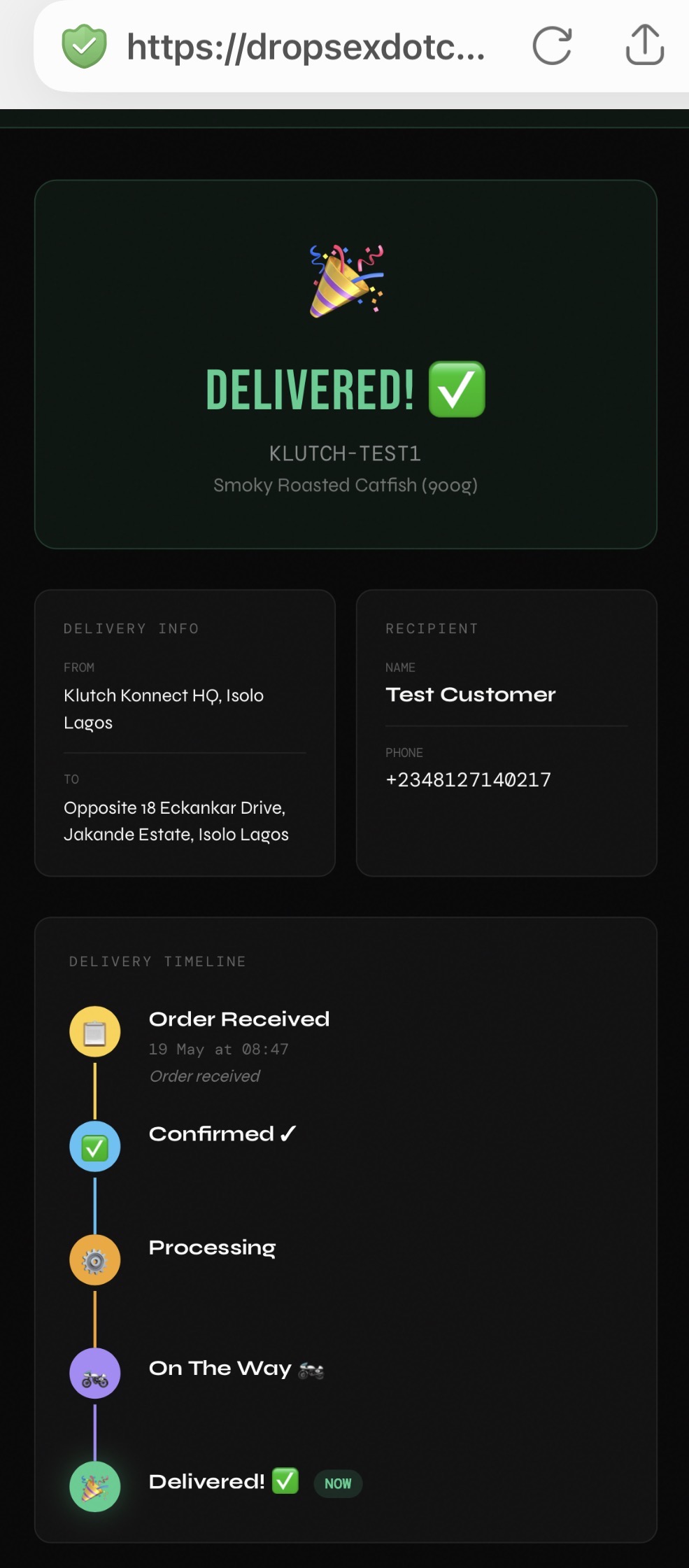
• Every delivery gets a unique tracking ID (KLUTCH-XXXXXX)
• Customers track orders in real time — no more “where is my order?” calls
• Businesses manage all deliveries via a clean dashboard
• ₦3,500/delivery · 80 trips/client/month · Scale to 50 clients = ₦14M/month

Accomplishments

• Next.js frontend deployed on Vercel
• AWS DynamoDB for business and delivery data (3 tables: businesses, deliveries, sessions)
• Supabase PostgreSQL for order history and analytics
• Vercel serverless functions for all API routes

Challenges

• Connecting two databases (DynamoDB + Supabase) simultaneously
• Building real-time tracking without websockets on serverless
• Deploying from Lagos with limited internet — every build counted

What I learned

• DynamoDB partition key design matters from day one
• Vercel + AWS is a genuinely powerful zero-infrastructure stack
• The best products solve your own real problem first

What’s next for DropsEx

• Onboard first 10 paying Lagos businesses (restaurants, pharmacies, supermarkets) at ₦3,500/delivery
• Add SMS notifications via AWS SNS — customers get automatic updates at every delivery stage without opening a link
• Expand to Abuja and Port Harcourt — same infrastructure, new city nodes
• White-label the tracking system — any logistics company in Nigeria can run DropsEx under their own brand
• $10,000 prize → first 3 months operating costs + first delivery bikes for DropsEx fleet
Built With

Share this project:

Updates

posted an update —

Since submitting DropsEx, real usage has driven real improvements. Here's what's changed:

Fixed a live production bug Customers tracking their orders were occasionally hitting 401 errors. Root cause: the admin login session was bleeding into the public tracking page. Fixed by explicitly isolating session persistence between the admin and public Supabase client instances — two completely separate session contexts now, zero crossover.

Hardened database security Ran a full audit of Row-Level Security policies on the orders table — testing every access path directly: anonymous SELECT (should work, for public tracking), anonymous INSERT/UPDATE/DELETE (should fail, and does), and authenticated full access (works as expected for admin operations). Every policy confirmed locked down exactly as intended.

Paystack integration in progress Moving from manual bank transfer to in-app payment processing, so customers can pay directly at checkout instead of needing a separate step.

New on the roadmap: K-OBS (Klutch Only Best Sellers) The next feature we're designing: businesses using DropsEx will be able to list only their proven best-selling items — not a full catalog — organized by category (food, electronics, baking, and more). The idea is curation over catalog size, which matters in a market like Lagos where buyers are often overwhelmed by choice and inconsistent quality.

Launch approach will be tiered: businesses self-nominate a small number of top items at first (manually approved), moving toward a "Verified Best Seller" badge once enough order volume flows through DropsEx to back the claim with real sales data instead of self-reported claims. Honest about that limitation from day one — no false certification before the data exists to support it.

Still solo-built, still bootstrapped, still shipping. More updates as K-OBS moves from idea to build.

Log in or sign up for Devpost to join the conversation.

Submission history