-
-
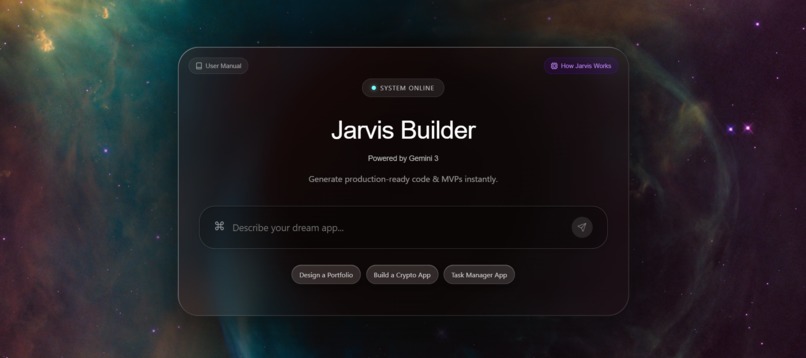
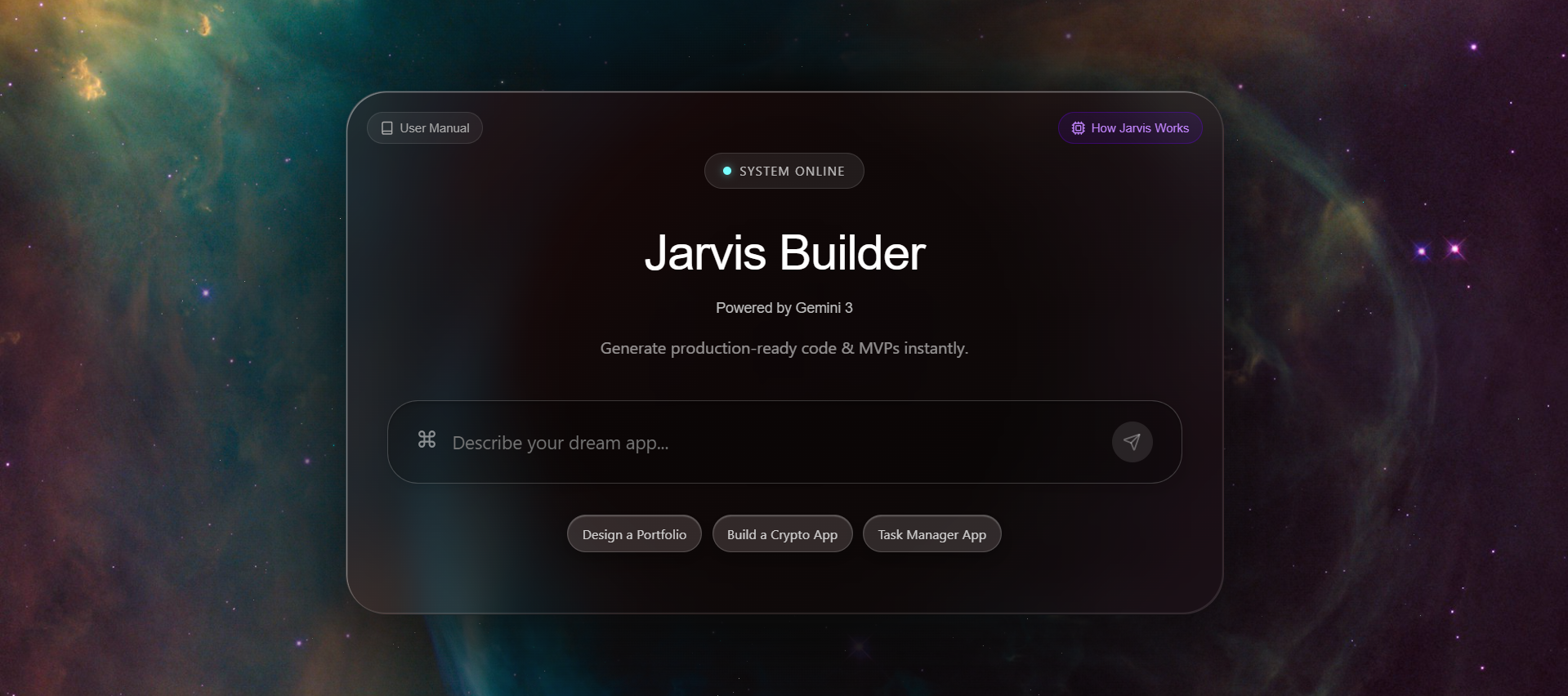
Jarvis
Inspiration
The idea for this project came from a previous hackathon where I did not get selected.
At that time, I depended a lot on AI coding tools that focused on fast code generation.
The AI could write code quickly, but it could not remember what it built earlier.
When I tried to make small changes, the whole project would break.
There was no memory, no way to restore previous work, and I often had to start from scratch.
That experience was frustrating, but it also taught me something important.
The problem was not the AI itself, but the way it was being used.
That is when I decided to build an AI system that works like a real developer, by planning first and then building.
What it does
JARVIS is an AI website builder that helps people create real, working web apps using simple English.
Instead of randomly generating code, JARVIS understands what the user wants, creates a clear plan, writes the code, and shows a live preview of the app.
It also remembers what was built earlier, so users can safely update or change their app without breaking everything.
How we built it
JARVIS is built using a step-by-step process.
First, the system understands the user’s intent, whether they want to build a new app, modify an existing one, or just ask a question.
Then a planning AI creates a structured plan for the app in JSON format.
After that, a builder AI generates the actual working code based on that plan.
Every successful build is saved as a Block, which works like a saved version of the app.
This allows JARVIS to remember past versions and make changes safely.
The frontend is built using React, and the generated apps run in a secure preview window.
Google Gemini is used to handle both planning and coding in a controlled way.
Challenges we ran into
One of the biggest challenges was stopping the AI from changing the entire app when only a small update was needed.
We also faced issues with inconsistent AI responses, broken JSON outputs, and handling errors during live demos.
Designing a memory system that was simple but effective was another challenge.
Debugging AI behavior took more time than debugging normal code.
Accomplishments that we're proud of
We are proud that JARVIS can build real working apps, not just visual designs.
The system successfully separates planning and coding, which makes it more reliable.
It also supports memory through saved Blocks, allowing safe updates and time travel between versions.
Most importantly, the project solves a real problem that we personally experienced.
What we learned
This project taught us that many AI coding problems come from poor workflow, not poor models.
Planning before coding makes a huge difference.
Memory and structure are very important when building real software with AI.
We also learned how to think like system designers instead of just tool users.
What's next for JARVIS
Next, we want to improve how accurately JARVIS handles small changes.
We also want to support larger projects, improve error handling, and make the tool easier for beginners.
For this hackathon, my main focus was to prove that the core idea works well in practice.


Log in or sign up for Devpost to join the conversation.