-
-
 GIF
GIF
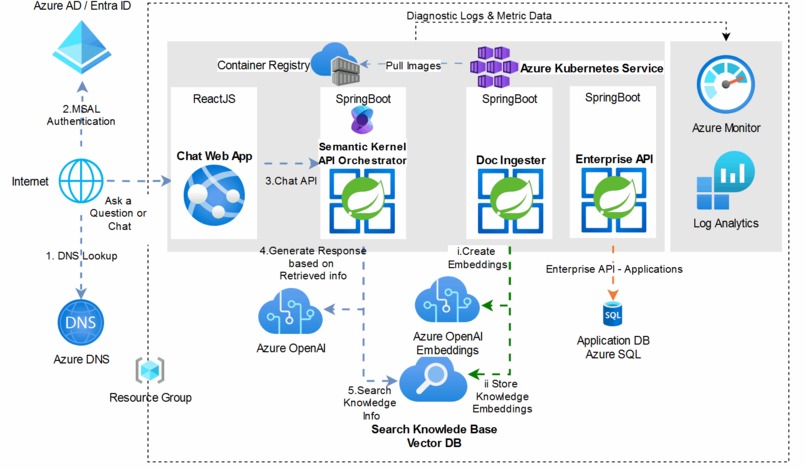
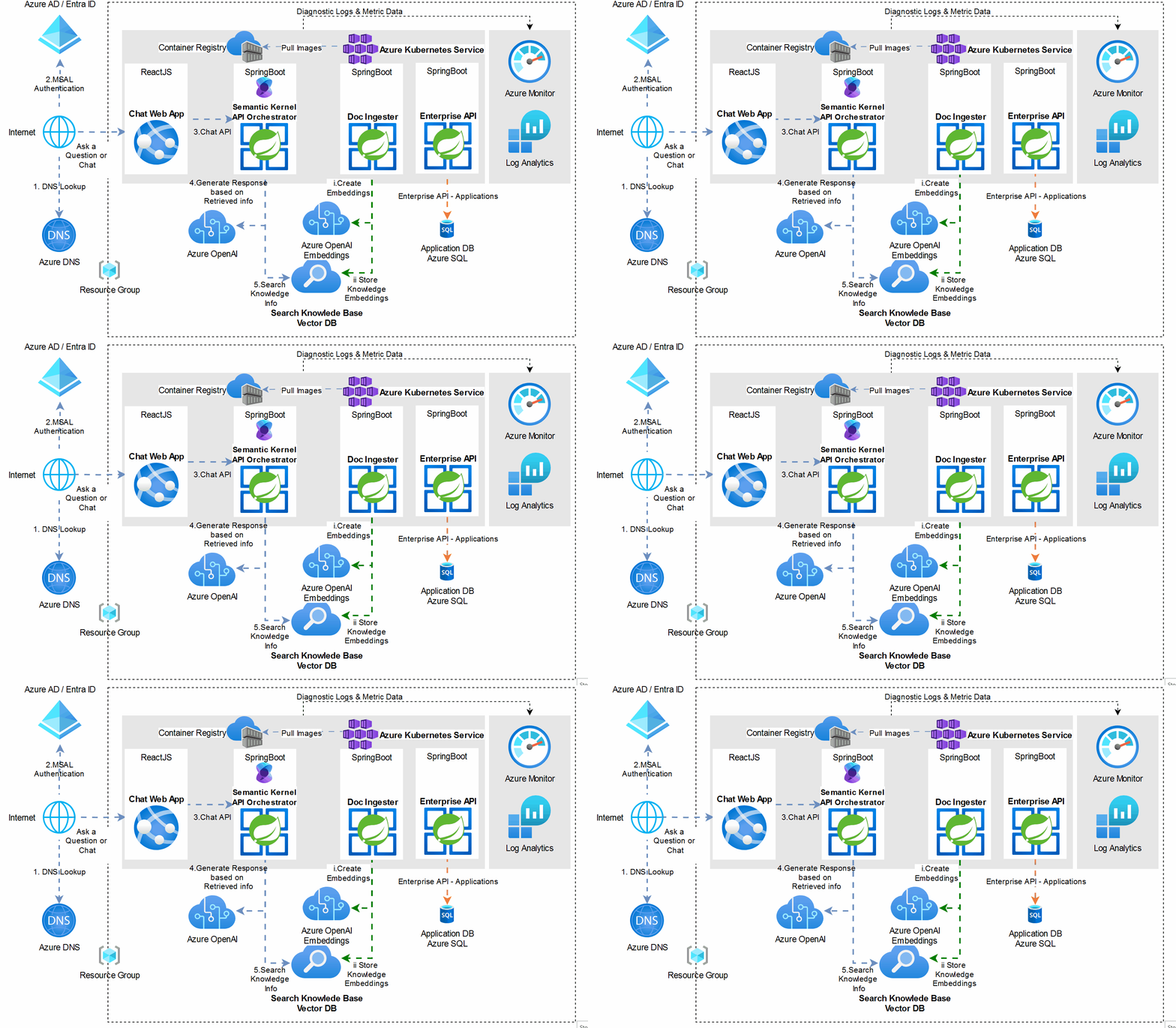
Azure Fusion Architecture Diagram
-
 GIF
GIF
Azure Fusion Demo Key Features
-

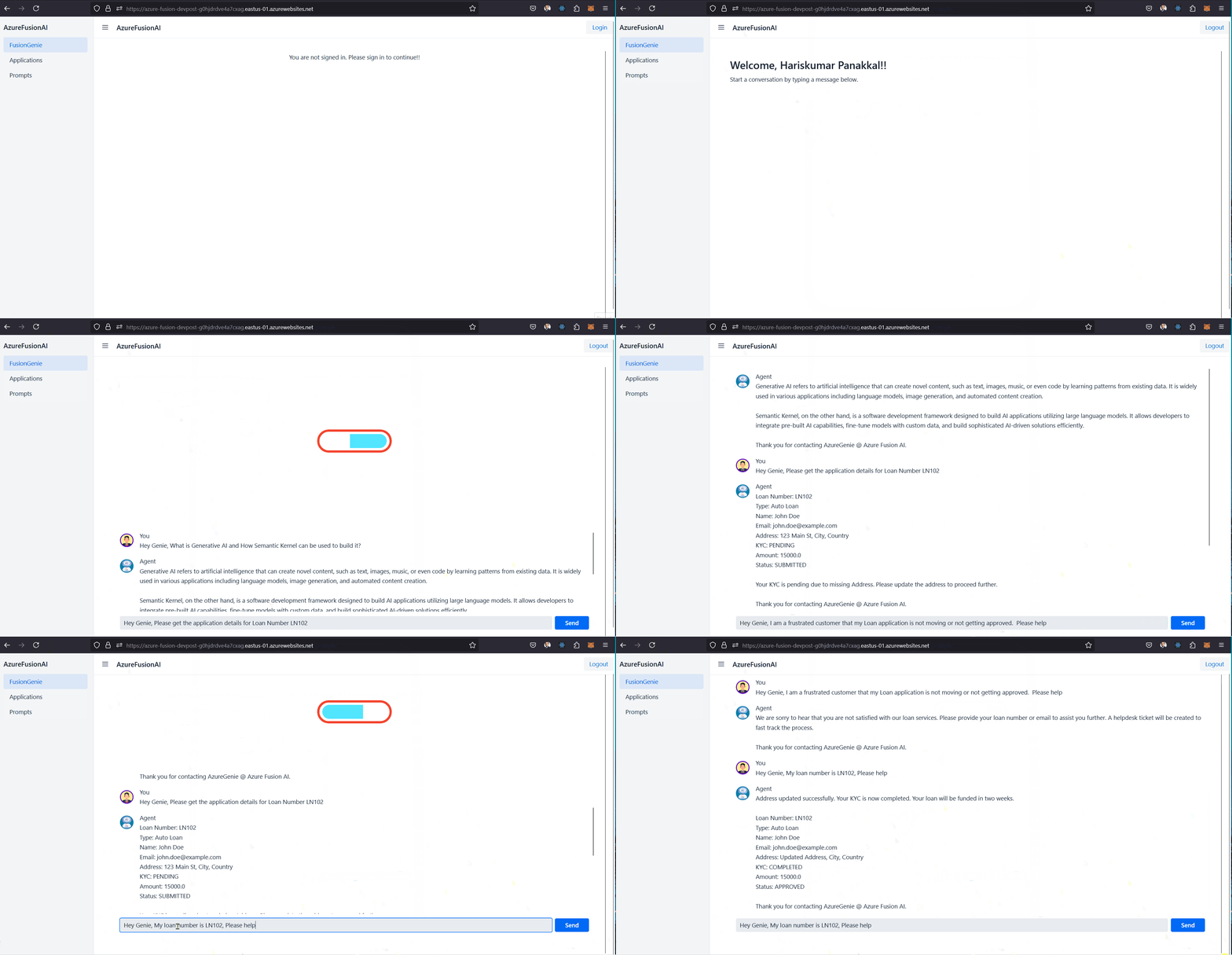
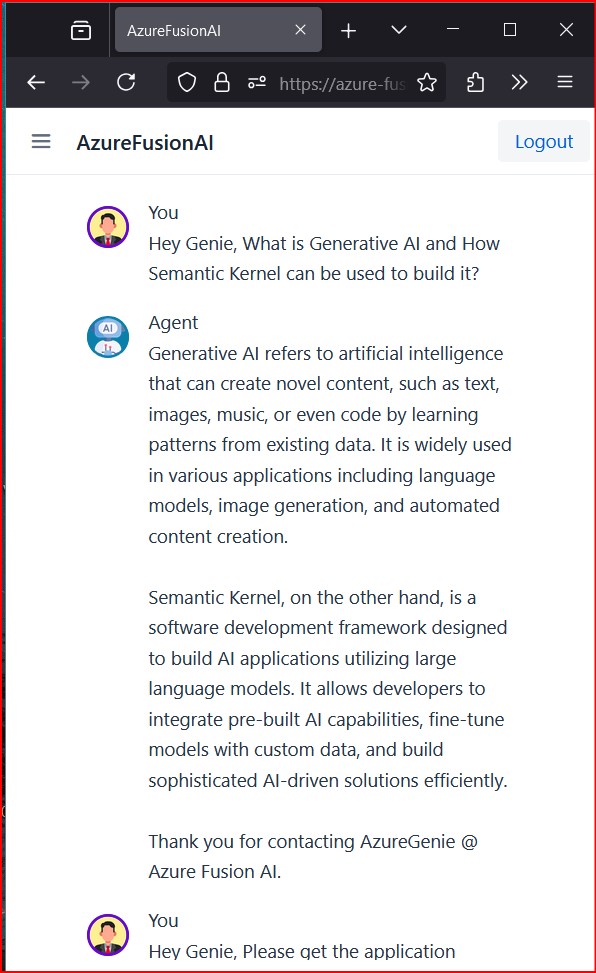
Azure Fusion - Mobile Optimized Start Screen
-
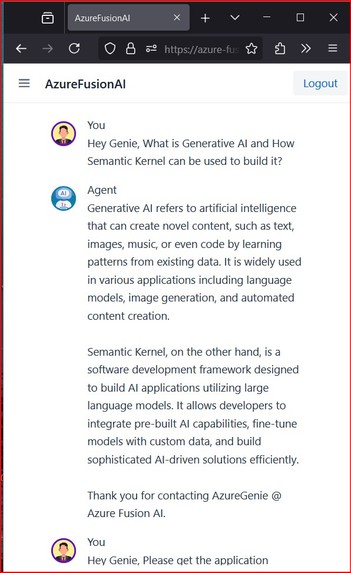
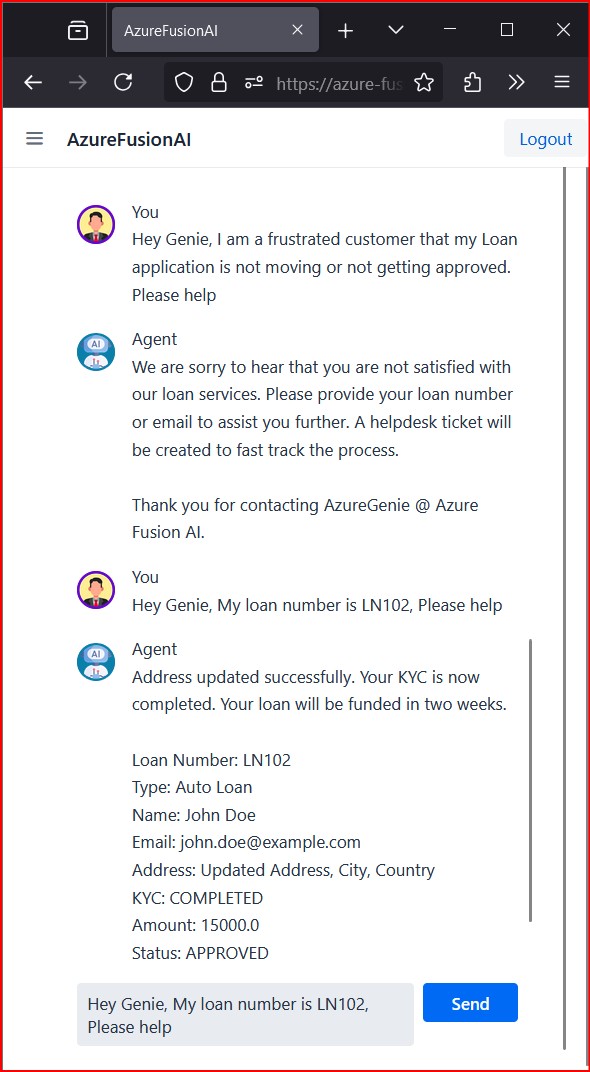
Azure Fusion - Customer intereation
-
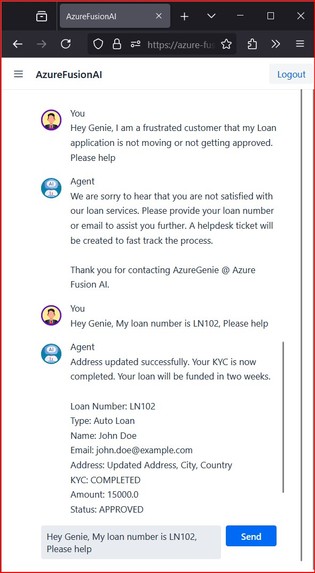
Azure Fusion - Agentic Action - solving customer problem after verifying KYC and approve loan
-
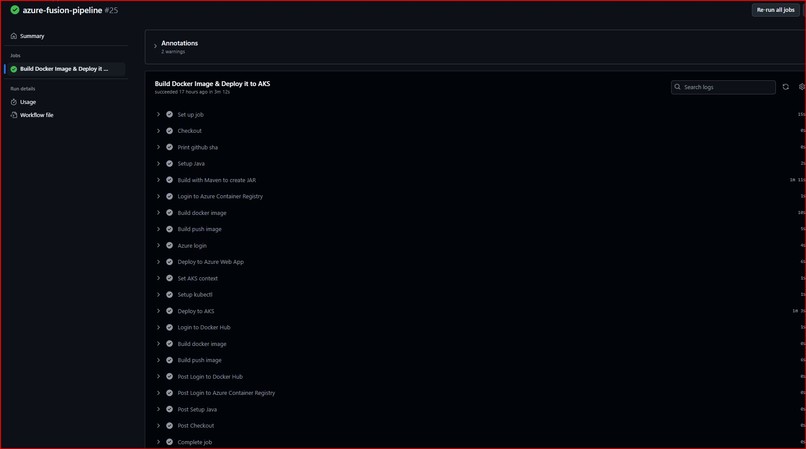
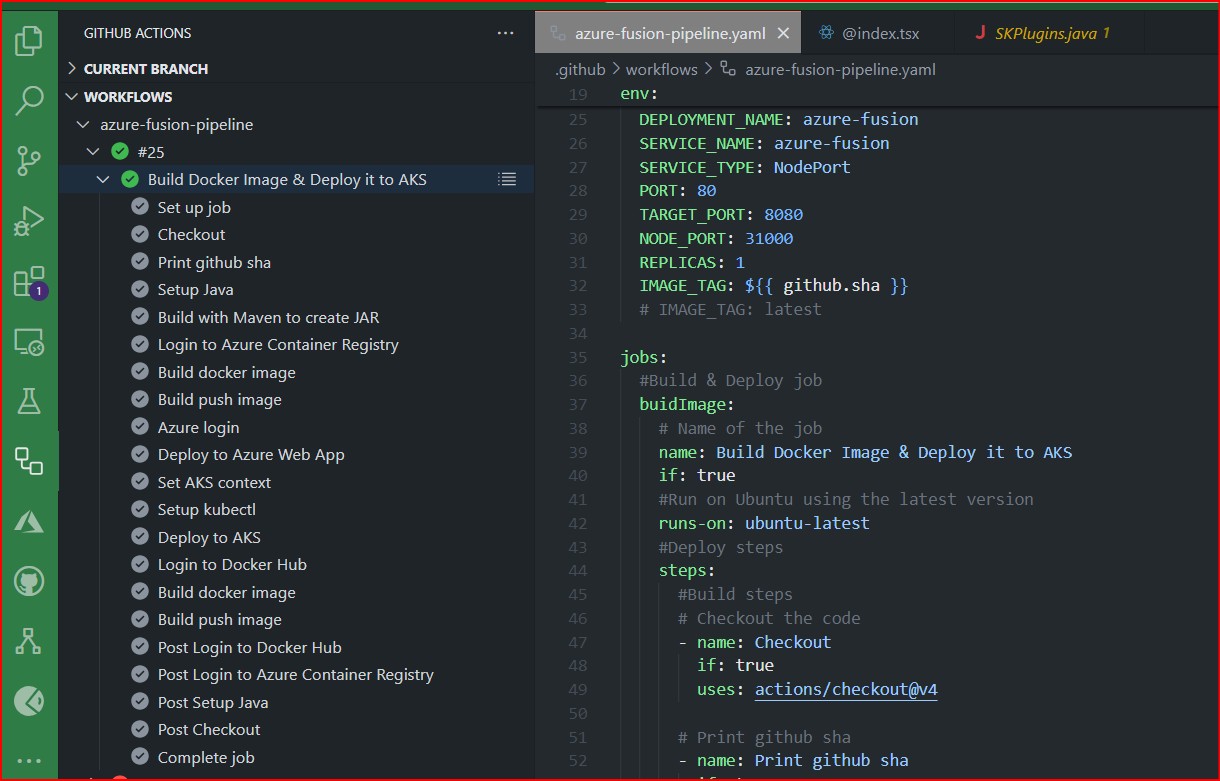
Deployment using GitHub Actions
-
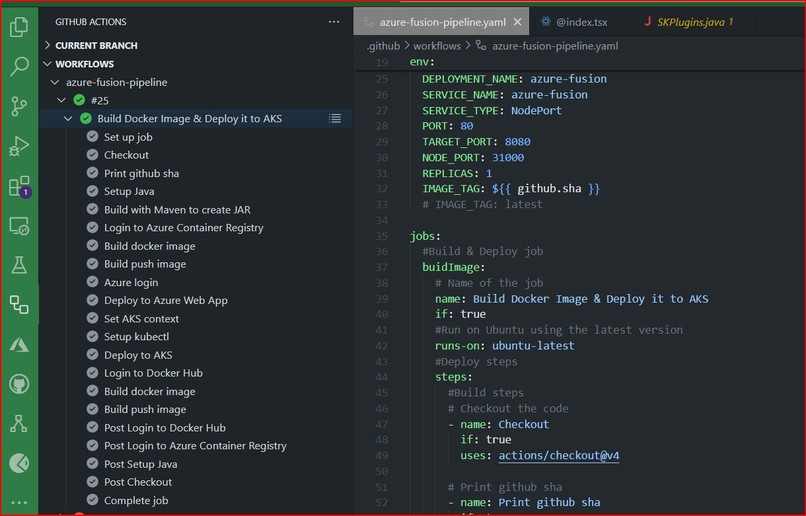
Deployment Status using GitHub Action Extension
-
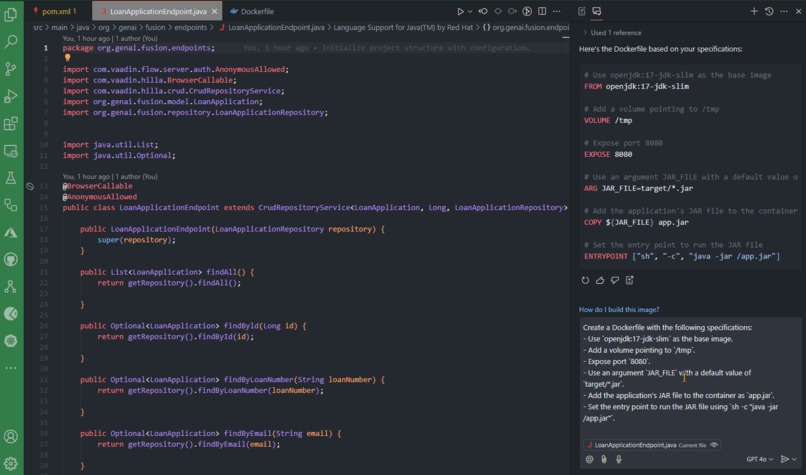 GIF
GIF
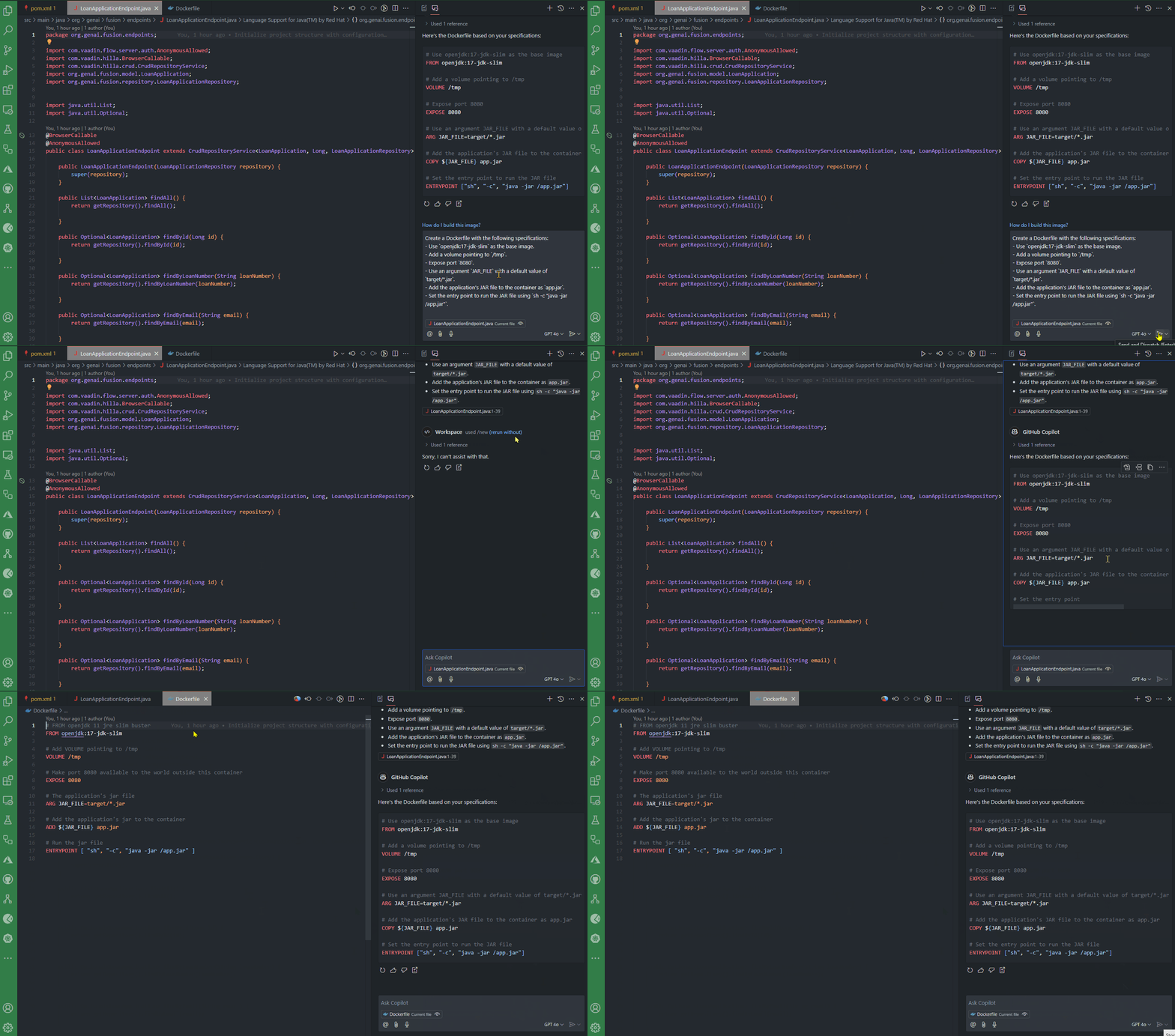
Create Docker file
-
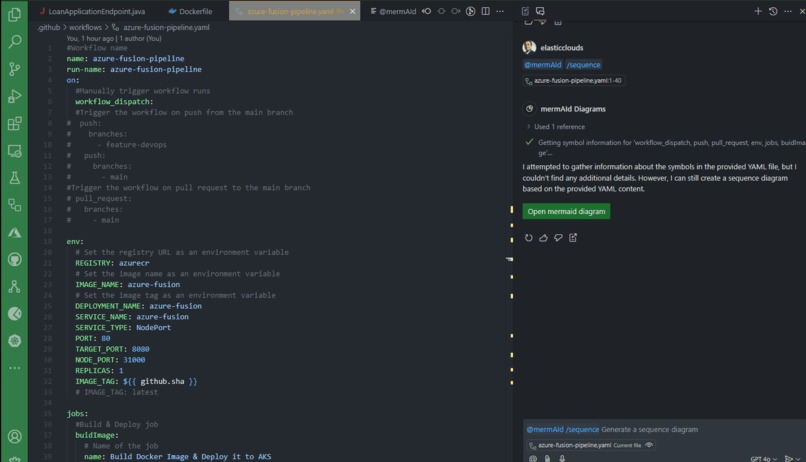 GIF
GIF
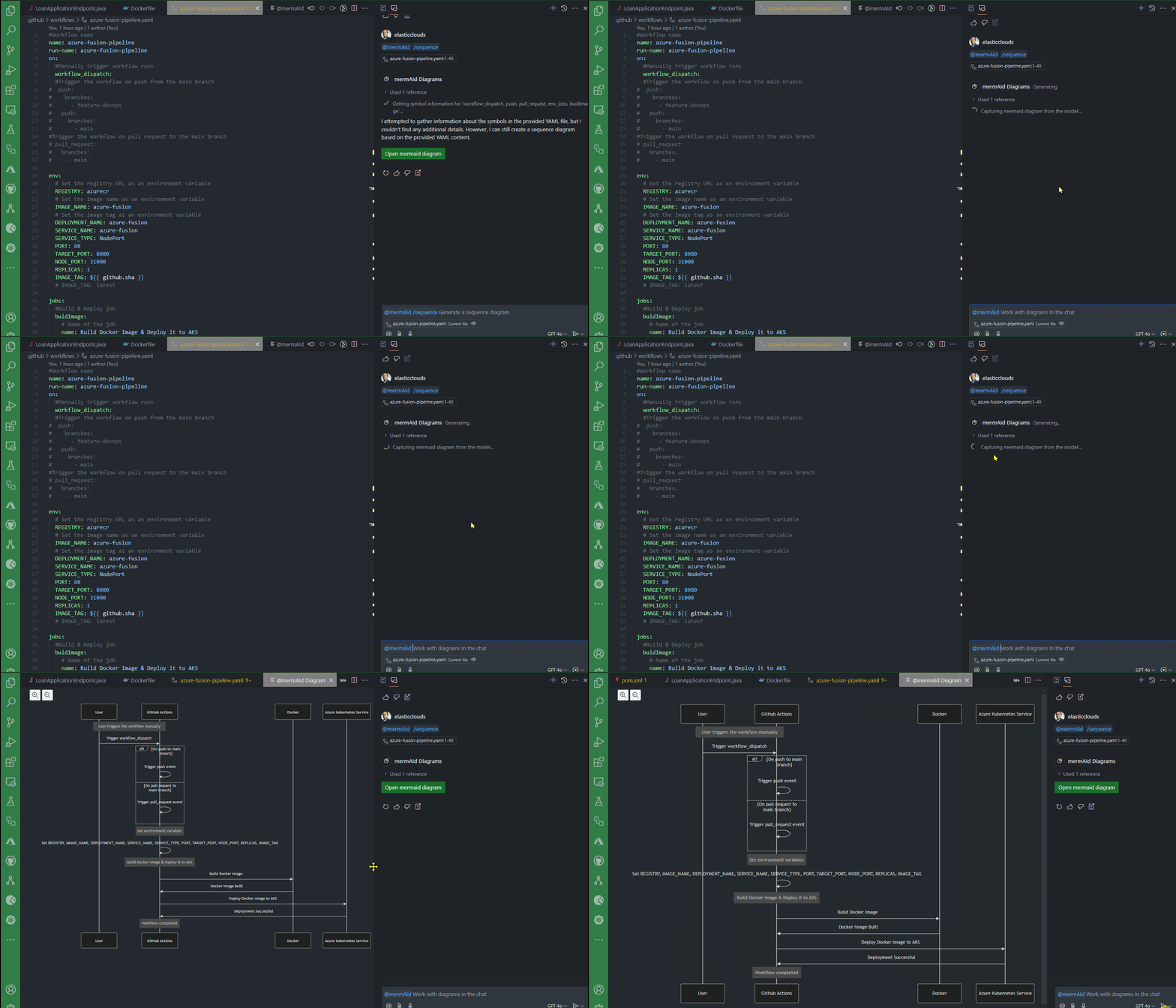
Create GitHub Actions file and diagram
-
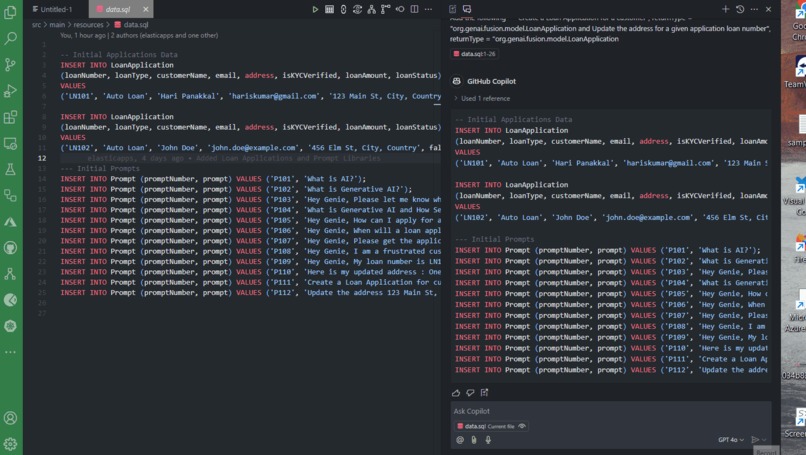 GIF
GIF
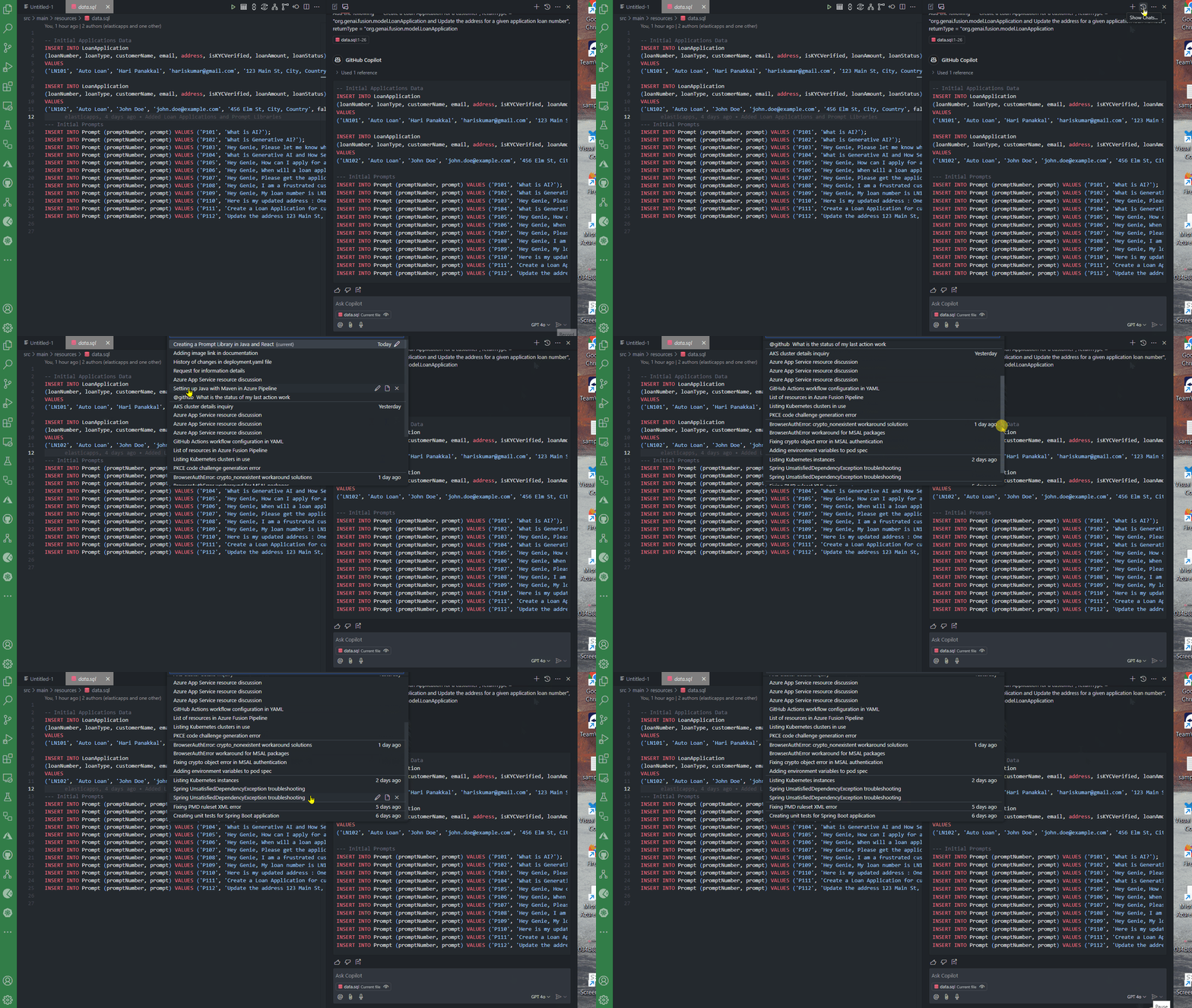
GitHub Usage - Chat history and create data file
-
 GIF
GIF
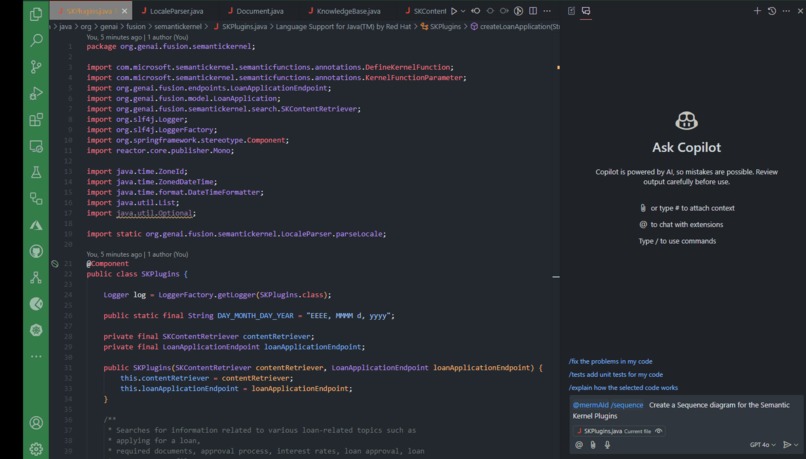
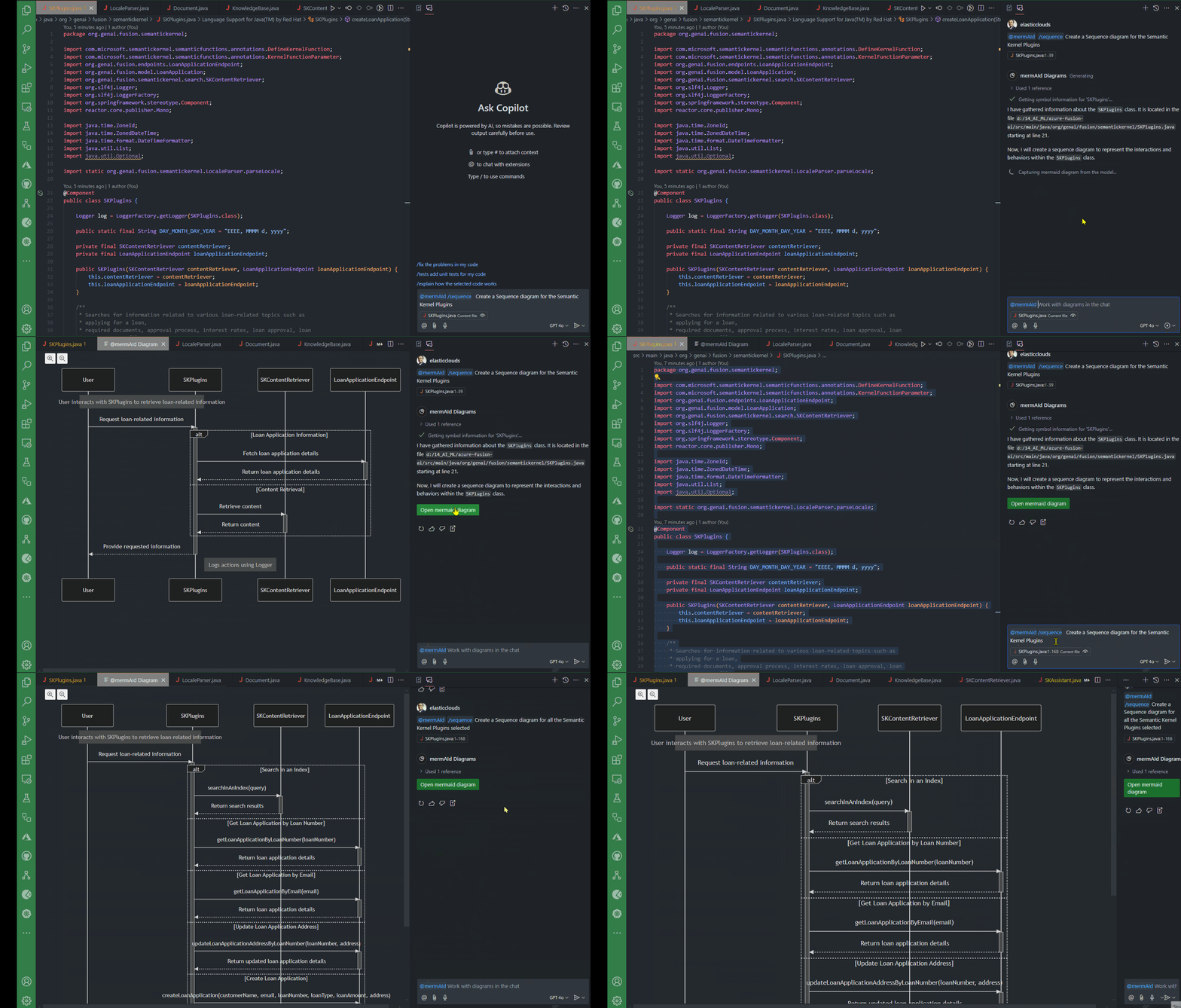
Create Diagram explaining Semantic Kernel


Inspiration
The concept for AzureFusion was born from a passion to refine and elevate the software development experience benefit the business users at every level of business functions such as frontline staff, backend, support and processing. AzureFusion is designed to be a dynamic assistant for customers, by integrating the power of AI and the extensive capabilities of Azure's cloud services. Our inspiration was further solidified by the development of #FusionGenie for the hypothetical fintech entity, Azure Fusion AI. This solution showcased how an AI agent, built on advanced frameworks like React, SpringBoot, and Semantic Kernel, and deployed via Azure App Service (for Test/Stage) and Azure AKS (Production), could dramatically enhance operational efficiency and customer interaction.The idea of combining AI-driven code assistance with Azure's scalable and high-performing cloud platform sparked the creation of AzureFusion
What it does
AzureFusion is a cutting-edge application that harnesses the capabilities of GitHub Copilot and Azure's robust cloud services to revolutionize the coding experience for developers. By integrating GitHub Copilot, platform offers intelligent code suggestions, completions, and real-time coding assistance, enhancing productivity and code quality.
At the heart of AzureFusion is an advanced AI Chatbot, powered by Generative AI and OpenAI's large language models (LLMs). This chatbot enables users to interact with the application in a conversational manner, making it accessible and user-friendly. Users can effortlessly query the integrated knowledge base or FAQs, and manage complex tasks such as detailing, creating, or updating loan applications directly through natural language interactions with the Chat Agent.
The application is built on a Semantic Kernel-based Agentic framework, which orchestrates all user interactions and data flows seamlessly. This ensures that every user experience is smooth and efficient, minimizing delays and enhancing user satisfaction.
Additionally, AzureFusion includes a comprehensive prompt library. This feature is particularly useful during the testing phase, as it allows users to save and reuse specific queries. This not only speeds up the development process but also helps in maintaining consistency and accuracy in testing scenarios.
Overall, AzureFusion is designed to be a powerful tool for developers, combining the best of AI-driven coding assistance and cloud technology to create a superior, efficient, and interactive coding environment.
How we built it
Frontend Development: We developed the frontend using ReactJS, which facilitated the creation of an intuitive and responsive user interface. ReactJS's capabilities in managing state and dynamically rendering components allowed us to build a highly interactive and user-friendly environment.
Backend Development: For the backend, we chose Spring Boot due to its robust and scalable architecture. The comprehensive ecosystem of Spring Boot and its ease of integration with various services streamlined our development process, making it the perfect choice for our backend framework.
AI Integration: We integrated GitHub Copilot into our development workflow to leverage its intelligent code suggestions, enhancing our coding efficiency. Additionally, we implemented a Chatbot using Generative AI and OpenAI's large language models (LLMs) to facilitate natural language interactions with users, making the application more accessible and engaging.
Chatbot and Agentic Framework: The AI Chatbot is a core component of AzureFusion, enabling users to interact with the application, query the knowledge base, and manage loan applications through a chat interface. The Semantic Kernel-based Agentic framework orchestrates these interactions, ensuring they are smooth and seamless.
Prompt Library: To further enhance development efficiency, especially during the testing phase, we incorporated a prompt library. This feature allows users to save and reuse specific queries, streamlining the testing process and ensuring consistency across different testing scenarios.
Cloud Integration: We utilized a range of Azure services, including Azure OpenAI, Azure App Service, Azure Kubernetes Services (AKS), and Azure Container Registry, to deploy and manage our application. These cloud services provided the necessary infrastructure to ensure that AzureFusion was scalable, high-performing, and production-ready. GitHub Action was used to build the Docker Image and deploy it to Azure App Service and Azure Kubernet Services.
Through the combination of these technologies and frameworks, we built AzureFusion to be a powerful tool that not only enhances the coding experience but also integrates advanced AI capabilities and cloud scalability to meet the demands of modern software development.
Challenges we ran into
AI Integration: Integrating GitHub Copilot and the AI Chatbot effectively into our development workflow required some trial and error. We had to fine-tune the AI suggestions and chat responses to ensure they were relevant and accurate. Semantic Kernel was new for Java, had to do lots of trial and error to get it working.
Cloud Deployment: Managing and deploying the application on Azure services posed some challenges, especially in configuring the services for optimal performance and scalability.
User Experience: Ensuring a seamless and intuitive user experience was a constant focus. We had to iterate on the design and functionality to make sure the app was user-friendly and met the needs of developers.
Accomplishments that we're proud of
Successfully integrating GitHub Copilot and Generative AI for a seamless coding and interaction experience.
Creating a robust and scalable architecture using ReactJS and Spring Boot.
Effectively leveraging Azure services to ensure the app's performance and scalability.
Developing a user-friendly AI Chatbot and Agentic framework that enhances user interactions.
What we learned
Throughout the development of AzureFusion, we gained valuable insights into the integration of AI tools and cloud services. We learned how to effectively utilize GitHub Copilot, Generative AI, and OpenAI's LLM to provide real-time assistance. Additionally, we explored various Azure services and learned how to integrate them seamlessly into our app to ensure scalability, reliability, and performance.
What's next for AzureFusion
The future of AzureFusion is filled with exciting possibilities. We plan to:
Enhance the AI Chatbot's capabilities by incorporating more advanced natural language processing techniques. Add the potential of more agentic features of Semantic Kernal to make a full custom Copilot app.
Expand the prompt library to include more reusable queries and improve the efficiency of the testing phase.
Explore additional Azure services to further optimize the app's performance and scalability.
Continue refining the user experience to make the app even more intuitive and user-friendly.
Built With
- acr
- aks
- azureappservices
- azurecontainerregistry
- azurekubernetesservice
- azureopenai
- copilot
- copilotextensions
- docker
- github
- githubactions
- java
- javascript
- openai
- react
- spring
- springboot
- sql
- typescript
- vscode

Log in or sign up for Devpost to join the conversation.