-
-
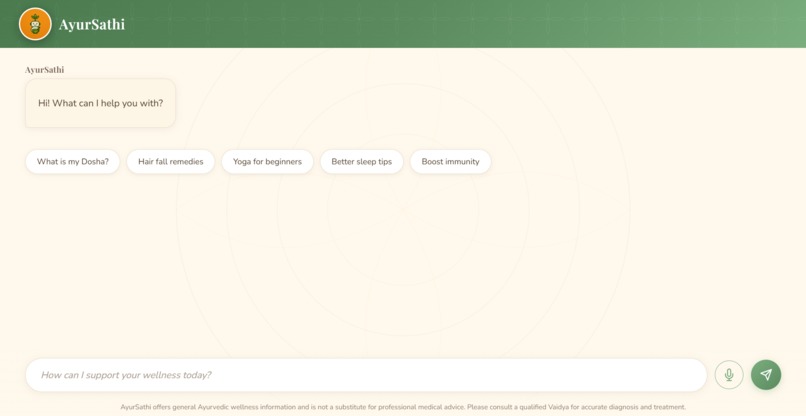
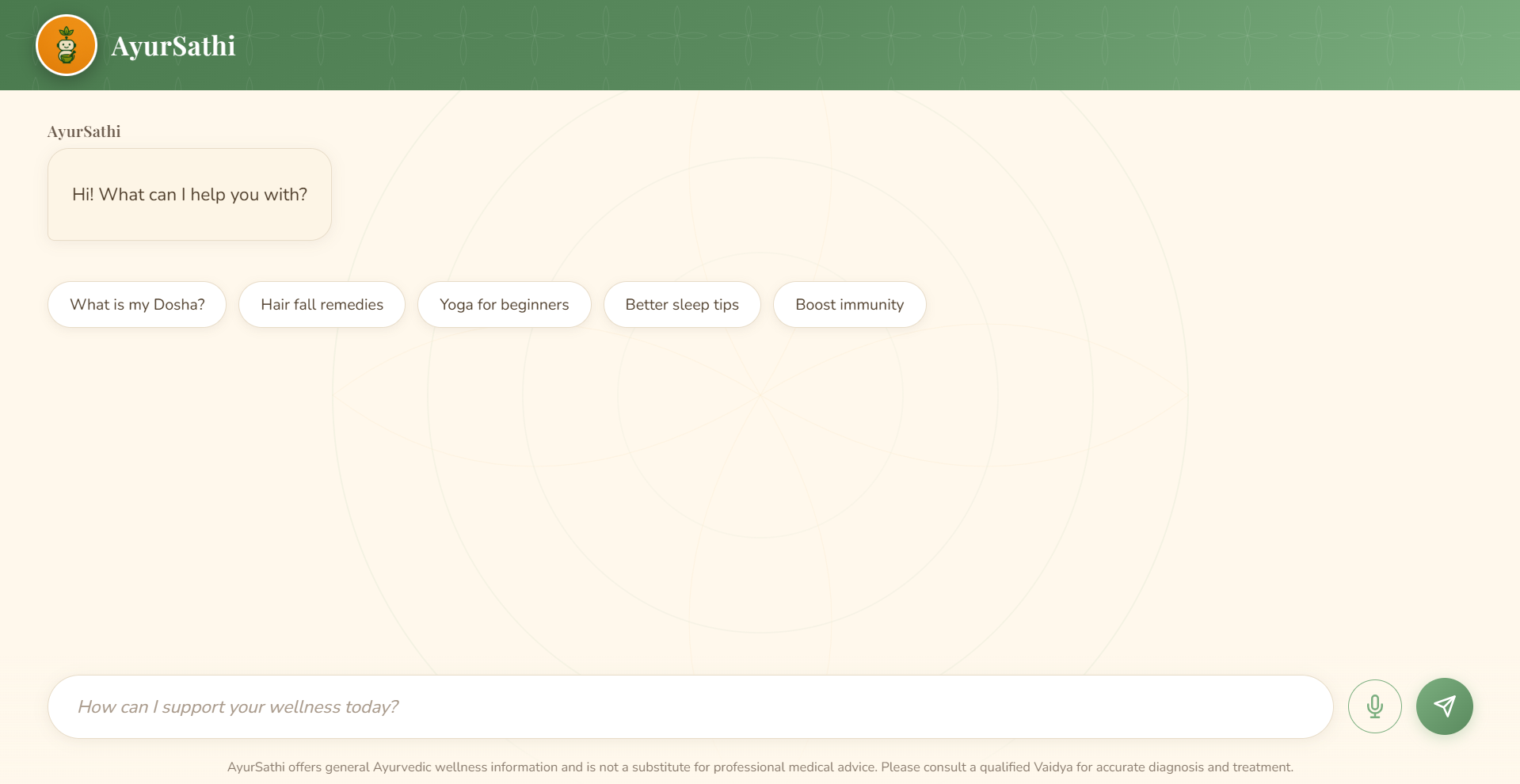
AyurSathi UI
Inspiration
AyurSathi was inspired by a clear gap between the widespread trust in Ayurveda and the limited access to authentic, reliable Ayurvedic guidance. While millions of people seek natural and preventive wellness practices, access to qualified practitioners is often restricted by geography, cost, and availability. At the same time, online information about Ayurveda is fragmented, inconsistent, and frequently lacks proper grounding in classical texts.
This disconnect between ancient Ayurvedic wisdom and modern digital accessibility motivated us to create a single, trustworthy platform that could make Ayurveda understandable and accessible to everyone.
How We Built the Project
AyurSathi was designed as a modular, explainable, and safety-first AI system.
- User Interface: Users interact with the chatbot through text and voice, ensuring accessibility across literacy levels and regions.
- Natural Language Processing (NLP): NLP models interpret user queries and extract relevant wellness-related concepts.
- Dosha Mapping Engine: A rule-based logic system maps inputs to possible Dosha tendencies (Vata, Pitta, Kapha) using Ayurvedic principles, without performing diagnosis.
- Recommendation Engine: Based on Dosha tendencies, the system provides general guidance related to diet, lifestyle, daily routines, Yoga, and Mudras.
- Knowledge Base: All outputs are grounded in classical Ayurvedic concepts and verified public-domain or government-approved sources.
- Safety Layer: Built-in constraints ensure the system remains strictly non-diagnostic and avoids medical prescriptions.
Challenges We Faced
- Structuring Traditional Knowledge: Ayurvedic texts are qualitative and contextual, making it challenging to convert them into structured, machine-readable logic.
- Balancing Helpfulness and Safety: Designing a system that is informative while avoiding medical advice required careful rule design.
- Explainability: Users need transparency in recommendations, which required linking every output to underlying Ayurvedic principles.
- Language and Accessibility: Supporting multilingual and voice-based interactions while preserving meaning was technically complex.
- Trust and Compliance: Since the project operates in a health-related domain, ensuring compliance and responsible use was critical.
What We Learned
Through building AyurSathi, we learned how to:
- Translate traditional knowledge systems into structured AI workflows.
- Build domain-specific conversational AI with strong safety and compliance constraints.
- Balance personalization with responsibility in wellness-focused applications.
- Design explainable AI systems that foster user trust.
- Work effectively at the intersection of AI, healthcare, and traditional knowledge.


Log in or sign up for Devpost to join the conversation.