-
-
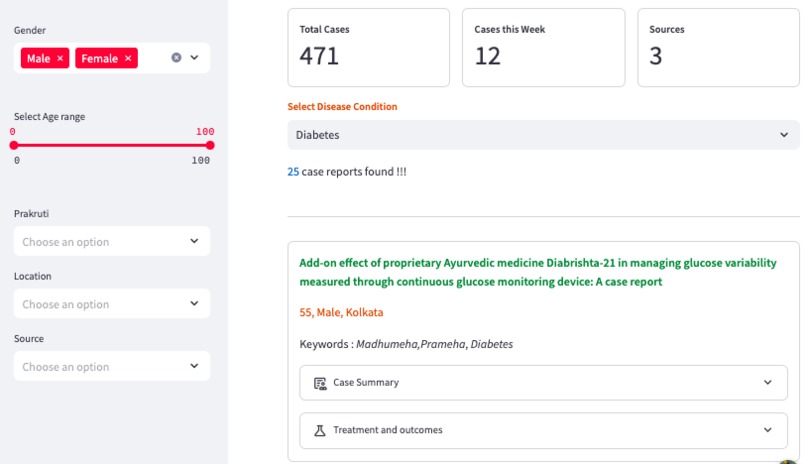
Project Demo
-
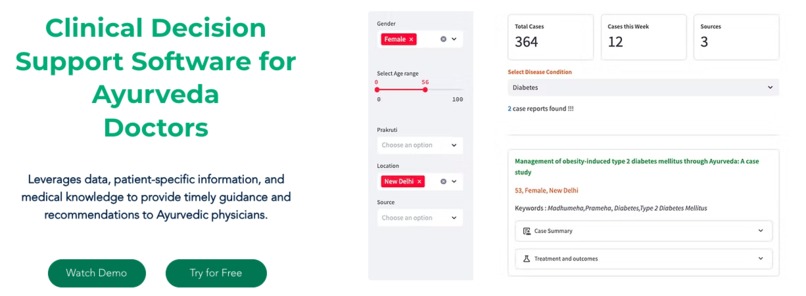
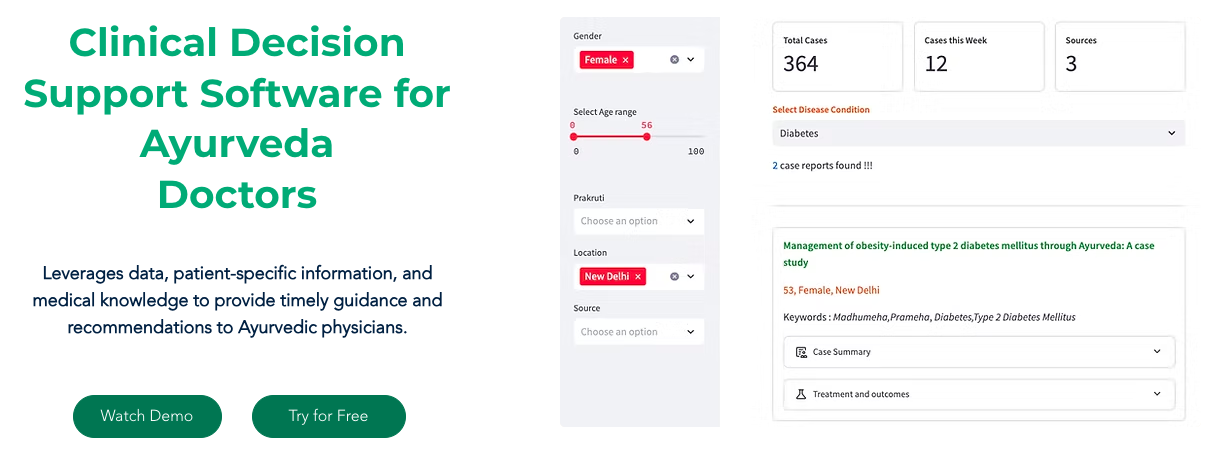
Web Home Page
-
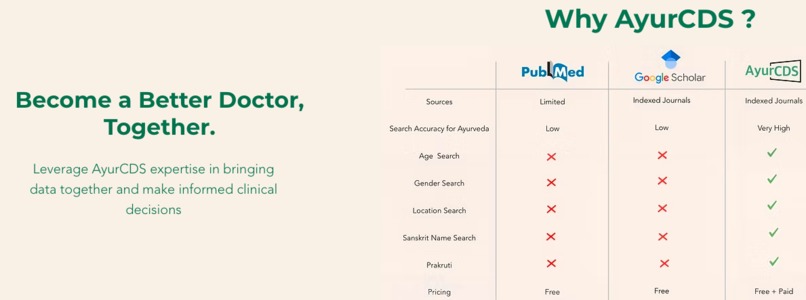
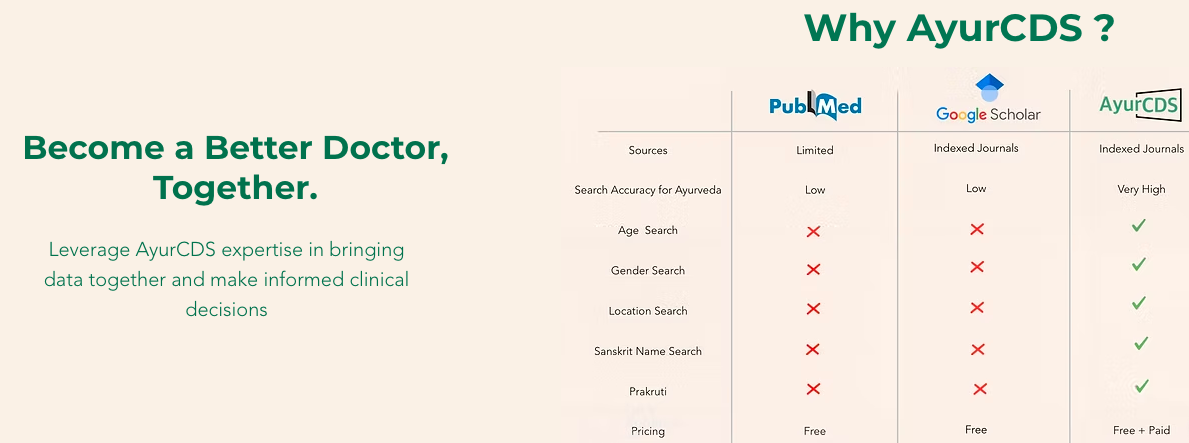
AyurCDS comparision with other Knowledge Base
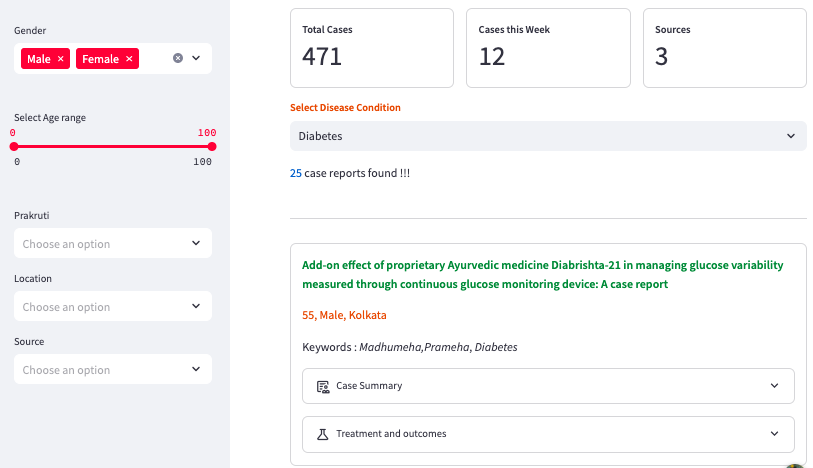
Inspiration
Ayurveda is one of the oldest systems of medicine in the world, but the knowledge behind it is scattered across ancient texts, modern research papers, and countless websites — with no single, structured, machine-readable source of truth. Meanwhile, modern clinical decision support systems have transformed how allopathic practitioners diagnose and treat patients, giving them fast, structured, evidence-based recommendations at the point of care.
That gap was the spark for AyurCDS: what if Ayurvedic practitioners and researchers had access to the same kind of structured, searchable, decision-support tooling that modern medicine takes for granted? I wanted to build a system that treats Ayurvedic knowledge — doshas, herbs (dravyas), formulations, symptoms, and treatment protocols — with the same rigor as a modern clinical dataset, and use that structure to power intelligent recommendations.
What it does
AyurCDS is a Clinical Decision Support System for Ayurvedic medicine that:
- Ingests and organizes Ayurvedic medical knowledge (herbs, formulations, symptoms, dosha profiles, and treatment protocols) into a structured, queryable dataset
- Matches patient-reported symptoms and constitution (prakriti) to relevant Ayurvedic diagnoses and treatment options
- Provides a foundation for future clinical-grade decision support tooling in traditional and integrative medicine
How I built it
The entire pipeline is built in Python, spanning data collection, curation, and the decision-support logic itself:
- Web scraping & data collection: Custom Python scrapers (using tools like requests, BeautifulSoup, and in some cases headless browsers) to pull Ayurvedic medical content from public web sources — texts, herb databases, and health information sites
- Data cleaning & curation: A dedicated pipeline to normalize inconsistent terminology (e.g., Sanskrit transliteration variants), deduplicate overlapping entries, and structure unstructured text into a consistent schema (symptoms → herbs → formulations → doshas)
- Knowledge base construction: Storing curated data in a structured format designed for fast lookup and rule-based matching
- Decision support logic: Python-based matching/rules engine that maps input symptoms and patient profiles to relevant Ayurvedic recommendations from the curated knowledge base
Challenges I ran into
Data collection and curation from the web was, by far, the hardest part of this project:
- Inconsistent source quality: Ayurvedic content online ranges from rigorous academic sources to unreliable folk blogs, requiring careful filtering and validation of what to include
- Terminology normalization: The same herb or condition often appears under multiple Sanskrit transliterations, regional names, or English translations, making deduplication and entity resolution genuinely difficult
- Unstructured, inconsistent formats: Unlike modern clinical datasets (ICD codes, structured EHR fields), Ayurvedic knowledge online is almost entirely unstructured prose, requiring custom parsing logic rather than off-the-shelf tools
- Data completeness vs. accuracy tradeoffs: Balancing the goal of a comprehensive knowledge base against the risk of including low-quality or contradictory information
Accomplishments that I'm proud of
- Building projects from scratch
- Bring structure to clinical data
What I learned
- How to design a web scraping and data curation pipeline resilient enough to handle messy, inconsistent, multi-source text data
- Practical techniques for entity resolution and normalization when no standard taxonomy exists (unlike ICD/SNOMED in modern medicine)
- The real-world complexity of building clinical decision support systems, even outside a hospital EHR context — data quality is the bottleneck, not the algorithm
- A deeper appreciation for how much structured infrastructure (like ICD codes and formularies) modern medicine relies on, and how much groundwork is needed to bring that same rigor to traditional medicine systems
What's next for AyurCDS
- Expanding the curated knowledge base with more validated sources and expert review
- Building an API and lightweight UI so practitioners and researchers can query AyurCDS directly
- Exploring integration with existing open health data standards for better interoperability
