-
-
User Guide
-
Journey
Inspiration Severe daily workplace risks in NYC: Thousands of Latino delivery and construction workers face dangerous conditions alone on city streets.
Fear and lack of legal knowledge: Immigration fears and language barriers prevent injured workers from seeking emergency care, unaware that ERs treat everyone.
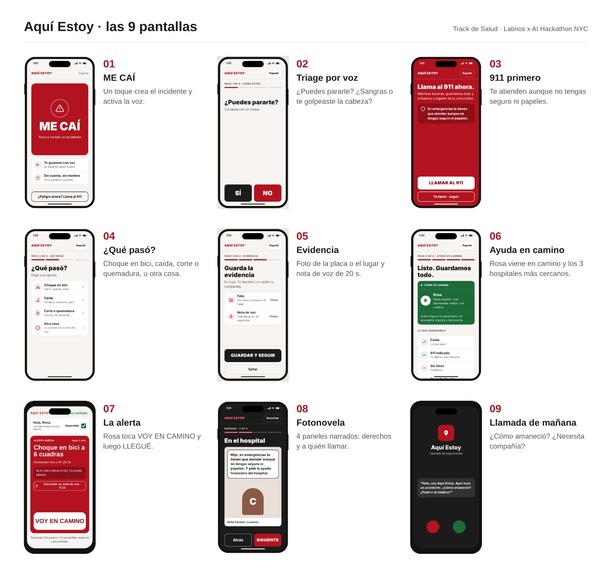
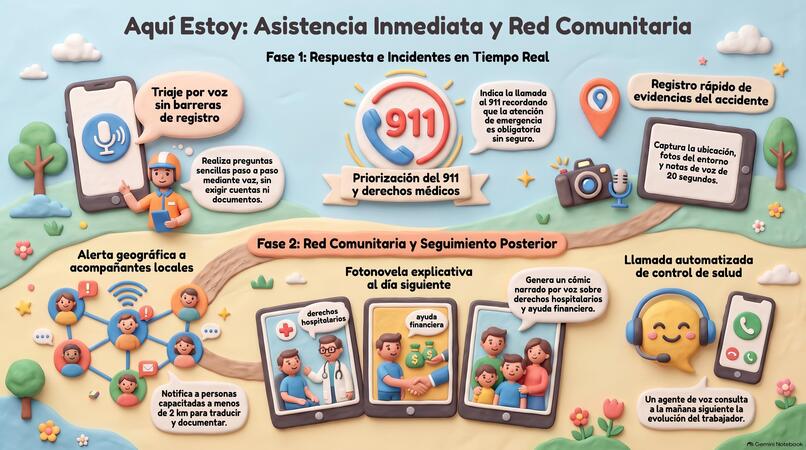
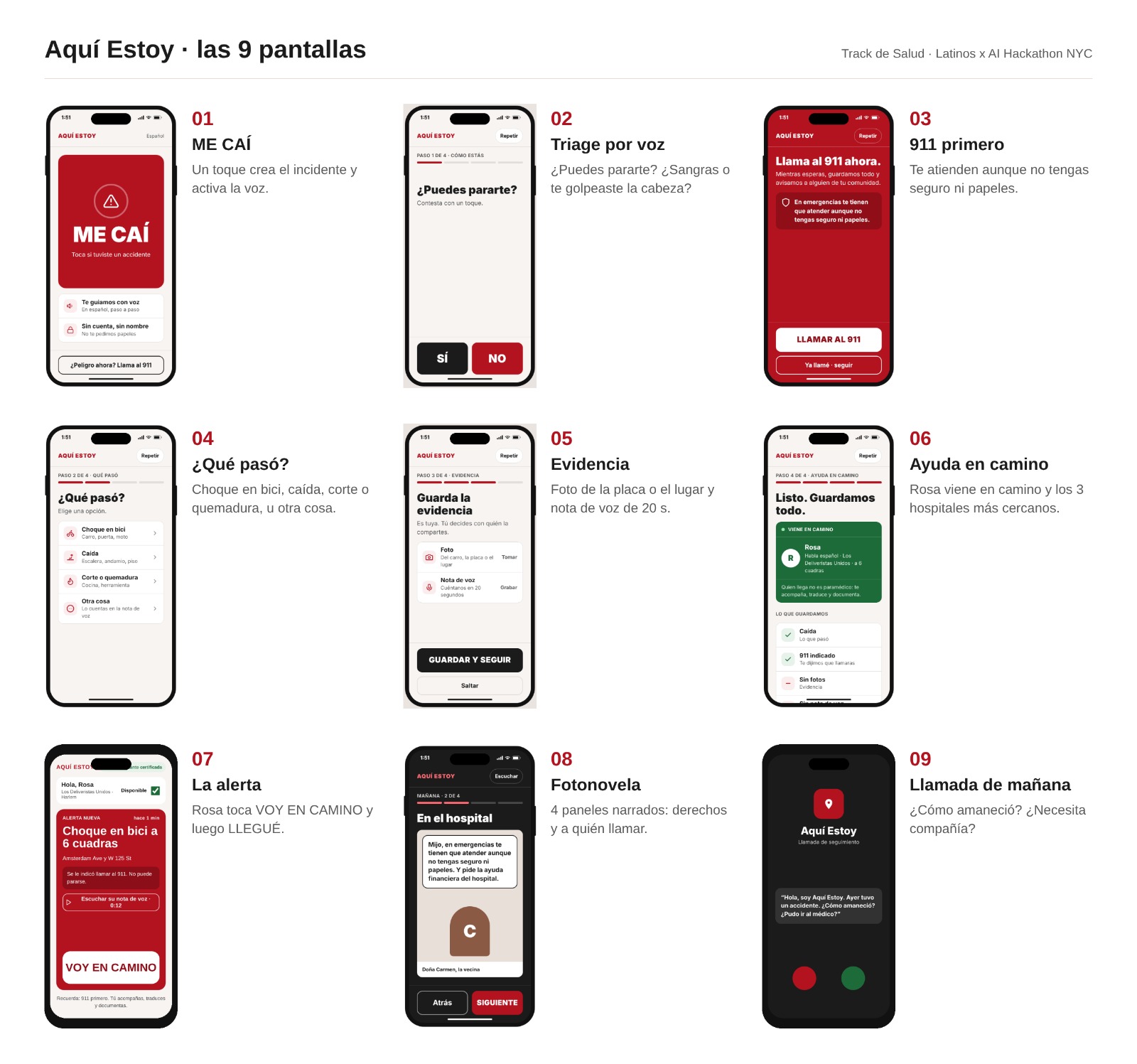
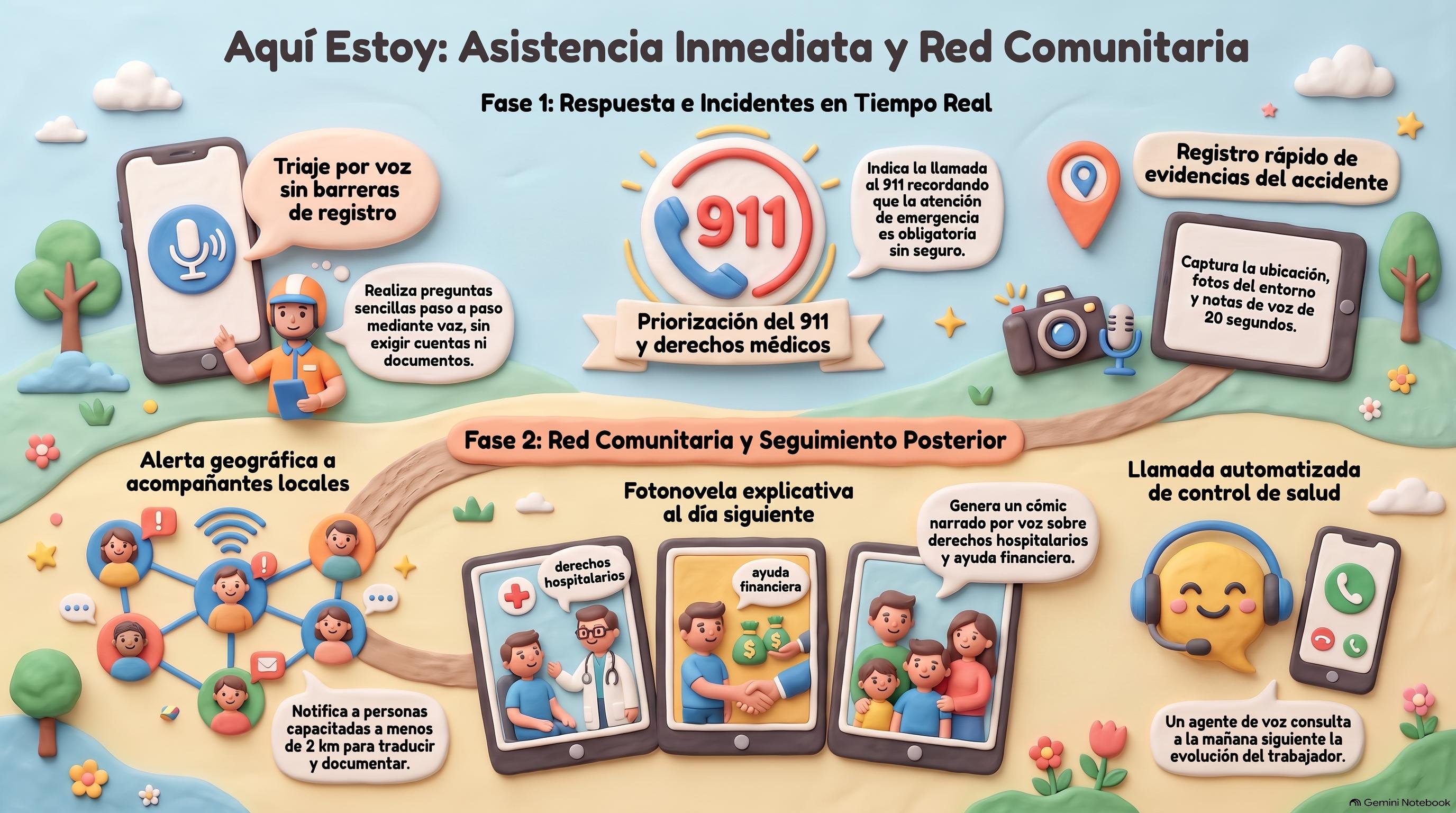
What it does Voice-guided emergency triage: Offers a zero-login Spanish interface with large buttons and spoken prompts to evaluate injuries instantly.
Emergency escalation and legal reassurance: Directs critical trauma to 911 while reassuring workers that public hospitals cannot ask for papers.
Rapid on-scene evidence collection: Enables injured workers to quickly photograph license plates and record a 20-second descriptive voice memo.
Community companion dispatch: Alerts nearby certified bilingual companions to rush to the scene, translate for paramedics, and document details.
Public hospital navigation: Routes users to the three nearest NYC Health + Hospitals facilities providing care to the uninsured.
Next-day narrated fotonovela: Generates an illustrated four-panel comic voiced by ElevenLabs explaining app reporting, hospital aid, and unions.
Automated morning check-in: Triggers a morning voice call via Vapi to ask how the worker is recovering and offer help.
Organizer dashboard and live map: Equips labor centers with a real-time incident map and response-time metrics across all five boroughs.
How we built it Accessible flat frontend: Built a mobile-first, high-contrast interface using pure solid colors, Archivo typography, and browser audio APIs.
Realistic voice synthesis via ElevenLabs: Integrated the multilingual model to generate spoken triage prompts and unique character voices for the fotonovela.
Conversational AI calling with Vapi: Implemented automated outbound calling workflows to conduct structured follow-up check-ins the morning after an injury.
Urgent SMS messaging via Twilio: Set up REST messaging pipelines to dispatch instant companion alerts and send case recovery links.
Resilient backend architecture: Engineered serverless endpoints with geographic radius filtering, webhook authentication, and soft-fail fallbacks for all APIs.
Challenges we ran into Stress-focused UI constraints: Designing for injured workers wearing gloves on cracked screens required eliminating forms and text inputs entirely.
API resilience and graceful degradation: Preventing app crashes during network drops required building seamless fallbacks from cloud APIs to local browser tools.
Balancing trust with anonymous access: Verifying community companion certifications while keeping the injured worker intake process 100% anonymous and frictionless.
Accomplishments that we're proud of Sub-minute emergency workflow: Empowered injured workers to complete triage, record evidence, and locate care in under 45 seconds.
Culturally tailored health communication: Transformed complex hospital financial aid policies into an engaging, voice-narrated comic strip format.
Safe non-medical companion model: Established a clear volunteer structure focused on translation and documentation without assuming medical liability.
What we learned Legal reassurance is vital: Clarifying within ten seconds that emergency rooms treat everyone without asking for papers saves lives.
Voice-first design ensures equity: Audio prompts and spoken recordings are essential during trauma when typing is nearly impossible.
What's next for AquiEstoy Formal worker center pilots: Expanding companion training programs with organizations like Worker's Justice Project and local labor centers.
Indigenous language localization: Adding voice narration in indigenous languages like Mixteco, K'iche', and Nahuatl for non-Spanish speakers.
Automated legal intake packets: Compiling photos, timestamps, and audio notes into one-click dossiers for pro bono worker attorneys.
Built With
- base44
- twilio

Log in or sign up for Devpost to join the conversation.