-
-

AxxessGuard Banner
-
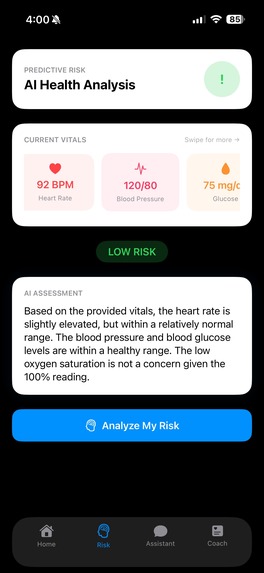
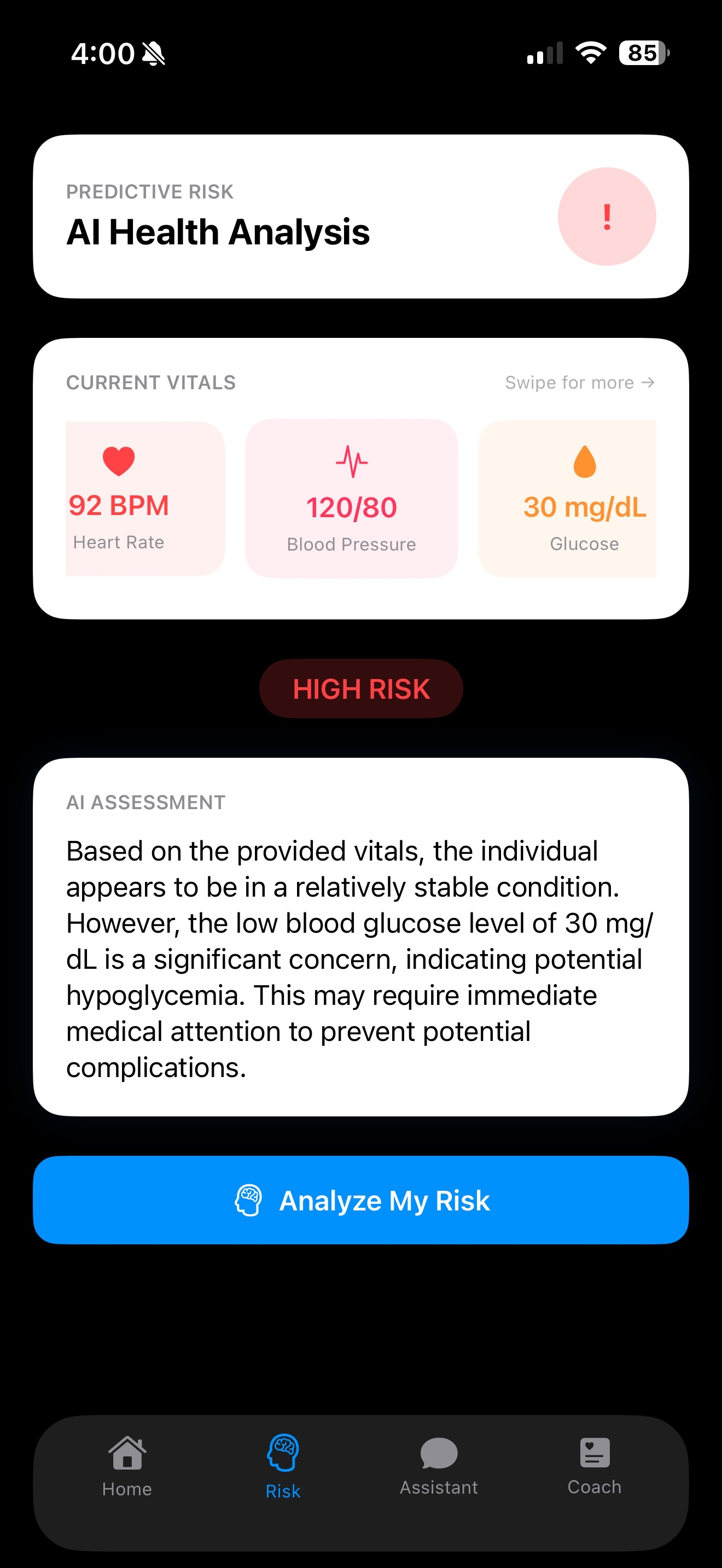
Risk Analysis Demo 1
-
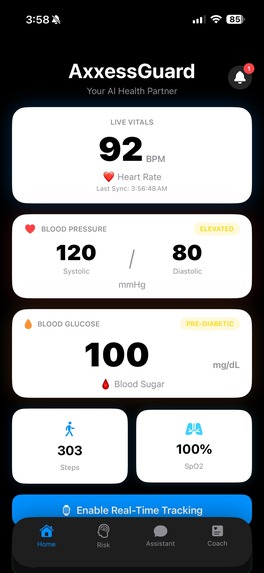
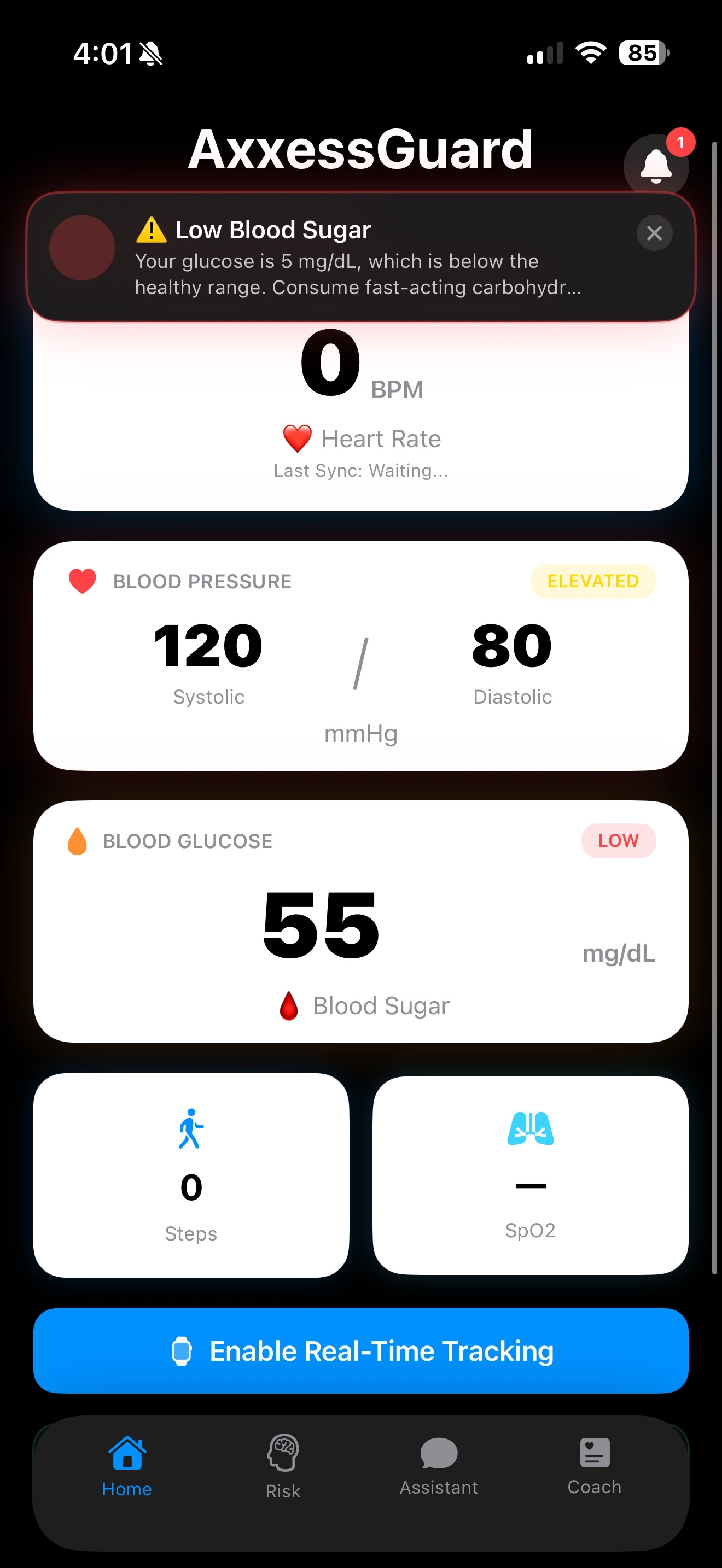
Home Screen Demo
-
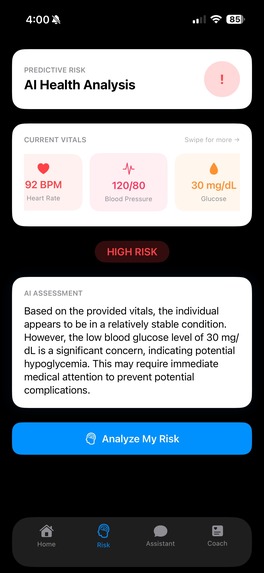
Risk Analysis Demo 2
-
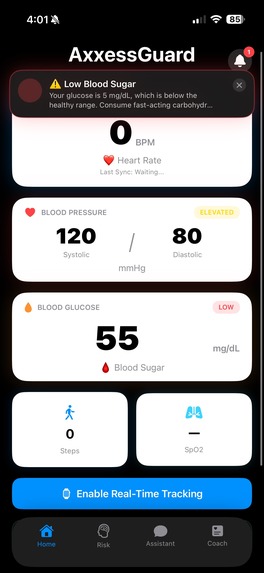
Notification Popup Demo
-
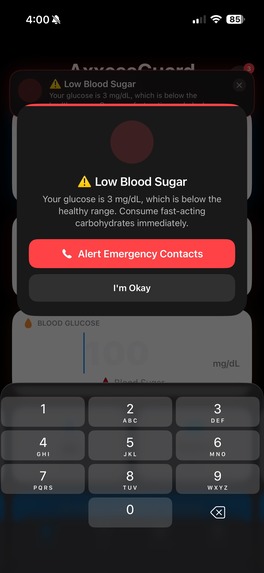
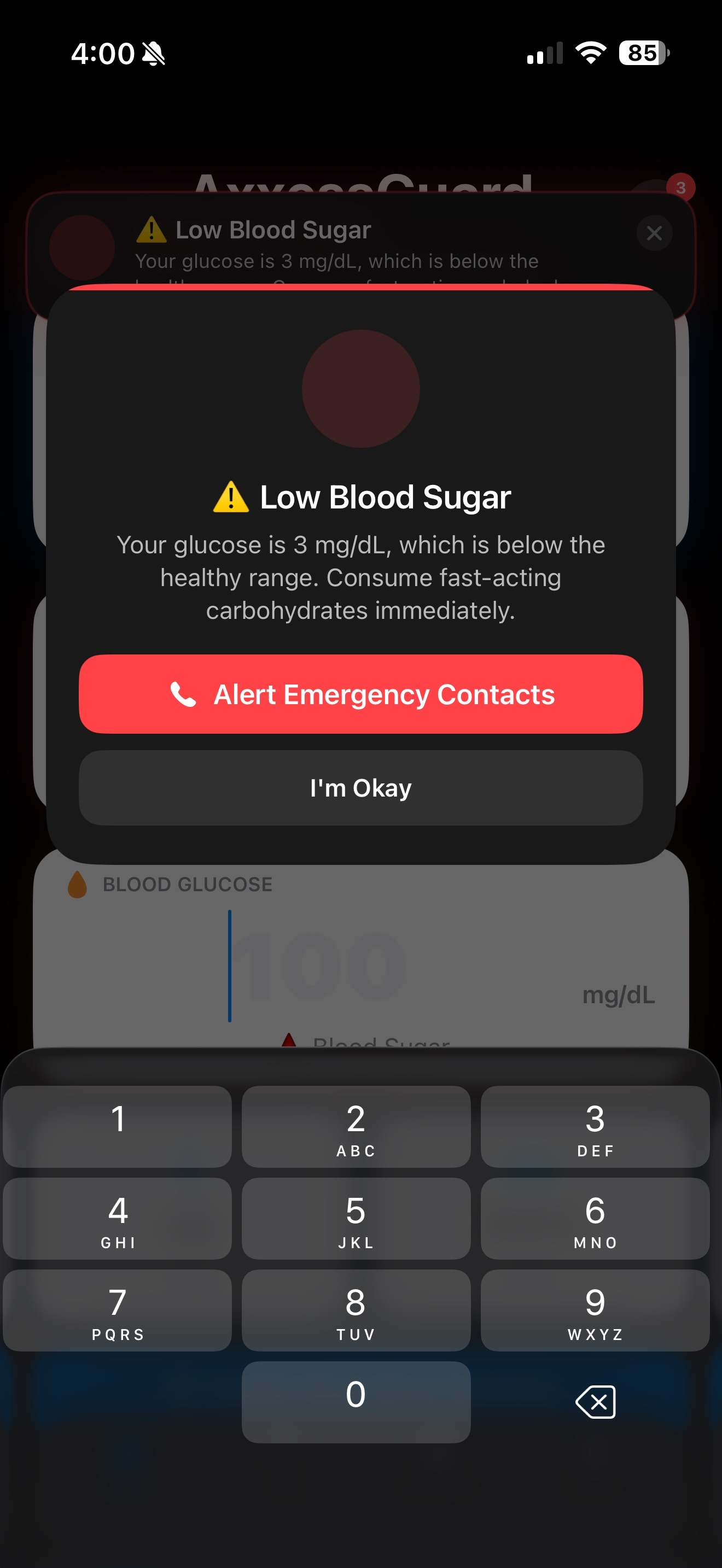
Emergency Contact Notif Demo
-
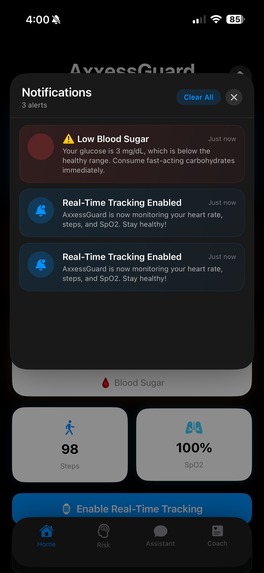
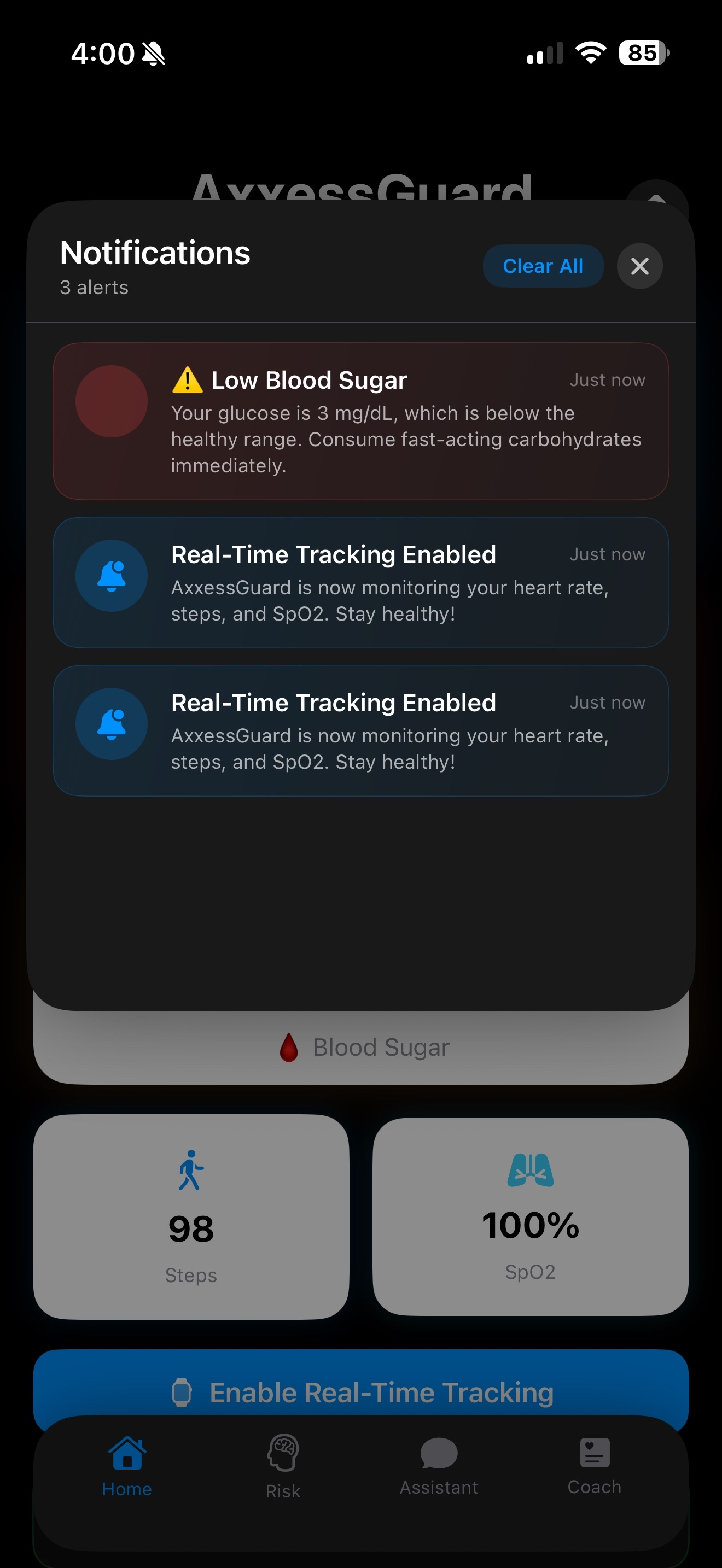
Notification Box Demo
-
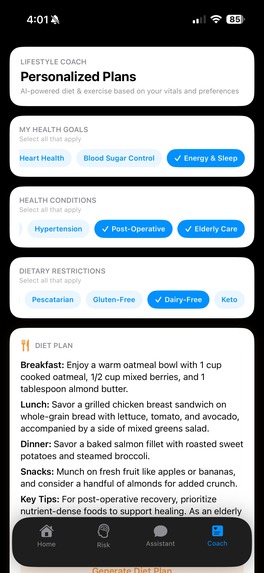
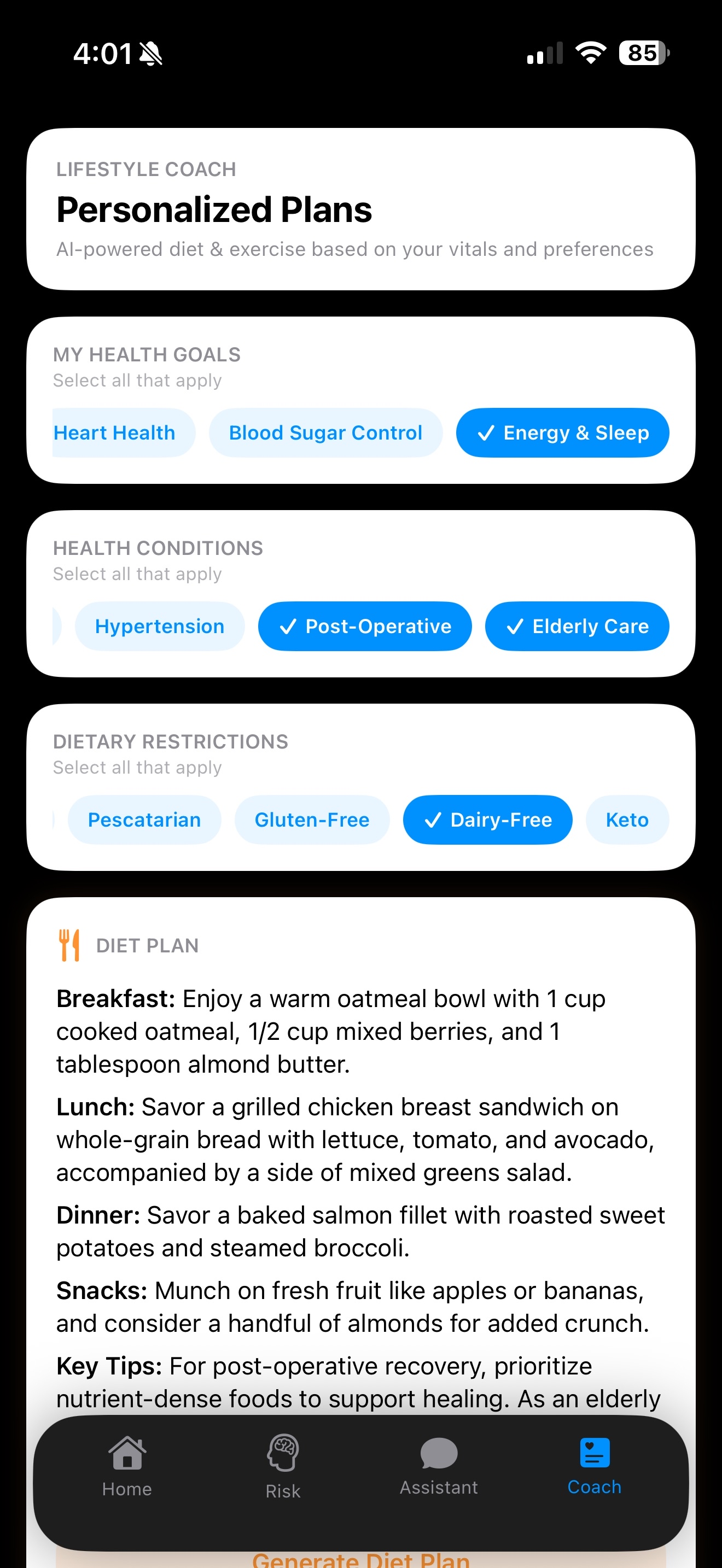
Coach Personalized Plans Demo 1
-
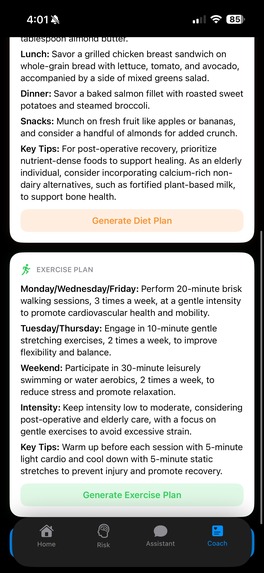
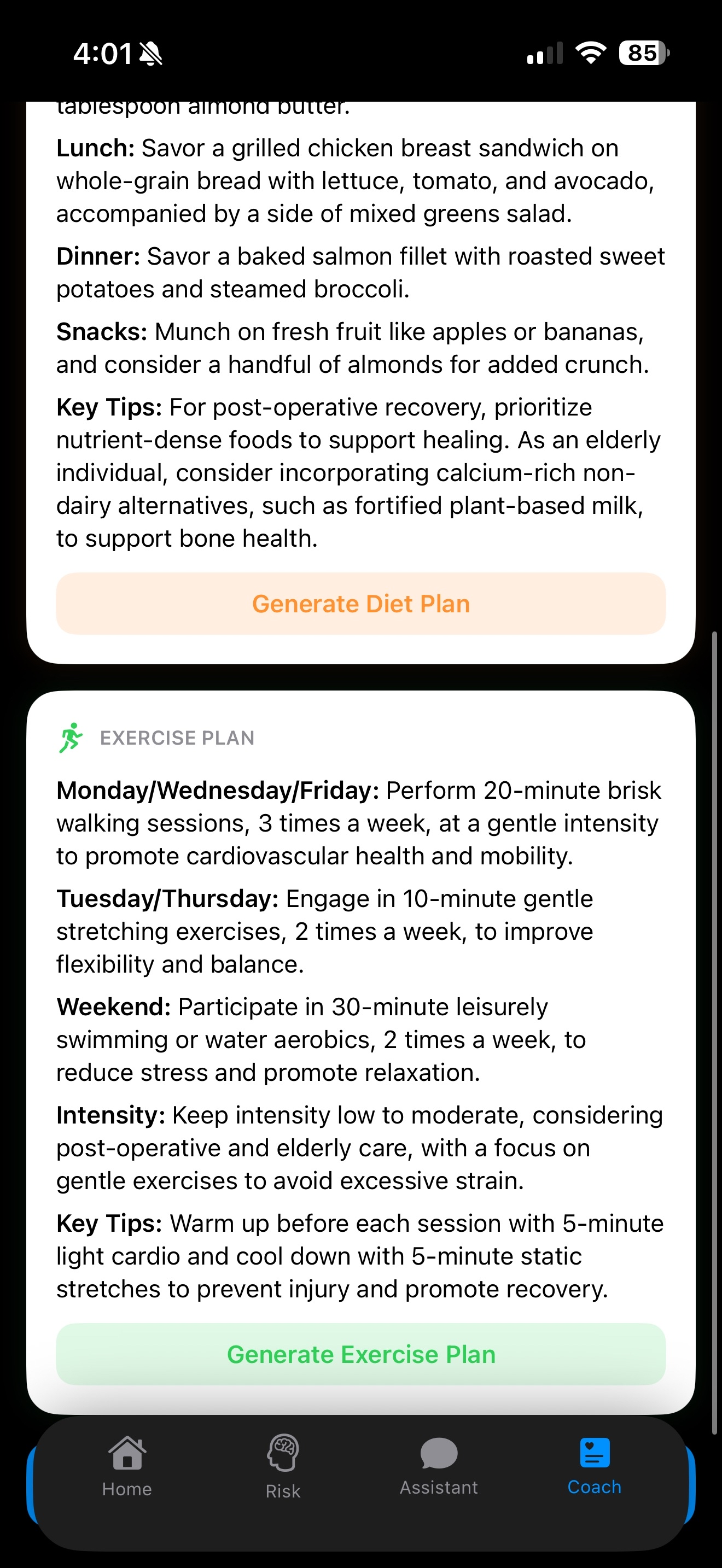
Coach Personalized Plans Demo 2
-
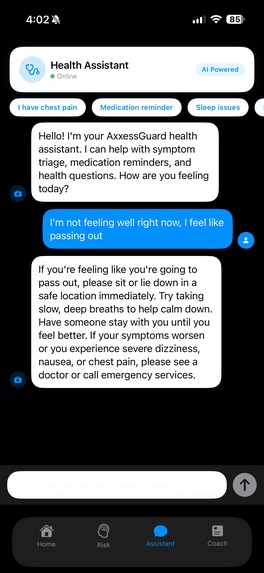
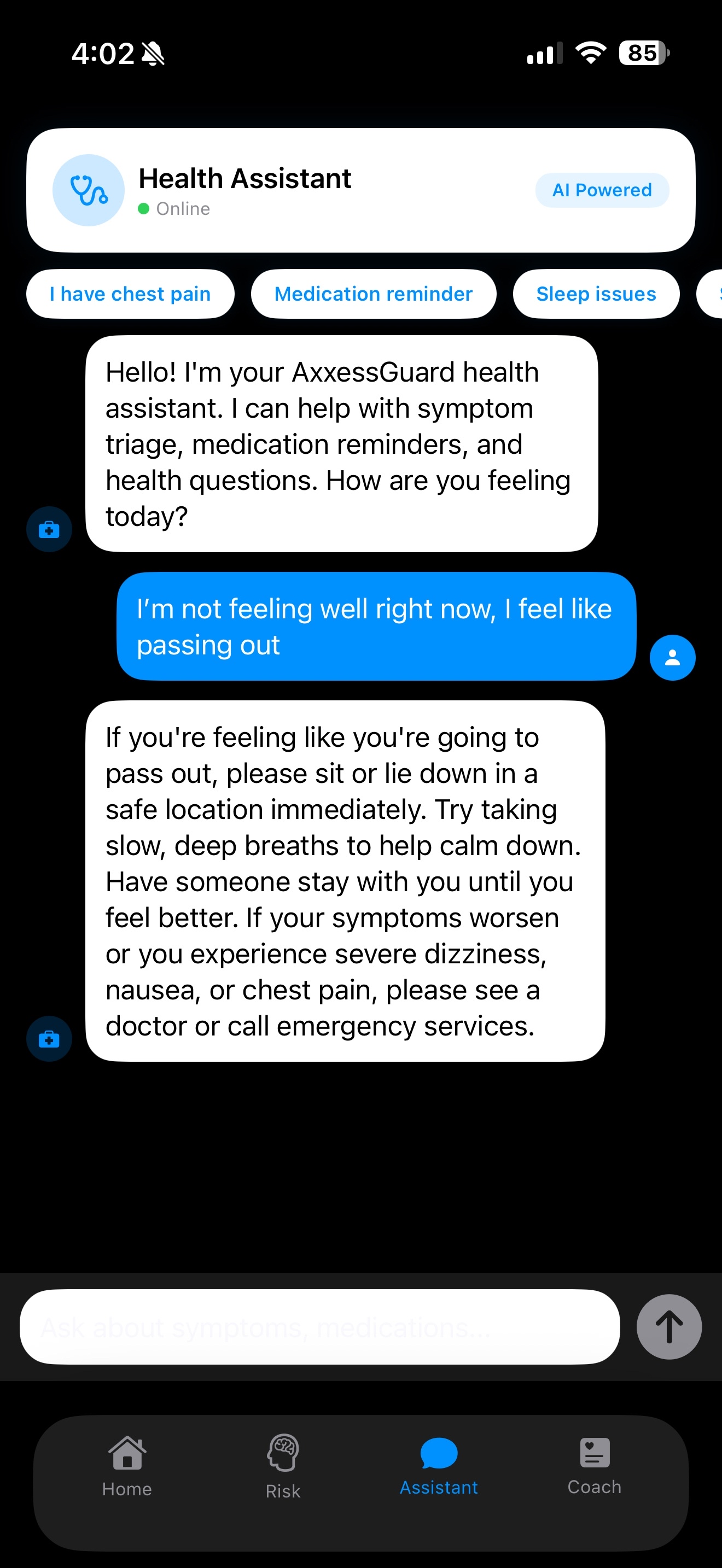
AI Assistant Demo 1
-
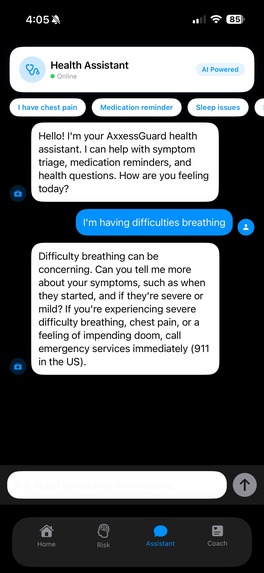
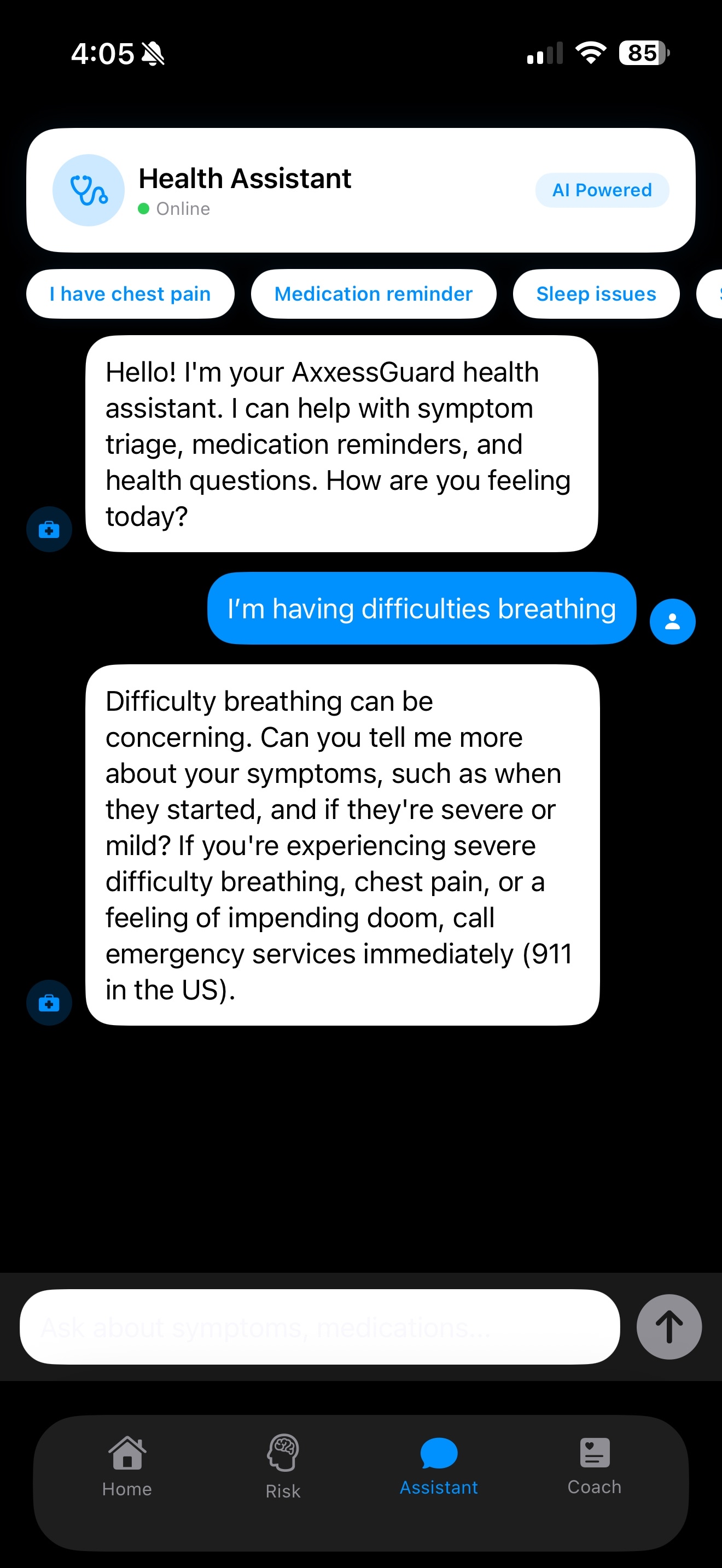
AI Assistant Demo 2

Inspiration
We built AxxessGuard because we realized that owning an item like an Apple Watch doesn't actually make you healthier, it just gives you a lot of numbers. For someone managing a chronic condition like diabetes or recovering from surgery, a "high heart rate" notification is just a source of anxiety if you don't exactly know what to do about it.
We wanted to stop that data from being without a purpose. We saw a gap where raw hardware telemetry could be turned something that doesn't just track your heartbeat, but understands your medical history and tells you exactly how to adjust your day or lifestyle. Our goal was to take the guesswork out of recovery or day-to-day action and create a proactive partner that helps you understand the numbers from different sorts of hardware.
What it does
AxxessGuard is a comprehensive health monitoring and AI-triage ecosystem focused on chronic disease management. The application functions by:
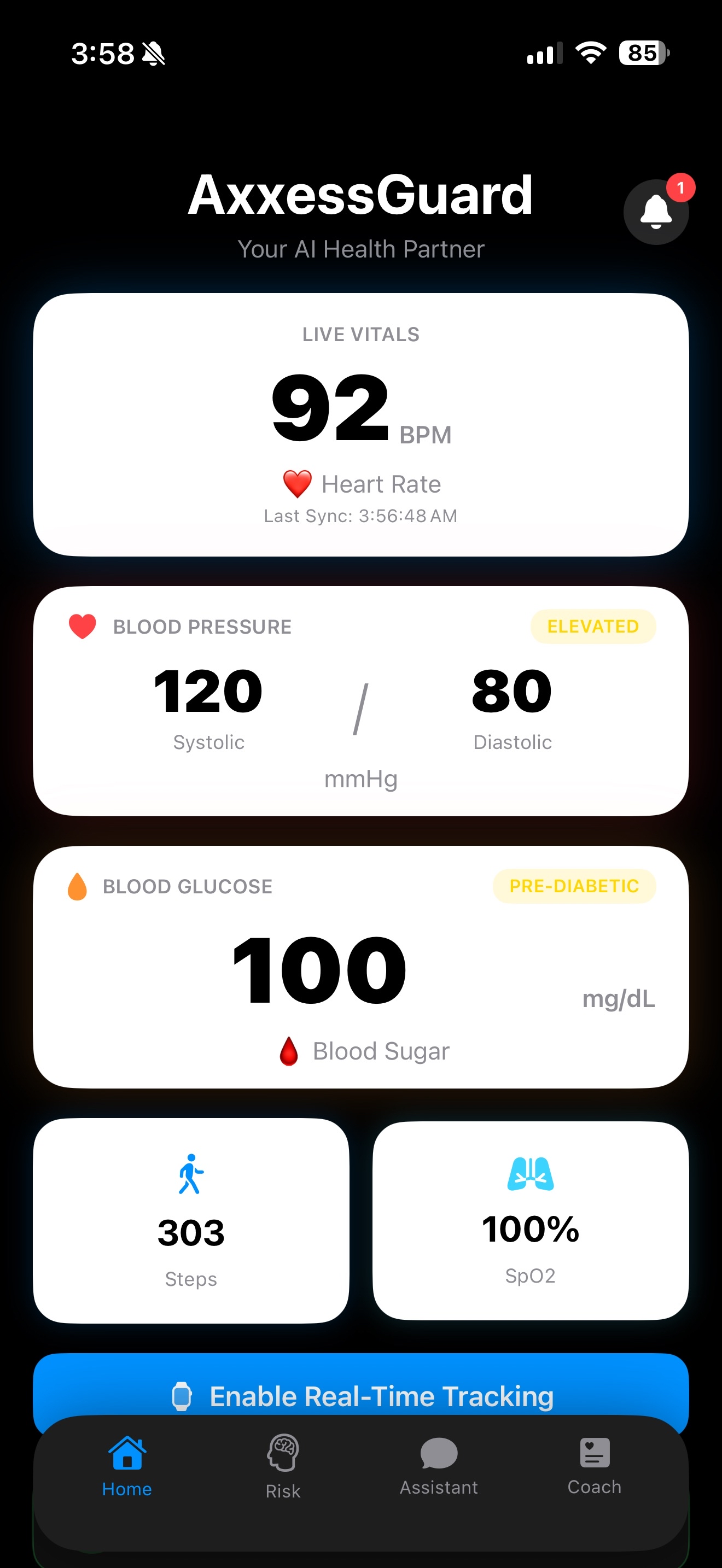
- Telemetry Integration: The app reads live data including heart rate, step counts, and blood oxygen saturation (SpO2) directly from the user's hardware.
- Clinical Inputs: Users can manually log critical metrics such as blood pressure and glucose levels to complete their health profile.
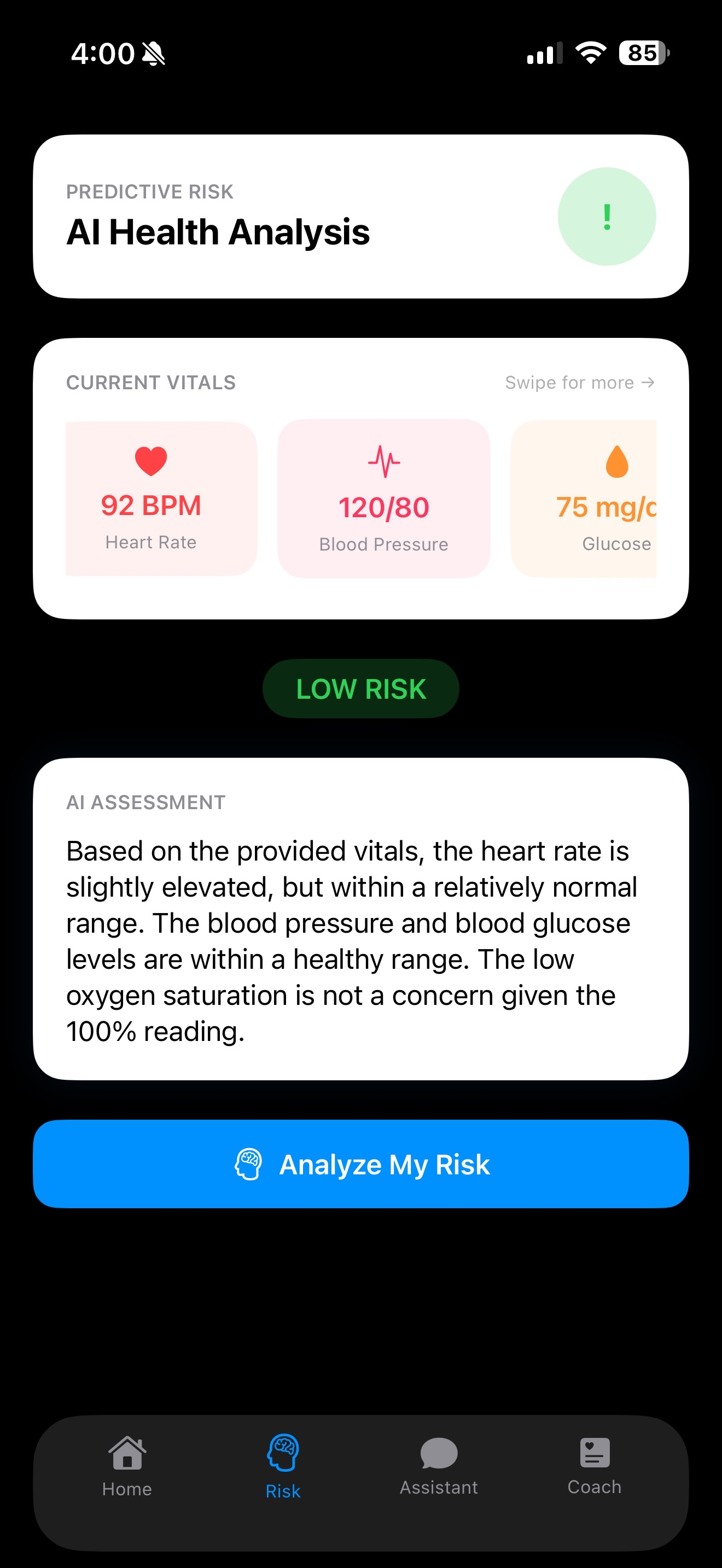
- Predictive Risk Analysis: Using these real-time readings, the AI generates a personalized risk assessment, categorizing the user into Low, Moderate, or High Risk states.
- Personalized Coaching: Users can generate specialized diet and exercise plans tailored to their specific health goals, dietary restrictions, medical conditions, and vital conditions.
- Specialized Care Segments: To further personalize the AI, we included specific tracks for elderly care and post-operative recovery.
- Virtual Assistant: A compassionate AI assistant is available 24/7 to answer health-related questions, assist with symptom triage, and provide medication guidance.
- Smart Alert System: We implemented a notification manager that sends push notifications if abnormalities are detected. It also delivers positive reinforcement messages when vitals remain stable for a period. Users can easily dismiss these notifications to maintain a clutter-free experience.
- Fall Detection: Using CoreMotion, the app monitors the iPhone's accelerometer to detect a specific fall signature. It identifies a brief freefall phase followed by a sudden impact spike to trigger emergency alerts.
How we built it
We utilized a robust stack focused on high performance and real-time data handling:
- Language & Framework: Developed natively in Swift and SwiftUI to ensure seamless integration with the iOS ecosystem.
- Health Data: We utilized the HealthKit framework to access and monitor encrypted biometric data from the Apple Watch and iPhone.
- AI Infrastructure: We integrated FeatherlessAI to host and serve our Large Language Models, utilizing Llama 3.1 8B Instruct for efficient, local-style response times.
- Networking & Foundation: We implemented custom Asynchronous API services using the Foundation library to handle secure communication between the app and our AI models.
- Motion Sensing: We integrated CoreMotion to access high-frequency accelerometer data (50 Hz) for our custom-built Fall Detection algorithm.
- Alert System: We utilized the UserNotifications framework to build a local push-alert system for abnormality detection and wellness streaks.
Team Allocation:
- Razeen: Focused primarily on backend data handling, architecting the HealthKit pipeline, and managing frontend AI integration.
- Krish: Specialized in the AI integration architecture and assisted with frontend data rendering.
- Tahmid: Led the frontend design and helped ensure a cohesive user experience across the AI and data modules.
Challenges we ran into
The journey was not without significant technical hurdles. We originally attempted to build the application in React Native, but we encountered critical issues with local data handling and hardware connectivity. The React Native environment struggled to maintain a stable local server connection to our mobile devices, which is essential for real-time telemetry. Furthermore, we initially struggled with Swift Package Dependencies for AI integration, eventually pivoting to a more reliable direct API implementation through our Featherless service to ensure uptime and response speed.
Accomplishments that we're proud of
We are immensely proud of the completed ecosystem. This project was intensive on both the AI and hardware ends, areas where our team lacked prior experience. Successfully utilizing Apple Health data into a live AI system was a major milestone as it was both a major hardware and software accomplishment. We are proud of the final UI/UX despite the technical complexity of the backend, the frontend remains highly readable and simplistic for the end user.
What we learned
We started this project with very minimal iOS experience and had to learn the ropes of Xcode and Swift on the fly. We got pretty deep into technical concepts like async/await and Task blocks to keep the app running smoothly while it processed all the live sensor data. A big part of the work was mastering SwiftUI state management with @StateObject and @ObservedObject so the UI would update instantly as the vitals changed. We also spent a lot of time figuring out the HealthKit and UserNotifications frameworks to handle the live data streaming and abnormality alerts.
What's next for AxxessGuard
The roadmap for AxxessGuard involves expanding beyond the Apple ecosystem to support a wider variety of hardware telemetry options. We plan to improve our AI model usage with more specific clinical data (maybe even train our own model) and expand our personalization options to include mental health support and pediatric care modules. Our ultimate goal is to move from a hackathon prototype to a validated tool for preventive medicine!


Log in or sign up for Devpost to join the conversation.