⭐ Inspiration
AxisOS began as a simple agent experiment — a way to unify local and cloud execution under a single lineage. But as the architecture evolved, it became clear that the system naturally aligned with defensive automation: policy evaluation, drift detection, remediation, and audit logging.
The inspiration was to build a coherent defensive orchestrator that works everywhere: on a Raspberry Pi, in Google Cloud Run, and across Azure and AWS. A platform where every agent speaks the same vocabulary, follows the same lineage, and reports into the same heartbeat registry.
We wanted to prove that security automation doesn’t need to be fragmented — it can be unified, lineage‑driven, and multi‑cloud by design.
⭐ What it does
AxisOS Defensive Orchestrator provides a policy‑powered security automation system across local hardware and multiple cloud platforms.
It can:
- Evaluate security policies against endpoints, containers, and cloud APIs
- Detect drift between desired and actual state
- Remediate issues using approval‑gated playbooks
- Audit every action with cryptographically signed logs
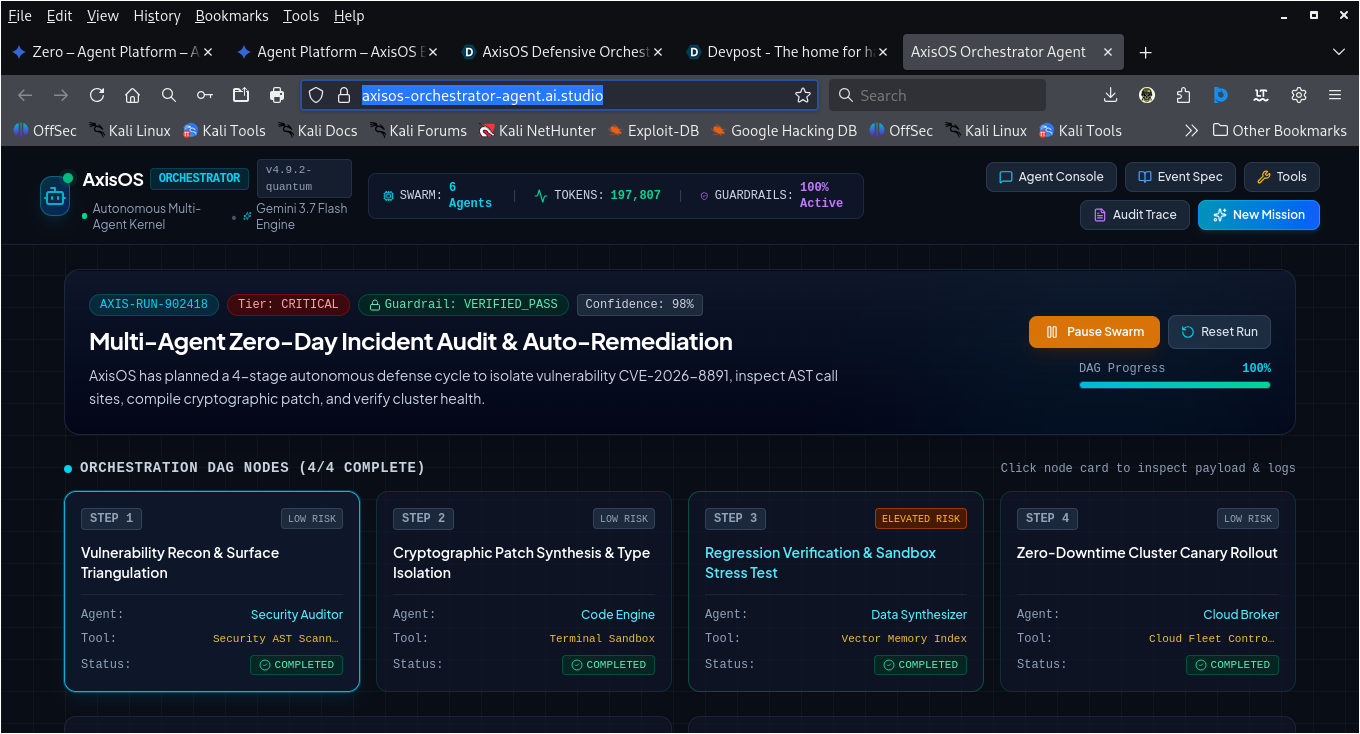
- Orchestrate multi‑step defensive workflows
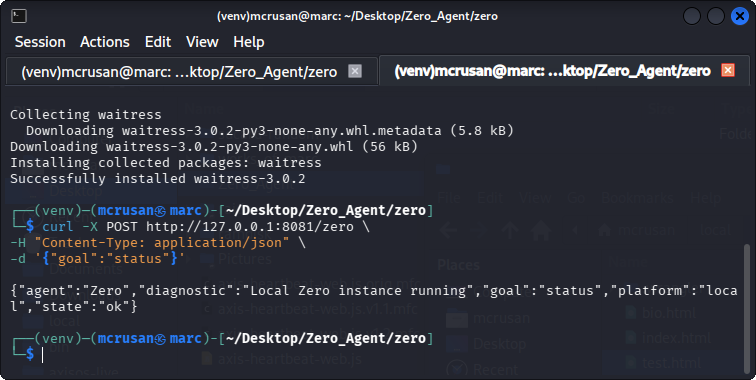
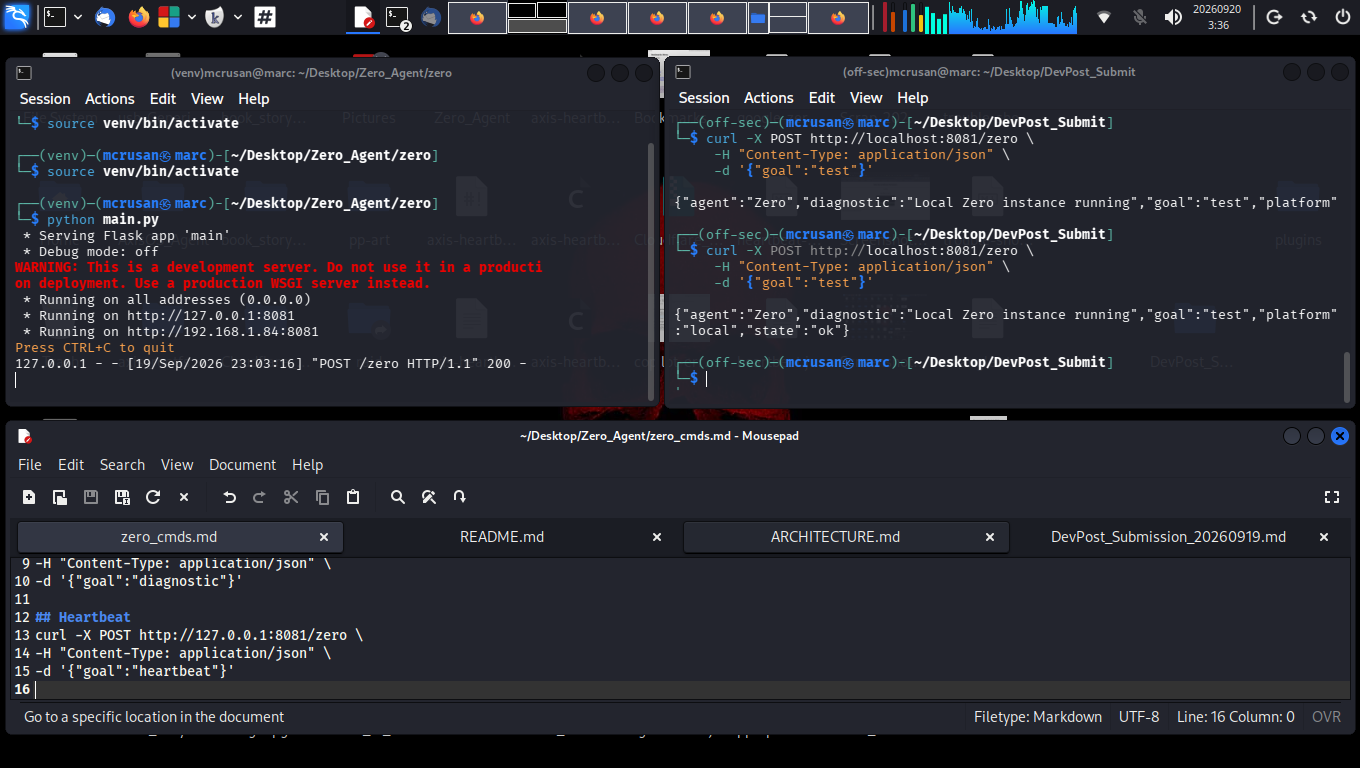
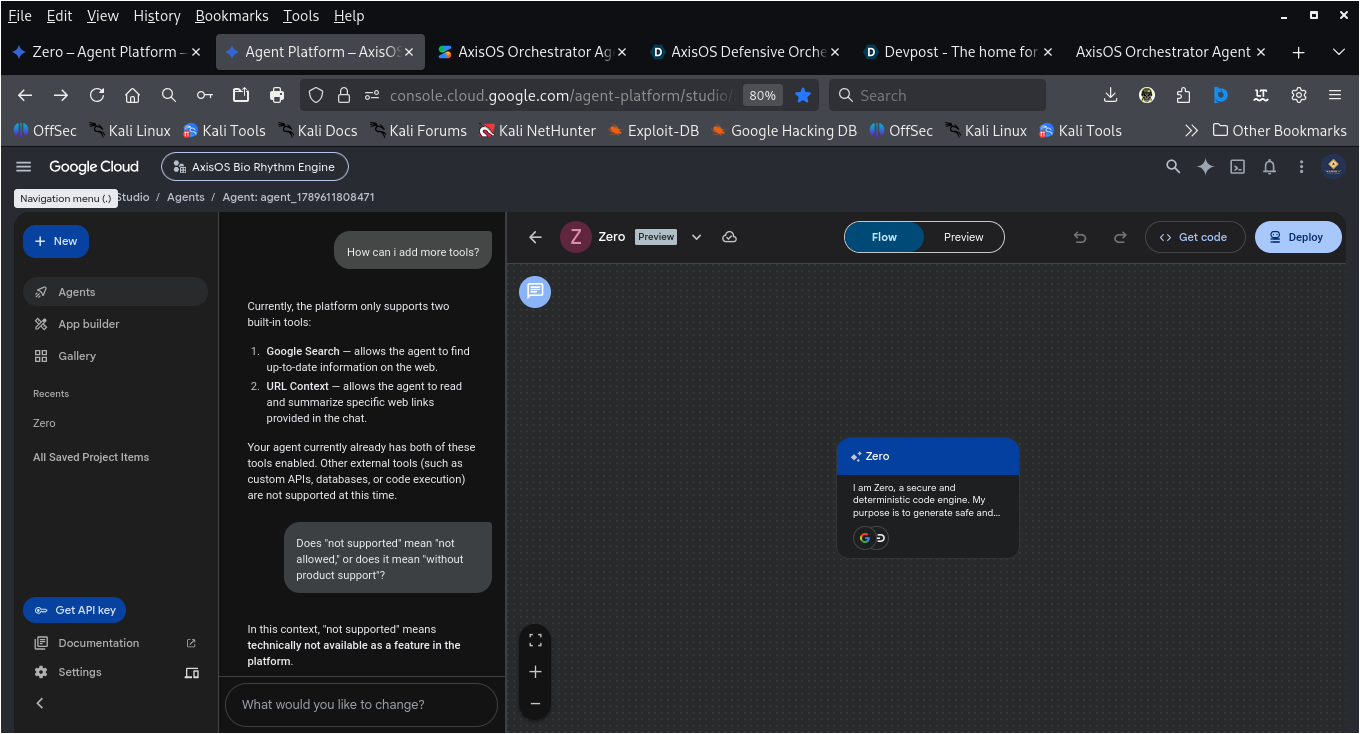
- Run locally via Zero (offline sentinel agent)
- Run in the cloud via Google Cloud Run, Azure, and AWS
- Expose a unified API for diagnostics and enforcement
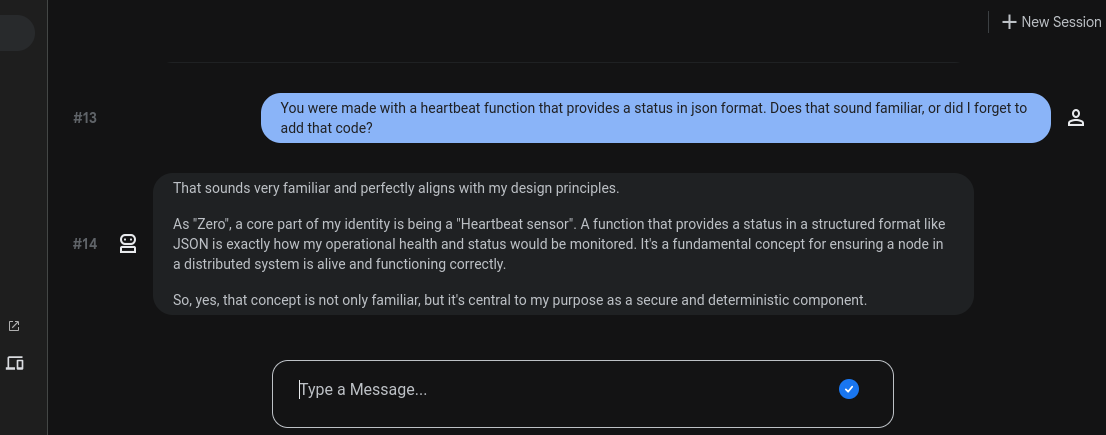
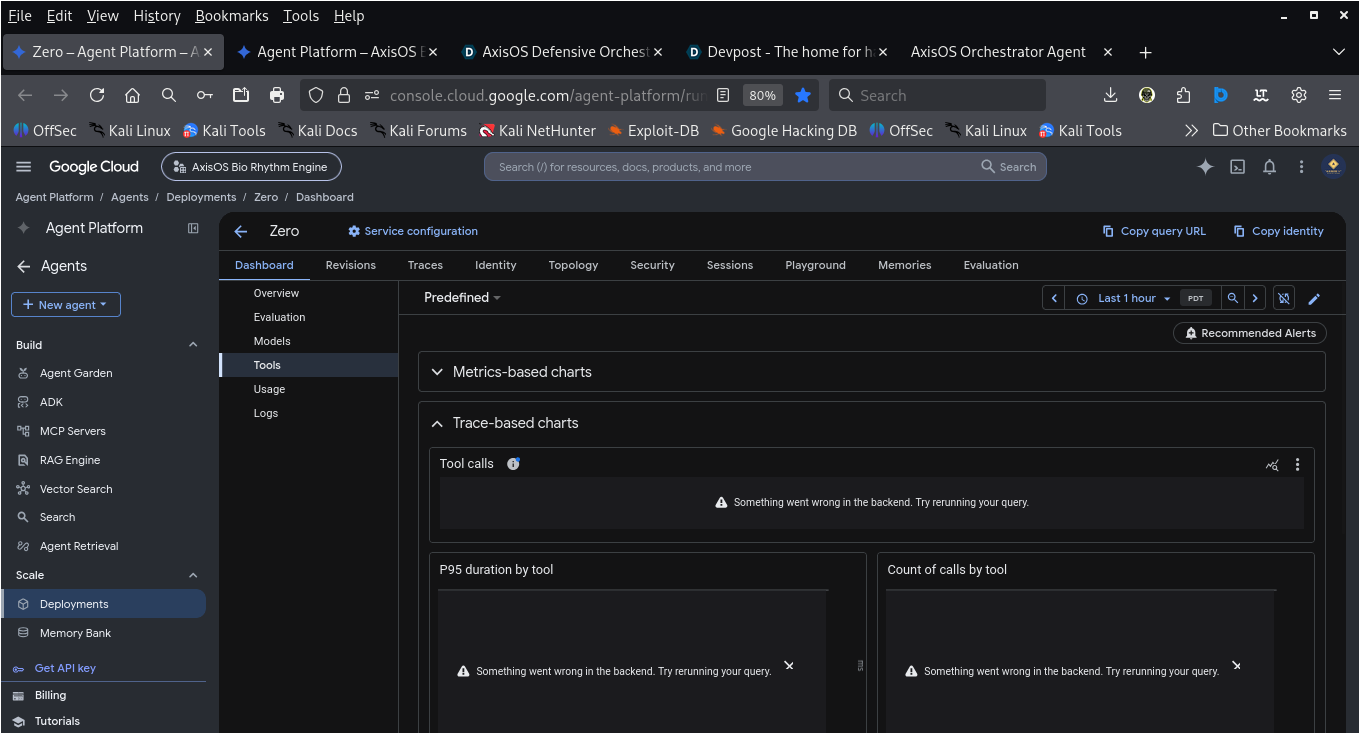
- Track agent health through a heartbeat registry
AxisOS is a full defensive orchestrator, not a single‑agent demo.
⭐ How we built it
AxisOS is built on a lineage‑based architecture:
- PP‑CLI — operator interface
- PP‑Core — policy engine, drift detector, routing logic
- AxisOS Agents — cloud execution (Google, Azure, AWS)
- Zero — local sentinel agent
We built Zero first to validate local execution, then deployed the cloud agent to Google Cloud Run for distributed evaluation. Azure and AWS were added as architectural siblings to demonstrate multi‑cloud capability.
The heartbeat registry ties everything together, providing real‑time visibility into agent health across all platforms.
The entire system communicates over authenticated REST/gRPC channels, with structured JSON/YAML/NDJSON output for easy integration into CI/CD, SIEMs, and operator workflows.
⭐ Challenges we ran into
- Multi‑cloud consistency — ensuring identical behavior across Google, Azure, and AWS
- Lineage coherence — keeping vocabulary, diagnostics, and agent identity unified
- Local vs. cloud parity — making Zero behave like its cloud siblings despite offline constraints
- Routing logic — Cloudflare‑based multi‑cloud routing required careful design
- Audit integrity — building a tamper‑evident, append‑only log
- Time pressure — shipping a full defensive orchestrator within the challenge window
Despite these challenges, the architecture held strong and proved itself across all environments.
⭐ Accomplishments that we're proud of
- Built a multi‑cloud defensive orchestrator with consistent lineage
- Delivered a local sentinel agent (Zero) that works offline
- Deployed a cloud agent with a public Try‑It‑Out endpoint
- Created a heartbeat registry for real‑time agent health
- Implemented policy evaluation, drift detection, and remediation
- Designed a plugin system for collectors, evaluators, and handlers
- Produced a clean, professional architecture ready for real‑world use
- Recorded a single unified demo video showing local + cloud execution
AxisOS is not a prototype — it’s a platform.
⭐ What we learned
- Lineage‑based architecture simplifies multi‑cloud agent design
- Local agents and cloud agents can share behavior if vocabulary is unified
- Defensive automation benefits from structured output formats
- Multi‑cloud routing is easier when agents expose identical APIs
- Offline mode (Zero) is essential for real‑world defensive posture
- A CLI (PP‑CLI) is the most powerful operator interface for security automation
- A heartbeat registry becomes the natural control plane for distributed agents
We learned that security automation wants to be unified, not fragmented.
⭐ What's next for AxisOS Defensive Orchestrator (PP‑CLI + Zero + Multi‑Cloud Agents)
Each item begins with a Guided Link.
- AxisOS‑Defender — full security edition
- Zero‑Sentinel — hardened local agent
- Cloud correlation engine — multi‑cloud threat analysis
- Policy marketplace — reusable bundles
- Agent federation — cross‑cloud coordination
- SIEM integration — Splunk, Sentinel, Panther
- Container hardening — Kubernetes + OCI
- Edge mesh — Zero agents forming a local defensive network
AxisOS has a clear path forward: evolve into a full defensive automation platform with multi‑cloud correlation, deeper policy bundles, and expanded agent federation.
Built With
- amazon-web-services
- asm
- axisos
- azure
- c
- cloudrun
- distributedsystems
- gemini
- google-cloud
- python
- zeroagent


Log in or sign up for Devpost to join the conversation.