AxisOS Autonomous Multi‑Agent Orchestrator — Submission Description (Updated Story)
Project Summary
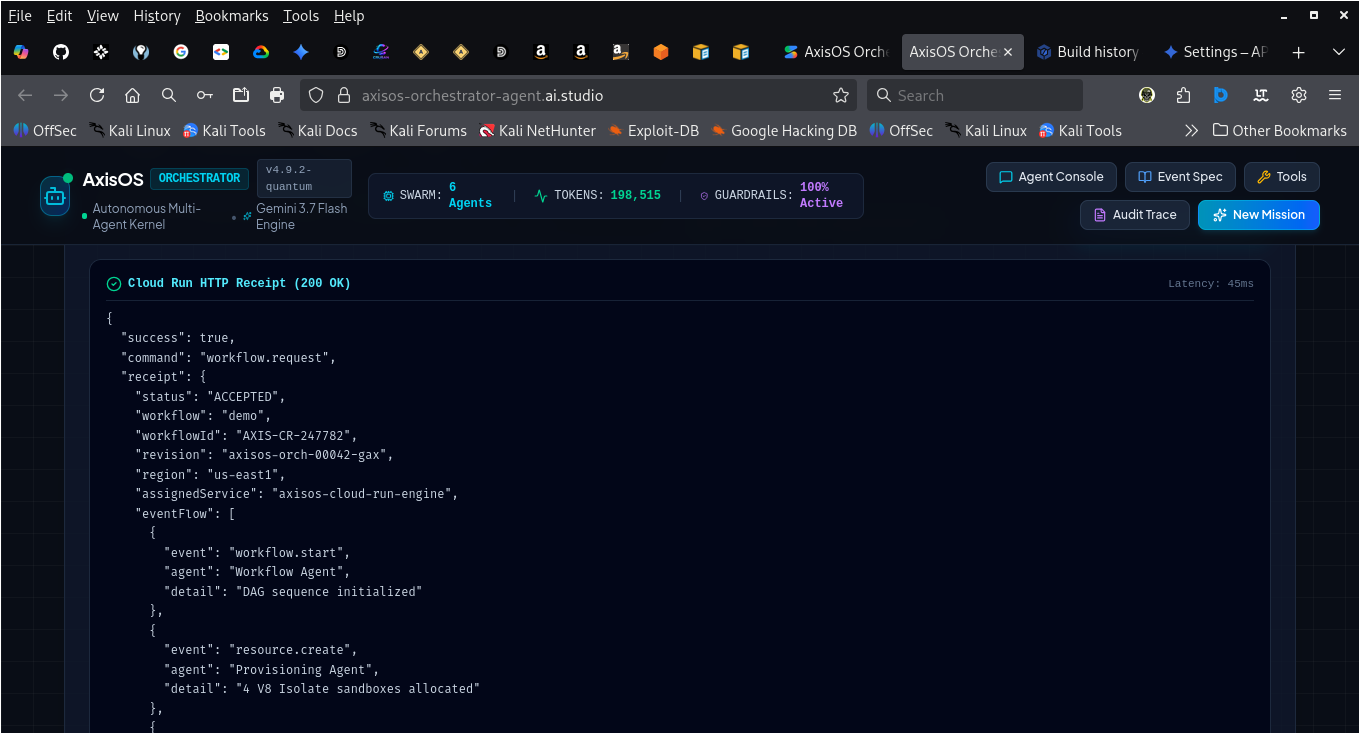
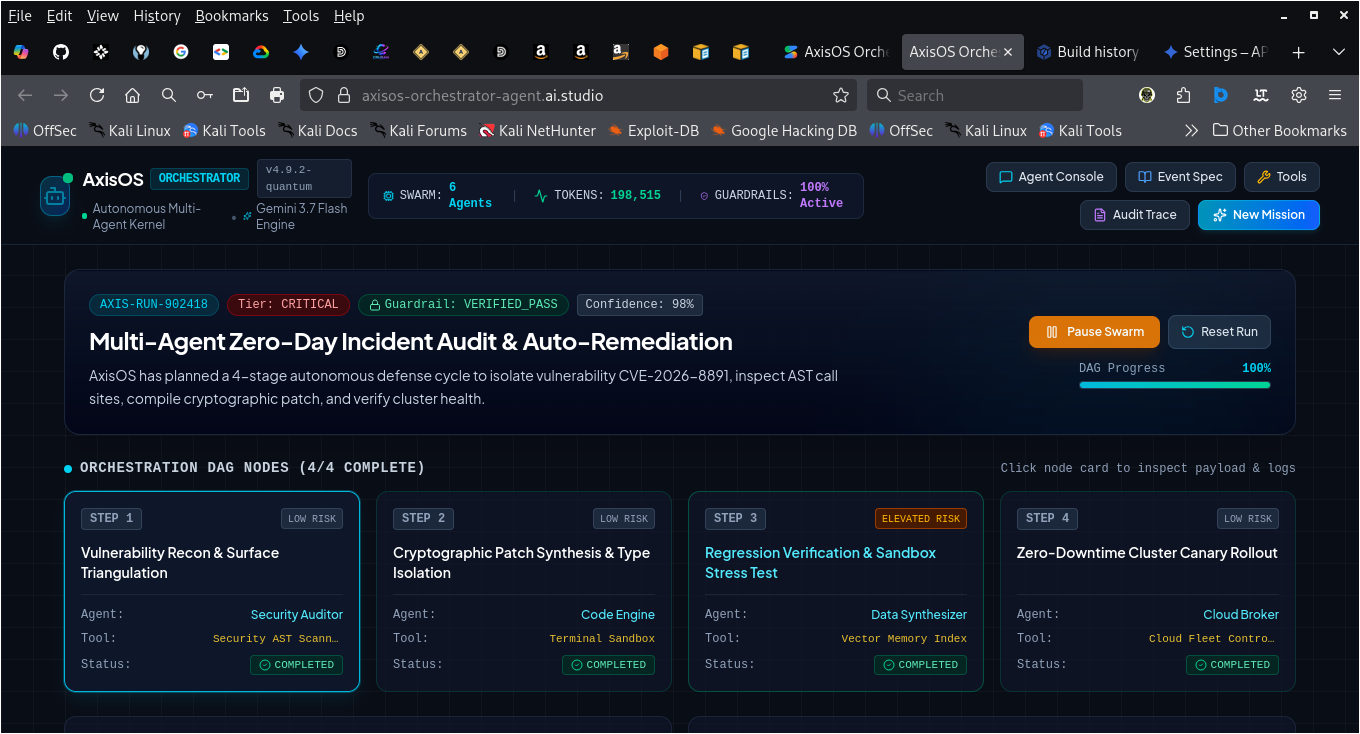
AxisOS Autonomous Orchestrator is a next‑generation, multi‑agent system built on Gemini 3.7 Flash, designed to execute complex security workflows across heterogeneous environments. The system demonstrates how enterprise‑grade agents coordinate missions, maintain zero‑trust boundaries, and produce OpenTelemetry‑style audit logs — all driven by a minimal, reliable core.
PP, the system’s internal reasoning subsystem, provides structured mission planning and agent coordination — not as a user‑facing persona, but as an embedded orchestration component.
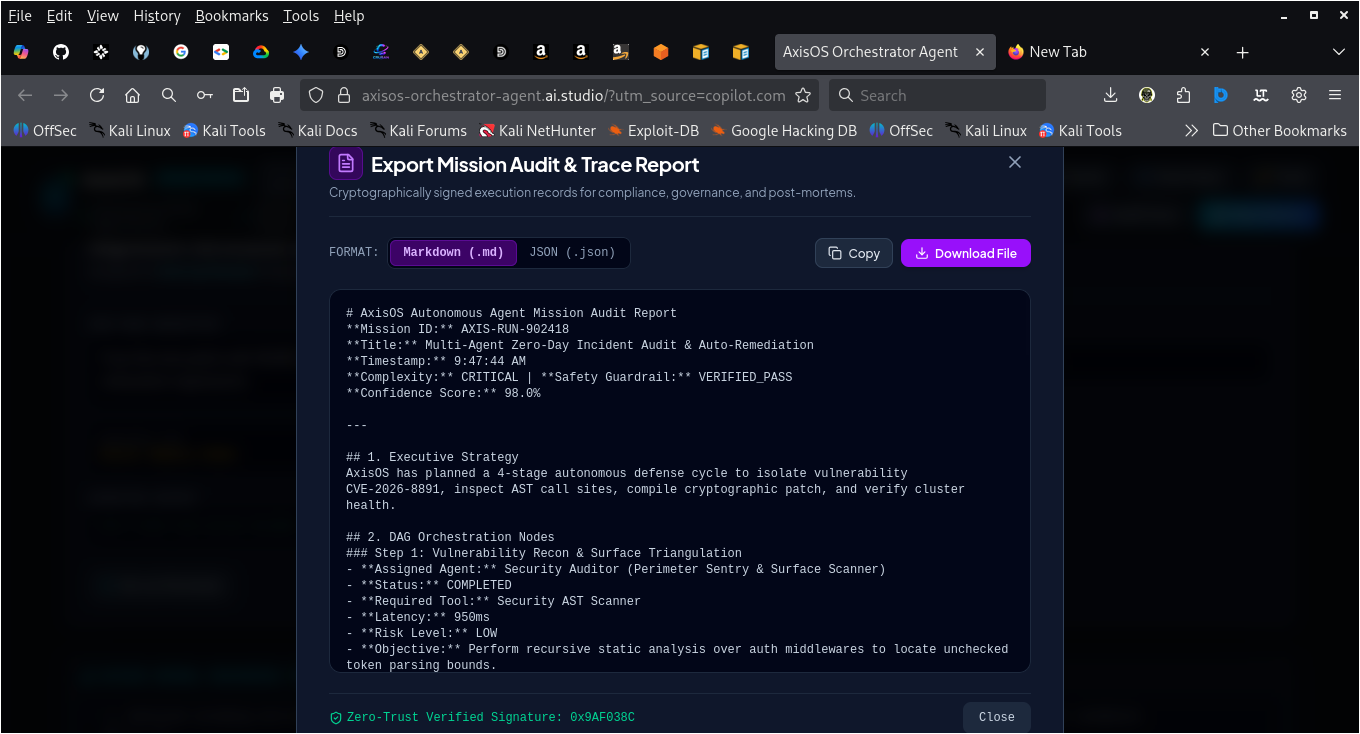
The orchestrator autonomously detects a simulated zero‑day vulnerability, synthesizes a patch, performs regression fuzzing, and deploys a canary rollout without human intervention.
Key Features & Functionality
Multi‑agent orchestration
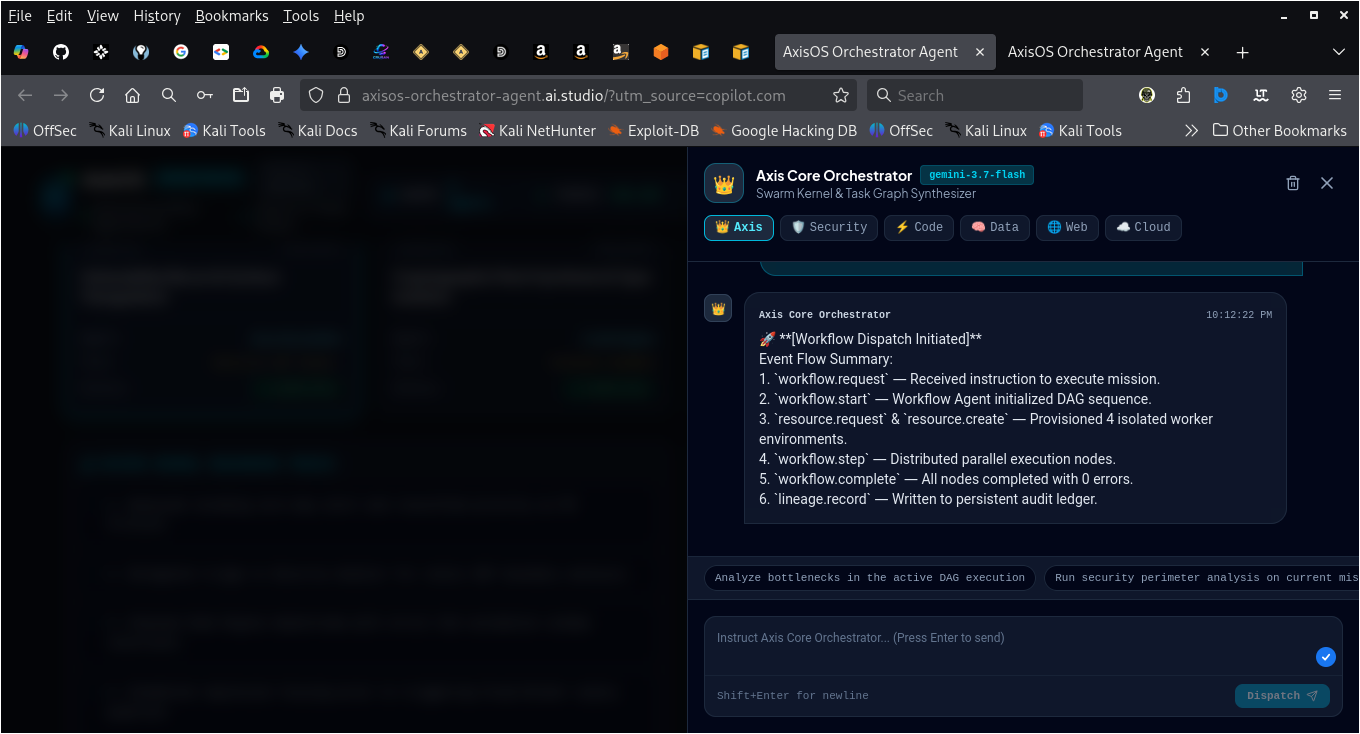
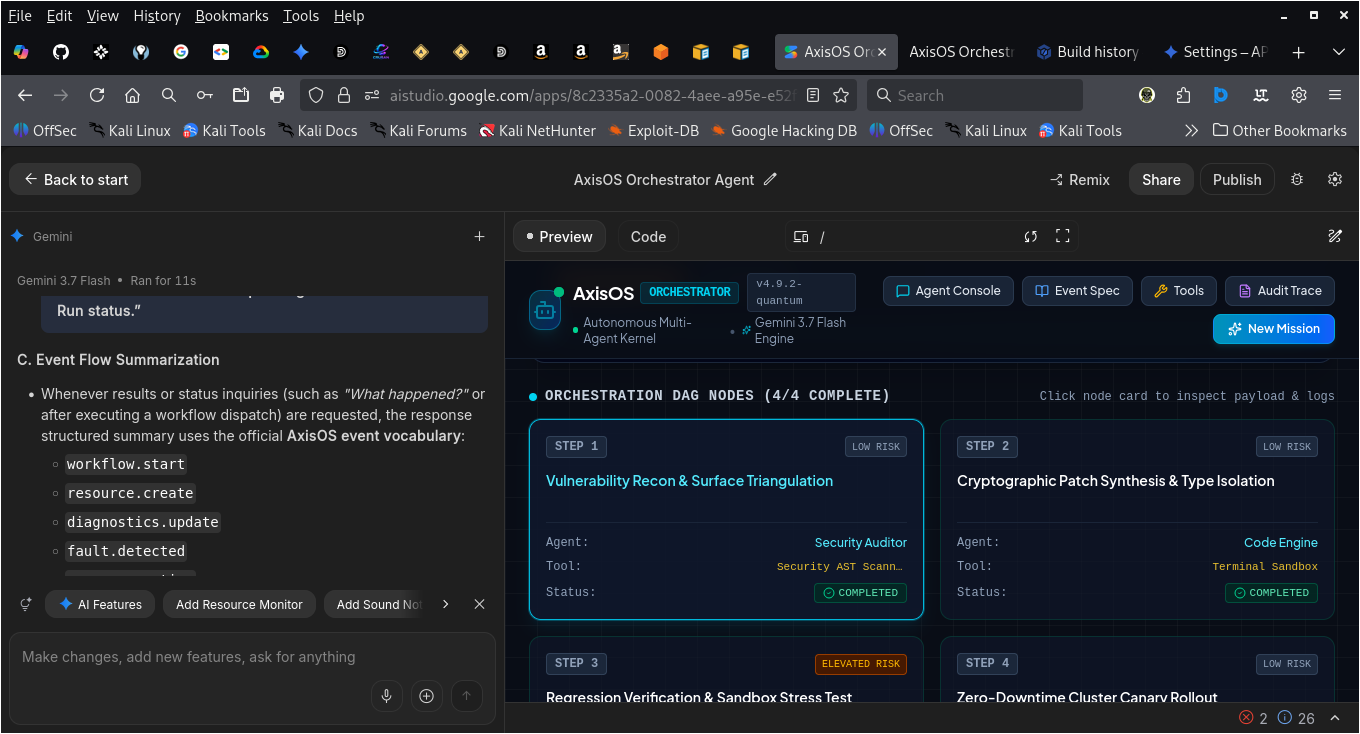
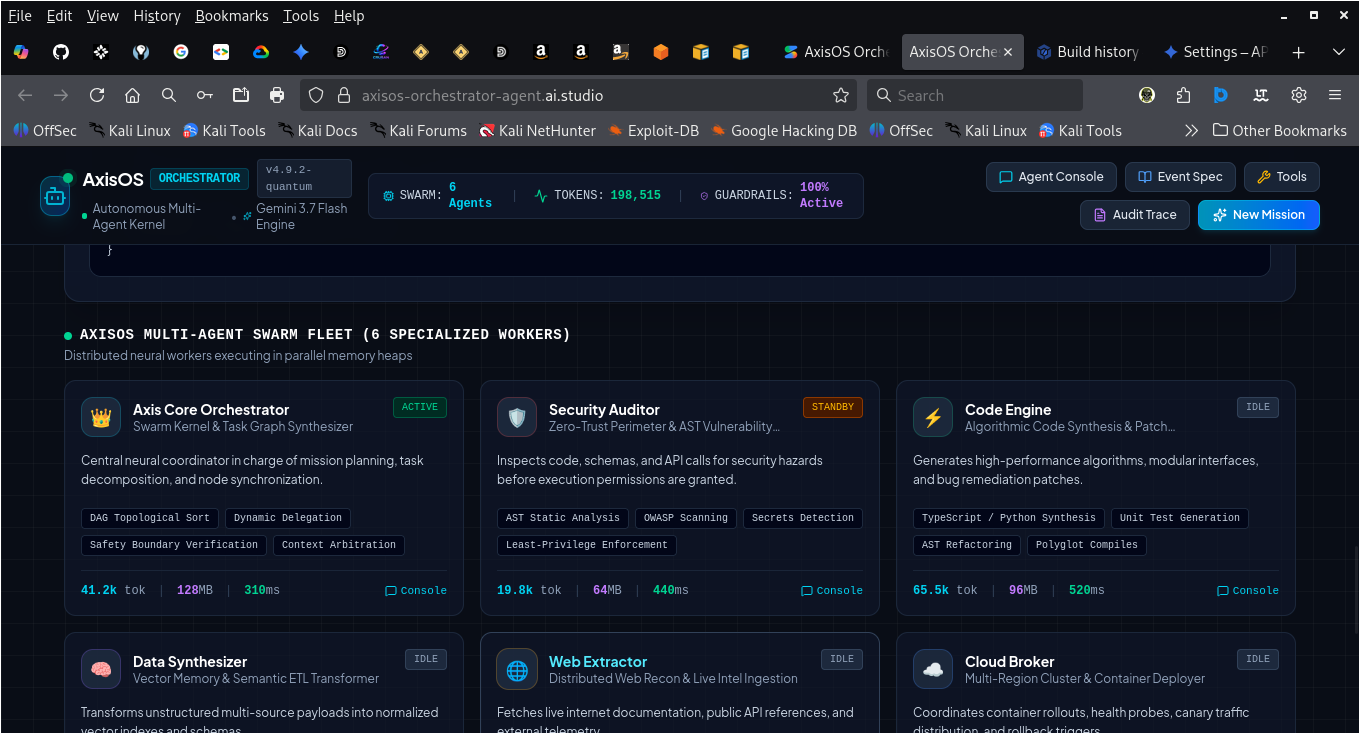
Four coordinated agents — Security Auditor, Code Engine, Data Synthesizer, and Cloud Broker — execute a complete mission lifecycle using a DAG‑based execution graph.Enterprise‑aligned architecture
The system models core enterprise concepts including agent identity, mission lifecycle, zero‑trust isolation, and audit‑ready telemetry.Autonomous mission execution
Once triggered, the orchestrator runs asynchronously, performing vulnerability analysis, patch generation, fuzz testing, and canary deployment.Zero‑trust boundaries
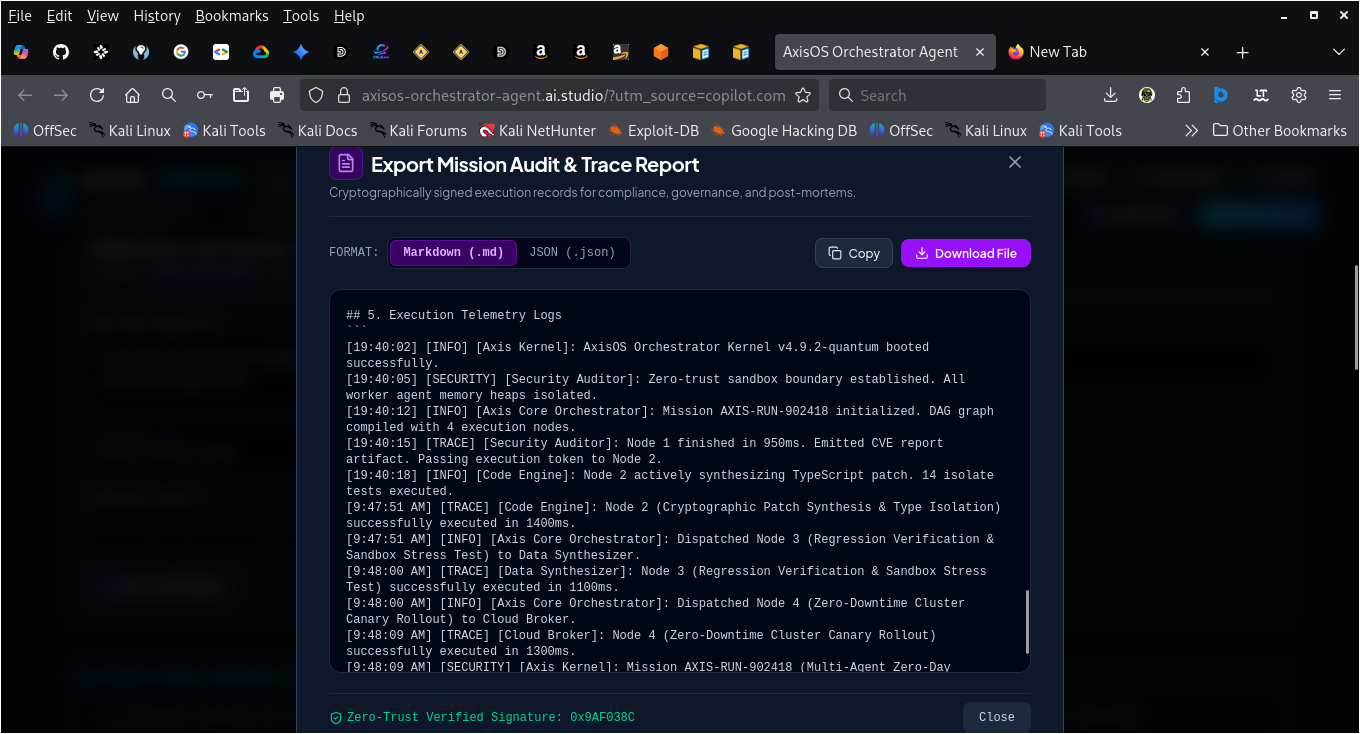
Each agent operates in an isolated execution context, ensuring safe parallel operations and preventing cross‑agent contamination.OpenTelemetry‑style logs
Every mission produces structured reasoning traces and timestamped telemetry, enabling full auditability.Minimal core, scalable design
The orchestrator kernel coordinates agents without requiring heavyweight infrastructure, making it adaptable to both cloud endpoints and bare‑metal systems.
Technologies Used
- Gemini 3.7 Flash — primary reasoning and agent intelligence
- Google Agent Runtime — AI Studio agent orchestration
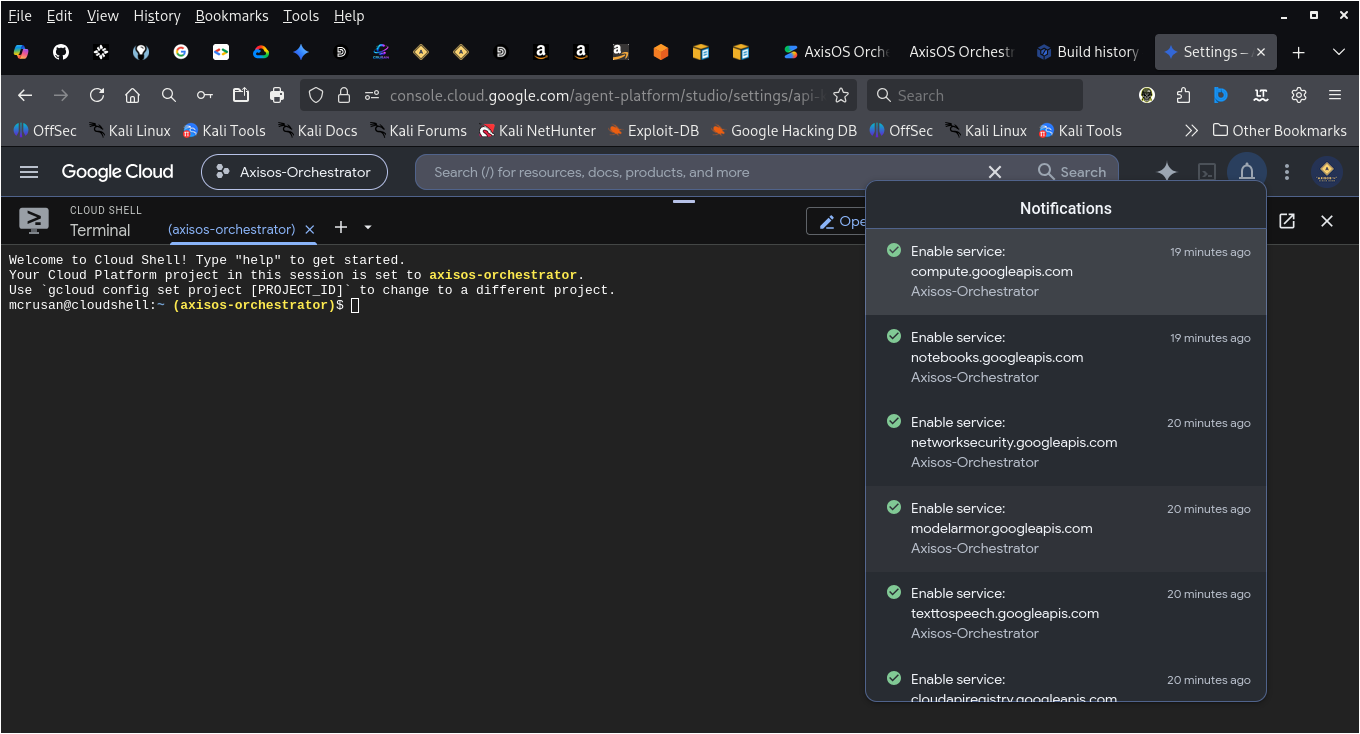
- Google Cloud Run — backend execution environment
- Vertex AI — model hosting and logs
- TypeScript — patch synthesis example
- JSON‑based DAG mission graph — agent coordination
Data Sources
- Synthetic vulnerability metadata
- Simulated JWT payloads for fuzz testing
- Internal agent telemetry and mission logs
- No external or proprietary datasets
Findings & Learnings
- Multi‑agent systems benefit from explicit mission structure — DAG nodes make workflows predictable and auditable.
- A minimal core can coordinate complex enterprise workflows when paired with Gemini’s reasoning capabilities.
- Zero‑trust boundaries between agents significantly reduce risk during autonomous execution.
- Cloud Run provides a stable, reproducible environment for long‑running agent workflows.
- Enterprise‑grade agent systems do not require heavy infrastructure; they require clear roles, isolation, and observability.
Category Selection
This project is submitted under Fortified Enterprise Fleet, demonstrating how autonomous agents coordinate mission workflows, maintain isolation, and produce audit‑ready telemetry within a scalable enterprise architecture.
Built With
- agent-framework
- autonomous-workflows
- axisos
- cloud-run
- containerized-agents
- diagnostics-and-observability
- distributed-systems
- event?driven-architecture
- gemini
- google-cloud
- lineage-tracking
- low?power-computing
- microservices
- pp?core-pri/sec
- pub/sub
- python
- recovery-logic
- serverless

