-
-
dashboard 2
-
dasboard 1
-
chatbot
-
timeline
-
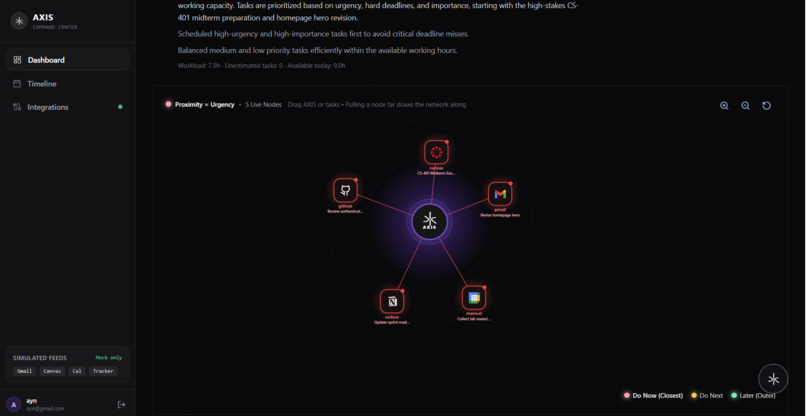
graphview
-
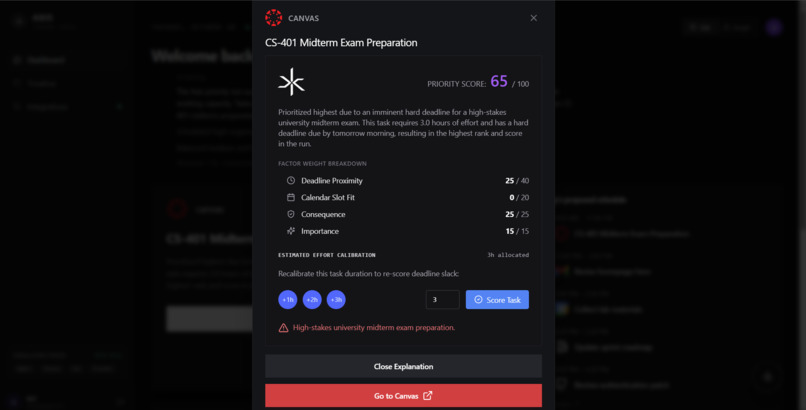
details
-
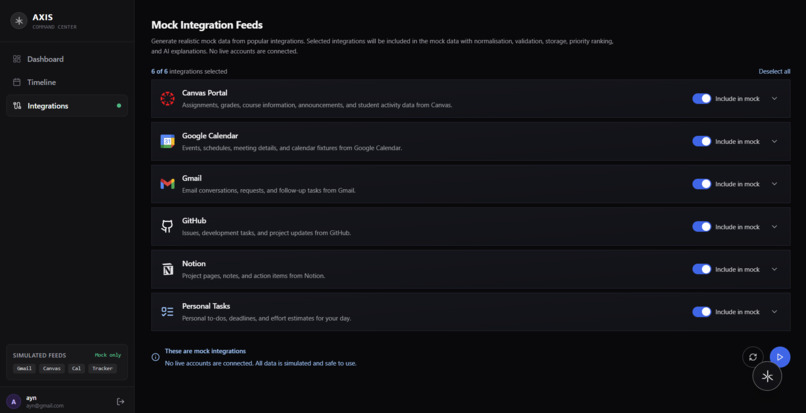
integration
Inspiration
AI is changing how people learn, work, and manage information. Yet as tools become more capable, people still face a daily challenge: deciding what deserves their attention across scattered tasks, deadlines, and commitments.
Axis was inspired by the opportunity to make AI useful in that decision. By bringing workload information together, explaining priorities, and helping people adjust their plans, Axis turns AI’s ability to understand information into practical support for everyday work.
What it does
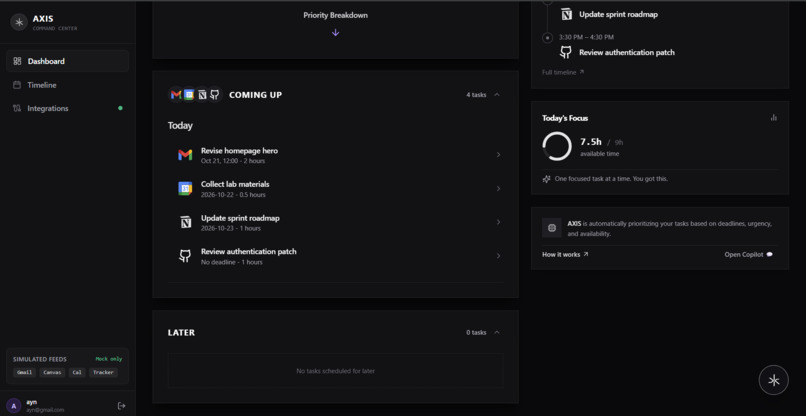
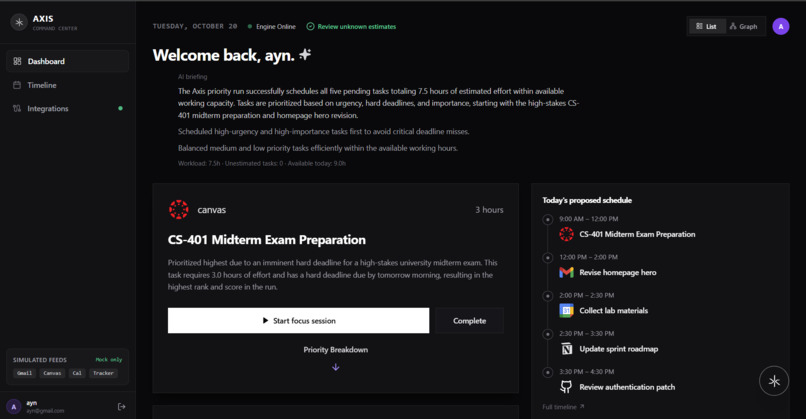
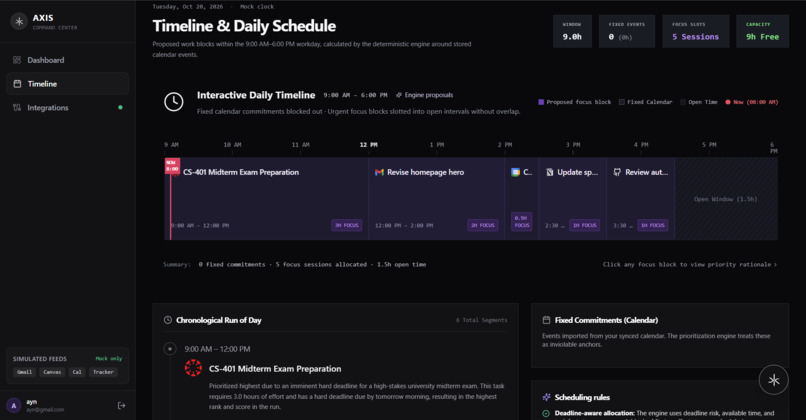
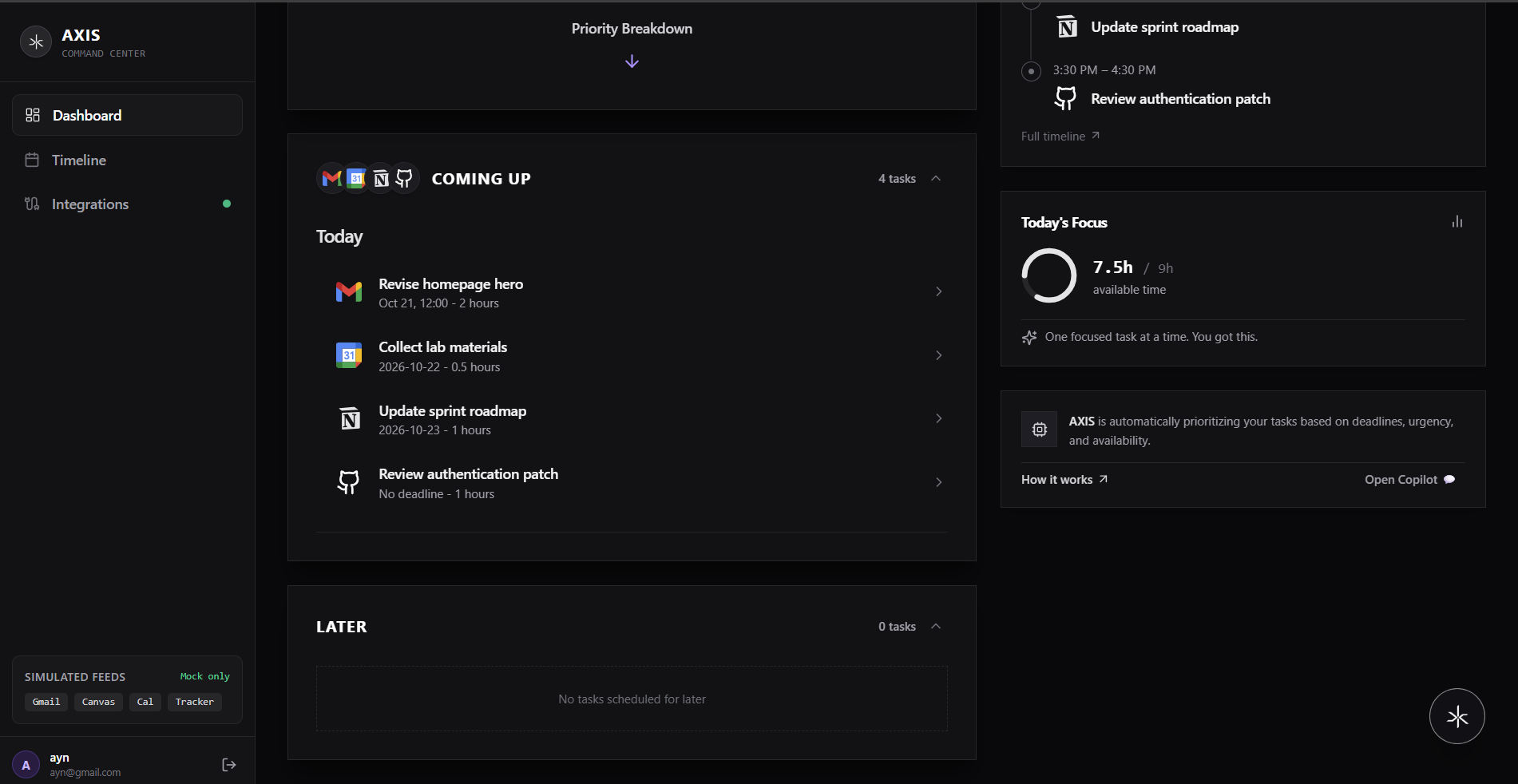
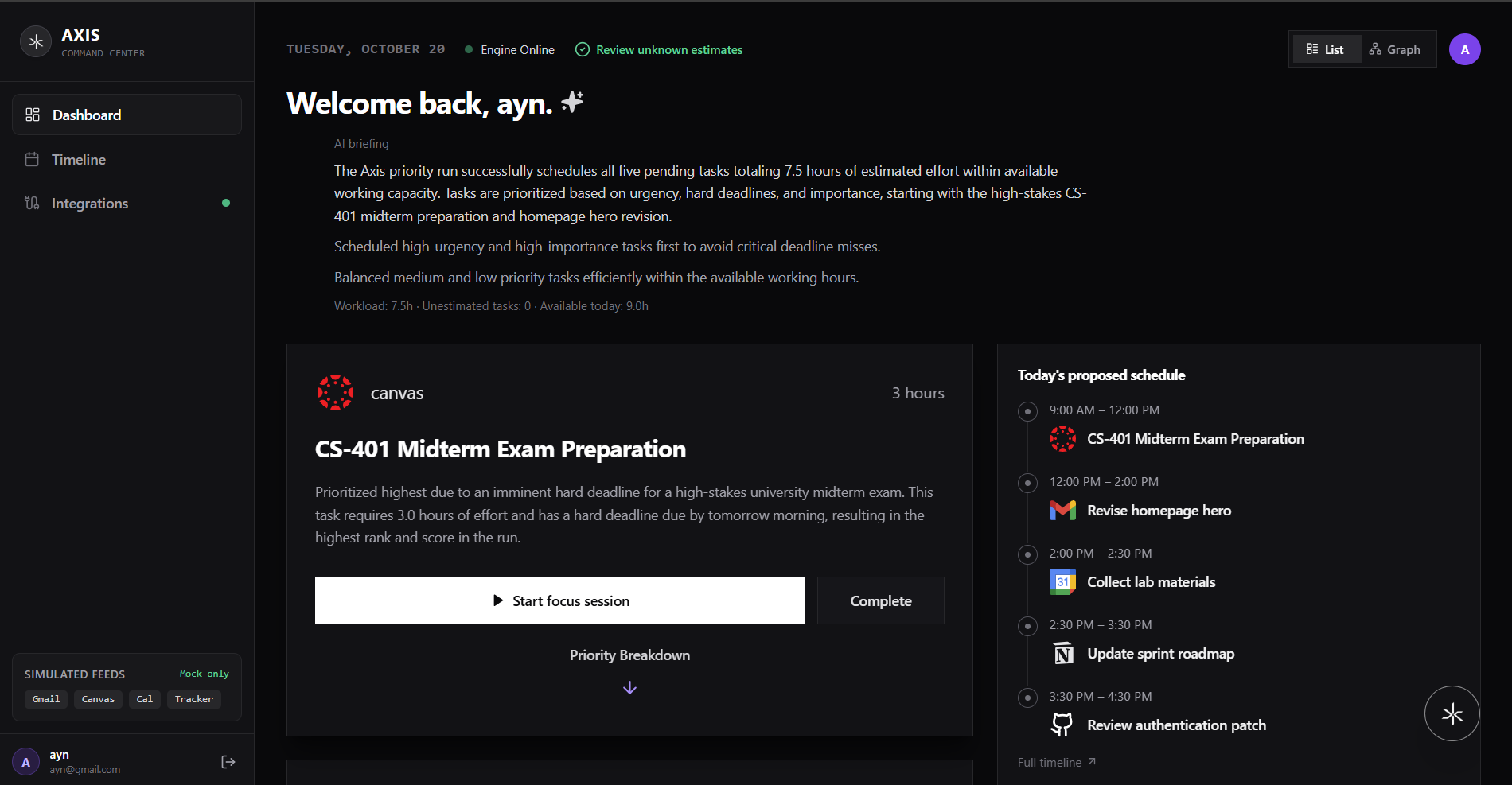
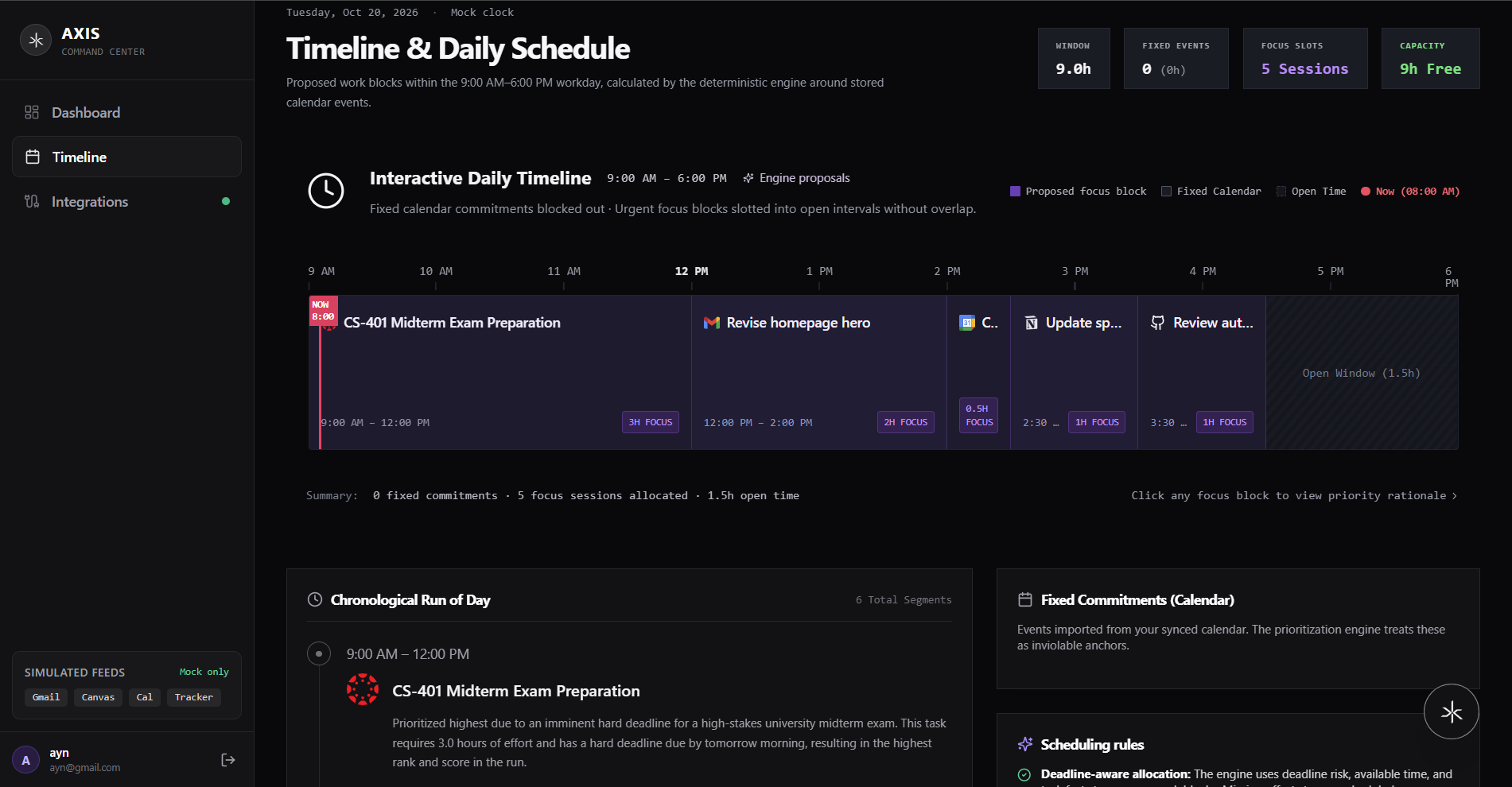
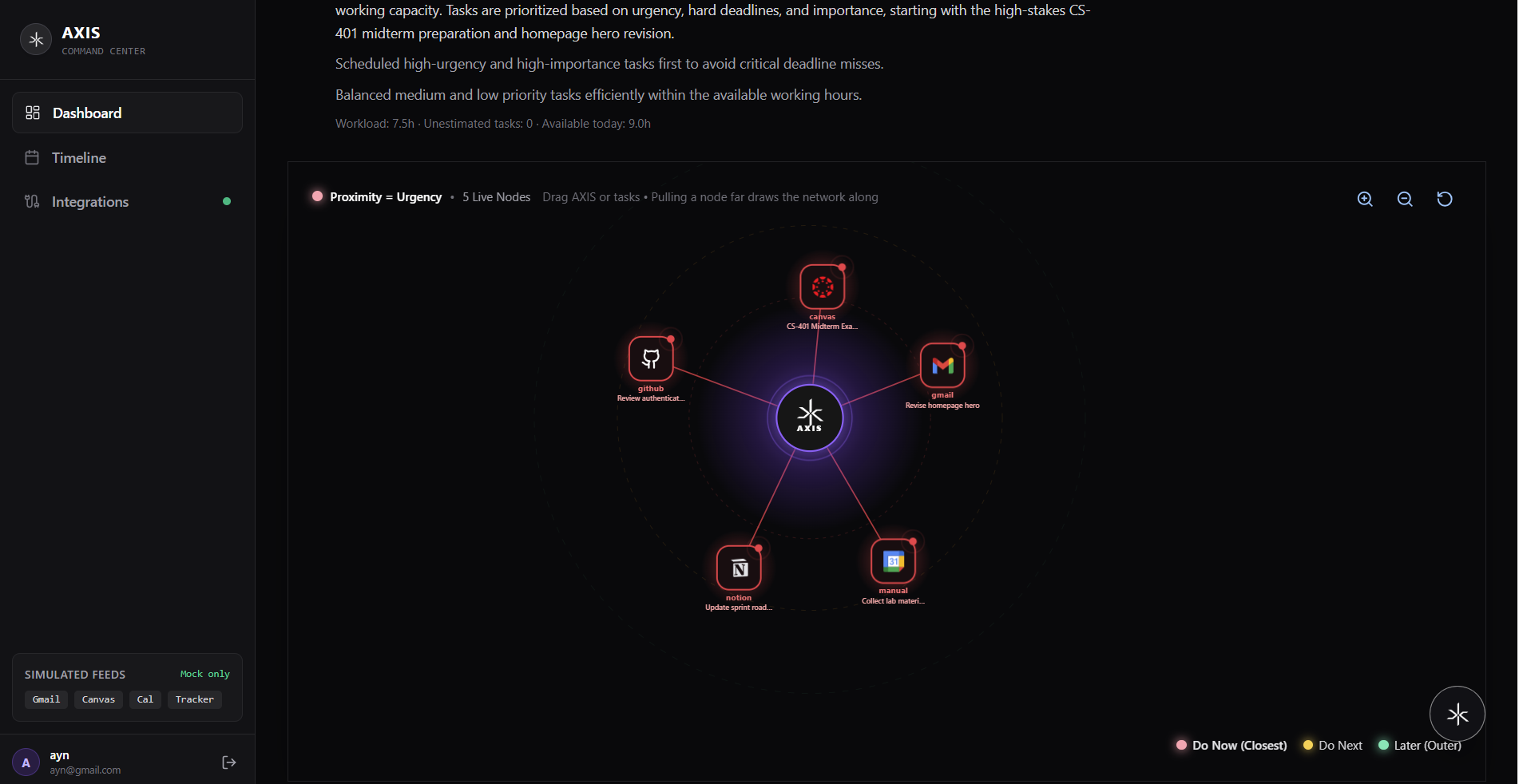
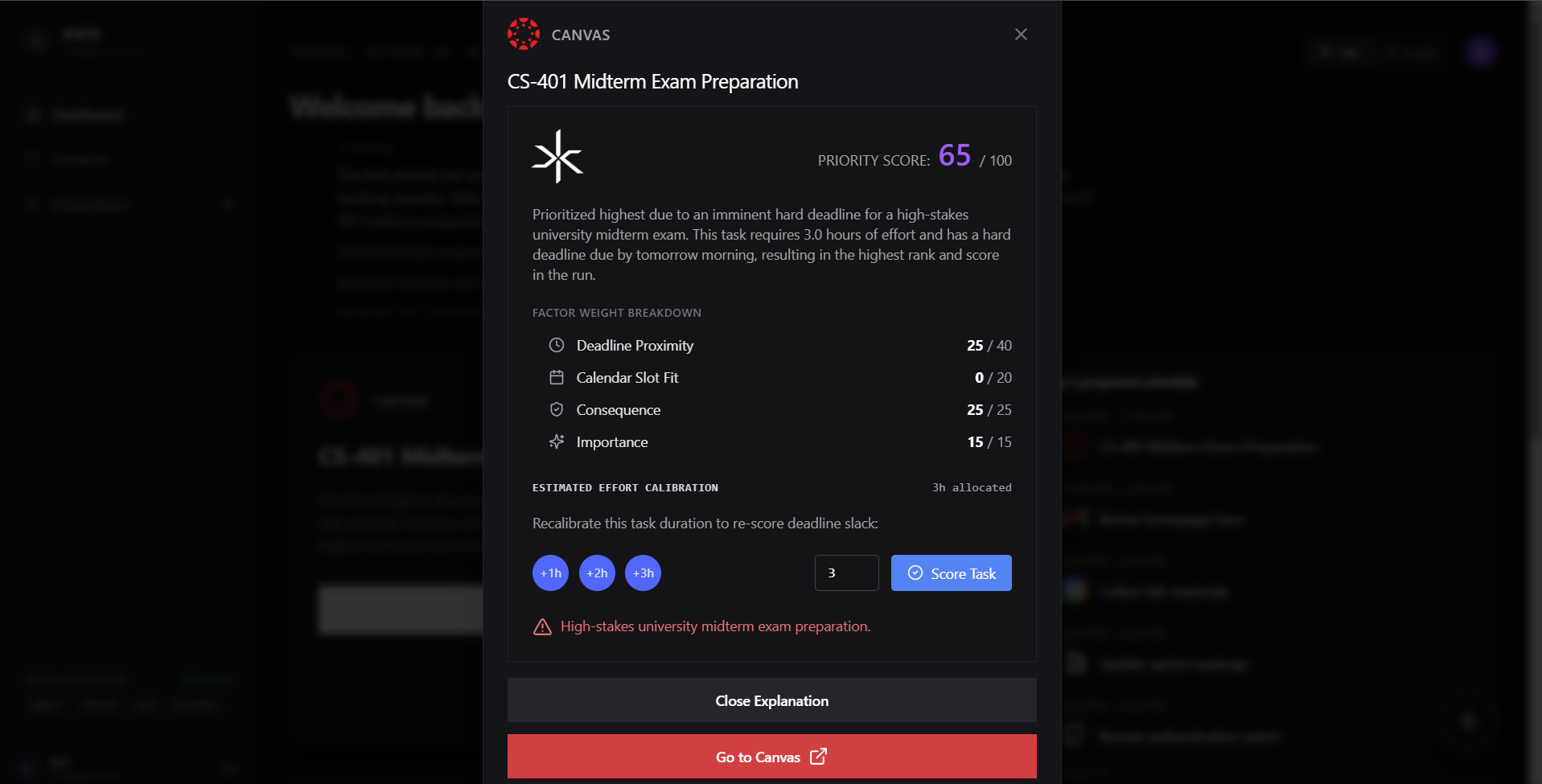
Axis organizes tasks into Now, Next, and Later, explains their priorities, and proposes focus blocks around calendar commitments. A daily briefing highlights what needs attention, while dashboard, graph, and timeline views provide different ways to explore the workload.
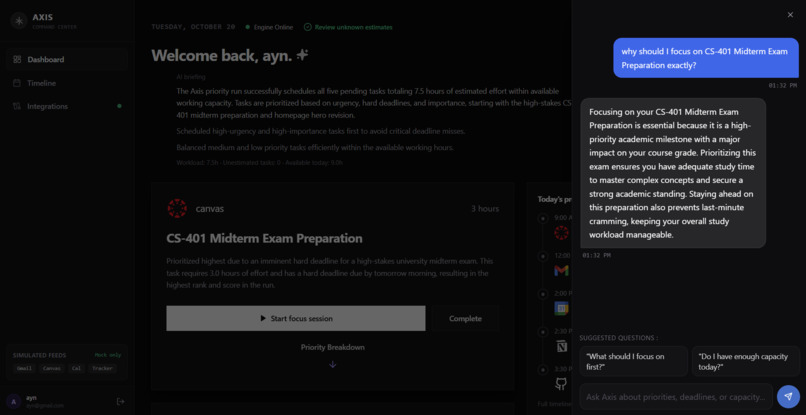
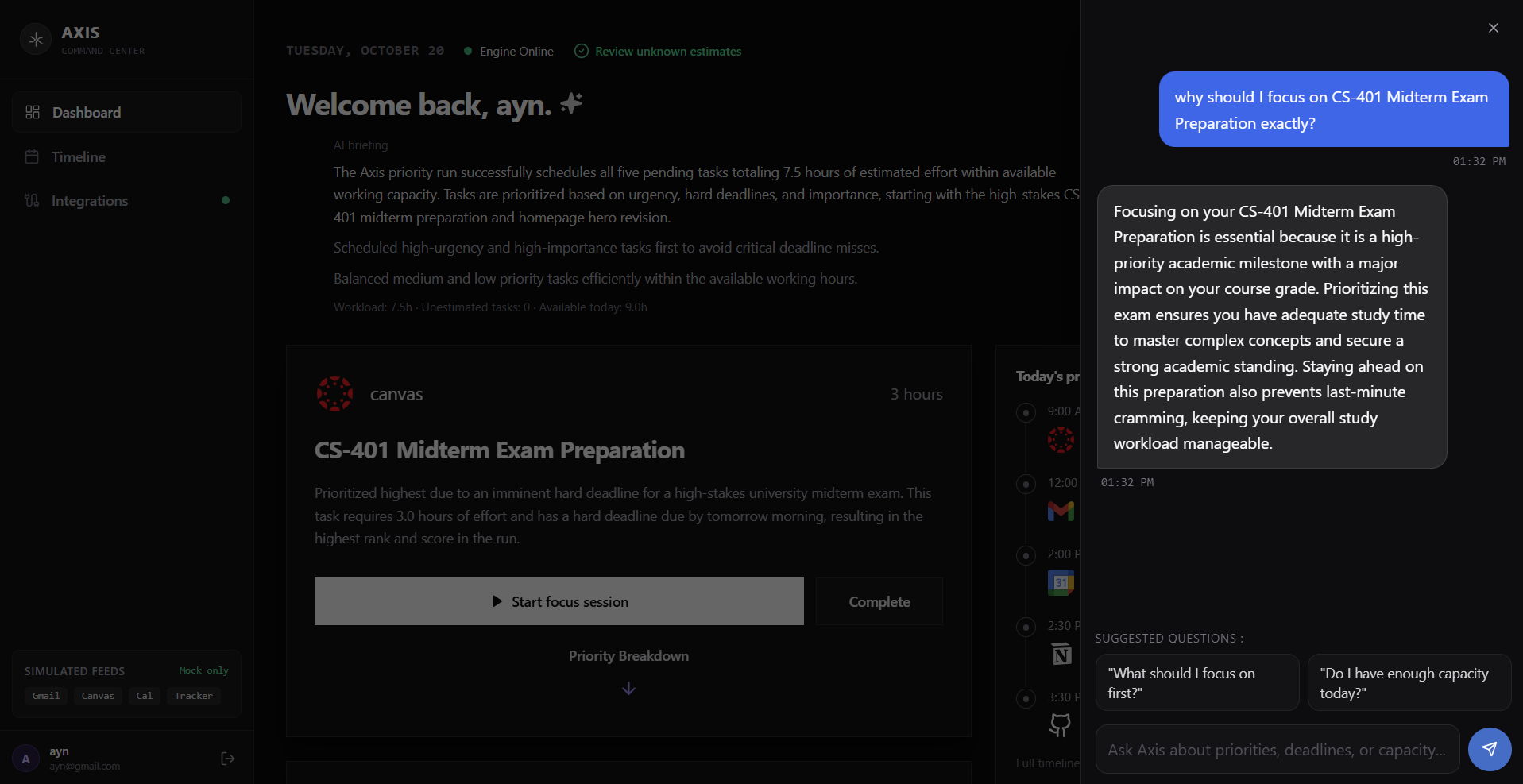
Users can adjust effort estimates, complete tasks, or ask the AI assistant to move work. Schedule changes appear as proposals for approval, then rebuild the saved plan. Deferred tasks remain visible with their planned dates and times, including warnings when a move puts a deadline at risk.
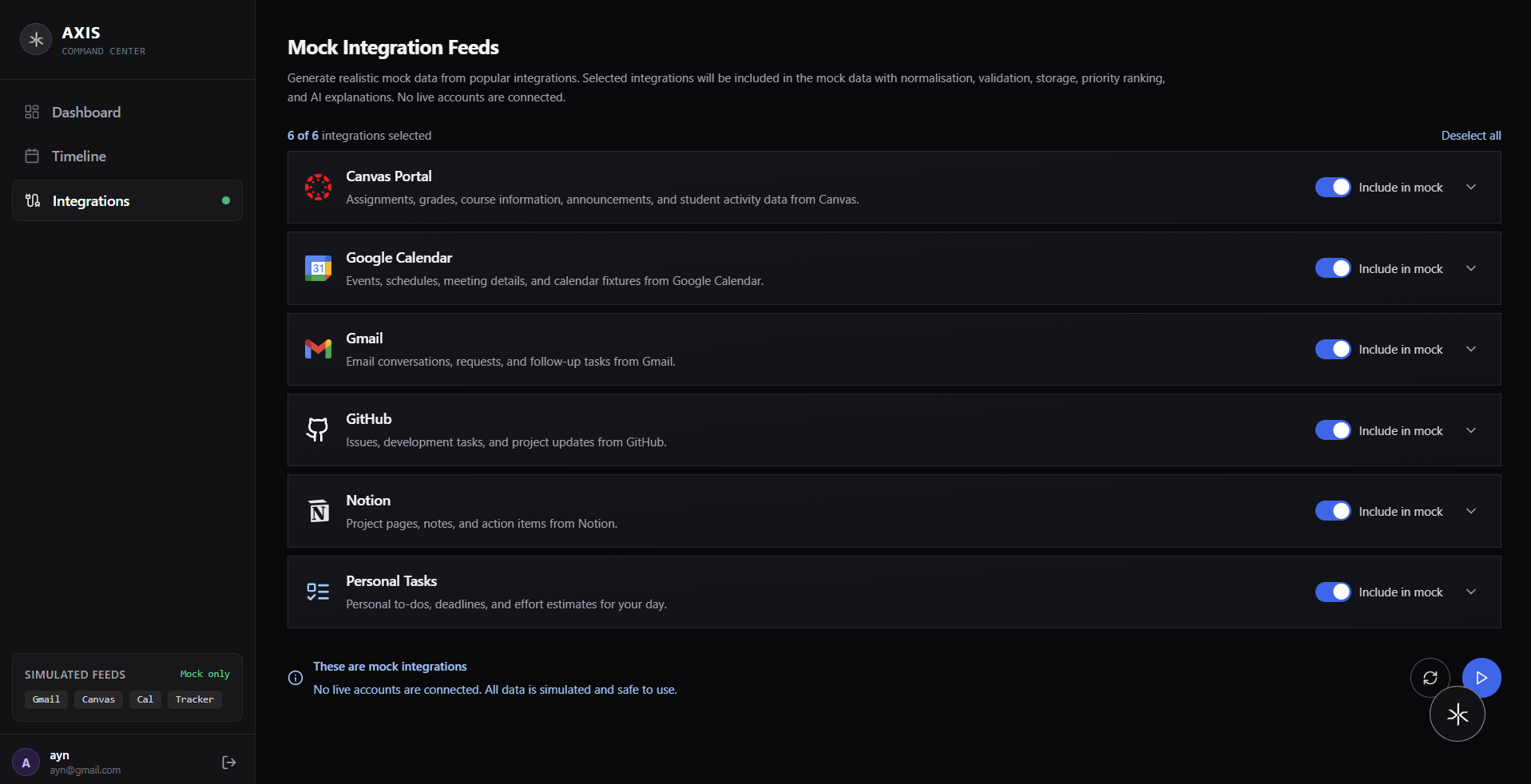
The prototype demonstrates this workflow using simulated Gmail, Canvas, Google Calendar, GitHub, Notion, and personal-task feeds.
How I built it
I built Axis with React, TypeScript, and Tailwind CSS on the frontend, supported by a FastAPI backend, SQLAlchemy, and PostgreSQL.
Gemini handles task extraction, daily briefings, priority explanations, and conversational requests. A deterministic scheduling engine uses validated task facts like deadlines, effort, importance, and calendar availability to calculate priorities and allocate work blocks.
For chatbot changes, I added structured schedule proposals and approval checks before saving a rebuilt plan. I also added backend and frontend regression tests, plus a live Gemini smoke test to verify the proposal-to-approval workflow.

Log in or sign up for Devpost to join the conversation.