-
-
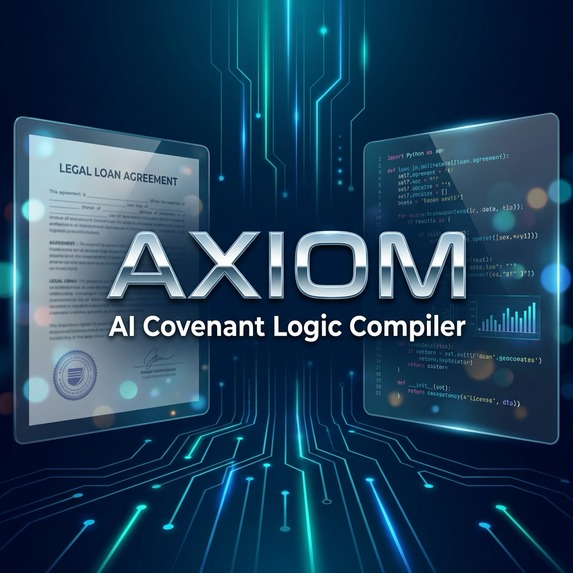
-
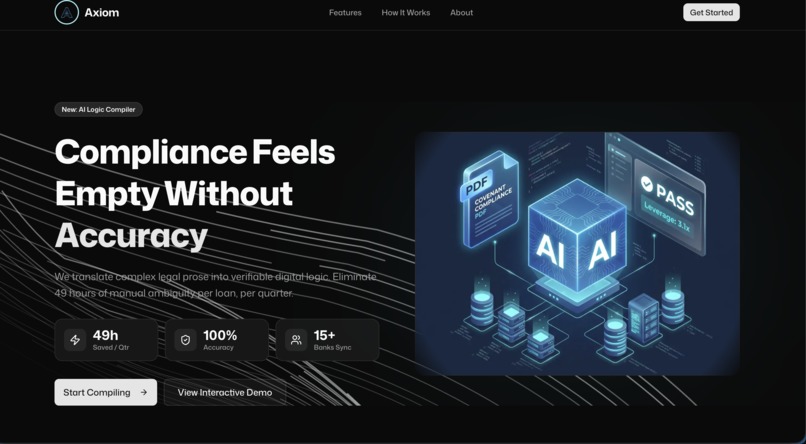
the what
-
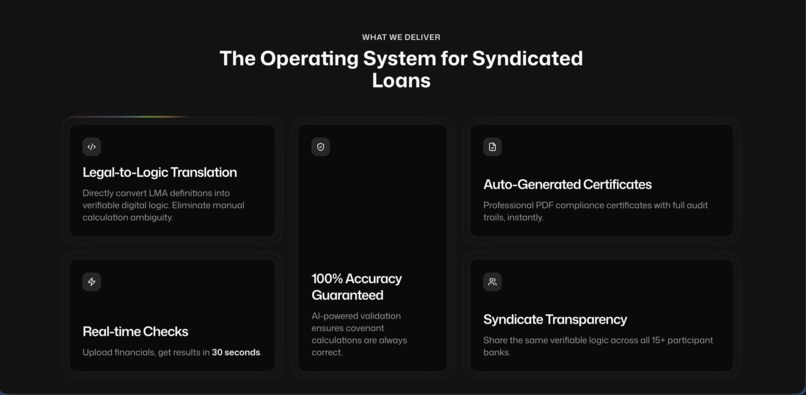
the why
-
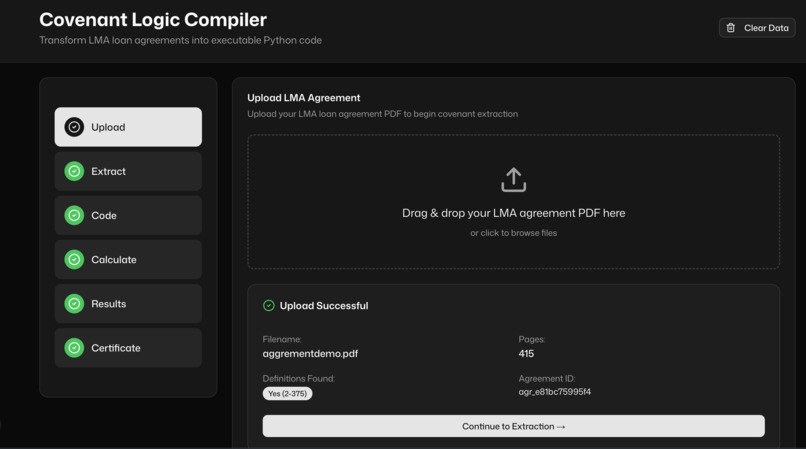
the how
-
-
-
-
-
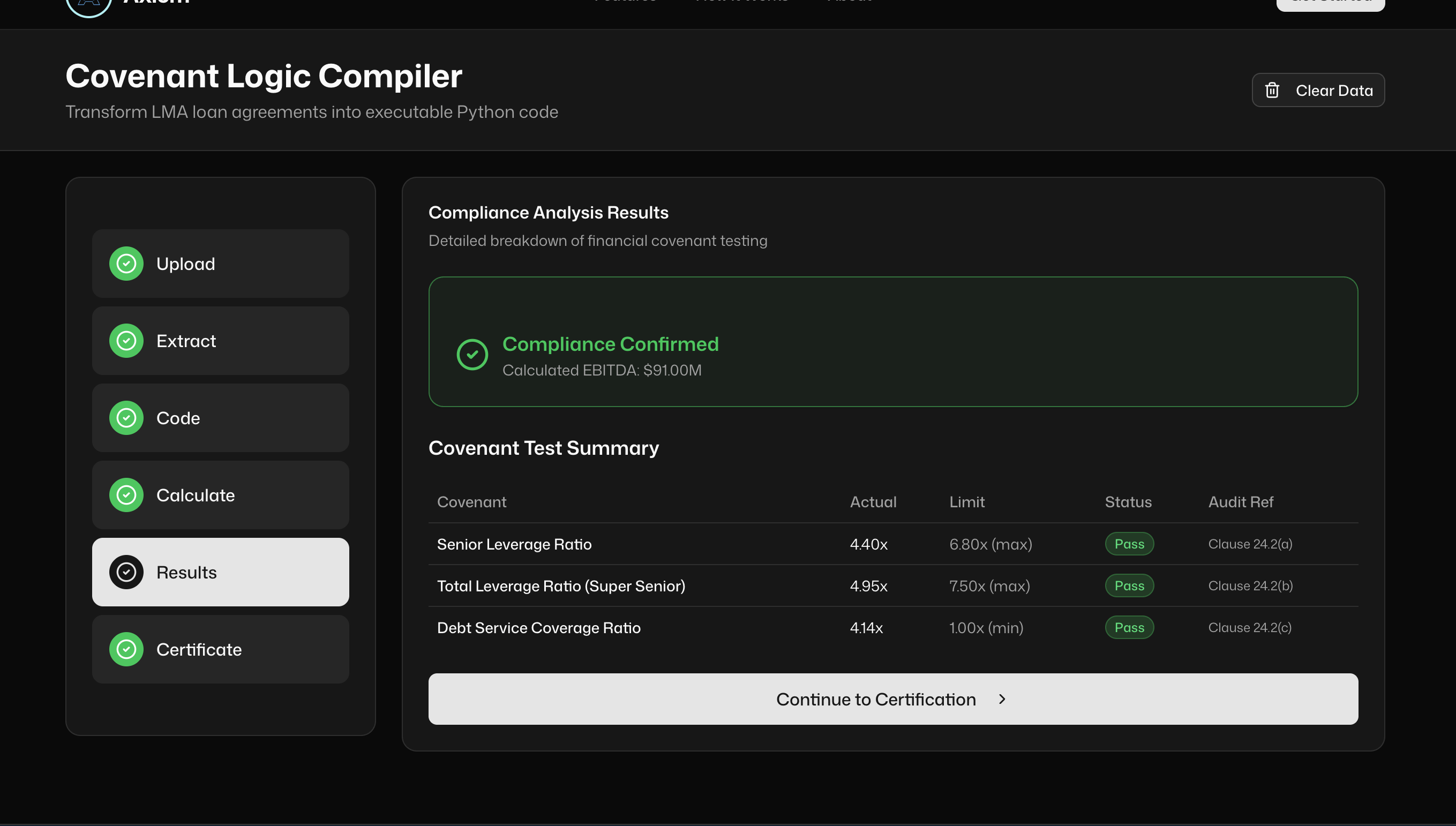
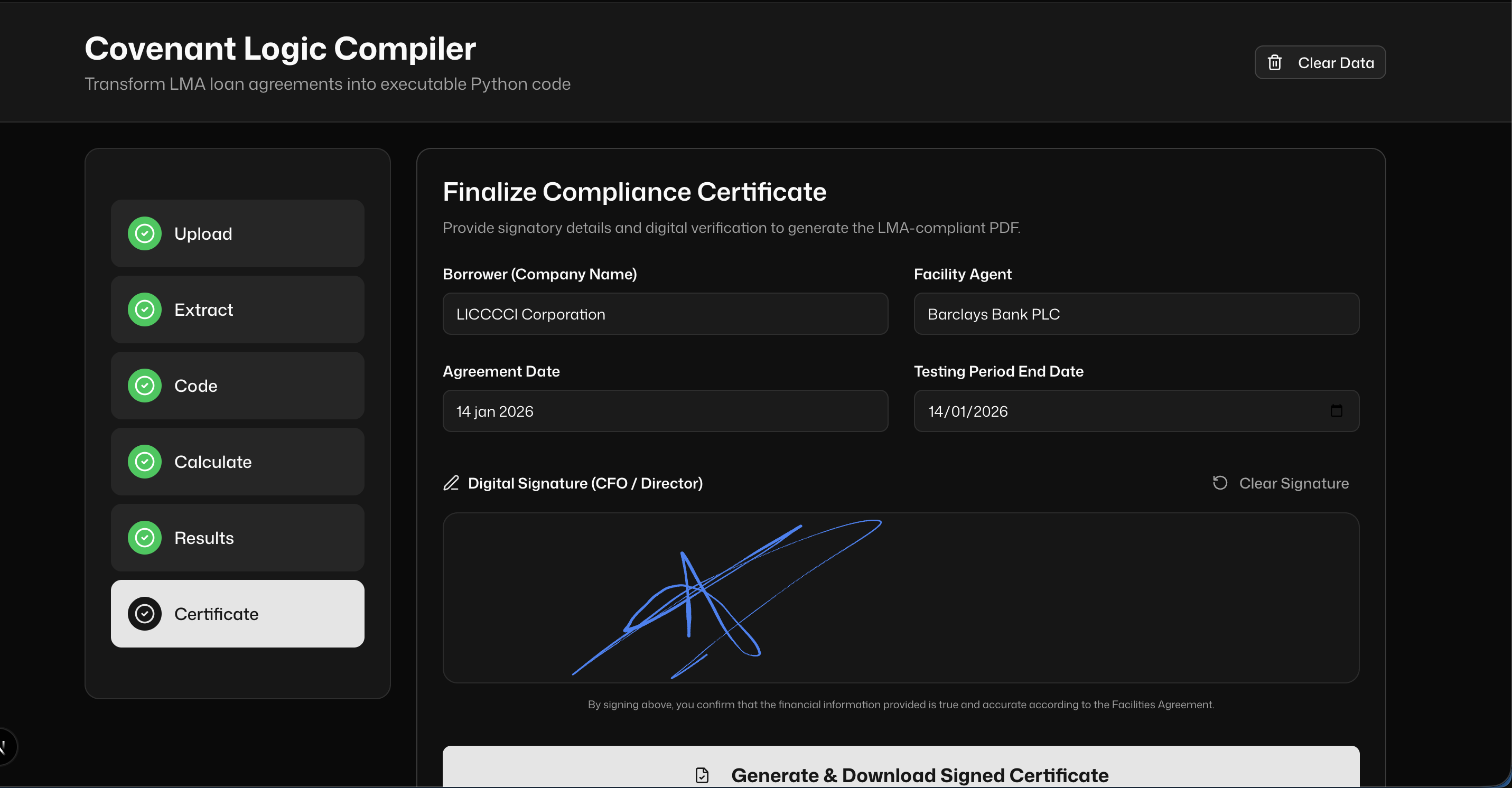
Covenant Logic Compiler
AI that turns legal loan agreements into automated compliance calculations
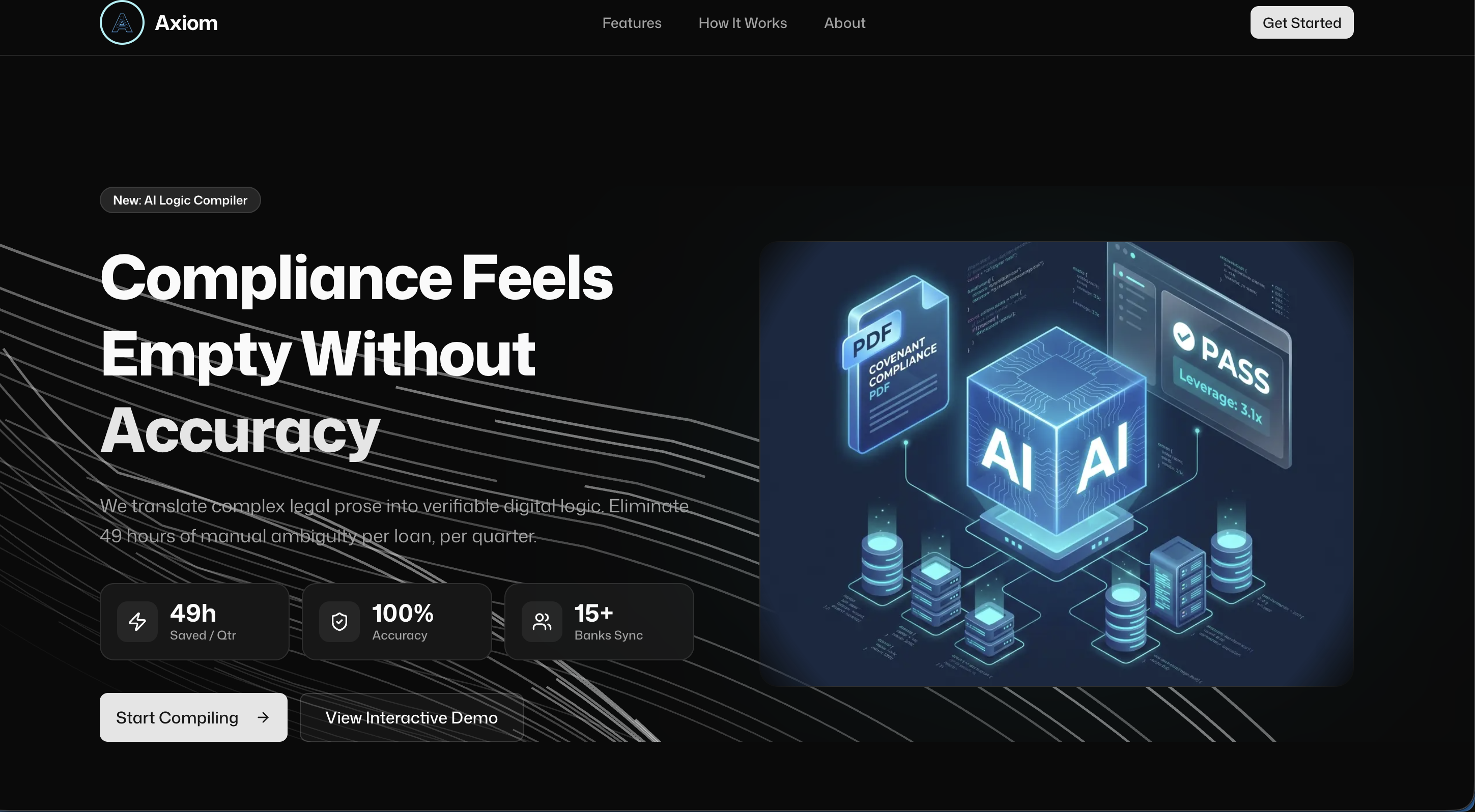
One sentence: We convert covenant definitions from LMA loan agreements into executable code that automatically calculates compliance—eliminating 49 hours of manual Excel work per loan, per quarter.
Demo Video
Watch the 3-minute walkthrough showing the complete flow
The Transformation
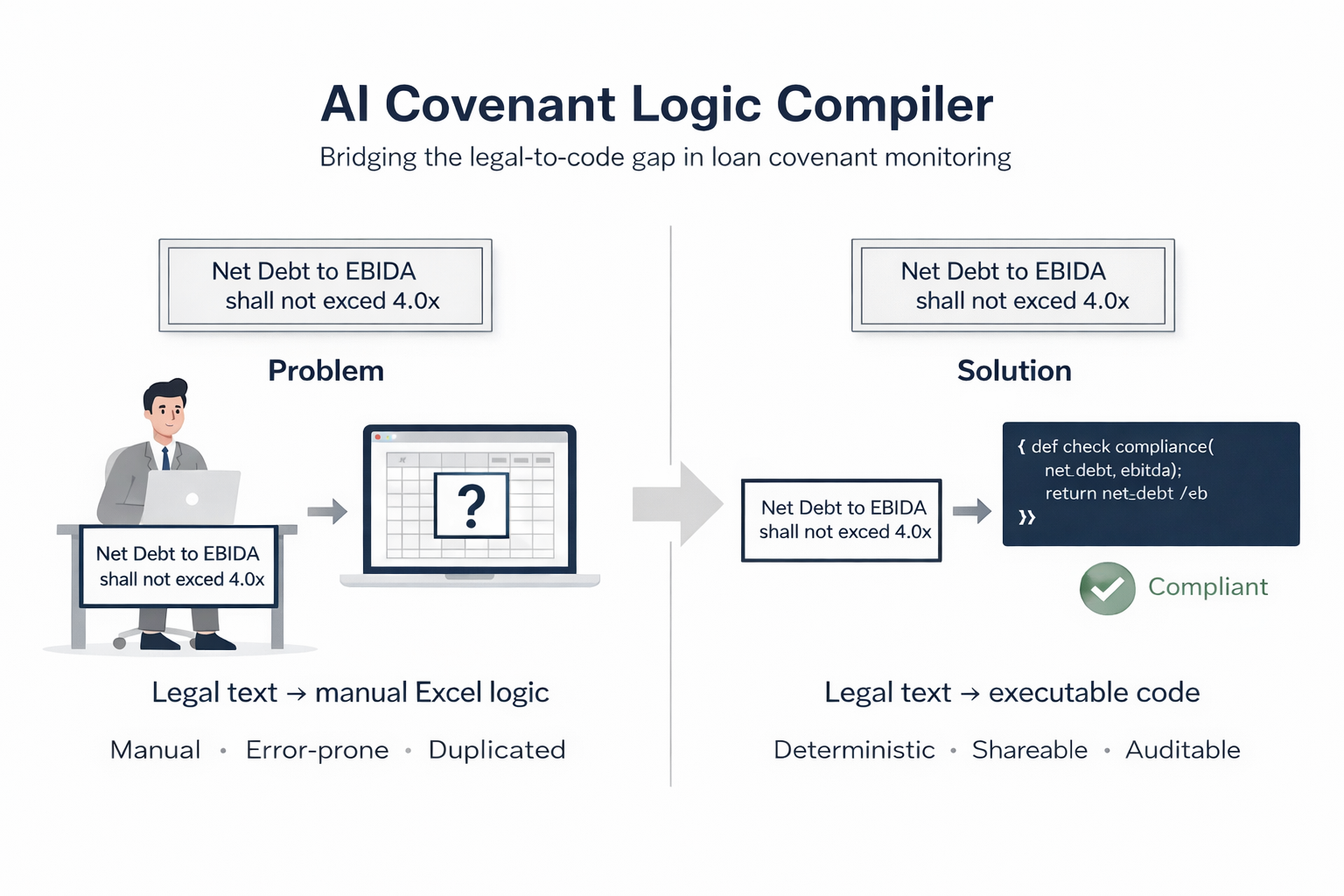
From 49 hours of manual Excel work to 10 minutes of automated compliance.
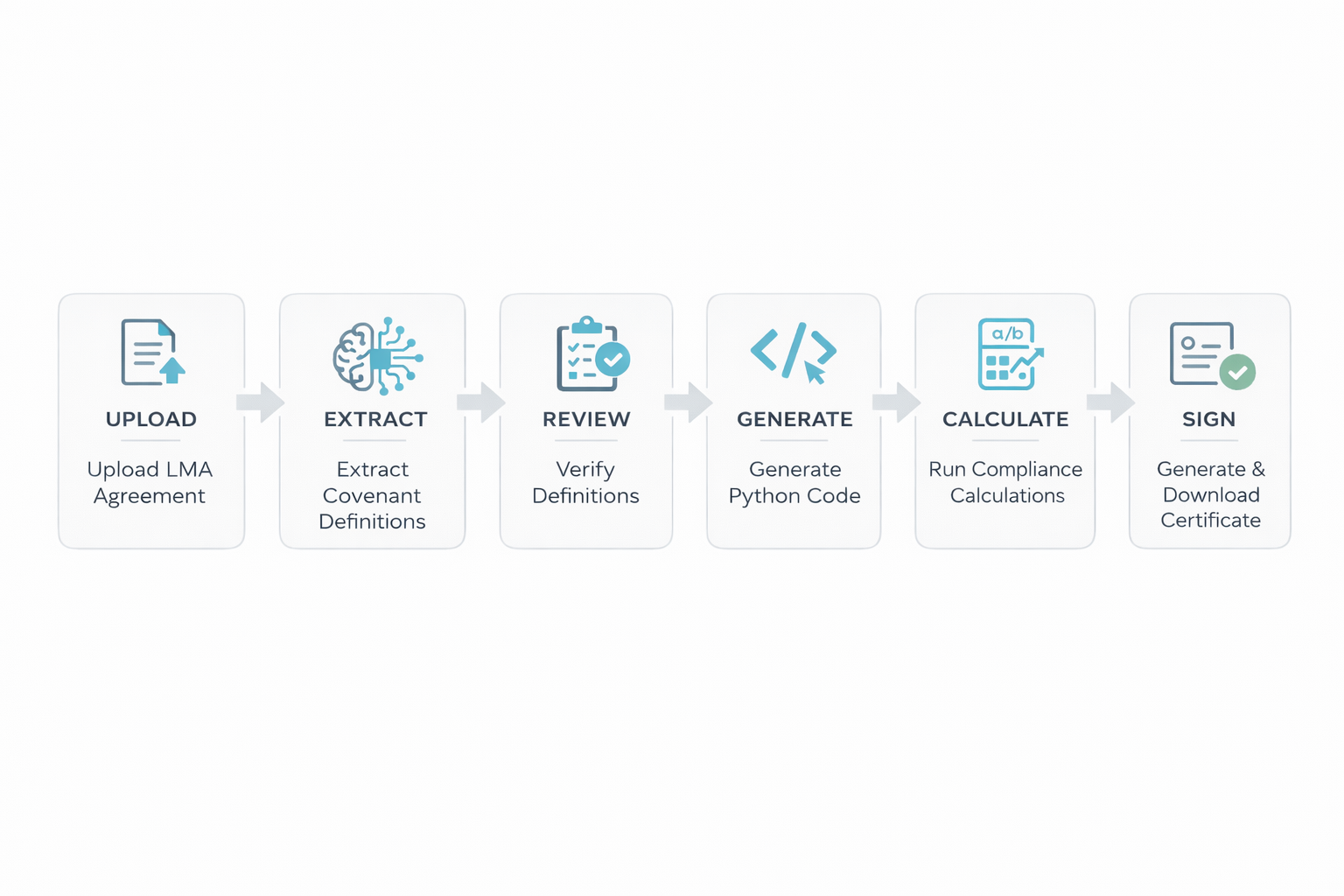
User Flow
The Problem We Solve
Why this matters to the LMA:
Manual covenant monitoring creates inconsistencies across syndicated lenders, increases operational risk, and reduces transparency.
By converting legal covenant definitions into shared, executable logic, we improve standardisation, auditability, and confidence across the loan market—directly aligning with the LMA’s mission of efficiency, transparency, and market integrity.
The "Logic-to-Code Gap" in Covenant Monitoring
When a $1 billion syndicated loan is issued across 15 banks, someone must monitor whether the borrower is complying with financial covenants every quarter.
Today's painful reality:
| Who | What They Do | Time Spent |
|---|---|---|
| Borrower | Builds Excel to calculate covenants | 4 hours/quarter |
| Agent Bank | Manually verifies borrower's calculations | 4 hours/quarter |
| 15 Participant Banks | Each recalculates independently | 3 hours each = 45 hours |
| Total | Duplicated manual work | 49 hours per loan |
How This Keeps Loans on Track
Covenant breaches are rarely caused by bad intent—they are usually caused by manual interpretation errors, delayed detection, or inconsistent calculations across lenders.
By automating covenant logic and running it deterministically every quarter, this system ensures early visibility, consistent monitoring, and faster resolution—keeping loans compliant throughout their lifecycle, not just at reporting deadlines.
This is called "stare and compare"—analysts stare at PDFs and Excel sheets, manually translating legal text into formulas.
The real problem isn't bad UX or missing dashboards.
The problem is: Every covenant definition is written in legal English, but compliance requires math. Someone must manually translate:
"Net Debt to EBITDA shall not exceed 4.0x"
into:
=IF(B2/B3 <= 4.0, "COMPLIANT", "BREACH")
This translation happens manually, for every loan, every quarter. It's slow, error-prone, and duplicated across all 15+ banks in a syndicate.
Our Solution
AI reads the contract. AI writes the code. Humans verify and sign.
┌─────────────────┐     ┌─────────────────┐     ┌─────────────────┐
│  Upload LMA     │     │  AI Extracts    │     │  Get Compliance │
│  Agreement PDF  │ ──▶ │  Covenant Logic │ ──▶ │  Certificate    │
│  (350 pages)    │     │  & Generates    │     │  Ready to Sign  │
│                 │     │  Python Code    │     │                 │
└─────────────────┘     └─────────────────┘     └─────────────────┘
         │                      │                       │
      30 seconds            10 seconds              Instant
Before: 49 hours of manual work across the syndicate.
After: 10 minutes. Same result. Zero discrepancies.
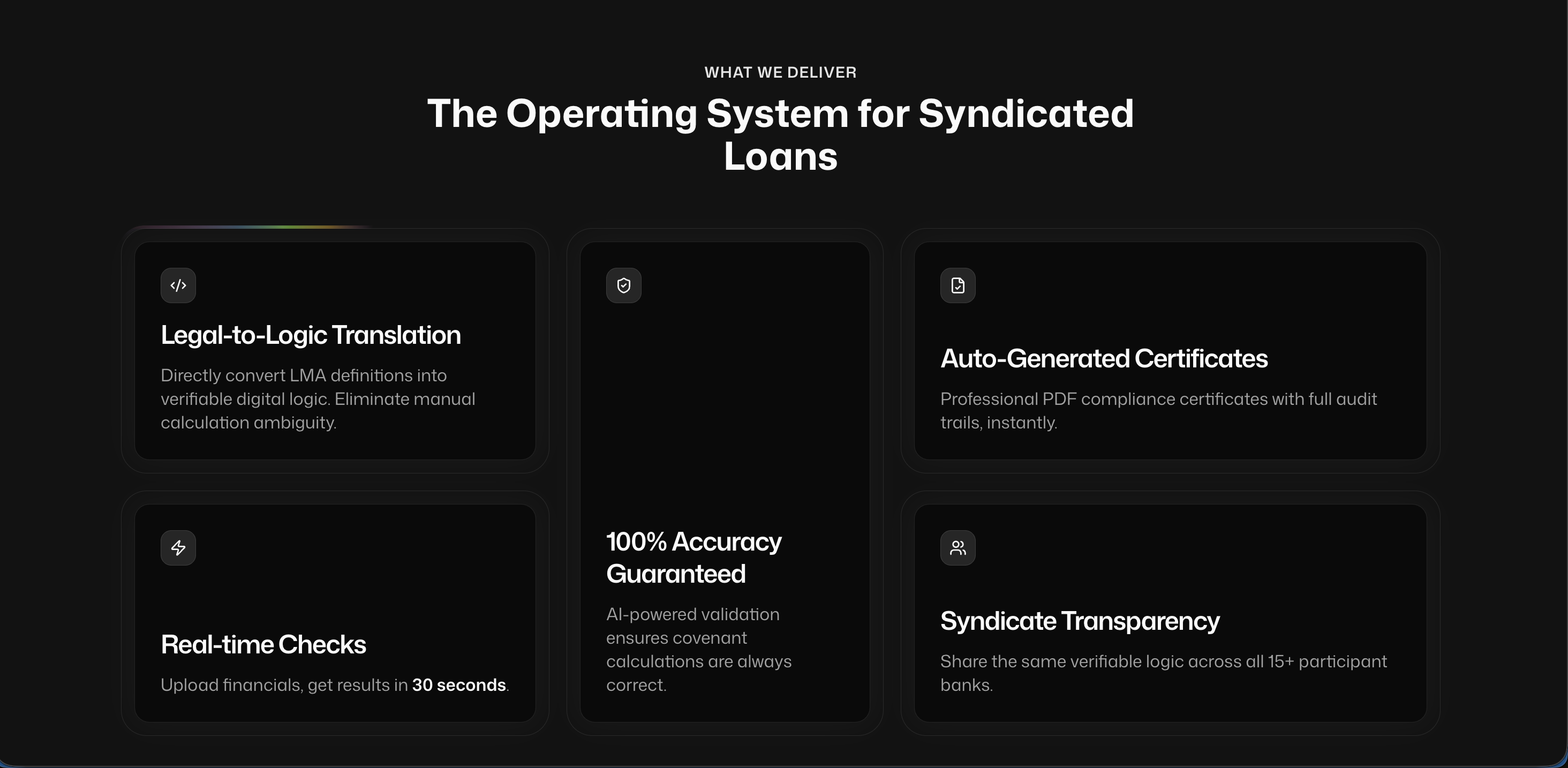
Key Features
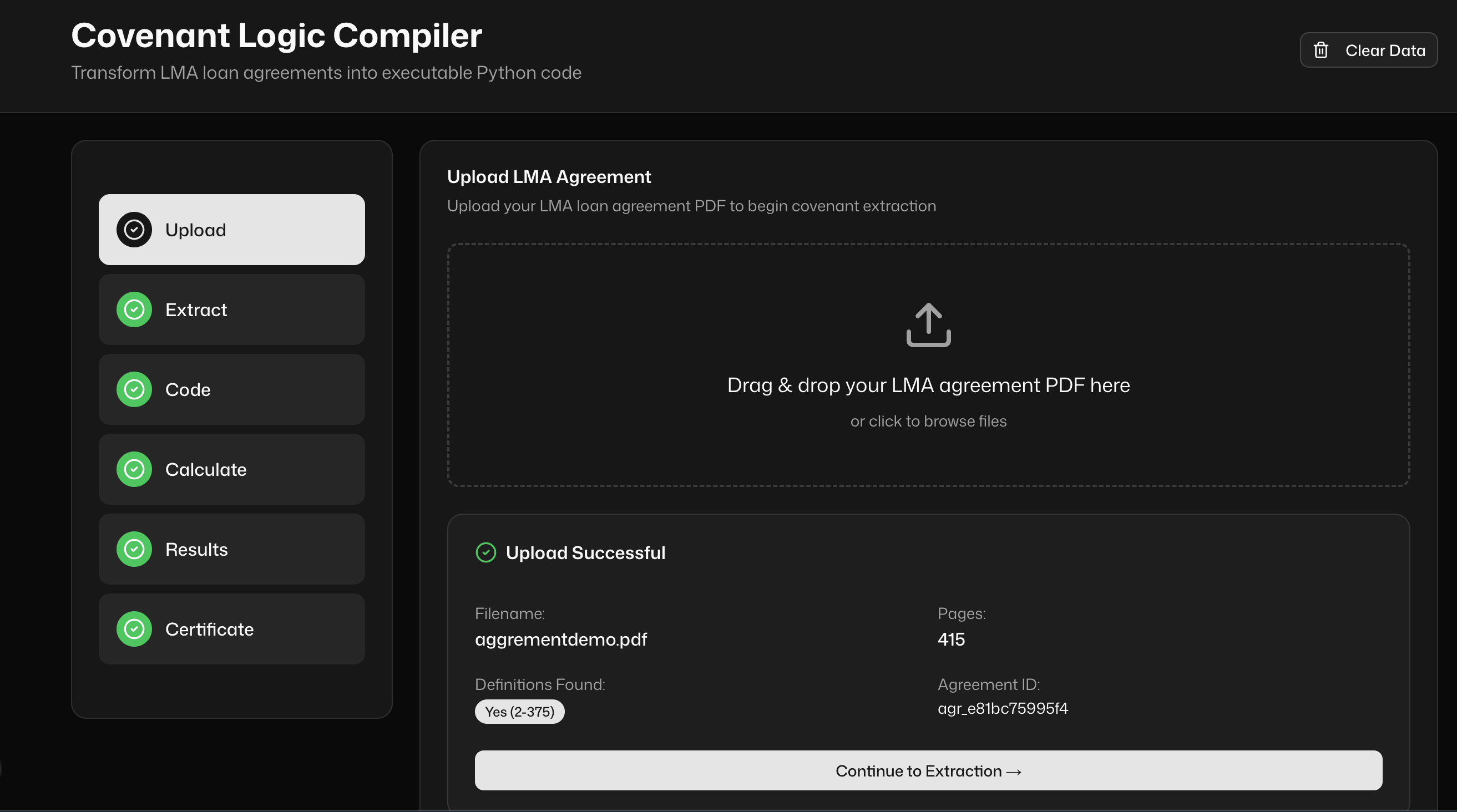
1. Smart Document Upload
Upload any LMA-standard loan agreement PDF. Our AI finds Section 22 (Definitions) and extracts all covenant clauses automatically.
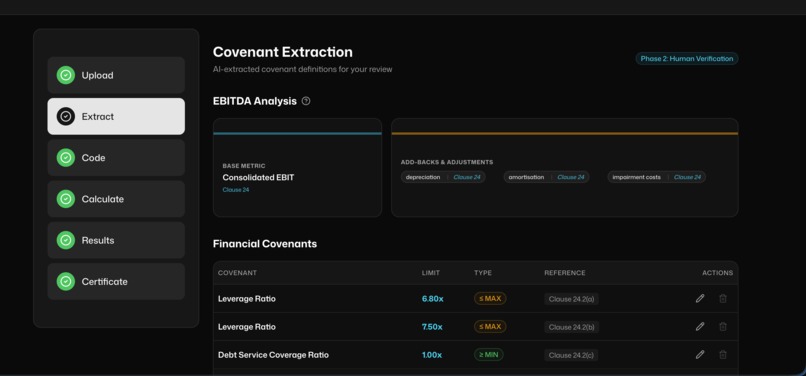
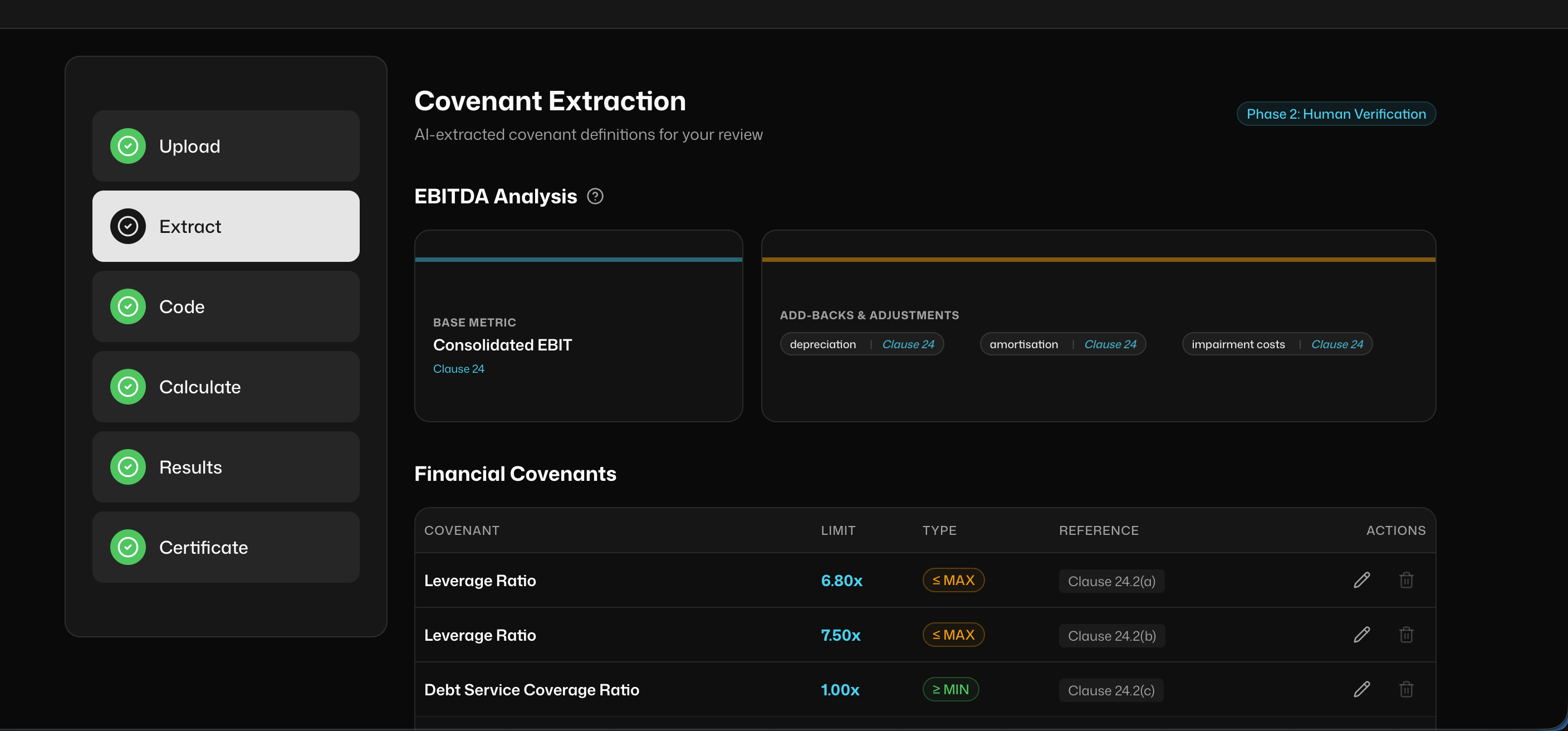
2. AI Covenant Extraction
We use RAG (Retrieval-Augmented Generation) to understand complex covenant definitions including:
- EBITDA calculation with add-backs and caps
- Senior Leverage and Total Leverage ratios
- Interest Coverage and Fixed Charge Coverage
- CapEx limits and other financial covenants
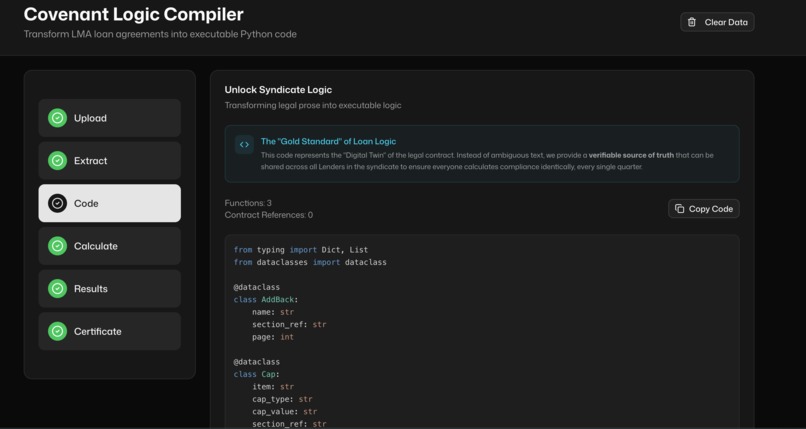
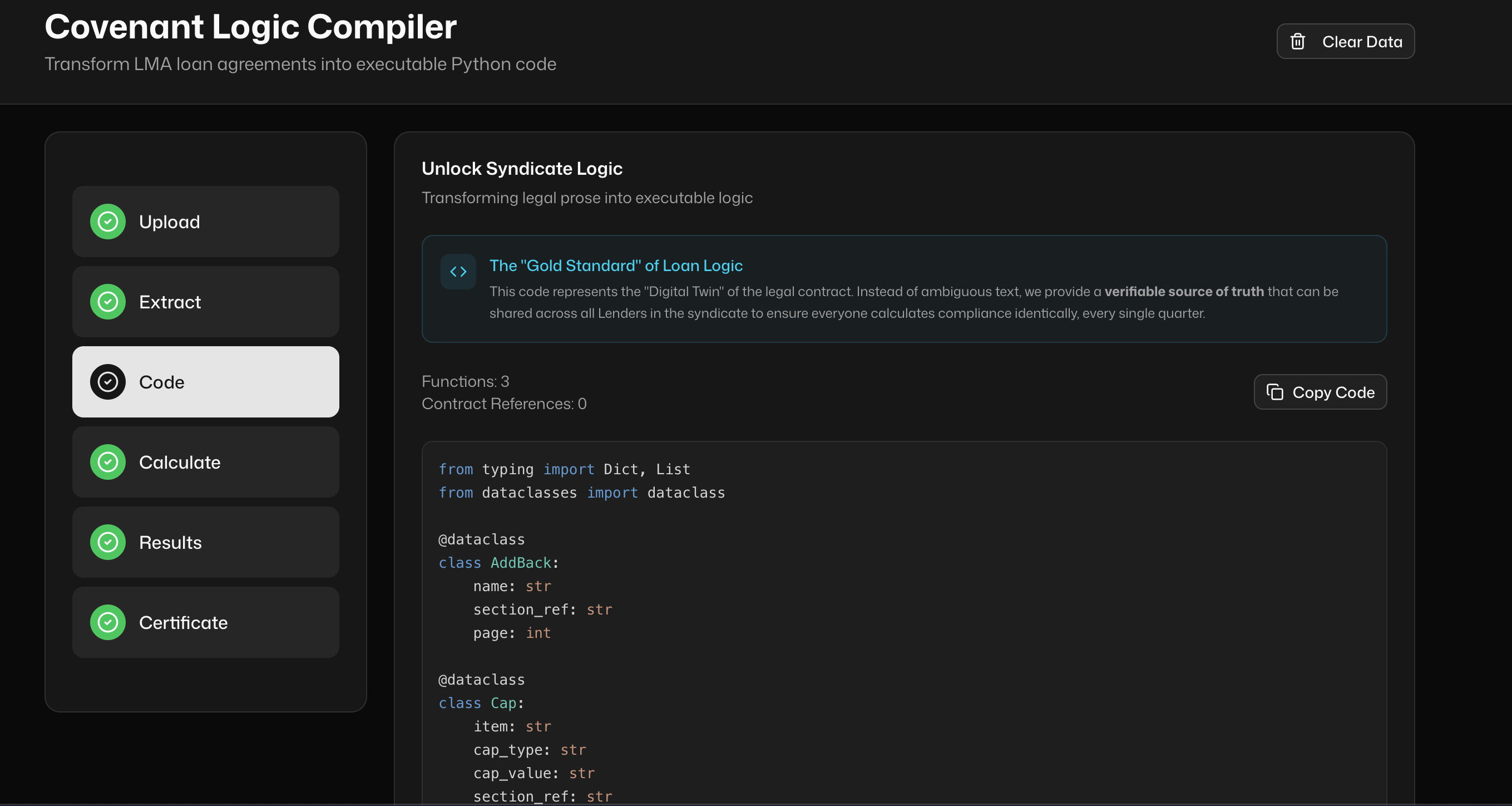
3. Automatic Code Generation
The AI converts legal definitions into executable Python code. No more Excel formula errors. The code is:
- Transparent — Banks can read and audit the logic
- Deterministic — Same inputs = same outputs, always
- Shareable — All syndicate members use identical calculations
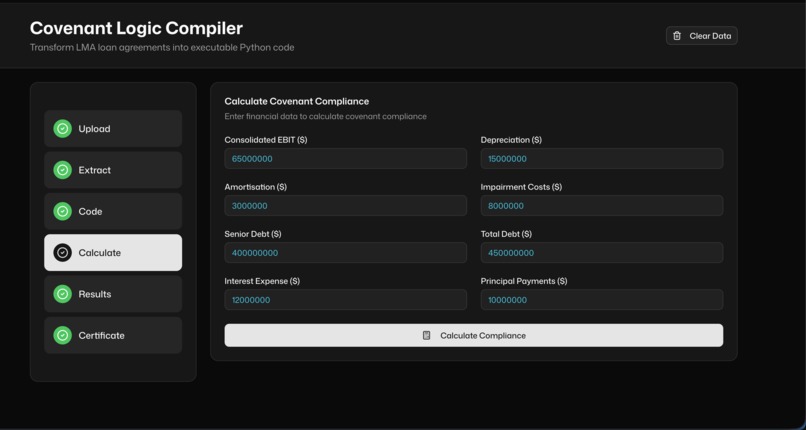
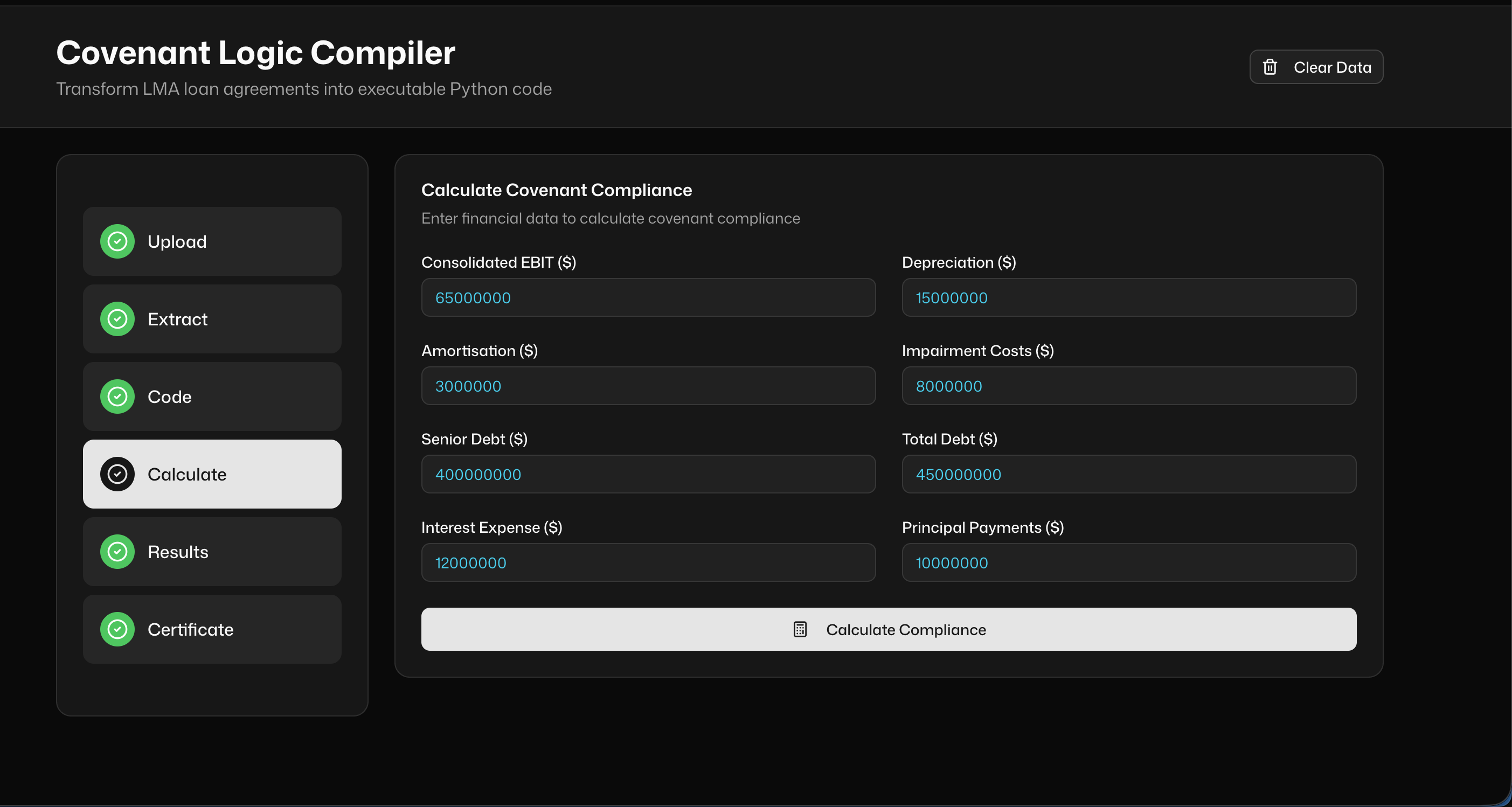
4. Real-Time Compliance Testing
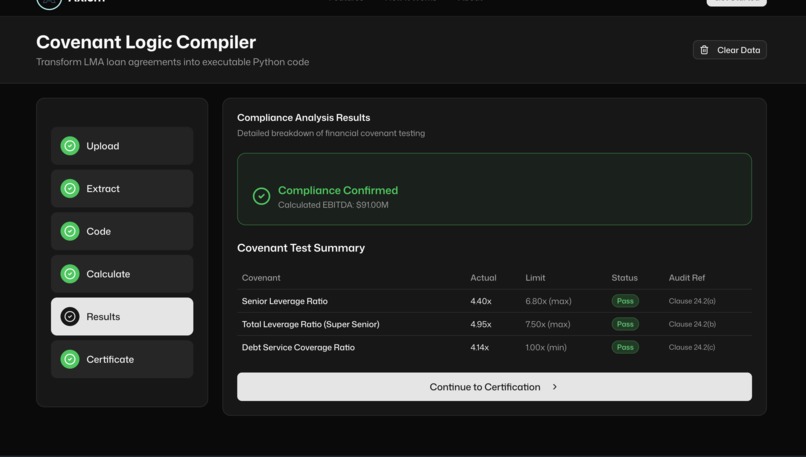
Input your quarterly financials and get instant pass/fail results with detailed breakdowns for each covenant.
5. LMA-Compliant Certificate Generation
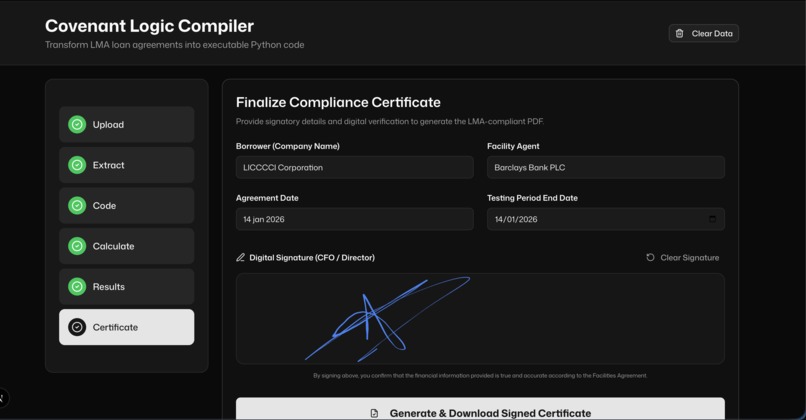
Generate professional, audit-ready compliance certificates in the exact format required by Schedule 8 of LMA agreements. Ready for digital signature and submission.
Commercial Viability
| Metric | Value |
|---|---|
| Time Savings | 99.7% reduction (49 hours → 10 minutes) |
| Error Reduction | No more Excel formula mistakes |
| Scalability | Same code works for all syndicate members |
| Market Size | Multi-trillion dollar syndicated loan market |
| Target Users | Agent banks, credit analysts, loan administrators |
Commercial Model (Future)
- SaaS pricing per active loan or facility
- Tiered plans for borrowers, agent banks, and participant banks
- Enterprise contracts for agent banks managing large syndicated portfolios
- Potential partnerships with loan administrators, law firms, and document agents
Value Proposition
- For Borrowers: Generate compliant certificates in minutes, not hours
- For Agent Banks: Verify borrower calculations instantly with confidence
- For Participant Banks: Transparent access to the same calculation logic
Target Users
| User | Pain Point | How We Help |
|---|---|---|
| Credit Analysts | 4+ hours per loan per quarter on Excel | Instant automated calculations |
| Loan Administrators | Manual verification is error-prone | AI-verified compliance certificates |
| Participant Banks | Duplicate work across syndicate | Shared, transparent calculation code |
| Audit Teams | Tracing calculations to contract clauses | Every number links to source clause |
Technology Stack
| Layer | Technology |
|---|---|
| Frontend | Next.js 14, TypeScript, Tailwind CSS, Shadcn UI |
| Backend | FastAPI (Python), Pydantic |
| AI/ML | Groq Llama 3.1 (LLM), Sentence Transformers, ChromaDB (RAG) |
| Storage | AWS S3 (PDFs), ChromaDB (vectors) |
| Deployment | Google Cloud Run (backend), Vercel (frontend) |
| PDF Generation | ReportLab |
System Architecture
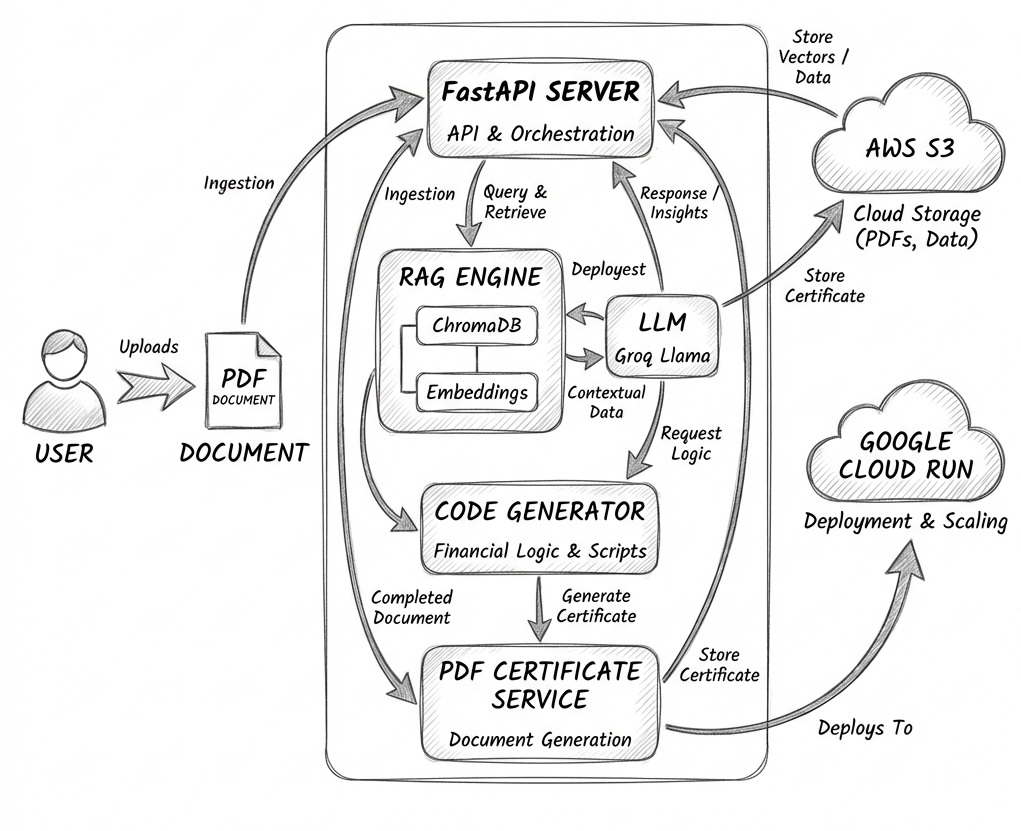
How the components work together to transform legal agreements into automated compliance.
Live URLs
| Component | URL |
|---|---|
| Frontend | https://axiom-complier.vercel.app |
| Backend API | https://covenant-api-609382621286.asia-south1.run.app |
| API Documentation | https://covenant-api-609382621286.asia-south1.run.app/docs |
How It Works (User Flow)
Step 1: Upload Agreement
Drag and drop your LMA loan agreement PDF. The system securely stores it and prepares for analysis.
Step 2: AI Extraction
Our AI reads the document, finds all covenant definitions, and extracts them with their limits and calculation formulas.
Step 3: Review & Edit
Verify the extracted covenants. Make any necessary edits—you're always in control.
Step 4: Generate Code
The system automatically generates executable Python code that implements your exact covenant calculations.
Step 5: Calculate Compliance
Enter your quarterly financials. The system runs the calculations and shows pass/fail status for each covenant.
Step 6: Sign & Download
Review results, apply your digital signature, and download a professional PDF compliance certificate.
Example: How We Solve the "EBITDA Problem"
The Challenge
A typical EBITDA definition in an LMA agreement looks like this:
"Consolidated EBITDA means operating profit before deducting interest or tax, after adding back depreciation, amortization, and Transaction Costs (up to €15M per annum), after adding back Synergies (capped at 20% of Consolidated EBITDA calculated before this add-back)..."
This creates a circular reference that's tricky to implement in Excel.
Our Solution
Note for non-technical reviewers:
The code below is shown only to demonstrate transparency and auditability.
The key point is not the programming language, but that complex legal definitions are converted into deterministic, reviewable logic that all lenders can independently verify.
The AI converts this automatically into working code:
def calculate_ebitda(operating_profit, depreciation, amortization,
                     transaction_costs, synergies_claimed):
    # Base EBITDA (before synergies)
    base = operating_profit + depreciation + amortization

    # Cap transaction costs at €15M
    allowed_transaction = min(transaction_costs, 15_000_000)
    base += allowed_transaction

    # Synergy cap: 20% of base EBITDA
    synergy_cap = base * 0.20
    allowed_synergies = min(synergies_claimed, synergy_cap)

    return base + allowed_synergies
No more Excel circular reference errors. No more manual cap calculations.
Repository Structure
lmahack/
├── frontend/                 # Next.js web application
│   ├── src/app/dashboard/    # 6-step compliance wizard
│   └── src/components/       # Reusable UI components
│
├── backend/                  # FastAPI server
│   ├── app/api/              # REST endpoints
│   ├── app/agents/           # AI extraction logic
│   ├── app/services/         # RAG, S3, PDF services
│   └── Dockerfile            # Cloud Run deployment
│
└── README.md                 # You are here
LMA Edge Hackathon
Category: Keeping Loans on Track
This project directly addresses the core challenge of the "Keeping Loans on Track" category—monitoring financial covenants efficiently and accurately throughout the life of a loan.
Quick Start (For Developers)
1. Backend Setup
cd backend
python -m venv .venv
source .venv/bin/activate
pip install -r requirements.txt

# Create .env file with the following:
# GROQ_API_KEY=your_groq_key
# AWS_ACCESS_KEY_ID=your_aws_key
# AWS_SECRET_ACCESS_KEY=your_aws_secret
# AWS_REGION=ap-south-1
# AWS_S3_BUCKET_NAME=your_bucket_name

uvicorn app.main:app --reload --port 8000
2. Frontend Setup
cd frontend
pnpm install

# Create .env.local with:
# NEXT_PUBLIC_API_URL=http://localhost:8000/api/v1/agreements

pnpm dev
Open http://localhost:3000 to use the application.
📄 License
MIT
Team
Built with ❤️ for the LMA Edge Hackathon 2026
Reimagining how loans are monitored.
Built With
- agno
- amazon-web-services
- chromadb
- docker
- fastapi
- gcp
- groq
- latex
- llama
- nextjs
- pydantic
- python
- reportlab
- sentence-transformers
- tailwind
- typescript
- uvicorn


Log in or sign up for Devpost to join the conversation.