-
-
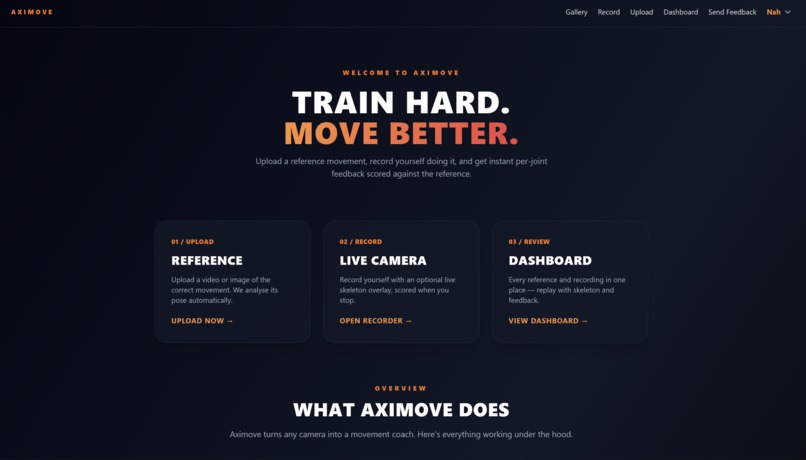
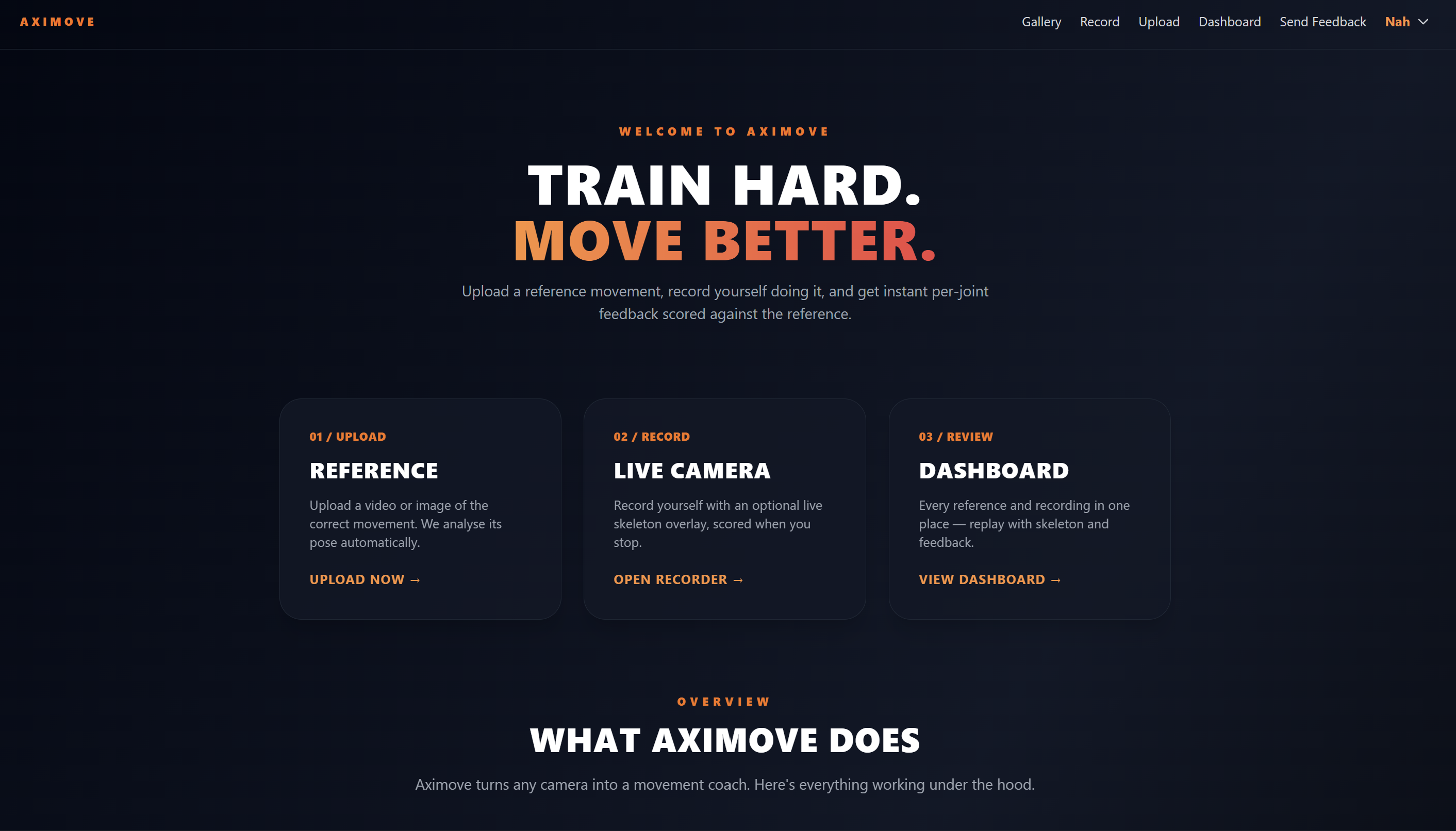
Home page
-
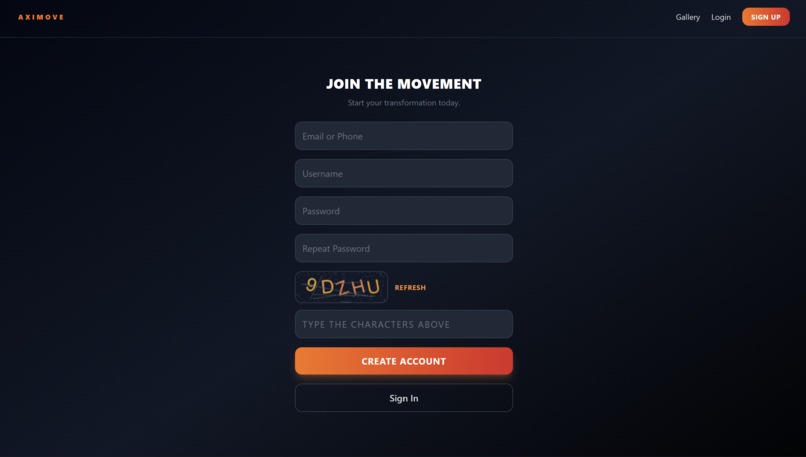
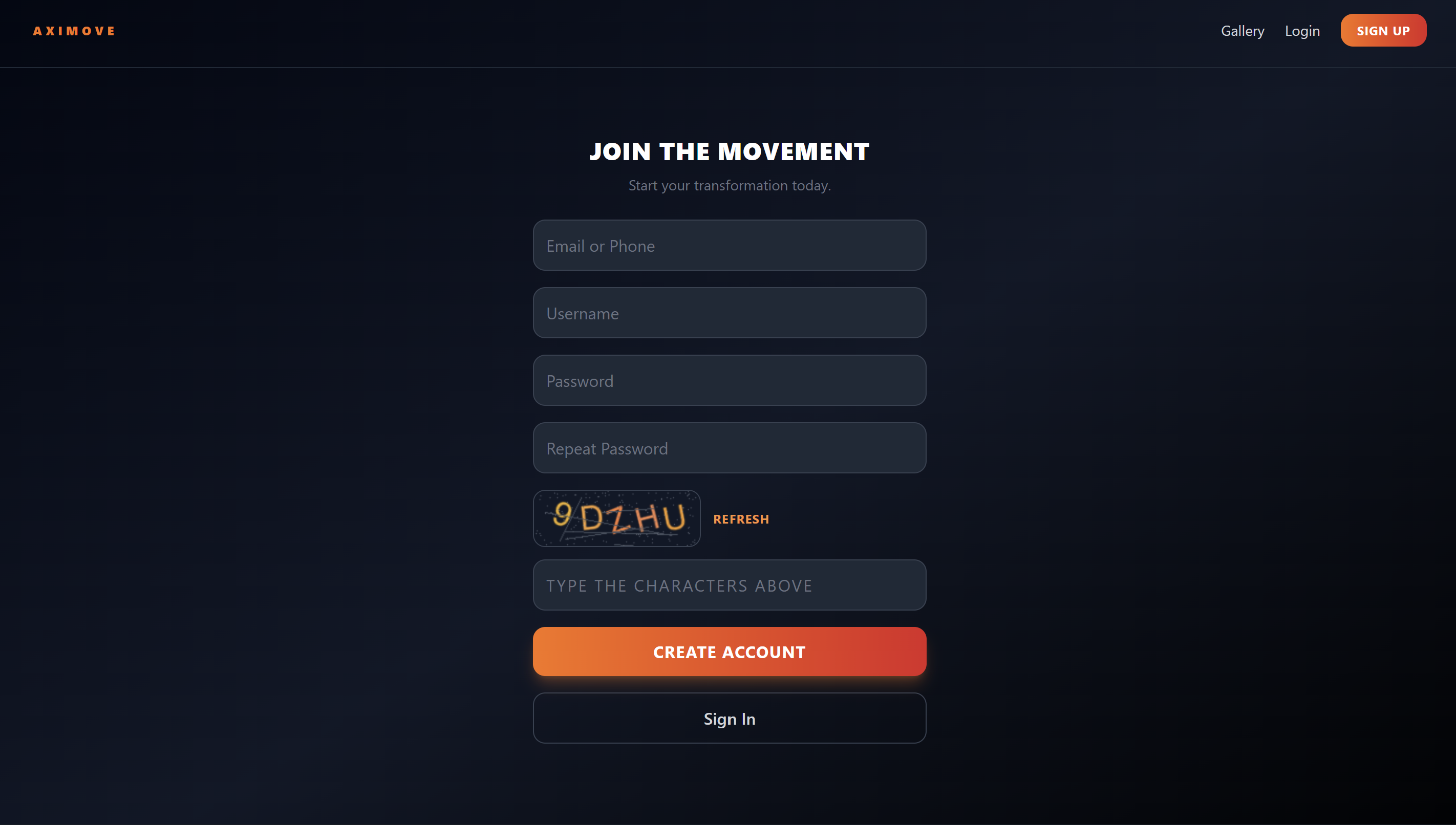
Sign up form
-
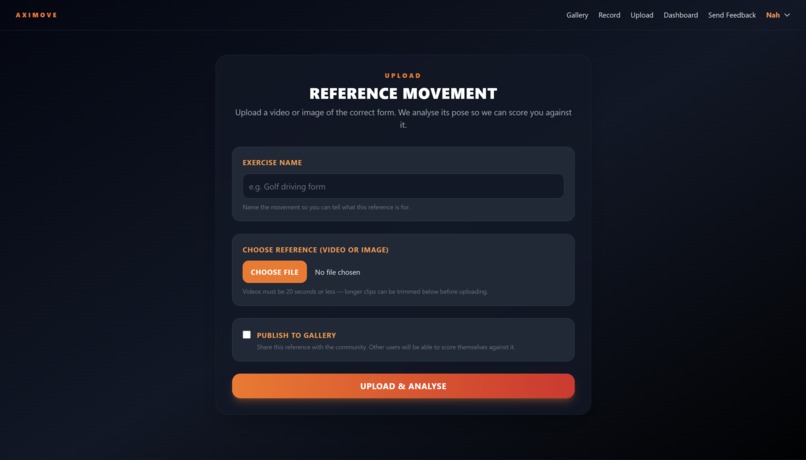
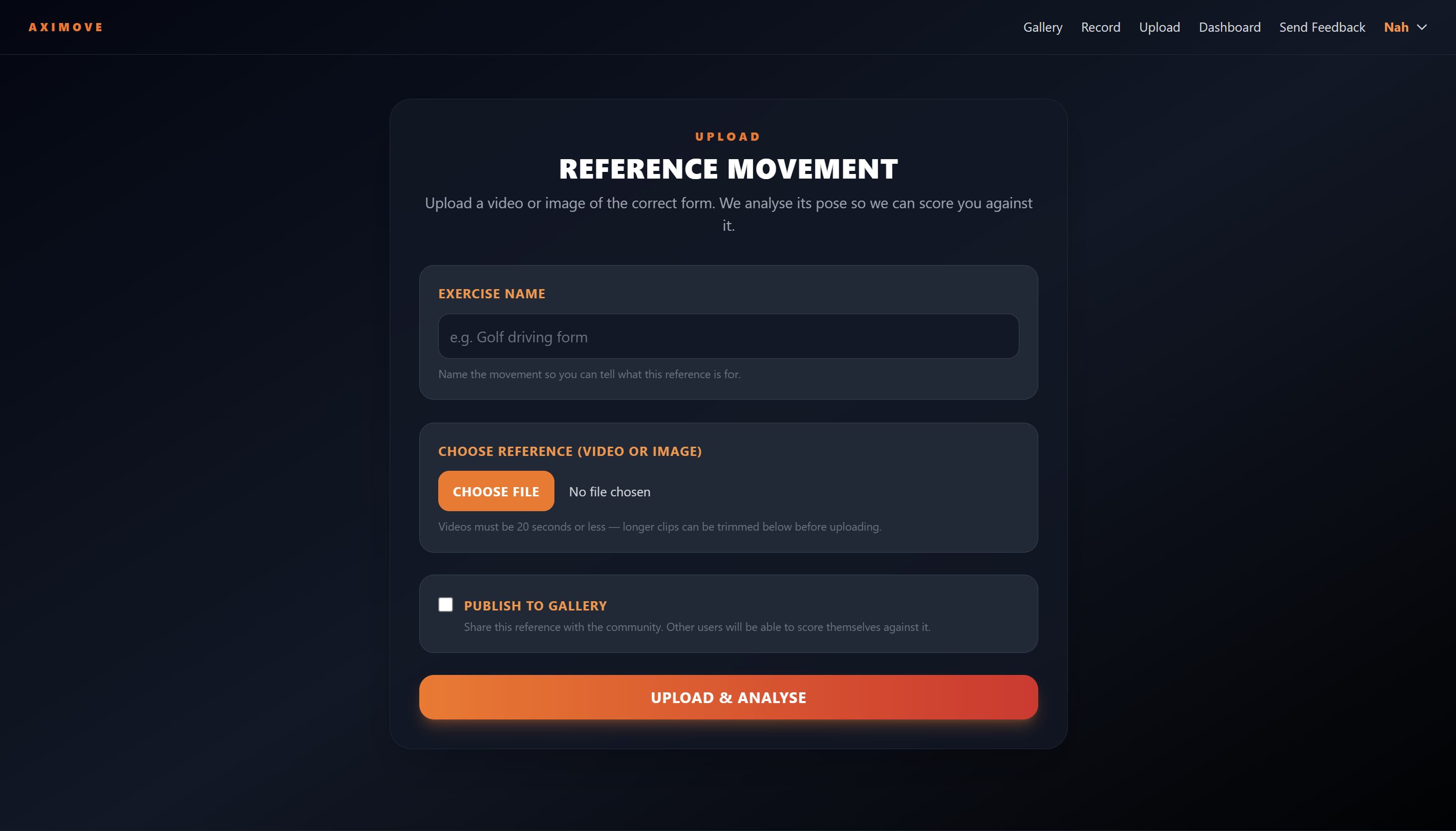
Upload reference
-
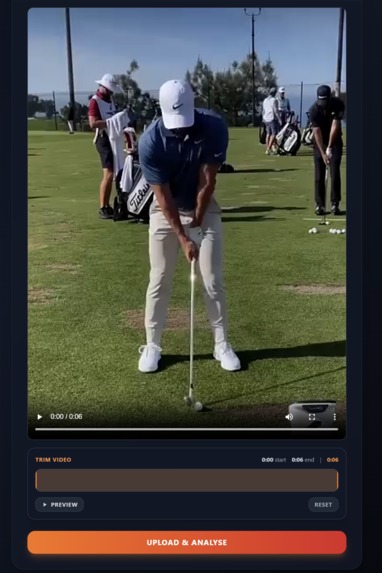
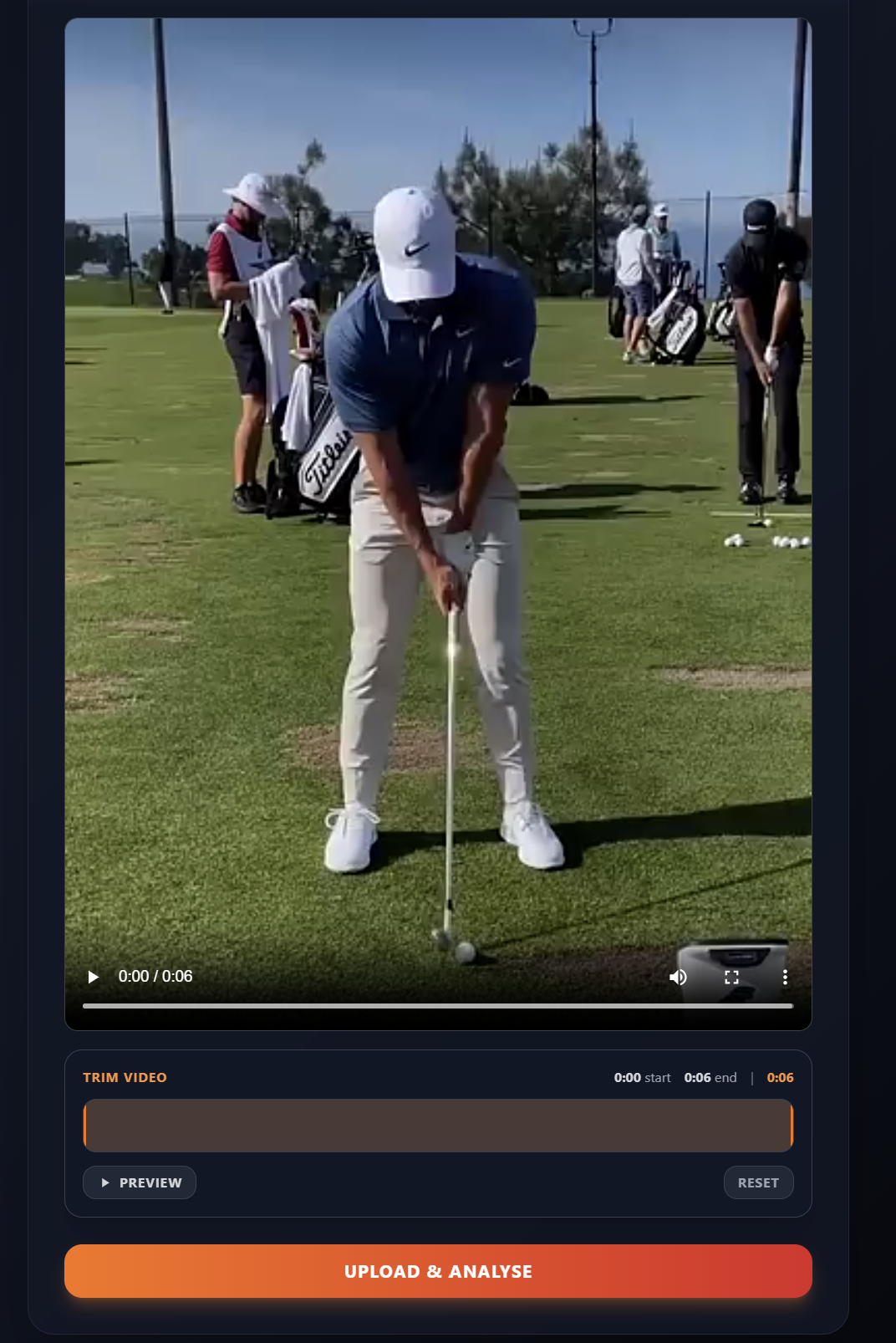
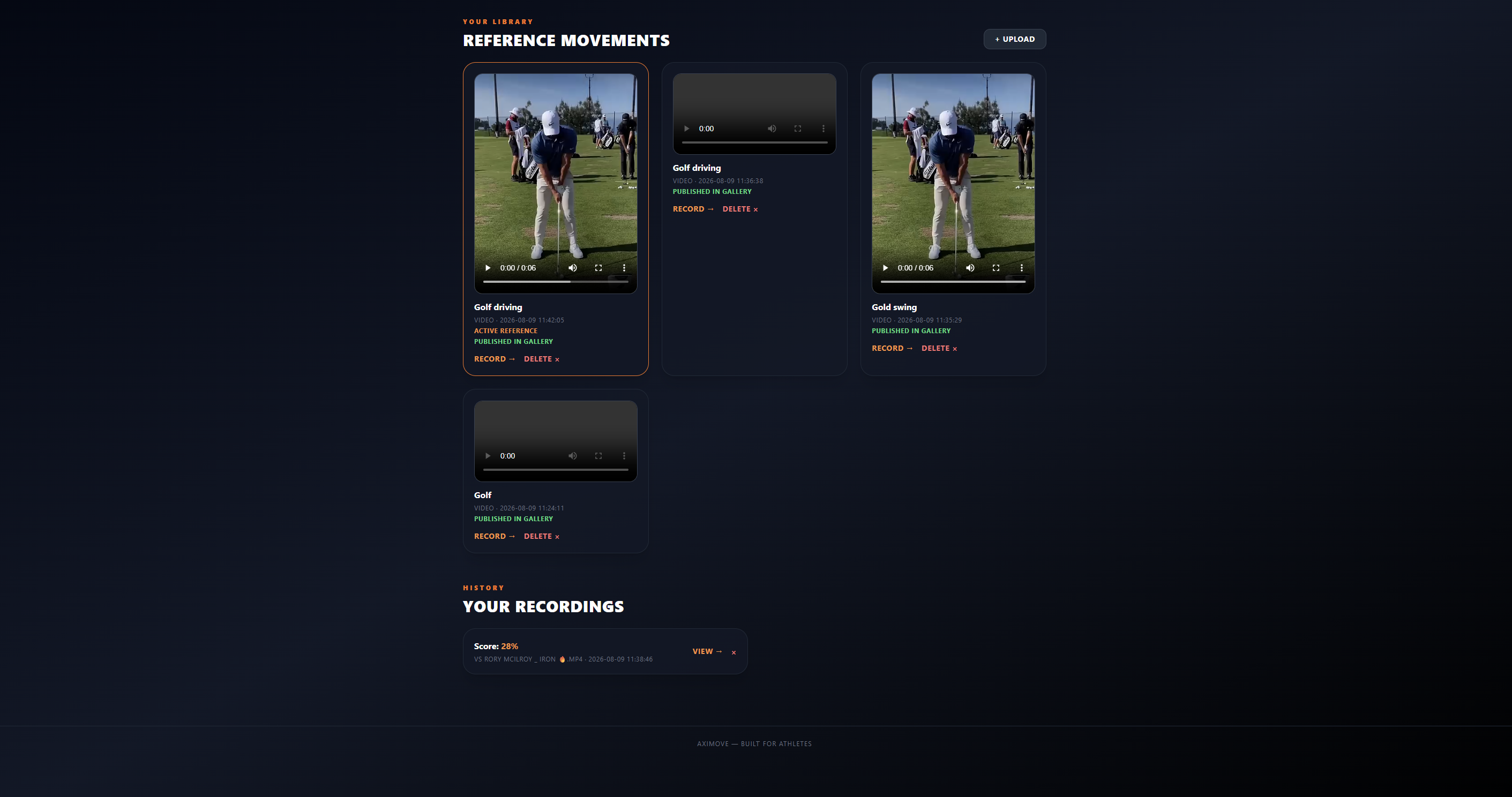
Reference video upload
-
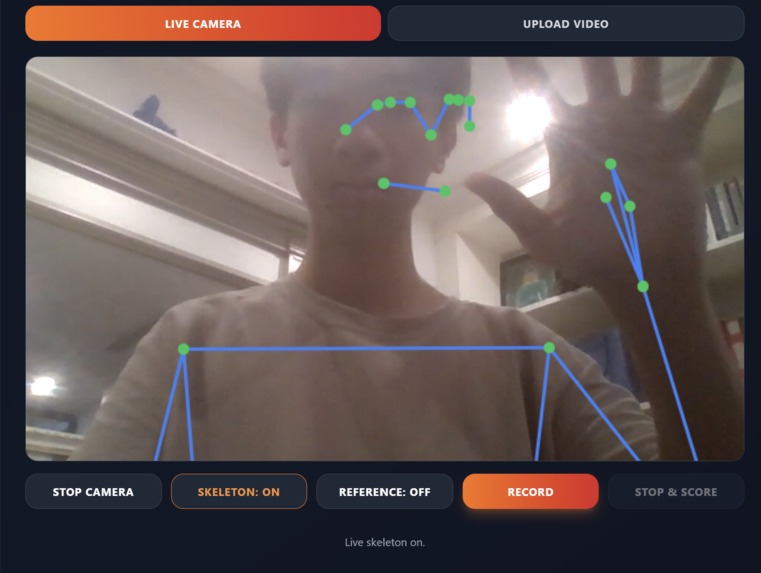
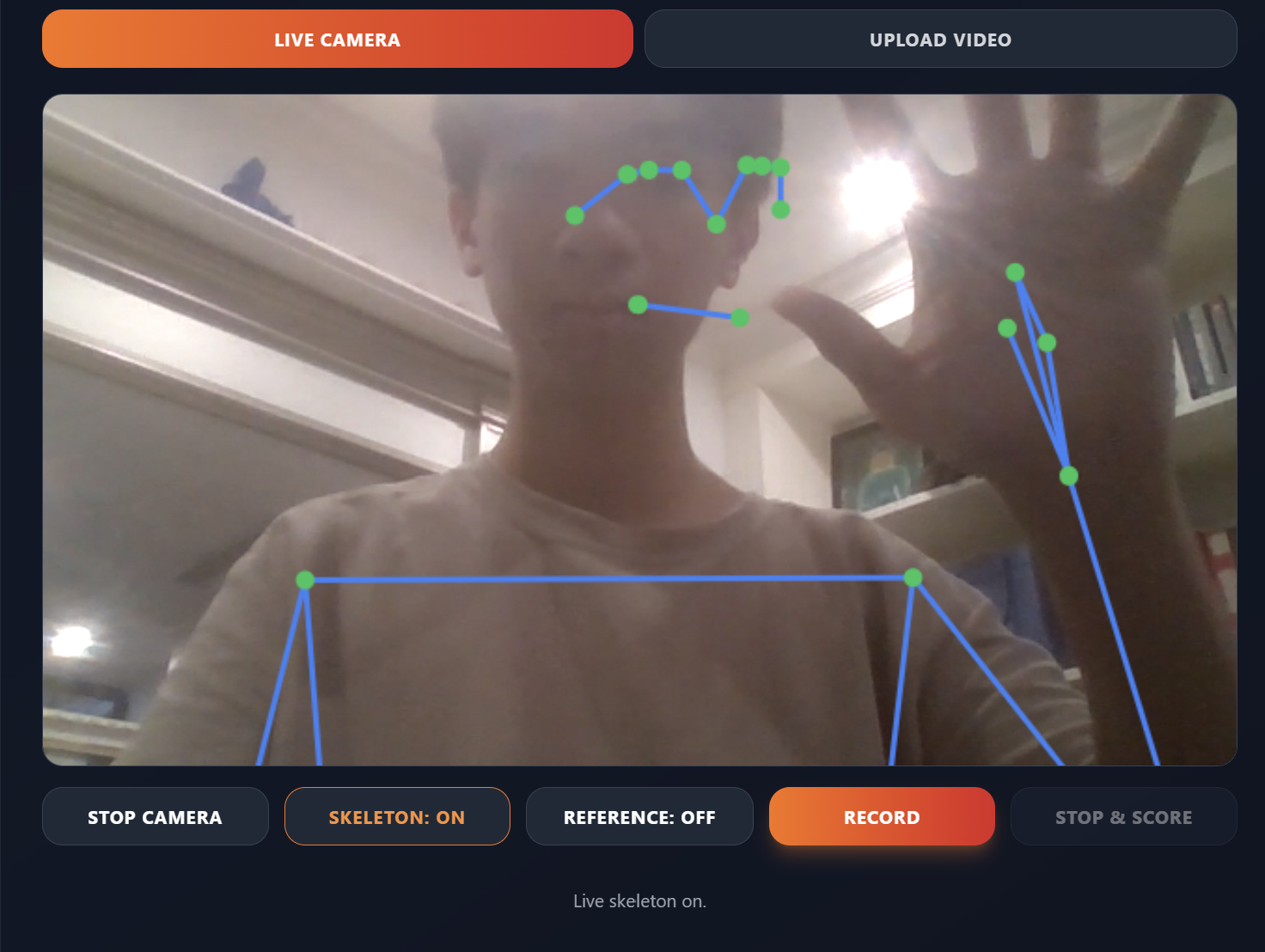
Live camera
-
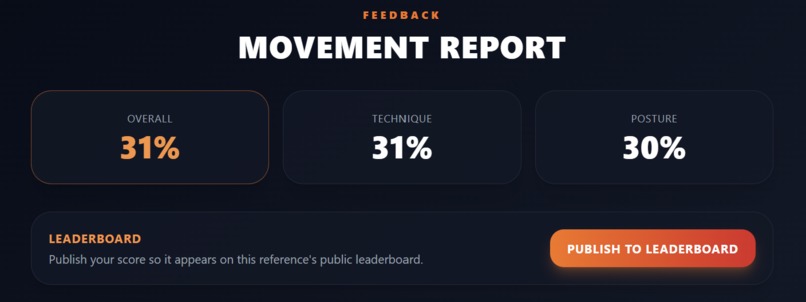
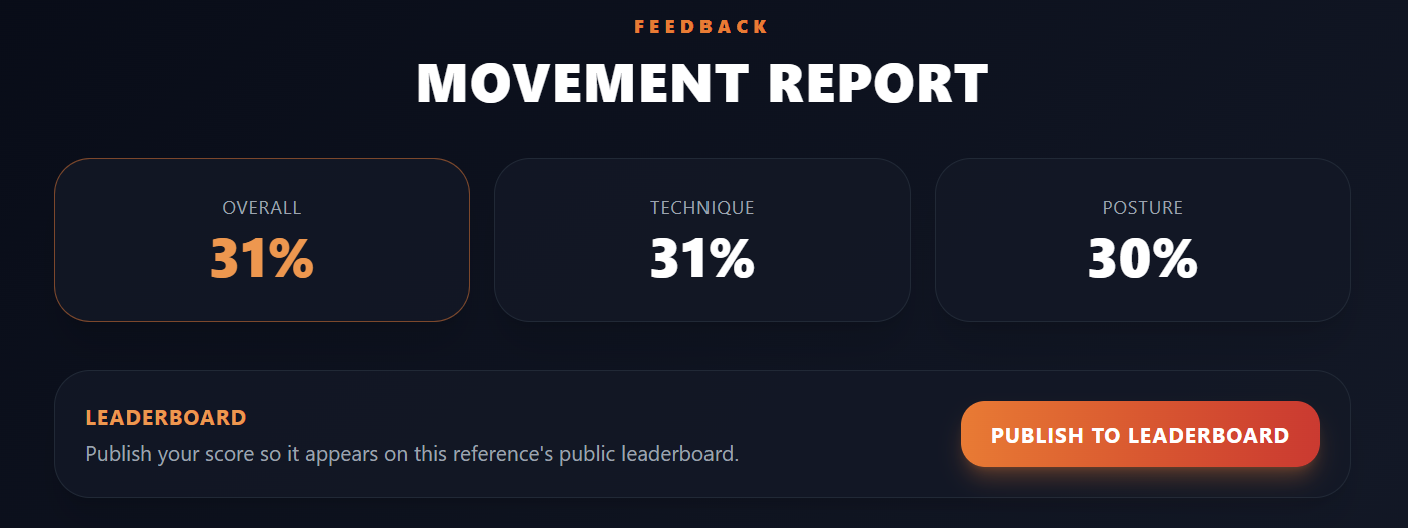
Movement report
-
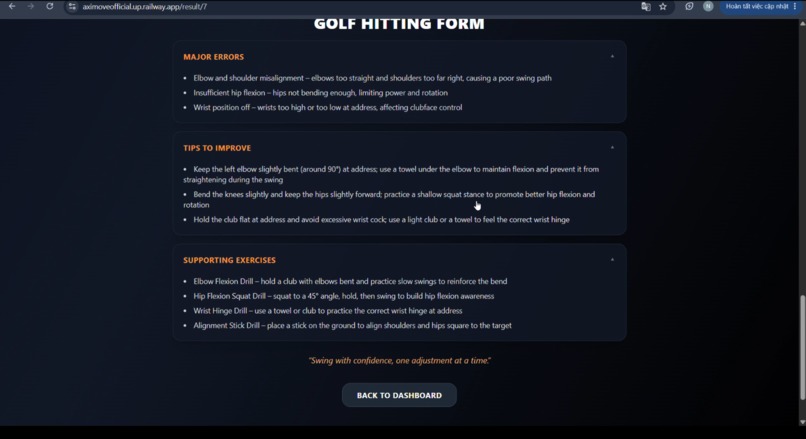
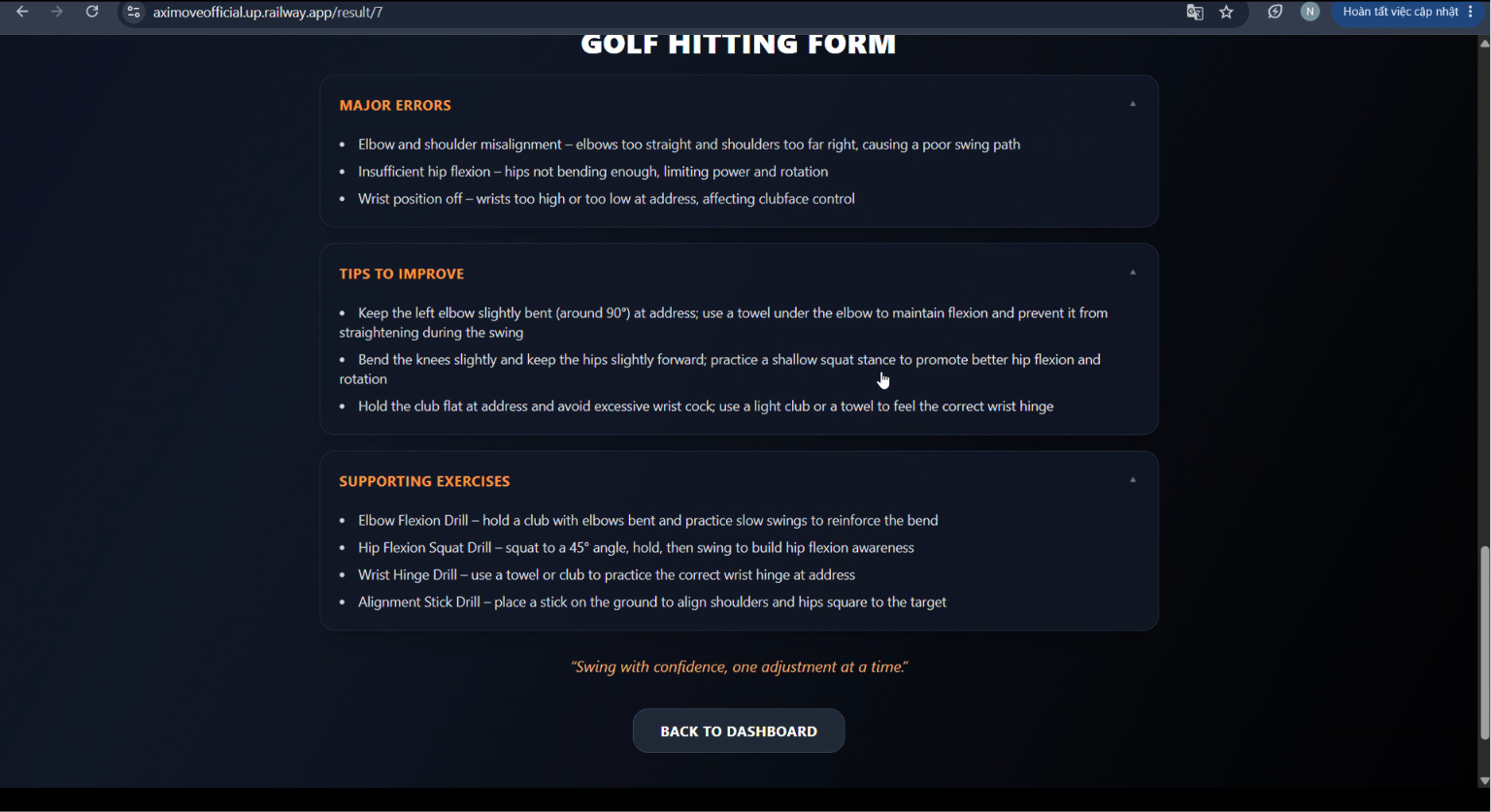
AI coaching feedbacks
-
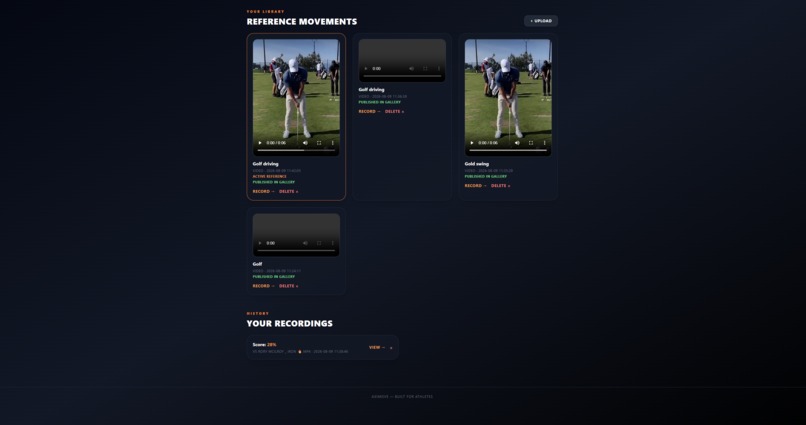
Dashboard
-
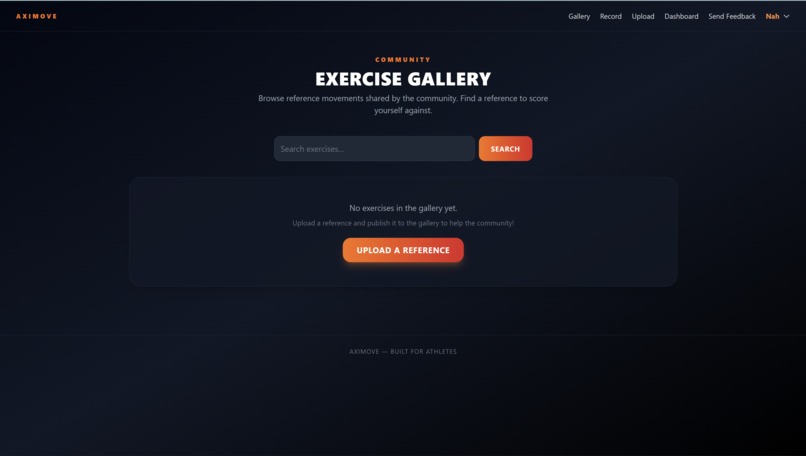
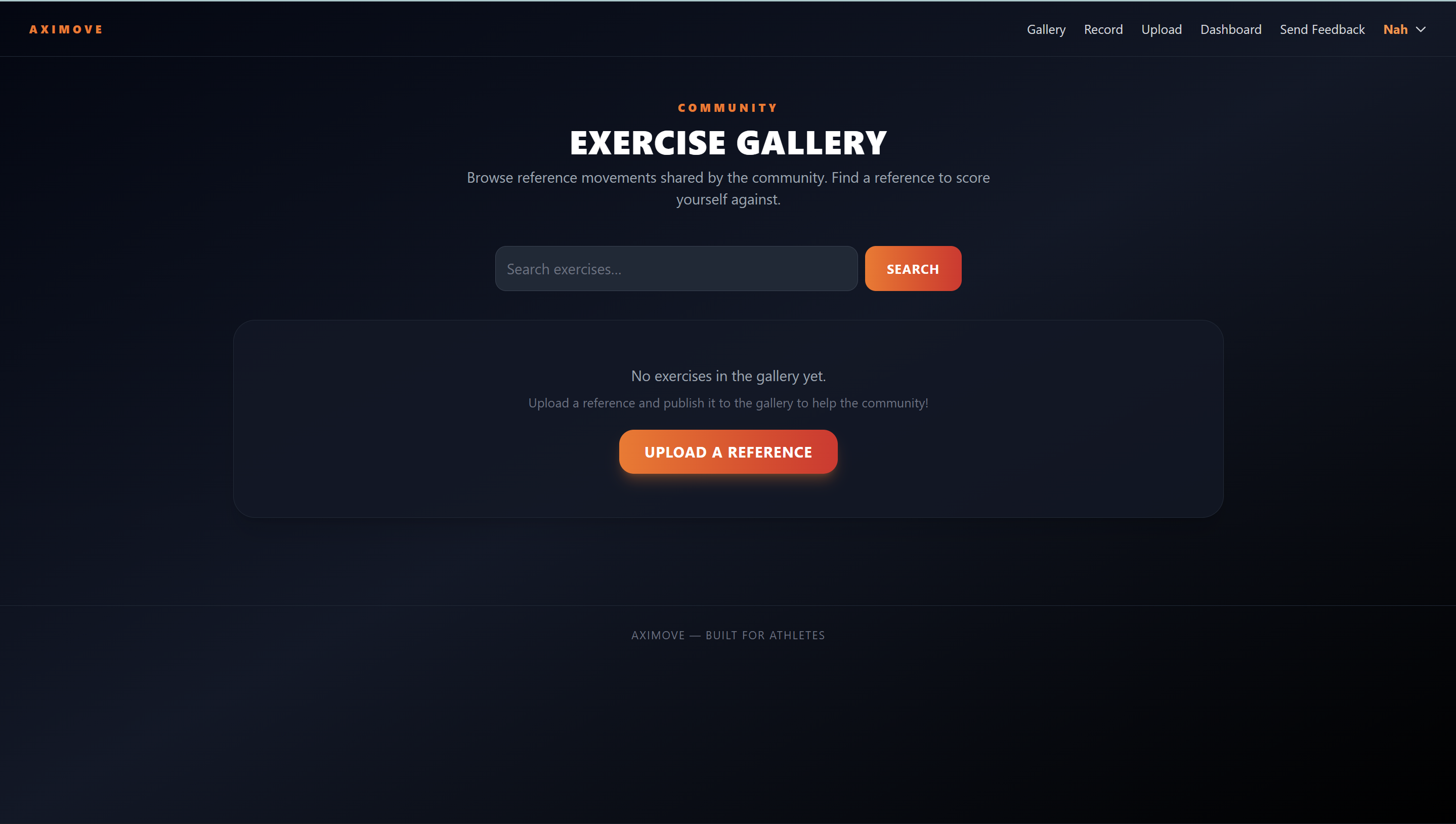
Community gallery
Inspiration
Proper movement technique is important for everyone—from athletes trying to improve performance to people learning how to exercise safely. However, getting consistent feedback usually requires a coach, trainer, or physical therapist, which is not always accessible.
We wanted to explore whether technology could make that kind of feedback more accessible. Instead of simply telling users what exercise to do, we wanted to build a system that could actually watch how they move, compare it with proper technique, and explain how they could improve.
That idea became AXIMOVE — Movement Analysis Coach.
What it does
AXIMOVE is an AI-powered movement analysis platform that helps users understand and improve their movement technique.
Users can upload a reference video demonstrating a movement and then record or upload their own performance. AXIMOVE uses computer vision to track body landmarks and compares the user's movement sequence with the reference.
Rather than relying only on visual similarity, AXIMOVE analyzes the underlying movement patterns and uses AI to turn those differences into understandable coaching feedback.
The platform supports:
- Reference-based movement analysis
- Live camera movement tracking
- Video upload and analysis
- Pose estimation using body landmarks
- Dynamic Time Warping (DTW) for movement-sequence comparison
- AI-generated personalized coaching
- A community gallery and leaderboard for sharing and comparing movements
Our goal is simple: help people understand how they move, not just what they are doing.
How we built it
AXIMOVE combines computer vision, movement analysis, and AI into a web-based platform.
We use MediaPipe Pose to detect key body landmarks from videos and live camera input. These landmarks allow us to represent a person's movement as a sequence of body positions and joint relationships.
To compare the user's performance with a reference, we implemented Dynamic Time Warping (DTW) through tslearn. Unlike a simple frame-by-frame comparison, DTW can align two movement sequences even when they are performed at different speeds or with slightly different timing.
We then process the movement differences and use AI to generate coaching feedback that is more understandable and actionable for the user.
The application itself connects these components through a web interface, allowing users to provide their own reference and performance videos and receive movement analysis without requiring specialized equipment.
Challenges we ran into
One of our biggest challenges was that human movement is extremely variable. Different people have different body proportions, movement speeds, ranges of motion, and natural ways of performing the same exercise.
A straightforward frame-by-frame comparison therefore wasn't reliable enough. A user could perform the same movement correctly but at a different speed and still appear significantly different from the reference. This was one of the reasons we explored Dynamic Time Warping.
We also faced challenges with pose estimation and video processing. Differences in camera positioning, video dimensions, and aspect ratios could affect how movement was represented and even cause visual distortions in the displayed skeleton.
Another major challenge was turning numerical movement differences into feedback that a normal user could actually understand. Detecting that two movements are different is one problem; determining what is different, why it matters, and how the user should improve is much harder.
Accomplishments that we're proud of
We are proud that we turned an initial idea into a functional movement-analysis system that combines several different technologies into one platform.
AXIMOVE can take a reference movement and a user's own performance, extract their movement patterns, compare them using DTW, and provide AI-generated feedback based on the analysis.
We are especially proud of building the system around reference-based analysis. Rather than forcing every user into one predefined standard, AXIMOVE allows users to provide a movement they want to learn or replicate and analyzes their performance relative to that reference.
Most importantly, we are proud that AXIMOVE addresses a real problem we encountered ourselves: how can someone receive meaningful movement feedback when an expert isn't always there to provide it?
What we learned
AXIMOVE taught us that building an AI application is much more than simply integrating a model into a website.
We learned how to work with real-world computer-vision data, represent human movement numerically, compare sequences that vary in timing, and connect multiple technologies into a usable product.
We also learned that technical accuracy and user experience are closely connected. An algorithm can successfully detect a difference between two movements, but that doesn't automatically make the result useful. The challenge is turning technical analysis into feedback that a person can understand and apply.
Most importantly, we learned through iteration. Many of our early approaches worked well in controlled situations but struggled with real-world movement. Testing those failures helped us understand the limitations of our methods and gradually build a more robust system.
What's next for AXIMOVE — Movement Analysis Coach
AXIMOVE is still evolving, and our next step is to make its movement analysis more accurate, personalized, and useful.
We want to improve the system's ability to handle differences in body proportions, camera angles, and individual movement styles. We also plan to expand the range of movements that AXIMOVE can analyze and improve the quality and specificity of its AI coaching.
In the longer term, we envision AXIMOVE developing beyond basic movement comparison into a more complete personal movement intelligence platform—one that can track progress over time, identify recurring movement patterns, provide personalized recommendations, and potentially support athletic training and rehabilitation.
Our ultimate goal is to make high-quality movement feedback accessible to anyone with a camera.


Log in or sign up for Devpost to join the conversation.