-
-
-
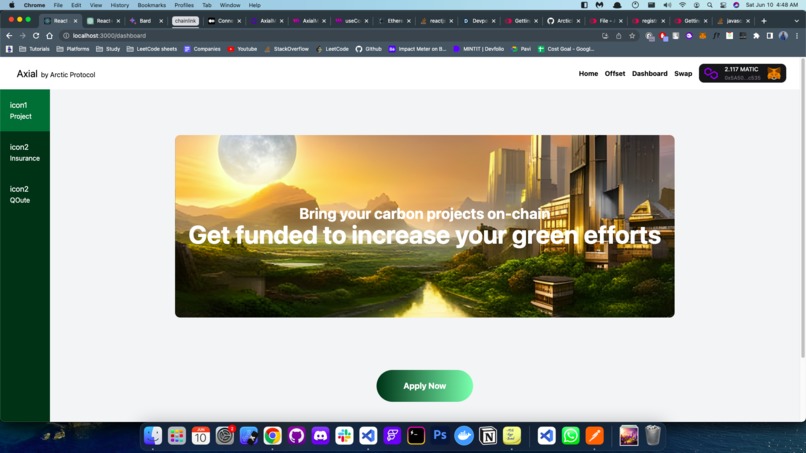
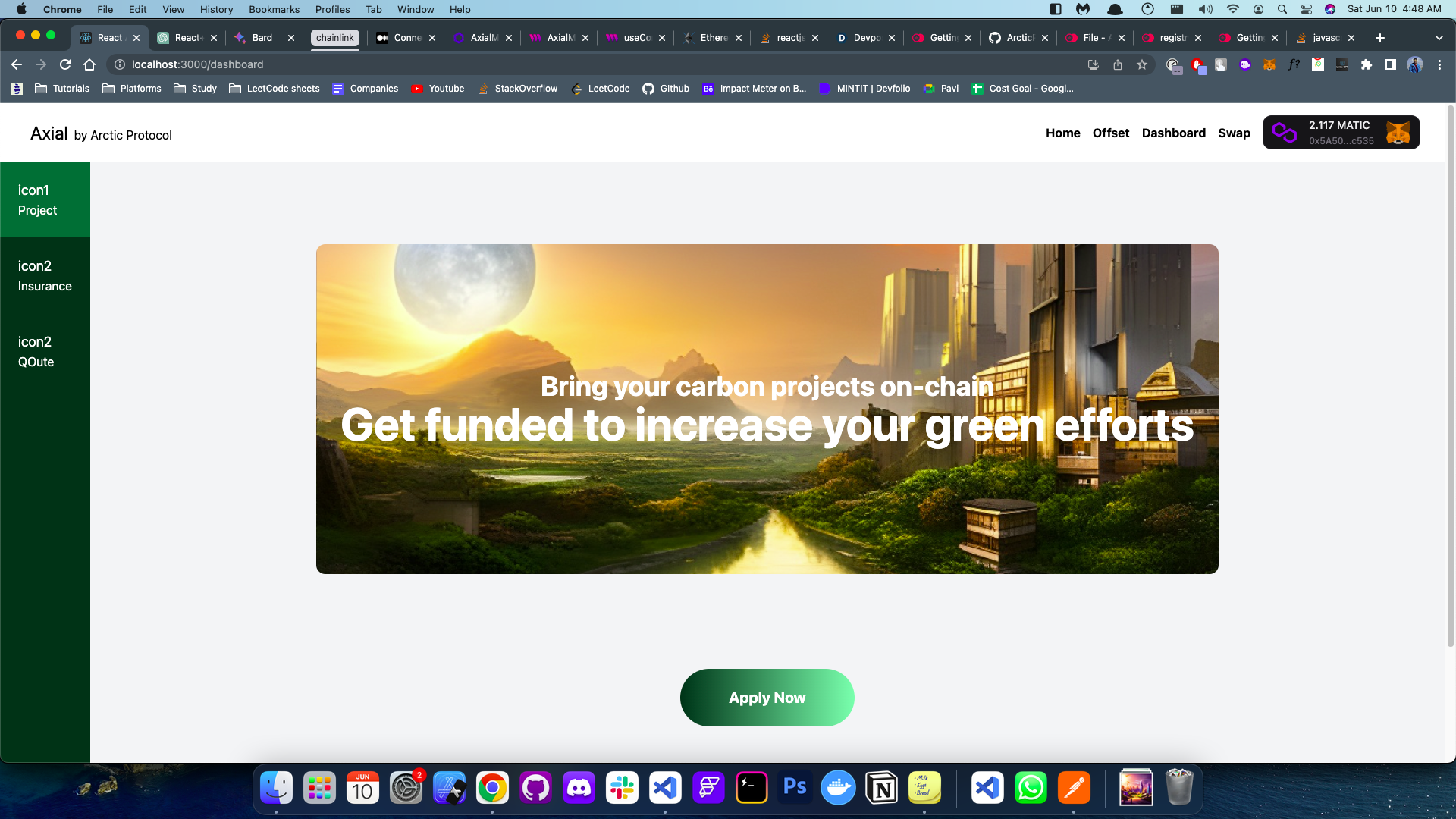
Add Projects
-
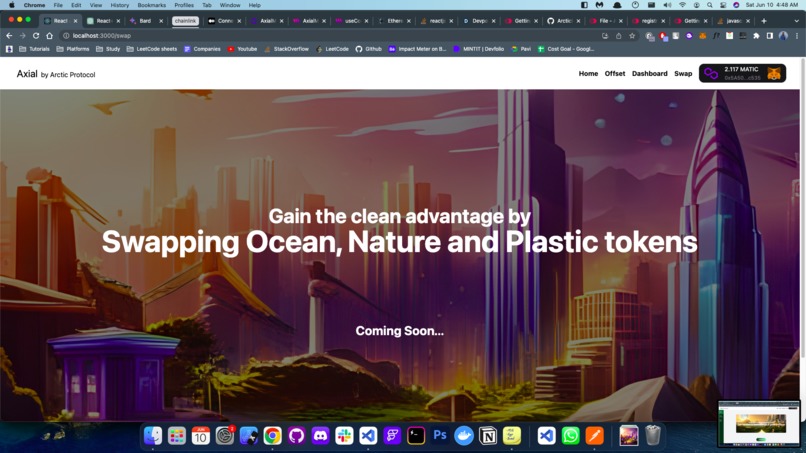
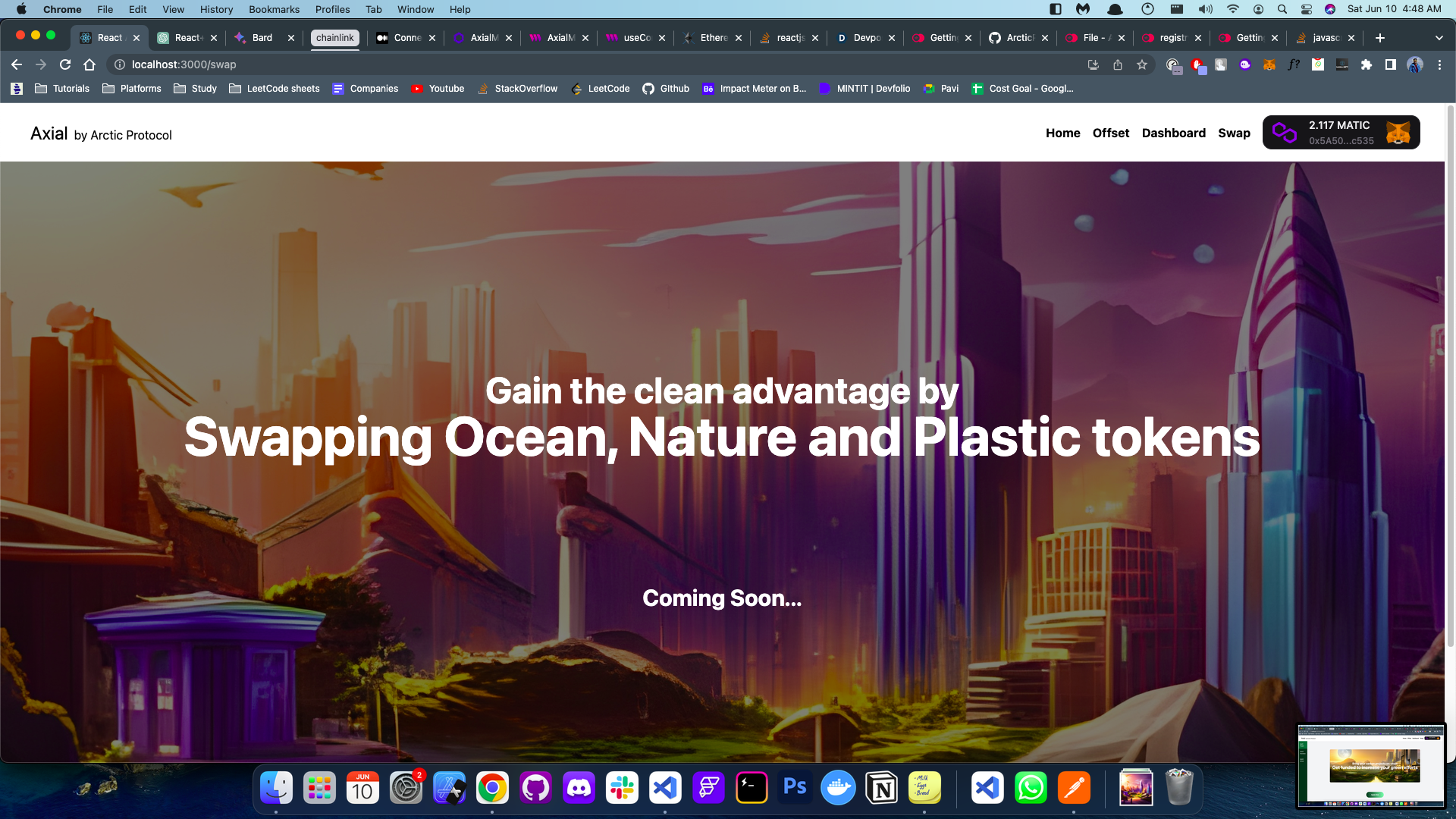
Swap, coming soon
-
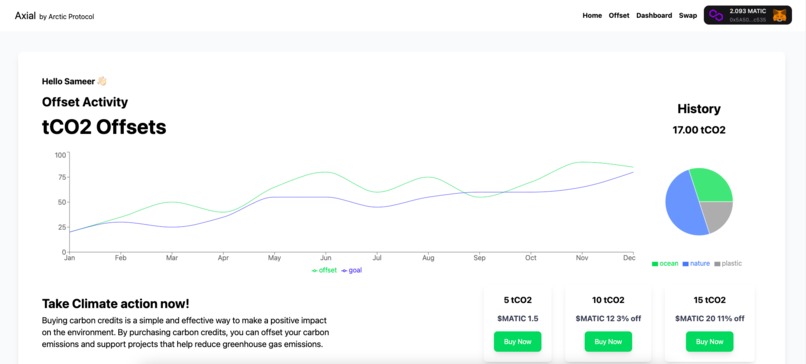
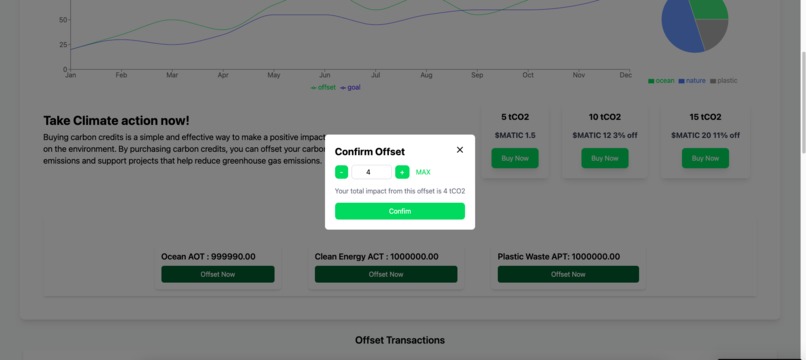
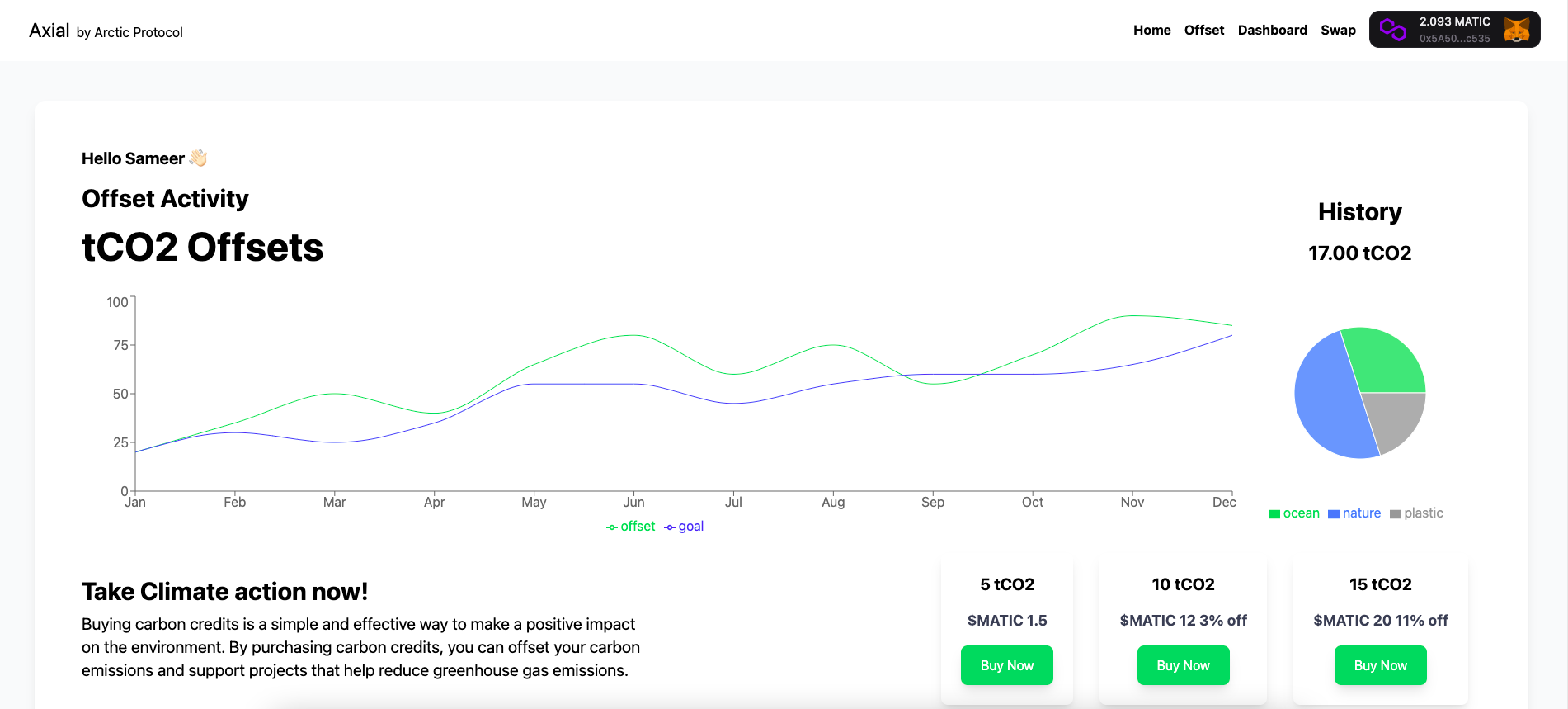
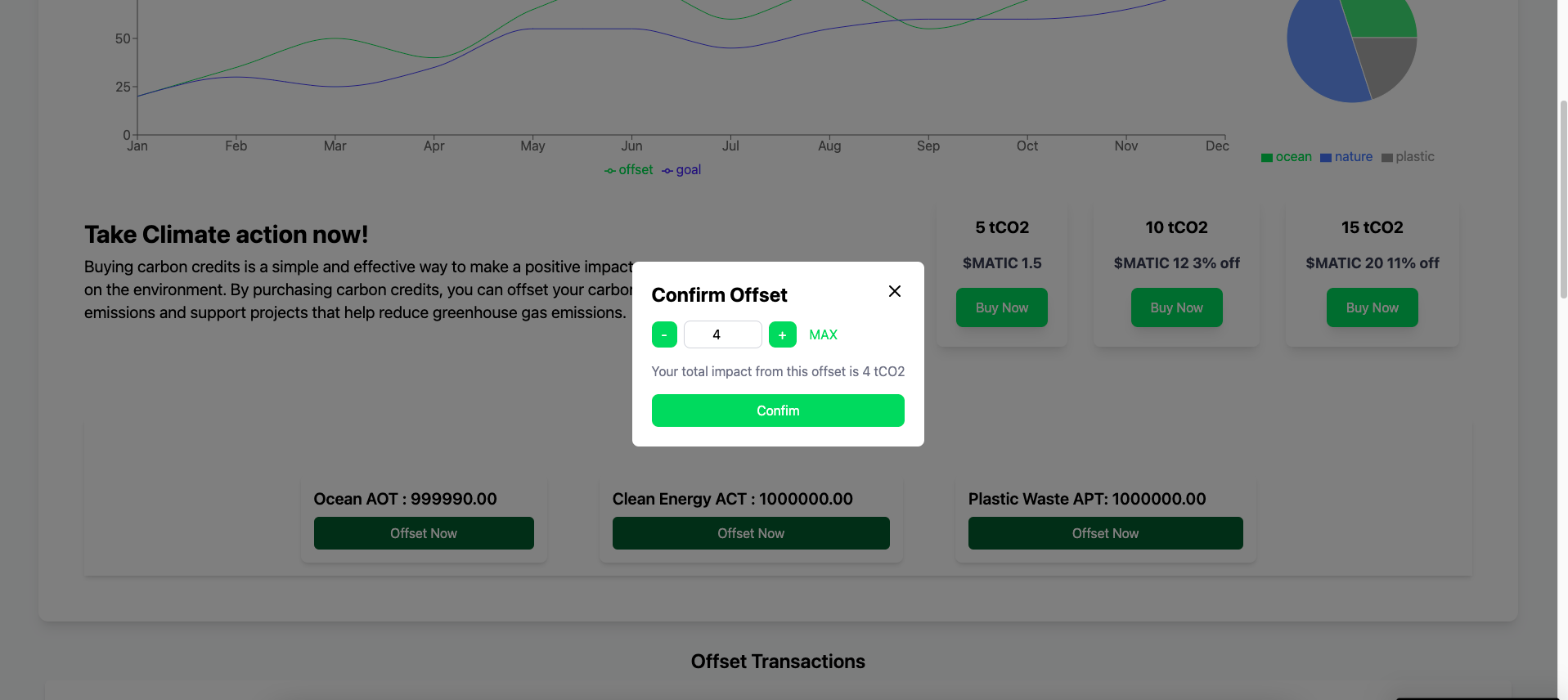
offset dashboard
-
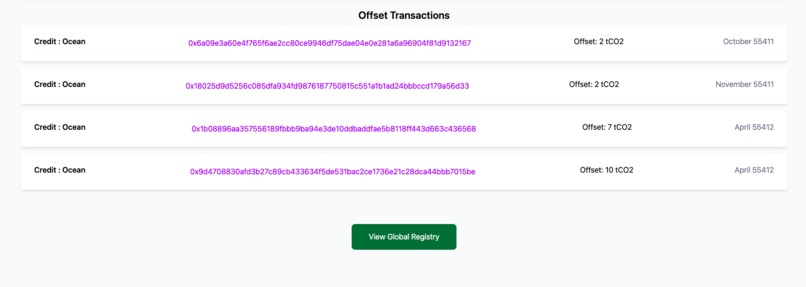
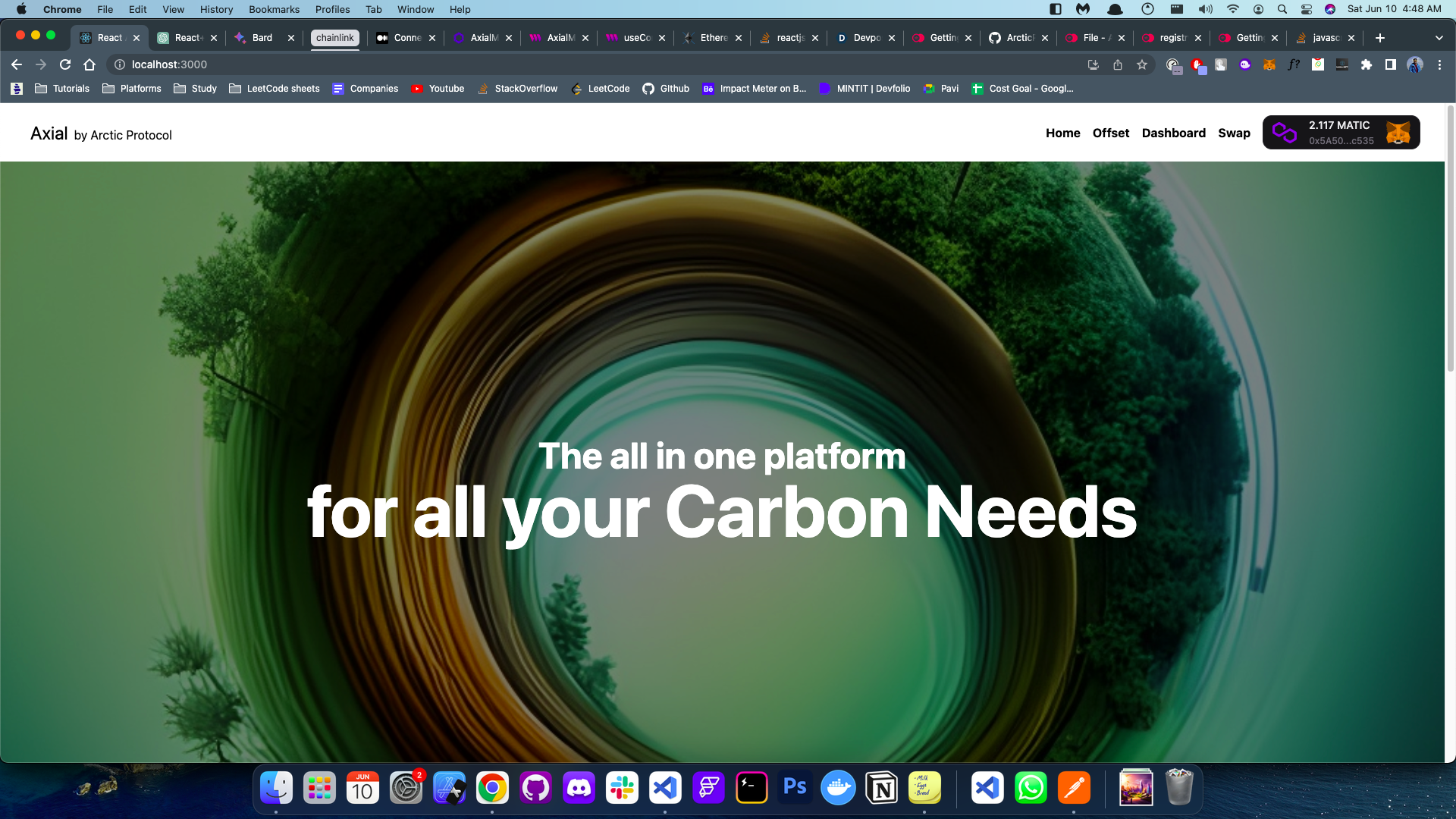
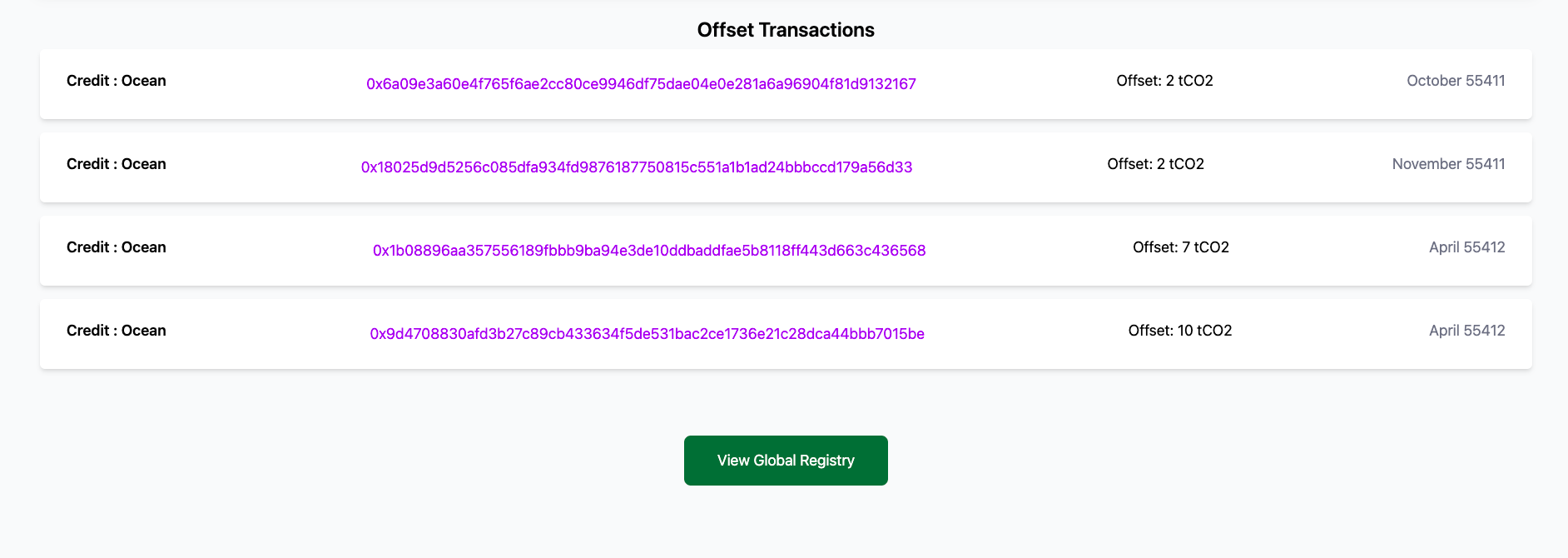
offset registry
-
-
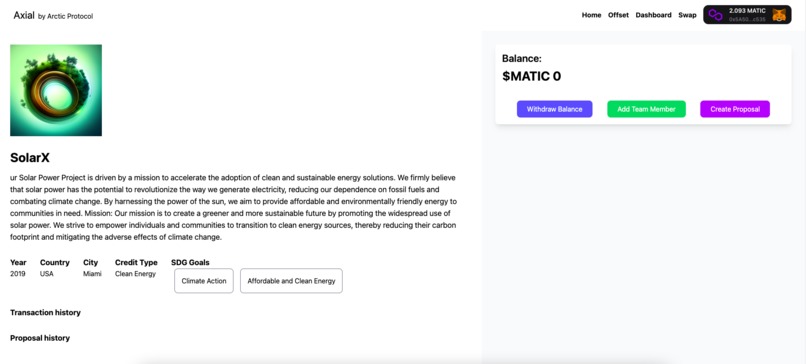
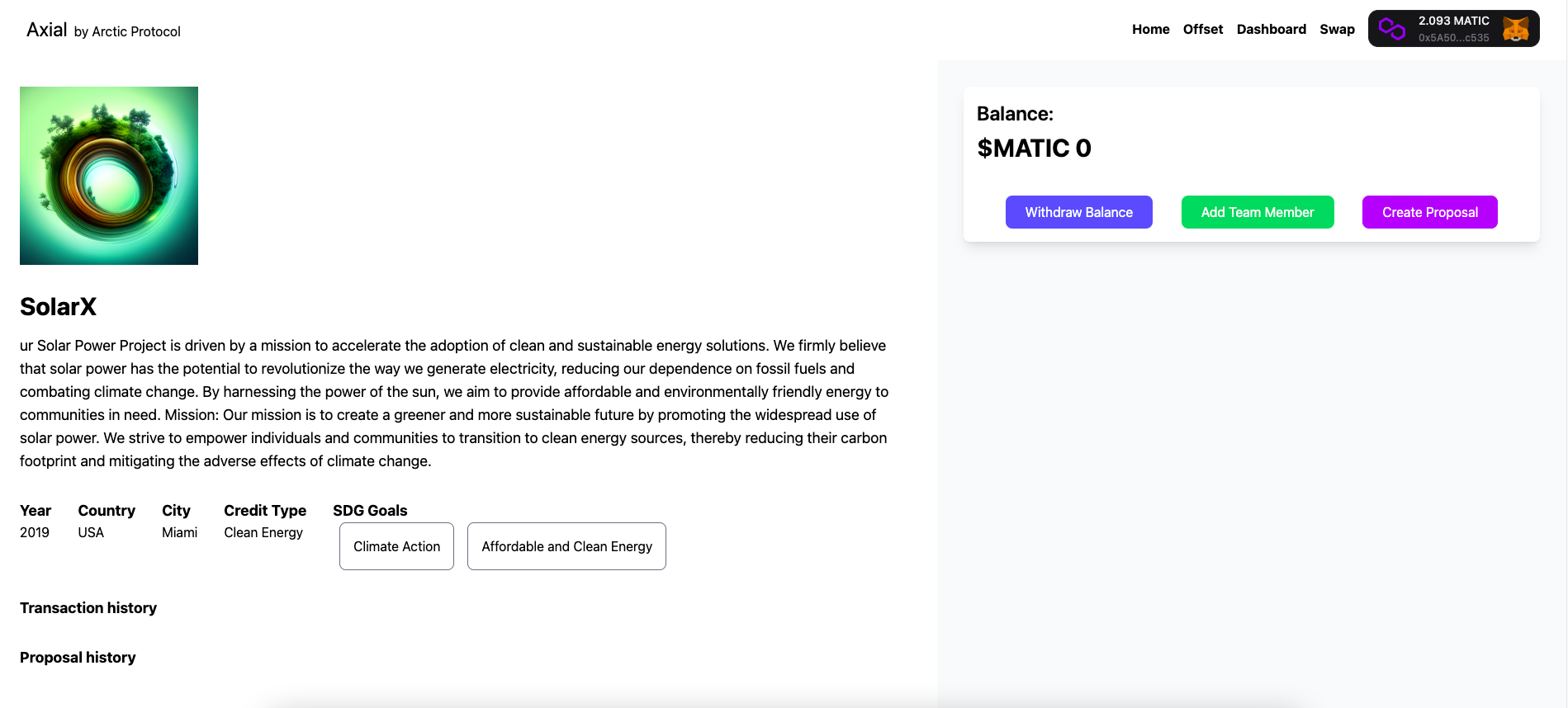
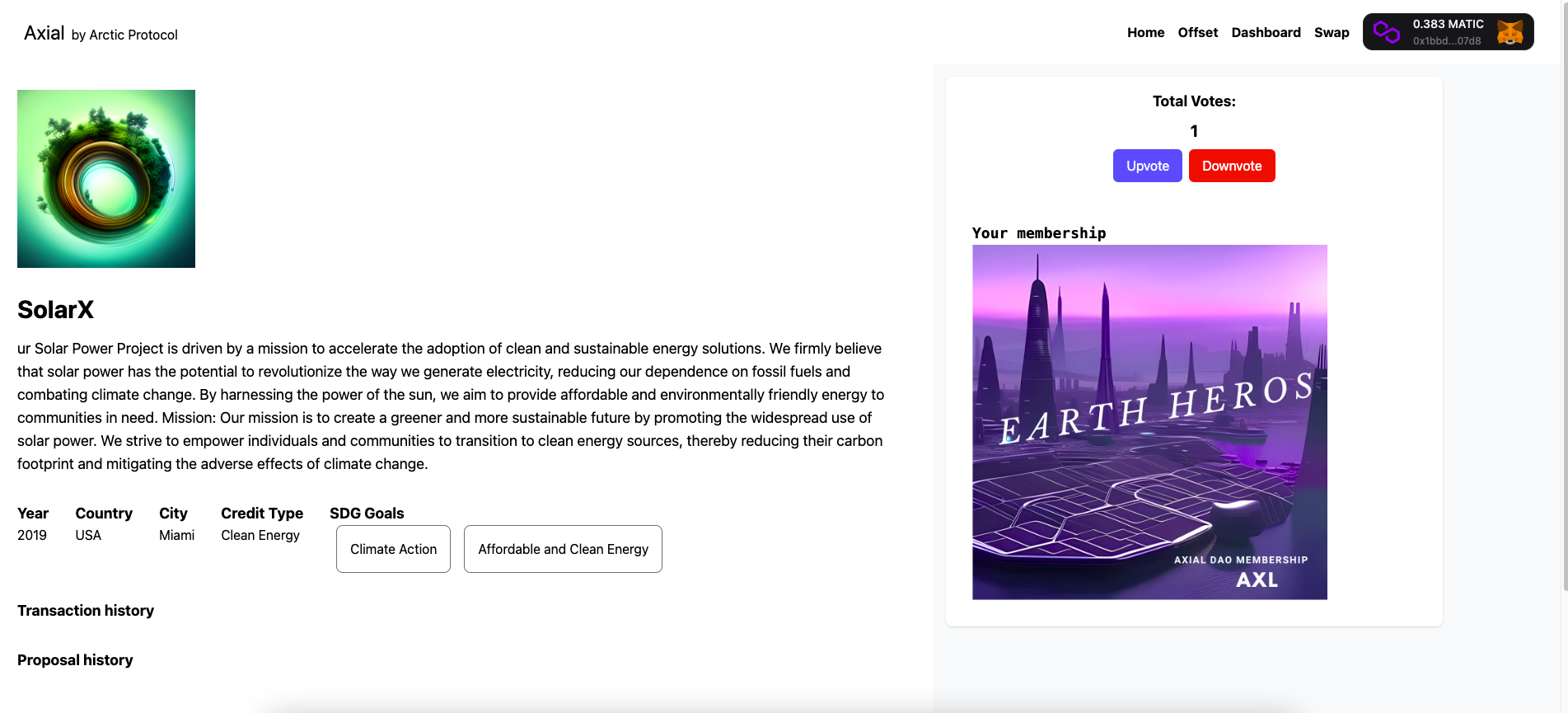
Manage Project
-
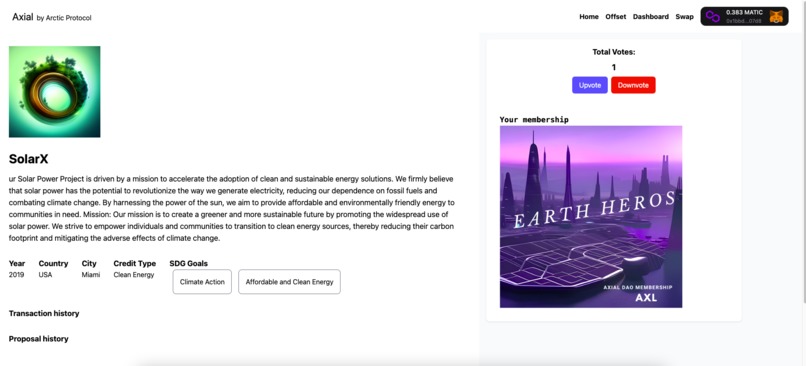
DAO voting
-
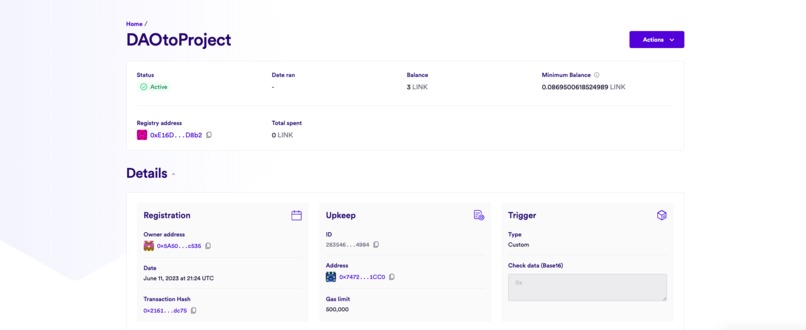
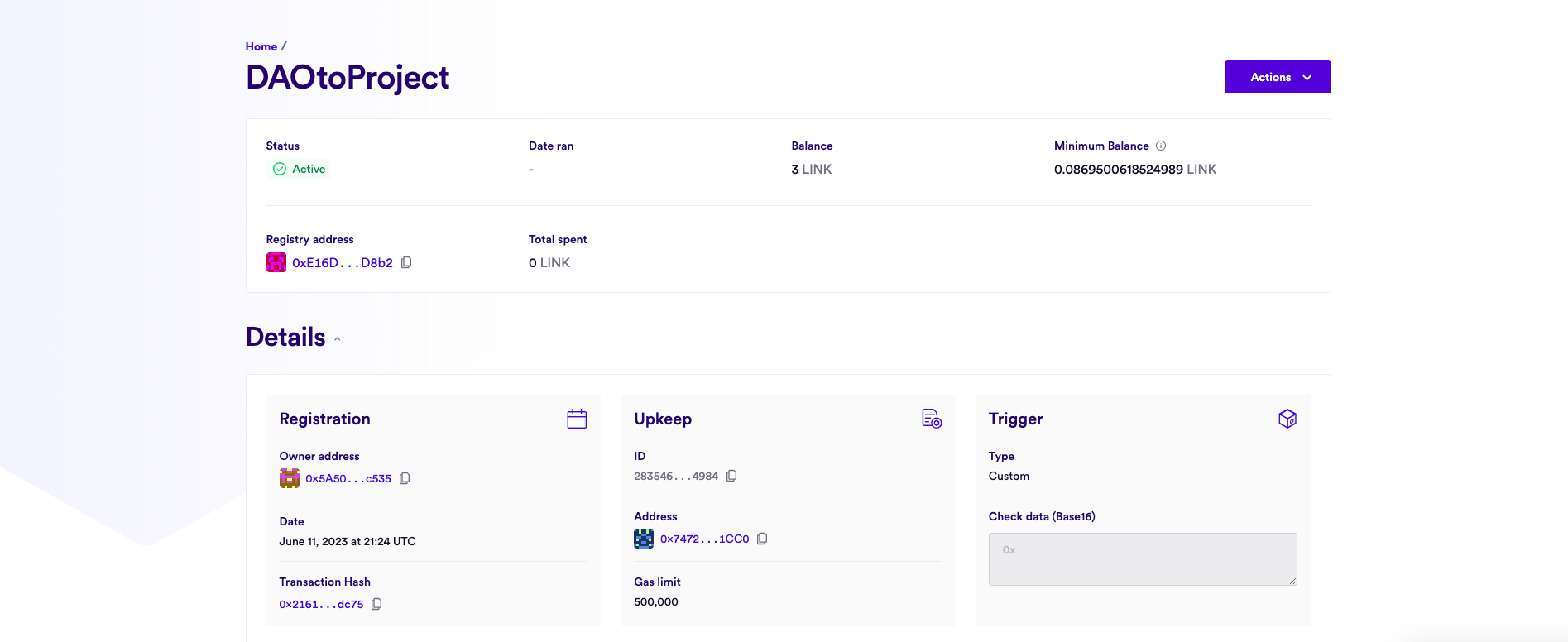
Chainlink keeper
Inspiration
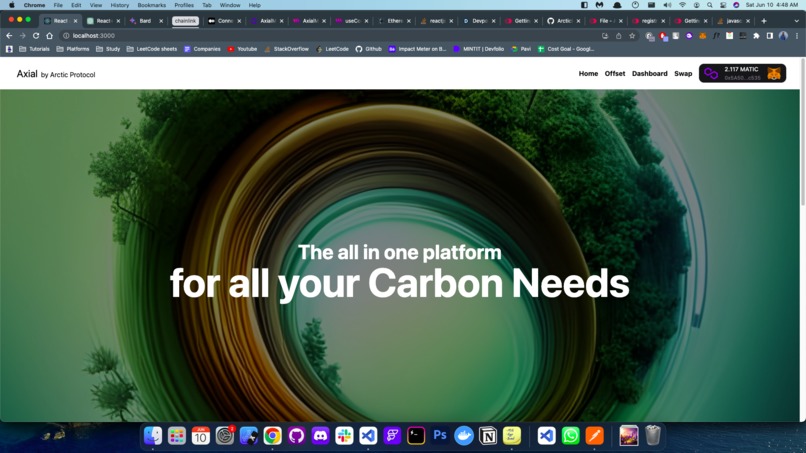
Our project was inspired by the urgent need to address climate change and reduce carbon emissions and the fact that the Arctic is melting 7x faster than everywhere else. We wanted to create an end-to-end solution that enables individuals and businesses to offset their carbon footprint and contribute to a more sustainable future.
What it does
Our project, Axial, is a platform that allows users to purchase climate credits and invest in sustainable projects. It provides a seamless experience for users to calculate their carbon emissions, explore a range of verified climate projects, and offset their carbon footprint by purchasing credits. The platform also offers transparency and traceability, ensuring that every credit purchased has a measurable impact on the environment. Each member who purchases can participate in the DAO process for the
How we built it
We built Axial using a combination of web technologies. The front end is developed using React.js, which allows for an interactive and user-friendly interface. We utilized smart contracts on the Polygon blockchain to manage the issuance and tracking of climate credits. The backend is built with Node.js and Express, providing the necessary APIs to interact with the smart contracts and handle user data securely and of course, Chainlink Keepers to automate the contracts in solidity
Challenges we ran into
Throughout the development process, we faced challenges in integrating the various components of the project. Ensuring the accuracy of carbon emissions calculations, implementing secure transactions, and maintaining data integrity were some of the key challenges we encountered. Additionally, ensuring a smooth user experience and optimizing performance were important considerations in the development process.
Accomplishments that we're proud of
We are proud to have developed a comprehensive platform that combines carbon emissions calculation, climate credit purchase, and project investment. Our solution provides an accessible and user-friendly interface for individuals and businesses to actively participate in addressing climate change. We are also proud of the integration with external data sources and the use of blockchain technology to ensure transparency and accountability in the offsetting process. Integrating Chainlink automation to automate a lot of our processes of expiring voted projects and moving funds to DAO treasury helped us understand a lot about solving problems efficiently with automation.
What we learned
During the development of Axial, we learned valuable lessons in integrating blockchain technology, handling sensitive user data, and building scalable and user-centric applications. We gained a deeper understanding of carbon offsetting and the importance of creating accessible solutions to encourage widespread adoption. Additionally, we learned about the challenges and opportunities in the climate finance sector.
What's next for Axial
In the future, we plan to expand the range of climate projects available on the platform and explore partnerships with organizations working in sustainable development. We aim to enhance the user experience by incorporating more personalized recommendations and tracking tools. Additionally, we will continue to improve the transparency and traceability of climate credits, ensuring that users can easily track the impact of their investments. And the biggest features in line for the next steps are on-chain carbon insurance to protect climate projects and make a safety net for investor investments. A Full-fledged liquidity pool will also allow us to trade between different utility tokens.
Built With
- chainlink
- polygon
- react
- tailwindcss
- thirdweb
- typescript

Log in or sign up for Devpost to join the conversation.