Inspiration
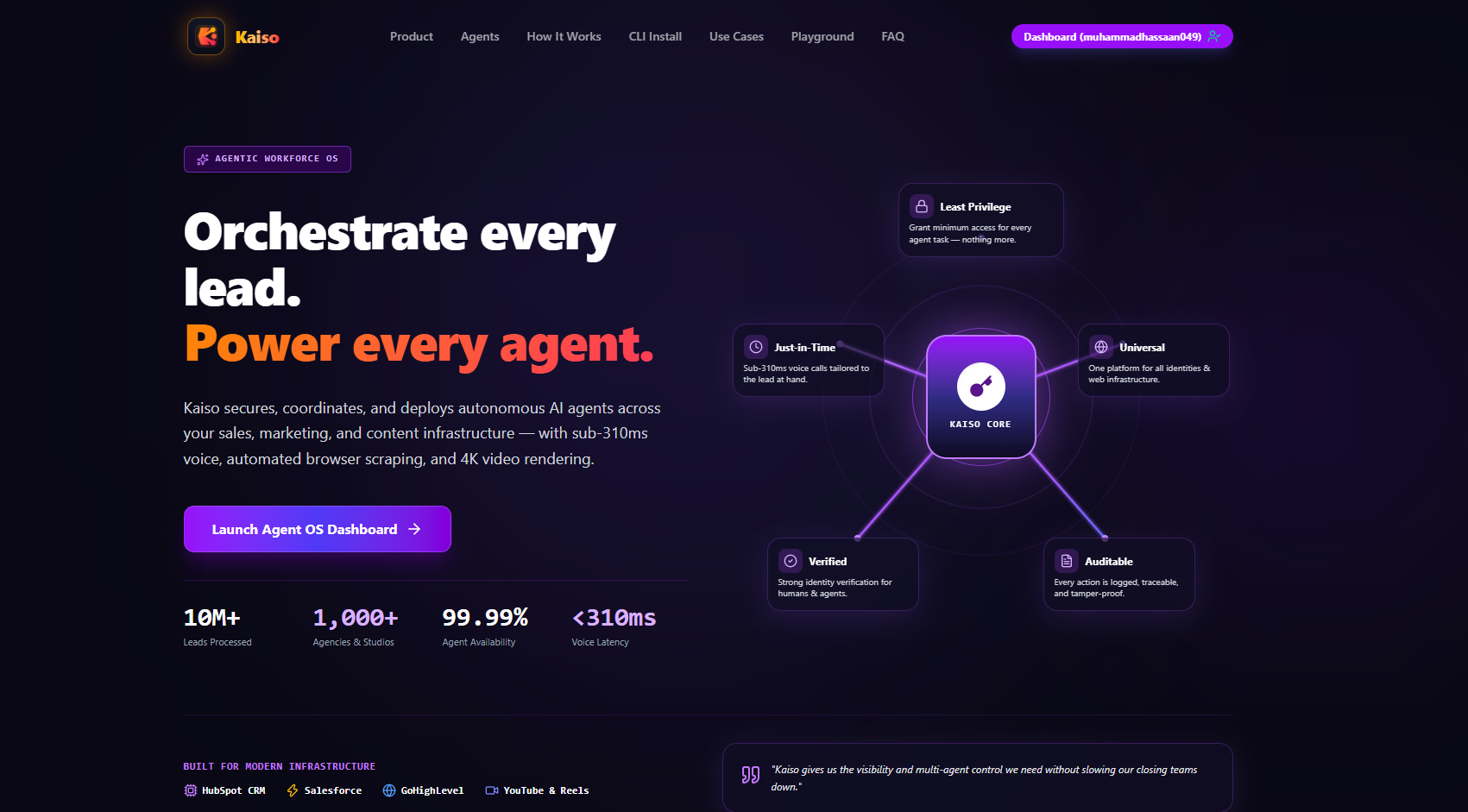
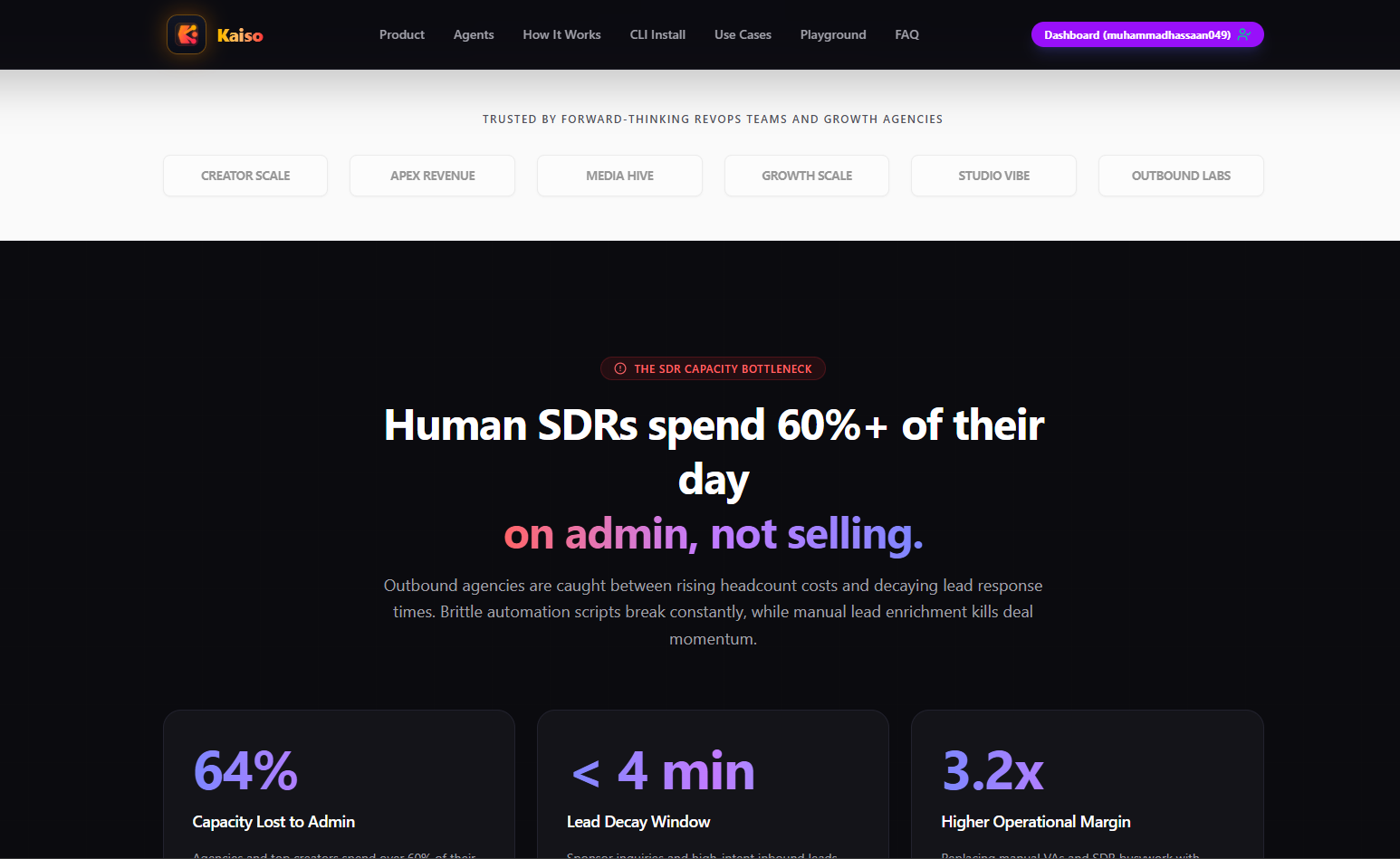
Agencies and creators drown in busywork: scraping leads, qualifying them, dialing prospects, and stitching analytics together by hand. Existing tools are isolated point solutions — a scraper here, a dialer there, a spreadsheet in between. We were inspired by a simple question: what if the whole funnel was one synchronized organism? KAI (Kaisō, "layered/structured" in Japanese) was born from the idea that agents shouldn't just automate tasks — they should hand off work to each other like a real team, with a shared, durable memory.
What it does
KAI is a multi-agent operating system for agencies and creators, built as a monorepo of four pillars:
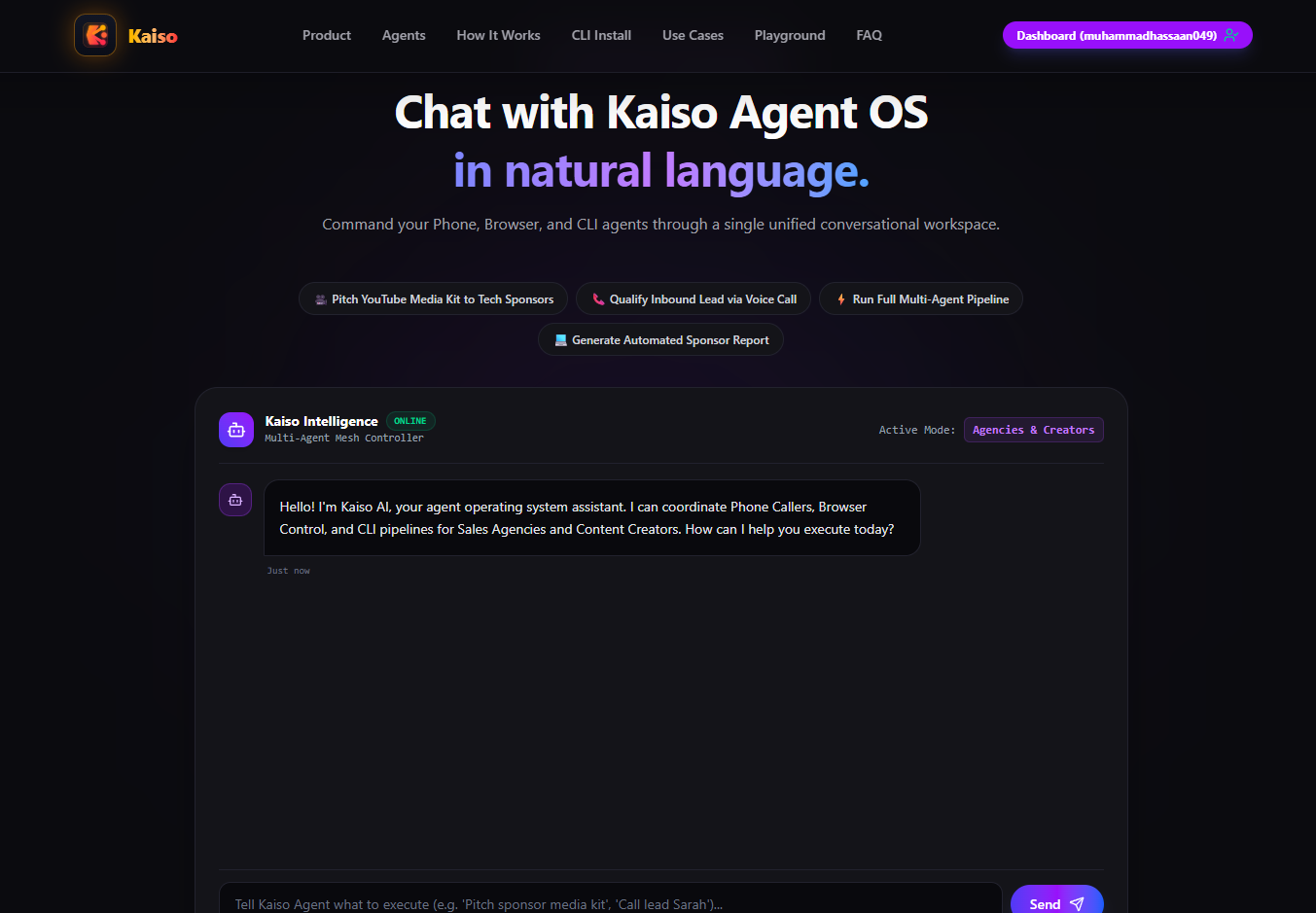
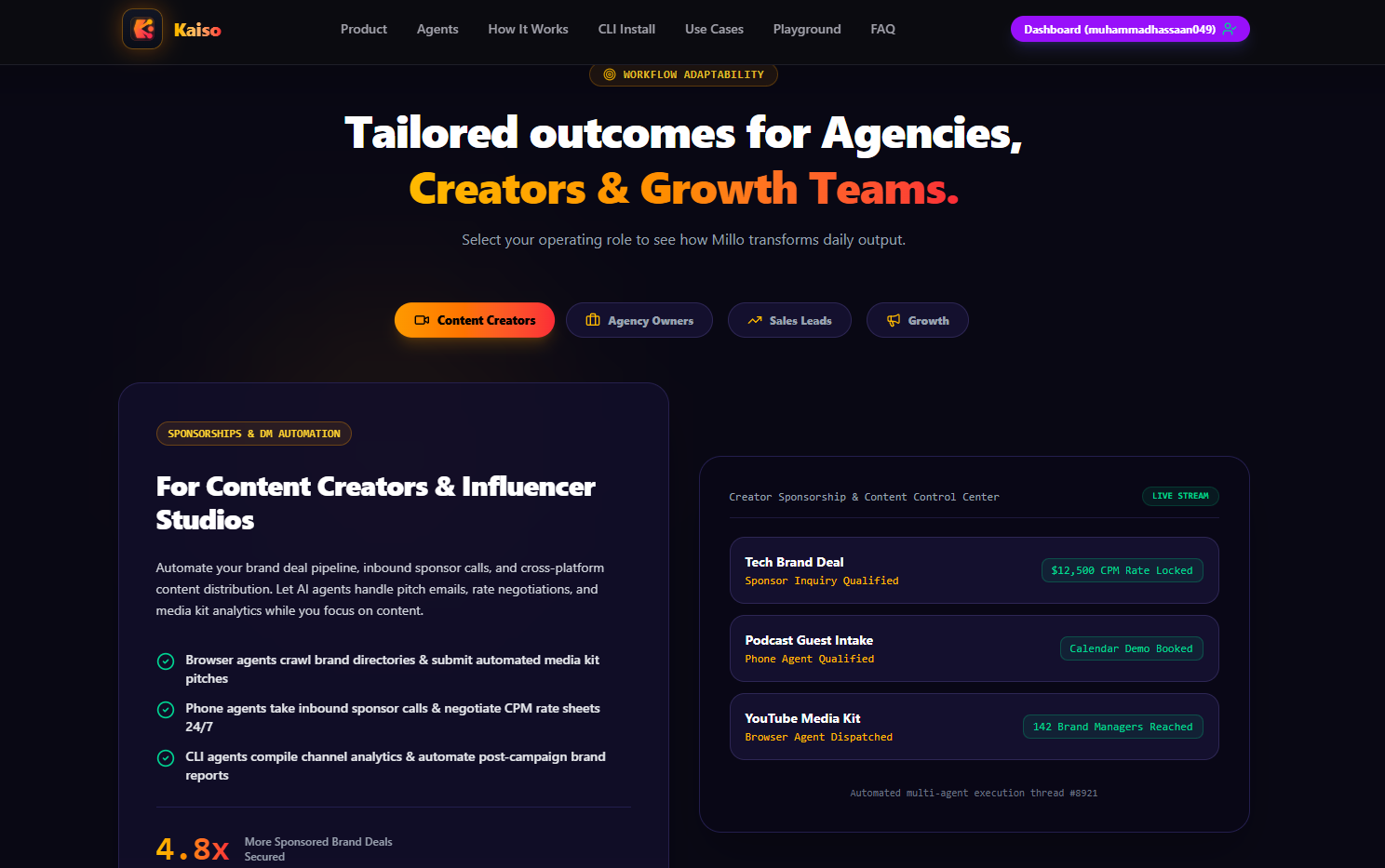
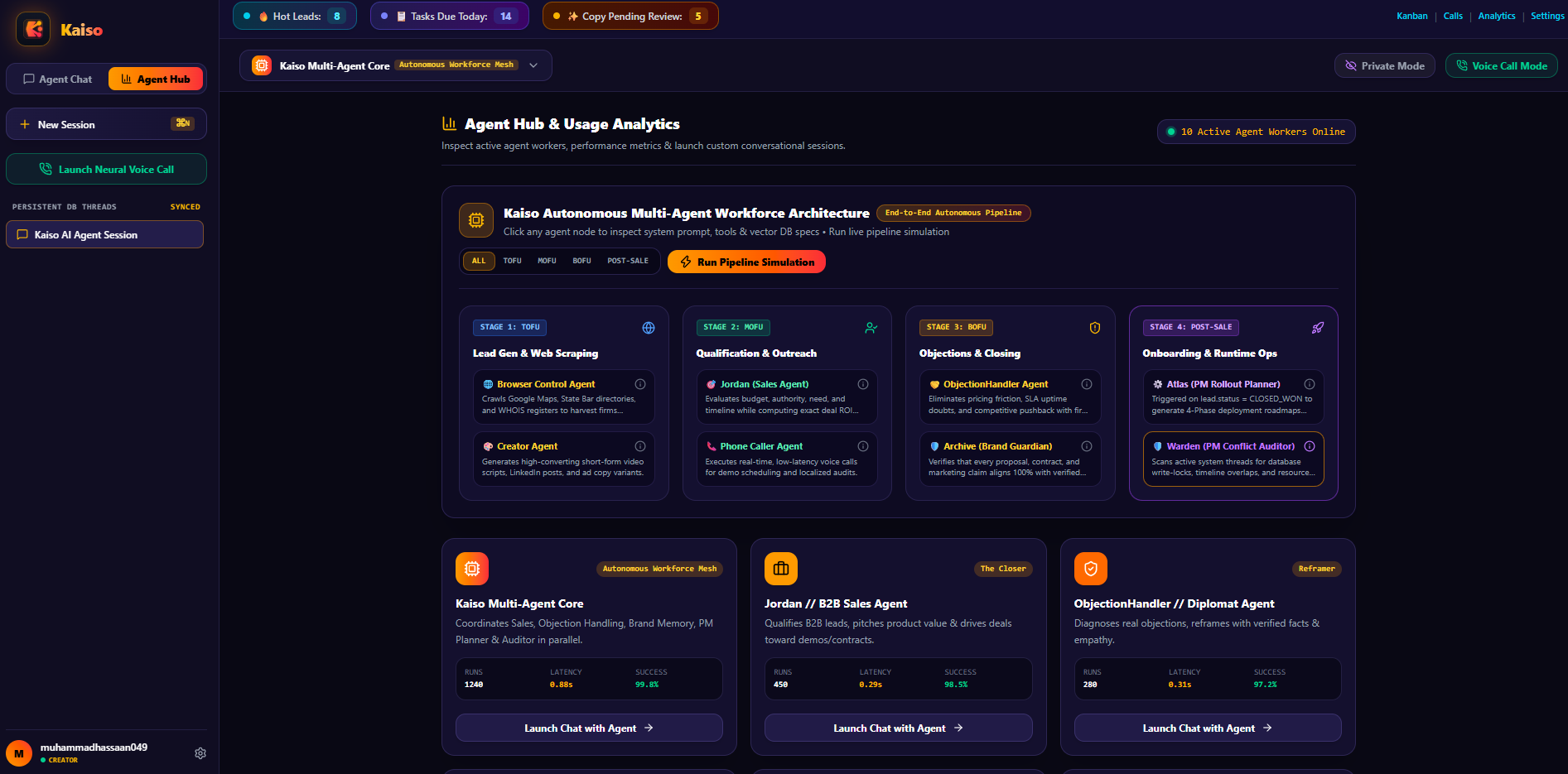
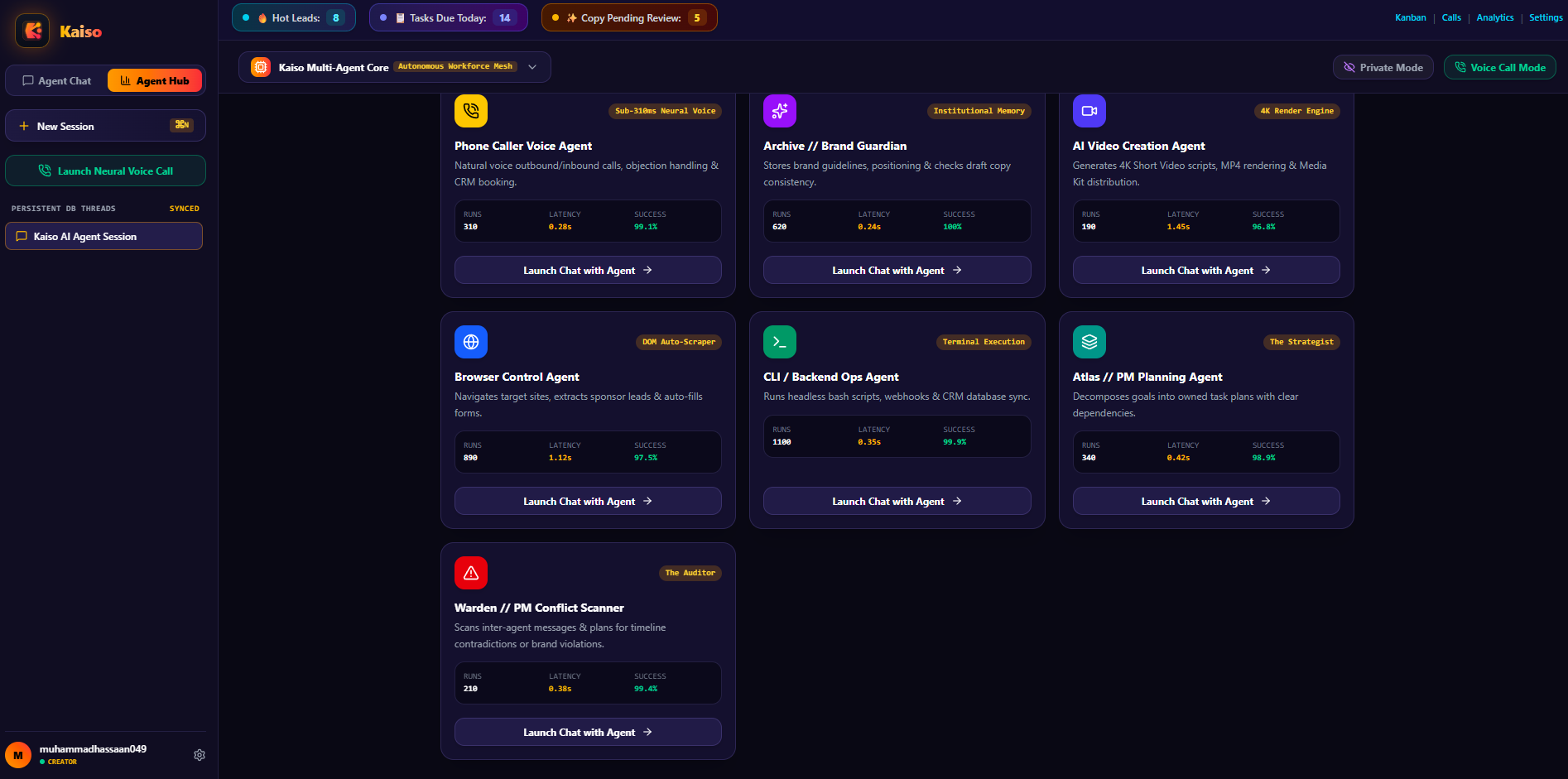
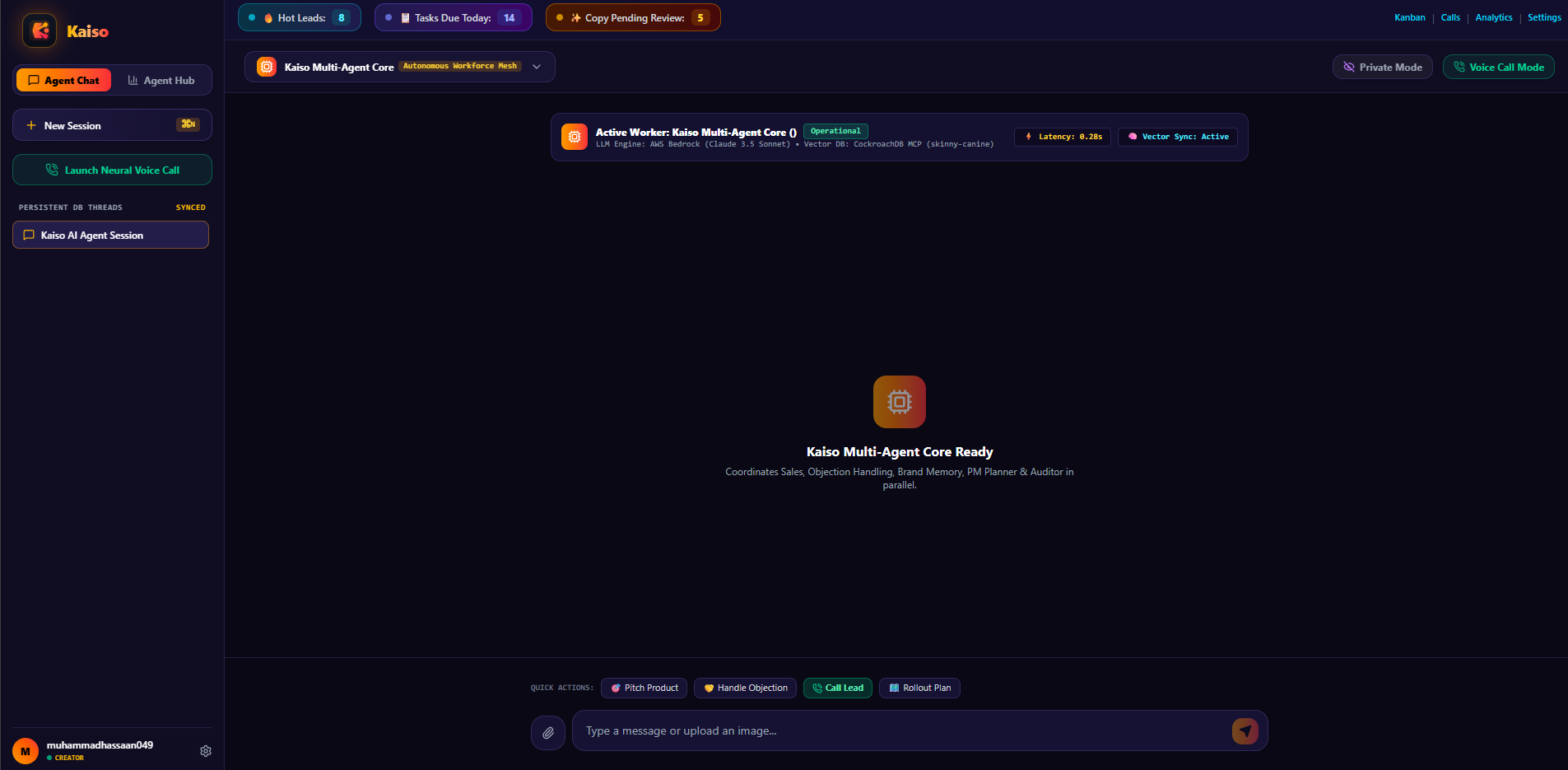
- Frontend (Next.js/React/Tailwind) — a premium web dashboard to deploy agents, simulate multi-agent handoffs, and view global funnel analytics.
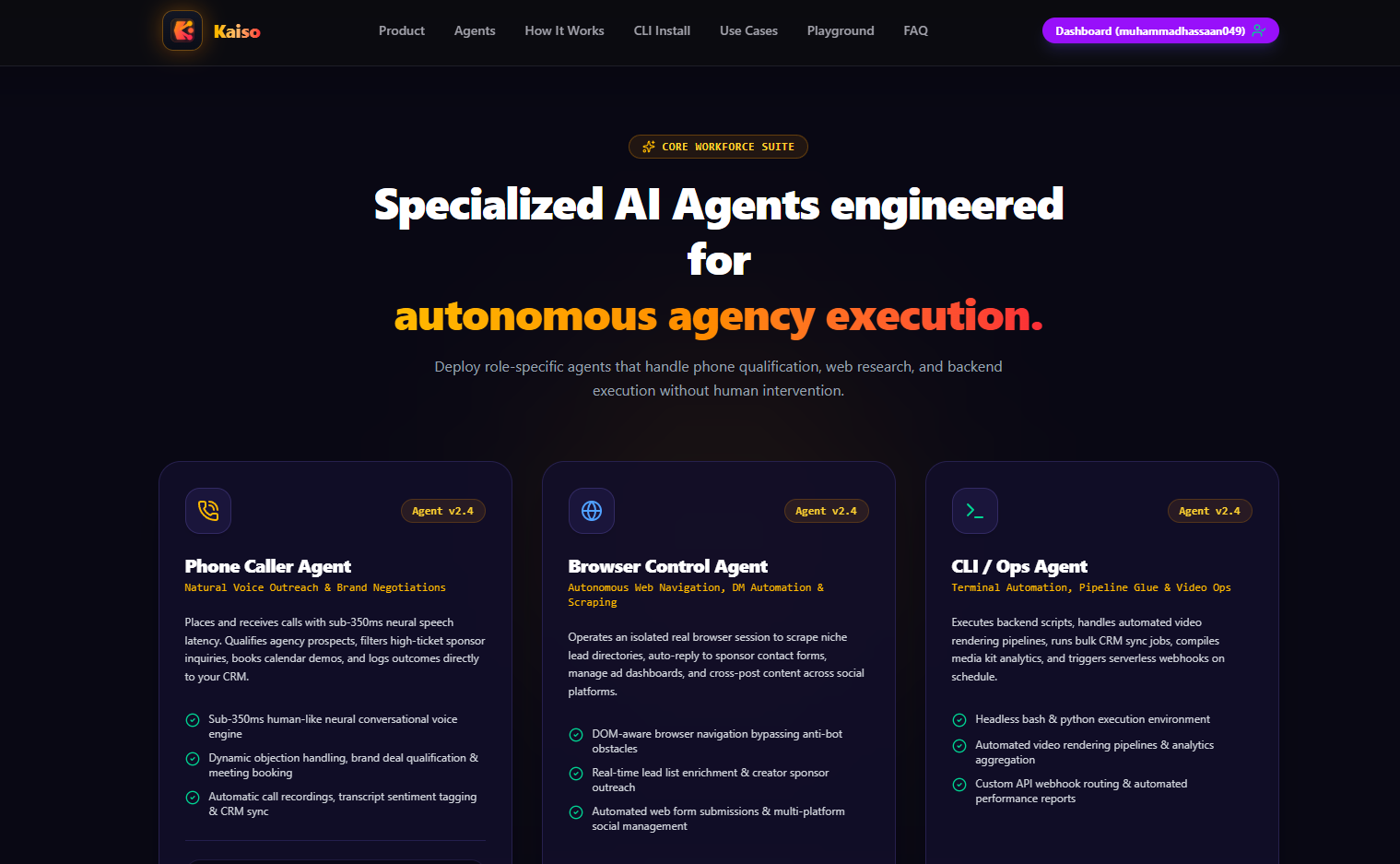
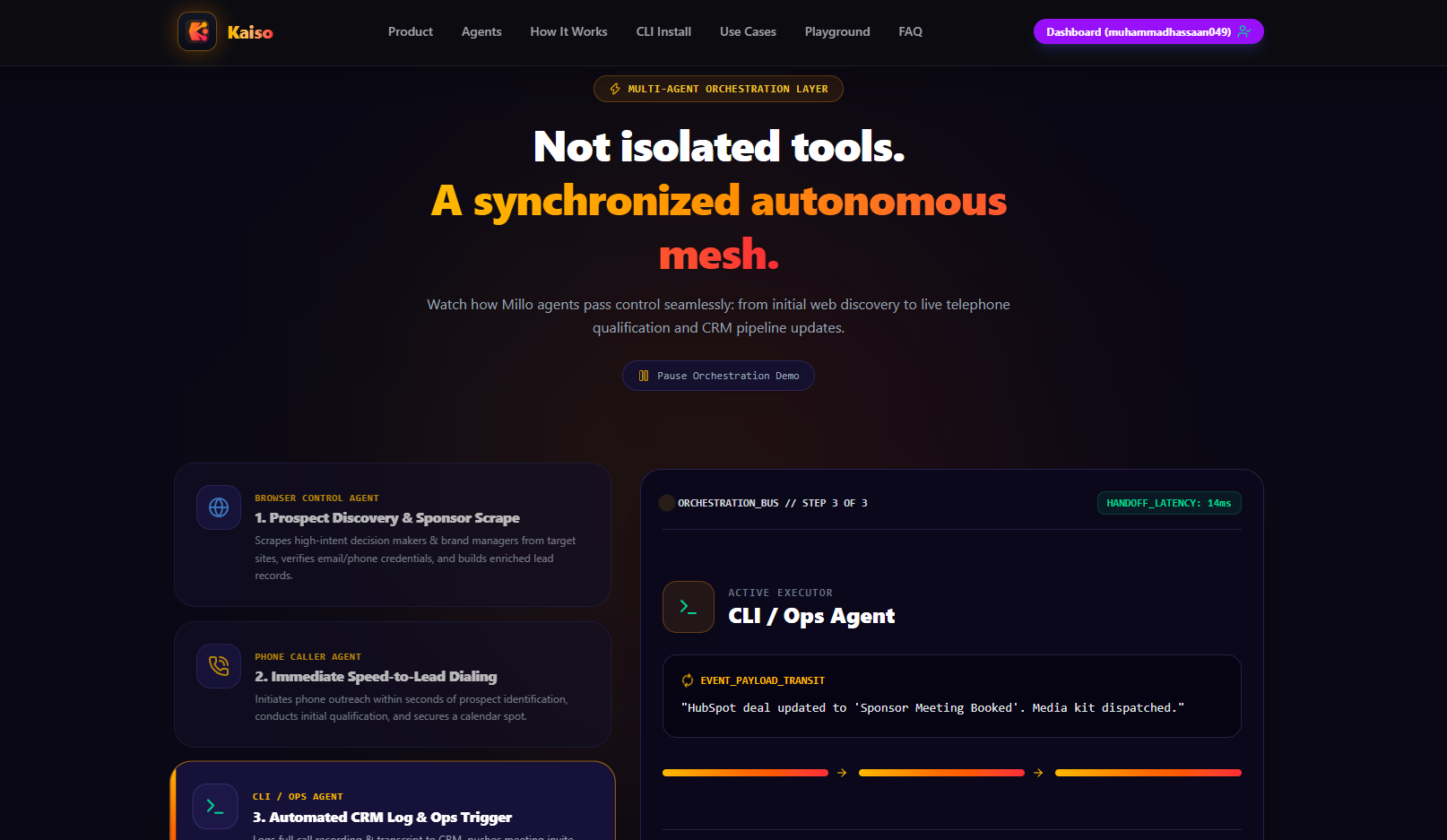
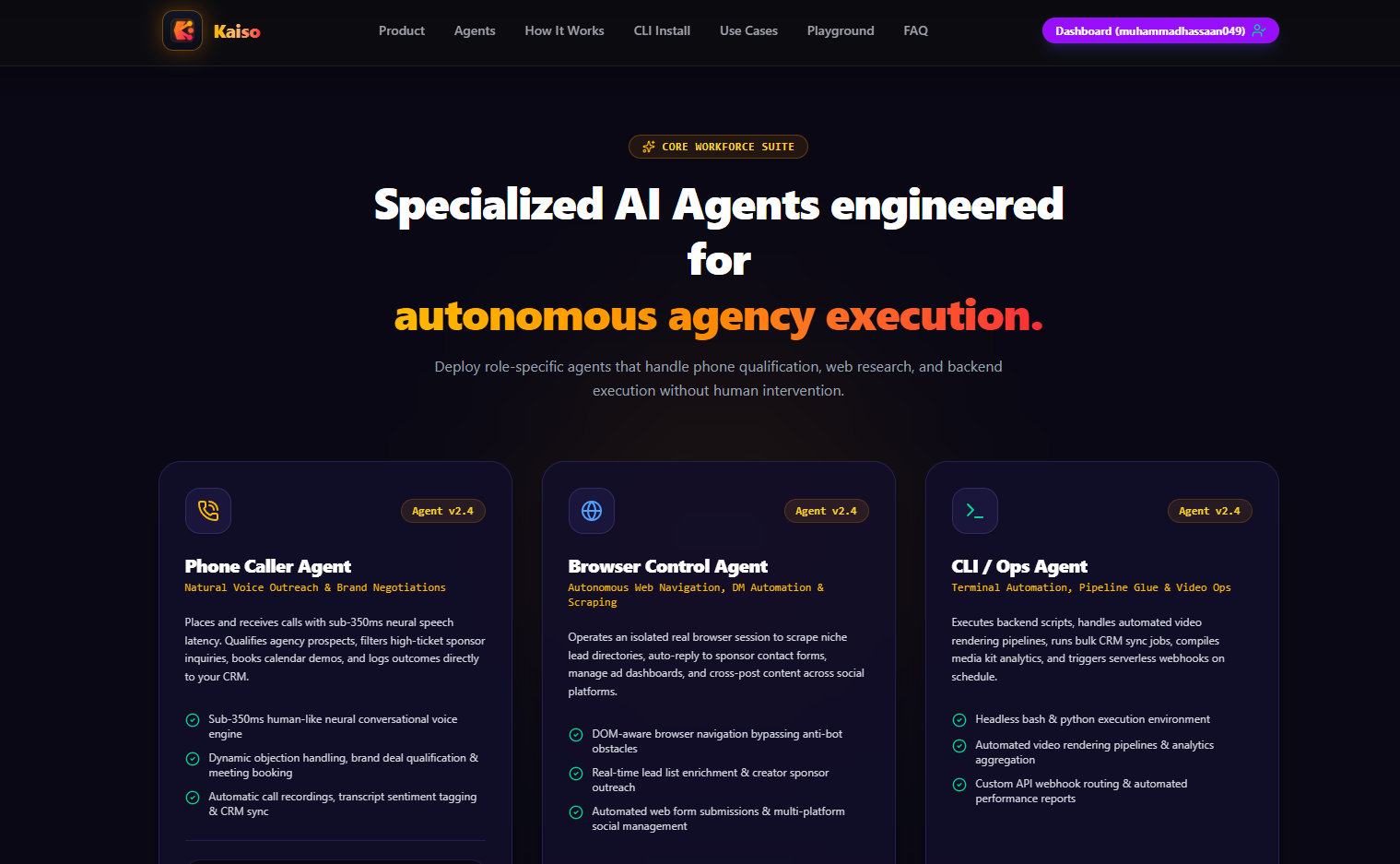
- Backend (Python/FastAPI) — the execution engine powering Agent-to-Agent (A2A) orchestration: TOFU browser agents scrape and enrich leads, hand them off to MOFU phone-dialing agents, and stream analytics back to the user.
- Kaiso CLI (Node.js/TypeScript) —
npx kaiso-ai workforce initinjects fully configured autonomous workforce pods into any local environment in one command. - OpenClaw (Rust/Ratatui/SQLx) — a blazing-fast terminal UI for power users: live memory replays, dynamic funnel visualization, and natural-language queries against the OS.
Every agent reads and writes through a shared CockroachDB memory layer, so a lead scraped at the top of the funnel is instantly visible — with full context — to the dialing agent downstream.
How we built it
The backend's A2A orchestrator is built with FastAPI and communicates with CockroachDB Cloud through the Cloud Managed MCP Server, which gives our agents a standardized, tool-native interface to query and mutate shared state without hand-rolled SQL plumbing. Lead embeddings and conversation summaries are stored as vectors and retrieved with CockroachDB's Distributed Vector Indexing, so when a phone agent picks up a lead, it semantically recalls every prior touchpoint in milliseconds — even as the cluster scales horizontally.
Agent reasoning is powered by Amazon Bedrock, which the orchestrator calls for lead qualification, call-script generation, and natural-language understanding in OpenClaw. Event-driven handoffs (e.g., "lead scraped → enrich → queue call") run on AWS Lambda, letting the mesh react in real time without keeping idle workers warm. The FastAPI control plane and the Next.js dashboard sit on top, while the Kaiso CLI packages the whole pod for one-command deployment.
Challenges we ran into
- Memory consistency across agents. Our first design used per-agent local state, and handoffs kept losing context. Moving to a single CockroachDB memory layer with the MCP server solved consistency, but we had to redesign our schema around handoff events rather than entities.
- Vector recall latency. Naive similarity search over growing lead history was too slow for live dialing. Switching to distributed vector indexing gave us the recall speed we needed without a separate vector database.
- Cold-start latency in handoffs. Synchronous handoffs blocked the pipeline; decomposing them into Lambda-triggered events made the mesh reactive but forced us to make every step idempotent.
Accomplishments that we're proud of
- A true A2A mesh: a lead scraped by a browser agent is dialed by a phone agent with zero human touch, with full shared context.
- One-command deployment of an entire autonomous workforce pod via the Kaiso CLI.
- OpenClaw: a Rust TUI that replays agent memory live and answers natural-language questions about the funnel.
- Cross-platform CI/CD with GitHub Actions releasing binaries for every major OS.
What we learned
Multi-agent systems are 20% agent intelligence and 80% state management. A durable, SQL-native, vector-capable memory layer (CockroachDB) mattered more than any single model choice. We also learned that serverless event triggers (Lambda) are the natural connective tissue for agent handoffs — but only if every step is designed to be idempotent and replayable.
What's next for KAI : Kaisō Artificial Intelligence
- BOFU agents: closing-the-loop agents that handle follow-ups, invoicing nudges, and reactivation campaigns.
- Agent marketplace: let creators publish persona packs (via
kaiso persona) that others can inject into their own workforce. - Deeper Bedrock integration: Bedrock Agents for long-running, tool-using workflows, and guardrails for outbound calling compliance.
- Multi-tenant CockroachDB isolation so agencies can run client-separated meshes on one cluster.
Built With
- amazon-web-services
- bedrock
- nextjs
- python
- rust
- typescript


Log in or sign up for Devpost to join the conversation.