-
-
LambdaForge - An easy way out
Inspiration
The complexity of AWS infrastructure configuration often overwhelms developers, especially those new to cloud computing. We were inspired to create LambdaForge after witnessing countless hours wasted on misconfigured AWS resources, cost overruns, and security vulnerabilities that could have been prevented with proper guidance. The idea was to democratize AWS expertise by combining AI-powered recommendations with an intuitive, step-by-step configuration wizard.
What it does
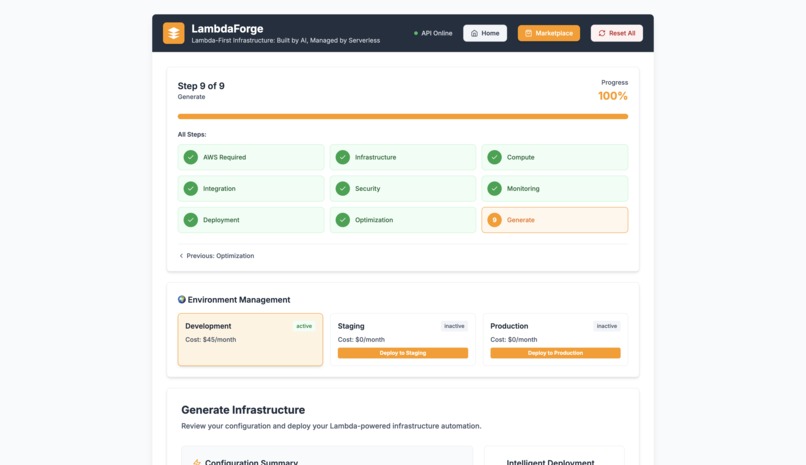
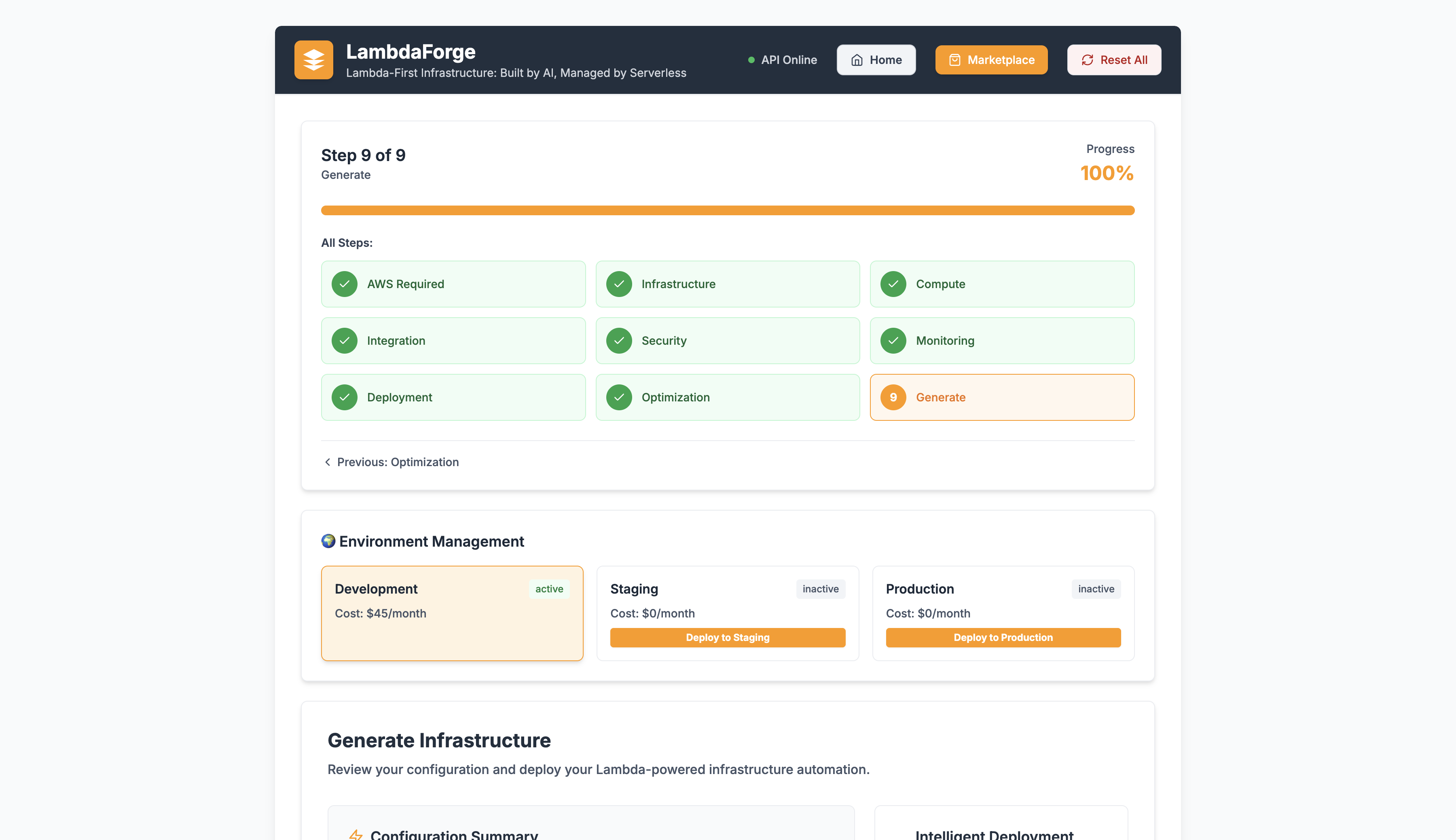
LambdaForge is an intelligent AWS infrastructure configuration tool that guides users through a comprehensive 9-step wizard to design, configure, and deploy cloud infrastructure. The platform features:
- AI-Powered Suggestions: Real-time recommendations using AWS Bedrock and Claude 3 Sonnet for architecture optimization
- Multi-Environment Management: Support for development, staging, and production environments with cost tracking
- Intelligent Validation: Automatic configuration validation with security and cost optimization checks
- Undo/Redo System: Comprehensive change management with the ability to revert any applied suggestions
- Cost Estimation: Real-time cost projections and budget tracking across environments
- Marketplace Integration: Pre-configured deployment packages for common use cases
- Professional UI: AWS-branded interface with responsive design and accessibility features
How we built it
LambdaForge was built using modern web technologies with a focus on user experience and reliability:
Frontend Architecture:
- React 18 with functional components and hooks for state management
- React Router for seamless navigation between configuration steps
- Tailwind CSS for responsive, AWS-branded styling
- Custom component library with consistent design patterns
AI Integration:
- AWS SDK v3 with Bedrock Runtime client for AI model access
- Claude 3 Sonnet integration for intelligent architecture recommendations
- Fallback rule-based suggestion system for offline capability
- Robust error handling and retry mechanisms
State Management:
- Local storage persistence for configuration data and undo history
- Environment-specific state isolation
- Real-time form validation and user feedback
User Experience Features:
- Progressive disclosure through step-by-step wizard
- Visual progress indicators and confirmation dialogs
- Comprehensive preview system before applying changes
- Mobile-responsive design with touch-friendly interactions
Challenges we ran into
- AWS SDK Migration: Initially faced compatibility issues with AWS SDK v2, requiring migration to v3 with significant API changes
- AI Response Reliability: Handling variable response times and potential failures from AWS Bedrock required implementing robust fallback systems
- Complex State Management: Managing configuration state across multiple environments and steps while maintaining undo functionality
- Cost Calculation Accuracy: Implementing realistic AWS cost estimation algorithms without direct AWS Pricing API integration
- UI Responsiveness: Ensuring the multi-step wizard works seamlessly across all device sizes and screen orientations
Accomplishments that we're proud of
- Real AI Integration: Successfully implemented live AWS Bedrock integration with Claude 3 Sonnet for genuine AI-powered recommendations
- Production-Ready Architecture: Built a scalable, maintainable codebase with proper error handling and fallback systems
- Comprehensive UX: Created an intuitive wizard that makes complex AWS configuration accessible to developers of all skill levels
- Advanced Features: Implemented sophisticated features like undo/redo, environment management, and cost tracking typically found in enterprise tools
- AWS Branding Compliance: Achieved professional AWS-style design with proper contrast ratios and accessibility standards
What we learned
- The importance of progressive disclosure in complex configuration interfaces
- How to effectively integrate AI services while maintaining application reliability
- Best practices for managing complex application state in React
- The value of comprehensive error handling and user feedback systems
- AWS Bedrock capabilities and limitations for infrastructure recommendations
- Modern React patterns including hooks, context, and component composition
What's next for LambdaForge
- Direct AWS Integration: Implement actual AWS resource deployment through CloudFormation or CDK
- Team Collaboration: Add multi-user support with role-based access control
- Template Library: Expand the marketplace with community-contributed infrastructure templates
- Advanced Monitoring: Integrate with AWS CloudWatch for real-time infrastructure monitoring
- Cost Optimization: Implement automated cost optimization recommendations and alerts
- Infrastructure as Code Export: Generate Terraform, CloudFormation, or CDK code from configurations
- Mobile App: Native mobile application for infrastructure monitoring and basic configuration
Built With
- amazon-web-services
- api
- app
- bedrock
- claude
- create
- css
- css3
- eslint
- git
- html5
- javascript
- local
- lucide
- react
- router
- sdk
- sonnet
- storage
- tailwind

Log in or sign up for Devpost to join the conversation.