-
-
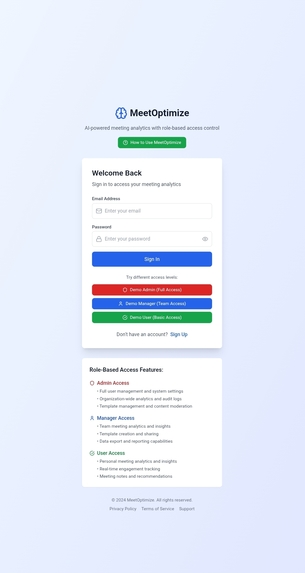
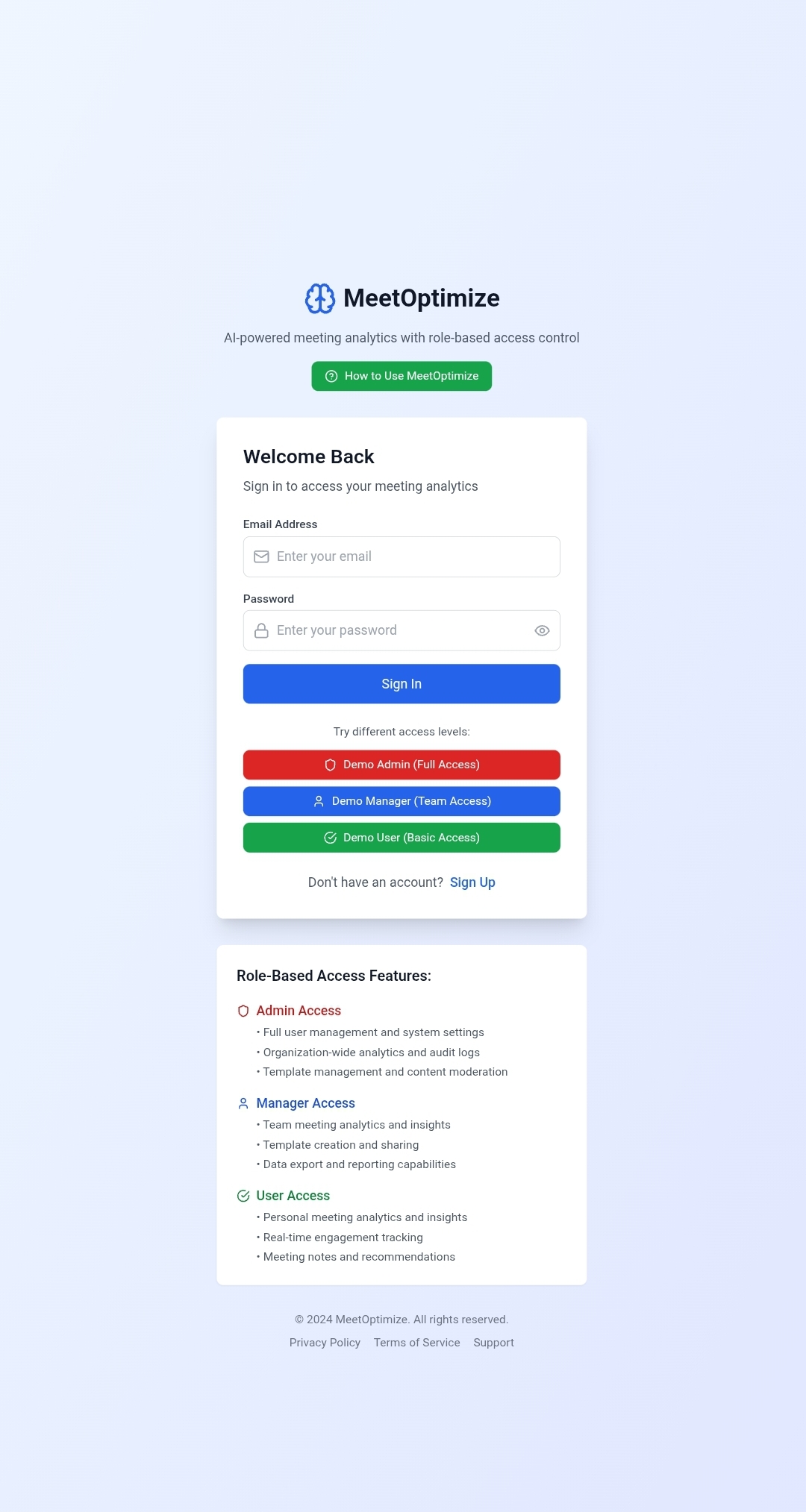
Login Screen
-
-
-
-
What Inspired Me
For over 10 years, I've had ambitious ideas brewing in my mind - concepts that I knew could make a real difference but always seemed just out of reach. The barrier wasn't the vision; it was the countless hours required to learn programming languages, frameworks, and technical skills that stood between my ideas and reality. Time and again, I'd start learning to code, get overwhelmed by the complexity, and watch my enthusiasm fade as the learning curve stretched endlessly ahead.
Everything changed when AI-powered development tools became accessible. Suddenly, the technical barriers that had blocked me for a decade crumbled. I could focus on solving real problems instead of wrestling with syntax and configuration files.
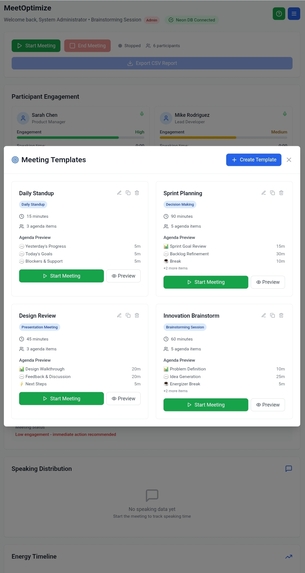
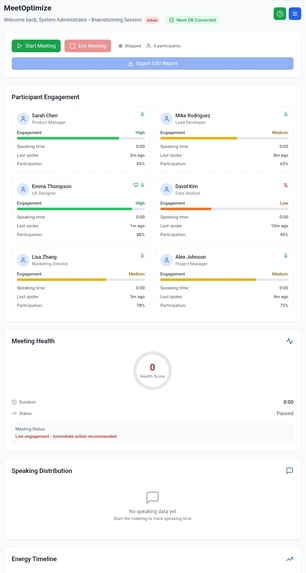
The inspiration for Meeting Energy Optimizer came from a universal frustration: unproductive meetings. We've all sat through those soul-crushing sessions where energy drains away, participants check out, and nothing meaningful gets accomplished. I realized that with the right data and insights, we could transform these experiences entirely.
What I Learned
This project taught me that the gap between idea and execution has dramatically narrowed. In just one week, I built 10+ websites - something that would have taken me months or years of traditional learning. More importantly, I learned that:
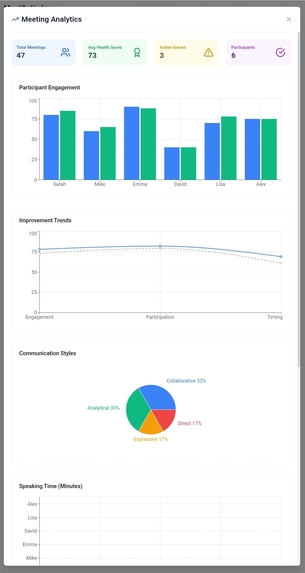
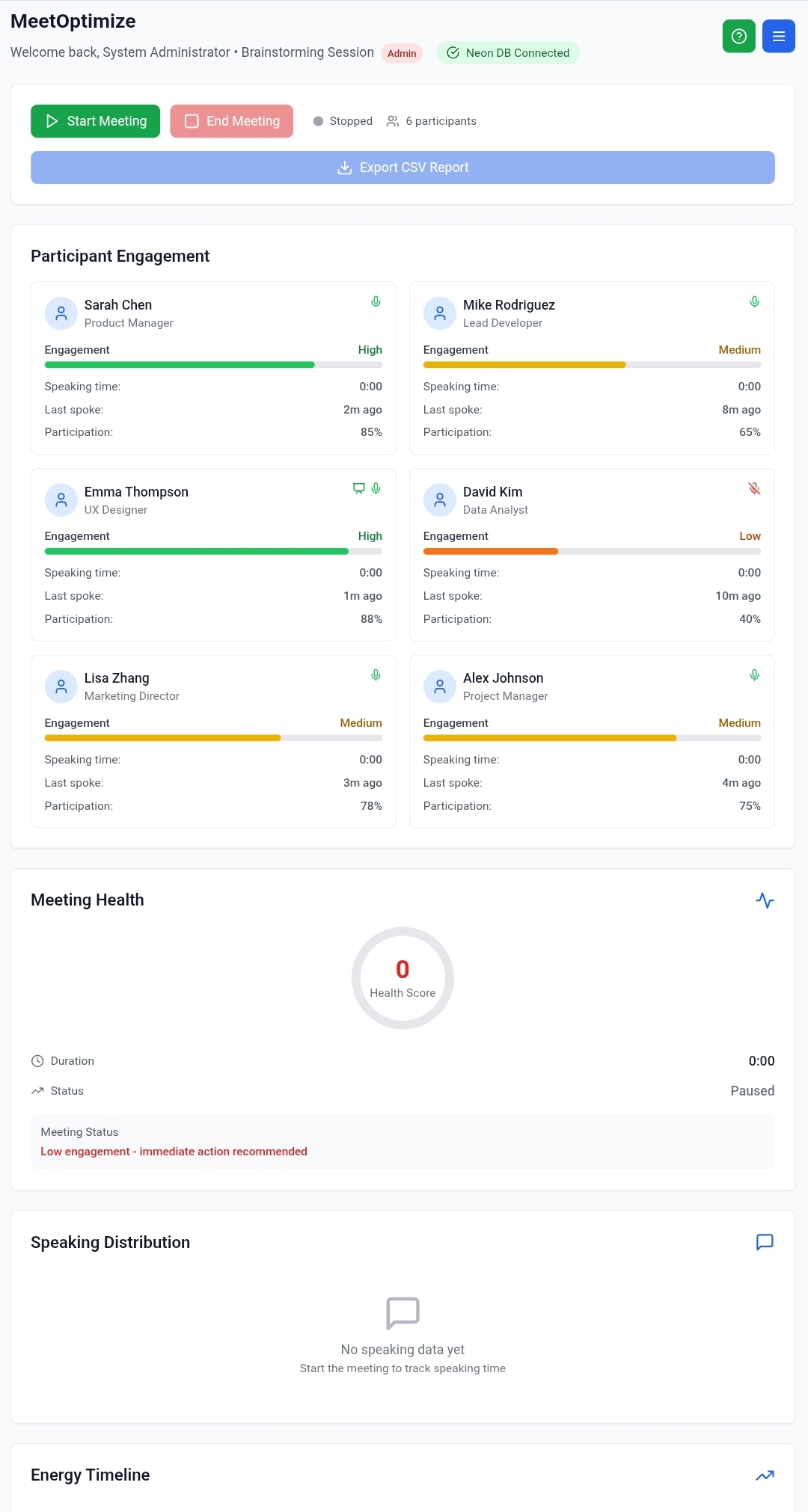
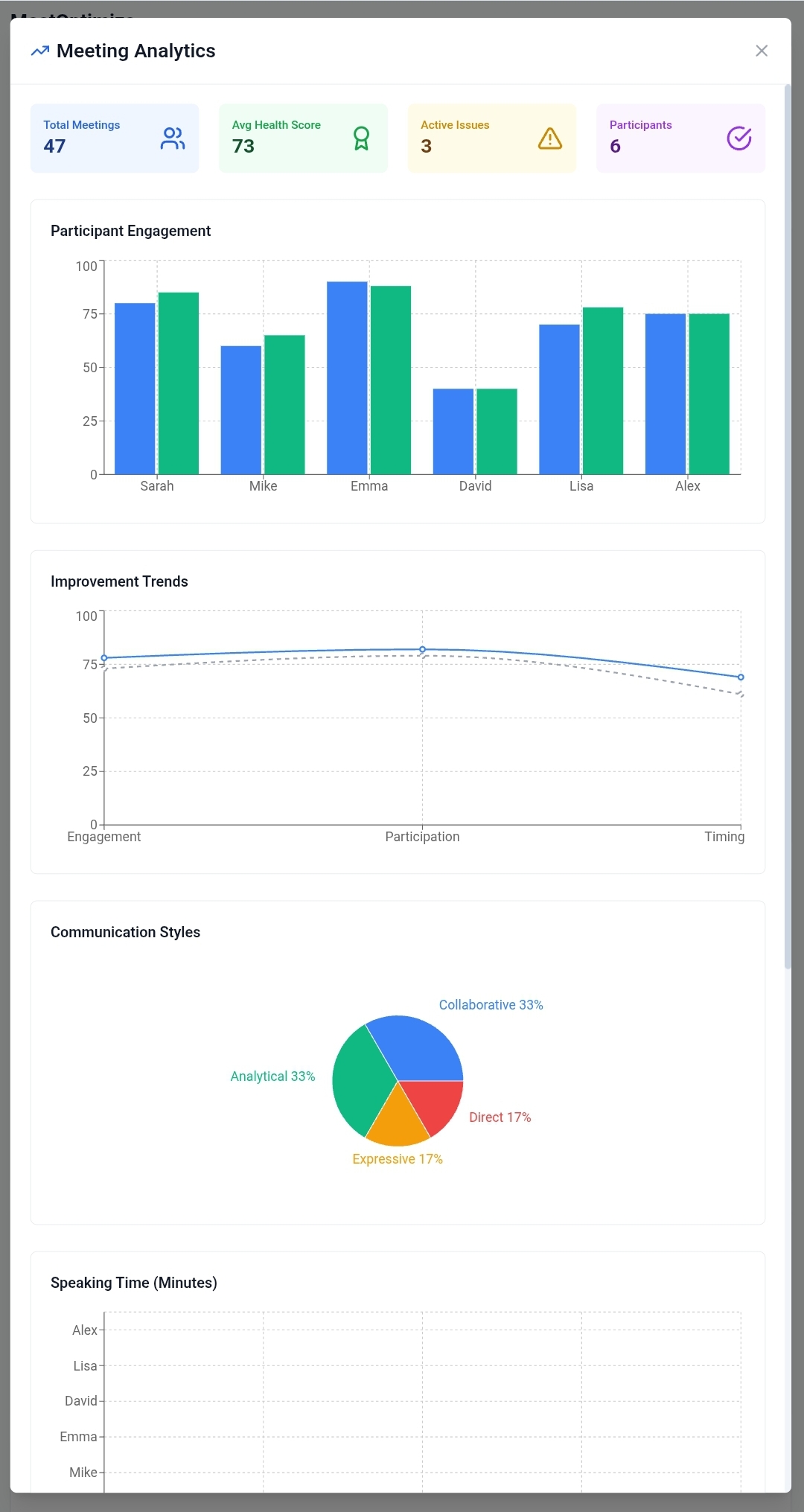
- Real-time analytics can revolutionize human interactions - By tracking engagement, speaking patterns, and energy levels, we can optimize meetings in ways never before possible
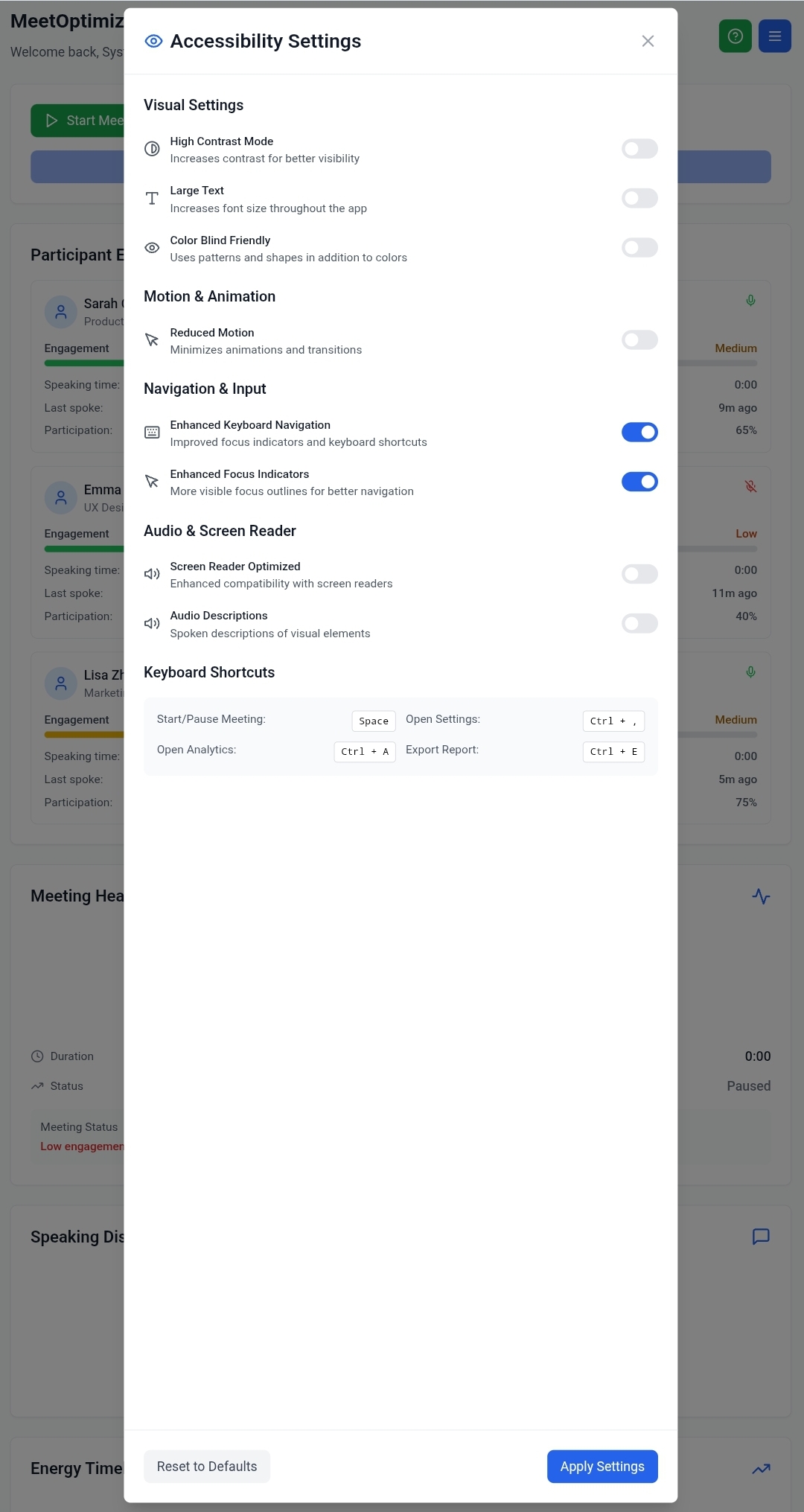
- Accessibility isn't optional - Building inclusive experiences from the ground up creates better products for everyone
- Data privacy is paramount - Users need control over their meeting data with configurable retention and anonymization
- Integration is key - Supporting multiple platforms (Zoom, Teams, WebRTC) makes the solution truly useful
The most profound learning was personal: after a decade of false starts, I discovered that persistence and the right tools can turn any ambitious idea into reality.
How I Built It
Starting just 3 days before the deadline, I leveraged Bolt.new - an AI-powered development platform that transformed my decade-long struggle with traditional coding into rapid, focused execution:
AI-Powered Development: Using Bolt.new, I could describe my vision for a meeting analytics platform and watch it come to life through intelligent code generation and architecture decisions.
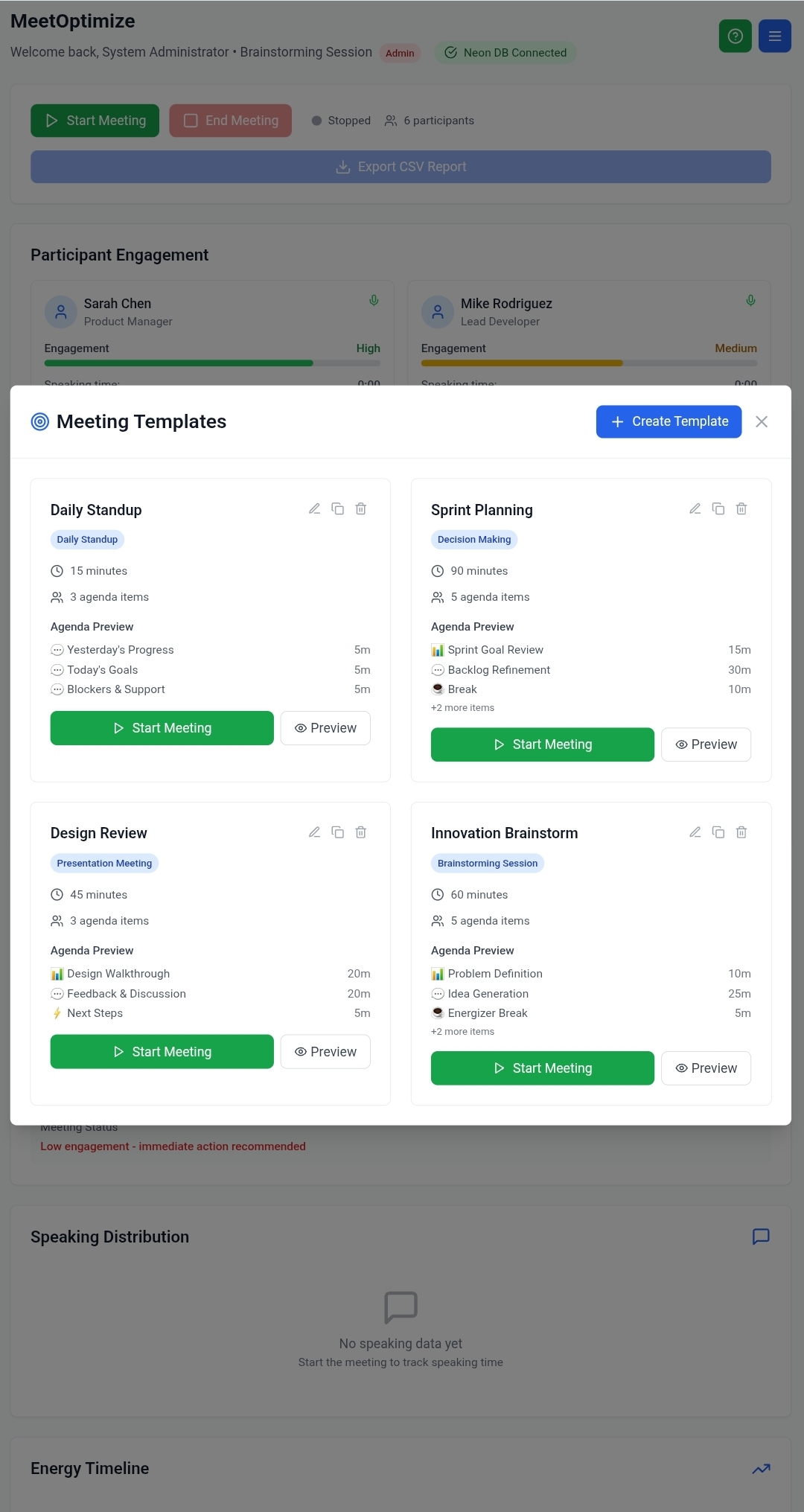
Rapid Prototyping: The platform enabled me to iterate quickly on complex features like real-time WebRTC analysis and multi-platform integration without getting bogged down in boilerplate code.
Smart Architecture: Bolt.new helped design a scalable system using React 18 and TypeScript for type safety, while setting up Neon PostgreSQL with Drizzle ORM for robust data analytics.
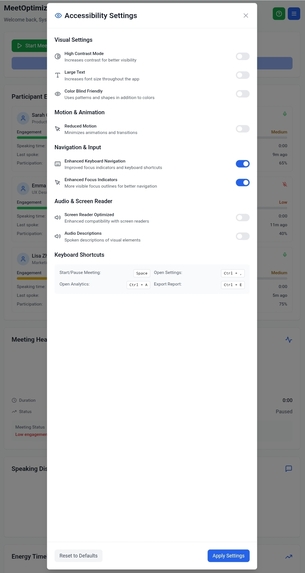
Accessibility Integration: The AI assistant guided me through implementing comprehensive accessibility features - screen reader support, high contrast modes, and keyboard navigation - ensuring inclusivity from the start.
Visual Polish: With Tailwind CSS integration and Chart.js/Recharts for data visualization, the platform helped create a professional, responsive interface that transforms raw meeting data into actionable insights.
Seamless Deployment: Bolt.new's integrated development environment with Vite made the entire process from concept to deployment incredibly smooth, enabling me to focus on solving the core problem rather than fighting with tooling.
Challenges Faced
Time Pressure: With only 3 days to build a comprehensive platform, every decision mattered. I had to balance feature richness with implementation speed.
Real-Time Complexity: Processing live audio/video streams while maintaining performance and privacy required careful optimization and strategic use of WebRTC capabilities.
Multi-Platform Integration: Supporting different meeting platforms meant handling various APIs and authentication systems while maintaining a consistent user experience.
Privacy vs. Functionality: Balancing powerful analytics with user privacy required implementing granular controls and anonymization features without sacrificing insights.
Accessibility at Speed: Building inclusive features under tight deadlines meant integrating accessibility considerations into every component from the start, not as an afterthought.
Despite these challenges, the project came together beautifully, proving that with the right tools and focused execution, even the most ambitious ideas can become reality in days, not years.
Deploy Challenge Participation
I'm particularly interested in qualifying for the Deploy Challenge: Use Netlify to deploy your full-stack Bolt.new application. Having built this comprehensive meeting analytics platform with Bolt.new, I'm excited to showcase how seamlessly these AI-powered applications can be deployed and scaled using Netlify's robust hosting platform. The combination of Bolt.new's rapid development capabilities with Netlify's deployment infrastructure represents the future of how ambitious ideas can go from concept to production-ready applications in record time.
Built With
- bolt.new
- charts.js
- drizzle
- javascript
- postgresql
- react
- recharts
- tailwind
- typescript
- vite
- webrtc

Log in or sign up for Devpost to join the conversation.