Custom-built robotic arm which flips pancakes, trained by an RL model fine-tuned on Baseten through physics simulations.
Inspiration
Who doesn't love a maple syrup pancake for breakfast? The only issue is that it's so easily burnt. Every morning would be perfect if we just had immaculate pancakes waiting for us. So we built the one and only awesome flipping robot, to recreate the best morning routine for everyone.
Then we found out what "flipping a pancake" actually means for a robot. The pancake leaves the pan, tumbles free for a third of a second, and has to be caught. Sounds easy enough, right? There's no feedback loop quick enough to save it once it's in the air. You get one shot, and the whole thing is decided in the few milliseconds where the pan changes direction.
What it does
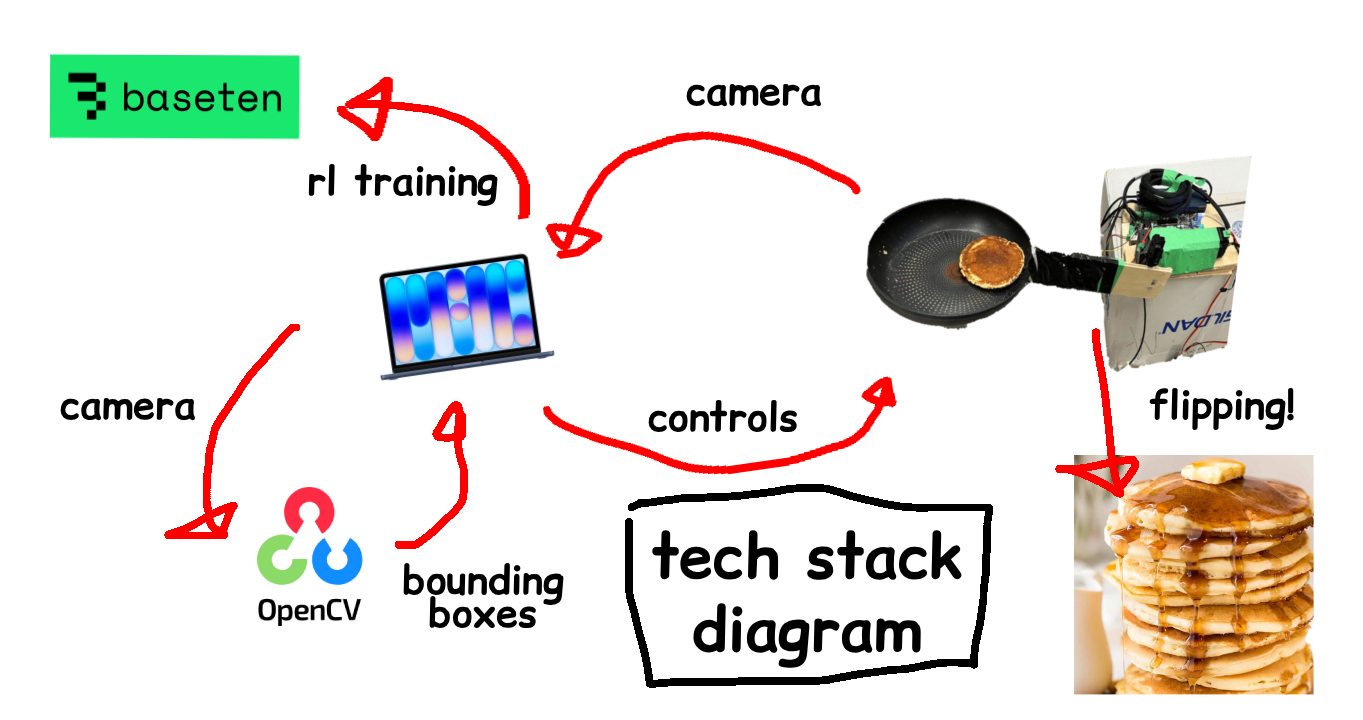
The Awesome Flipping Roboexecutes a masterfully done pancake flip, powered by an RL model trained on Baseten’s training platform, when it decides your pancake is ready for flipping. Given just the bounding boxes for the pancake, the model maneuvers the two-joint robot to flip the pancake and land it on the other side.
How we built it
The physics side of the Awesome Flipping Robot was trained by millions of MuJoCo simulation run on Baseten’s H100 GPU training platform (primarily designed for LLMs, but repurposed for physics sims). The RL model was rewarded with successfully landing flips or keeping the pancake in the air for a prolonged period of time, and was punished for dropping pancakes or making undesirable movements with the motors.
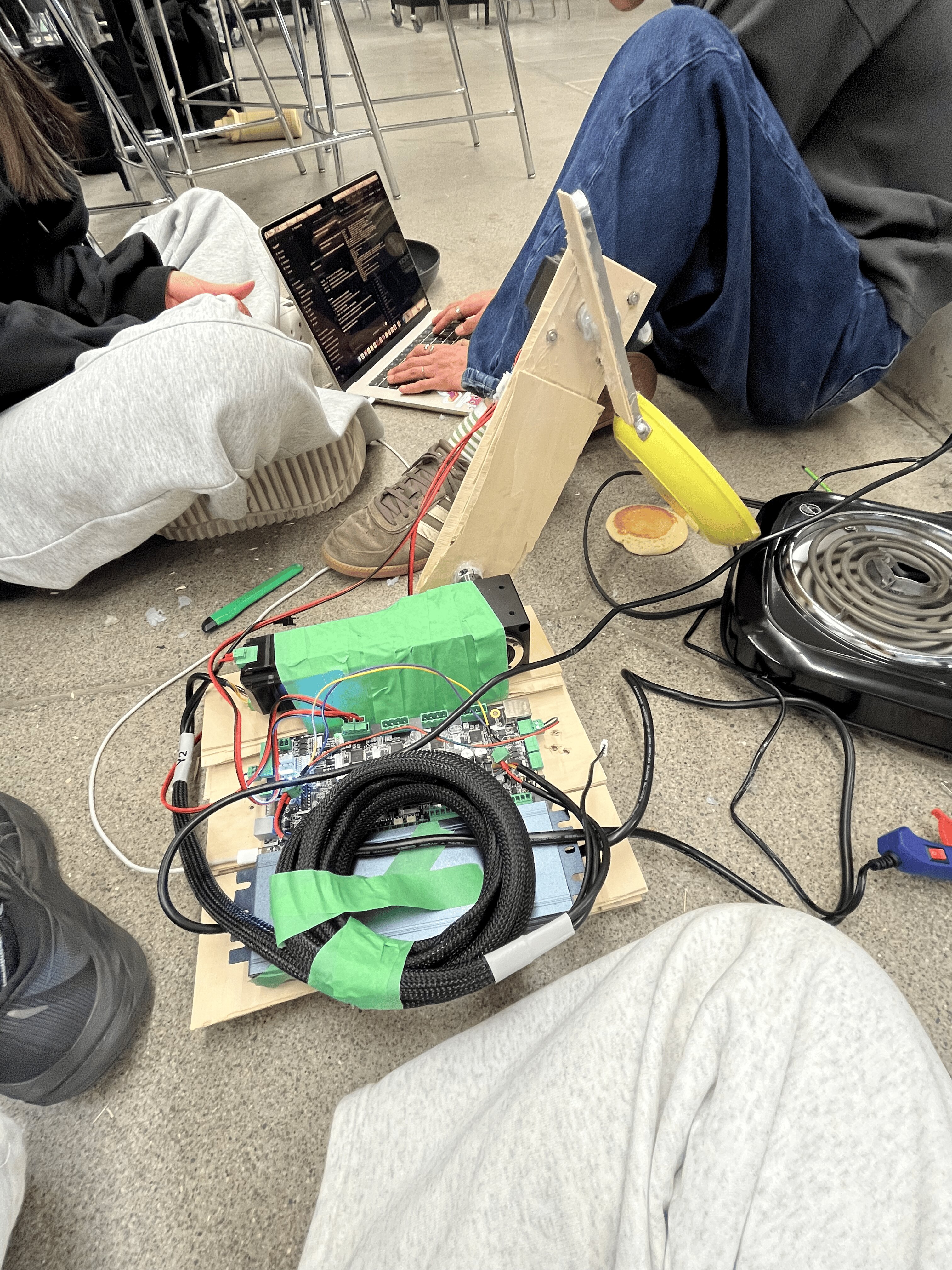
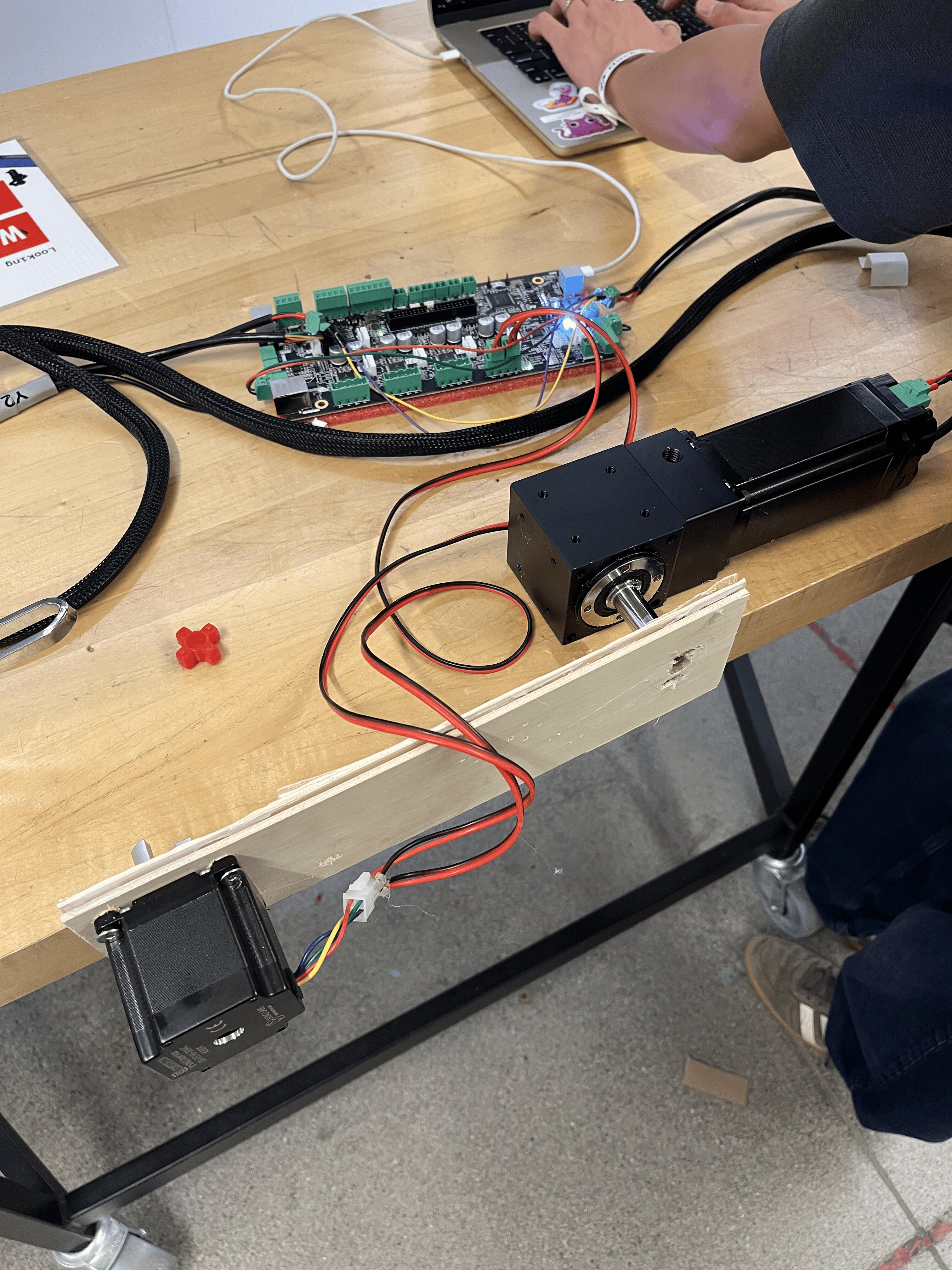
The robot itself is made of two stepper motors, a powerful “elbow” motor (57HYB112), and a lightweight “wrist” motor (57STH56), which each share a small power supply with the motor driver/control board. Designing custom wiring solutions for each incompatible piece was one of the most rewarding challenges of this project.
Challenges we ran into
Building the robot itself took a significant chunk of time, as hand-carving wooden pieces, and stripping and rewiring wires introduced error after error. Physical limitations such as the torque limit of certain motors and the weight of larger pans introduced challenges we didn’t initially plan around, forcing us to adjust the design of the robot many times as we built. (e.g., we had to switch pans three times just to land on one that would work)
What we learned
Planning the feasibility of hardware projects significantly outweighs the scope of a software project, as pieces can go missing or tools can become unavailable. One particular example was the measures we took messing around with wood and power tools for the construction of the robot, as we were unable to 3D print for the majority of the hackathon.
What's next
- Pancake art painter :)


Log in or sign up for Devpost to join the conversation.