Inspiration
An estimated 125,000 people die every year simply because they didn't take their prescribed medications, and this number continues to grow as more and more people start to lose track of what they need to take. For our team, personally, Evan's uncle unfortunately passed away after forgetting to consistently take his blood pressure medication. This led him to cause his blood pressure to spike, and eventually led to a heart attack. To help prevent any unfortunate circumstances like this one, we wanted to build something that knew your meds, your labs, and your conditions, and could answer real health questions without sending your data anywhere.
What it does
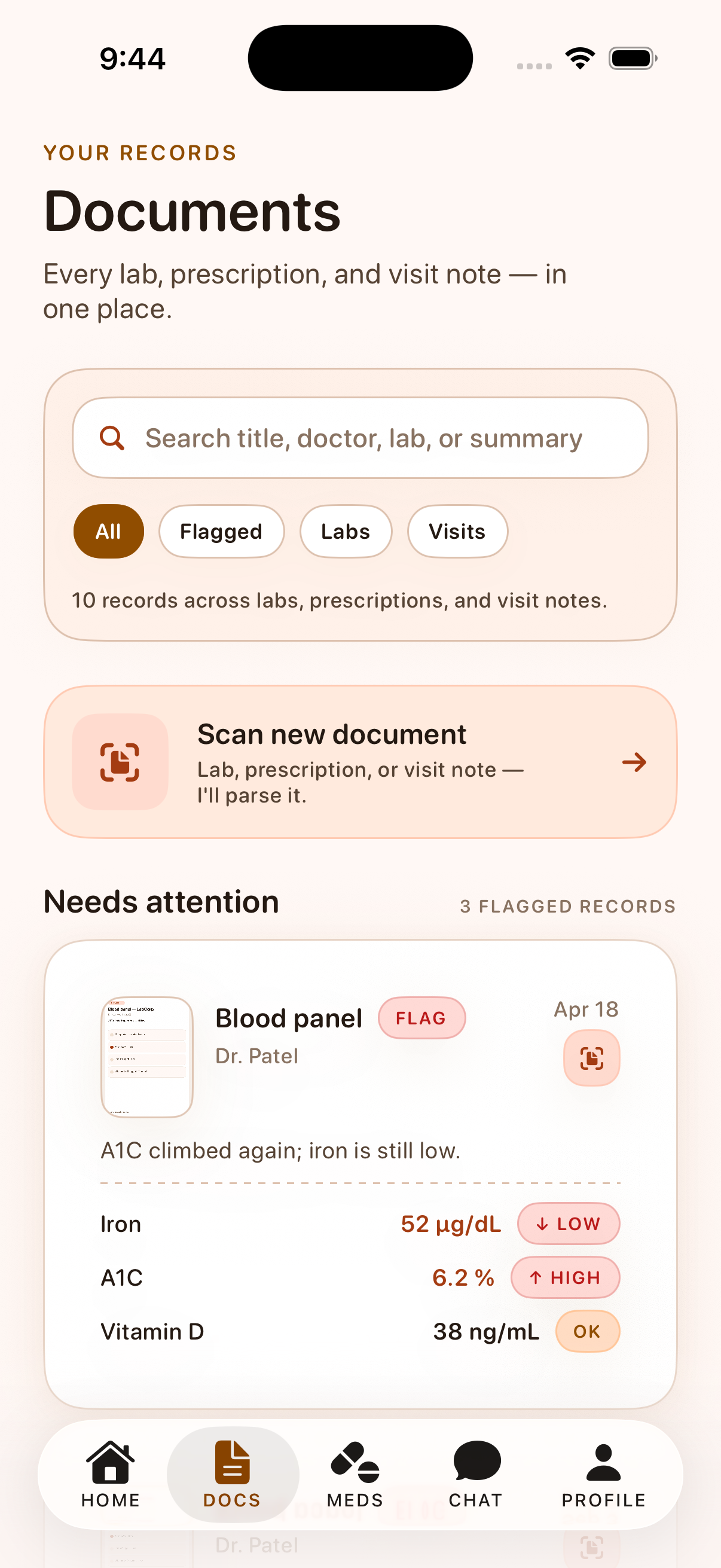
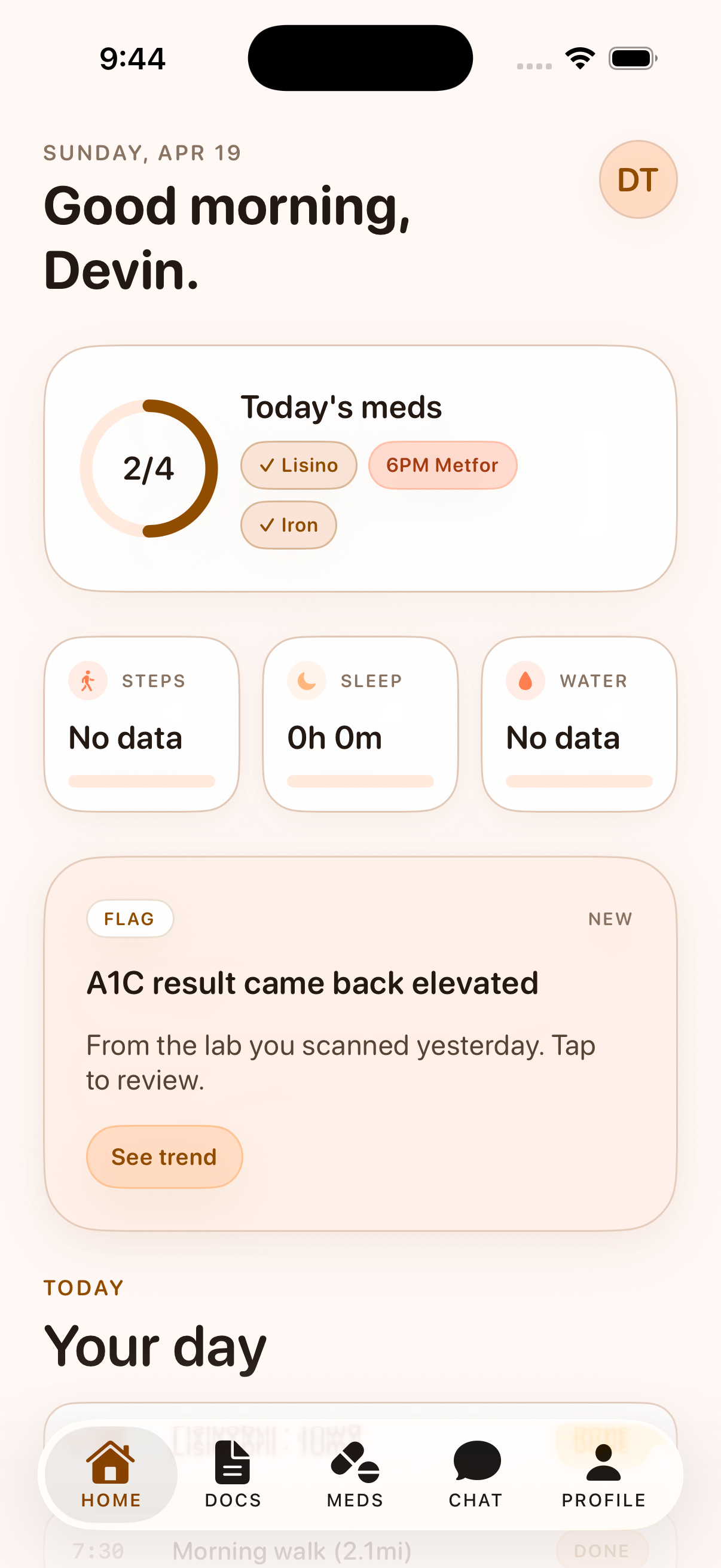
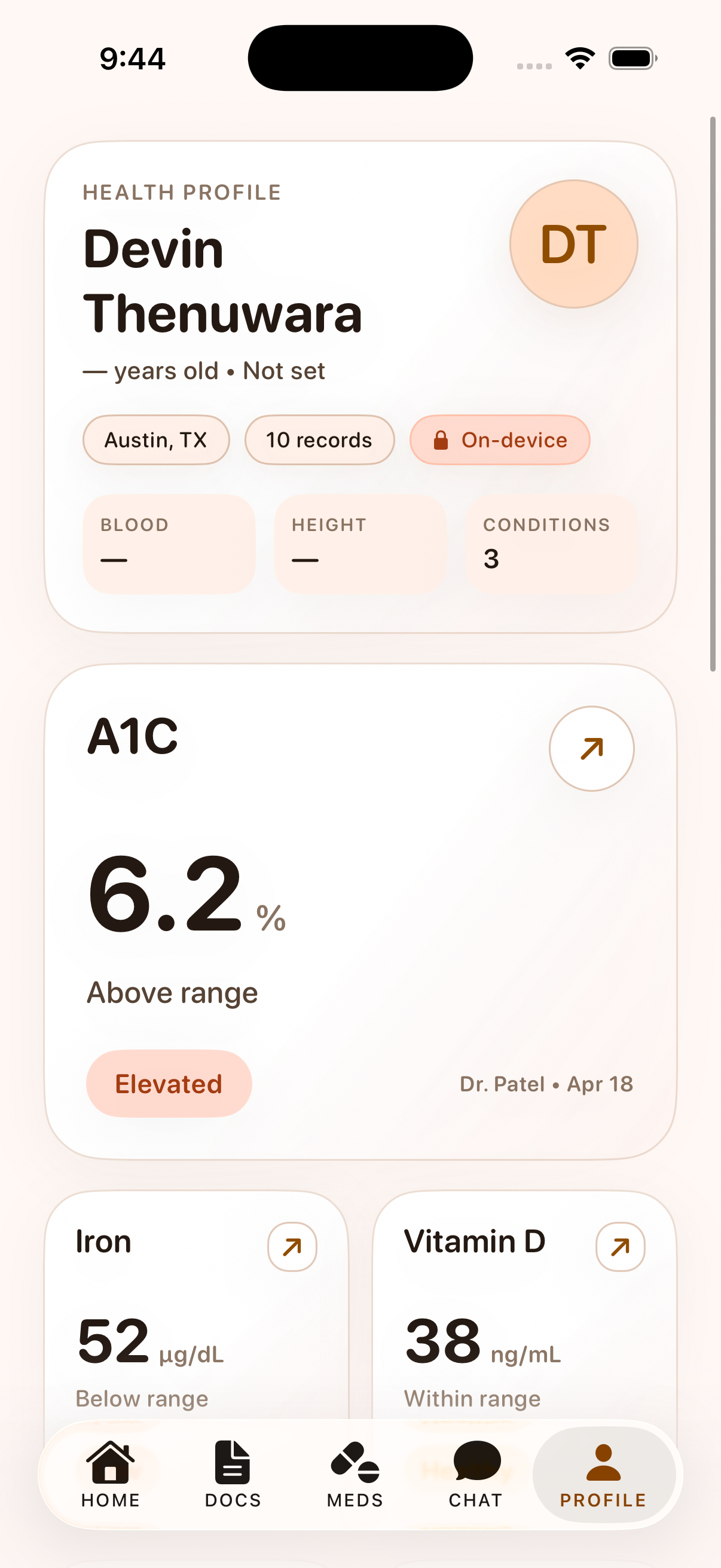
Scan any medical document (lab panel, prescription, imaging report), Interval OCRs it and extracts lab values automatically
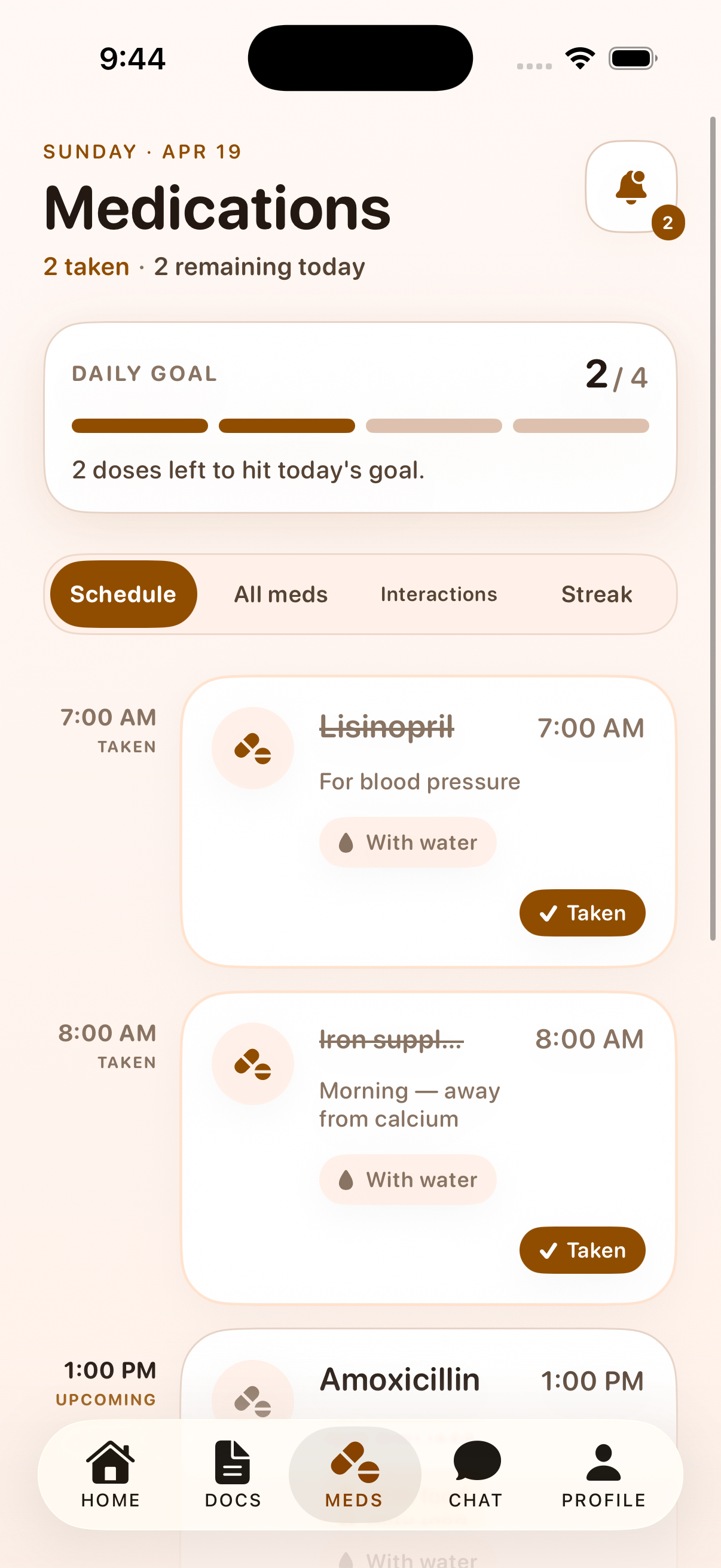
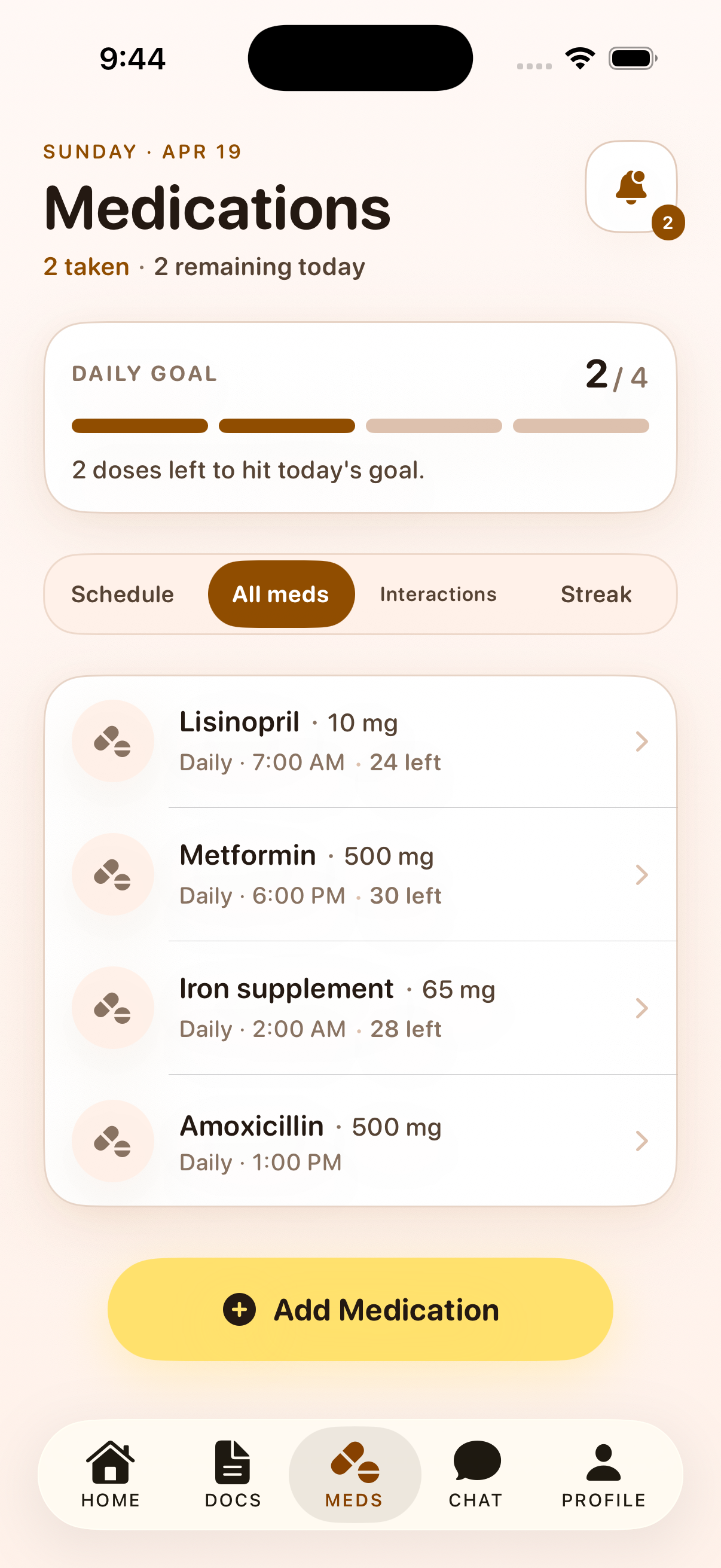
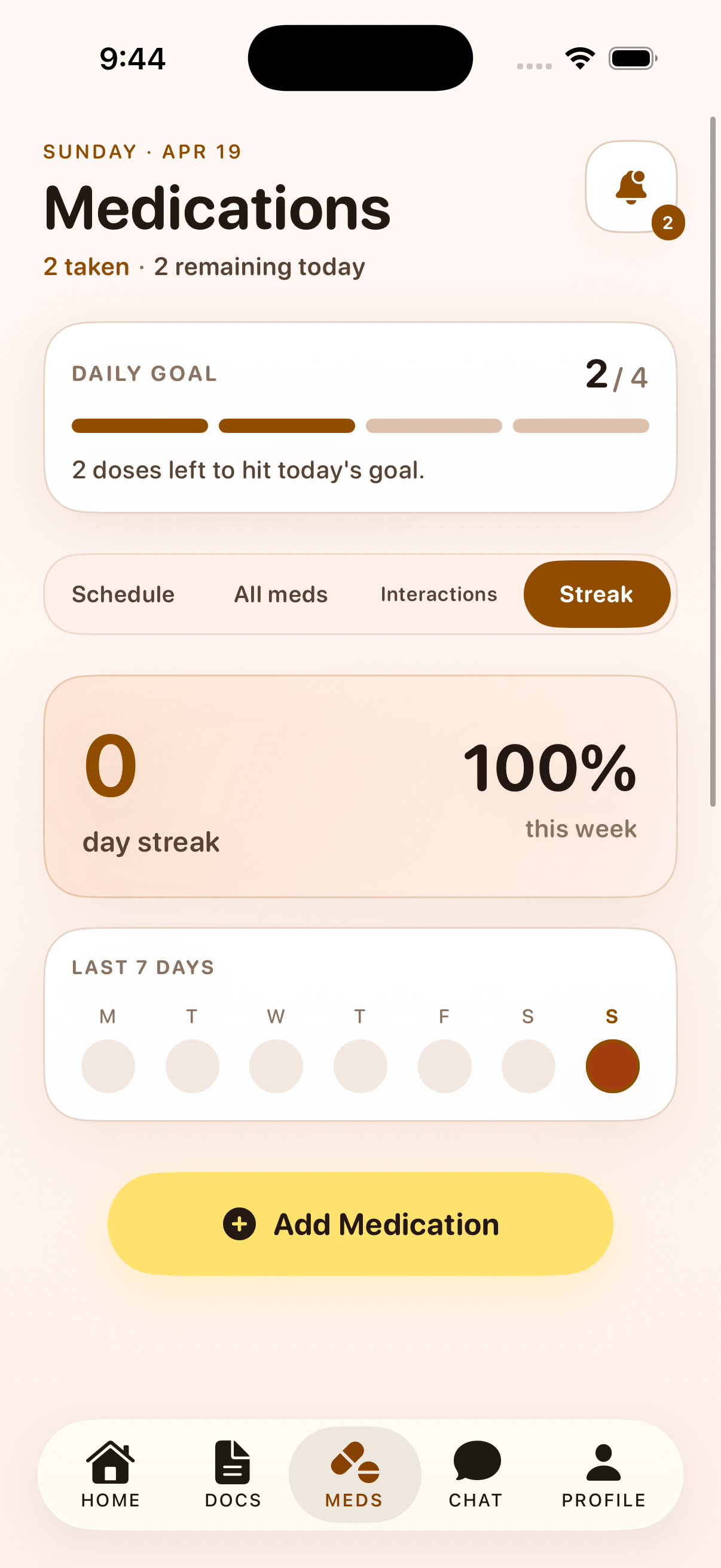
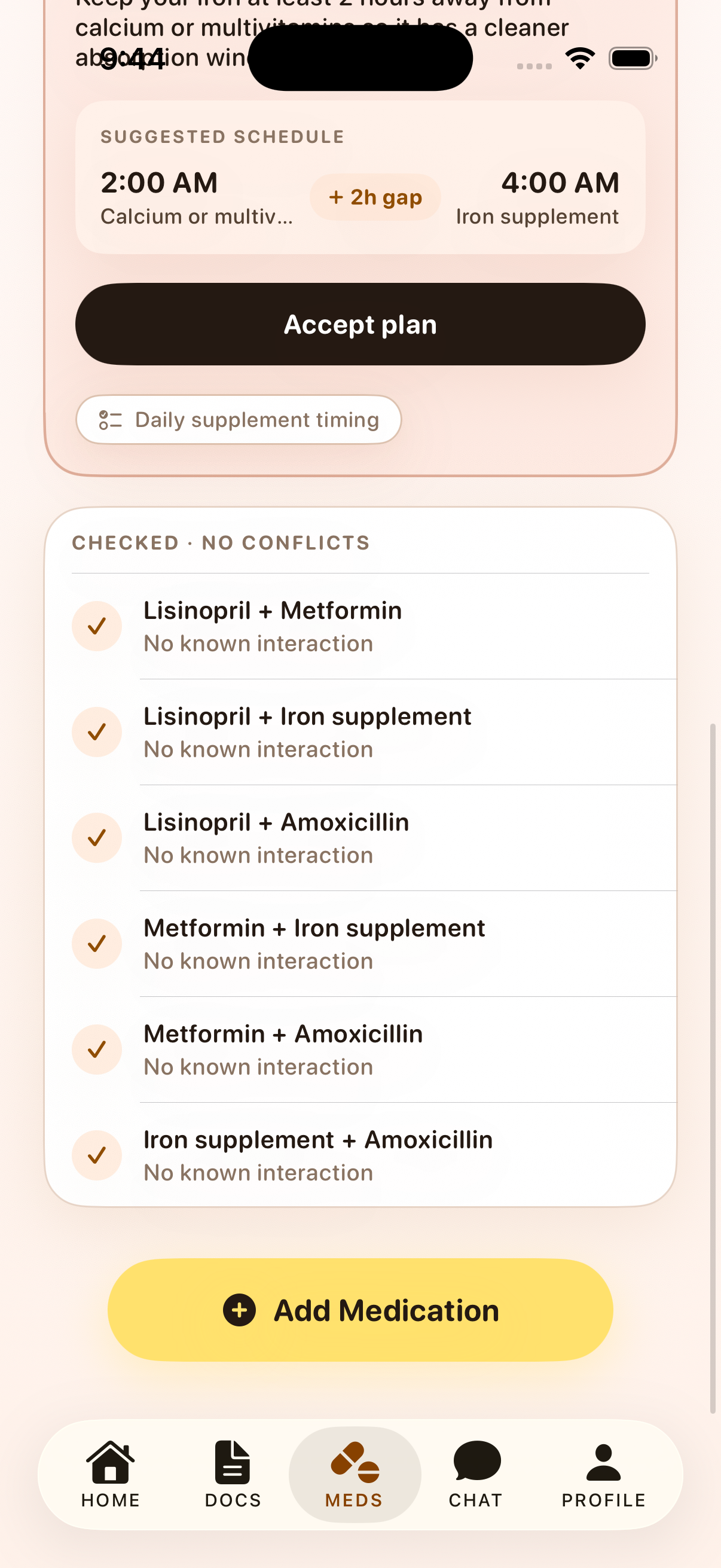
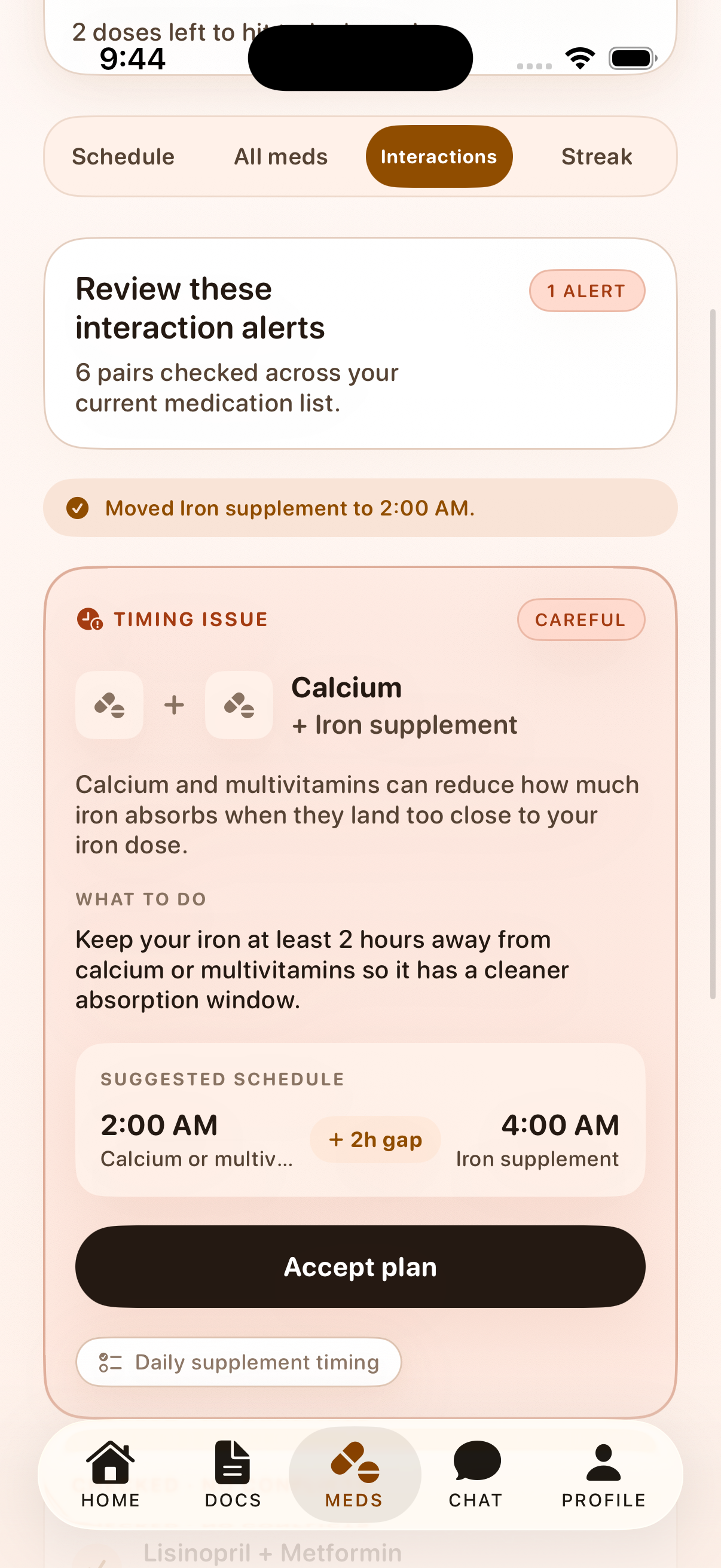
Track medications with a schedule view, 7-day streak, and a real drug interaction checker (e.g. warfarin + NSAIDs, levothyroxine + iron) with timing fix suggestions
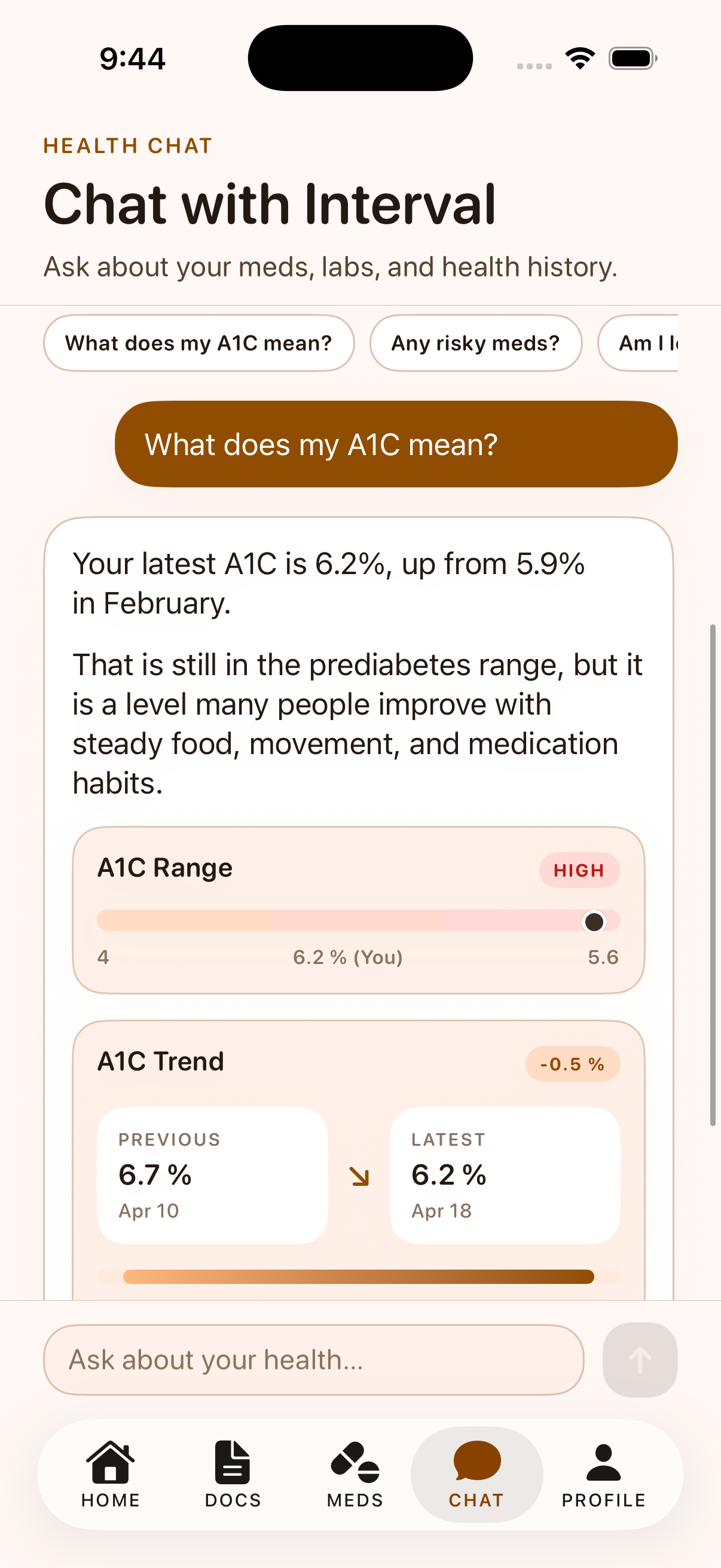
Chat with an on-device AI grounded in your actual health data, every answer is tagged with source chips ("Your labs · Apr 15") that link to the underlying record
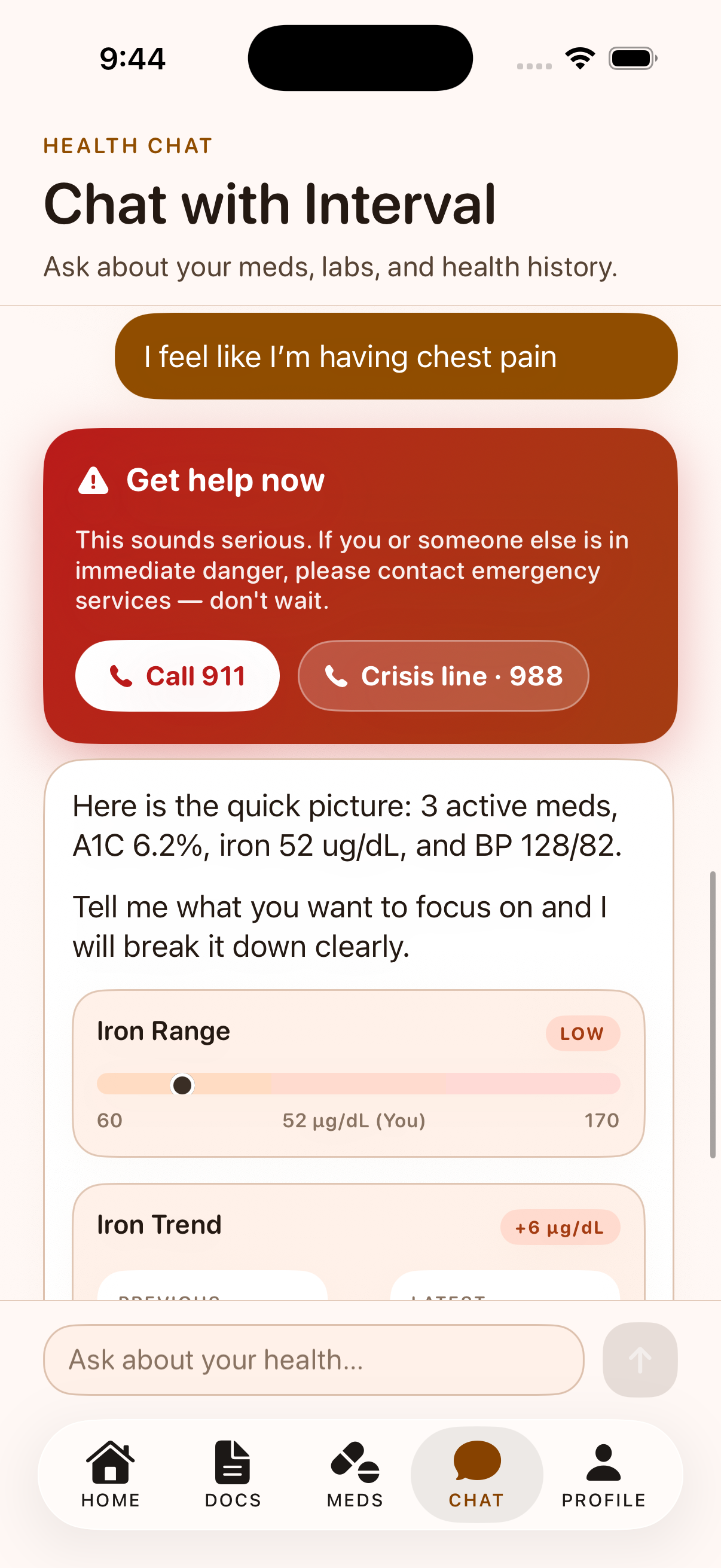
Emergency keyword detection (chest pain, stroke, overdose) surfaces a one-tap 911 / 988 card before any AI response
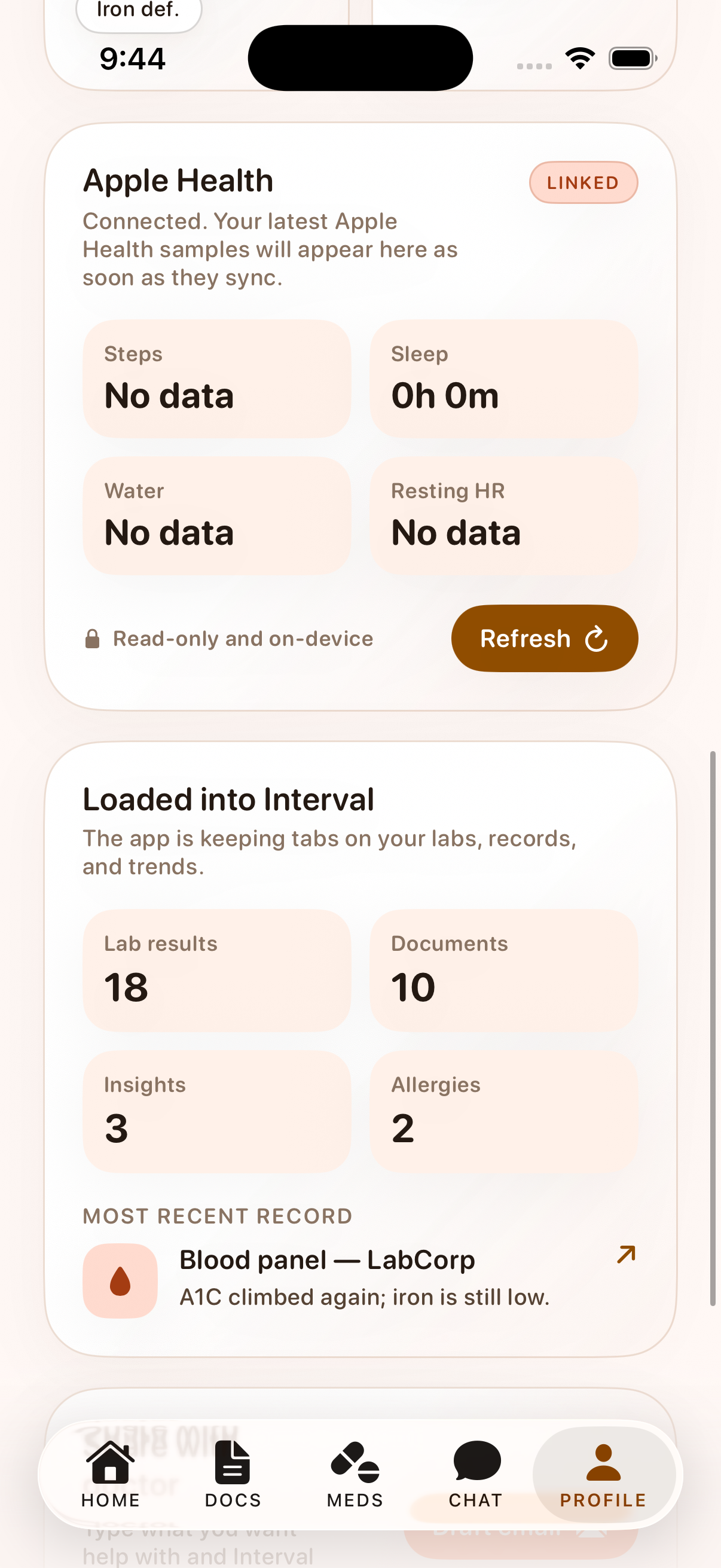
Syncs steps, sleep, and water from Apple Health
One competitor that we found that was similar to this was MyChart. Though MyChart has some functionality similar to our app, MyChart is just a portal that dumps raw numbers on you with no explanation. It's raw data and doesn't allow an explanation to users, which often leaves them with more anxiety. Our app combats this, and offers explanations to every statistic and ways they can get help.
How we built it
SwiftUI + SwiftData for the full app
Apple Intelligence (FoundationModels, iOS 26) for on-device AI, streaming responses, structured lab extraction with @Generable
Vision + VisionKit for document OCR
Pure-Swift medication safety engine with a curated interaction rule database
Challenges we ran into
FoundationModels is Xcode 26 beta-only, @Generable macros are compile-time, so every struct and call site needed #if canImport(FoundationModels) guards with working heuristic fallbacks
Building the interaction checker to handle timing conflicts and generate human-readable schedule adjustments, not just flag pairs
Accomplishments that we're proud of
Everything runs fully on-device, no backend, no API keys, no data leaves the phone. This helps to address the privacy and security issue that many users might be concerned about when giving an app access to their health data.
The app pulls the user's health data straight from the Apple Health app, so it allows the user to have all their current information synced and up to date. You can also add the medication reminders directly to the reminders app on your phone, making it easier for users to be reminded to take their medication.
We added an emergency safety rail and source citations system, which helps to make the AI feel trustworthy rather than just a tool that provides you with information.
A user can scan a medication (like Tylenol) and it can be directly added to the app under their medications. It also breaks down the information of the medicine and also cross checks the medication with their current medication schedule, and allows the user to see what medications conflict with each other and what medications they should and shouldn't take at the same time.
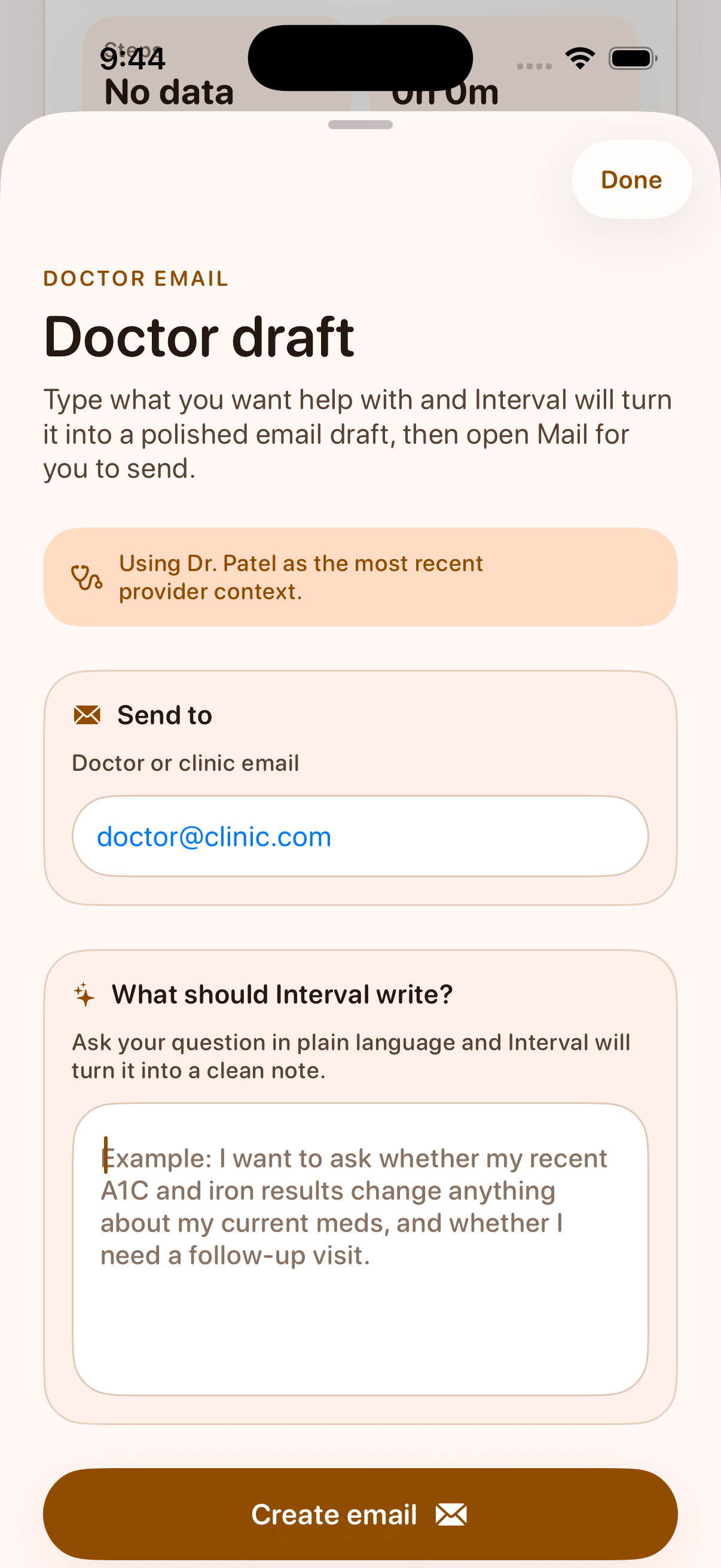
If you want to directly contact your doctor/medical provider, there's a feature in the app that lets you draft an email with the click of one button, and uses Apple Intelligence to draft using your health statistics that are in the app, allowing the doctor to get all the relevant information in one email.
The AI chatbot is another feature that we're proud of since the user can ask it any questions it feels is necessary and AI provides them information for what is suggested that they should do (it cites sources and adds a disclaimer to say that they should check with their current physician). The AI can also detect potential fatal scenarios, such as if a user complains that they have chest pain, and prompts a UI for the user to be able to call medical services straight from the app.
What we learned
On-device LLMs need structured output when you need predictable schema, prompt-engineered JSON falls apart at the edges
One thing we learned was that the hardest part of building a health app like this is that we had to ensure that the user's privacy was secure, and that their information won't be leaked outside the app. We combated this by using a local AI model (Apple Intelligence) so that everything is processed locally on the user's device.
What's next for Awesome Demo Project
Expand the drug interaction database
PDF health summary export
Apple Clinical Health Records API integration for direct hospital lab import

Log in or sign up for Devpost to join the conversation.