-
-
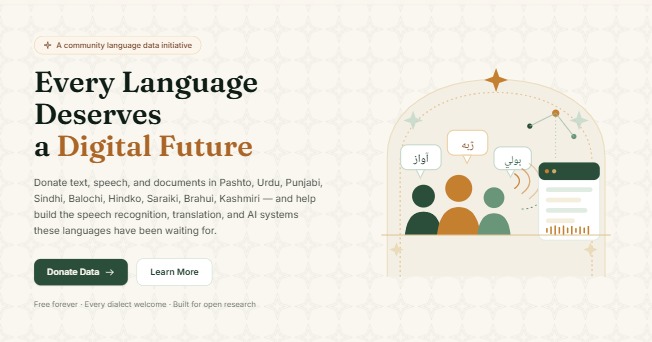
Landing Page
-
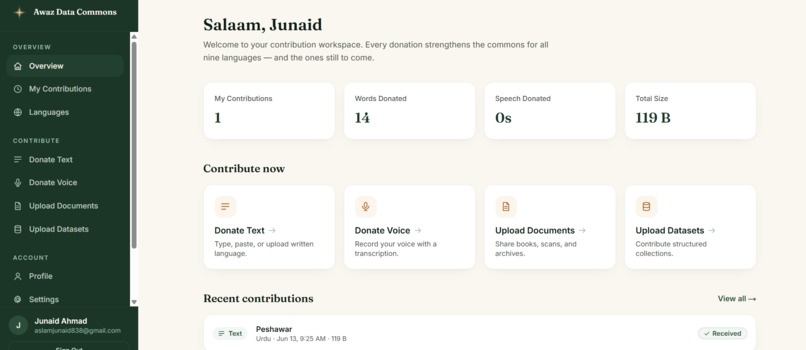
Account Dashboard
Inspiration
While building Qehwa and Katib for Pashto, we discovered a bigger problem: the real barrier wasn't the AI models, it was the lack of data. We realized that many Pakistani languages were being left behind in the AI revolution. That sparked a simple idea: what if communities could come together to build the data foundation their languages deserve?
What it does
Awaz Data Commons allows people to contribute text, voice recordings, documents, and datasets in low-resource languages. Every contribution helps create the foundation for future AI systems that can understand, preserve, and support these languages.
How we built it
We started with a simple goal: make contributing language data as easy as possible. We focused on creating a platform where anyone, regardless of technical background, could help shape the future of AI for their language.
Challenges we ran into
One of the biggest challenges was realizing how fragmented language resources are. Valuable content exists everywhere, but bringing it together into a shared, organized effort required rethinking how communities can participate in AI development.
Accomplishments that we're proud of
We're proud of turning a challenge we faced while building Pashto AI into a solution that can benefit many languages. What started as a problem for one language evolved into a platform designed to support entire communities.
What we learned
We learned that AI begins long before model training. It starts with people, culture, stories, and voices. The strongest AI systems are built on communities willing to preserve and share their knowledge.
What's next for Awaz Data Commons
Our vision is to build the largest open language data initiative for Pakistan's low-resource languages and use that foundation to power future speech recognition, translation, OCR, and language AI systems that serve millions of speakers.
Built With
- ai
- cloud
- nextjs
- opensource


Log in or sign up for Devpost to join the conversation.