-
-
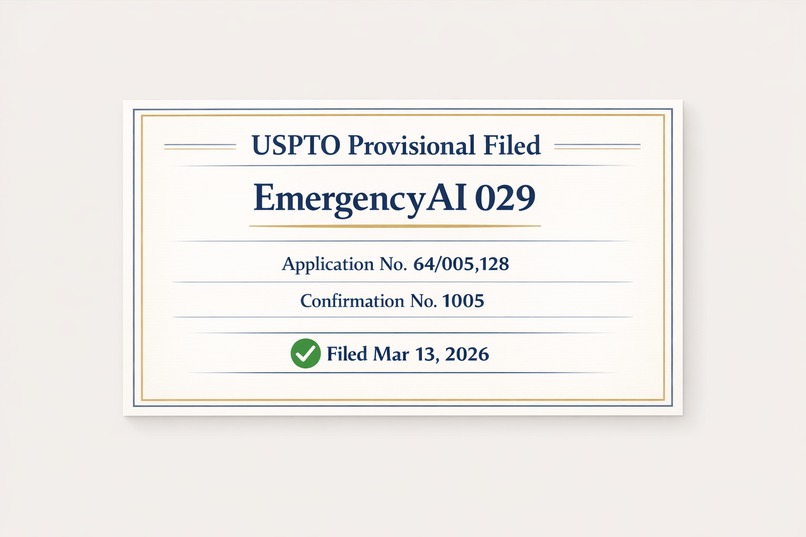
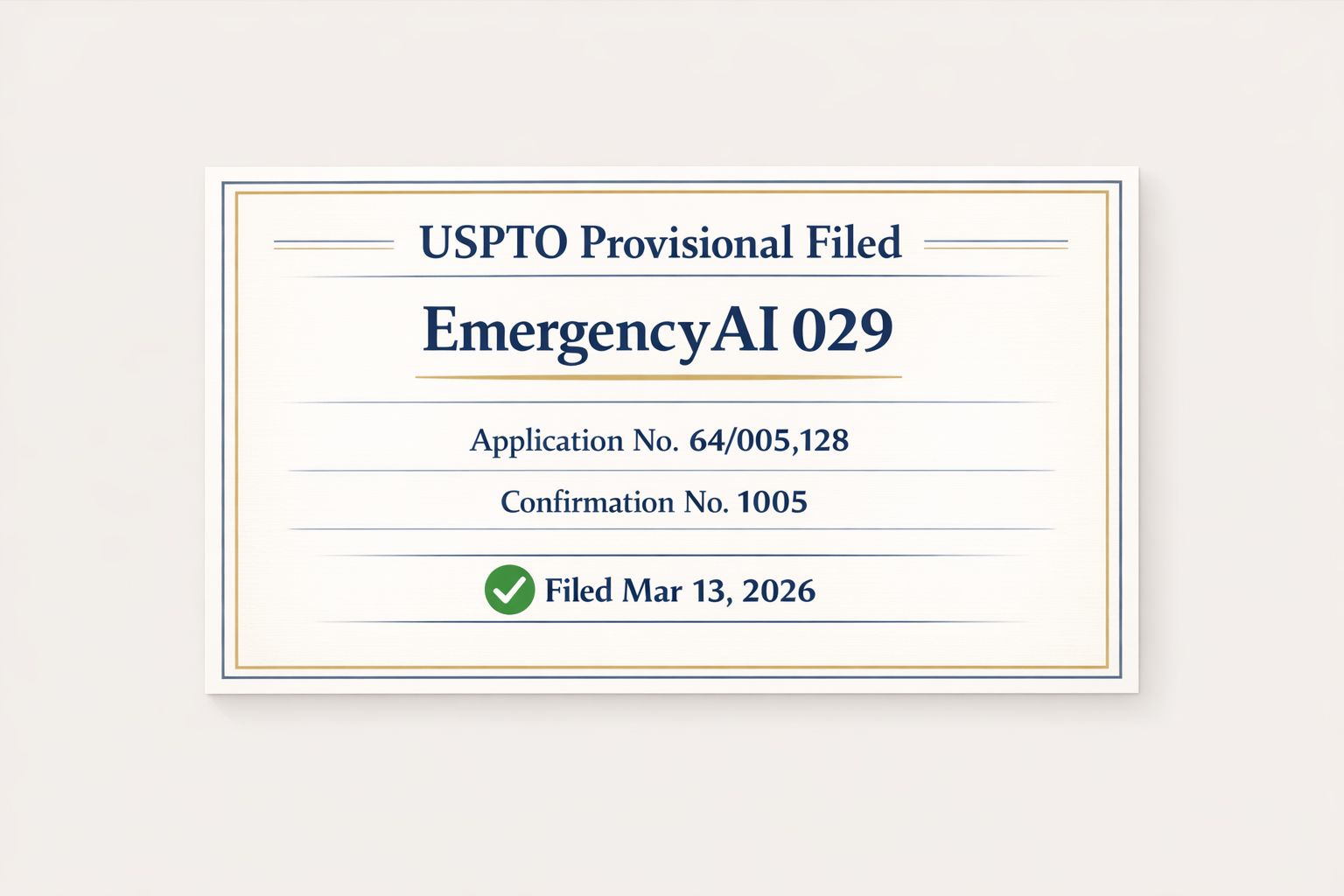
USPTO provisional filing milestone for EmergencyAI 029
-
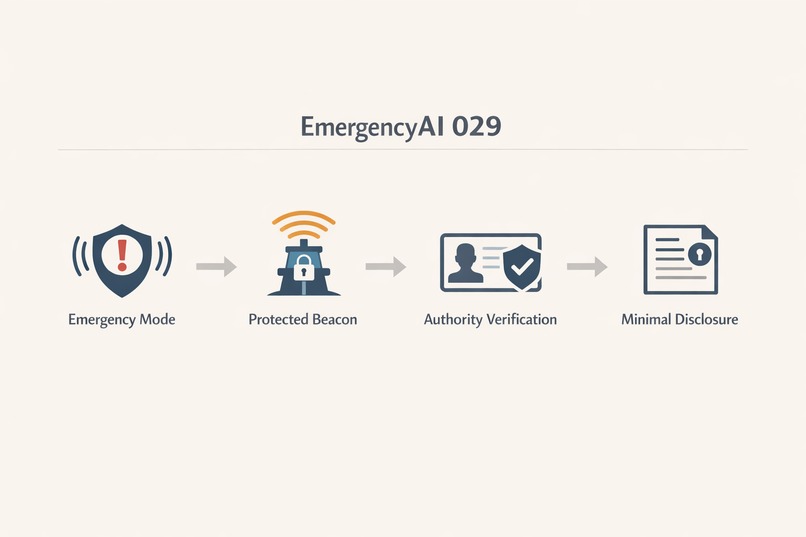
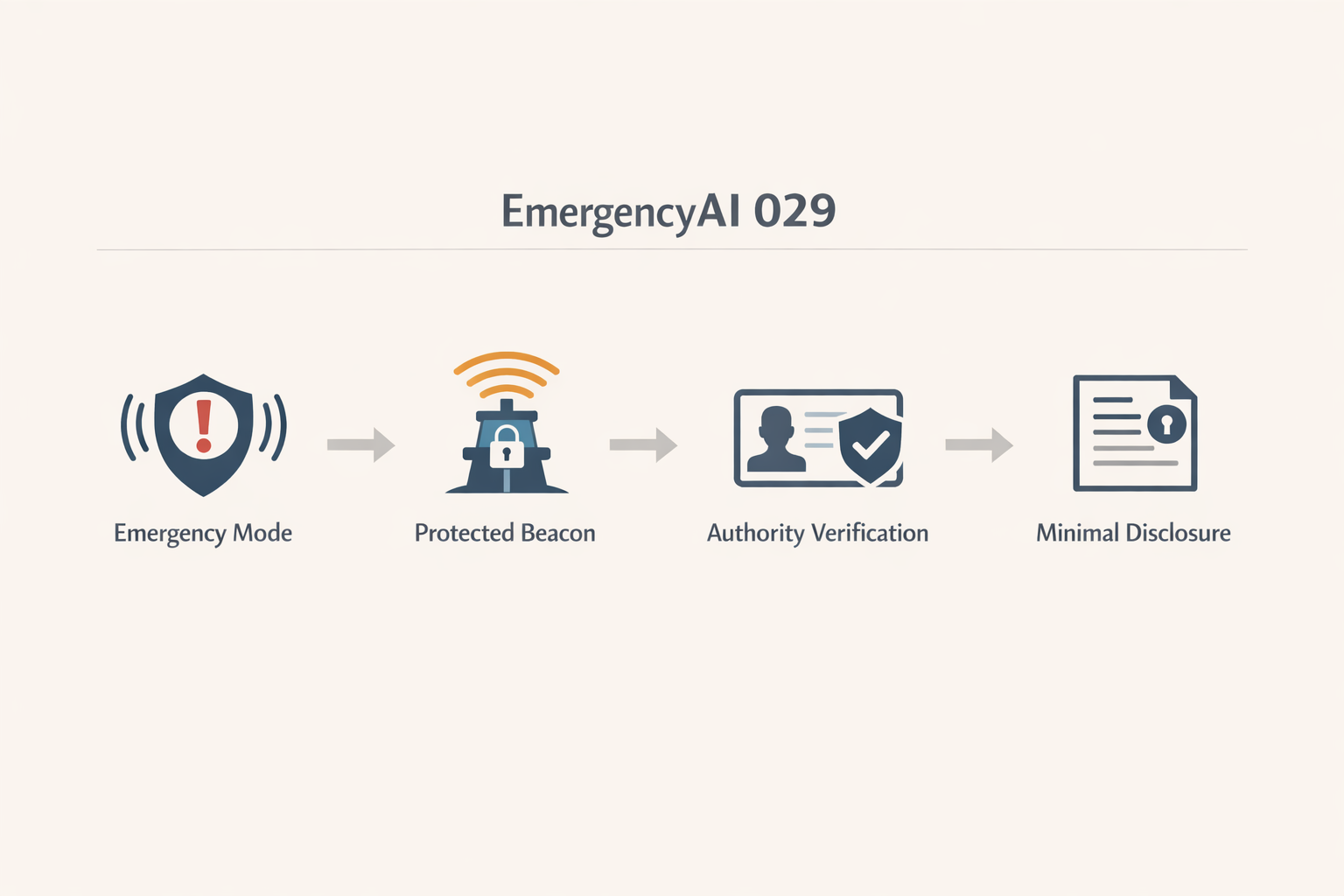
Core protocol flow: Emergency Mode, Protected Beacon, Authority Verification, and Minimal Disclosure
-
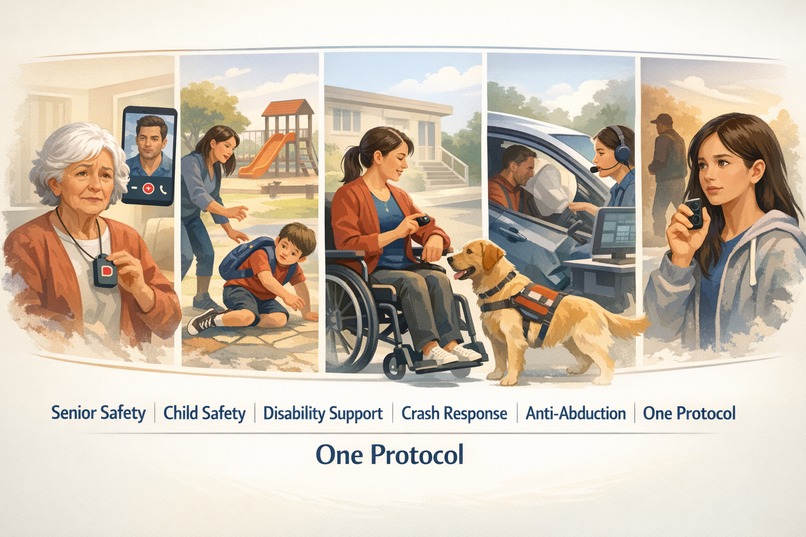
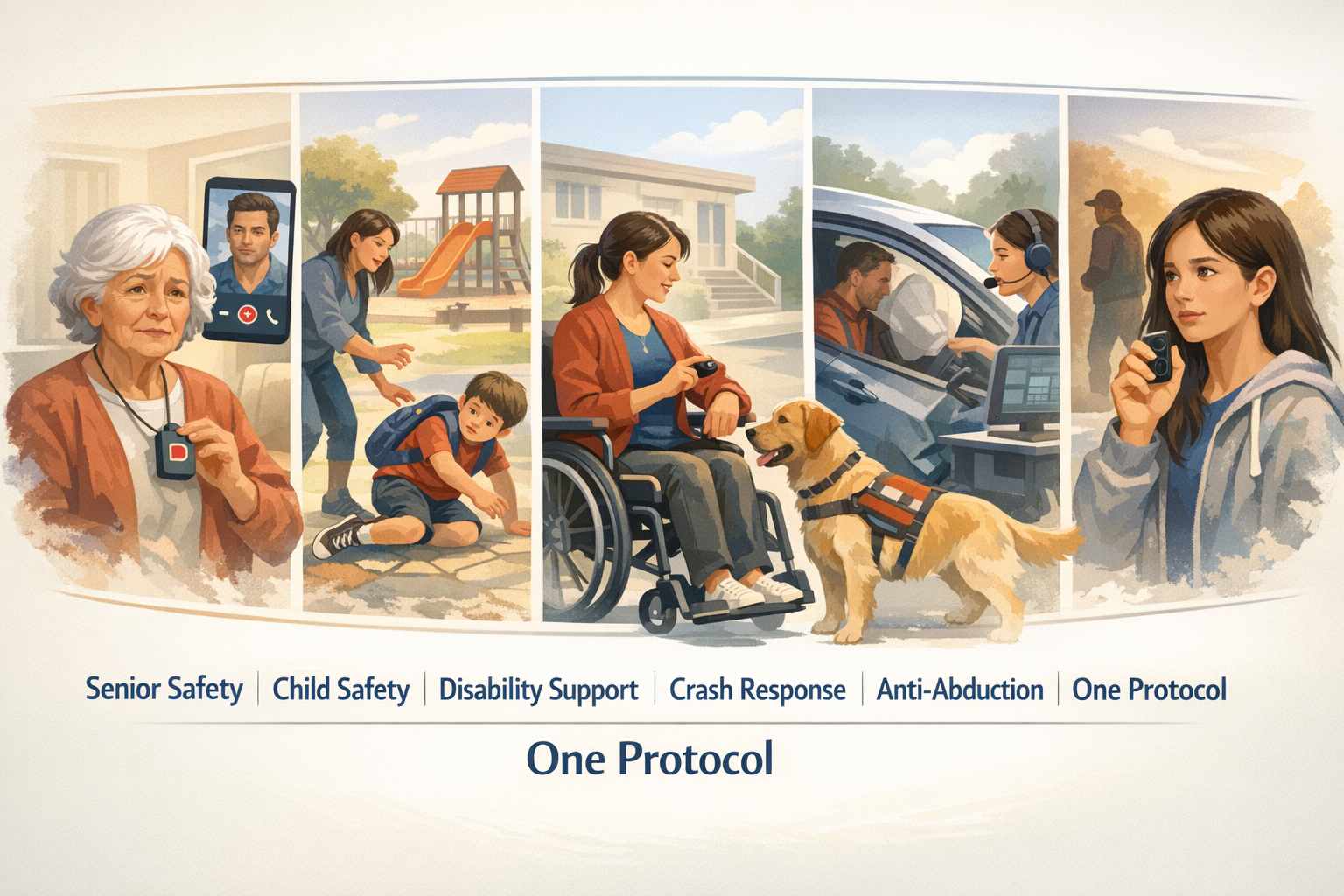
One emergency trust protocol across senior safety, child safety, disability support, crash response, and anti-abduction
Inspiration
EmergencyAI 029 came from a very real family fear: what happens when an older loved one goes out alone, remembers that something is important, but forgets where to go or what the next step is?
One real incident made this painfully clear. My mother once ran into an older friend near Roosevelt Avenue and Main Street in the afternoon. She was pacing and clearly trying to go somewhere, but when asked what she was doing, she said she had forgotten. She only knew that the errand was important, and she did not want to go home. After calling the local senior center, they learned the missing context: she had a dentist appointment that the front desk had helped her schedule.
That moment changed how we thought about the problem. Many vulnerable users do not lose all intent first. They often keep the feeling that something matters, while losing the destination, the next step, or the surrounding context. If EmergencyAI 029 had been there, the user could have simply asked, "Where am I supposed to go right now?" and received a calm, grounded answer.
That is why we built EmergencyAI 029: not as a generic assistant, not as a cold monitoring device, and not as another panic button, but as an Amazon Nova-powered emergency trust agent that can restore context, stabilize emotion, and protect dignity before panic becomes danger.
What it does
EmergencyAI 029 is an Amazon Nova-powered emergency trust agent for vulnerable individuals. It shifts from private daily assistance into a protected emergency mode, broadcasts a one-way beacon, verifies responder authority, and releases only the minimum role-specific information required for the situation.
The system is designed to support:
- senior disorientation and memory breakdown
- disability and accessibility emergencies
- child safety and reunification
- vehicle crash response
- anti-abduction and coercion scenarios
- broader public-safety workflows
How we built it
We designed the concept around four Amazon Nova capabilities working together:
- Amazon Nova 2 Sonic for calm, real-time voice guidance
- Amazon Nova 2 Lite for risk evaluation, mode changes, and disclosure decisions
- Amazon Nova Multimodal Embeddings for emergency document and identity-context retrieval
- Amazon Nova Act for downstream workflow execution across caregiver, follow-up, and public-service systems
The interactive site demonstrates the full chain:
- Daily mode with zero disclosure
- Emergency mode activation
- Protected beacon broadcast with no inbound session
- Authority verification by responder role and jurisdiction
- Minimal, purpose-bound disclosure
- Workflow execution after verified escalation
Challenges we ran into
The main challenge was product framing. If the concept is presented as a generic assistant, it loses its distinctiveness. We had to make the protocol logic visible: one-way beaconing, responder verification, minimal disclosure, and role-based release all needed to be understood quickly by judges.
Another challenge was making the concept broad enough to matter beyond elder care while keeping the emergency chain simple and coherent.
Accomplishments that we're proud of
- Turned a patent concept into a multi-scenario interactive prototype
- Framed the project as a protocol layer, not just an app
- Built a concept video, voiceover, GitHub Pages site, and polished Devpost assets around a single coherent narrative
- Demonstrated how Amazon Nova can power voice, reasoning, multimodal retrieval, and workflow automation in one emergency product
What we learned
We learned that the strongest AI safety products are not just conversational. They need explicit trust boundaries, verification rules, and action flows that map to institutions in the real world.
We also learned that Amazon Nova becomes much more compelling when the models are presented as one operating system for a product workflow rather than four isolated features.
What's next for EmergencyAI 029
Next steps include:
- expanding the responder policy engine
- adding stronger cryptographic responder verification flows
- building scenario-specific operational policies for seniors, children, crash response, and anti-abduction
- integrating real workflow connectors for caregiver, medical, and public-service systems
- refining the product into a deployable emergency trust layer for wearable, mobile, and ambient devices
Built With
- agentic-ai
- amazon-nova-2-lite
- amazon-nova-2-sonic
- amazon-nova-act
- amazon-nova-multimodal-embeddings
- amazon-web-services
- bedrock
- multimodal-ai
- ui-automation
- voice-ai

Log in or sign up for Devpost to join the conversation.