-
-
Avocatto
Inspiration
The rapid growth of AI-driven interactions in robotics and edge devices revealed a pressing need: managing conversational agents at scale is incredibly complex. Manufacturers struggle with managing the release cycle voice-enabled products and various TTS and AI systems, fragmented deployments, and ensuring real-time updates across devices operating in diverse environments.
Avocatto was created to solve this by providing a modular platform that makes orchestrating intelligent voice agents across edge and robotics devices straightforward and scalable.
What it does
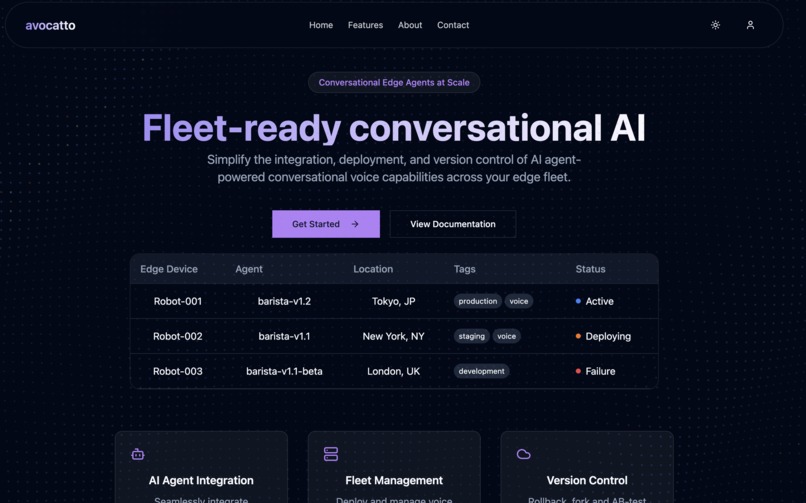
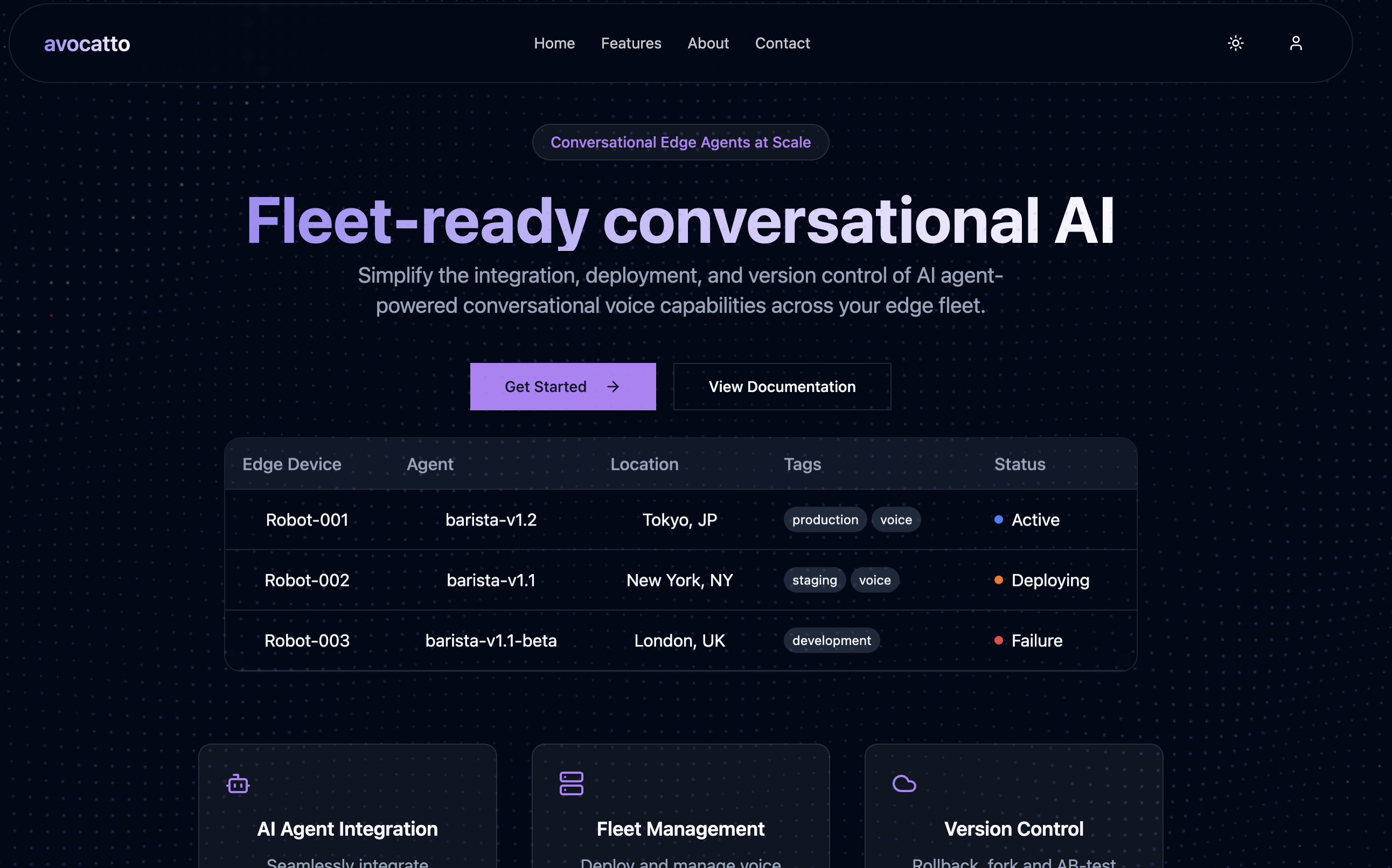
With Git-like version control, geofencing and built-in A/B testing, you can deploy, update, and rollback configurations across devices with precision—ensuring that every robot or edge device delivers consistent, high-quality conversational experiences.
How we built it
We built Avocatto with a modular, plug-and-play architecture designed specifically for the unique challenges of edge and robotics deployments. Our robust plugin system abstracts the quirks of diverse TTS and AI APIs into one unified interface. A centralized configuration hub gives developers granular control over device-specific settings, while our deployment pipeline—modeled on Git workflows—supports staged rollouts, A/B testing, and instant rollbacks. We balanced cloud processing with local, offline capabilities to maintain low latency and reliable performance, even in environments with spotty connectivity. An integrated monitoring dashboard offers real-time insights into system health, deployment status, and performance metrics.
Challenges we ran into
We faced significant challenges integrating disparate TTS and AI provider APIs into a cohesive framework. Ensuring secure, real-time synchronization across a distributed fleet of edge and robotics devices—especially under variable network conditions—stretched our design to its limits. Balancing the processing demands between cloud-based analytics and local execution was another hurdle. Incorporating A/B testing into our deployment pipelines, so that different configurations could be evaluated in live environments without disruption, added a layer of complexity that required innovative solutions.
Accomplishments that we're proud of
It's 2 days but we got a working proof of concept that can be used!
What we learned
We learned that a modular, standardized approach is essential to managing complexity in large-scale voice deployments for edge and robotics devices. Balancing cloud power with local processing ensures consistent, low-latency performance. But - different configurations across providers create another level of complexity - how do we find the common denominator that would utilize the services and features from all providers, like, ElevenLabs, OpenAI or fal.
What's next for Avocatto - Agents at Scale The next step is to implement authentication and finish the admin dashboard for the customers. That will be a proof of concept that would let gathering practical feedback.
Built With
- elevenlabs
- firebase
- kotlin
- ktor
- lovable


Log in or sign up for Devpost to join the conversation.