Inspiration
Almost everyone in Puerto Rico has heard it: "No hay citas hasta marzo." The island is short roughly 1,286 specialist physicians, and researchers report waits of six to eight months to see one. At the same time, when a patient cancels, that slot usually goes empty, because the office has no quick way to find who is waiting.
I kept thinking about that gap. The appointments exist; the problem is that the right patient never finds out in time. People here already live on WhatsApp, so the idea was simple: don't make anyone download an app. Just send a message.
No esperes meses. Espera un mensaje.
What it does
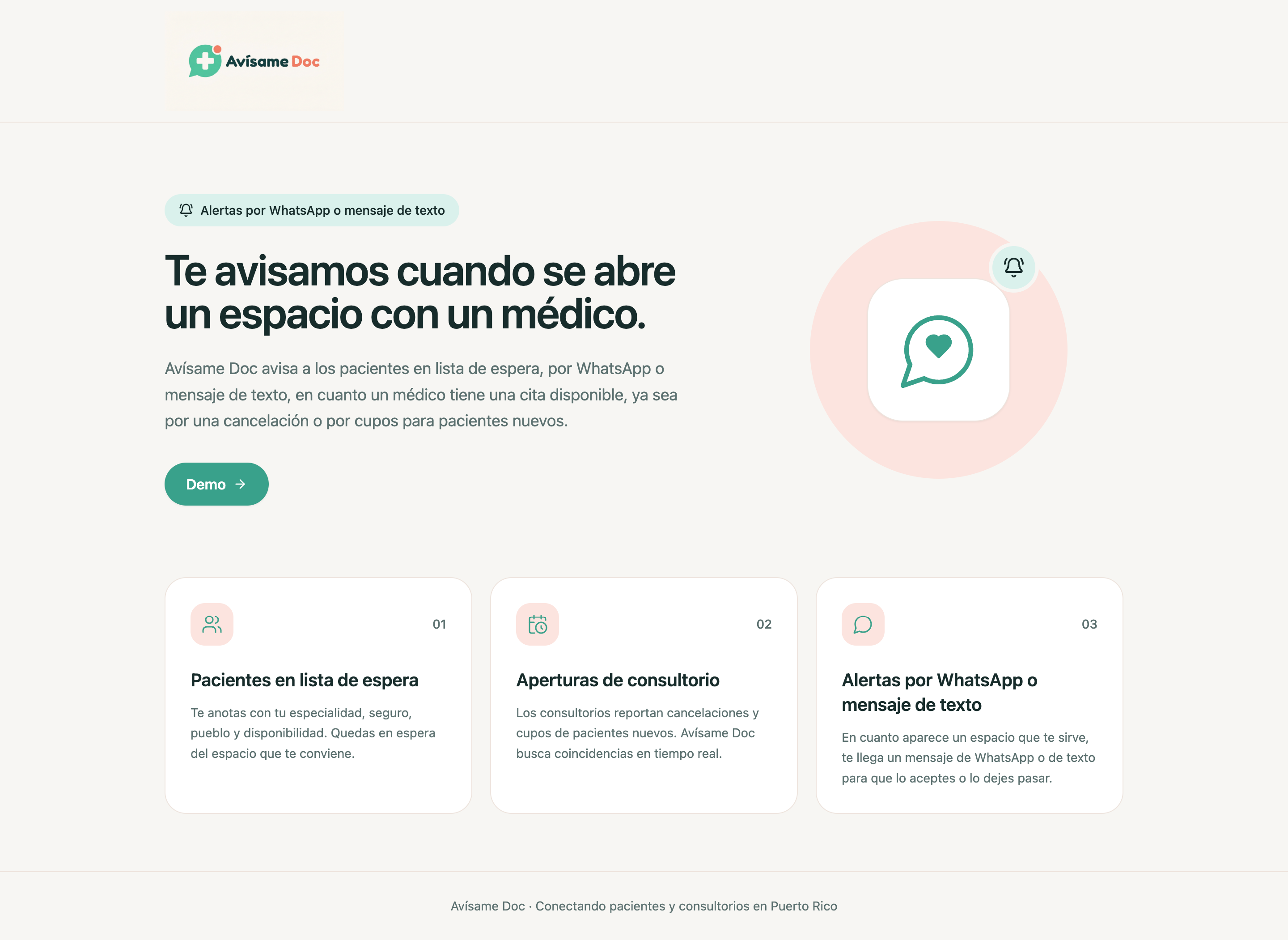
Avísame Doc connects patients waiting for a specialist with appointments that open up, whether a same-week cancellation or new-patient capacity, entirely over WhatsApp or text message.
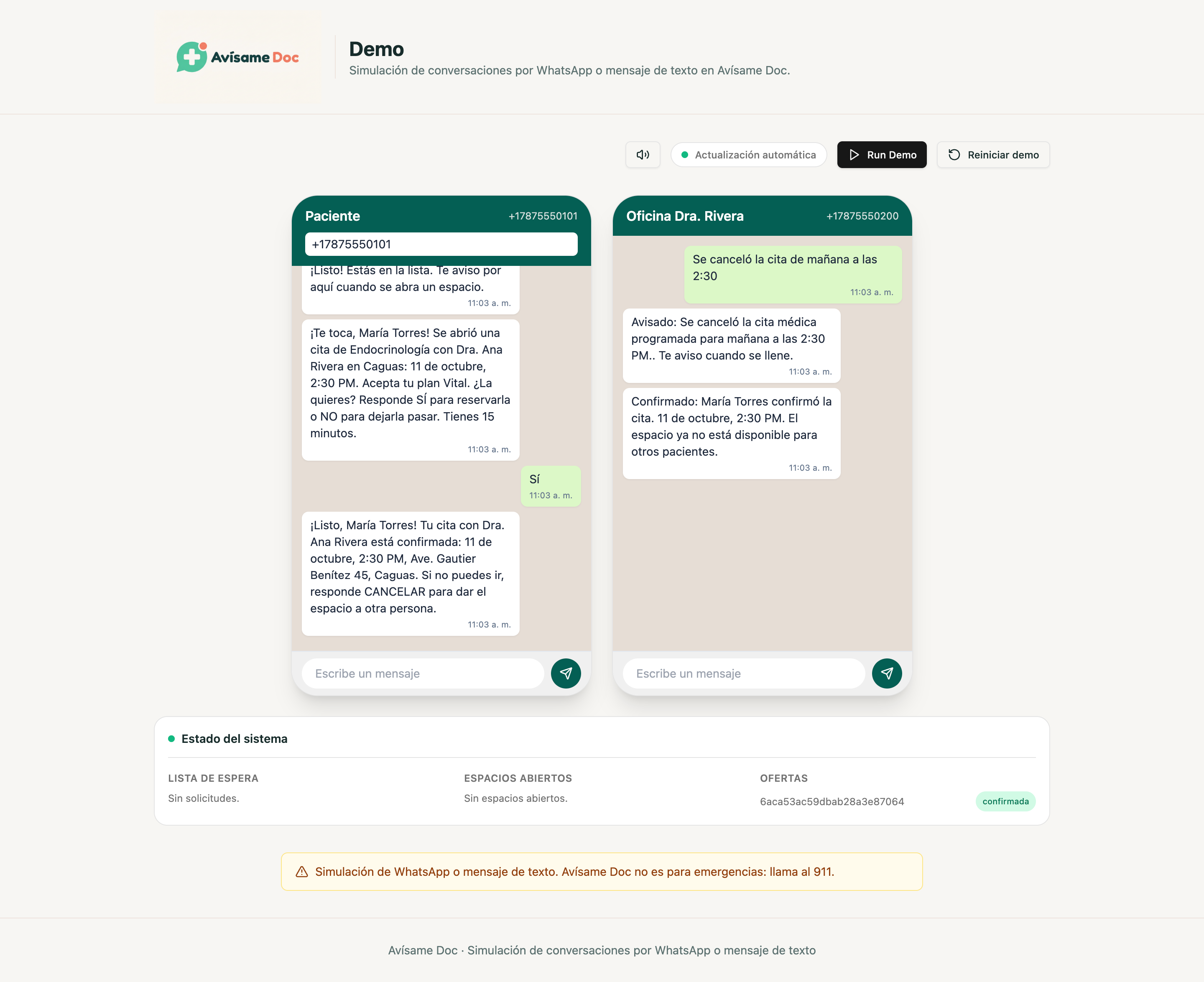
- The patient writes in their own words, for example: "Busco el doctor de la tiroides, tengo la reforma, vivo en Caguas." The AI understands that as endocrinology, the Vital plan, and Caguas, asks only for what's missing, and adds them to a virtual waiting line.
- The office writes one line: "Se canceló la cita de mañana a las 2:30." The AI turns it into a structured opening.
- Clear rules pick the match: same specialty, an accepted insurance plan, a reachable town, a compatible schedule, and the longest wait first.
- The patient gets "¡Te toca!", replies Sí, and both sides are confirmed.
How I built it
I built it with Base44 and Claude: its database, backend functions, hosting, and built-in AI integration. Claude helped me plan the architecture, write a step-by-step build spec, and design the pitch deck.
The key design decision was splitting the work in two:
- AI only reads language. It turns casual Spanish from patients and receptionists into structured data, and it never guesses: a missing field comes back empty, and the bot asks for it.
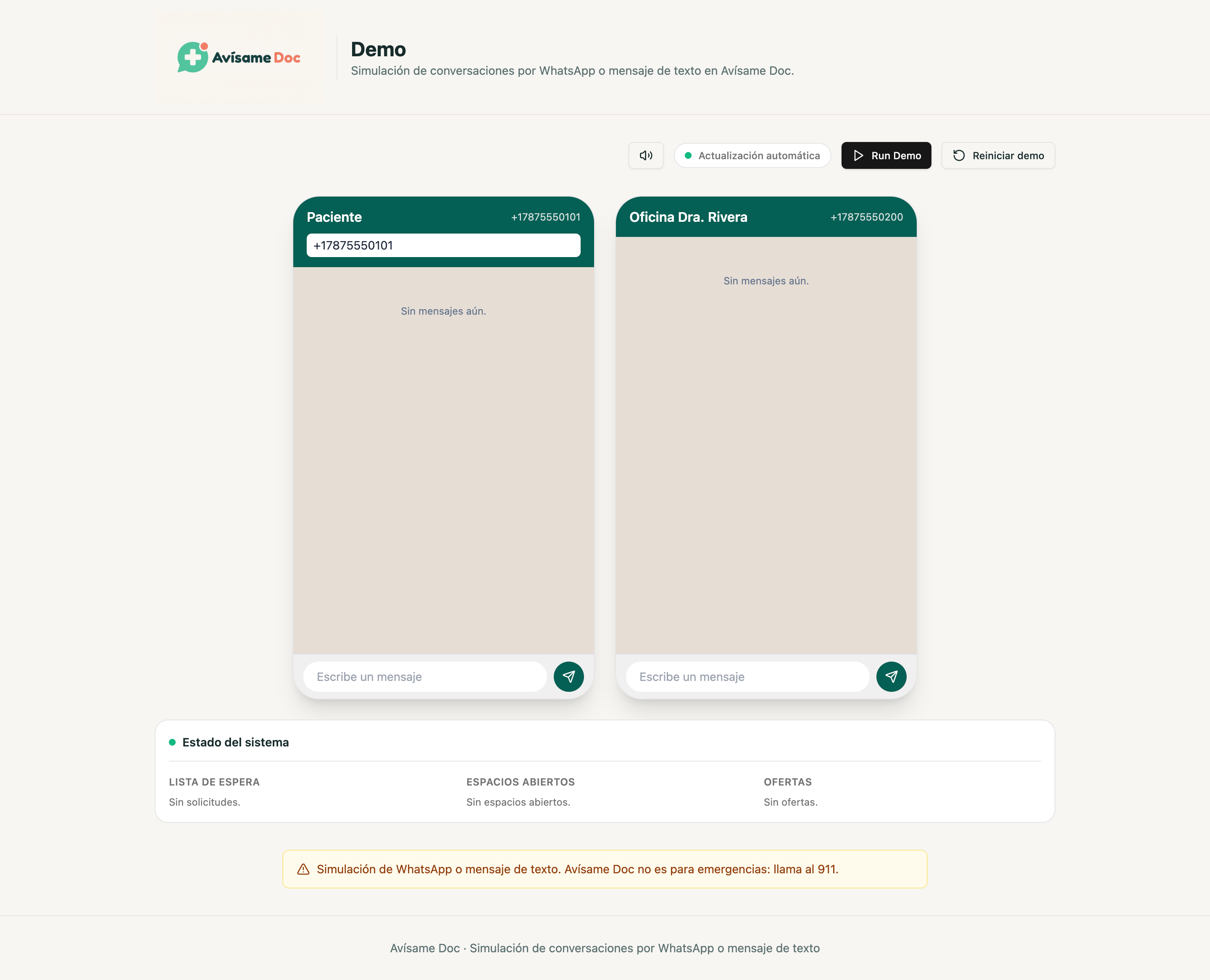
Everything runs through a single message engine, processMessage(from, body). For the demo, a two-phone simulator (patient and office) calls that same engine, so moving to the real WhatsApp Business API or SMS changes only the channel, not the logic.
Responsible design was part of the build from the start: no symptoms or medical history are collected, emergency messages are redirected to 911, phone numbers are masked in the panel, and all demo data is synthetic.
Challenges I faced
- The AI ignored the first message. Patients who explained everything up front still got the generic welcome. I fixed it by parsing the very first message too, so the bot only asks for what's actually missing.
- A missing field silently broke matching. The patient's town was saved, but not their region, so the location filter rejected everyone. Mapping all 78 municipalities to regions solved it.
- Rate limits. An automated test run, plus chat screens refreshing every second, exhausted the AI and database budget, and messages failed with 500 errors. I slowed the refresh, added retries, and added a friendly "try again in a minute" reply instead of silent failures.
- The demo story fought the rules. Seed patients with longer waits kept "stealing" María's appointment, which was correct behavior but confusing on screen. I simplified the demo to a clean waiting line.
- One person, one phone. Two-sided WhatsApp needs two phones, so I built the simulator, which also made the demo reliable and repeatable.
What I learned
- Use AI where language is messy, and rules where fairness matters. That split made the system easier to build, easier to debug, and easier to explain.
- Build in small, tested steps. Every time I pasted one prompt and tested it before moving on, things worked. The one time I asked for a big automated feature, it broke what was already working.
- The best interface is one people already use. A receptionist will never log into another dashboard, but she will send one WhatsApp message.
What's next
Validate with receptionists and pilot with a few independent practices in the Este region, then go live on the WhatsApp Business API or SMS with HIPAA-ready hosting and a clear consent flow, and grow to every specialty in Puerto Rico.
Sources: Fiscal Oversight Board health workforce study, via El Nuevo Día (Sept. 2025); FIU research, via CBS News.
Built With
- base44
- claude
- database
- javascript
- react
- tailwind

Log in or sign up for Devpost to join the conversation.