-
-
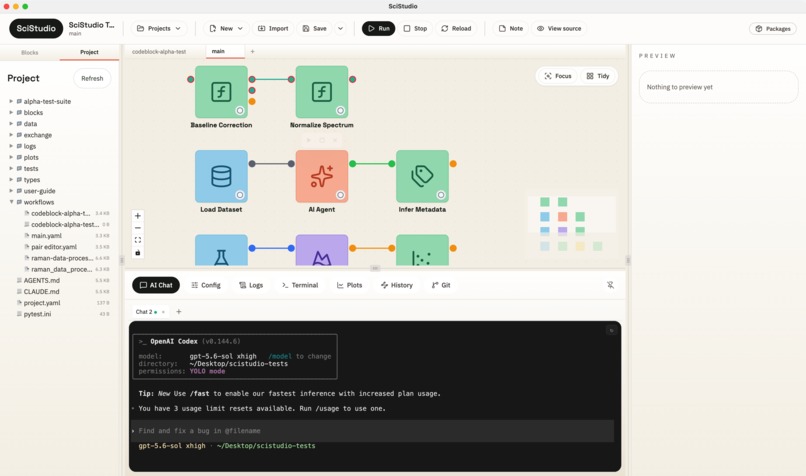
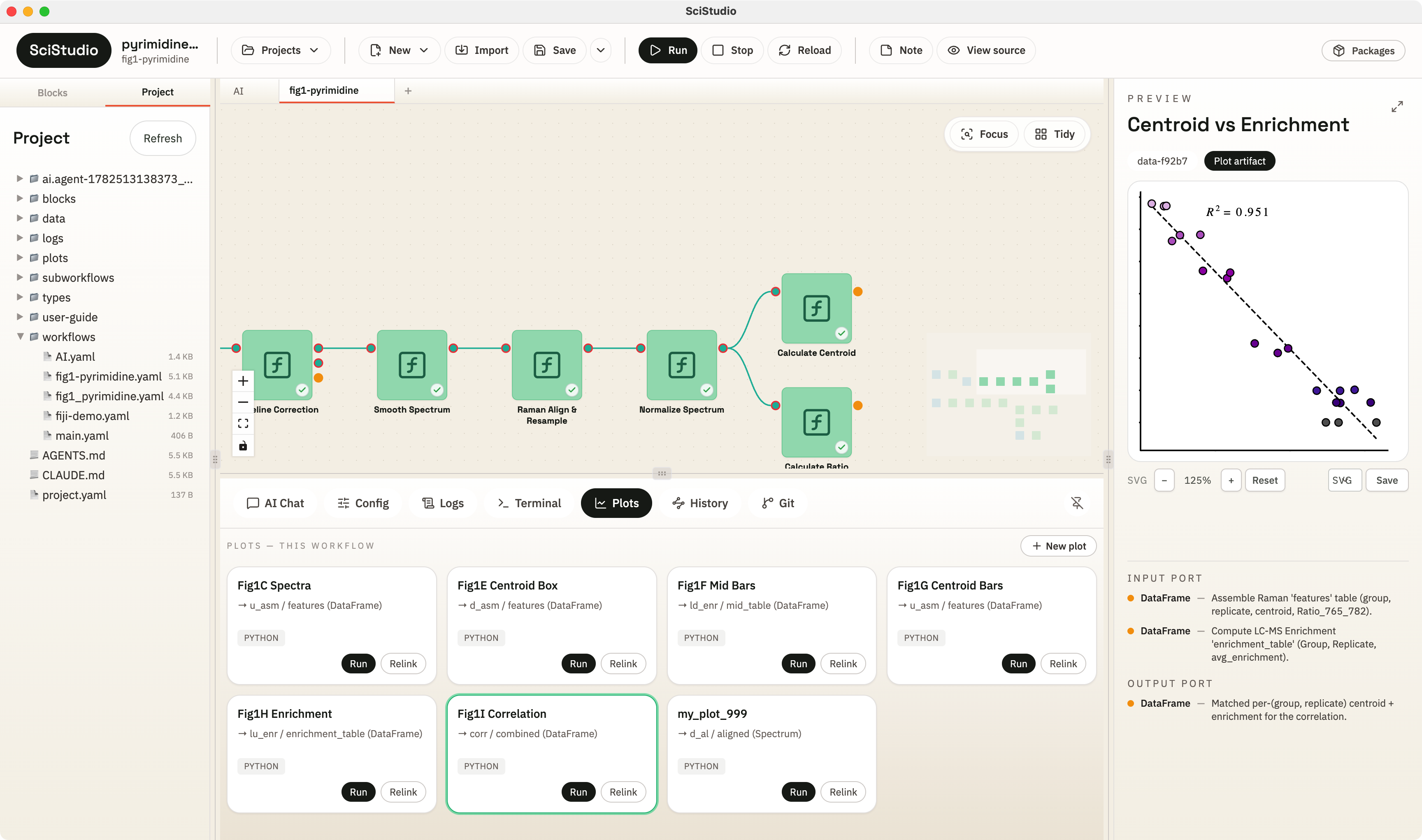
Overview GUI
-
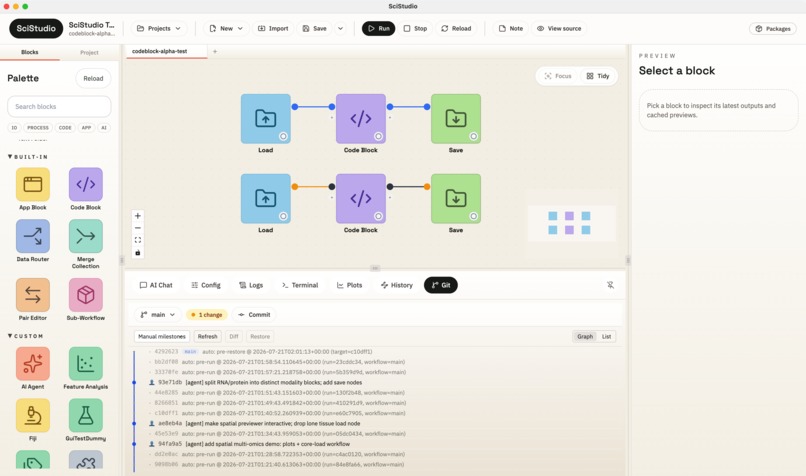
Git and block palette
-
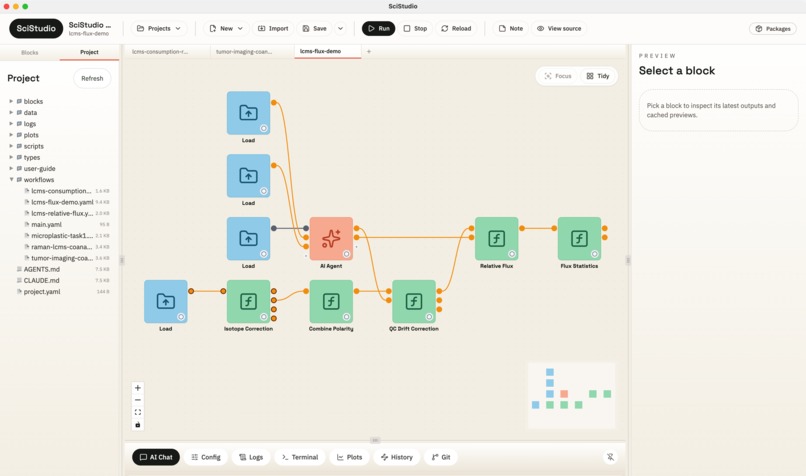
Workflow demo
-
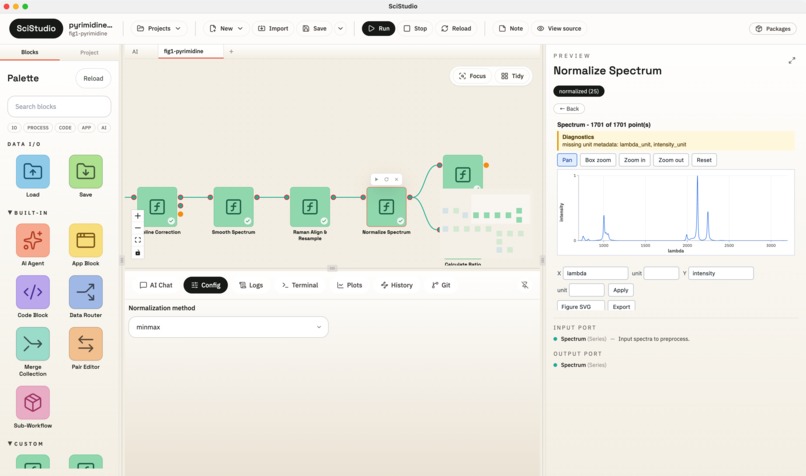
Data previewer
-
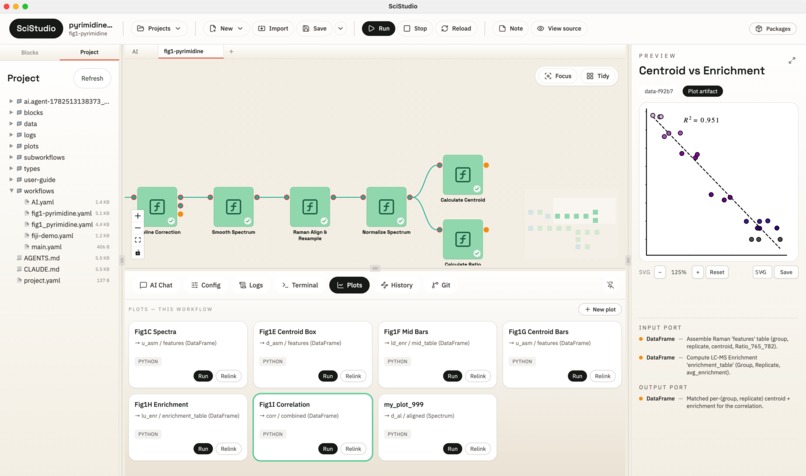
Plot cards
-
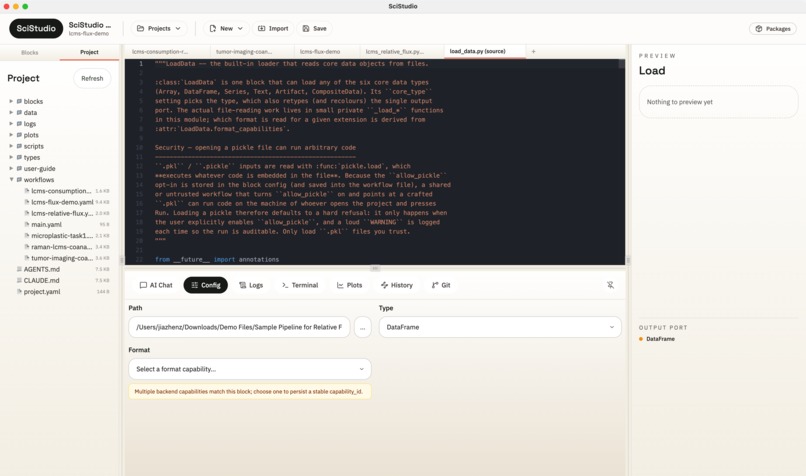
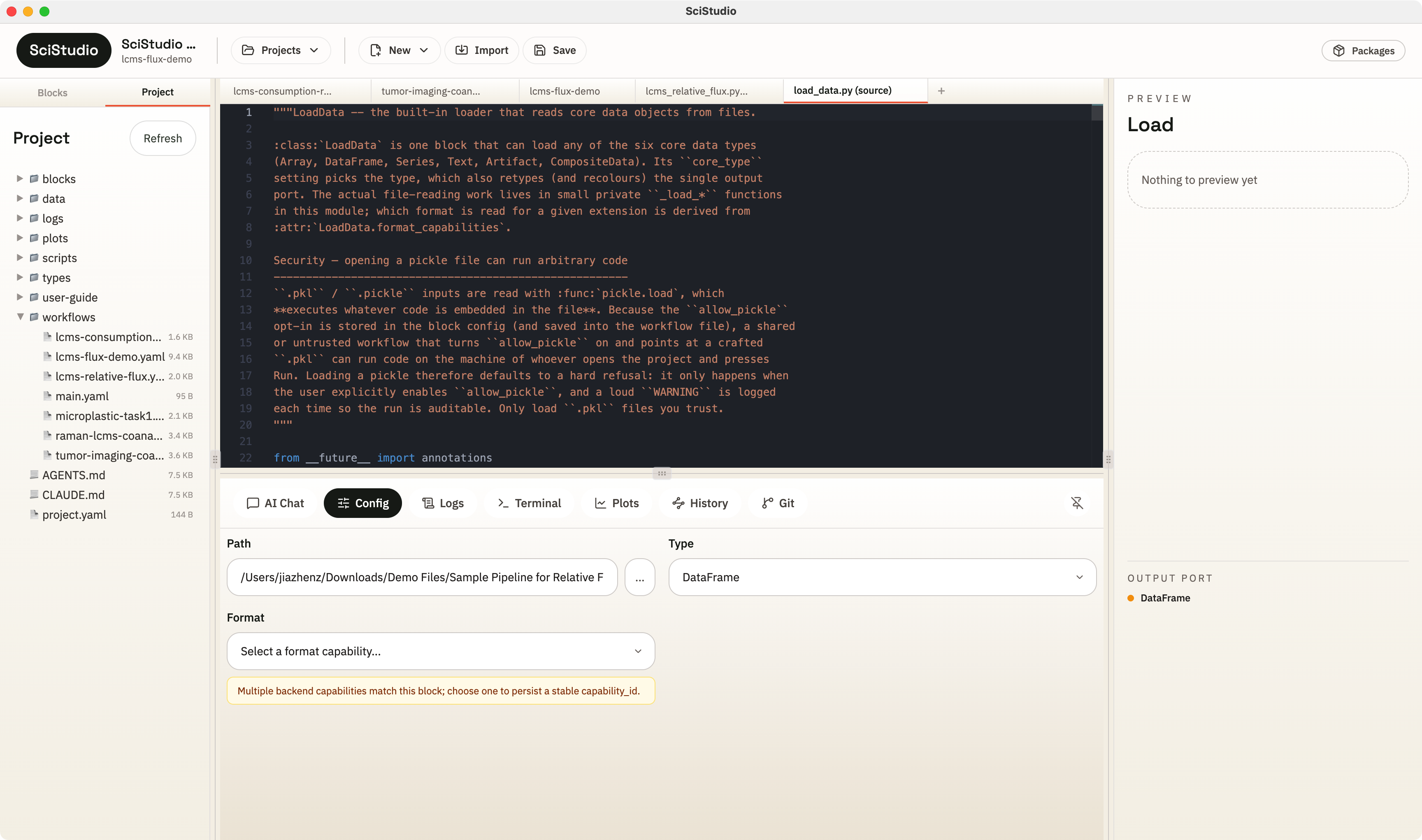
SciStudio code editor
-
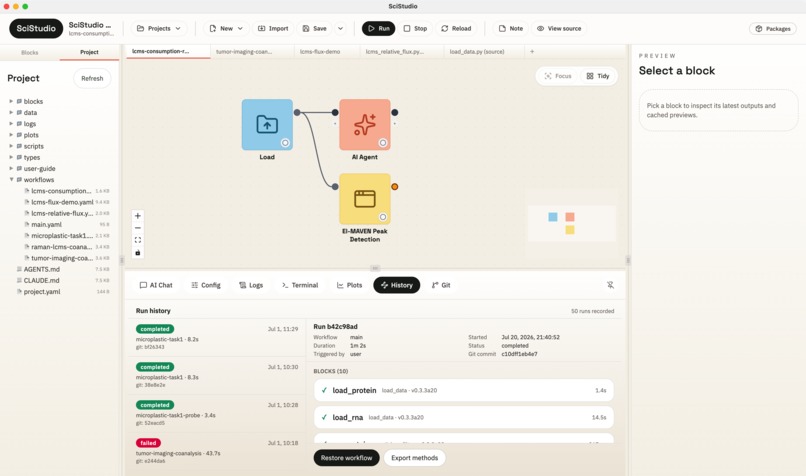
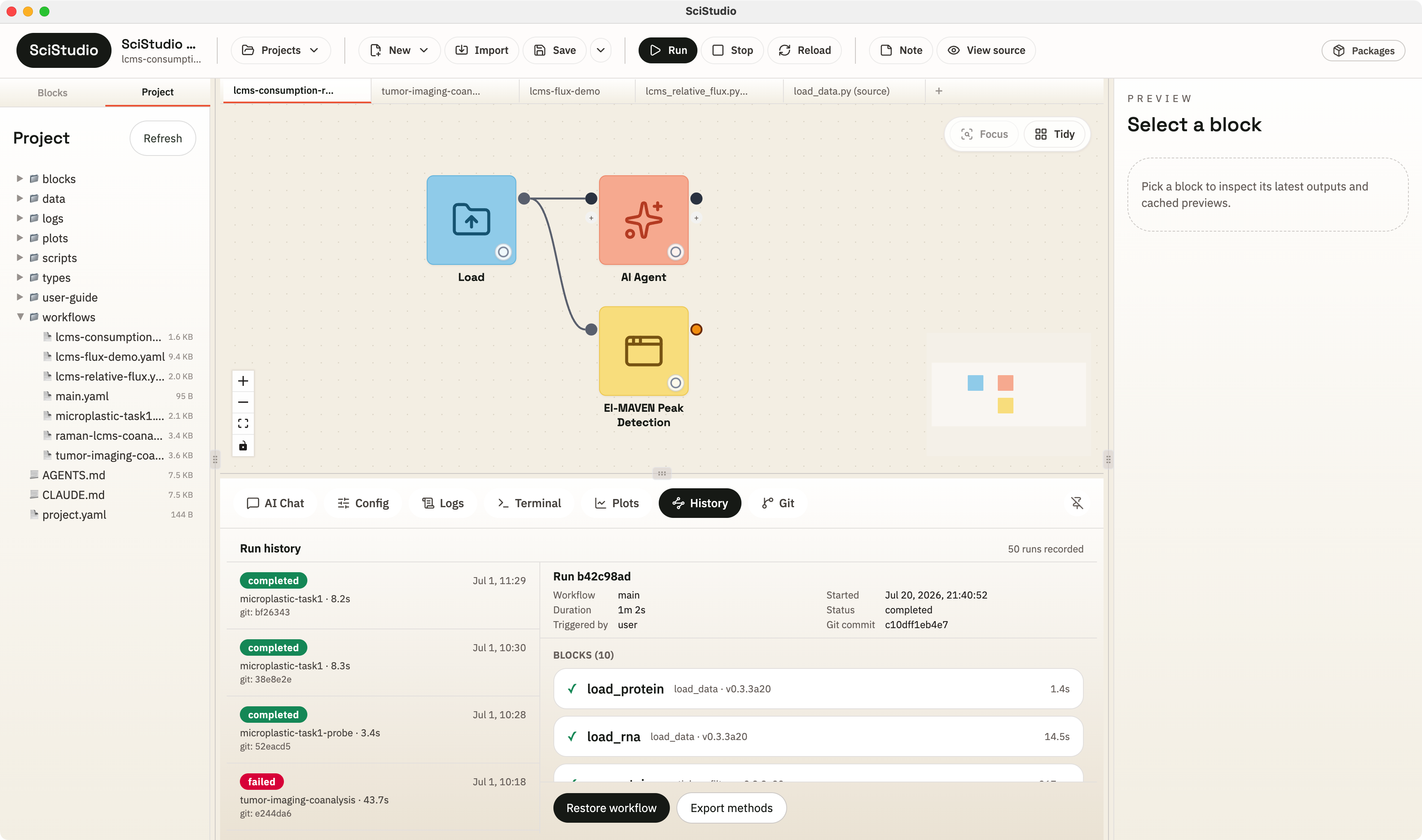
Data analysis run history
-
Branding
Inspiration
SciStudio came from two frustrations we lived.
In our own research, analyzing multimodal data — imaging, multiomics, spectroscopy — meant a dozen open windows, scripts scattered everywhere, and a fragile final step of stitching it all together by hand. It worked, but it was chaotic and difficult to reproduce.
Teaching undergraduates showed the flip side: they lost most of their time to configuring environments, running code, and editing code they didn't understand — long before any science happened.
Opposite problems, same root: code gives you flexibility but scatters the environment, state, and intermediate steps across too many windows, with nothing to hold them together. Moreover, data visualization is not straightforward when analyzing with codes.
SciStudio is our bet on the fix — make that structure explicit with a typed workflow graph, and use AI to lower the barrier to building it.
What it does
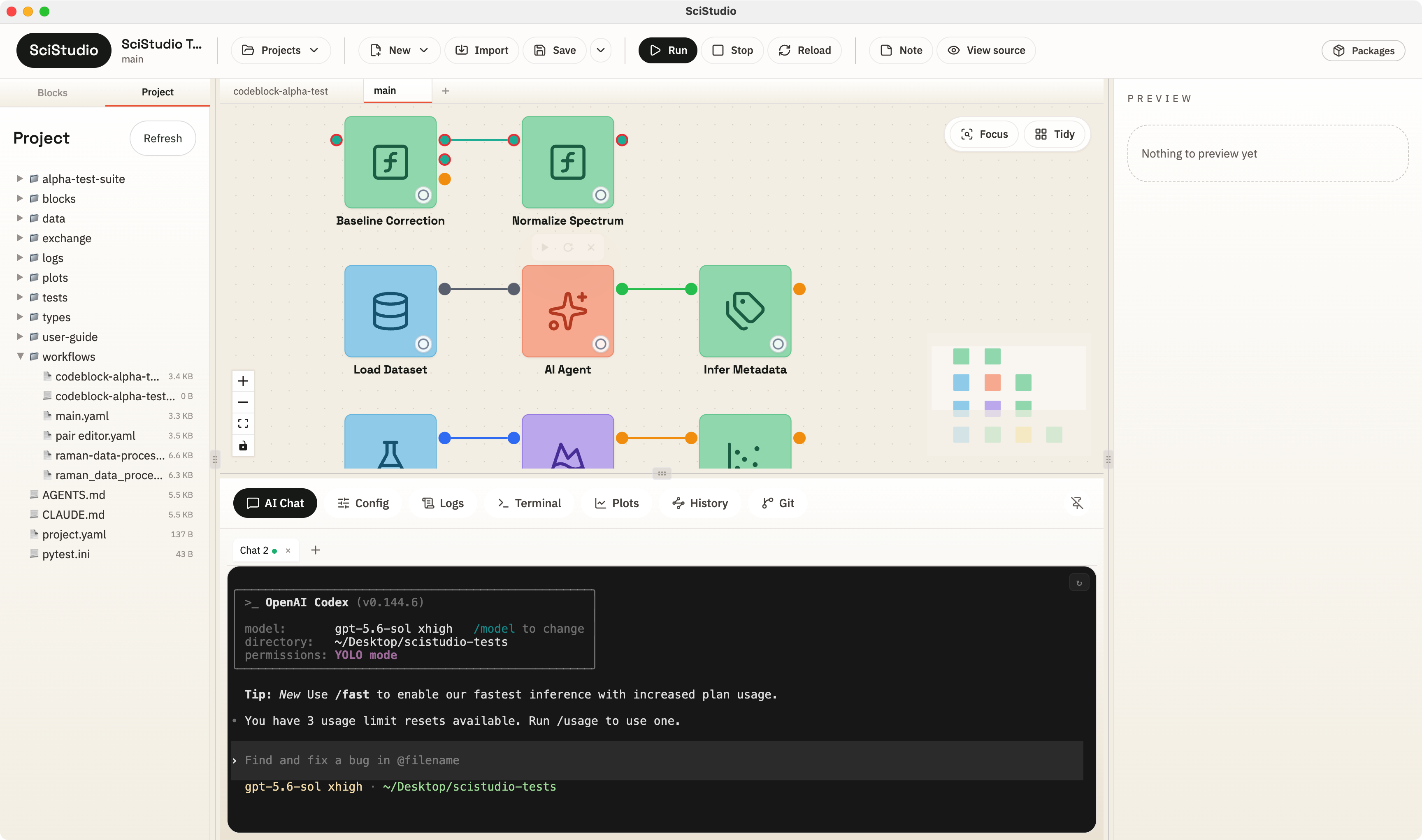
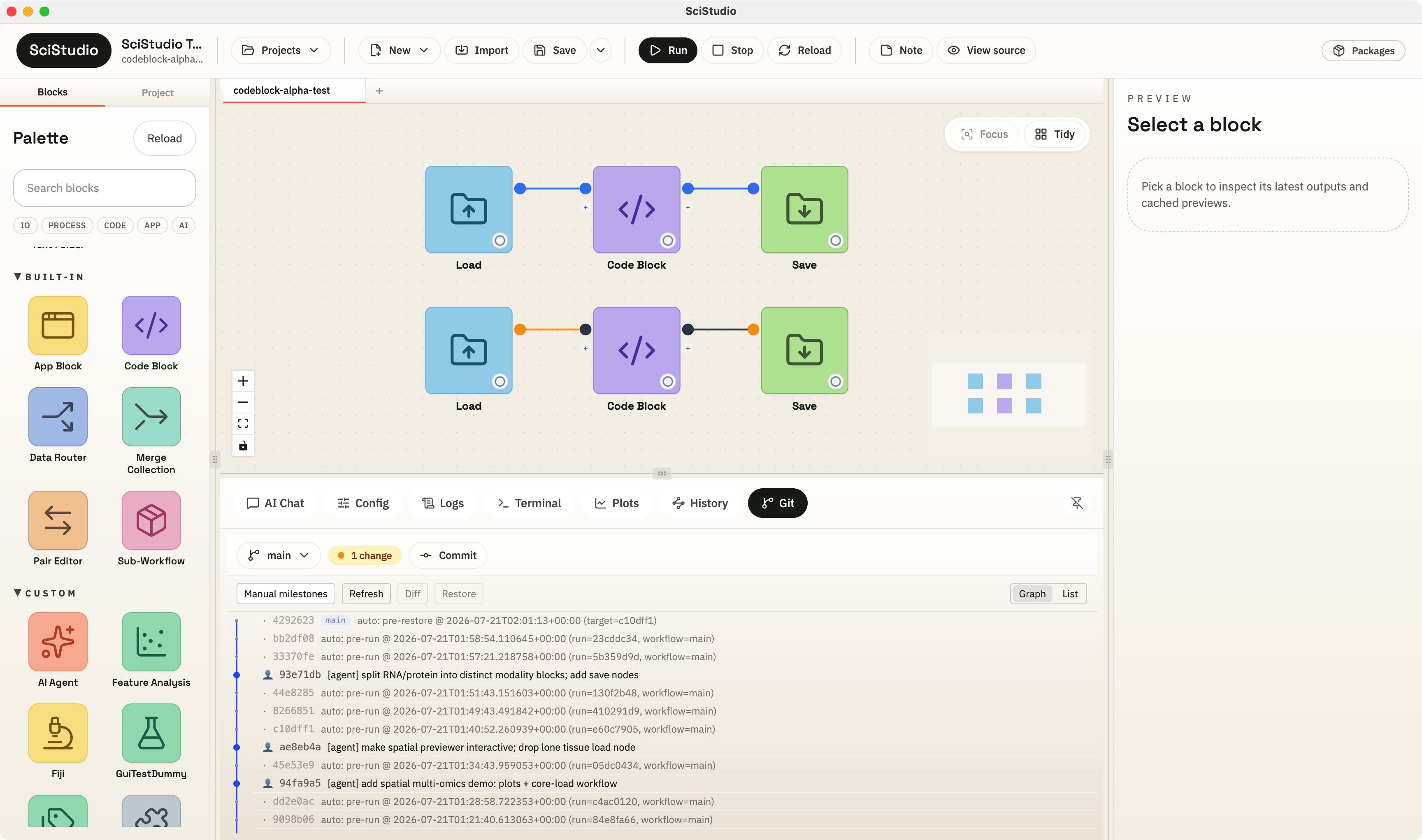
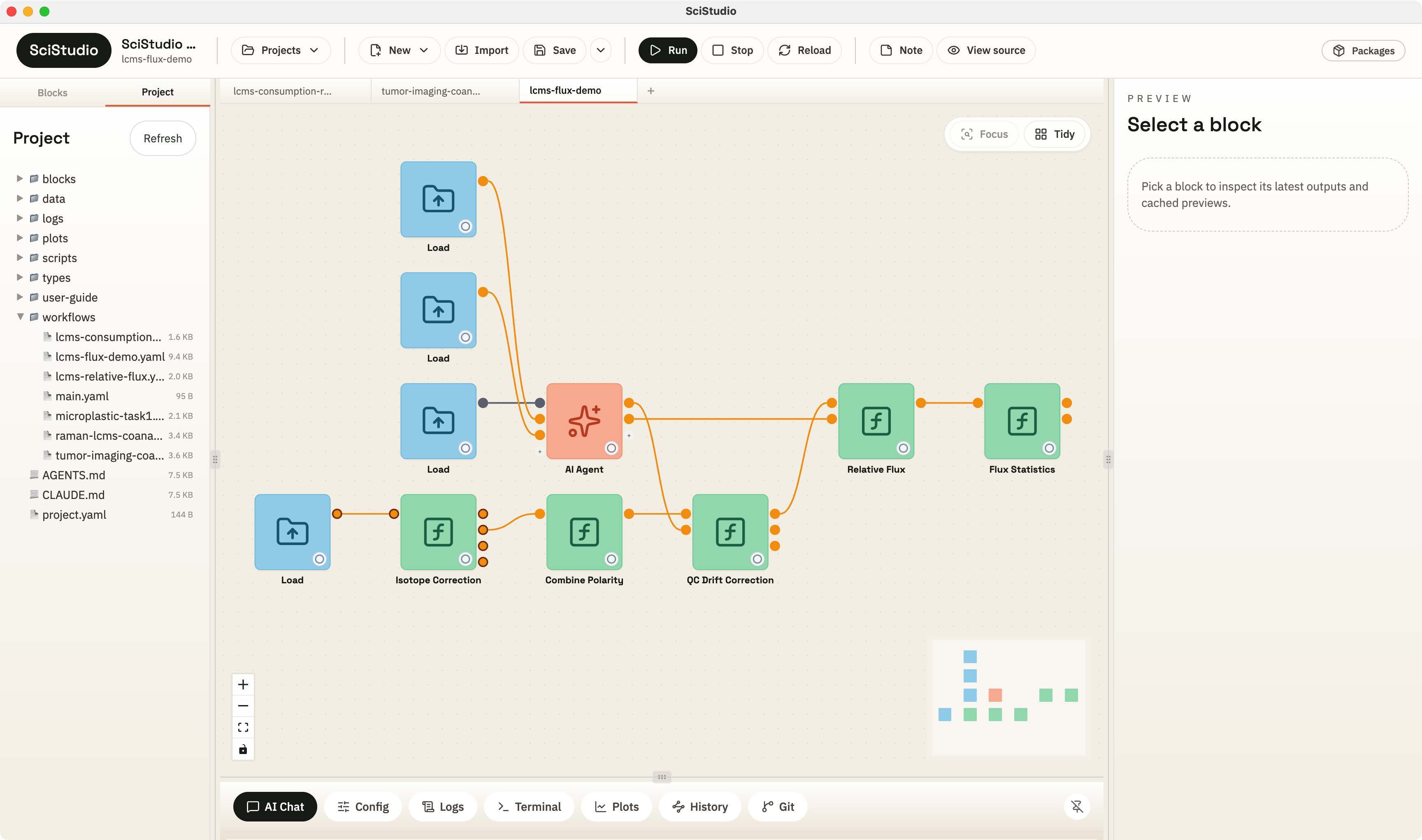
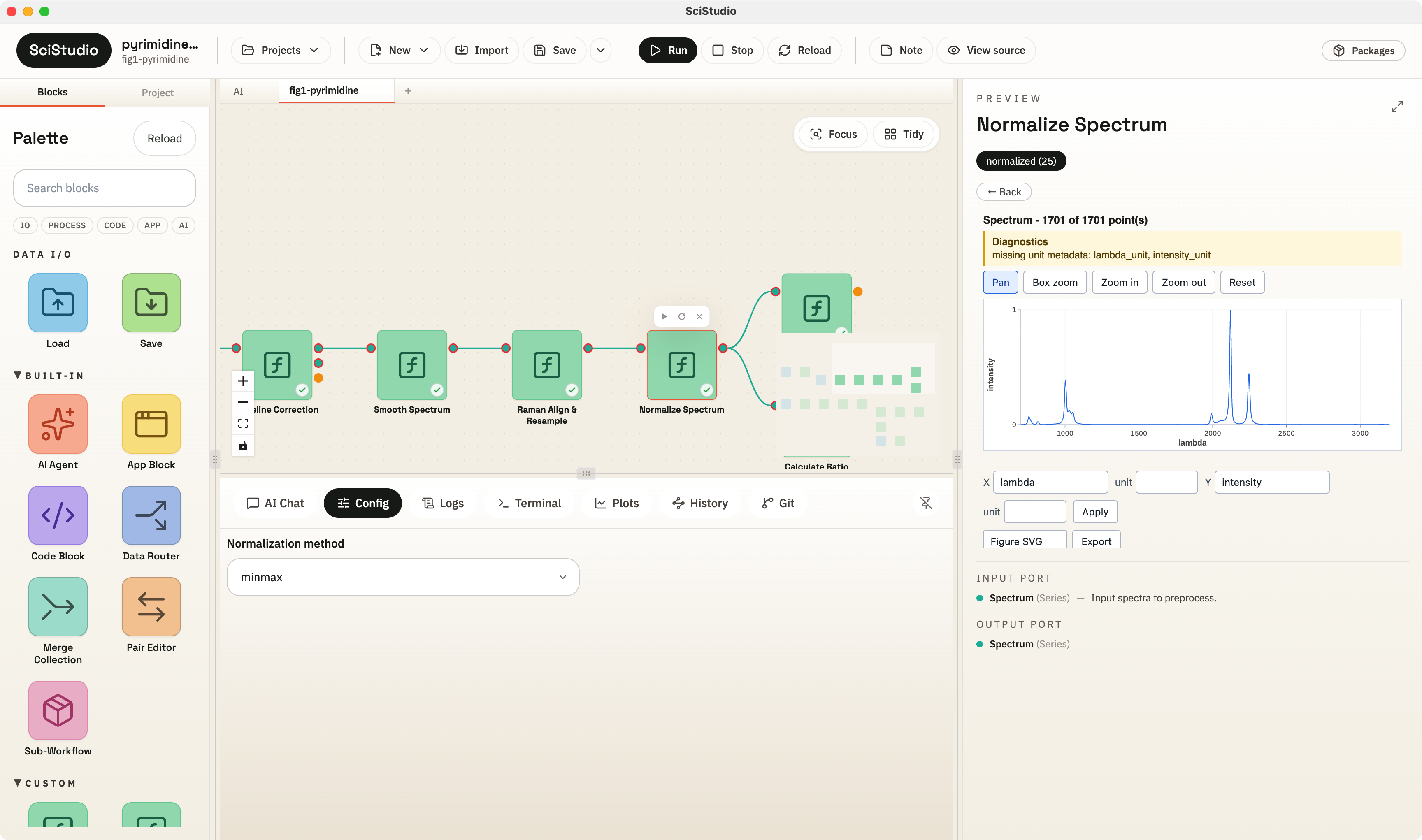
SciStudio is an AI-native runtime for multimodal scientific data analysis. It brings software, scripts, data processing, visualization, and AI agents together under a single workflow.
Each workflow step is a block with a formal contract for what data goes in and comes out, so steps connect safely and every result stays reproducible. An AI agent works alongside you — wiring blocks, workflows, plots, and even the way you want to visualize your data in data previewer.
How we built it
We built SciStudio with an AI-assisted development process that scales a small team's output.
We start at the top: sketch the architecture, then have AI refine it. Large structures and major features get written up as ADRs and specs first, so the design is settled before any code exists. From there we specify downward — all the way to each module and each function signature — until the work is decomposed into pieces small enough to hand off.
Those pieces go to multiple agents working in parallel to implement, review, and test them. Everything then passes through CI and human review for code quality before it lands. The result is a codebase that a small team could move through quickly while keeping the design coherent and every change traceable.
Challenges we ran into
The first challenge came from our own process. When AI writes code in parallel, signatures drift and implementations wander away from the intended architecture. We addressed this with a QA governance layer and CI that guard both code quality and architectural integrity, backed by periodic architecture reviews to catch drift before it accumulates.
The second was data formats. Scientific data comes in more formats than any team could ever support directly. We solved it through the design of IO blocks, which modularize format support and let users add or customize handling for whatever formats their work depends on.
Accomplishments that we're proud of
We fully implemented SciStudio as a complete, working product — the typed workflow runtime, formal block contracts, the AI agent that builds and debugs workflows, plugin domains, and a desktop app that updates over the air, all running end to end. It is a full system a real scientist can open and use today.
What we learned
We came away with a much deeper feel for software architecture design — how much clean contracts and clear module boundaries pay off once a system grows. We also learned how to run AI-assisted development in practice: how to specify work down to the right level, keep parallel agents from drifting, and lean on governance and CI so speed never costs us quality.
What's next for SciStudio
We want to grow a real user base among the scientists SciStudio was built for, cultivate a community that contributes packages and workflows, and invest in outreach to put the tool in front of the labs and classrooms that need it.
Built With
- css
- fastapi
- fastmcp
- http
- httpx
- python
- react
- reactflow
- typescript
- yaml


Log in or sign up for Devpost to join the conversation.